BMW 3 Series E46 (1997-2005) review | A BMW high point and a classic in the making
BMW 3 Series cars for sale
4.0
Expert review
Pros
Understated but handsome styling
An absolute pleasure to drive
Diesels are fuel efficient
Cons
The Touring's boot is small by estate car standards
Some reliability problems, especially with the 320d
Look out for rusting front wings
The CarGurus verdict
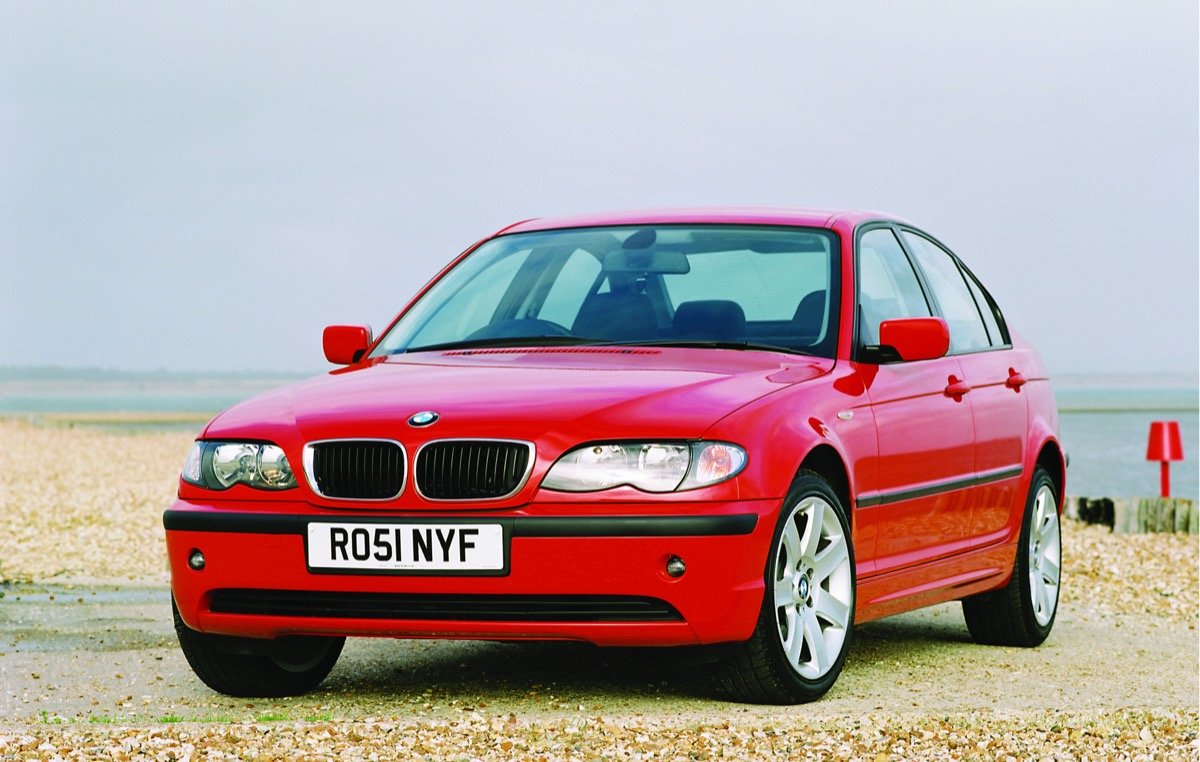
In many ways the BMW E46 3 Series is an extraordinarily good car – it’s a pleasure to drive, it looks great, the cabin is well built and attractively styled, and most of its petrol and diesel engines are smooth, powerful and reasonably economical given their age.
But the 3 Series E46 is plagued by a number of mechanical maladies that mean the wise buyer would be well advised to do a deep dive on the research front, once they’ve decided which model takes their fancy. The 320d, in particular, has engine issues so serious that if you buy a bad one then you’ll be taking the car to the scrapyard rather than having it repaired. That’s a shame, because otherwise the 320d would probably be the pick of the E46 crop.
There are lots of E46 3 Series out there though, so take your time and pick sensibly – a good one is very much worth it.
What is the BMW 3 Series?
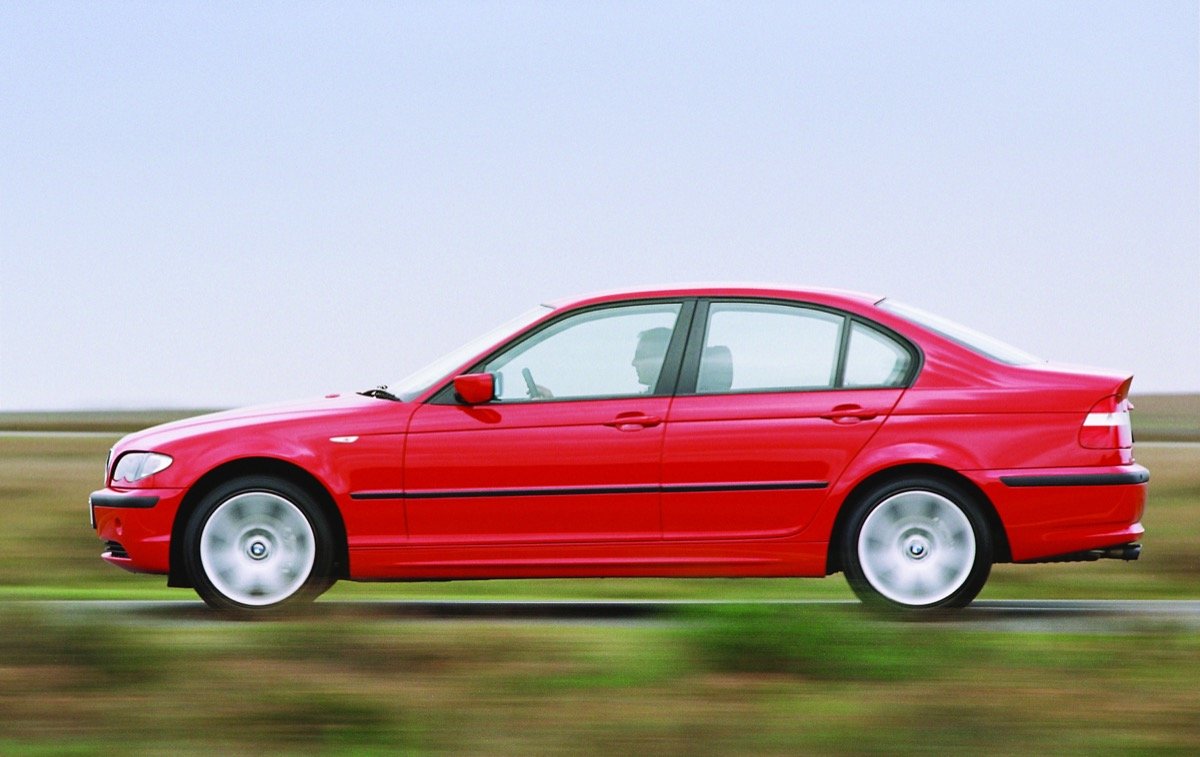
Back in 1975 when it introduced the first generation 3 Series, BMW popularised the concept of the compact executive car, and as an added bonus, it was fun to drive. Fast forward to 1997 and the basic ethos of the 3 Series had remained intact, the then-new E46 variant (the fourth generation of BMW’s baby) being a compelling combination of sharp looks, enjoyable driving dynamics, robust build quality and upmarket cabin architecture. Neither Mercedes-Benz with the C-Class, nor Audi with its A4, was able to field a rival as well-rounded in all areas as the E46 3 Series.
Hitting the British market in March 1998, the rear-wheel-drive 3 Series was initially launched just in saloon form, but the E46 Coupe and Touring estate car arrived the year after, followed by the four-seat Convertible and broad-shouldered M3 sports coupe in 2001. Today, the 3 Series still offers serious quality for bargain bin prices – but that won’t last forever, as interest in more desirable versions like the coupe, cabriolet, and potent 330i is starting to pick up.
How practical is it?
One of the E46 3 Series’s great assets was its space, which had the edge over rivals like the Audi A4 and Mercedes-Benz C-Class. There was plenty of room for both front and rear seat occupants, and a usefully deep, tall and wide 435-litre boot.
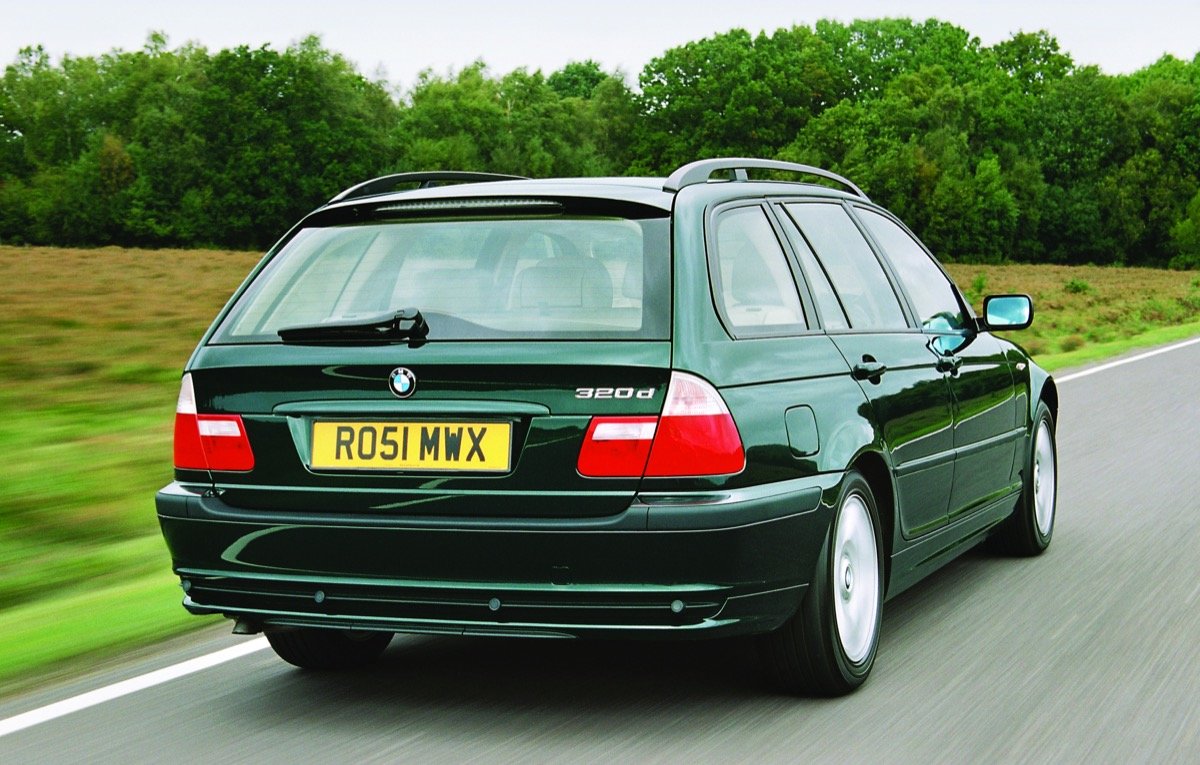
Those in need of more versatile room could go for the estate, or Touring, version; this wasn’t quite as roomy as some of its rivals, such as the Volkswagen Passat, but it did give you enough room to fit in the whole family’s luggage for a week away.
Although the 3 Series Coupe is a two-door with a boot, according to several of its owners it’s surprisingly practical, at least in terms of luggage space. In part that’s because BMW decided to make a 60/40 split-folding rear seat standard on all coupe models, and that allows the transportation of big bits of flat-pack furniture and even bicycles minus their front wheels. The two-door’s boot is also comparatively large in its own right.

What’s it like to drive?
Amongst the 3 Series’s broad range of four- and inline six-cylinder petrol and turbodiesel engines, the 150bhp 2.0-litre diesel in the 320d, 204bhp 3.0-litre straight-six in the 330d and the 330i’s 228bhp 3.0-litre straight-six are standouts in terms of performance and refinement.
0-62mph times range from around 12 seconds in the rather sedate 316i, whose 1.9-litre four-cylinder can feel wheezy, to around 6.5 seconds in the gutsy 330i. The fastest E46 of all, though, is the M3, which we’ve reviewed elsewhere – this gets to 62mph in just five seconds.
In terms of handling the 3 Series is a delight for enthusiast owners. Steering is crisp with beautifully judged weighting and speed, there’s plenty of feedback, body lean is well controlled and there’s plenty of grip. And when you do push the 3 Series harder, you uncover beautiful, progressive and easily controlled rear-biased balance under power.
Despite its handling chops, the 3 Series isn’t tough over bumps. Sport models with big wheels do have a slightly firmer ride, but for the most part, the 3 Series is remarkably supple, finessing away the smaller bumps and cushioning the larger ones beautifully.
Technology, equipment & infotainment
The E46 3 Series hails from an era when BMW was particularly mean with its standard equipment, so have a good check of what the car you’re looking at has. Then again, it sold in large numbers and most original owners would have plucked desirable goodies from the options list, so put aside the time to find the spec that suits your needs best.
The entry-level 3 Series didn’t carry any additional badging – it was simply sold as the 316i, 320d, 325Ci, and so on. However, if you wanted more equipment, you could upgrade to the SE, which gave you electric rear windows and air conditioning as standard. Sport models then took things one stage further, adding sportier styling, stiffer suspension, and larger wheels.
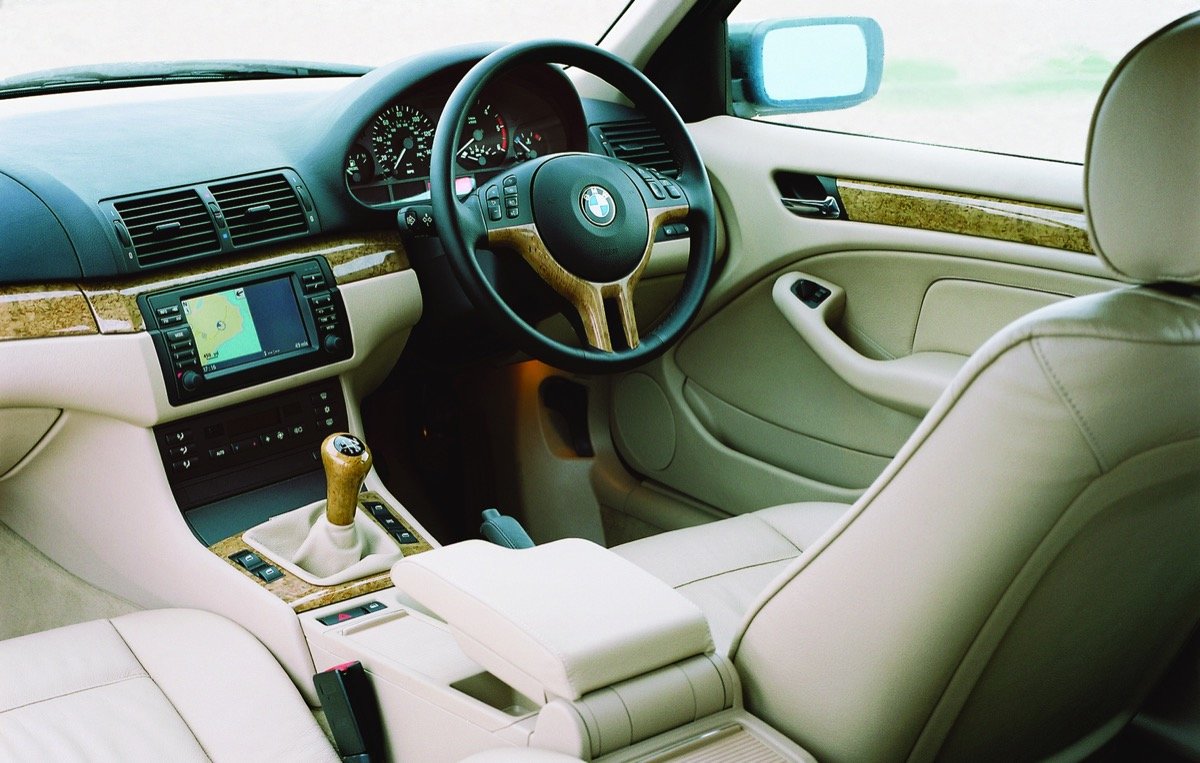
Options include leather seats, dual-zone climate control and – on the saloon models – folding rear seats. Some high-spec cars even come with built-in satnav as an option.
Whichever version you choose, you’ll get a pretty intuitive interior layout. If you have a high-spec stereo and the climate control option, the centre console can get a bit over-laden with buttons, but lower specification versions are pretty simple to find your way around. Meanwhile, the big, clunky indicator stalks and rotary controller for the headlights are simplicity itself, while the dials are clear and easy to read.
BMW 3 Series running costs
The diesel versions of the 3 Series provide the best fuel economy. The 318d is good for up to 50mpg and the 320d only one mpg behind. Given its gutsy performance, the 330d’s 42mpg is commendable, too. The petrol engines aren’t as frugal, but later versions of the 318i can manage up to 38mpg. Most of the other engines, petrol and diesel, hover around the 30mpg mark. The exception to that is the BMW E46 M3 – at best you’ll get 23mpg out of it, and considerably less if you are tempted to deploy all its performance.
While the 3 Series is of an age where you’re likely to hunt down an independent BMW specialist come service time, also check out BMW’s dealer network – the Value Service package for BMWs more than four years old allows for as much as a 40% discount on parts for cars the age of the E46. Shop around for tyres, the prices of which will vary greatly depending on what size you’re after, but whichever 3 Series E46 you have, chances are you’ll be spending at least £100 to £150 per corner.
Insurance groups for the 3 Series E46 start from group 23 for the 316i, rising to group 35 for the 330i, with most bunched between 27 and 33. Once more the M3 is out on its own – its insurance grouping is between 42 and 44 and its road tax is as high as £580 annually. As for the other models, the 320d attracts the cheapest road tax from £165, with most of the rest sitting in the £270 to £330 bracket.

BMW 3 Series reliability
The 3 Series E46 suffers the normal problems of a comparatively old car with high mileage, but it also has some serious underlying issues affecting certain models.
From new, BMW advised that the automatic gearbox was ‘sealed for life’ but many transmission failures later it appears that for longevity they need their lubricant changed every 60-80,000 miles. Ask if that has been done on the car you’re looking at.
Great care is required when picking a post-facelift 320d with the 150bhp M47 engine. Because of extended service intervals and sticky Exhaust Gas Recirculation valves, they are prone to turbo failures through lubrication deprivation. Additionally this engine’s inlet manifold housing can split, causing large chunks of the swirl flaps to be ingested by the engine with terminal results. As a replacement engine could set you back £10,000, it’s worth checking the service history and previous bills with a very keen eye. Pre-August 2004 M3s sometimes suffered from big end shell bearing failure, but BMW GB replaced the engines under warranty.
There’s a long list of other things to look out for, including broken rear suspension springs, worn out front suspension ball-joints and wishbone bushes and failed fuel tank sender pumps, as well as knackered tail-light assemblies, heater fan electronic glitches that drain the battery and radiator fan faults. Oh, and camshaft sensor and crankshaft sensor issues that stop the 2.0-litre petrol engine dead, oil leaks from various engine gaskets and brake pipe corrosion.
Need more? Look out for problematic fuel injectors, water ingress through the tail-lights of the Convertible and busted cam chain tensioners, as well as the electronic module that controls the central locking going haywire, rattly electric window regulators, broken rear suspension subframes where they meet the bodywork. And much, much more. This is a used buy that really requires some homework to avoid being stung.
There have also been several official recalls, most related to Takata airbag issues. By now the recall rectifications should have been done, but just be sure to ask.
Keen owners report that most of the problems with the 3 Series E46 are comparatively easy and cheap to fix, provided you identify them early enough and ask for advice from independent BMW specialists as well as the many dedicated E46 online forums. But the one issue that scares even the most passionate owner is rust, principally eating through the front wings: fixing that can be an expense too far.
- During the time that it was new, the 3 Series performed well not just in magazine road tests, but also in ownership surveys. In 2001 it was deemed Britain’s fifth most reliable car in a Fleet News magazine survey, and it placed consistently high in contemporary What Car?/JD Power annual customer satisfaction surveys. Ironically, given what you will read in the Reliability section below, the E46 3 Series also didn’t much trouble the breakdown services when it was new and the average cost of its breakdown repairs was commendably low.
- If you’re considering an E46 BMW then it’s best to choose one from post-September 2001 when a modest cosmetic facelift was complemented by a raft of mechanical upgrades. These included improved petrol and diesel engines compared with pre-facelift models, as well as sharper steering and better suspension for the Coupe. Equipment lists also got a marked upgrade. Engine enhancements continued throughout the 3 Series’s lifespan, so try to buy as late an example as you can afford.
- Even the youngest 3 Series E46 is now getting on in years and most will have three-figure mileages on the clock. Low-mileage examples are extremely rare, so in addition to some of the major problems highlighted in the Reliability section, many parts are likely to be old and worn out. Luckily there’s an extensive network of independent BMW specialists in the UK who have seen it all on a daily basis and should be able to advise you on the best, most cost-effective fixes and may be able to help with pre-purchase inspections. Check them out. And don't forget to check for a full service history.
- If you want the best blend of performance and economy: The 330d’s silky straight-six 3.0-litre turbodiesel engine produces 201bhp and a whopping 302lb ft of torque at 1,500rpm, so it’s effortlessly swift in all circumstances. Yet on a run it will easily give more than 40mpg according to some owners. Buying one in SE trim rather than Sport will give you a better ride quality.
- If you like to enjoy the sunshine: Because it was designed from the outset to have a fabric roof, the E46 3 Series Convertible has a very stiff body shell and a well engineered hood mechanism. Even so, there’s no need to rush around in it, so you could easily get by with the 143bhp petrol engine of the 318i – it’s smooth, gives reasonable performance and returns fuel consumption in the mid-30s. The SE trim package will give you more than enough goodies.
- If you want the fastest E46 3 Series: The regular BMW M3 coupe is quick enough for most of us, but in August 2003 BMW introduced the limited-edition M3 CSL. Stripped of its entertainment system and aircon it weighs 110kg less than the standard car and has an extra 17bhp, taking the total to 360bhp. With its speed limiting device reprogrammed it’s capable of a top speed of 175mph. It’s very costly to buy, and extremely expensive to run.
- If you’re on a budget: The 318d SE offers most of what’s so admirable about the E46 3 Series – great handling, solid build quality and decent refinement – yet returns between 41 and 50mpg. Its performance won’t blow you away, but if you want to get into 3 Series ownership cheaply, it’s a good place to start.


