Audi Q7 Mk1 Review (2005-2014)
Audi Q7 cars for sale
3.0
Expert review
Pros
Practical cabin with space for seven
Drives well on Tarmac
Wide range of engines to choose between
Cons
Thirsty compared with more recent SUVs
Expensive bills if you buy a tired example in need of work
Almost too big, especially for narrow urban streets
The CarGurus verdict
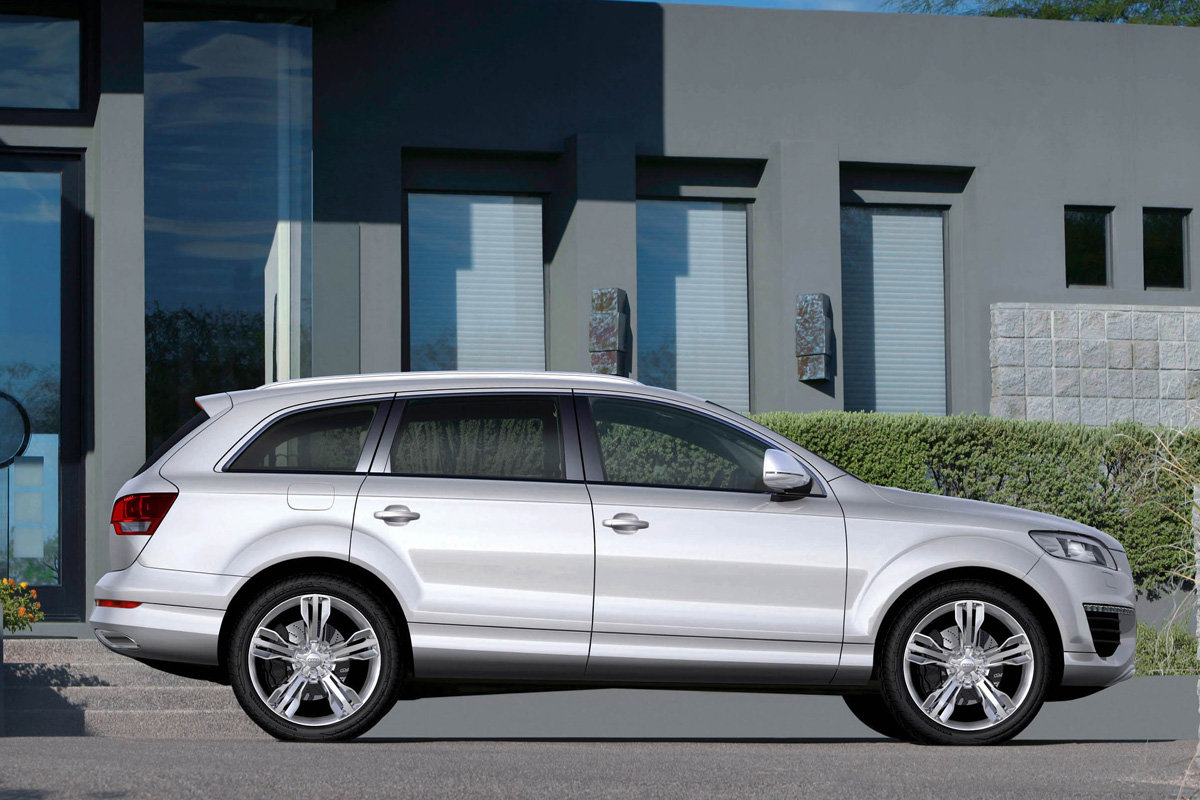
If you need a large SUV that carries some prestige, a used first-generation Audi Q7 has its merits. A good example should drive well, have a modicum of off-road capability, be able to tow well and offer plenty of room inside – allowing it to tackle a range of conditions and uses with ease.
The extensive array of options and seven-seater configuration lend the Q7 further appeal but, as is typically the case with large luxury SUVs, it’s not for everyone; if you routinely drive on narrow country lanes, or through winding villages, its width and length could quickly become a source of frustration.
This, coupled with its weight, running costs and the potential reliability issues with older examples, could quell your enthusiasm for a used Q7 mk1.

What is the Audi Q7?
The luxury SUV market was booming in the early 2000, with offerings such as the BMW X5 and Mercedes-Benz M-Class vacuuming up customers left and right.
Audi, however, had no large, practical and luxurious SUV in its line-up. It also meant the brand was missing out on a big sales opportunity in the vital US market, where Lexus was making notable inroads with its upmarket RX. Even the Land Rover Discovery had been introduced into America in 1994, leaving Audi trailing the pack.
Finally, in 2005, Audi unveiled its first large luxury SUV – the Audi Q7. In a similar vein to the BMW X5, the new Q7 aimed to blend luxury saloon comfort and dynamics with off-road capability and improved practicality. It was equipped with quattro all-wheel drive as standard, offered seating for seven, had a vast load capacity and available with an array of engines and advanced technologies.
How practical is it?
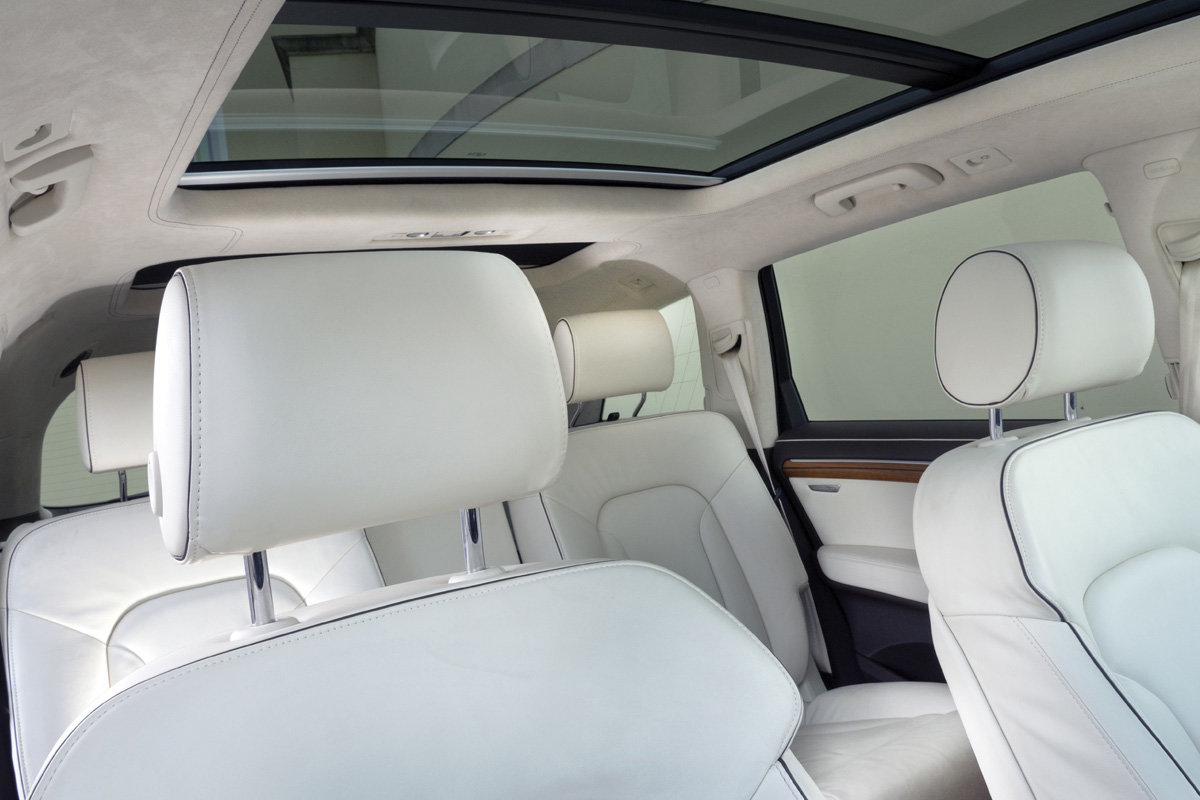
While it isn’t as sharply styled as a Land Rover Discovery 3, or as good to drive as a BMW X5 of the same era, the high-quality Audi does offer luxury and comfort in a very spacious package – and a good used Q7 can deliver a very pleasant ownership experience. You get seven seats, and all of them are of a decent size, so even the rearmost row is usable, and there are lots of cubbies in the cockpit which allow you to store odds and ends with ease.
With all the seats up, the Audi offers 330 litres of boot space. With the rearmost row down, that figure rises to a spacious 775 litres. Drop both rear seat rows, however, and you’ll have access to a whopping 2,035 litres of storage space. The Q7 is also good at towing, bolstering its practicality further.

What's it like to drive?
Initially, when the Q7 went on sale in the UK in 2006, two engines were offered. Customers could pick from a petrol 4.2-litre FSI V8 or a more economical 3.0-litre V6 TDI, both of which were coupled to a six-speed automatic transmission.
The Audi Q7 range would quickly expand to include other V6 and V8 engines and, in 2008, a flagship V12 diesel model. A major update, which introduced new bodywork and technology, followed in 2009. Supercharged V6 TFSI petrol engines and a new eight-speed automatic transmission also arrived in 2010, ahead of another major facelift in late 2011.
It isn’t as agile or as much fun as a BMW X5, but regardless of which version you go for, its straight-line performance shouldn’t prove disappointing. Even the early 3.6-litre petrol V6, which weighed in at a light-for-the-Q7 2,310kg, can accelerate from 0-62mph in 8.5 seconds.
It’s the diesels that make the most sense, though, with their stout mid-range pull suiting the heavy Q7’s relaxed cruising nature; their reduced fuel consumption also helps soften the blow of running the big Audi.
Whatever model you choose, the Q7 is an extremely comfortable long distance cruiser that does a good job of shutting out wind and road noise.
Technology, equipment & infotainment
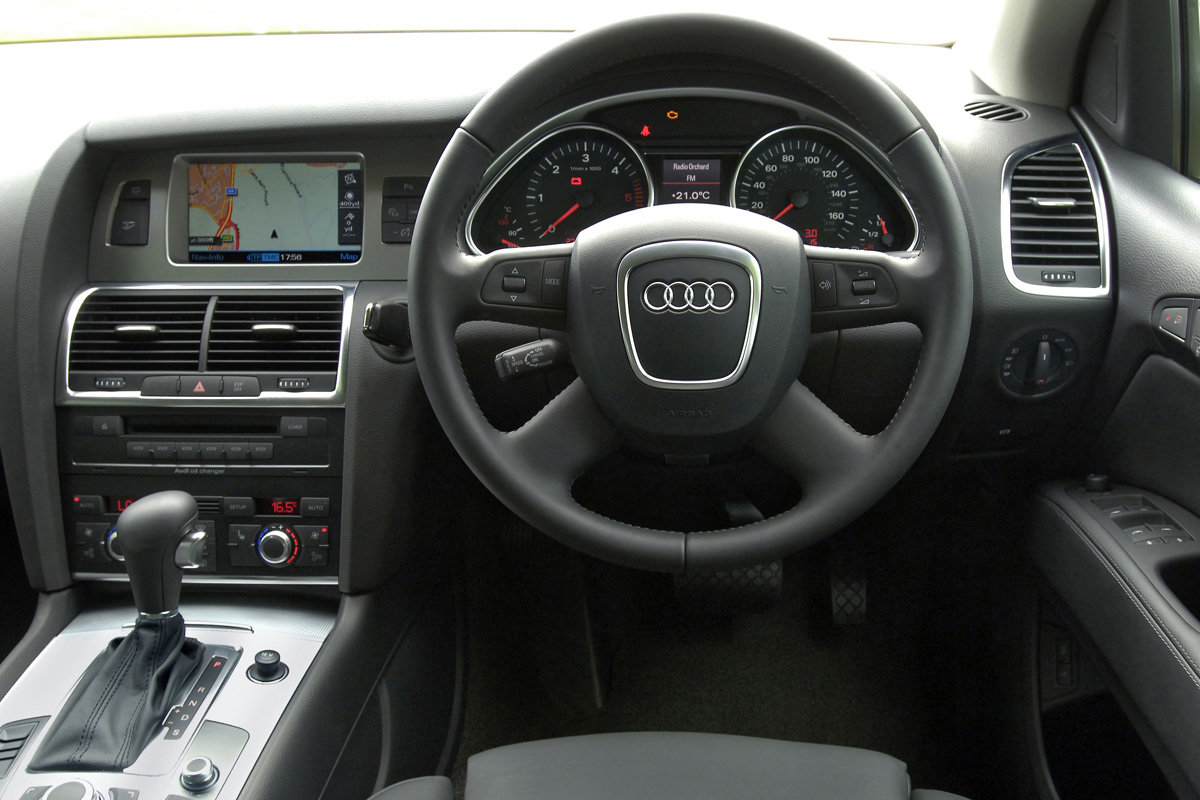
Standard equipment was comprehensive, with even the entry-level model including a vast array of kit; features included parking sensors, adaptive air suspension, Audi’s Multi Media Interface – MMI – system, climate control and cruise control.
By the 2011 facelift trim levels consisted of Standard, SE, S line and the range-toppping S line Plus – which included eye-catching features such as 21-inch wheels and Google Earth-powered navigation mapping.

The Audi Q7 was a thirsty SUV; regardless of which engine you go for don't expect great mpg. That, coupled with its high emissions and high Vehicle Excise Duty (VED) costs, meant any owner would immediately be facing substantial bills – especially those covering higher annual mileages.
Even later versions of the popular 3.0-litre diesel, which was claimed to average 39.2mpg, would struggle to better 30mpg in the real world. A CO2 output of 189g/km also meant it would cost over £300 a year to tax on the old Vehicle Excise Duty (VED) scheme.
Audi Q7 running costs
Petrol versions were predictably far worse, with models such as the 4.2-litre FSI V8 claimed to average just 22.2mpg – which you’d do well to average in the real world. The higher emissions of the petrol models also entailed higher VED costs, with a 2007 example of the 4.2-litre FSI V8-powered Q7 costing almost £600 to tax.
Going for one of the later diesels will definitely help reduce fuel and tax costs, but that must be balanced with the realities of running a used diesel. One major failure, such as a broken injector or two, could immediately obliterate any fuel-related savings you might have made compared to a petrol model. Audi Q7s are generally reliable cars, however, but there’s no guarantee when you’re looking at a used example.
Long-life servicing meant that a Q7 that didn’t have to work particularly hard could scrape by with a dealer visit every 19,000 miles or two years, which would help control costs for Q7 owners. On the fixed-inspection service schedule, an oil change would be required every 9,000 miles and one year, with an inspection every 19,000 miles and two years. For older cars, it’s probably best to stick to the shorter interval to help prevent excess wear and to help uncover issues early before they develop into major problems.

Audi Q7 reliability
The Q7 is a large premium all-wheel-drive SUV and, from its introduction, it came with advanced features such as electronically controlled air suspension with ride height control. Audi was also generally accepted as offering reliable and high-quality cars at the time, however, so there were few concerns about reliability at the time.
However, if you’re in the market today, many used Audi Q7s in the classifieds will be getting on a bit and could be prone to more significant, costly and hard-to-diagnose issues. Diesel variants, in particular, could easily throw up expensive bills for injector replacements, emissions control system faults, and turbocharger failures.
That doesn’t mean they should necessarily be steered clear of, that said. As is the case with all used cars, it’s important to buy on condition rather than purely age and mileage. Settle on an engine and specification that is most appropriate for your use, then set about finding the best possible example within your budget; at the very least, make sure the engine runs well, that there are no warning lights, that the gearbox works properly and that there are no fluid leaks. Check all of the electrical systems, too, such as the remote central locking and electric windows.
Bear in mind that buying a used example needing a little work could result in significant costs, to the point that simply buying a better used Q7 would have panned out cheaper. A set of new tyres, a balancing and tracking session and some wheel refurbishment could easily land you with a four-figure bill. Add to that some servicing, and a few minor repairs, and you could quickly sink some serious money into recommissioning a tired Audi Q7.
- A wide range of engines were offered throughout the life of the Q7 but even the base engines often served up decent performance; the 3.6-litre TSI petrol V6, introduced in 2006, granted a 0-62mph time of 8.5 seconds and a top speed of 142mph. Its average fuel consumption was a grimace-inducing 22.2mpg, however, and its CO2 emissions a heady 304g/km of CO2.
- In 2008, Audi introduced the flagship Q7 V12 TDI quattro. It featured a 6.0-litre twin-turbocharged diesel engine that produced a still-impressive 493bhp and 735lb ft, which could propel it from 0-62mph in just 5.5 seconds – and, driven sensibly, it was reputed to average 23.7mpg. This range-topping model also came with upgrades including 20-inch wheels, a unique chrome grille and seven leather-trimmed sports seats. Only a handful were sold in the UK; if you want one today, be prepared for comically expensive running costs.
- The Q7 was also a very safe option. It earned the full five-star rating in Euro NCAP crash testing in 2015, in part thanks to an impressive 94 per cent rating for adult occupant protection and 88 per cent for child occupant protection.
- The best all-rounder: The Q7 has been around for a long time, so there is plenty of choice – but the best balance of performance and efficiency is offered by the V6 diesel variants. Even the earliest example granted decent performance and a combined claimed fuel economy of 31mpg, which wasn’t bad considering the size and weight of the Audi. The V6 diesel versions were regularly updated, too; for example, the version introduced in December 2011 was claimed to be capable of averaging 39.2mpg. Buy on condition and history rather than specification, as even base Q7s were well equipped.
- For the eco-minded: The Audi was later offered with a “clean diesel” version of the V6 engine that was fractionally more efficient than the normal diesel option. Those who want a cleaner and more economical option will have to opt for a later Q7, such as the revised V6 diesel model that arrived in December 2011. Its diesel was claimed to average up to 39.2mpg, while its emissions were a sensible – for its time – 189g/km of CO2.
- The least problematic used buy: The Q7 is a complicated car but some versions are bound to be far less reliable and far more expensive to run than some. If simplicity and minimising risk is essential, you’ll want to opt for one of the petrol versions. An early 3.6-litre V6 model, as a case in point, has no turbochargers, no complex emissions controls and sensibly priced injectors.

