Volkswagen Passat B6 Review (2005-2009)
Volkswagen Passat cars for sale
3.0
Expert review
Pros
Impressively spacious
Good long-distance comfort
Nicely designed interior
Cons
Dull to drive
Reliability issues
A Mondeo is equally comfortable, but more reliable and enjoyable
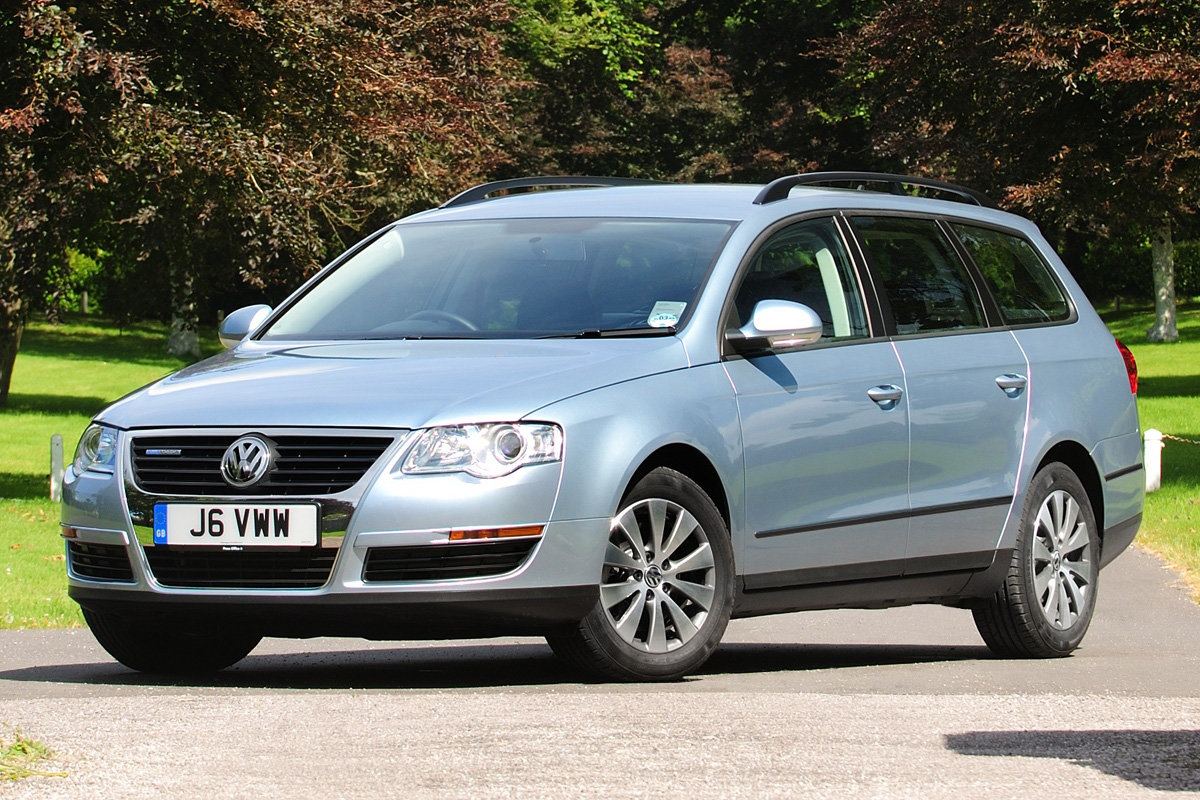
The CarGurus verdict
Standard versions of the Volkswagen Passat are practical, refined and comfortable cars that, in the right specification and condition, are very pleasant cars to live with.
However, the variable reliability encountered by the various versions makes recommending a sixth-generation Passat difficult. Alternatives such as the Honda Accord are far more reliable, which is likely to be a very important factor.
The Passat is not all that interesting to drive, either, so if you want something more engrossing, you should go for a Ford Mondeo. A good example of one of those should prove reliable and similarly comfortable.
Buyers seeking a more distinctive car should investigate the CC, however, as its sleek looks and upmarket feel make it a more compelling option. Steer clear of the complex automatic 3.6-litre V6 all-wheel drive models, though, including the R36, as those are prone to major and costly issues.
What is the Volkswagen Passat?
The sixth-generation Volkswagen Passat is a large, practical and comfortable car that competes with alternatives such as the Ford Mondeo, Audi A4, Skoda Superb and Honda Accord.
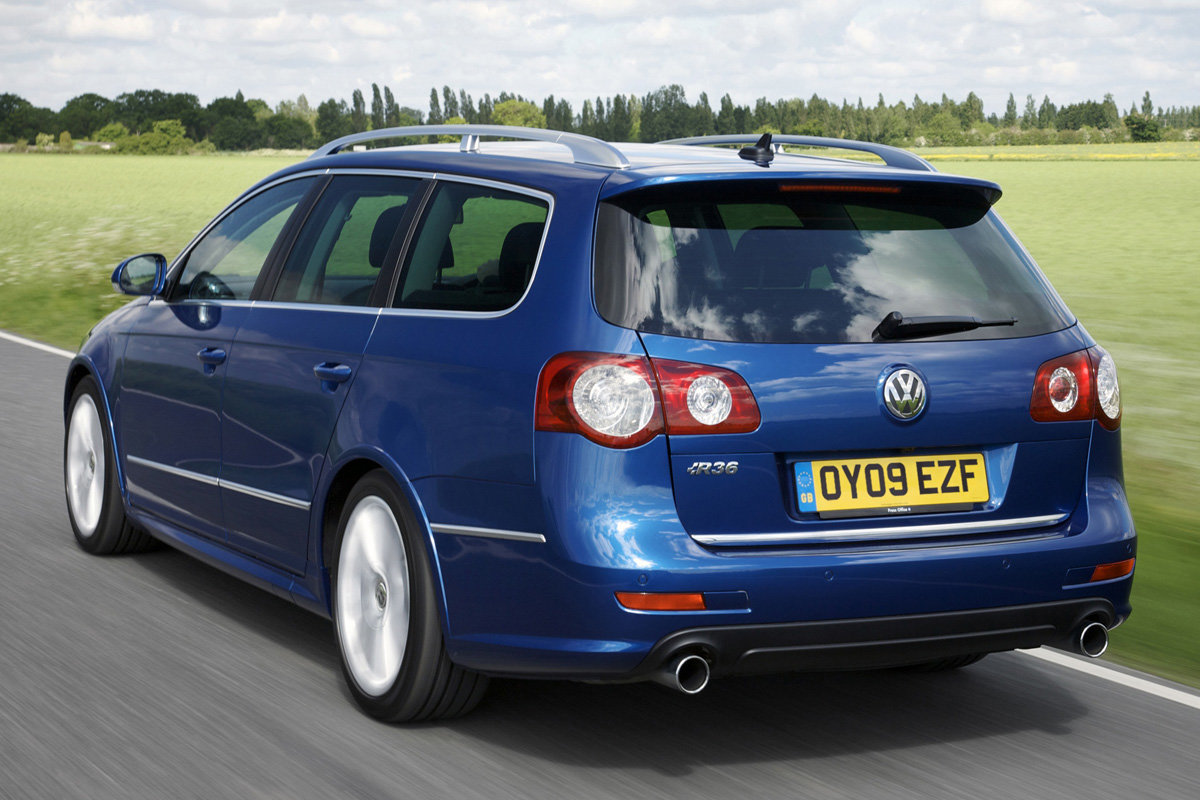
Bolstering its appeal is the fact that it’s offered in saloon, estate and coupe-like body styles, and an extensive selection of engines and equipment are available. There’s even a high-performance derivative, called the Passat R36, which could be specified with either a saloon or estate body.
Volkswagen began selling its sixth-generation Passat, which was internally named the B6, in 2005. Originally launched with a wide range of petrol and diesel engines, the Passat received subtle updates to its specification and engine line-up over the years, but no major changes. However, when the car was refreshed in 2009, VW considered the facelift big enough to class the new version as the B7 – although under the skin it was largely the same machine.
Buying a used VW Passat can be a bit of a minefield, due to myriad issues that are only exacerbated by age and mileage. If you can find an example in excellent condition and that’s been properly looked after, it can make for a sensible buy. If you’re concerned about keeping costs down and breakdowns to a minimum, we’d instead recommend looking at the Toyota, Honda or Ford alternatives.
How practical is it?
Unlike many of its contemporary rivals, the Passat wasn’t available with a versatile hatchback body style (in fact, only the first two generations were available with this layout), but with saloon and estate variants there should be something that fits the bill.
Regardless of the model, the Passat is a roomy family car, with those sitting in the front enjoying plenty of space. There’s also lots of seat and wheel adjustment so finding a comfortable driving position will be straightforward. You’ll not be short of storage either, with deep door bins that will accommodate a large drinks bottle, an air-conditioned glovebox and a lidded cubby between the front seats that doubles as an armrest. This generation Passat was also the first to use an electronic handbrake, freeing up space in the centre console for cupholders.
Occupants sitting the back are just as well catered for, with good head and legroom, while features such as the separate air vents and fold down centre armrest add a touch of luxury. There’s even space for three adults, although the middle seat is set high and the transmission tunnel eats into the space for feet.
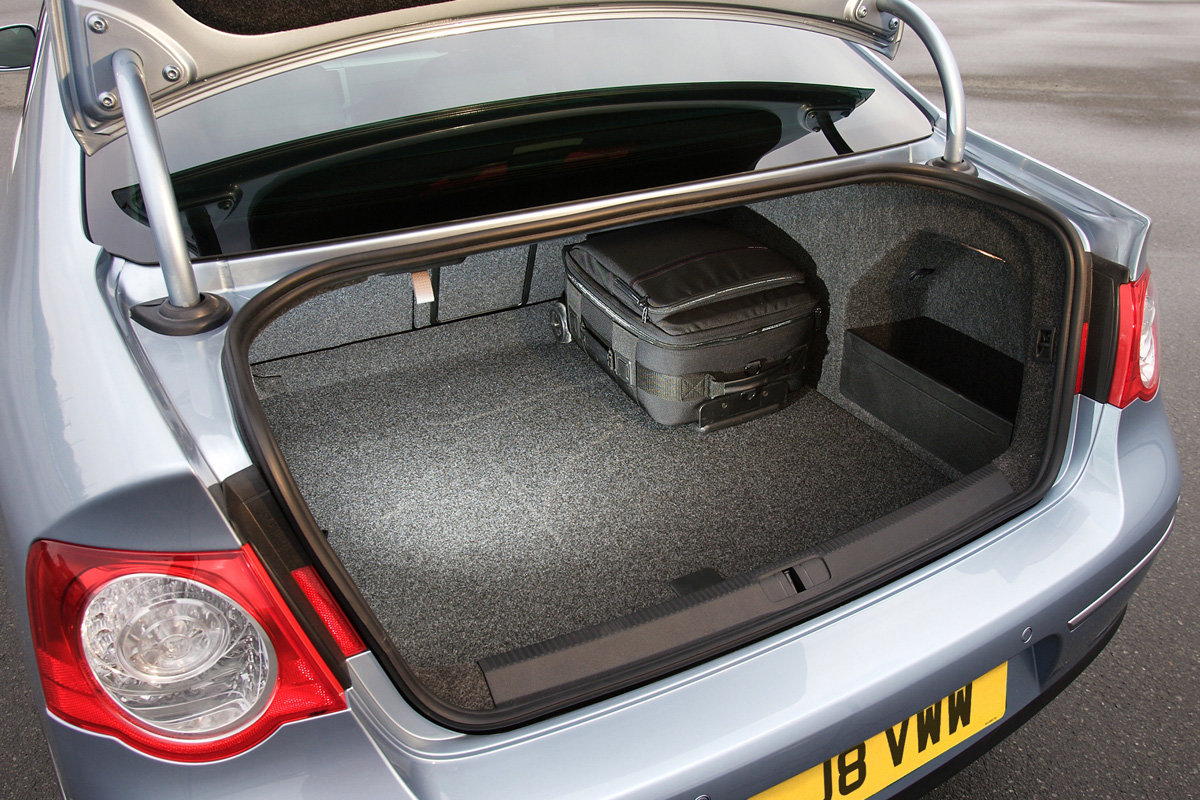
Lift the saloon’s tailgate and you’ll find a usefully large opening and well-shaped load area with a useful 485-litre capacity, which should be enough for even the biggest weekly shop or all the luggage for a family holiday. However, the estate still remains the top choice for those that need to lug even greater loads, with 513 litres of space below its retractable load cover. Drop the rear seats and fill it to the ceiling and you’ll be able to make use of the impressive maximum capacity of 1,641 litres.

What's it like to drive?
No conventional Passat is all that much fun to drive, but they are relaxing and safe cars that feel well built and offer a fuss-free experience. It’s at its best when cruising on the motorway, when its excellent comfort and strong refinement help take the sting out of even the longest journeys. If you want something better to drive, you could opt for the Ford Mondeo or Mazda 6 from the same era.
That said, the VW isn't totally dull from behind the wheel, with accurate steering, strong grip and good body control allowing you to attack corners with confidence. And while the low speed ride is a little firm, it smoothes out the faster you go, soaking up bumps with aplomb. It’s quiet too, with low levels of wind and road noise.
There’s a broad range of engines to choose from, but the entry level 1.6-litre FSI should be ruled out if you do lots of miles as it’s barely able to cope with the Passat’s bulk. The naturally aspirated 148bhp 2.0-litre FSI feels far more responsive, while the rare 197bhp turbocharged 2.0-litre TSI (essentially the same engine as the mk5 Golf GTI's) is a smooth and very gutsy performer.
Rarer still are the V6 (technically a narrow angle VR6, engineering fans) models, with both 3.2-litre and 3.6-litre versions available, both of which came as standard with four-wheel drive. The latter was fitted to the high performance R36 flagship that featured lowered and stiffened suspension, bigger brakes and wider, lower profile tyres. It’s a fast and discreet choice, but not as involving as models such as the BMW 335i.
Most Passats, however, are fitted with a diesel engine, which was still a hugely popular choice with private motorists and fleet buyers alike. The entry-level 104bhp 1.9-litre TDI is clattery at idle and gruff when worked hard, but don’t discount it because it delivers decent mid-range acceleration and is extremely tough. The more sophisticated and smoother 2.0-litre is still a better bet though, with the standard 138bhp version proving virtually as quick as the 168bhp unit in the real world.
Both manual and twin-clutch DSG automatic transmissions were also available, with the former delivering a precise action and better reliability. Look hard and you’ll also find all-wheel-drive 4Motion Passats, which offer enhanced all-weather grip.
Technology, equipment & infotainment
Equipment levels were decent for the time; the entry-level S model featured a CD player, electronic parking brake with auto-hold function, air-conditioning and remote central locking.
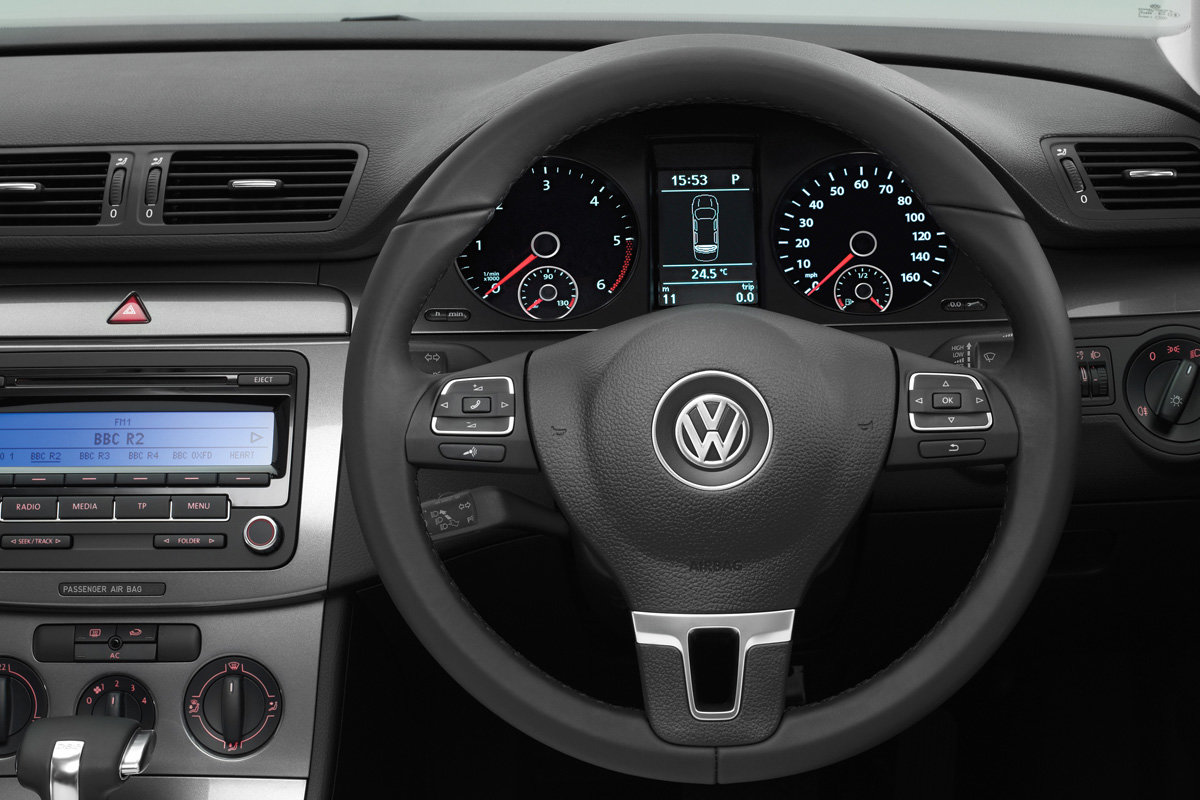
Stepping up to SE trim gained you an electrically adjustable driver’s seat and cruise control, along with an upgraded interior, so it was an option worth taking. Sport and SEL trims were also offered, which featured creature comforts such as a multi-function driver’s display, an auto-dimming rear-view mirror and climate control.
Volkswagen would continue to revise the Passat line-up throughout its life, adding new trims such as the R-Line in 2009. This came with equipment such as tyre pressure monitoring and a leather multi-function steering wheel, as well as an R styling kit and 17-inch wheels.
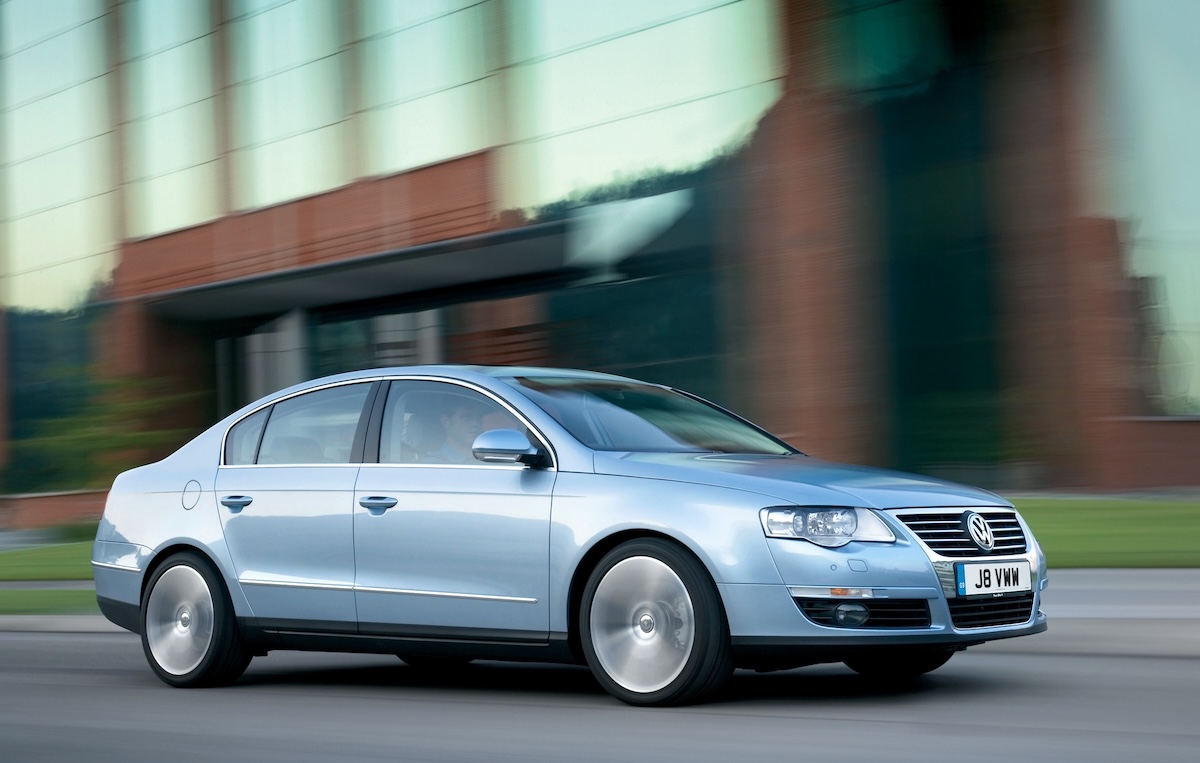
Volkswagen Passat running costs
Your mileage may vary things considerably when it comes to Volkswagen Passat running costs. In general, no standard petrol or diesel Passat variant should prove particularly expensive to run, but repair costs can result in increased expenditure.
If you’re covering lots of miles, it’s not a bad idea to opt for a diesel Passat. You need to be careful about which you buy, though, as early 2.0-litre diesels could be particularly problematic. The best bet is to go for one of the later common-rail engines that were introduced in 2008. In any case, you need to be mindful of the higher repair costs associated with diesels and the impact that can have on your budgeting; injectors, flywheels, turbochargers and particulate filters can require attention.
On the plus side, the 2.0-litre TDI CR in a Passat saloon, which has a bhp power figure of 138, is claimed to average around 50mpg and emit 146g/km of CO2 – meaning annual Vehicle Excise Duty (VED) of £165. It does vary depending on the precise year, engine specification and transmission, so it’s worth checking the exact quoted figures for the particular car you’re interested in.
Cleaner Bluemotion versions of the Passat were also offered, which are worth keeping an eye out for if low emissions are crucial. The 1.6-litre Bluemotion TDI CR, introduced in late 2009, had a claimed average fuel consumption of 64mpg and emitted 114g/km, meaning annual VED of just £30. It’s not uncommon for these to return around just over 50mpg in the real world, while the bigger diesels will often average in the 40mpg range.
The conventional petrol models of the Passat are a better bet if your mileage is lower, or if you’re concerned about ongoing reliability. In any case, servicing costs at a good independent garage shouldn’t prove costly, but bear in mind that many engines in the Passat range have a timing belt, which will often need changing in conjunction with the water pump. Tyre costs shouldn't prove extortionate, though; a 215/55 R16 tyre, found on the early 2008 SEL version of the Passat, will cost around £100.
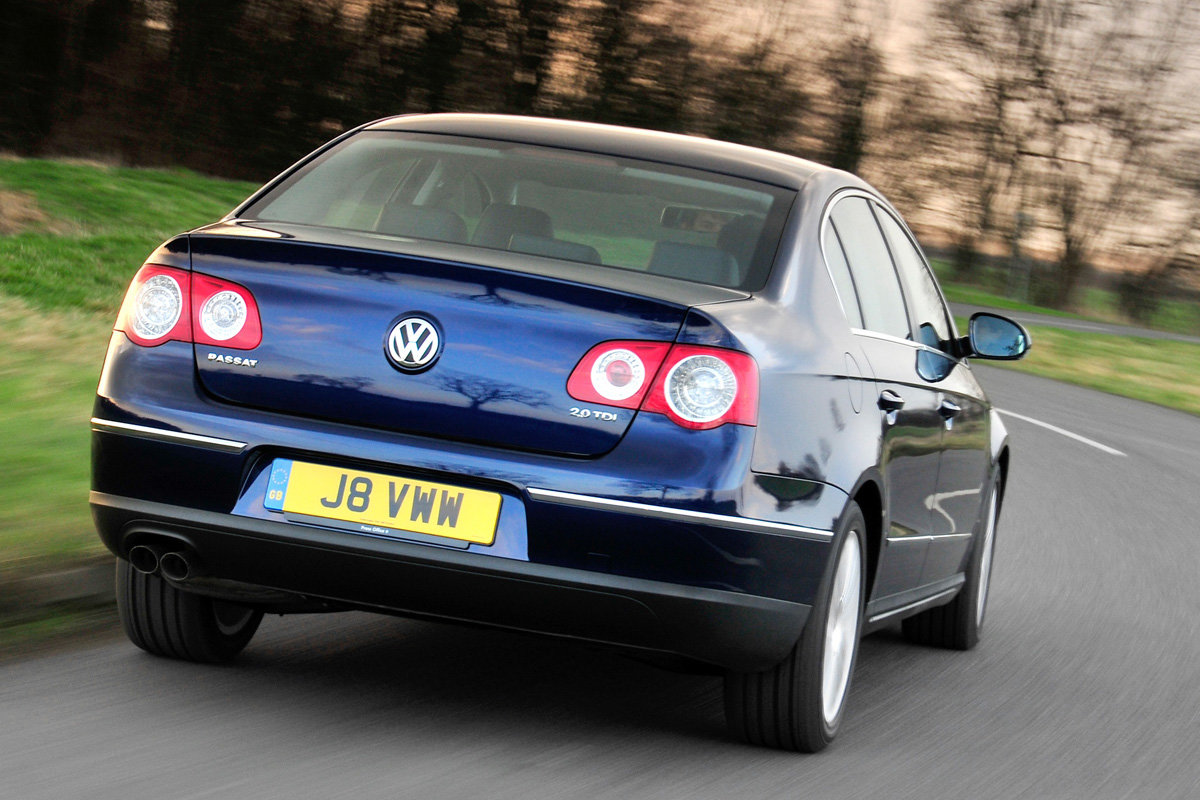
Volkswagen Passat reliability
When it was new, the Passat did benefit from better resale values than some of its less desirable rivals, such as the Vauxhall Insignia. Depreciation has taken its toll by now, though, so resale values are effectively a moot point.
You might expect a VW of this era to be an entirely dependable and reliable car but, unfortunately, this era of Passat has its fair share of issues. While aspects such as the build quality are good, there are often all manner of engine, steering, transmission and electrical problems.
In particular, you need to look out for any issues with the power steering system, dual-clutch automatic gearbox (DSG) issues, electronic parking brake faults, central locking-related issues and erratic front window operation; water ingress and worn wires can cause intermittent and uncommanded operation of the front windows, which can pose obvious problems.
Many used examples may have already been repaired or received suitable fixes, so if you want a second-hand VW Passat B6, it’s best to try and buy one that’s been well looked after. Similarly, it’s worth finding a local specialist familiar with the cars. They should know the cause of many issues, allowing for quick diagnosis and repair of faults without huge costs.
To help identify cars that have been well maintained, look out for invoices detailing work such as transmission fluid changes – particularly in the case of DSG versions – and regular coolant, brake fluid and oil changes. All-wheel drive versions should receive intermittent Haldex fluid changes, and receipts for this indicate a car that’s properly been maintained. In manual versions, particularly diesels, listen out for rattling or banging noises that could indicate a failing dual-mass flywheel.
It’s worth avoiding the 3.6-litre Passat CC and Passat R36, unless you're a dedicated enthusiast. These cars are complex and prone to both engine and transmission-related issues that are extremely expensive to rectify. One major failure can easily write the car off.
When new, the Passat came with a three-year, 60,000-mile warranty. Its paintwork was also covered for three years and a 12-year body protection warranty was also standard.
- If you’re considering a Passats equipped with the 4Motion all-wheel drive system, then its worth bearing in mind that extra driveline components reduce the boot capacity by 15-24 litres compared to front-wheel-drive models. Also, unlike its predecessor that used the robust, permanently engaged Audi-designed Torsen all-wheel drive transmission, this sixth generation used the Haldex set-up. This means it effectively runs in two-wheel drive until it senses wheelspin, at which point it sends drive to the rear axle.
- Volkswagen introduced a sleeker version of the Passat, called the Passat CC, in 2008. While still technically a saloon, it had a much sleeker coupe-like look and also benefitted from an extended line-up of engines; buyers could pick from turbocharged 1.8 and 2.0-litre petrol engines, two diesels and a range-topping 3.6-litre V6. It was also well equipped, spacious and better to drive than the standard Passat. When new, it was a costly option, but a used example can make for a sensibly priced stylish alternative to more conventional cars. Running costs for the V6 will be high, however.
- A flagship performance version of the Passat, called the R36, was also offered. It was the second Volkswagen to carry the R badge and packed a 3.6-litre V6 as well as all-wheel drive, a dual-clutch transmission, sports suspension, upgraded brakes, more kit and bespoke styling. The R36 was claimed to accelerate from 0-62mph in 5.6 seconds in saloon form, while the estate version clocked in at 5.8 seconds. Flat out, both could do 155mph. Unfortunately, they are expensive to run and prone to expensive problems. Many examples for sale today are recent Japanese imports, where the car proved more popular.
- If you want the best all-rounder: If you’re going to buy a Volkswagen Passat B6, you might as well go for an estate version as its additional practicality will come in handy at some point. From the outset, the estate was also well equipped; we’d try to find an SE or above, though, as these come with air-conditioning and a better interior. Otherwise, just pick an engine you’re comfortable with and one that suits your mileage and intended use.
- If efficiency is key: Go for a Bluemotion version of the VW Passat, preferably a later Bluemotion 2 model or 1.6-litre Bluemotion TDI CR version, which was launched in late 2009. The latter emits 114g/km of CO2 and is claimed to average 64mpg. Its excellent fuel consumption also means that it could potentially travel almost 1,000 miles on a single tank of fuel, making it ideal for those regularly driving long distances. The only downside is that it’s not very powerful, but it can accelerate the saloon from 0-60mph in around 12 seconds.
- If you want to keep running costs low: For a cheap car with the cheapest possible running costs, and if you don’t intend to cover many miles, go for one of the basic 1.6-litre or 2.0-litre FSI petrol versions of the Passat. These earlier cars aren’t particularly quick or frugal but the engines are uncomplicated, so issues should be rare.
- If you’re a dedicated performance VW fan: For maximum punch from an unassuming car, have a look at the R36. It’s quick, subtle and refined, but although it packs a 3.6-litre engine, don’t expect it to be terrifically exciting. You’ll also have to be prepared to stomach some big repair bills, so tread carefully.

