Audi A7 Review (2010-2017)
Audi A7 cars for sale
3.0
Expert review
Pros
Handsome, but without attracting too much attention
Choice of powerful petrol and diesel engines
Comfortable and quick long-distance machine
Cons
Gearbox and engine reliability issues
Rapid S7 and RS7 get through a lot of petrol
Harsh ride on sports suspension
The CarGurus verdict
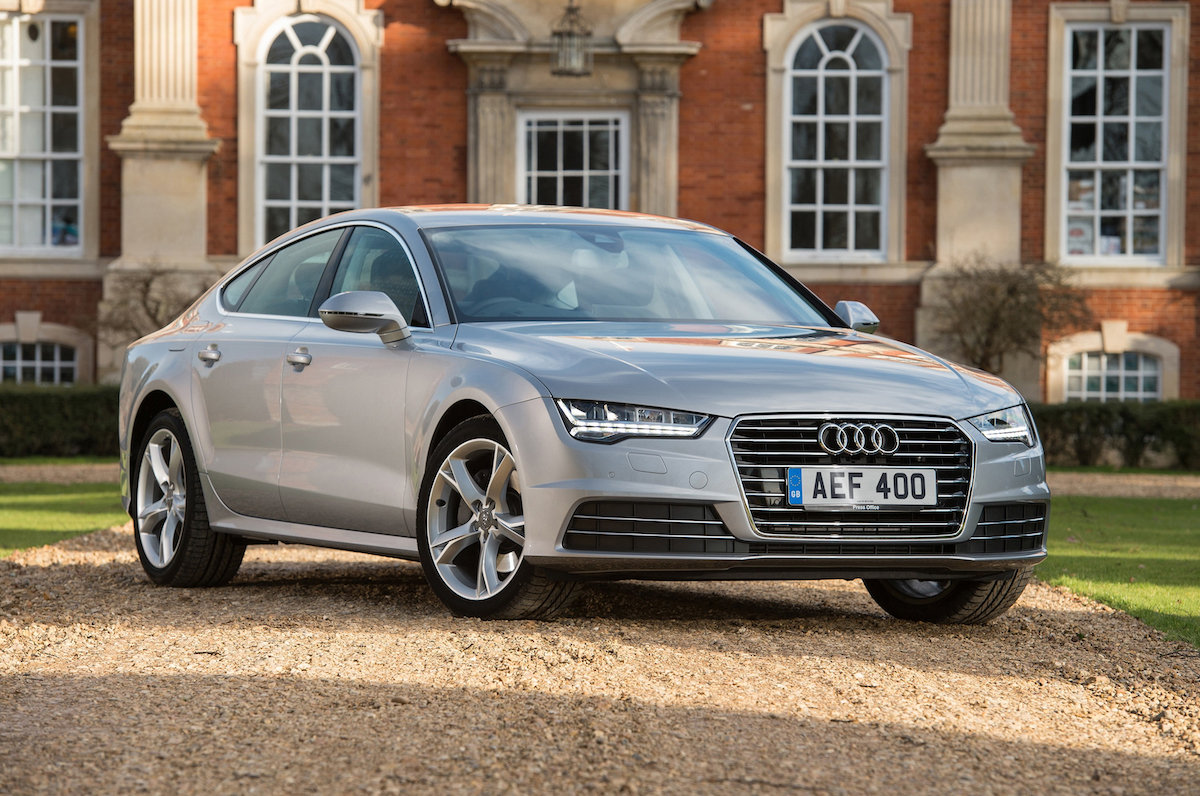
Stylishly understated, effortlessly fast, comfortably cosseting and lavishly equipped, the Audi A7 Sportback makes an amiable companion for tackling long journeys with the minimum of fuss. It’s moderately entertaining to drive on back roads, too, and while some rivals may have the edge in terms of driving intimacy, the A7’s sophisticated four-wheel drive system inspires confidence in all weathers for those of us content to simply relax behind the wheel.
The A7’s gearbox and engine reliability issues can’t be overlooked, however, so you really do have to buy with care. That’s why we recommend you invest in a pre-purchase inspection by an independent Audi specialist and suggest you look into an aftermarket warranty. Also be prepared for relatively high running costs.
What is the Audi A7?
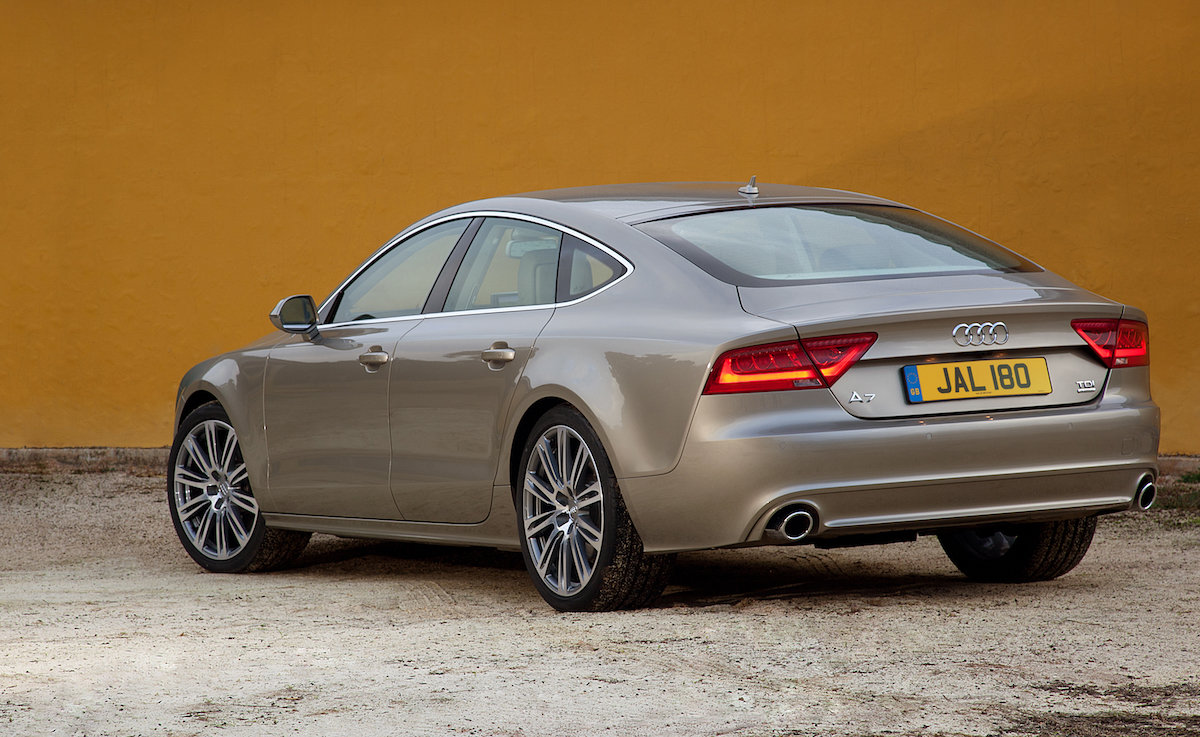
With its swooping rear roof-line, Audi would like us to believe that the A7 Sportback mk1 is a four-door coupe, but the reality is that it’s a smart-looking premium saloon, albeit one with a hatchback rather than a regular boot. The A7 Sportback is based on the Audi A6 saloon and sits between the smaller A5 and larger A8, with a clear family resemblance to both.
How practical is it?
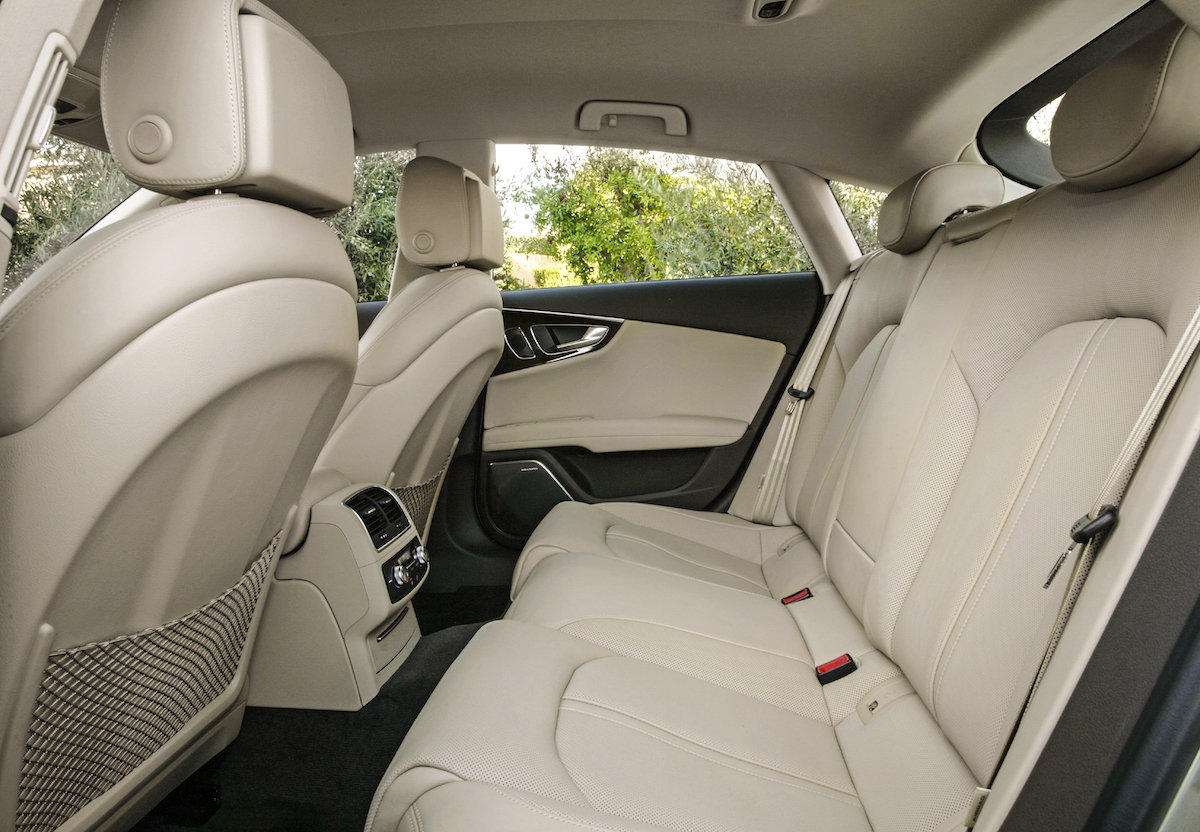
The A7's interior is as classy as you’d expect of an expensive Audi, ditto the fit and finish. And despite the dipping roof-line, there's enough rear headroom and legroom to allow rear-seat passengers to travel comfortably, providing they’re not much above six-feet tall.
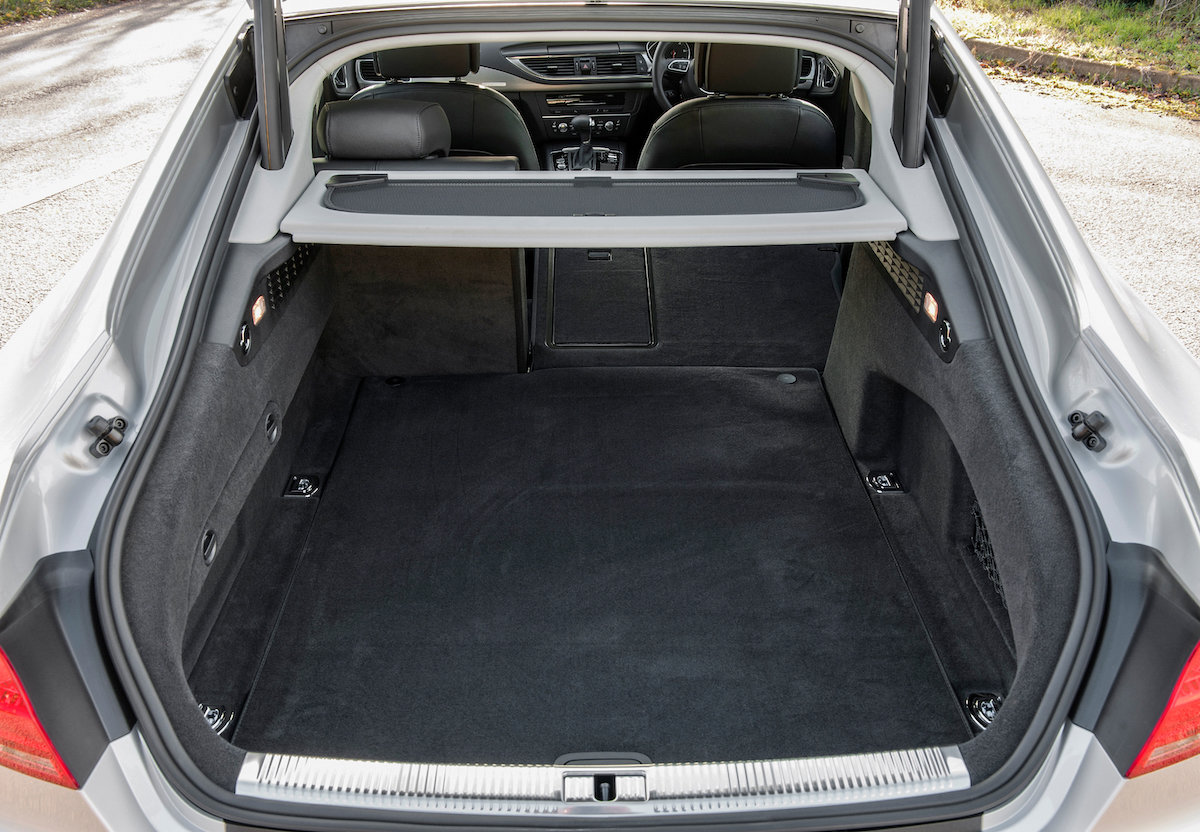
Boot space is generous at 535 litres – and supplemented by folding rear seats, you can get up to 1,390 litres of load carrying space. Access to the boot, meanwhile, is mad more flexible courtesy of the power-operated hatchback. That's the everyday practicality sorted, then.

What's it like to drive?
Although falling a little short of being considered a true sporting saloon, the A7 Sportback is impressively quick in all its guises and the four-wheel drive models are blessed with surefooted handling and high levels of grip, in the wet as well as the dry.
Overall refinement is first-rate, the A7 Sportback cruising quietly, while the ride quality – even with the standard steel springs, as opposed to the optional adaptive air suspension – is actually pretty supple for an Audi, provided you stay away from the 20 and 21-inch alloy wheels.
Technology, equipment & infotainment
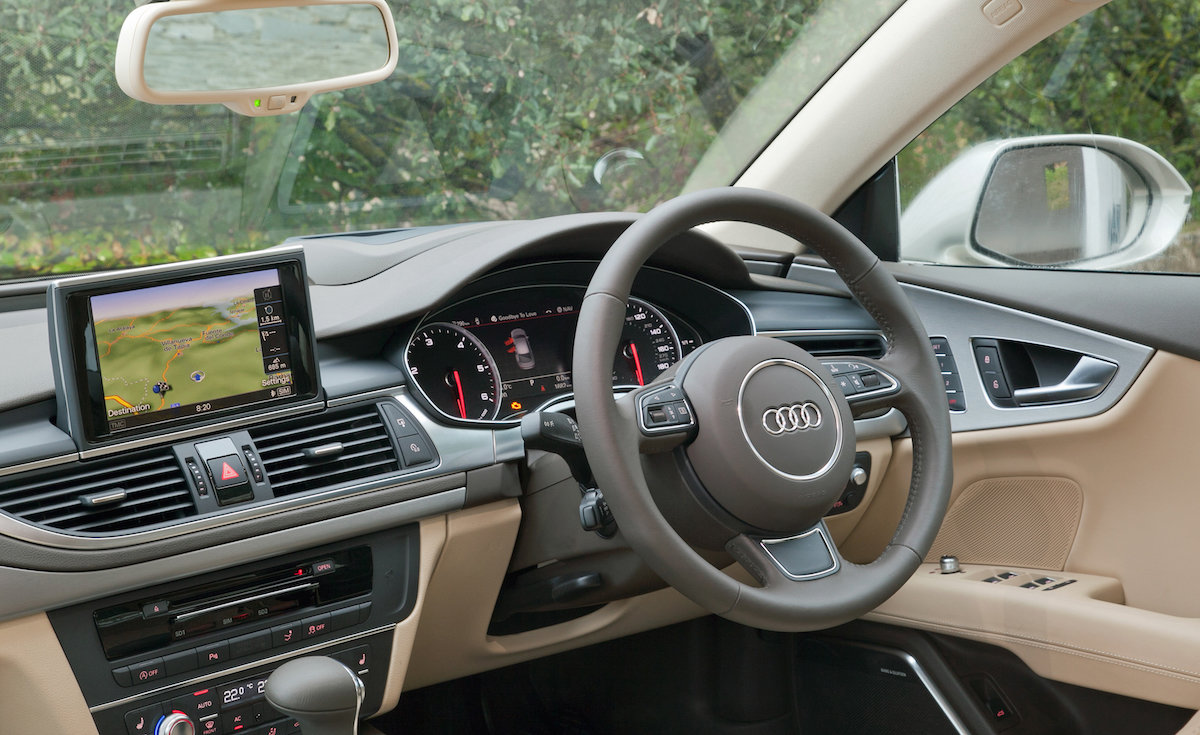
Whether you opt for the entry-level SE Executive or the sportier and more luxurious S Line version, standard equipment levels are commensurate with a top-tier executive saloon.
Available as an option, Audi offered later versions of the A7 Sportback mk1 with MMI Plus, an advanced system that links the satnav element of the touchscreen infotainment system with other vehicle systems. This enables the S tronic automatic gearbox to anticipate upcoming corners, for example, and select an appropriate gear to tackle them, helping save fuel. The car’s (optional) adaptive cruise control also benefits from this accurate route information.
Following its May 2014 facelift, the A7 Sportback mk1 could be ordered with LED Matrix headlights. These sophisticated units have 25 separate LED elements apiece, each of which operates individually to alter the pattern of light the headlights project. This means that when you’re on full beam and the sensors detect an oncoming car, for instance, just the outer LEDs automatically dip to prevent dazzling the other driver. Similarly, if there’s too much reflection from a large road sign, the LEDs causing the flaring reduce their light output. And, of course, the LEDs can angle their beams for maximum illumination through corners.
Audi A7 running costs
The A7 Sportback mk1 is a technically sophisticated car and it’s an Audi: you can’t run one on a shoestring. Fortunately there’s a national network of reputable and highly knowledgeable independent Audi specialists in the UK that can ease the financial pain of servicing and maintaining an A7 Sportback. To give you a yardstick against which to measure their prices, we’re going to quote what Audi charges within its fixed price servicing scheme for cars between three- and six years old. The scheme does cover older cars, but you have to call an Audi dealer for an individual quote.
An interim service costs £220 and a major service £420, while a set of replacement front discs and pads will lighten your bank balance by £600: the rears are slightly cheaper at £500. To change the oil and filter in the Multitronic CVT automatic transmission is £200, while the same operation for the S tronic automatic is £250. The latter requires the oil and filter change every 40,000 miles or less, else you run the risk of the whole gearbox failing and a bill of £10,000 to replace it. As mentioned at the start of this section, an independent Audi specialist should be able to improve considerably on these prices.
Sooner or later your A7 will need tyres. If you shop around online you'll be able to find them from between £135 to £200 per corner, depending on the brand: you may see budget brands for less money, but you don’t want to scrimp on a car with this much performance.
Official mpg figures paint a rosy picture of the A7’s economy, with numbers stretching from 34mpg to 60mpg for the mainstream models. As ever, in the real world it’s a different story. An owner of the 60mpg 3.0 TDI Ultra reports that 42mpg is more typical. The 268bhp version of the 3.0 TDI is quoted at 54mpg, while owners reckon to see a genuine 37mpg in mixed driving and up to the mid 40s on a motorway run.
Before buying an A7, it’s worth investing in a pre-purchase inspection by an independent Audi specialist if there’s one nearby, and by the AA or RAC if not.

Audi A7 reliability
While some A7 Sportback mk1 owners happily report years of trouble-free motoring, others haven’t been so blessed.
Both automatic gearboxes give cause for concern, and sometimes at very serious expense. With the Multitronic, a leak from the engine’s coolant control valve is known to wick its way along the wiring harness and infiltrate the gearbox’s electrical connector, causing a wave of malfunctions. Audi dealers may propose changing the wiring harness and gearbox ECU for the princely sum of £3,000, but by carefully drying out the connector and replacing the coolant control valve, your Multitronic can be functional again for about £250.
In common with the dual-clutch DSG automatic gearbox in many other Volkswagen Group products, the S tronic gearbox can suffer from expensive failure of a sensor inside its Mechatronic control module, the replacement of which entails removing the gearbox. And failure to religiously change the S tronic’s oil and filter every 40,000 miles can result in complete failure of the gearbox and the need for a £10,000 for a replacement. The Mechatronic module is also known to have failed because of an oil leak between the engine and gearbox, forcing excess oil into the gearbox.
A distinct rattling at start-up from the TDI diesel engines is likely to be a failing cam chain tensioner; replacing it is a £3,000 job as it entails removing the engine. Failing to get it fixed can result in the chain jumping a tooth on its pulleys and a wrecked engine. A handful of the twin-turbo BiTDI engines have suffered tiny cracks in the block allowing coolant and engine oil to mix. The cracks are almost impossible to trace so a complete new engine is recommended, at a cost of between £15,000 to £23,000 depending on which Audi dealer is quoting.
Sticking with the diesel engines for a minute, they are part of the VW emissions cheat scandal and subject to a recall to remove the ‘cheating’ software. Several owners report that their car runs badly after the ‘fix’, and as the recall isn’t safety-related, some folk are opting to ignore it. Meanwhile, higher mileage petrol engines are starting to have misfire issues caused by carbon build-up on the back of the inlet valves; this can be cleaned off by specialist companies for a charge of between £400 and £700.
- Arriving in UK showrooms in July 2010, the new Audi A7 Sportback was initially available with 2.8-litre and supercharged 3.0-litre petrol engines, and a brace of 3.0-litre TDI turbodiesels producing 201bhp and 242bhp. The less powerful TDI engine is available only with a front-wheel-drive powertrain, but all the rest are teamed with Audi’s sophisticated quattro four-wheel-drive system. All A7 Sportback mk1s have an automatic transmission, a dual-clutch seven-speed S tronic unit for the all-wheel drive cars and an eight-speed CVT (continuously variable transmission) that Audi calls Multitronic, for the front-driver. As part of the 2014 facelift for the car, Audi introduced an S tronic gearbox for the front-wheel drive models, too. In 2011, the 201bhp TDI became available with four-wheel drive, while early in 2012 the 309bhp twin-turbo 3.0 BiTDI was launched as a performance diesel derivative. With somewhat different goals in mind, the efficiency-focused front-wheel drive 3.0 TDI Ultra joined the A7 Sportback range in 2014. It’s claimed to give up to 60mpg and produce just 122g/km of CO2. Over the course of the A7 Sportback mk1’s relatively long lifespan, all its engines were subject to gradual improvements and increases in power.
- Also making its debut in 2012 was the S7 Sportback, which is chivvied along by a twin-turbo 4.0-litre petrol V8 developing 414bhp (uprated to 444bhp in 2014). It was followed in 2013 by the hardcore RS7 Sportback, which uses the same engine but tuned to 552bhp, and in 2016 the RS7 Performance raised the output to 597bhp.
- Audis of this era were regularly criticised for their poor ride quality when fitted with large diameter wheels and sports suspension. The trouble is, models fitted with them as standard tend to have desirable styling enhancements. Conscious of this, from 2014 onwards, Audi offered buyers of the sporty A7 S line the no-cost-option of having standard suspension in place of the sports variety. Similarly, you could replace the standard 20-inch alloys with 19s. You’ll be lucky to find an A7 Sportback mk1 thus equipped, but you’ll enjoy a smoother ride if you do.
- If you want the best value: Nearly all versions of the A7 were extremely well equipped as standard, so either an SE or the post-facelift SE Executive will look after you nicely: why spend more? As for engines, one of the diesels makes most sense; more than 80 per cent of A7 Sportback mk1s are powered by a 3.0-litre V6 TDI, and with a wide choice comes the possibility of negotiating a better bargain.
- If you’re a speed fiend: The S7 and RS7 high performance models are the obvious choice, but both are comparatively rare and very expensive to run. Instead, check out the twin-turbo diesel 3.0 BiTDI, which produces 316bhp and a 479lb ft (650Nm) mountain of torque, resulting in phenomenal real-world performance. Thanks to a sound resonator in the exhaust system, the 3.0 BiTDI also makes a great noise.
- If fuel economy is important: All diesel-engined A7 Sportback mk1s are relatively frugal, but the 3.0 TDI Ultra is tuned specifically for economy, as its 60.1mpg combined fuel consumption figure attests. Bear in mind, however, that this figure was recorded before the more recent tougher economy test was introduced. To get the most from your gallon, make sure you choose a front-wheel drive version.
- If you fancy a touch more exclusivity: Launched early in 2013, the Black Edition A7 Sportback features all-black exterior trim pieces, rear privacy glass, dark titanium 21-in alloy wheels, and S line sports suspension. Inside the black theme continues for the headlining, leather upholstery and the trim inlays on the facia.

