Hyundai Santa Fe Review (2011-2017)
Hyundai Santa Fe cars for sale
4.0
Expert review
Pros
Hugely roomy cabin
Generous standard kit
Comfortable ride
Cons
Engine can sound strained
Rapid tyre wear
Second row is a 60/40 split bench rather than individual seats
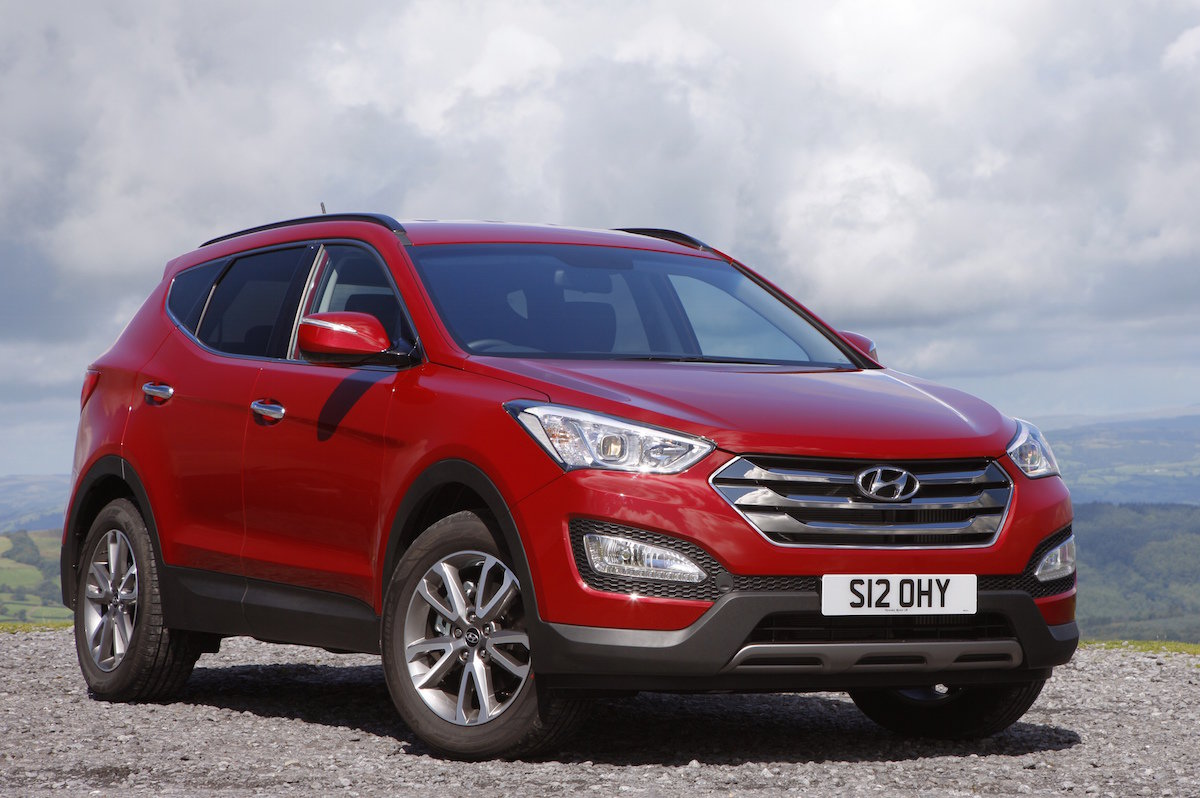
The CarGurus verdict
By now you’re probably figured out we quite like Hyundai’s Santa Fe. There are few, if any family cars, for this kind of money, that offer the same levels of effortless driving characteristics and user-friendly virtues.
As well as being super-spacious, the people who designed the Santa Fe obviously knew a thing or two about family life. Although no bobby dazzler, the cabin is pleasantly trimmed, versatile and extremely well-made, while every version comes with an impressive amount of standard equipment. The driving experience is one of effortless progression, thanks to strong diesel power and a supple ride, and despite that bluff frontal area and substantial mass, wind- and road noise are well suppressed at all speeds.
Of course, none of this will come as a surprise to anyone who has ever owned a Santa Fe, and judging by those strong used values, their growing popularity seems destined to continue.
You don’t have to be Einstein to work out why MPVs have fallen so spectacularly out of fashion. They may be eminently practical and versatile, and in certain cases, surprisingly good to drive, but fundamentally, a box-on-wheels with windows, is about as racy as your Nan’s dressing gown.
It’s hardly surprising, then, that cars like Hyundai’s Santa Fe are seen as much more appealing alternatives, giving you the same family-friendly virtues wrapped up in wilderness-adventurer body styling. In fact, this is the third generation of Santa Fe and it builds on the considerable success of its predecessor, which was the first to signal Hyundai’s intent to move from budget brand to serious premium player.
The big SUV has always been Hyundai’s flagship model, and this version was designed to go toe-to-toe with mainstream models such as the VW Tiguan, as well as more expensive machines such as the original Volvo XC90 and Land Rover Discovery Sport.
Available as a five- or seven-seat SUV and powered by a four-cylinder 2.2-litre diesel engine, with a choice of a six-speed manual or six-speed (latterly eight-speed) automatic transmission, most examples come with the reassurance of four-wheel drive and plenty of creature comforts, but perhaps the Santa Fe’s greatest appeal lies in the sheer amount of metal you get for your money. It first appeared in showrooms in 2012 and received a modest facelift in 2016.
We may not be talking high-end Germanic levels of material quality inside or the type of visual treats you get in a Peugeot 5008, but what the Santa Fe lacks in wow-factor it more than makes up for with solid practicality and tough-as-old-boots durability. Trimmed throughout with robust, scuff-resistant mouldings, it’s a dab hand at resisting the crash-bang-wallop tribulations of everyday family life.
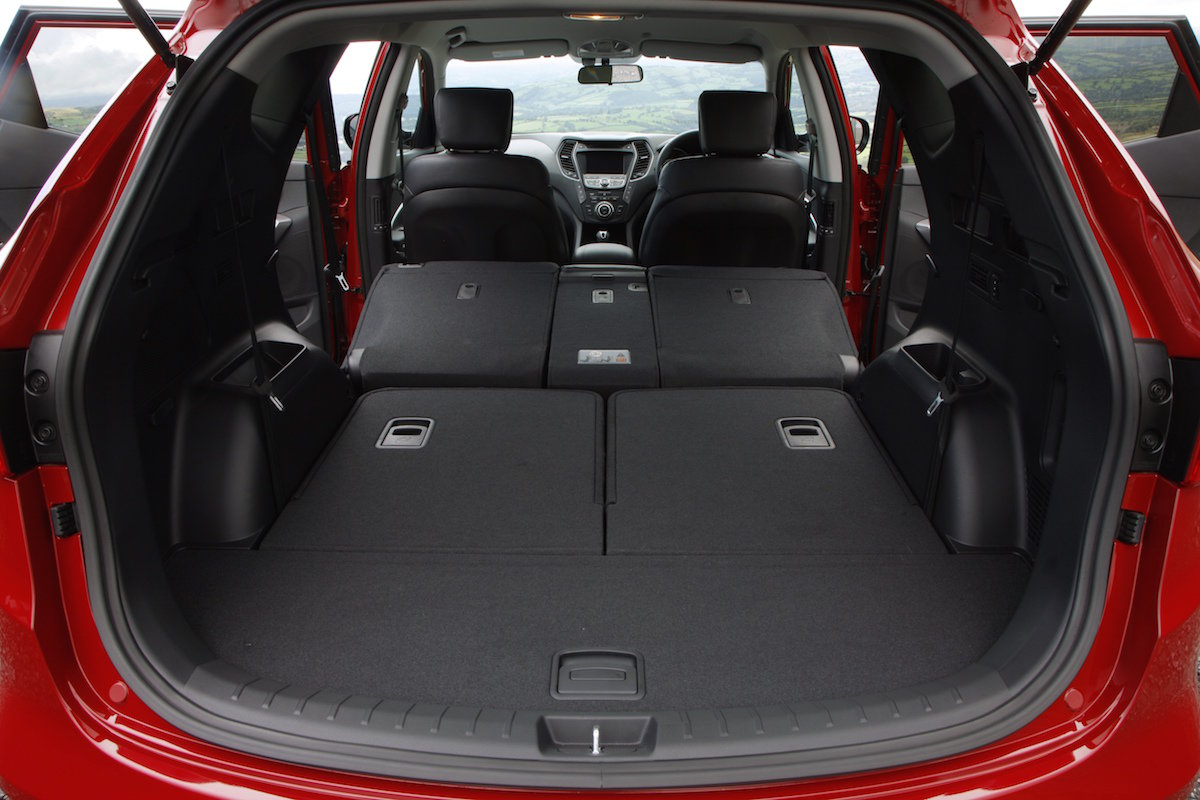
That durability is supplemented by a choice of five- or seven-seat layouts. Sales were split around 50:50, so there’s plenty of used examples of both. So, whether you need the additional seats or just a whopping-great boot, there's a Santa Fe model that's got you covered. If you choose to go down the five-seat route, you'll get a bunker sized 585-litre boot with the rear seats up and 1,680-litres with them folded down. Going for the seven-seater means that capacity drops slightly but it’s still far from shabby at 516-litres with the third row folded and 1,615-litres with all the seats folded. With all seven seats employed you’ll still have enough space left over at the rear to jam in a couple of soft-sided suitcases.
Along with masses of leg- and headroom for those travelling upfront, if you’re using all seven seats, you can adjust the amount of legroom elsewhere, thanks to sliding seat runners for the middle row.
Not that everything is perfect. The middle row seats don’t divide individually, instead, they split 60/40. This isn’t an issue, until you come to let someone into the rearmost row. Although the seatback folds forward, you’ll still need to be pretty nifty on your pins to clamber over the remaining section of seat base. Thankfully, kids always seem inexplicably excited about the prospect of sitting in the back of the bus and adults will be happy to indulge them because leg-, head- and elbowroom are somewhat tight back there.

Being such a big car, we’re not talking sports car levels of handling here, but the Santa Fe is still a fairly competent device. The steering is light and precue and there’s decent grip, which means the Hyundai always feels safe and secure when cornering, even if it’s not all that exciting.
As you might imagine, there is a fair bit of body float, which you’ll notice most in tighter corners and under heavy braking, but the ride is smooth with just the odd suspension clatter evident over really cruddy surfaces.
As for the motivational side of things, the 194bhp (power was upped to 197bhp for the 206 update) 2.2-litre CRDi turbo diesel engine is the only option and can sound a little strained at times and some vibration can be felt filtering into the cabin at higher revs, but you rarely need to go there as it pulls well from low revs and has plenty of mid-range power. The rest of the time it’s really rather quiet, with little to disturb the calm of the cabin.
In fact, easy-going refinement is the Santa Fe’s forte, the big Korean machine feeling smooth and unruffled on long journeys. Its soft suspension soaks up bumps and wind and road noise are kept to a minimum, while that torquey diesel engine feels unstressed as it hauls the car up even the steepest hills.
Yet despite its large exterior dimensions, the Santa Fe feels surprisingly wieldy in the urban jungle, where that elevated driving position gives a commanding view of the road and the light controls mean parking isn’t a muscle-pumping workout. The standard parking sensors help here too, allowing you to slot into spaces with scraping a bumper.
In terms of transmissions, the entry level cars got a six-speed manual as standard, with a smooth but rather slow-witted six-speed automatic as an option. From the 2016 facelift a rather more responsive eight-speed auto was made available.
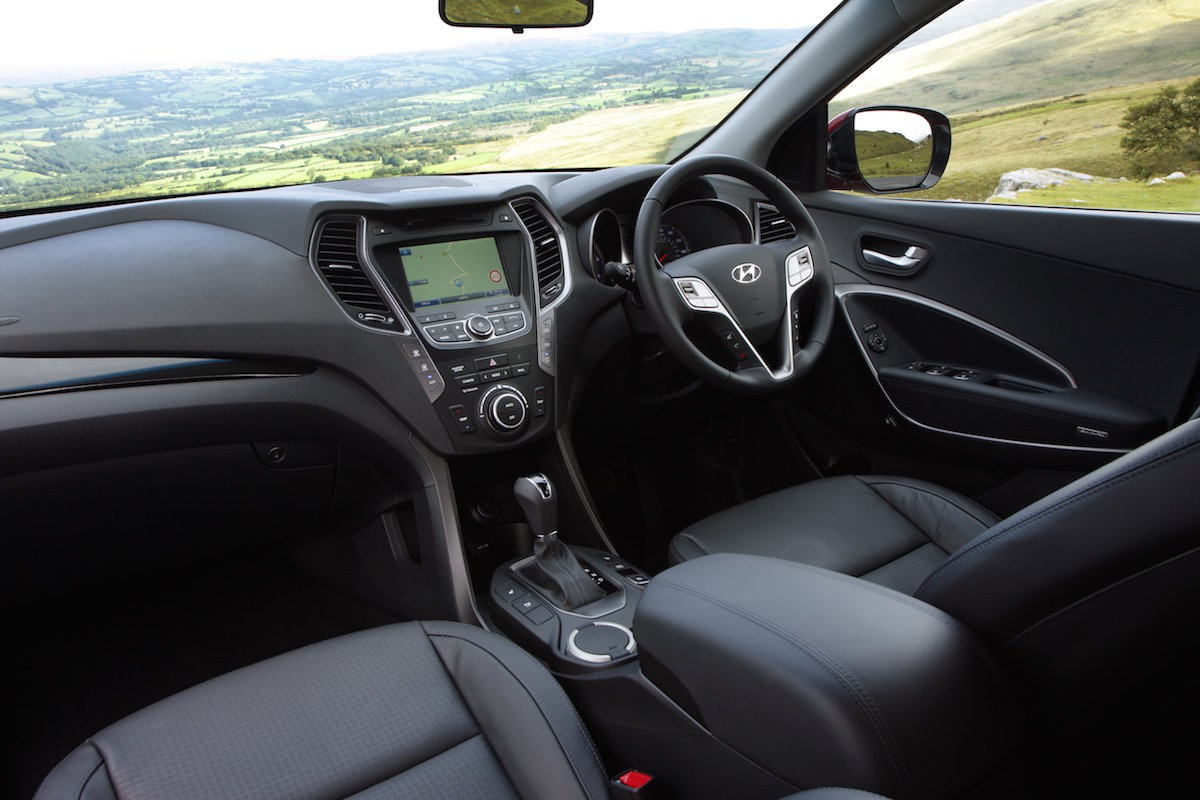
Given its status as Hyundai’s top-of-the-range model, it’s no surprise to find the Santa Fe comes loaded with standard kit. Earlier cars were available as Style and SE specifications, which come with all the kit you’re likely to need, such as air-conditioning, Bluetooth connectivity, USB sockets and remote central locking.
The most popular examples are the Premium models, which have a wide array of standard equipment including 18-inch alloys, cruise control, parking sensors, dual-zone climate control, an electrically adjustable driver's seat and heated front seats. Also included was a touchscreen infotainment system with sat-nav. Premium SE models gain larger 19-inch alloys, blind-spot monitoring, lane departure warning, three-zone climate-control, a heated steering wheel, heated and ventilated front seats, xenon headlights, a rear view camera, full-length glass sunroof and an electric tailgate.
For the post 2016 facelift the range was rationalised to include just the Premium and Premium SE models, with the biggest change being the adoption of a faster acting and easier to use infotainment system, which on the last models featured Apple CarPlay and Android Auto.
Safety equipment was also enhanced, with adaptive cruise control and autonomous emergency braking being added. Standard kit for all models includes seven airbags and electronic stability control, which combined with the Santa Fe’s strong construction earned it a five-star EuroNCAP rating.
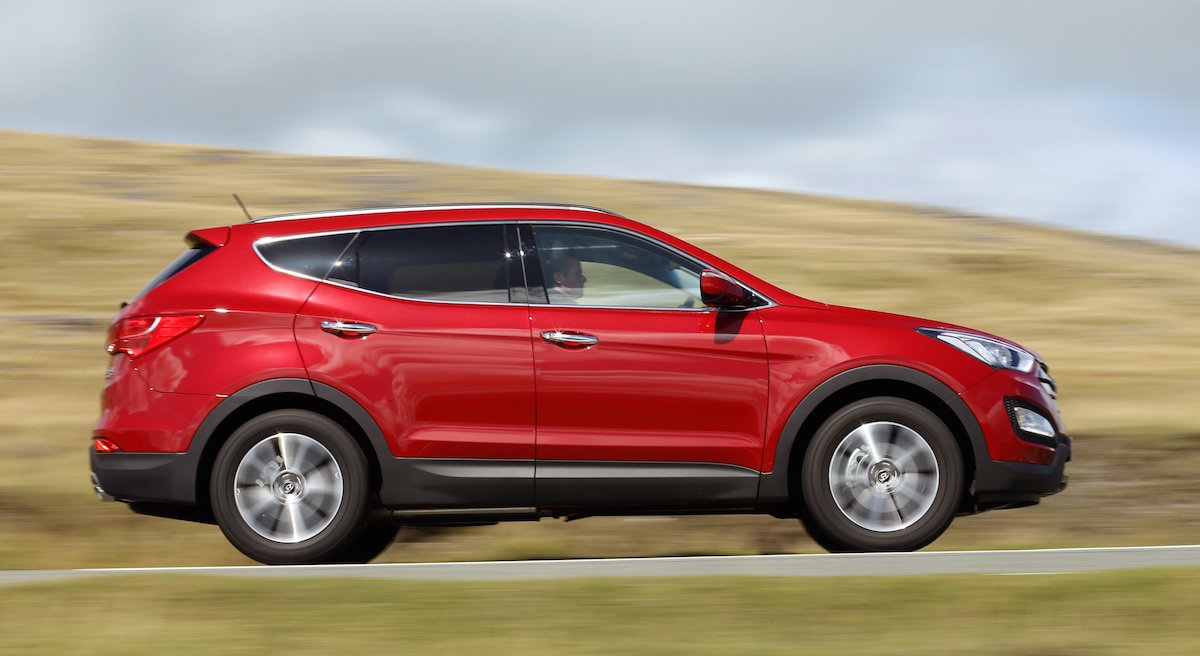
As we said earlier, you’re far more likely to come across an automatic version of the Santa Fe than the manual gearbox models, but if you don’t mind swapping cogs the old fashioned way you’ll pay less initially and you’ll also feel the benefit of superior fuel economy. On average, a manual car’s mid-forties fuel economy will better an auto' version by around five mpg.
Unsurprisingly, because there’s only one engine choice, there is next to no difference between the trim levels when it comes to insurance rates. While the basic car falls into group 27 the Premium SE models are rated at 28.
If you’re buying a used Santa Fe from a main dealer then you may be able to persuade the salesman to throw in a service plan in order to sweeten the deal. Hyundai offers three- or five-year fixed-price servicing plans on new cars and a similar set up for used examples. When you consider that a three-year plan - which includes two interim services and a full service in year two - costs around £500 and a five-year plan - including three interim services and a full service in year two - costs the thick end of £800, it’s certainly something worth haggling over.
Hyundai uses an on-demand four-wheel-drive system, so most of the time the power to the road is streaming via the front wheels. This undoubtedly helps reduce tyre wear but the Santa Fe weighs over two tonnes and a whole lot more when fully laden. Not surprisingly, it gets through tyres quite quickly and you can expect to pay around £130 per corner for a model running on 18-inch wheels. One of the most reassuring parts of Santa Fe ownership is the strong resale values they command. They are not cheap to buy, but a strong fan base means you claw back a fair bit of your initial outlay come resale time.
Hyundai is one of the best manufacturers in the business when it comes to warranty cover, guaranteeing its cars for five-years and an unlimited number of miles. The only mystery is why the company doesn’t offer the same seven-year 100,000-mile warranty as Korean sister brand, Kia.
Even so, that five-year deal is considerably better than the three-year cover offered by most European manufacturers, and is a statement of just how much confidence Hyundai has in the robustness of its vehicles.
Recommended service intervals for the Santa Fe are either annually or every 20,000 miles, whichever comes first. If you’re looking at buying a higher mileage example you need to check that the coolant has been changed after four years or 60,000 miles, and the gearbox oil levels have been checked every two years or 40,000 miles. Air and fuel filters should also have been changed at 40,00 miles. These changes and observations should all be listed on any invoices that accompany a fully stamped service book.
As a brand Hyundai always performs well in customer questionnaires, coming close to the top - and sometimes top outright- of many surveys.
There have been some reported issues with diesel particulate filters in some models clogging up, but these instances appear to be rare. Additionally, minor issues relating to electrics and comms systems have been noted, including sat nav glitches, but most of these were addressed with software upgrades.
- Although only 500 were made, you do see a surprising number of Wiggins special edition models for sale. They are effectively top-trim Premium SE models with bespoke alloy wheels and paint colours and Wiggins embossed interior detailing. It was named after British cycling legend and Tour de France winner, Sir Bradly Wiggins, who had a sponsorship deal with the brand.
- Initially, the Santa Fe was offered with a choice of two or four-wheel drive, but after the 2016 facelift the latter was the only transmission available. Despite its rugged off-roader looks, the Hyundai isn’t a true mud-plugger and will be quickly out of its depth if you head far off the beaten track. However, the all-wheel drive set-up provides extra peace of mind in poor weather, while the electronically controlled centre differential lock will provide extra traction on slippery surfaces, which is handy when pulling a caravan or trailer out of a muddy field.
- As with so many other Hyundais, the Santa Fe shares its underpinning with a model from sister firm Kia. In this case, it’s the third generation Sorento, which is also a large seven-seater SUV. It gets the same 2.2-litre diesel engine, as well as a similar option of two or four-wheel drive, plus an entry-level five-seat version. There’s little between them on the road or in terms of price, so it’s down to looks and the fact the Kia gets that seven-year warranty.
- If you’re looking to spend as little as possible: Although not that easy to find, early entry-level cars featuring front-wheel-drive and badged Style or SE are the cheapest way into Santa Fe ownership. Being that bit lighter they are a tad more economical than the all-wheel-drive versions, but their specification is relatively spartan and they will not be worth as much as their 4WD counterparts come sell-on time.
- If you’re looking for the best workhorse: If you don’t need the additional passenger capacity then a five-seat, manual-gearbox model will be just the ticket. It is only available with entry-level Premium trim but that still includes loads of standard kit, while the combination of a 2.2-litre diesel developing 194bhp and on-demand four-wheel drive delivers plenty of traction and oodles of pulling power. So much so, that even with the boot loaded to the rafters, you’ll have enough power in reserve to hitch up that trailer, load the cement mixer and gobble up the miles to that next extension job.
- If you’re looking for the ultimate support vehicle: If your kids are budding showjumpers or avid Tour de France followers, then what better way to turn up to their events than in the poshest Santa Fe. While the seven-seat versatility of SE Premium and Wiggins models can be juggled around to ferry different configurations of kids and kit, that powered rear tailgate and quickly converted flat load bay will double as a nifty wet-weather shelter when swapping trainers and jeans for helmets and Lycra. After the day’s excursions are done and dusted, you’ll be glad of the environment separation qualities of the three-zone climate control and thankful that those leather seats will come up as good as new when given a quick once-over with a damp rag.

