Range Rover Evoque Review (2011-2018)
Land Rover Range Rover Evoque cars for sale
4.0
Expert review
Pros
An affordable route to Range Rover ownership
Styling still looks fresh after more than a decade
Good to drive on all surfaces
Cons
Convertible is not as good to drive as the hard top
Surprisingly small in the back for a car of this size
Reliability is iffy, so expect some unexpected bills

The CarGurus verdict
If you’re after a stylish, smallish SUV and practicality isn’t top of your list of requirements, then the Evoque is an excellent choice, and still looks fresh many years after its first introduction. It’s very desirable, which means it should hold its value well when you come to sell it.
Reliability is far from its strongest suit, so take your time when you’re looking for a used example, but with so many Evoques on the market, there should be plenty that are worth your cash. If you can find a good one, there’s every chance you’ll be very chuffed with it.
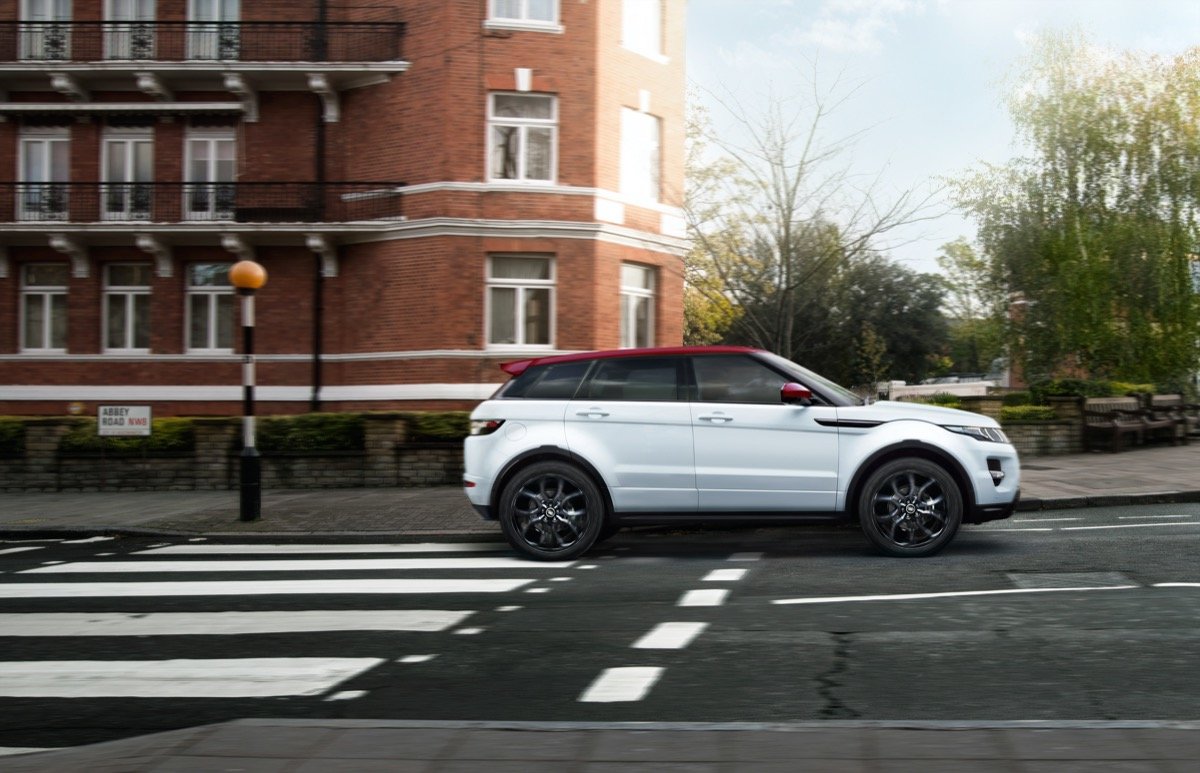
What is the Range Rover Evoque Mk1?
The Evoque has been a smash hit for Land Rover, providing access to the prestigious Range Rover brand for considerably less money than the bigger cars in the line-up. It walks a line between smart styling and luxurious appeal with off-road capability and on-road performance.
Most Evoques will never tackle anything more than a tall kerb, but owners can at least boast about how good it would be if they did want to stray from the motorway. It’s rather like a sports diving watch; the capabilities are there, even if most people won’t use them – and it looks fantastic.
It was available in three- and five-door guises – the former loosely billed as a coupe. There was also a convertible Evoque, but the less said about that, the better. Jaws dropped when the production car was first unveiled in 2011, not least because it had hardly changed from the 2008 LRX concept car, and nobody expected such a sleek thing to go on sale. The second-generation Evoque arrived in 2019, and you can now pick up an original Evoque for little more than £10,000.
How practical is it?
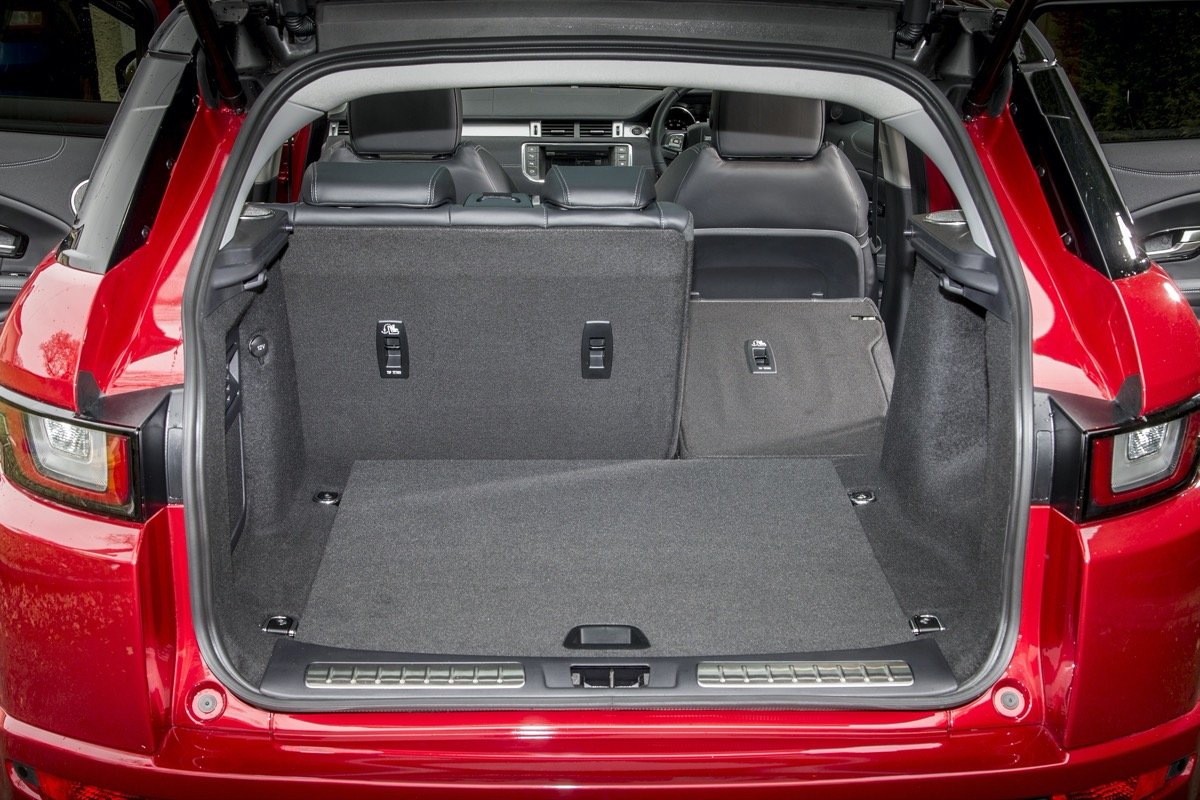
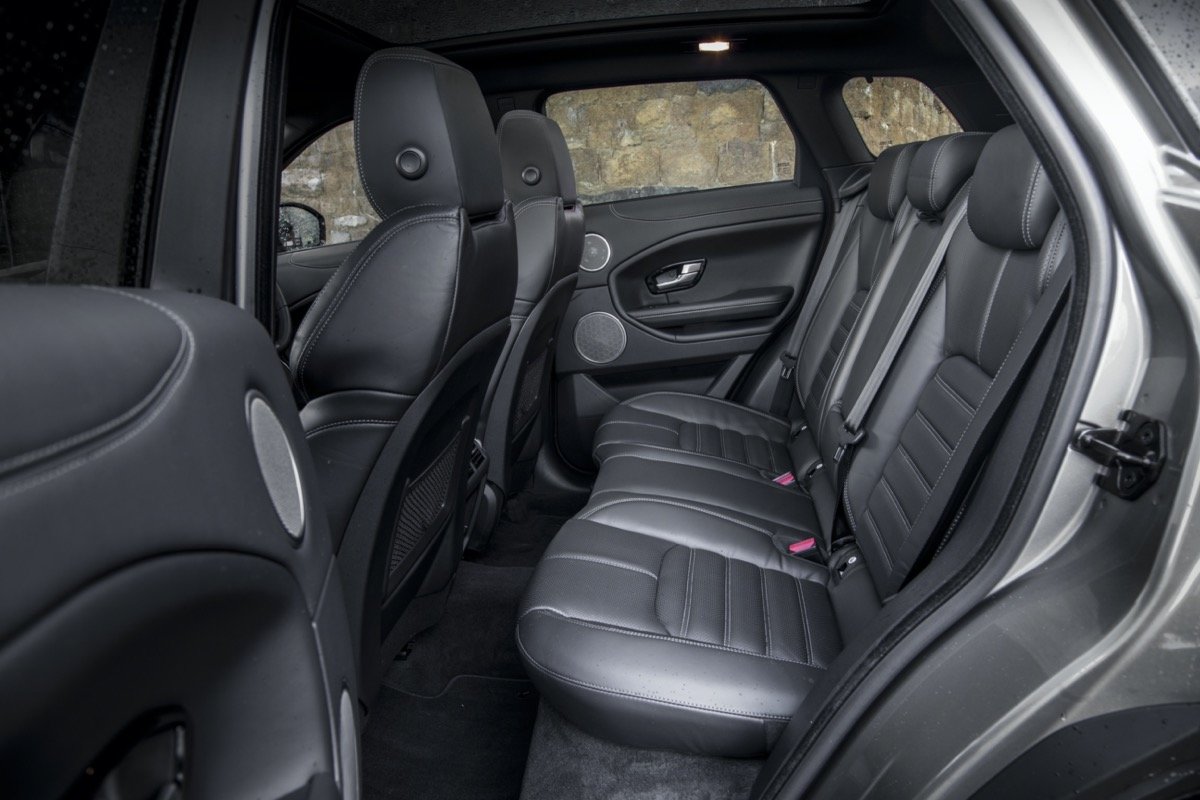
Don’t think you’re getting a hugely roomy SUV with the Evoque, because it’s less practical than its size might suggest, especially for rear-seat passengers, for whom there really isn’t much space.
At 420 litres, the Evoque's boot is also smaller than that of rivals such as the BMW X3 and the Audi Q5. The back seats fold down, but not completely flat – as they do in many rivals – leaving a tilted section towards the front seats, which makes it harder to carry bigger loads. In this respect, it isn’t overstating the case to say that the Evoque represents style over substance, and if practicality is any way a concern, the five-door model is a must.
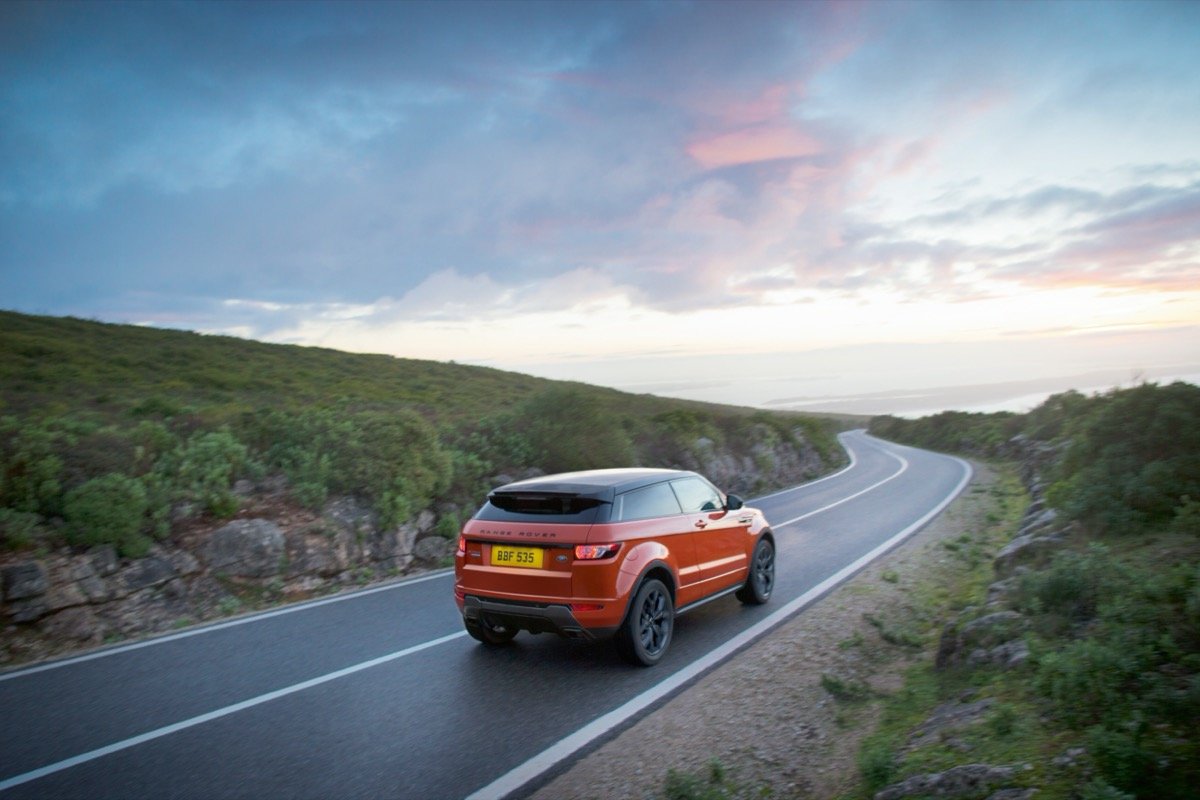
What’s it like to drive?
This is one of the Evoque’s strong suits because it’s surprisingly nimble, despite its chunky proportions. A lot of that is down to the steering, which is direct and responsive. The ride isn’t as plush you’d expect of a more expensive Range Rover, but it’s decent for a compact SUV, and the cabin is reasonably quiet.
A 237bhp 2.0-litre petrol was available when the Evoque was launched, but it sold in very small numbers, and you’re far more likely to find one of the 2.2-litre diesels with either 148- or 187bhp on the used market. Those diesel engines were replaced by Jaguar-Land Rover’s smooth 148- and 178bhp 2.0-litre Ingenium engines when the Evoque was facelifted in 2015, and these are definitely the ones to go for if you can find them and your budget stretches.
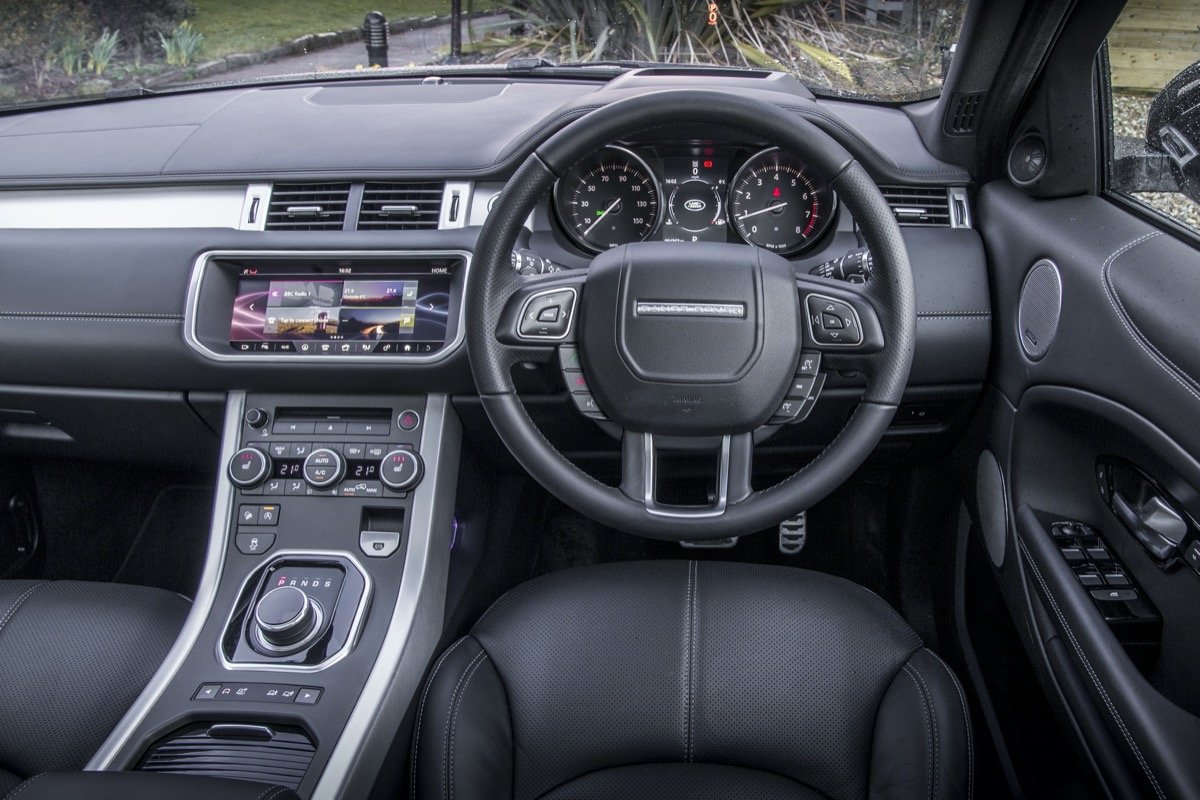
Technology, equipment and infotainment
Trim levels start with SE, which has leather seats (eight-way electrically adjustable in the front) and 18-inch alloy wheels. SE Tech adds 12-way electric memory seats and Land Rover’s InControl Touch Navigation system.
HSE Dynamic has plusher leather, a body kit, 20-inch alloy wheels, and a larger 10.2-inch touchscreen, while top-spec HSE Dynamic Lux features an 825W Meridian sound system with surround sound, a digital TV, Keyless Entry, Park Assist and 360 parking aid, surround camera system with towing assist, and a blind spot monitor.
The Evoque was facelifted in 2015, and cars sold from then on had an upgraded infotainment system. The old one was, frankly, pretty awful, so keep that in mind if tunes, radio, navigation and so on are particularly high on your priority list.
Range Rover Evoque Mk1 running costs
Evoques range from the entry-level front-wheel drive diesels to four-wheel drive, all-singing all-dancing, luxury machines, so running costs can vary considerably. The later models, with their updated engines, are more fuel efficient than earlier cars.
Across the range and years, official fuel economy figures span 32.5mpg to 67.3mpg, although don’t expect to hit those figures in real life as they were determined under the old and optimistic NEDC laboratory test (this was replaced by more reliatsic but still not perfect WLTP test in 2018) rather than on the road. Insurance groups start at 28 and finish at 40.
Top-end models can be very pricey to buy and run. It’s certainly worth asking yourself if you really want or need four-wheel drive, because these models are heavier and thirstier. Petrol models drink like fishes, so think carefully before you dismiss the idea of a diesel.
Land Rovers are not cheap cars to maintain, because they’re big, heavy, premium vehicles. Service intervals are once a year or every 16,000 miles, whichever comes first, or variable at up to 24 months and 21,000 miles. The 2.2-litre diesel engine needs a new cambelt every 10 years or 144,000 miles. Land Rover offered service packs of three- or five years on new Evoques, so it’s worth checking if the used car you’re looking at still has one, as they can be transferred across to new owners. It also sells service plans for used cars up to 10 years old to help owners spread their costs.
Range Rover Evoque Mk1 reliability
Land Rover does not have the best reliability record, and regularly features towards the bottom of independent studies. The Evoque came 53rd out of 75 cars in the 2022 Auto Express Driver Power survey, which could have been worse, but Land Rover as a brand finished 29th out of 30 manufacturers in the 2021 What Car? reliability survey, and the Evoque came dead last – 28th – in the family SUV category of the same survey.
Electrics are a regular sore point, so make sure you try everything before you buy: windows, seats, heater, powered tailgate and anything else you can operate with a switch. It’s also worth checking the dashboard for any warning lights. For example, on diesel models the DPF filter needs a chance to regenerate and if it hasn’t, a warning light will show on the instrument cluster.
Automatic gearbox issues are all-too common on Evoques, as are satnav problems, so again, try before you buy. Watch out for clunking noises from the suspension, and some cars had poor alignment on the boot lid, which could affect the image from the reversing camera. Manual gearbox cars with stop-start systems are prone to wear on the flywheel, detectable via vibration through the clutch pedal.
If you buy your Evoque through Land Rover’s approved used scheme, you’ll get a 12-month warranty and an MOT test warranty, which is well worth checking out.
The Evoque has been subject to several recalls, so make sure the recommended work has been done. The issues range from the engine cutting out and fuel leaks, from chafing hoses to airbag issues and electrical short circuits. A small number of vehicles were at risk of damage to the steering system, and some suffered from inaccurate fuel readings. In 2019, a recall provided a software upgrade and some hardware changes, as some cars weren’t hitting emission targets, and there was also an issue with the emergency call systems in later models.
- Most new buyers of the first-generation Evoque went for a diesel engine, so you’re far more likely to find one of these on the used car market. Petrol-powered models do exist, but they’re scarce.
- The Evoque was sold in both front- and four-wheel drive guises. Four-wheel drive models are obviously better off-road and offer more grip when the weather turns for the worse, but they’re heavier and more expensive to run. If you're not planning to head off-road or through Scotland in the winter, then a front-wheel drive model may be a better bet, because it will be cheaper to run.
- The Evoque was facelifted in 2015 complete with the smooth and punchy 2.0-litre Ingenium diesel engines. These models are well worth seeking out.
- For fuel efficiency: The three-door 2.0-litre diesel with front wheel drive and a manual gearbox has an official fuel economy figure of 67.3mpg and CO2 emissions of 109g/km of CO2. These are lab figures rather than real-world and they were achieved under the old and often unreliable NEDC test, but that doesn’t change the fact that this is the most economical first-generation Evoque.
- The fastest model: For a speedy Evoque, go for the 286bhp 2.0-litre petrol, which accelerates from 0-62mph in just 6.0 seconds. Models built from 2015 onwards come with a nine-speed automatic gearbox.
- All the toys: The HSE Dynamic Lux trim leads the way at the top of the range. It was loaded with kit to start with and those that splashed out on a new one probably added options on top of that, which means you’ll have almost every bit of tech and luxury you can think of.
- The best all-rounder: HSE Dynamic trim has enough features to satisfy most needs and has a body kit – and the Evoque is, after all, very much about looks. We’d stick with diesel where possible, and five-door models are significantly more practical.
- For wind in your hair: Let’s be clear, the Evoque convertible isn’t nearly as good a car as the conventional version, but it does have a little corner of the market to itself. If you want a premium-badged, open-top SUV, then this is your only choice.

