Peugeot 208 Review (2012-2018)
Peugeot 208 cars for sale
3.0
Expert review
Pros
Lively and economical engines
Cabin has a premium feel
GTi model is great fun
Cons
Not as roomy in the back as a Skoda Fabia
Some reliability issues
A Ford Fiesta is better to drive
The CarGurus verdict
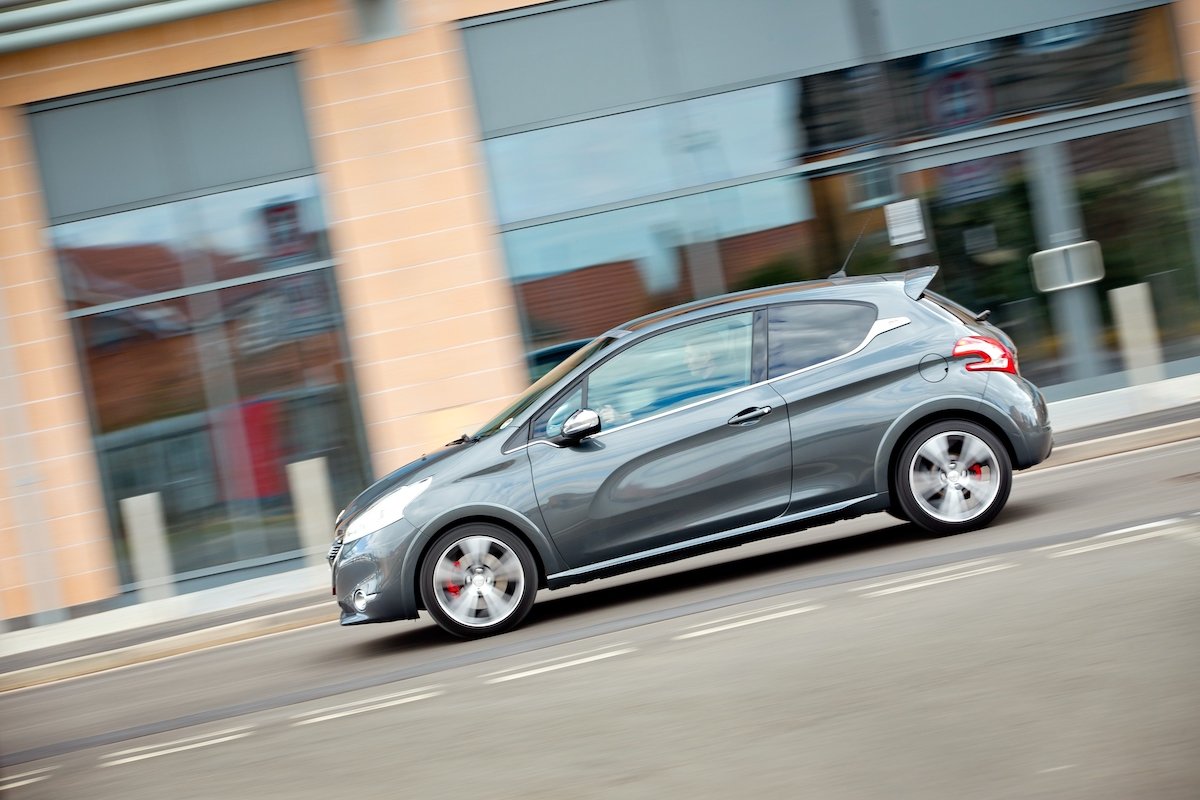
The Peugeot 208 is a very likeable little car. It’s smartly dressed, its cabin exudes a sense of premium quality not always evident in the supermini class, and while it’s not a class-leader in terms of cabin space it has enough room inside and practicality for most folk. If you’re able to afford more than the entry-level trim grades then the standard equipment levels are likely to satisfy the needs of most owners, and running costs, especially in terms of fuel consumption, are pleasingly modest.
Some rivals are better to drive, but from behind the wheel you’re unlikely to be too disappointed in the 208, and if you can stretch to a GTi by Peugeot Sport then you won’t stop grinning. Unfortunately the GTi models suffer some reliability issues, as do the 1.2-litre PureTech petrol engines, so when you’re looking around you need to be cautious. Pick wisely, though, and the 208 should serve you well.

The 208 represented Peugeot’s return to form as a master practitioner of the art of the small car. The French car maker had hit a high in the 1980s with its 205 range, and the subsequent 106 models were well respected, too, but then its rivals just got better and better while Peugeot stagnated. With attractive styling inside and out, and with a plethora of different engine choices (petrol and diesel) to suit all needs, the 208 is a vivid example of what you can achieve if you try a bit harder.
Compact enough to make easy work of city driving and parking, the 208 has a premium look and feel, especially as you work your way up through the trim ranges. It’s also packed with standard equipment, cost effective to run and, because it was so popular when new, there are plenty of used examples to choose from. Keen driver’s will also be excited to hear that the flagship GTi by Peugeot Sport model rekindled a lot of the magic of its famously thrilling forebear, the 205 GTi.
The Peugeot made its debut in 2012 in both three and five-door hatchback guises, while a facelift in 2015 brough subtly tweaked looks and enhanced equipment. The 208 finally bowed out in 2019, when it was replaced by an all-new version, also called the 208.
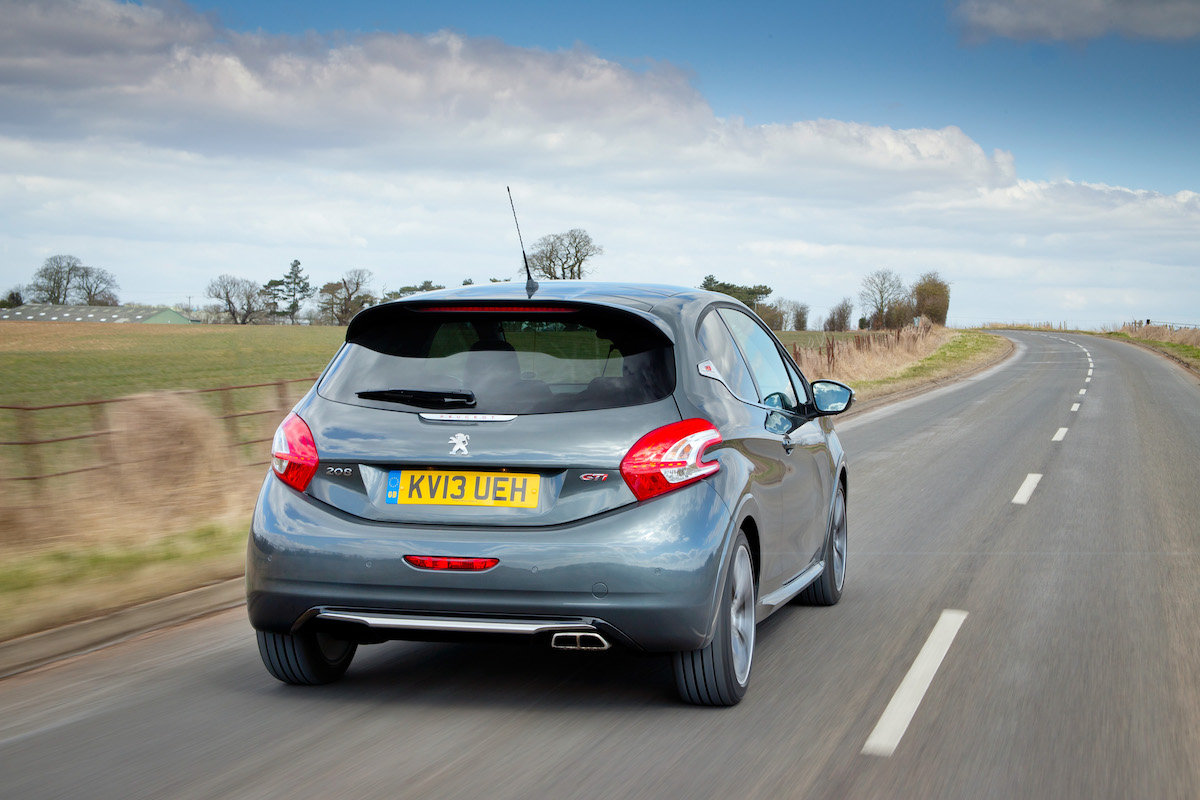
Those sitting up front in the 208 are very comfortably accommodated, while a couple of six-foot adults should be able to sit in the back without too much complaint unless the car is fitted with the panoramic sunroof that reduces the headroom available.
However, access to the back seats in the three-door model isn’t wonderful and a third passenger creates a very tight squeeze. However, it’s fine for kids and two adults will have little to complain about assuming you don’t subject them to a marathon, non-stop run from London to Leeds.
There is a decent amount of storage, including usefully sized doorbins, cup holders and a deep tray ahead of the gear lever, which is perfect for wallets, smartphones or even a giant pack of Doritos, if you’re feeling peckish on the move. However, like so many French cars of the era, the glove box is rendered largely useless by the intrusive fusebox that hasn’t been moved in the car’s conversion to right hand drive.
Boot space is adequate – most rivals have more of it – at just 285-litres, plus loading is hindered slightly by a small aperture. There’s the further annoyance of the back seats not folding completely flat for carrying large items, although when the rear bench is lowered there’s a decent 1,152-litres of space to play with. Unlike its 207 predecessor, there’s no SW estate version of the 208, so this is as big as it gets for luggage capacity.

Peugeot has always prided itself on delivering small cars that are sprinkled with just a little driver fun. And while the 208 can’t match the old 205 and 106 for smiles per mile, it’s one of the more entertaining superminis.
The number of engine options available for the 208 is overwhelming. If you count different power outputs and those fitted with stop/start technology, there are 26 to choose from, but to simplify the line-up a little, the petrol engines come with 1.0, 1.2, 1.4 and 1.6-litre capacities, the diesels in 1.4 and 1.6-litre guises.
Apart from the three-cylinder 1.0-litre petrol and 70bhp version of the 1.4-litre diesel, all the engines are peppy enough for a car this size, and all have impressive official fuel consumption figures; the 75bhp 1.6 BlueHDi with stop/start tops the charts with 94.2 mpg. Some versions of the 208 are offered with an automatic gearbox, but its responses can be sluggish and jerky: stick with the manual gearboxes unless you have a compelling need for an auto.
There’s some criticism of the 208 for its steering and handling not having the verve of some rivals, and while that may be of concern to enthusiast drivers, the rest of us will find Peugeot’s supermini stable and reassuring in everyday driving conditions. If there’s a criticism, it’s that the ride is surprisingly firm, especially so given the French firm’s long tradition of delivering supple suspension that soaks up bumps. That said, it’s hardly spine-shattering, and once you break free of city limits it feels much smoother.
Besides, if it’s thrills you’re after then the 208 range is topped by the 208 GTi and the GTi by Peugeot Sport models. The former is a decent little hot hatch that combines a 197bhp turbocharged 1.6-litre with an agile and grippy chassis, but for ultimate driver thrills you’ll want the latter. Not only does it get 205bhp, its stiffer suspension and wider track delivers even more exciting handling, making it one of the best junior pocket rockets a modest amount of cash can buy.
Over the years, the 208 line-up has chopped and changed a fair bit, with numerous trim levels coming and going. The regular models are Access, Access Plus, Active, Allure, Allure Premium, Feline (what was Peugeot thinking?), GT Line, GTi and GTi by Peugeot Sport. By the end of the 208’s life the range had been simplified to just Active, Signature, GT-Line and Tech Edition models.
However, Peugeot is also a big fan of the special edition, and there are a fair number of them, several with, er, interesting names – Design Menthol, XS-Lime, Intuitive, Ice Velvet and XY are amongst our favourites. The special editions are worth hunting down, though, as their equipment levels tend to be high compared with the mainstream trim packages.
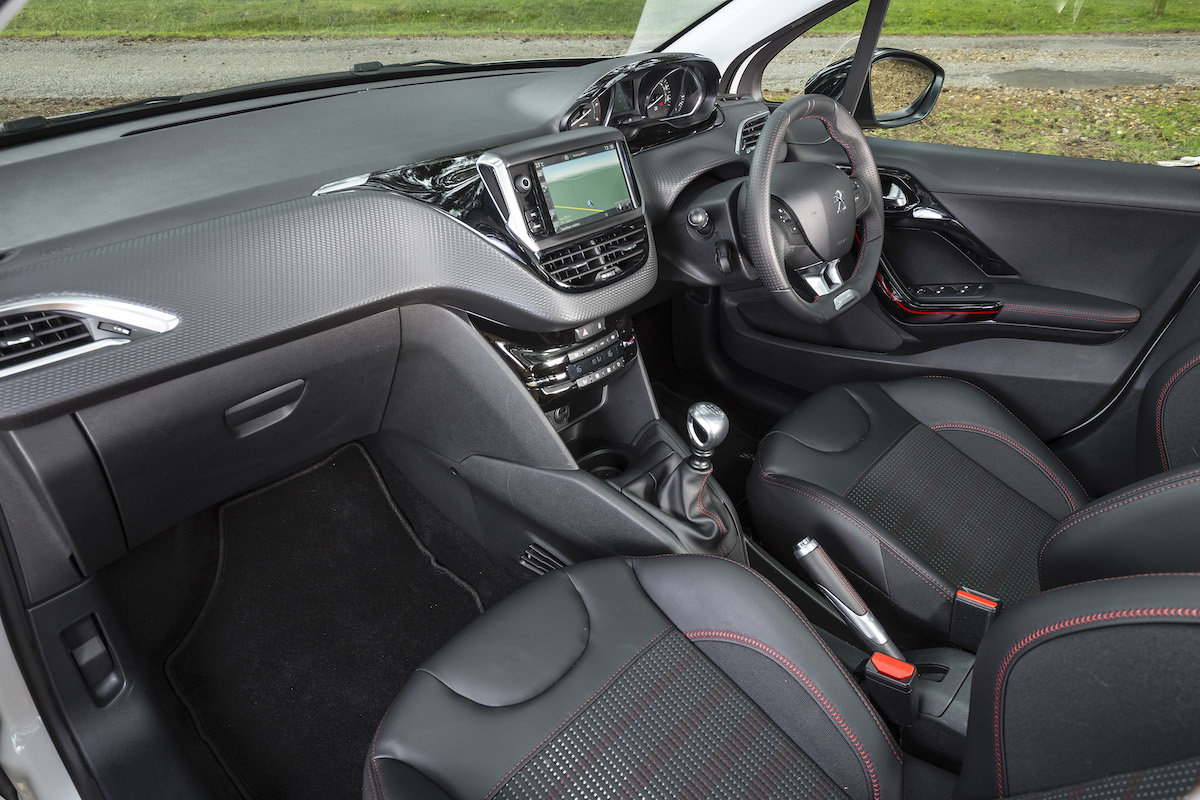
That said, the overall kit count is fairly good, with even the entry-level Access getting electric front windows, remote central locking and cruise control, while top-line variants such as the Allure and Feline treat you to such delights as dual-zone climate control, a touchscreen multimedia system, automatic lights and wipers, satnav, DAB radio and panoramic sunroof. There was even the option of leather seats on some models, while the GTi is packed with all the racy add-ons that you’d expect from a fully paid-up member of the hot hatch club.
Apart from the entry-level versions, pretty much every 208 came with a touchscreen infotainment system. It certainly looks slick enough, but on early cars you’ll notice the dated graphics and the fact it doesn’t feel as responsive as newer units. Matters improved over the years, while the latest cars even feature Apple CarPlay and Android Auto.
EuroNCAP awarded the 208 five stars when it tested the car in 2012, but obviously the assessment has become much tougher since then. All versions get six airbags, electronic stability control and a speed limiter, but you’ll need a post 2015 facelift car if you want autonomous emergency braking.
The Peugeot 208 offers cracking fuel economy throughout the range. Even the GTi by Peugeot Sport has an official figure of 52mpg, whilst the least thirsty 208, the diesel 1.6 BlueHDi 75 stop/start has been measured at a pretty darned impressive 94.2mpg. The rest of the diesel models have figures in the 70s and 80s: the greediest petrol engines deliver figures in the mid-to-high 40s, while the most parsimonious, the 1.2 VTi 82 stop/start is knocking on the door of 70mpg. Obviously in real world driving you’d be hard pressed to match these headline-grabbing figures – an observation applicable to all cars – but nevertheless, visits to filling stations should be mercifully infrequent in a 208.
Good fuel economy equates to low emissions, and therefore modest road tax. Several versions of the 208 – petrol as well as diesel – are free of road tax, while the most you’re going to pay is £220. The majority of models sit within a range between £20 and £150, while many of the diesels cost nothing at all. The insurance industry is also kind towards the 208, with some models in group 6, the majority in a band between groups 8 and 18, and the sportier cars sitting between groups 20 and 33.
All car manufacturers would like to see their used cars serviced within the official dealer network, but Peugeot has actually taken a positive step towards making this happen. It offers two grades of servicing and maintenance, one that uses original equipment parts, the other using what’s known as ‘pattern parts’, produced by the aftermarket, which are cheaper than OEM (Original Equipment Manufacturer - Peugeot, in other words) parts. And when listing its servicing prices, Peugeot quotes the pattern parts prices ahead of its own.
At the time of writing, a 208 more than three years old (in other words, pretty much all of them) cost from £189 for a minor service using pattern parts, and from £199 for OEM parts: a major service costs £219 and £249, respectively. Common maintenance jobs fall within this scheme, too. Replacement front discs and pads are £199 pattern, £279 OEM; rear discs and pads £229 and £279, respectively. A new timing belt (for all but the 1.6 THP turbo engine in the GT Line and GTi, which have chains) costs £399 and £499, but in both cases a replacement water pump (recommended) is a further £120.
Tyres range from between £50-£75 each for many of the models, up to between £120 and £175 a corner for the GTi by Peugeot Sport.
It has been little publicised, but there have been numerous issues with the 1.2-litre VTi and 1.2-litre PureTech petrol engines. Worst is a crankshaft problem that could affect cars with less than 5,000 miles on the clock; Peugeot very quietly replaced the complete engine of cars affected. It became the matter of a recall, and should have been remedied, but if the car you’re considering runs roughly, move on.
The 1.2 also suffered from a crumbling cam belt, fragments of which could block up the oil pick up pipe and cause oil starvation to the big end bearings. The engine is also prone to carbon build up on the backs of the inlet valves, and it’s £100 to clean them.
The turbocharged 1.6-litre THP petrol engine in the GTi has also endured problems. It was subject to a recall for a defective coolant temperature sensor, but more alarming was a batch of dodgy timing chain tensioners that made it sound like a diesel tractor when cold. High pressure fuel pumps have a habit of failing, and so too do ignition coils and spark plugs.
The BlueHDi diesel engines don’t appear to have any recurring issues beyond the coking up of diesel particulate filters (DPF) – as is prevalent in all modern diesels – if the engine isn’t revved hard enough for the DPF’s regeneration process to function properly.
All first-generation 208s were prone to random poor braking performance and premature brake disc wear. The wear was caused by particularly coarse OEM brake pad material – most garages these days fit aftermarket pads – while in some instances of random brake fade, the cause was, in fact, worn front anti-roll bar links that permitted enough movement in the anti-roll bar that it pressed against the front brake calipers in corners.
Other reported issues include weak clutches (one unlucky owner had three replacements in 10 months), failure of the front suspension top mounts and potentially the failure of the complete front suspension subframe, rattly and leaky panoramic sunroofs, a plethora of minor electrical gremlins, and multimedia infotainment screens with a tendency to ‘freeze’.
- The 208’s dashboard is an unusual design in that the instrument cluster sits above a very small steering wheel. Known as i-Cockpit, the theory behind the layoutTh it is that the steering wheel’s spokes will never obscure your view of the dials even when you’re turning a corner. Which is all fine and dandy if you’re tall enough to see clean over the top of the steering wheel, but not so effective if you’re a shorter driver, in which case you may discover that the top of the steering wheel completely impedes your view of the dials.
- Peugeot’s engineers worked hard with the safety package of the 208 and when independently tested in 2012 the car achieved a five-star EuroNCAP rating. Amongst its safety equipment are six airbags – two at the front, to the sides, and brace of curtain-type airbags – a pair Isofix children’s car seat fixtures in the rear, electronic stability and traction control, ABS brakes, electronic brake force distribution, and hill start assist. On the options list are an autonomous emergency braking system for city use, and a system that automatically alerts the emergency services with your precise location if the airbags are triggered.
- The Peugeot 208 was the car used by nine-times world rally champion, Sebastien Loeb, to smash the American Pikes Peak Hillclimb record in 2013. Well, sort of. Despite a passing resemblance to the supermini, Monsieur Loeb’s 208 T16 was actually a bona fide racer featuring an 875bhp mid-mounted twin-turbo 3.2-litre V6 that drove the rear wheels and could fire the Peugeot from 0-62mph in 1.8 seconds.
- If you’re after the best value package: While you may not care if your 208 has every piece of kit in the catalogue, it’s nice to have a few goodies, and that’s what the Active mid-range trim grade entitles you to. The standard roster includes alloy wheels, air conditioning, electric front windows, cruise control, electrically adjusted and heated door mirrors, split/folding rear seats and a touchscreen multimedia entertainment system with Bluetooth connectivity.
- If you want a good blend of performance and economy: Although the diesel 1.6 BlueHDi 75 stop/start is king of economy with a Combined figure of 94.2mpg, it’s a sluggish thing. The 120bhp version of that engine, however, still gives you 78.5mpg but is considerably brisker and stronger in all circumstances.
- If you can’t afford a 208 GTi but like its looks: It’s not an exact replica of the GTi, but the GT Line is close enough in the styling department to keep you smiling. As for engines, we’re tempted to recommend the 108bhp three-cylinder petrol motor, but we’re nervous of its reliability. Instead, take a look at the version with the 165bhp turbocharged 1.6 petrol engine. Its performance isn’t too far adrift of the GTi’s and it’s cheaper to buy and to insure.
- If you can afford a GTi: Forget the standard 208 GTi and the plusher GTi Prestige: they’re below par dynamically. The model you want is the 208 GTi by Peugeot Sport. It has a wider front track, lower suspension, model-specific springs, dampers and wheel alignment, bigger wheels and tyres, and a Torsen differential between the front wheels to make it less wayward as you power out of tight corners. It’s one of the best junior hot hatches around.


