Porsche 911 991 Review (2012-2019)
Porsche 911 cars for sale
4.0
Expert review
Pros
Hugely exciting to drive
Usable every day, all-year round
Comfortable over long distances
Cons
Some reliability issues with the PDK gearbox
Costly to buy and run
The most powerful models will get through rear tyres quickly
The CarGurus verdict
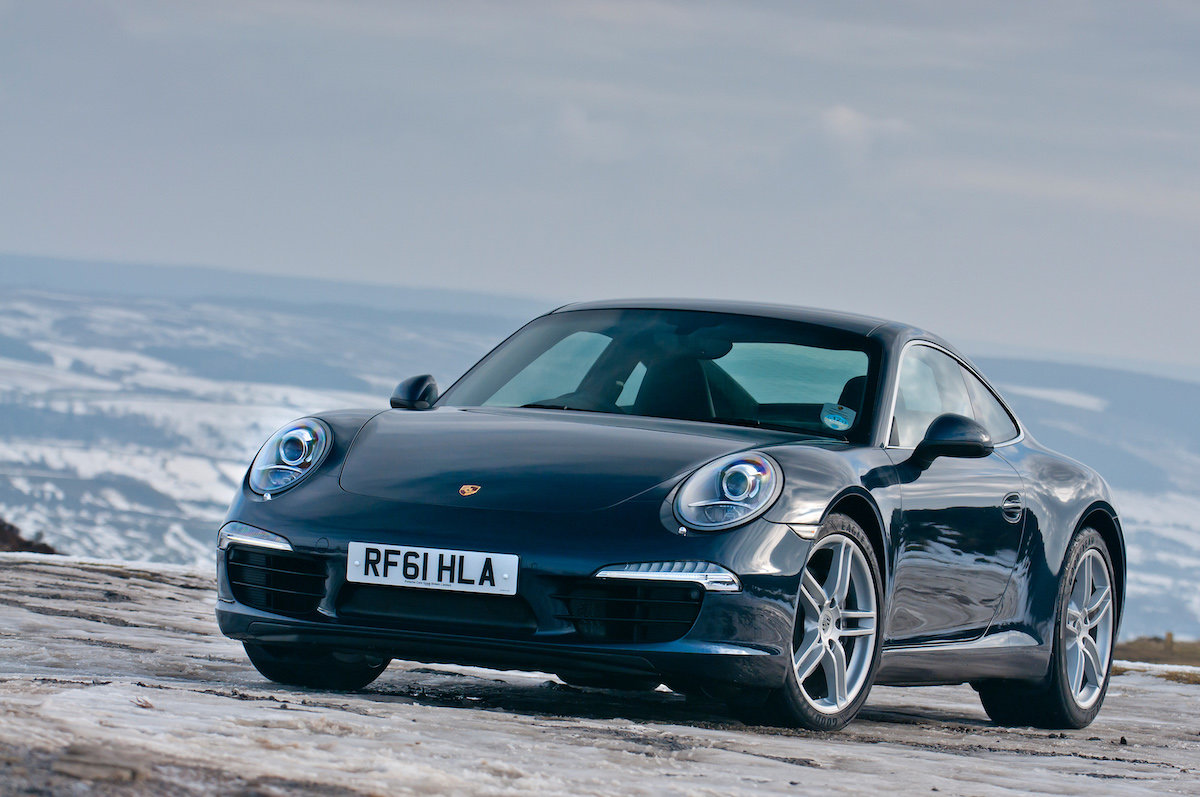
The Porsche 991 is a top-class sports car and the more powerful versions can justifiably be labelled as supercars. But you don’t need to aspire to the wilder models to enjoy a rewarding time behind the wheel. The ‘mainstream’ Carrera and Carrera S 911s are as fast as anybody really needs to go on the public road, they’re comfortable, packed with luxury and convenience features, and they’re robust enough that you’ll have no qualms about using one as your everyday transport.
A Porsche 911 isn’t cheap to run – few true sports cars are – but there’s a national network of well-established independent Porsche specialists that can help reduce costs.
Obviously there are no guarantees, but the 991 is the Porsche 911 that you should be able to own without any dramas, day in, day out, while it treats you to the drive of your life.
Part of the great appeal of the Porsche 911 throughout all its generations is the fact that, as well as being an extraordinarily good sports car, it’s so refined, convenient and robustly engineered that you can use it every day, all year round. The 991-series of the Porsche 911, launched in the UK at the very end of 2011, further ramped up the dynamic excellence over its predecessor – the 997-series – to satisfy the sports car aficionados, while also smartening up the cabin design and equipment levels to make it a credible alternative to buying a luxury saloon.
The timeline for the Porsche 911 is split into two phases, from launch until October 2015 when the car enjoyed a mid-life revamp, and then from the revamp onwards. The 911’s looks didn’t change much with the revamp, but there was big news at the back of the car under the engine cover: a brand new engine with two different power outputs for the ‘mainstream’ Carrera and Carrera S models. The revamped range is known either as the Gen 2 or 991.2, which may be how the car is referred to in advertisements.
The Gen 1 Porsche 911 is powered by a 346bhp, 3.4-litre, flat-six engine in the rear-wheel drive Carrera model, while a 3.8-litre unit with 395bhp propels the Carrera S. There are also four-wheel drive versions of both cars, called the Carrera 4 and Carrera 4S, with wider wheel arches to distinguish them. And then there are Cabriolet and Targa models for folk who like fresh-air motoring. Other Gen 1 models include the fearsomely fast 911 Turbo, the race track-focused 911 GT3, and the 911 GTS, which shares the wider body and drivetrain of the four-wheel drive models, but is also available with rear-wheel drive.
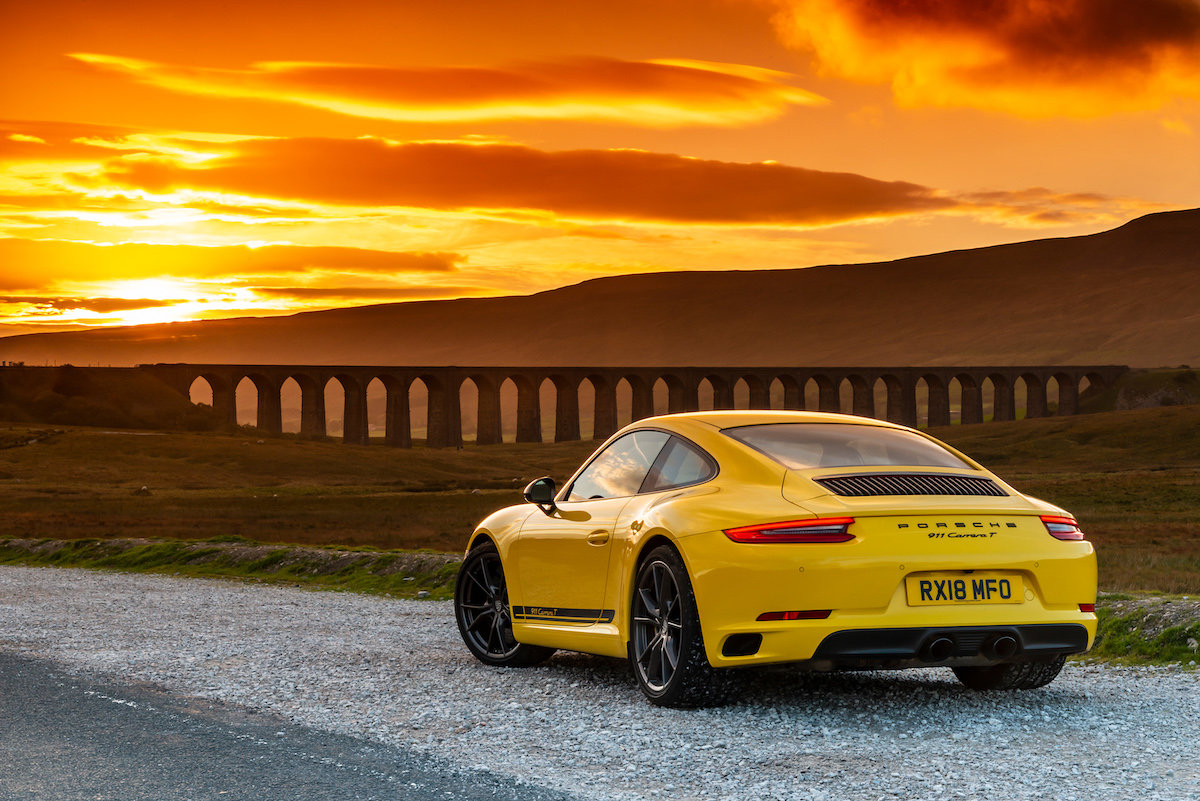
Gen 2 versions of the Porsche 911 Carrera and Carrera S feature a 3.0-litre flat-six engine with twin turbochargers. This motor produces 365bhp in the Carrera and 414bhp in the S. Also in the Gen 2 line-up are more powerful versions of the 911 Turbo, Turbo, GTS and GT3, the race-inspired GT3 RS and the completely bonkers 690bhp, 211mph GT2 RS. Porsche produced two special edition lightweight models, the 3.0-litre (bi-turbo) 911 T and 4.0-litre 911 R, which are both sought after by Porsche collectors.
The 991 is easy to live with, comfortable to travel long distances in, and if chosen with care, reasonably reliable.
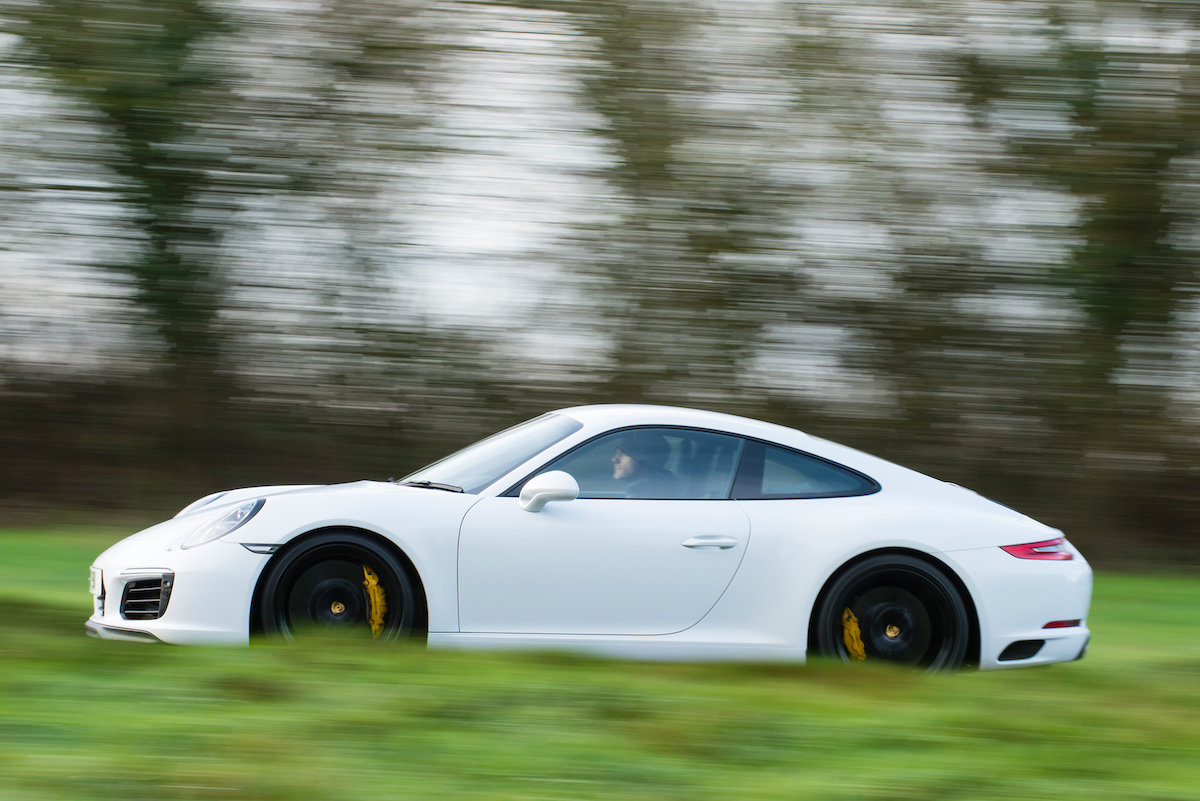
It’s been said many times before, but if you’re looking for a sports car that can double as everyday transport, there are few that can match the 911. Despite its towering performance and peerless handling, the Porsche can turn its wheels to being an occasional family car, a commuting king or a long distance express. One of the big (literally) changes over its predecessor is the increase in size of the 991, which is longer and wider. That translates into an interior that has more space than ever, particularly for those sitting up front, who benefit from more head, leg and shoulder room. There’s also a greater range of seat and wheel adjustment, so getting comfy behind the wheel is easier than ever.
As ever, the 992 gets the 911’s famous 2+2 layout, with a pair of jump seats in the rear. While there’s an increase in space over the 997 generation car, adults still won’t be able to fit into the back. Children will be fine, however, and if you’re travelling two-up you can drop the backrests to create a large extra load area that complements the useful 145-litre boot in the nose (four-wheel drive models have a smaller 125-litre capacity). However, as with previous generations, the GT models are strict two-seaters, with a roll cage where the rear bench would usually be.
The 911’s usability is further enhanced by its excellent visibility, with large front and rear screens and deep side windows making it one of the easiest supercars to see out of. And while it's bigger than older 911 models, the 991 is still relatively compact, meaning narrow streets and tight parking spots won’t have you breaking out in a sweat.
Storage space in the cabin is a weakness though, with only a glovebox, a couple of narrow door bins and a very shallow cubby between the front seats. There are a couple of cup holders that pop out of the dashboard, but they obscure some of the switchgear when in use.
If you want some fresh air thrills, then the convertible and Targa models get you up close and personal with the elements at the touch of a button and in a matter of seconds. The former features a full folding fabric roof, while the latter boasts a novel arrangement where the roof panel is automatically stowed below the distinctive wraparound rear screen.

We risk sounding like a broken record when it comes to the 911, but it really does drive brilliantly. Years and years of continual development have honed the Porsche into one of the most engaging and entertaining driver’s cars on road and track.
A switch to electrically-assisted steering caused a flurry of negative reviews in the car’s early days, but the set-up is actually fast, accurate and delivers just the right level of feedback. The Porsche also delivers astounding grip, incredible poise and twinkle-toed agility.
Yet the 991 combines an immersive driving experience with any easy going side that makes it easy to live with. The low speed ride is firm, but it feels smoother at speed, especially on cars fitted with adaptive dampers (which is most of them), while engine and wind noise are kept to a minimum on a run. However, tyre roar on coarse surfaces can make some motorway stretches more trying than others.
Adding to the car’s appeal is that famed flat-six engine, which delivers a distinctive howling soundtrack and serves up scintillating performance, even in entry-level Carrera guise. That’s particularly true of the facelift 991.2 cars that received turbocharged units across the range.
Despite being down-sized to 3.0-litres delivers stonking real world pace, its extra low rev muscle making it much faster when overtaking slower traffic or firing out of tight corners. It lacks some of the musicality and character of the old naturally aspirated units, but for most the extra pace is a fine trade-off.
Almost all versions of the 991 are fitted with the firm’s slick seven-speed twin-clutch gearbox, which is smooth in auto mode yet also serves up quick and crisp shifts using the steering wheel-mounted paddles. A seven-speed manual was available, but few buyers bothered to choose it, preferring the versatility of the PDK. On the R and GT3, a bespoke six-speed manual was fitted (optionally on the latter).
At the top of the performance tree are the Turbo and Turbo S. Both are obscenely fast (0-60mph in around 2.5 seconds is well within reach) and are packed with extra kit, such as active aerodynamics, four-wheel steering and four-wheel drive. If you’re looking for an all-season everyday supercar, then look no further.
Finally, there are the GT machines, which deliver the ultimate in driver thrills. The mad and bad GT2 RS is effectively a collectors item, as is the sublime 911R with its de-winged body and manual gearbox. The GT3 and GT3 RS are track cars for the road, with scalpel-sharp handling and screaming naturally-aspirated engines that will leave you with a mile-wide grin.
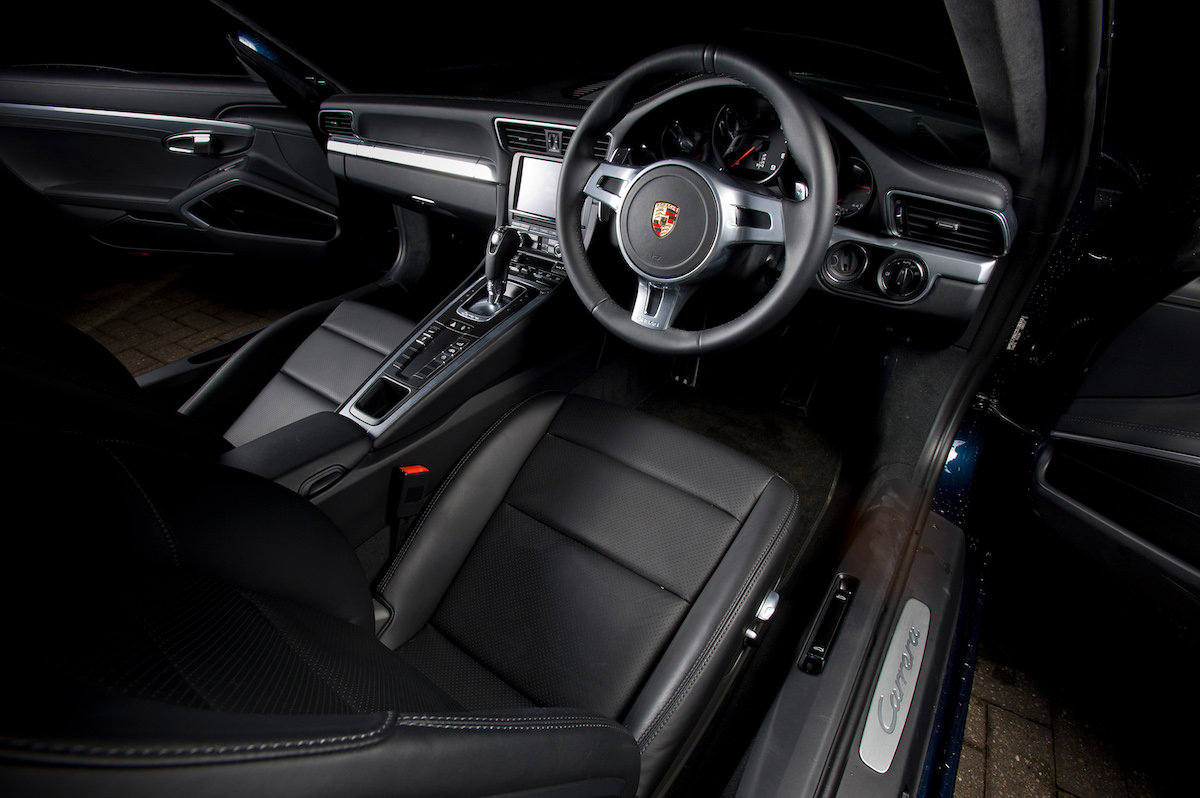
The 991 represented a step-change for the 911, with an interior that finally lived up to the car’s premium pricing in terms of finish, equipment and tech. High grade materials are used throughout, while the build quality is top notch.
Porsche is famed for its extensive and expensive optional extras list, but the 991 series cars are surprisingly well-equipped as standard. Dual zone climate control, xenon headlamps and leather seat trim feature on all models, while S, GTS and Turbo models add even more. However, most owners splurged quite a bit on personalisation, with everything from colour coded seat belts to eye-wateringly expensive (and effective) carbon ceramic brakes. So, inspect any possible purchase carefully to make sure you know exactly what you’re getting.
Yet the real game changer over previous 911 models is the addition of the latest technology, which brings the Porsche kicking and screaming into the 21st century. The early 991 models get a touchscreen infotainment system with USB and Bluetooth connection, while the 991.2 versions get an even slicker set-up that included the option of Apple CarPlay.
Safety also came on leaps and bounds, with the availability of driver assistance systems such as adaptive cruise control, lane departure warning and autonomous emergency braking. However, all were expensive options, so again you’ll need to check exactly what was fitted to your car when it was new.
Your first expense with any Porsche 911 should be a pre-purchase inspection by an independent Porsche specialist. They know the car’s foibles inside out, and what’s likely to go wrong, so will spot things that most of us would miss. A pre-purchase inspection costs around £245, or £395 if it includes an internal examination of the cylinder bores, but look at the outlay as a potential investment, because any problem with a 911 engine or gearbox will be very, very expensive to remedy.
Another potential early cost is a Porsche extended warranty. Subject to a vehicle inspection, this is available for Porsches up to 15 years old and with up to 125,000 miles on the clock. However, it’s about £2,500 for two years’ cover, so not cheap. Some owners report being thankful they invested in it, though, after major mechanical issues with their 911s. It's worth considering if the Porsche 911 you’ve bought was an expensive one.
Servicing costs for the 991 predictably are on the high side. The 911 needs servicing every 20,000 miles or two years, and the sequence runs from minor to major to full-on. At an independent Porsche specialist expect to pay about £290 for the 20,000-mile service, £585 at 40,000 miles, then at 60,000 miles be prepared for a £690 bill. For a 911 Turbo those costs are about £460, £950 and £520 respectively. These prices are likely to be higher if you choose to have your car looked after at an Official Porsche Centre.
Although Porsche suggests your 911 can go two years between services, it’s prudent to have at least an engine oil change on an annual basis. It’s also worth setting money aside for the day you have to change the front brake discs and pads, which will cost about £750 if you have a 911 Carrera and £870 if it’s a Carrera S. The other great consumables on a 991 are tyres; you’ll want to invest in premium brands, so for a 911 running on 19-inch wheels, expect to pay from about £150 to £190 per corner.
Official claimed fuel economy figures for the 991 Carrera models range between 30 and 38mpg, but you’re unlikely to often achieve those mpg figures in real-world driving. Road tax ranges from £250 to £590, while insurance spans groups 47 to 50.
The most troubling issues on a Porsche 991 concern the PDK seven-speed automatic gearbox and whilst faults aren’t commonplace, you do need to be aware of them. The PDK gearbox can become stuck in Drive if actuator units fail, while internal sensors can go on the blink, throwing up ominous warning symbols on the dashboard, although sometimes just resetting the sensor can sort this out. Some PDKs will drop randomly in and out of gear and won’t release a gear, and in a worst-case scenario, this is a prelude to requiring a whole new gearbox at vast expense.
So on your test drive, ensure that the PDK shifts smoothly and quietly, and remember to check out its manual gear-changing functions, too. This is where a pre-purchase inspection can become very worthwhile, and similarly the Porsche extended warranty.
While early examples of the 911 GT3 were recalled for an engine replacement, generally the engines of the 991 range suffer few real issues. Some are known to misfire, which is likely to be caused by faulty coil packs, and others are reported to cut out at low revs, especially when hot, a problem attributed to a faulty crankshaft sensor. The stop-start system can sometimes throw up a warning symbol, usually just because of a blown fuse.
Radiators can leak. They’re located low in the nose where leaves and other road debris can accumulate and lead to corrosion, so clean out the area around the radiators from time to time. And talking of water leaks, the drainage pipes from the air conditioning unit can become dislodged allowing condensation to trickle into the footwells; damp carpets and a musty smell are giveaways. This needs sorting out quickly as various electronic control units are located under the seats and can respond expensively to water ingress.
For all Porsche’s much-vaunted reputation for build quality, the interior of the 911 is prone to annoying rattles, some of which can be silenced with a determined effort, some of which you just have to live with. If you’re buying a 911 Cabriolet or 911 Targa, make sure that their roofs operate smoothly and quietly and that they latch cleanly when you raise them. And beware a malfunctioning alarm, as it could shut down the car altogether.
- The 991 is quite costly and complex and goes extremely fast, so you don’t want to get your purchasing decision wrong. It’s worth investing in a pre-purchase inspection by an independent Porsche specialist, Because they work on cars like this all day every day, they know what to look out for. A pre-purchase inspection isn’t cheap – about £245 for the standard one, £395 if they look inside the cylinder bores – but it’s money well spent if you can avoid, say, buying an example that might soon need its £25,000 engine replaced.
- In an advertisement for a Porsche 911 you may well notice several acronyms signifying equipment fitted to the car. PASM stands for Porsche Active Suspension Management, which can automatically adjust the car’s dampers to suit your driving needs; it’s standard on the Carrera S and an option on the Carrera. PDCC is for Porsche Dynamic Chassis Control, which automatically stiffens the anti-roll bars when going around corners to lessen the amount of body roll. PDK is what Porsche calls its twin-clutch automatic gearbox (manual gearboxes are also available on most models), while PCM is for Porsche Communication Management, a fancy name for the infotainment system, which on these cars includes satnav.
- Standard on the 911 Turbo and optional on other 991 models are Porsche Carbon Ceramic Brakes (PCCB); cars fitted with these hi-tech brakes feature yellow brake calipers. While they’re a trendy thing to say your car has, they really only come into their own on the race track. They dissipate heat very quickly, which reduces brake-fade when you’re driving flat-out for lap after lap. The thing is, the standard brakes on the 991 are outstanding, and for most drivers most of the time, you don’t need anything more. So question whether you really need to pay extra for a car with PCCB discs.
- If you don’t want to spend too much money: For the full Porsche 991 experience at comparatively reasonable cost, a pre-facelift 3.4-litre Carrera coupe will do just fine. Although it’s the ‘entry-level’ model, it still does 180mph, can jump from rest to 60mph in 4.6 seconds, and drives with the same sense of involvement and exhilaration as its more powerful siblings. If your budget allows, try to find one with the optional and excellent PASM suspension.
- If you want the best all-rounder: The Porsche 911 Carrera GTS post-facelift model encapsulates the best that the range has to offer. Its 444bhp twin-turbo engine brings sensational performance – 193mph, 0-60mph in 3.8 seconds – its handling and roadholding are superb, and thanks to having PASM suspension as standard, it rides quite well for a car of this type. We suggest going for the four-wheel drive version, although you won’t be disappointed by the rear-drive alternative.
- If you’re a fresh-air fiend: The Porsche 911 offers you two choices for enjoying the wind in your hair; the 911 Cabriolet with a full canvas roof that folds right back, and the 911 Targa, which has a moveable solid roof panel that stows automatically behind the seats, exposing the front seats to the sky above. With the roof closed, the 911 Targa is just like a regular coupe from behind the steering wheel, which is good in the winter and for security in the city. The canvas roof of the Cabriolet is beautifully engineered and snug and quiet when closed.
- If you’re a speed freak: All Porsche 911 models are very quick, but the 573bhp 911 Turbo S is breathtaking and the 690bhp 911 GT2 RS simply insane. Then there’s the 911 GT3 RS, which although road legal is set up to excel on the race track. A ‘normal’ 911 Turbo, however, is plenty quick enough.


