Peugeot 308 Review (2013-2021)
Peugeot 308 cars for sale
3.0
Expert review
Pros
Understated good looks
The estate is extremely practical
Solid build quality
Cons
Not a driver's car
Cramped rear seats
Reliability is a concern

The CarGurus verdict
If you want something a bit different from the classic Golf, Focus or Astra, then the 308 is well worth looking at. The SW estate is one of the most practical cars of its type, and the GTi can give you some real fun on open roads. But even the standard car has plenty to recommend it. If you’re planning on carrying adults in the back regularly then it might not be for you, and the reliability concerns mean it’s important to do your homework before purchasing. But if you’re careful, you could end up with the 2014 European Car of the Year on your driveway at a very attractive price.
Peugeot first introduced the 308 back in 2007, and while the French company's new car didn’t quite have the chops to compete with the market big boys, like the Ford Focus, Vauxhall Astra and Volkswagen Golf, it gave Peugeot a solid base to build upon.
And so, in 2013, it unveiled this second-generation model. It went on sale in 2014 as a five-door hatchback and a five-door estate, the latter called the 308 SW. It was well-received, and was even awarded the prestigious 2014 European Car of the Year title that same year. Not only was it more handsome than its predecessor, it packed an interior that had just a touch of premium appeal. It was decent to drive too, in a refined and easy-going sort of way.
The 308 was given a facelift in 2017, with a tweaked grille, headlights and bumpers and an updated infotainment system, bringing in Apple CarPlay and Android Auto for smartphone connectivity. In 2021 it was replaced by an all-new 308, which was closely related to the equally new Vauxhall Astra.
The interior is unusual compared to rivals, with a small steering wheel that you look over - rather than through - to see the dials. For some, this will be a stylish and different approach, making it easier to glance down at driving information. But others will struggle to find their preferred driving position without the top of the wheel obscuring their view of the instruments. Build quality and the standard of the materials is good, but not quite as good as in rivals like the Volkswagen Golf.
Space in the front of the 308 is very good, with lots of room for tall adults, but the rear space in the hatchback is limited, especially when compared to capacious rivals like the Skoda Octavia. Legroom particularly is in short supply for adults, but it’s better in the SW estate. At least there’s loads of handy storage, including a lidded cubby between the front seats, deep door bins and a useful tray ahead of the gear lever. However, there’s also the familiar French car gripe of a glovebox that’s virtually useless due to an intrusive fuse box.
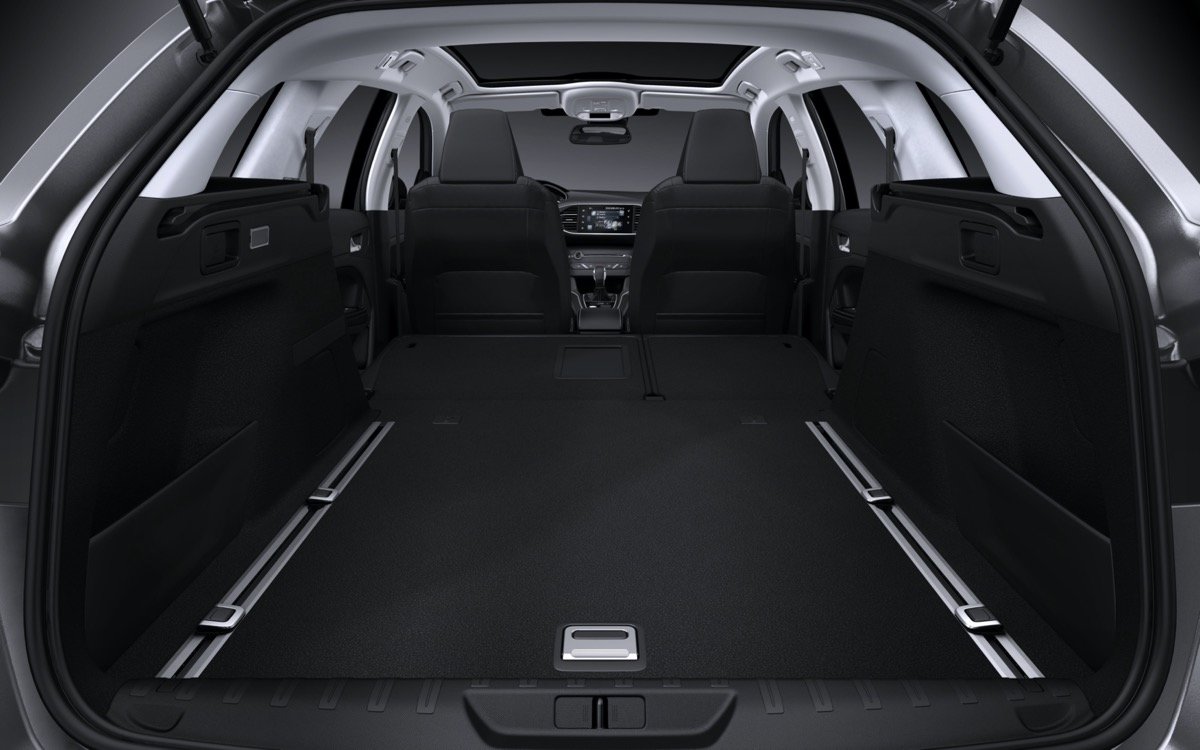
Still, the hatch’s boot is big, with 470-litres of space, expanding to 1,309-litres when you fold the rear seats down. The SW estate boasts a huge 660-litre load, including 70-litres of handy hidden storage under the boot floor. Handy levers make it a doddle to lower the 60/40 split/fold rear seat, which drops down to create a totally flat floor and liberate a cavernous 1,775-litres of space - only the Skoda Octavia estate offers more.

On the move, it’s clear that the 308 in standard form isn’t designed as a driver’s car. There’s none of the feeling of agility and alertness that you get in a Ford Focus, and it’s also missing the comfort and class of the Volkswagen Golf. Yet the Peugeot always feels poised and predictable, and that small steering wheel makes it feel a touch more nimble. And while it doesn’t ride quite as smoothly as the VW, it makes a decent fist of isolating you and your passengers from the worst bumps and potholes.
There are plenty of engines to choose from too, although the availability varies depending on the trim level you want. We count more than a dozen different engines through the 308’s production run, and that’s before you factor in the various automatic and manual gearbox combinations.
The entry-level petrol, a 1.2-litre with 82bhp, labelled 1.2 VTI, is rather gutless and best avoided, but the remaining petrol and diesel engines are all strong and efficient. Of the petrol engines, the 109bhp version of the 1.2-litre engine is worth a look, as it’s got enough grunt without eating through fuel. The sweet spot for many was the diesel-powered 1.6 HDi engine with 118bhp, and you’ll find plenty of these on the market. It was replaced by a 1.5-litre engine in 2018, which had 99bhp or 128bhp, and that’s the one to go for if budget allows. You can also get a 2.0-litre diesel engine with 148bhp or 178bhp, both of which deliver a compelling blend of performance and economy.
If you do want a bit of extra punch, 1.6-litre petrol engines are available with 156bhp and 202bhp, and then there are the GTi models, too. The standard car serves-up a healthy 248bhp, but it’s the 267bhp 270 by Peugeot Sport that’s the one to have. A bit of a hidden hot hatch gem, it features an uprated chassis and limited slip differential for extra traction. It’s not as fashionable as a VW Golf GTI or as instantly exciting as a Ford Focus ST, but its blend of muscular performance and agile and engaging handling makes it an extremely fun driver’s car.
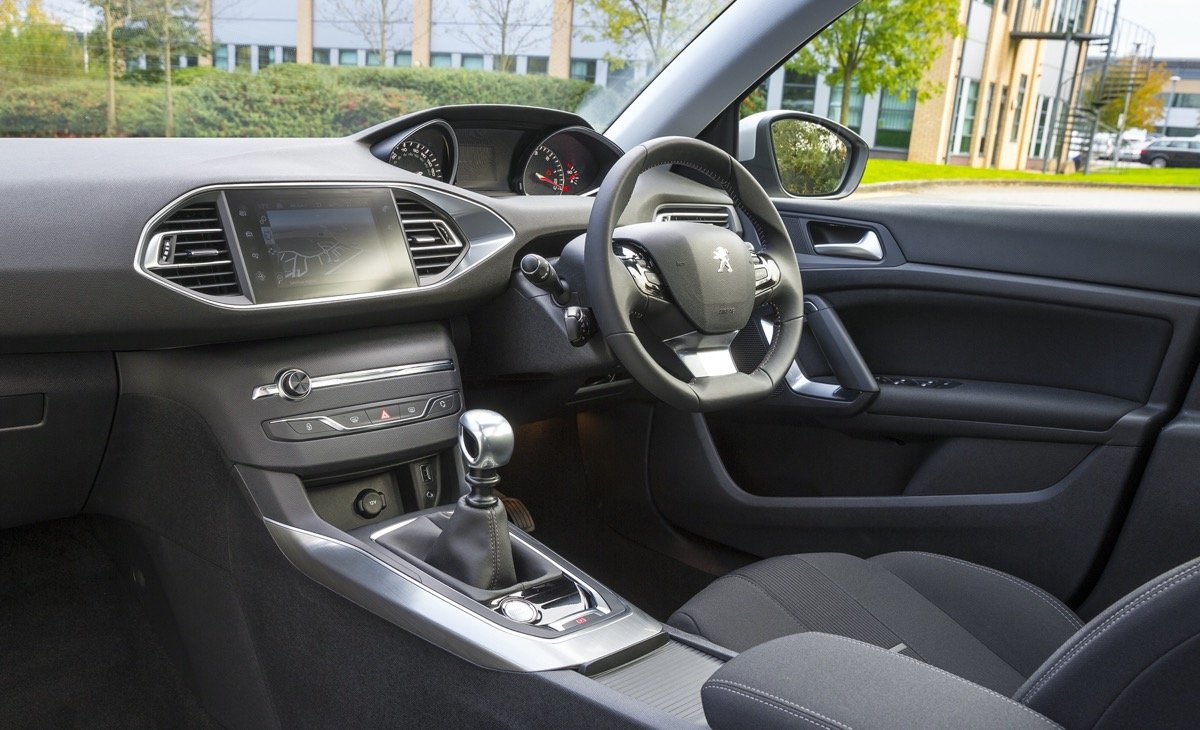
At the 308’s launch there were four trim levels to choose from. Access gives you manual aircon, cruise control and speed limiter, DAB radio and Bluetooth, while Active boosted the spec to include 16-inch alloys, dual zone aircon, rear parking sensors and satnav on a 9.7-inch touchscreen (which was the largest in the sector at the time).
Allure added 17-inch alloys, reversing camera, LED headlights and front parking sensors, while Feline had a panoramic sunroof, keyless entry, Alcantara sports seats and a Driver Assistance Pack that included features like adaptive cruise control and automatic emergency braking.
In 2015, the range-topping GT model was introduced, with a lowered ride height for a sportier drive and 18-inch alloy wheels. This wasn’t quite a hot hatch, but did make for a more involving experience. At the same time, a GT Line model was introduced, which replaced the Feline trim, and included sports seats, 18-inch wheels, bright LED headlights and tinted windows.
By the time the 308 bowed out in 2021, there were Active Premium, Allure, Allure Premium, GT and GT Premium models, although the specification levels largely matched the old trim structures. The biggest upgrade was arguably the introduction of Apple CarPlay and Android Auto.
Speaking of infotainment, all 308 models got a 9.7-inch touchscreen that looks smart and is mounted high in the centre of the dash for ease of use. However, there are some frustrations, not least the fact that you have to enter various sub menus just to change the temperature on the climate control, something made more irritating that the unit isn’t the most responsive.
In terms of safety, the 308 was awarded five stars by EuroNCAP in 2013, and all cars get six airbags, electronic stability control and a manual speed limiter. It’s worth looking out for models fitted with the optional Driver Assist Pack that featured adaptive cruise control, blind spot monitoring and autonomous emergency braking. This latter technology was made standard on post facelift cars.
The 308 has some of the most efficient engines you can get in this class of car, which will help keep day-to-day running costs relatively low in terms of fuel economy. They’re clean, too, with low CO2 emissions that, for older cars, will keep Vehicle Excise Duty costs down.
The diesel models will be better on fuel than the petrol, with the 99bhp 1.5-litre BlueHDi model promising an official figure of up to 64.6mpg. That’s measured under the newer WLTP testing method, so will be more accurate to real-world performance than older cars, which used a different test to come up with an official MPG figure.
The 1.2-litre petrol, often labelled as PureTech, is also very impressive on fuel. The 108bhp version has an official MPG figure of 70 using the old test method.
Cars registered after 1 April 2017 will pay a flat rate of £160 a year in VED, but earlier cars fall under the old rules, with annual costs dependent on their CO2 emissions. Several of the diesel engines have low enough emissions to not attract any VED, while some of the 1.2-litre e-THP petrol engines will cost only £20 or £30 a year. No model will cost more than £160 a year.
Insurance groups vary between 9 and 29 of 50 for the ‘regular’ versions, while the performance GTI models sit in group 36. This is pretty similar to rivals. You’ll need to service your 308 every year, or every 20,000 miles for diesels and 16,000 miles for petrol, whichever comes sooner. Expect to pay around £200-£330 at a main dealer. Older cars might be worth taking to an independent mechanic, which will likely be cheaper.
Peugeot’s reputation for reliability has grown in recent years, from not great to actually topping the 2019 JD Power Vehicle Dependability Study. Having said that, the 2019 What Car? Reliability Survey put the 308 only 28th of 31 family cars, which is a bit concerning.
There have been plenty of recalls for the 308, too: we counted 23 at the time of writing. These ranged from fuel and oil leaks to starter motor issues and airbag problems. Most of the issues should have been fixed by past owners, but it’s worth checking with a Peugeot dealer to see if the car you’re looking at has been affected and sorted out.
When it comes to common problems, watch for knocking from the rear axle on earlier cars, which could signify that it’s been damaged. Cars up to 2015 had cambelts that could degrade over time, but a stronger version was then introduced to stop this. The belt needs changing every 10 years or 112,000 miles, which will cost between £400 and £500 at a Peugeot dealer.
The 308 was covered by a three-year, unlimited-mileage warranty, so later cars will still be covered. That said, other manufacturers offer five- or even seven-year warranties on similar cars.
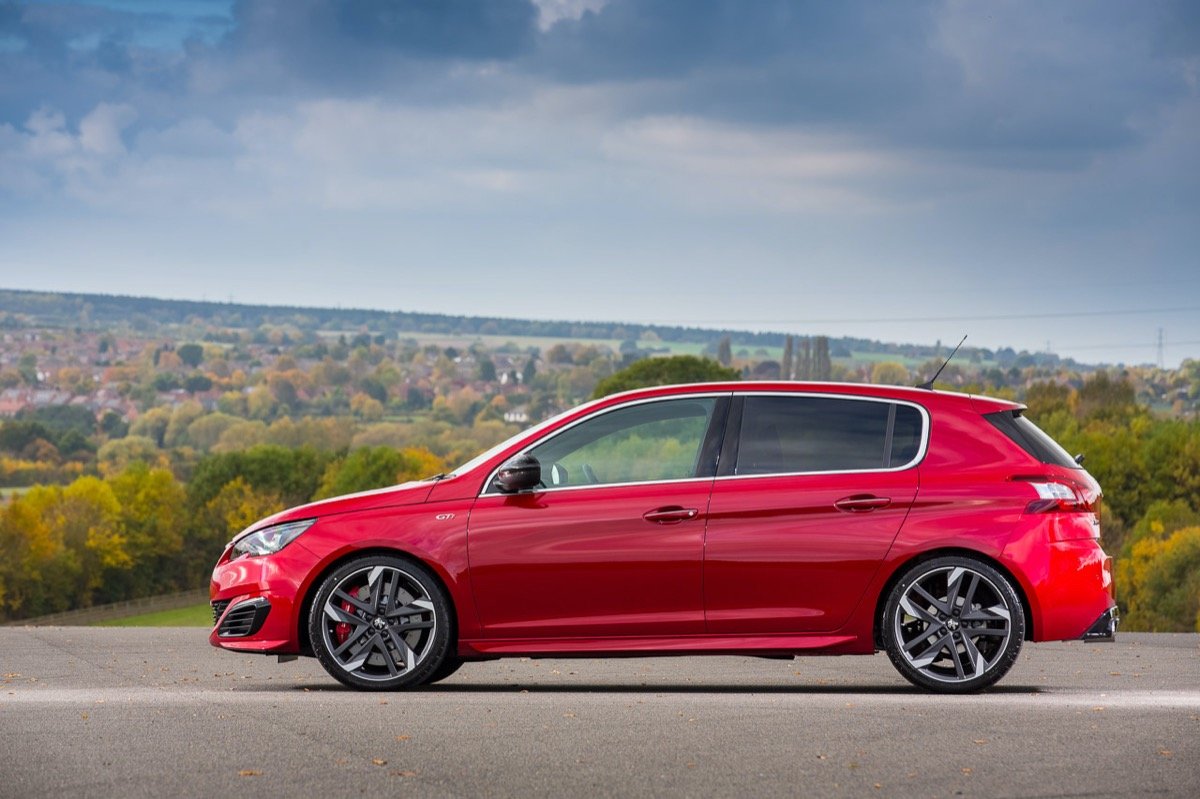
- Also in 2015 a sportier model arrived, called the 308 GTi. This gives the 308 some proper hot hatch credentials and is a worthy rival to cars like the Volkswagen Golf GTI, with a much more involving driving experience. Its 1.6-litre petrol engine puts out either 247bhp or 267bhp depending on spec. We’d recommend the latter, and Peugeot seemed to agree, dropping the lower-powered version fairly quickly.
- A special edition model, called the 308 Sportium, was introduced in late 2014. It sat between the Access and Active trim levels and was powered by the 1.2-litre PureTech petrol engine, promising low emissions and either 110bhp or 130bhp. It was only available as a hatchback, and featured as 16-inch alloys and rear parking sensors.
- Another special edition, the Tech Edition, was released in 2018 and sits above Allure spec, with adaptive cruise control, sports seats and a panoramic sunroof.
- If you want the most fun: There’s no question that the 308 GTi is the model to go for if you’re set on a mid-sized Peugeot but want to enjoy your driving. We’d go for the 267bhp model, badged as the 270 by Peugeot Sport, as it’s a proper hoot to drive.
- If you want the most space: The 308 SW estate has more space in the back for passengers and a boot that’s one of the biggest in the class. If you’re going to be carrying adults around, or you just need as much luggage room as possible, then this is the model you should be looking at. Be aware that models with a panoramic sunroof have a bit less headroom, however.
- If you want all the toys: Aside from the GTi hot hatch, the GT model sits at the top of the range and has the most standard equipment. If you want the absolute zenith of tech and features, then go for a later model, which is even better specified.
- If you want the best all-rounder: We’d go for the mid-spec Active model as the best balance of price and features, but as prices come down on used examples we’d be keeping our eyes open for Allure and GT-Line examples if they’re not too much extra. For engines, the 1.5-litre diesel is the best all-rounder, but it’ll be pricier than the 1.6s, as it’s newer. A 118bhp version of the 1.6-litre engine will suit many.
