BMW 2 Series (2014-2021) review | One badge for four very different cars

Pros and cons
What we like
Four different versions to suit different buyers
Impeccable interior quality
Competent handling and a comfortable ride
What to consider
Cramped third row of seats in the Gran Tourer
Convertible is heavier and slower than the coupe
The 2 Series is quite a pricey used car
The CarGurus verdict
There really is a 2 Series to suit every taste, such is the diverse nature of the range. It can be had as a glamorous coupe or drop-top convertible, or as an MPV with either five or seven seats.
Whichever you choose, you’re assured of impeccable interior quality, with lush materials and a solid build, along with the image and desirability that comes hand-in-hand with the BMW badge. Although there are very significant mechanical differences under the skin between the four different variants, all of them assure a polished driving experience, with sharp handling, decent ride comfort and a fairly good level of rolling refinement.
Each is a reasonably practical offering for a car of its type, too, and most of the luxury and safety equipment you’d expect is present-and-correct. And while a BMW will never be as affordable to buy as a rival with a less prestigious badge, it is at least comparable on price with its premium competitors, while its running costs should be a match for any of them.
out of 5 expert review
What is the BMW 2 Series?
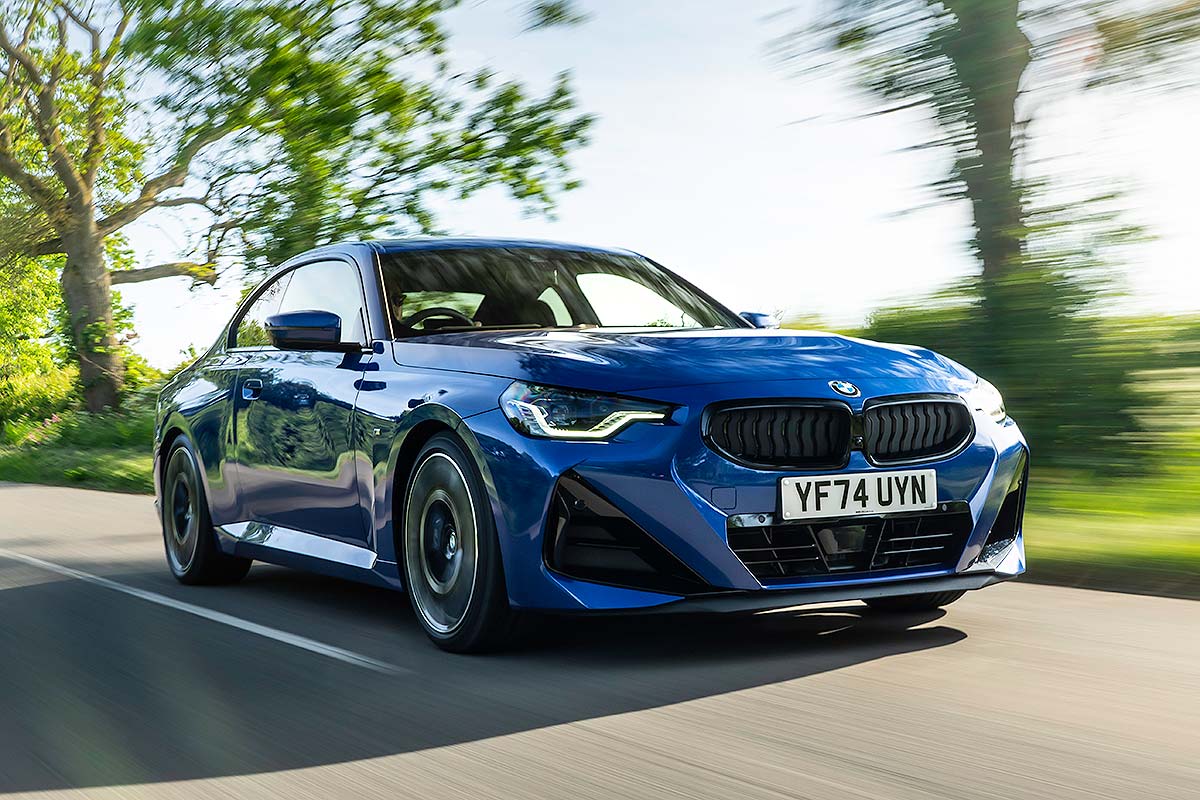
It might sound a little strange to suggest that a car might have an identity crisis, but if any car does, then the BMW 2 Series is it. You see, depending on which of the four different versions you buy, your car will do a very different job. On the one hand, you have the glamorous pair: the BMW 2 Series Coupe and the BMW 2 Series Convertible. Both of these four-seater, two-door cars have sleek, sexy looks that match well with a desirable badge and stunning quality, making them super-attractive for buyers looking for style and sophistication at a reasonably affordable price.
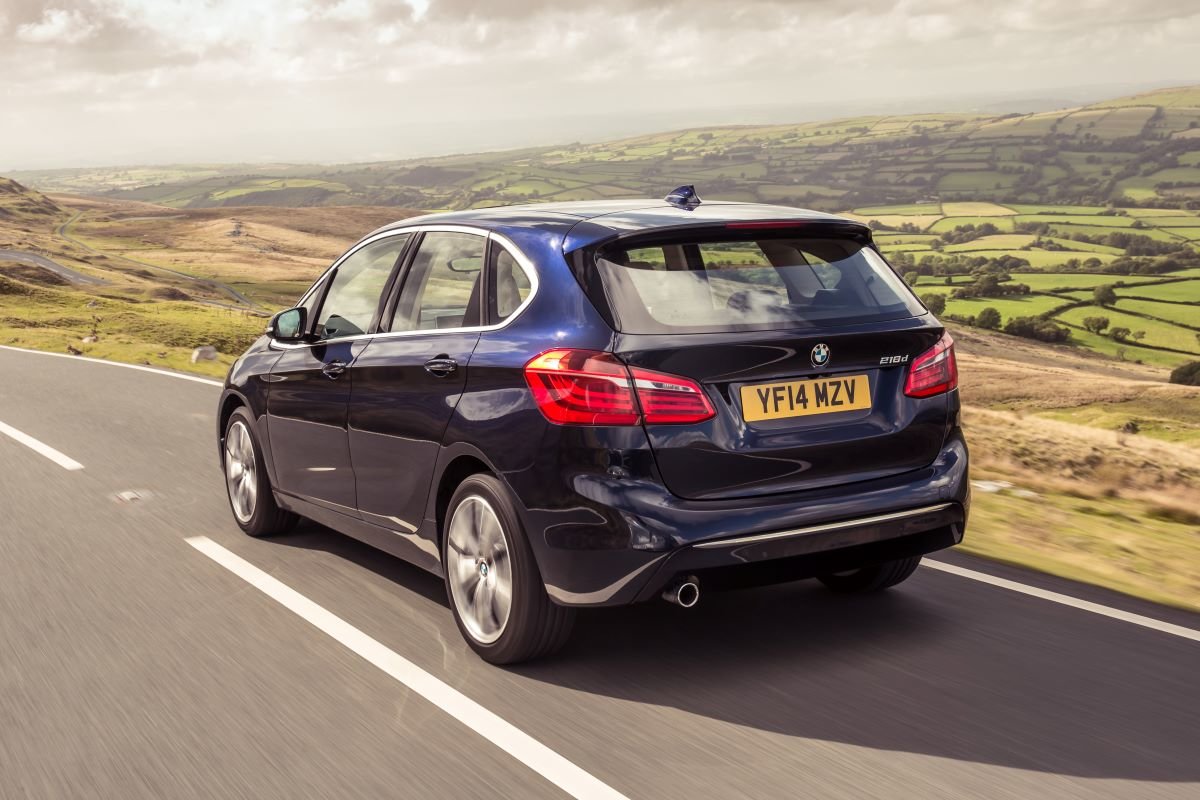
On the other hand, you have the 2 Series Active Tourer and 2 Series Gran Tourer, which couldn’t be more different. Yes, the desirable badge and the stunning quality remain, but this time they’re wrapped up in an MPV body with practicality at its heart, which means there’s very much a chalk-and-cheese feel to the 2 Series range.
Of course, with the diverse nature of each of the various types of 2 Series, the rivals for each one will be very different. If you’re considering the coupe, then you’re probably also considering cars like the Audi TT, Toyota GT86 or Volkswagen Scirocco. If you’re considering the convertible, then the likes of the Audi A3 Cabriolet, the Mercedes SLK or Vauxhall Cascada might well also be catching your eye.
The Active Tourer, meanwhile, dusts it with other premium high-sided hatchbacks such as the Mercedes B-Class and Volkswagen Golf SV. With the seven-seat Gran Tourer, meanwhile, most other premium-badged seven-seaters take the form of SUVs, such as the Land Rover Discovery Sport, but one premium-ish MPV rival does exist in the form of the Volkswagen Touran.
Practicality
How practical is it?
As you might imagine given the diversity of the range, just how practical your 2 Series is will very much depend on which 2 Series you’re choosing.
Let’s look at the coupe and convertible models first. Understandably, neither of these cars was designed with practicality at the forefront, but compared with similar coupe and convertible rivals, there’s actually a reasonable amount of room for passengers – more than you’ll get in an Audi TT, for example (the TT Roadster doesn’t even come with rear seats at all).
You also get a surprisingly big boot; 390 litres of luggage space in the coupe, and 335 in the convertible, is plenty for a car of this size and type (though it’s worth pointing out that lowering the convertible’s roof reduces the usable space to a somewhat less capacious 280 litres).
Of course, the five-seat 2 Series Active Tourer is a far more pragmatic proposition, with a light, airy interior, high driving position with good visibility, and plenty of room in the back seats, where you’ll also find a 40/20/40 split to allow easy through-loading, and the seats also slide to allow you to increase boot space to its maximum of 468 litres without decreasing passenger carrying capacity.
Much the same can be said of the seven-seat 2 Series Gran Tourer, though the difference is that extra length allows space for an additional pair of seats. These seats are pretty vestigial, and are best thought of as being reserved for occasional use, though they can be folded down into the boot floor when not in use, at which point the Gran Tourer can carry up to 560 litres of luggage.

Driving
What’s it like to drive?
There are some fairly fundamental differences between the ‘glamorous’ end of the range and the ‘practical’ end, too. While the coupe and the convertible are based on the same sporty rear-wheel-drive platform as the 1 Series of the day, the Active Tourer and Gran Tourer share the same front-drive platform as the MINI (although some versions can be had with all-wheel drive instead).
That means differences in the way they behave on the road, but all of them are very good to drive, with agile handling, sharp responses, a reasonably comfortable ride and good refinement. Most of the same engines are shared across the board, and most do a really good job on performance, refinement and fuel economy.
Tech and equipment
Technology, equipment & infotainment
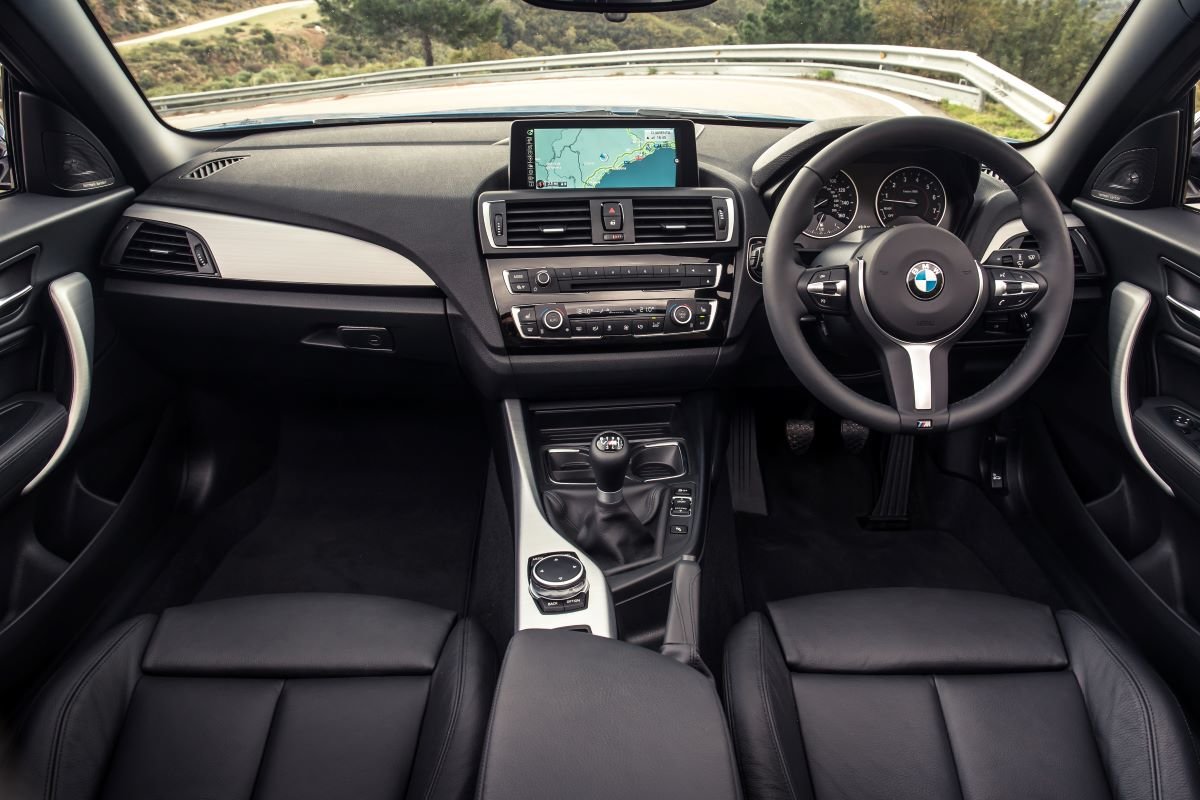
Between the four different types of 2 Series, there are one or two differences in trim levels and the stuff you get from each of them, but they follow a generally similar format. In each case, SE is the entry-level trim, and you can expect a standard kit list that includes automatic climate control, remote central locking, rain-sensing wipers, rear parking sensors, alloy wheels, height adjustment for the front seats, and a multi-function leather steering wheel. You also got the excellent iDrive infotainment system which brought together a 6.5-inch colour display, DAB radio, a Bluetooth hands-free phone connection, USB and aux-in sockets and six speakers.
In most cases, you could then choose to upgrade to either Sport or M Sport trims. Sport added sports seats and a range of sporty styling upgrades inside and out, but very little else in the way of extra luxury kit. It was a similar story with M Sport trim. It had even more aesthetic embellishments, but little in the way of extra gadgetry; if you wanted that, you’d have to raid the options list. Depending on the type of 2 Series in question, and the time it was built, you might also have had the choice of Luxury or Modern trims (these came and went over time on various versions of the car).
Running costs
BMW 2 Series running costs
With the 2 Series being available in so many different shapes and sizes, pinning down precise figures for running costs is rather difficult. Obviously purchase prices will vary greatly between the four types of car, but whichever you’re considering, they won’t be particularly cheap choices. With higher original prices and stronger resale values than most of the competition, they’re likely to be pricier as used cars, although having said that, they shouldn’t be any more expensive than other premium-badged alternatives.
The story is similarly vague with fuel economy due to the diverse nature of the range. Obviously, the diesels will treat you best on this score. Taking the coupe as an example, the diesels will all return upwards of 50mpg, regardless of whether you team them with a manual or automatic gearbox, although the 220d will drop into the mid-40s if combined with xDrive four-wheel drive. You’ll get somewhere in the mid-to-late 30s with most of the petrols, with very little difference between them, while the most powerful M235i and M240i versions should get around 30mpg.
Engine-for-engine, the Active Tourer gets very similar figures to the coupe, but the convertible and Gran Tourer are a little thirstier due to their extra weight. The Active Tourer has another trick up its sleeve, too, as this one is the only 2 Series to be offered with a plug-in hybrid drivetrain. According to the latest official tests, up to 157mpg is achievable, but this figure isn’t representative of real-world use. Put simply, if you run the car on electric power the whole time without any intervention by the petrol engine, then you’ll use no fuel at all. If you regularly rely on the combustion engine, you’ll use lots. The fuel economy you get will depend entirely on how you use the car, so it’s best suited to drivers who only do short, tightly regimented journeys and have regular access to charging points.
BMW 2 Series reliability
Timing chain issues are less of a concern with the 2 Series than with earlier 1 Series models, and the three-cylinder petrol engines that power most models are generally thought of as being pretty dependable.
If you’re looking at buying a diesel, though, you’ll want to try and find out whether it’s had regular long runs at higher speeds, which help to clear out the particulate filter. If a diesel 2 Series is used exclusively for shorter trips, the particulate filter can clog up, and that can lead to an expensive bill to replace it.
You’ll also want to check all the electrics work properly, and ensure that the air conditioning blows cold. And don’t forget that Active Tourer and Gran Tourer models will probably have had to suffer lots of abuse at the hands of young families, so check the interior plastics are all in good order and the fabrics aren’t torn.


What owners say
"The BMW 2 Series stands out for its sporty performance and luxurious feel across all model years. Owners consistently praise its build quality and comfort, making it a pleasure to drive. However, some drivers feel that the car's features and fuel economy could be improved. Overall, the 2 Series offers great value for those looking for a blend of practicality and driving enjoyment."
Updated 2020 BMW 2 Series for 2025 2 Series and have to say that the new model has much improved tech and smoother ride.
20 November 2025The vehicle is just perfect for me. I however wish the trunk has a button to close and lock it.
18 June 2025Looks great but this 218i is listed as a 2.0 litre model but I think it's only a 1.5 litre
26 April 2025What owners say
Updated 2020 BMW 2 Series for 2025 2 Series and have to say that the new model has much improved tech and smoother ride.
20 November 2025The vehicle is just perfect for me. I however wish the trunk has a button to close and lock it.
18 June 2025Looks great but this 218i is listed as a 2.0 litre model but I think it's only a 1.5 litre
26 April 2025Very nice drive they don’t have elective folding mirrors as standard
28 July 2025Quality match for what we need right now. Comfortable driveable Classy hatchback
4 September 2025An exceptionally elegant family car. Packed with practical features, lots of technology. Good looking, great fun to drive.
20 November 2022Much more comfortable than an M2 and .2 of a second slower to 100k, what’s not to like...
22 December 2020Perfect family car. Sporty drive, excellent build quality and looks good! The best MPV on the market for anyone who enjoys driving!
28 February 2021Love it. Fun to drive. Beautiful inside & out. Great MPV twin exhaust & Xdrive (awd) make it such a practical vehicle for all driving situations.
30 October 2023Love this car. Best I have had. Good price. Smooth and a great drive.
11 August 2022Three things to know
- The price you pay for your car will differ greatly according to which flavour of 2 Series you choose, - but because initial prices were comparatively high and resale values are very solid, none of them will be a particularly cheap choice. Happily, though, each does feel worth the money you pay.
- Given BMW’s fondness for a fast car, it’s no surprise that high-performance variants of the 2 Series are available. Provided you go for the coupe or convertible, that is; there’s not much call for a super-powered MPV these days. Depending on the vintage of car you’re looking at, the fast one will be called either the M235i or M240i. Each uses a turbocharged 3.0-litre, six-cylinder engine, with the former delivering 322bhp and the latter pushing out 335bhp. Both are capable of cracking 0-62mph in less than five seconds. Or, if you want something really fruity, the Coupe can be had in super-fast BMW M2 form, which has even more power.
- Also worth noting is that there’s a plug-in hybrid of the 2 Series, known as the 225xe. It’s only available in the Active Tourer body, however, and it does bring with it some compromises: because the rear seat and boot floor have had to be raised to make room for the battery beneath, and this of course has an impact on head room in the back, and on boot space. What you do get, however, is a real-world range of around 15-20 miles running on electric power alone – enough to make a real difference to the cost of a short commute.
Which one to buy
- If it’s the 2 Series Coupe you’re considering: We can’t see much reason to look beyond the entry-level 218i version. Its turbocharged, three-cylinder 1.5-litre petrol engine is way peppier than its modest cylinder count would suggest, and it's also impressively smooth, quiet and frugal. Choosing the entry-level engine will also keep your purchase price down.
- If you're after the convertible: We’d suggest the 218d diesel. The convertible is a considerably heavier car than the coupe, and all the petrols need to be worked quite hard to haul all that weight around. The extra low-down torque of the diesels helps quite a lot on this score, and the 218d is the most affordable diesel choice.
- If you’re considering the 2 Series Active Tourer: The 225xe is certainly the most interesting choice. This is a plug-in hybrid that has the same petrol engine as in the 218i powering the front wheels, along with an electric motor powering the rear wheels, and it’s very nippy indeed. According to official figures, it’ll do around 20 purely on electric power, and achieves frankly ludicrous fuel economy figures. This powertrain isn’t available in the other 2 Series models, either.
- If you're interested in the Gran Tourer: You'll probably be best off with the 220d version. It’s a bigger, heavier car than the Active Tourer to start with, and if you fill it up with people and luggage, even more power and torque is needed to shift it around with purpose, and the 188bhp 2.0-litre diesel engine provides exactly that.


Pricing trends
Starting RRP
£21,038
Current avg. market price
£11,734
Trending down by 5.6% this month
May 2026 - October 2026
More on the BMW 2 Series (2014 - 2021)

Compare 2021 BMW 2 Series Trims
The 2021 BMW 2 Series offers a blend of sporty performance and luxury features, with a range of trims to suit different preferences and budgets.
- Starting at £14,199
- Most Popular: 218i [136] M Sport 4dr Dct
Trim Overview
Prices updated weekly from CarGurus listings.
| 218i [136] Sport 4dr [live Cockpit Professional] | 218i [136] M Sport 4dr | 218i [136] M Sport 4dr Dct (Most Popular) | 220i M Sport 4dr Step Auto | 220i M Sport 2dr Step Auto | M235i Xdrive 4dr Step Auto | M240i 2dr [nav] Step Auto | M240i Xdrive 2dr Step Auto | |
|---|---|---|---|---|---|---|---|---|
| Starting MSRP | £29,565 | £31,990 | £33,475 | £36,275 | £38,285 | £42,465 | £43,175 | £46,875 |
| Avg. Market Price | £14,199 | £16,520 | £17,134 | £18,293 | £17,354 | £21,370 | £27,626 | £17,354 |
| Positioning | Best value | Standard | Standard | Standard | Standard | Sport + AWD | Standard | Trail-ready |
| Standout Features | Cruise Control, Bluetooth, Navigation System | Heated Seats, Parking Assist, Navigation System | Bluetooth, Parking Assist, M Sport Package | Heated Seats, Parking Assist, Navigation System | Parking Assist, Heated Seats, Bluetooth | Parking Assist, Navigation System, AWD | Bluetooth, Navigation System, Comfort Package | Heated Seats, Panoramic Roof, Bluetooth |
| Drivetrain | FWD | FWD | FWD | FWD | RWD | AWD | RWD | AWD |
| Listings Available | 29 | 47 | 114 | 22 | 85 | 53 | 37 | 28 |
Quick Compare Table
Listing prices sourced from CarGurus — updated weekly. OEM specs from manufacturer data.
| 218i [136] Sport 4dr [live Cockpit Professional] | 218i [136] M Sport 4dr | 218i [136] M Sport 4dr Dct | 220i M Sport 4dr Step Auto | 220i M Sport 2dr Step Auto | M235i Xdrive 4dr Step Auto | M240i 2dr [nav] Step Auto | M240i Xdrive 2dr Step Auto | |
|---|---|---|---|---|---|---|---|---|
| AI Summary | Best value entry point for luxury | Solid features at a competitive price | Popular choice with sporty features | More power with luxury touches | Sporty coupe with great features | Performance-focused with AWD | High performance with luxury features | Trail-ready with premium features |
| Avg. Market Price | £14,199 | £16,520 | £17,134 | £18,293 | £17,354 | £21,370 | £27,626 | £17,354 |
| MSRP | £29,565 | £31,990 | £33,475 | £36,275 | £38,285 | £42,465 | £43,175 | £46,875 |
| Engine | 1499.0cc 136 hp I3 | 1499.0cc 136 hp I3 | 1499.0cc 136 hp I3 | 1998.0cc 178.0 hp I4 | 1998.0cc 184 hp I4 | 1998.0cc 306.0 hp I4 | 2998.0cc 340 hp I6 | 2998.0cc 374.0 hp I6 |
| Drivetrain | FWD | FWD | FWD | FWD | RWD | AWD | RWD | AWD |
| MPG/MPGe (City/Hwy) | — | — | — | — | — | — | 28.8/44.8 | — |
| Cruise Control | ✓ | ✓ | ✓ | ✓ | ✓ | ✓ | ✓ | ✓ |
| Parking Assist | ✓ | ✓ | ✓ | ✓ | ✓ | ✓ | ✓ | ✓ |
| Bluetooth | ✓ | ✓ | ✓ | ✓ | ✓ | ✓ | ✓ | ✓ |
| DAB Radio | ✓ | ✓ | ✓ | ✓ | ✓ | ✓ | ✓ | ✓ |
| Air Conditioning | ✓ | ✓ | ✓ | ✓ | ✓ | ✓ | ✓ | ✓ |
| Keyless Entry/Start system | ✓ | ✓ | ✓ | ✓ | ✓ | ✓ | ✓ | — |
| isofix | ✓ | ✓ | ✓ | ✓ | ✓ | ✓ | ✓ | ✓ |
| Alarm/Immobiliser | ✓ | ✓ | ✓ | — | ✓ | ✓ | ✓ | ✓ |
| Climate control | ✓ | — | — | — | — | — | — | — |
| AUX/USB connectivity | ✓ | ✓ | — | ✓ | — | ✓ | ✓ | — |
| Navigation System | ✓ | ✓ | — | ✓ | — | ✓ | ✓ | — |
| Heated Seats | — | ✓ | ✓ | ✓ | ✓ | — | — | ✓ |
| Parking Sensors | — | — | — | — | — | ✓ | — | — |
| Heated Steering Wheel | — | — | — | — | — | — | — | ✓ |
| Memory Seats | — | — | — | — | — | — | — | ✓ |
| Active Listings | 29 | 47 | 114 | 22 | 85 | 53 | 37 | 28 |
Missing data displayed as "—".
Trim Deep Dives
218i [136] Sport 4dr [live Cockpit Professional] — "Who It's For"
The 218i [136] Sport is the pick for shoppers who want a well-equipped entry-level luxury car without breaking the bank.
- Avg. market price: £14,199 (updated weekly)
- Inventory: 29 listings — lower availability; may limit negotiating room
- View 218i [136] Sport listings
218i [136] M Sport 4dr — "Who It's For"
The 218i [136] M Sport is ideal for buyers seeking sporty aesthetics and features without a hefty price tag.
- Avg. market price: £16,520 (updated weekly)
- Inventory: 47 listings — lower availability; may limit negotiating room
- View 218i [136] M Sport listings
218i [136] M Sport 4dr Dct — "Who It's For"
The 218i [136] M Sport 4dr Dct is perfect for those wanting a sporty drive with advanced features, making it the most popular choice.
- Avg. market price: £17,134 (updated weekly)
- Inventory: 114 listings — lower availability; may limit negotiating room
- View 218i [136] M Sport 4dr Dct listings
220i M Sport 4dr Step Auto — "Who It's For"
The 220i M Sport is for shoppers who desire a bit more power and luxury without stepping into the higher price brackets.
- Avg. market price: £18,293 (updated weekly)
- Inventory: 22 listings — lower availability; may limit negotiating room
- View 220i M Sport 4dr Step Auto listings
220i M Sport 2dr Step Auto — "Who It's For"
The 220i M Sport 2dr is suited for those who want a sporty coupe experience with premium features at a reasonable price.
- Avg. market price: £17,354 (updated weekly)
- Inventory: 85 listings — lower availability; may limit negotiating room
- View 220i M Sport 2dr Step Auto listings
M235i Xdrive 4dr Step Auto — "Who It's For"
The M235i Xdrive is for performance enthusiasts looking for a powerful engine and all-wheel drive capability.
- Avg. market price: £21,370 (updated weekly)
- Inventory: 53 listings — lower availability; may limit negotiating room
- View M235i Xdrive listings
M240i 2dr [nav] Step Auto — "Who It's For"
The M240i 2dr is ideal for buyers wanting a high-performance coupe with luxury features and advanced technology.
- Avg. market price: £27,626 (updated weekly)
- MPG/MPGe: 28.8 city / 44.8 hwy
- Inventory: 37 listings — lower availability; may limit negotiating room
- View M240i 2dr listings
M240i Xdrive 2dr Step Auto — "Who It's For"
The M240i Xdrive is for those who want a sporty coupe with all-wheel drive and premium features for varied driving conditions.
- Avg. market price: £17,354 (updated weekly)
- Inventory: 28 listings — lower availability; may limit negotiating room
- View M240i Xdrive listings
Trim Recommendations
Most Popular — 218i [136] M Sport 4dr Dct
With 114 active listings, the 218i [136] M Sport 4dr Dct is the clear volume leader in the lineup.
Browse 218i [136] M Sport 4dr Dct listings
Best Budget Option — 218i [136] Sport 4dr [live Cockpit Professional]
At £14,199 avg market price — below the lineup median of £17,354 — it's the most accessible entry point.
Browse 218i [136] Sport listings
These recommendations are based on CarGurus' proprietary market data from October 22, 2026, CarGurus experts' opinions, and generative AI.

