Jaguar XE Review (2015-2024)

Pros and cons
What we like
Brilliant handling
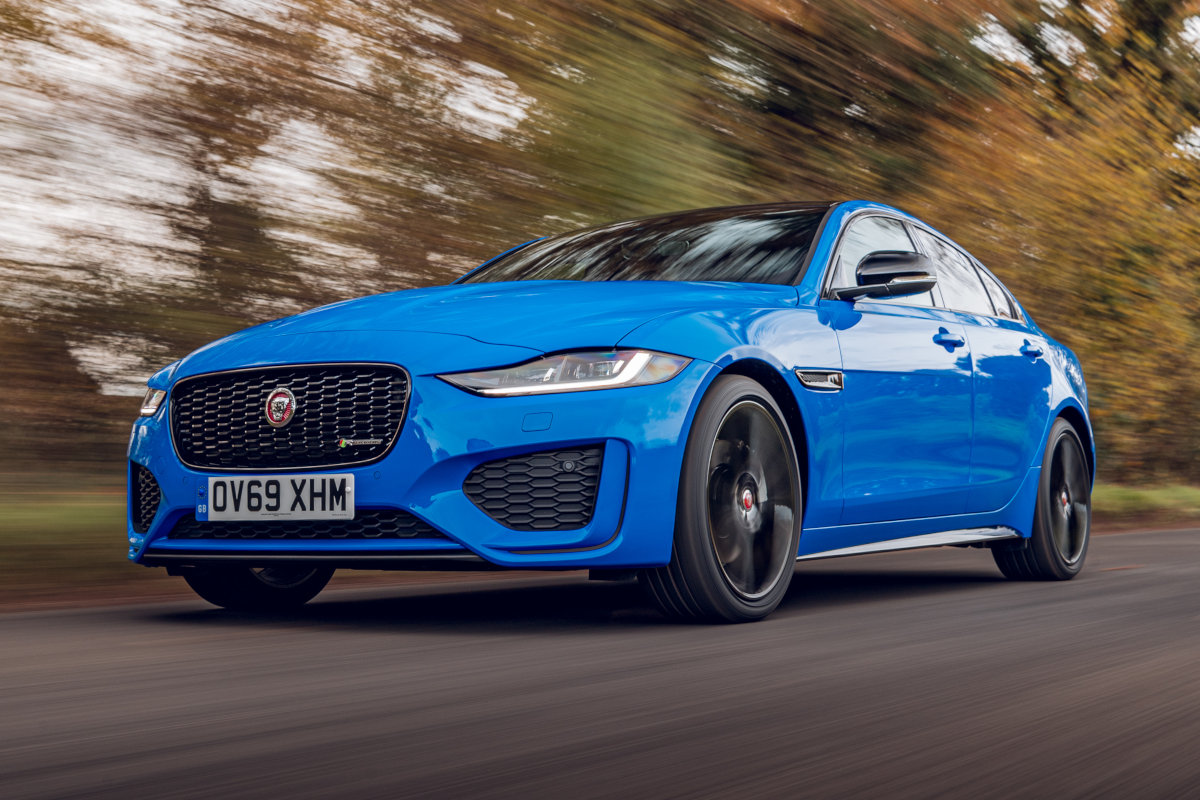
Sleek and sporting looks
Excellent eight-speed automatic gearbox
What to consider
Electrical issues blight the Jag's reliability record
Tight rear-seat space
Small boot
The CarGurus verdict
Despite a considerable number of faults with early XEs, most owners appear to be happy with their purchase, according to independent customer satisfaction surveys.
Aside from some gruffness from the turbodiesel engines, the XE is a delight to drive, an appealing blend of the excitingly sporty and the comfortable cruiser. Sure, headroom is tight in the rear and the boot is on the small side, but if such concerns aren’t a priority to you, then the Jaguar makes a refreshing alternative to the usual compact executive saloon suspects from the German manufacturers.
Just remember to check that all the recall work has been done on your car before you hand over your money.
out of 5 expert review
What is the Jaguar XE?
The XE was Jaguar’s attempt to break into the profitable compact executive saloon market. This put in up against the BMW 3 Series, Audi A4 and Mercedes-Benz C-Class. It's a stylish car, and it handles brilliantly. But does it make a good used buy?
Jaguar’s previous attempt to steal sales from the aforementioned German rivals was the X-type, wasn’t a commercial catastrophe, but its Ford Mondeo underpinnings did the Jaguar brand no favours.
The company’s second attempt, the XE, arrived in UK showrooms in 2015, and is far more stylish and innovative. Its shell is constructed from bonded and riveted aluminium components, its diesel engines – and, from 2017, its petrol engines, too – are Jaguar’s own design, and the model range is packed with a plethora of electronic driver assistance and convenience aids, though they haven’t been universally reliable.

Practicality
How practical is it?
Favouring style over practicality, the XE’s sleek lines give it a distinctly sporty appearance, but the sloping roofline robs rear passengers of vital headroom. Also, the transmission tunnel that runs through the middle of the car eats up what little legroom there is for passengers in the middle seat.
At 410 litres, the car’s boot is the smallest in the class, though it can be extended via the optional 40/20/40 split folding rear seat. The BMW 3 Series and a Mercedes C-Class each have 480-litre boots. Unlike its rivals from Mercedes, Audi and BMW, there is no practical estate option, either.
All that being said, you probably aren't going to be buying a small, upmarket sporty saloon car if rear-seat space or boot space is a top priority

Driving
What's it like to drive?
The XE’s ride and handling neatly straddles the fine line between comfort and nimbleness, and it’s generally very refined in terms of wind and road noise, so it’s great for long distance trips.
Jaguar’s Ingenium turbodiesel engines are gruffer than those of its rivals, particularly the BMW 3 Series, but they are powerful, economical, and efficient. The petrol engine range – both the pre-2017 Ford-sourced units and Jaguar’s replacements, known as Ingenium – are quieter but fuel economy is a little poorer.
The XE is either rear-wheel drive or four-wheel drive and there's a choice of manual or automatic transmissions, though the higher-end models are generally four-wheel-drive automatics.
Enthusiastic drivers will find much to admire in the XE, but Jaguar’s compact executive car has suffered its fair share of problems over the years, as we’ll explain.
Tech and equipment
Technology, equipment & infotainment
Standard equipment is generous, because even the entry-level S trim comes with leather seats, dual-zone climate control, 18-inch alloy wheels, and a 10-inch touchscreen infotainment system, among other elements. There’s no shortage of standard safety features, either, including front and rear parking sensors, lane keep assist, a rear-view camera, adaptive cruise control and traffic sign recognition with an adaptive speed limiter.
The car was updated in 2019, and models sold from then on are fitted with an updated infotainment system, which includes satellite navigation, a DAB radio, 10 speakers, and Apple CarPlay and Android Auto connectivity.

Running costs
Jaguar XE running costs
The Jaguar XE has aluminium subframes front and rear, designed to be easily, and therefore (comparatively) cheaply, replaced after a major impact. And body panels are bolted on for simpler replacement.
Fuel economy from the 161bhp 2.0-litre turbodiesel engine is claimed to be 74.3mpg, and while most of us aren’t likely to achieve much better than the mid-60s, some owners report that they’ve managed 80mpg when they’ve concentrated on driving for maximum economy. The engine we’d recommend because of its extra punch, the 178bhp 2.0-litre turbodiesel, has a claimed fuel consumption figure of 67.3mpg: even when driven extremely hard it returns a genuine 41mpg or so, which isn’t bad for this type of car.
Petrol engines require servicing every year or 16,000 miles, with diesels stretching out the gap to two years and 21,000 miles. Jaguar offered fixed price servicing plans for new XEs, but there are large variations between dealers for what the charge is – some quote as much as £1,100 for a three year plan, others as little as £475 for a five-year plan. At a Jaguar dealer a minor service for a diesel model can be £360, and £480 for a major one. Jaguar also includes the XE as part of its ‘100% Jaguar’ fixed price maintenance programme for car more than three years old.
Diesel models use the AdBlue additive to reduce emissions, but where originally the cars used about 10 litres per 10,000 miles, after an engine emissions-related software update the mileage between fills dropped to less than half that.
Most XEs cost £145 a year to tax, although a pre-April 2017 161bhp turbodiesel SE is excused VED because of its sub-100g/km emissions, while 2019’s P300 All-Wheel Drive automatic S petrol model is burdened with a £465 annual payment.

Jaguar XE reliability
Electrical issues have been rife throughout the XE’s life, although Jaguar has worked hard to remedy them. Early models had weak batteries that caused the stop/start system to cease functioning, and then the stop/start’s software needed updating. Also subject to much updating of software is the XE’s infotainment system and satnav: the former’s touchscreen was slow to accept commands, while the latter was sometimes inaccurate and hopelessly out of date. The XE’s Bluetooth operation was occasionally patchy, as was the reception for its DAB radio.
Instrument clusters have been known to fail and random – false – messages appear in the warning panel, and there have also been failures on the sensors for the ABS, electric parking brake, automatic gearbox, and fuel level equipment. In all these instances, and several more, affected cars should already have been updated/repaired under warranty, but do ask a Jaguar dealer to check that they have.
There have been very few reported major mechanical problems with the XE, although some have suffered turbo disintegration and subsequent engine destruction. Leaking air conditioning condensers affected some early cars.
Less serious but nevertheless annoying, some early models suffered from a plague of rattles and squeaks. In some instances this was caused by loose pieces of exterior trim, while on a few cars the boot lid was misaligned and rubbed paint off the rear bumper: several rubber boot seals were also replaced under warranty.
Inside, the plastic trim around the (optional) sunroof aperture hadn’t been clipped properly in place at the factory, while a rattle from the dashboard area was caused by defective bracket on the AdBlue tank hidden behind it. And on some models with the optional split/folding rear seat, a batch of rogue retaining catches meant the seat back was prone to dropping forward of its own accord.

What owners say
"The Jaguar XE has garnered positive feedback for its impressive handling, performance, and stylish design across multiple model years. Drivers appreciate its ride quality and the powerful engine, making it a strong contender against competitors. However, some owners have expressed concerns about road noise and the lack of certain features, which can detract from the overall luxury experience they expect from the brand."
The Jaguar XE is probably the best handling car I've driven so far. The styling of the face-lift 2019 version is one of the best looking cars in it's class. Would have loved the camera in the rearview mirror, amazing feature. Would compare this car to a BMW 3, Merc C class. The more I drive this car the more I love it!!
3 September 2025Nice car, very elegant looking like a tiger. I would compere to a Maserati
29 June 2026The car was everything....and more....that I expected. Very pleased indeed!
27 April 2021What owners say
The Jaguar XE is probably the best handling car I've driven so far. The styling of the face-lift 2019 version is one of the best looking cars in it's class. Would have loved the camera in the rearview mirror, amazing feature. Would compare this car to a BMW 3, Merc C class. The more I drive this car the more I love it!!
3 September 2025Nice car, very elegant looking like a tiger. I would compere to a Maserati
29 June 2026The car was everything....and more....that I expected. Very pleased indeed!
27 April 2021Fantastic looking car with excellent handling characteristics and a superb petrol engine. It feels noticeably more special than its German rivals on the road, and if got with the InControl Pro 10 inch touch screen (and its assorted connectivity feature set) it can give them a run for their money in electronic tech. This year is towards the end of the model line for the gear selector rising out of the centre console once the engine is started, a fantastic feature that adds nothing to driving but contributes brilliantly to the sheer theatricality of the car.
22 February 2021It was a very fine looking, well specced example and seemed to be in excellent condition. The main reason for testing it was to see if it deserved its reputation for a smooth ride and general refinement. Whilst not actually uncomfortable, I was surprised at how stiff and unsettled the ride was, and how quickly I noticed the level of road noise. It was specified as a SPORT model, but I had been told by a dealer that that was about trim, and not any especially firmer suspension than a normal Jag XE . So overall very nice, but nowhere near as specially refined as I had been led to believe.
21 September 2023Ride and handling best in class ,performance more than adequate for normal road driving
30 December 2020Well equipped with a luxurious feel. Out performs the BMW 3 series. If space in the back and boot are important then look at the bigger XF. Lovely road presence and distinctive front grill.
22 June 2022The only fault with the xe prestige is that the door mirrors are not electric folding.
20 April 2021The car is good value but the price is also reflected in the relatively high mileage, (not that this is a problem for Jaguars in most cases). My main reason for not purchasing was mainly that it did not meet all my requirements such as adaptive cruise control. I was also surprised that it had no cd player.
15 July 2023More than happy. Car is great, lots of new toys to play with
1 February 2021Three things to know
– Most XEs are fitted with an excellent eight-speed automatic gearbox. It makes the XE so much smoother than the manual-equipped versions. – The XE is available in rear-wheel drive and four-wheel drive guises. Unless you live in snowy climes, the four-wheel drive system just adds weight and blunts fuel economy and emissions, so ask yourself if you really need it. – In February 2017, the XE received a raft of engine and equipment enhancements – if your budget stretches this far, look for models made after this date. Even better if you can extend it to a post-2019 model, when yet another update came along.
Which one to buy
- For a great all-rounder: The 178bhp 2.0-litre Ingenium turbodiesel engine married to the eight-speed automatic gearbox and in rear-wheel drive. Opt for Prestige trim.
- For the sportily inclined: The 375bhp supercharged V6 petrol engine from 2017 teamed with the great-looking R-Sport body and trim package.
- For maximum economy and efficiency: A pre-April 2017 SE model powered by the 161bhp 2.0-litre turbodiesel engine and fitted with the six-speed manual gearbox. Claimed fuel consumption is 74.3mpg and emissions are 99g/km, making it cheap to fuel and tax.
- For a little bit of silliness: In June 2017 Jaguar’s Special Vehicles department created the SV Project 8. Powered by a 592bhp supercharged V8, it does 200mph, cost £149,995 when new, and Jaguar made just 300 of them. Not your typical XE, then...


