BMW M2 Review (2016-2021)
BMW M2 Coupé cars for sale
5.0
Expert review
Pros
Superb handling, so long as you go for the later M2 Competition
Practical enough to use every day
Muscle-bound good looks
Cons
Less roomy than an Audi RS3
Wayward body control of early models
Appetite for rear tyres
The CarGurus verdict
The M2 is a great BMW M-car that became greater still with the arrival of the M2 Competition. Despite being the baby of the line-up, it is arguably the most enjoyable high-performance BMW for a decade. It’s a great all-rounder, too, just as happy schlepping along a motorway or battling rush-hour traffic as being wrung out on a quiet hillside road.
There’s even more to cheer in the fact that M2s are proving to be tough and durable machines that don’t cost a great deal to keep on the road. As they slip down in value, early cars are likely to fall into less diligent hands and may not be cared for as they should be. Take the time to find a good example, however, and you’ll be reminded why BMW’s fabled M Division is so highly regarded among performance car enthusiasts.
What is the BMW M2?
BMW M-cars come in all shapes and sizes, particularly since the first M Division SUVs arrived in 2010. Over the years buyers have been able to pick from sports cars, coupes, convertibles, saloons of different sizes, estates and high-riding 4x4s. In many ways, though, the whole M-car thing works best in a compact two-door with a fixed roof and seating for four. Perhaps that’s why the M2 is one of BMW M’s most highly regarded models – not only of recent times, but ever.
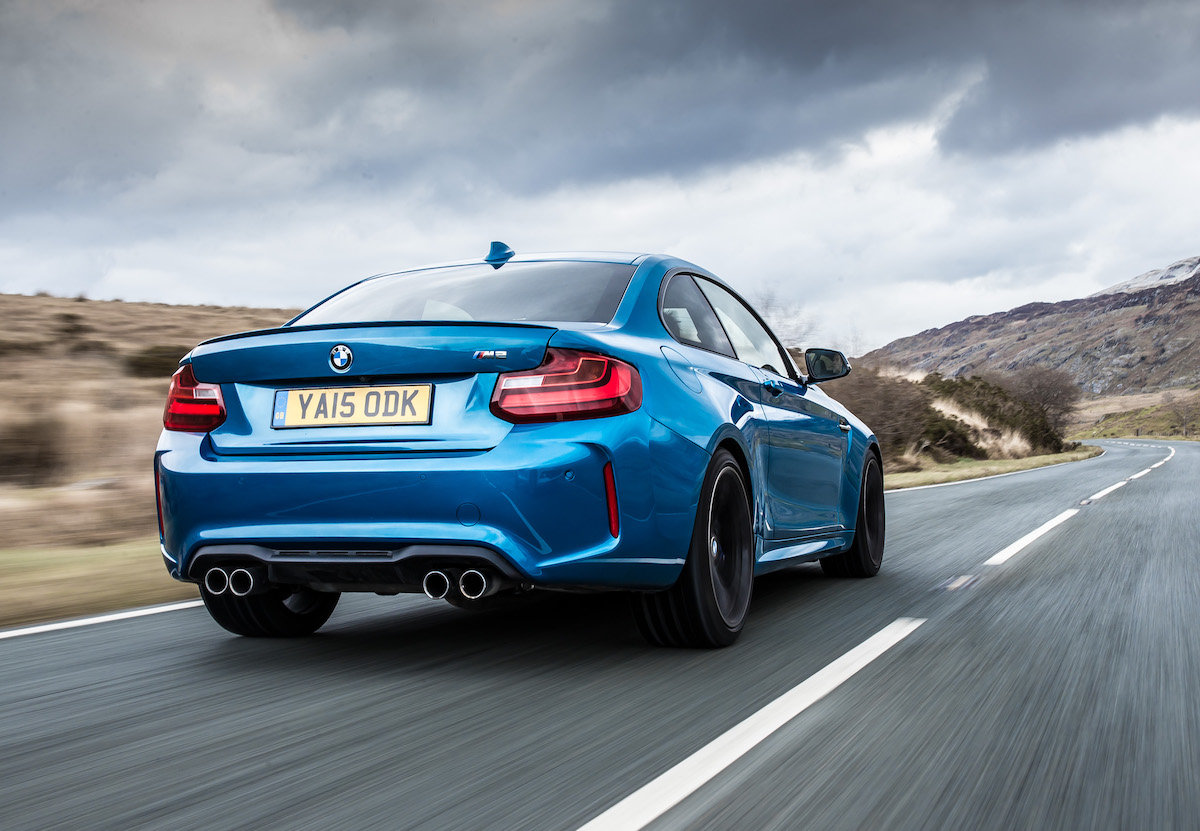
Based on the BMW 2 Series Coupe, the first M2 emerged in 2016 looking squat and pugnacious, its swollen arches and purposeful stance striking just the right balance between subtlety and aggression. Powered by a 3.0-litre straight-six with a single turbocharger (good for 365bhp), it was plenty quick enough as well, whether in top speed (155mph) or 0-62mph time (4.5 seconds). What’s more, you could pick a seven-speed dual-clutch DCT gearbox if day-to-day ease (plus race car-style ultra-quick gearshifts) appealed most, or a traditional six-speed manual transmission if you preferred to change gear yourself.
This first-generation M2 went off sale in 2021, yet it wasn't until 2023 that the replacement G87-generation BMW M2 Coupe arrived.
How practical is it?
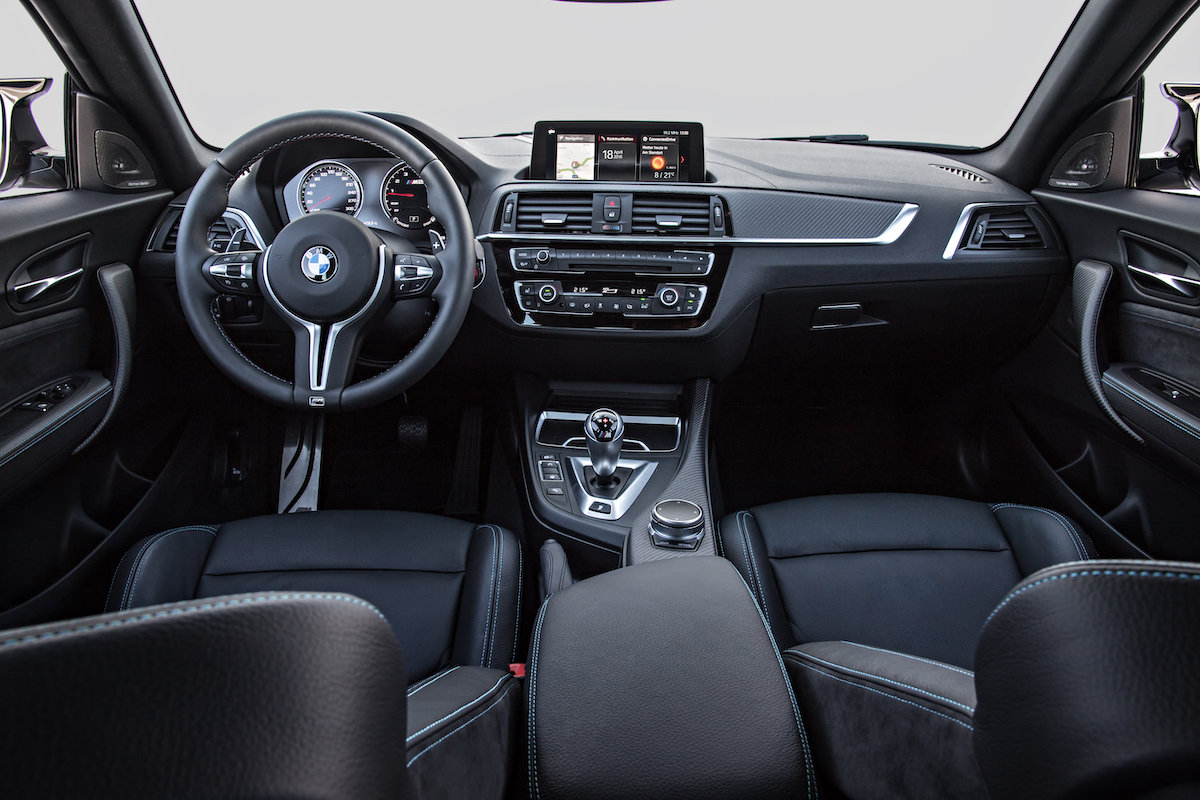
The M2 wasn’t just about going fast. It backed up its driving enthusiast credentials with a well-appointed cabin, a pair of back seats that, while not enormously spacious, were at least usable for actual adults, plus a very decent boot – which provided a VW Golf-beating 390 litres of space. It also delivered everyday manners that demanded no more of you than would any other 2 Series variant.

What's it like to drive?
An engine up front, an active M-differential in the rear – and of course rear-wheel drive only… The basic recipe was so right for a high-performance BMW it’s no wonder the M2 was so admired when new.
In that sense, only the Audi TT RS comes close to troubling the M2 (and the TT’s rear seats are pretty useless for anyone other than small children or as extra storage space). The BMW’s other immediate rivals (the similarly-priced Alpine A110 and Porsche 718 Cayman S) are mid-engined two-seaters and compromised, therefore, in the practicality stakes. An Audi RS3, while roomy and very fast, lacks the M2's coupe styling.
Inevitably, the A110 and Cayman are even sharper to drive on a quiet B-road or race track. Being ground-up sports cars, they are lighter, better-balanced and more agile, whereas the M2 – which is ultimately derived from the 1 Series hatchback – will always be hobbled to some degree by its very humble underpinnings.
Technology, equipment & infotainment
The original M2 coupe wasn’t without its weaknesses as a driving machine. Most troubling of all was its wayward body control, a character trait that morphed very quickly into a serious failing on an undulating road with lots of compressions and sudden crests. Rather than feeling keyed into the road surface, the car often felt as though it might relinquish its grip of the tarmac altogether. Every time it did so, your confidence took a knock.
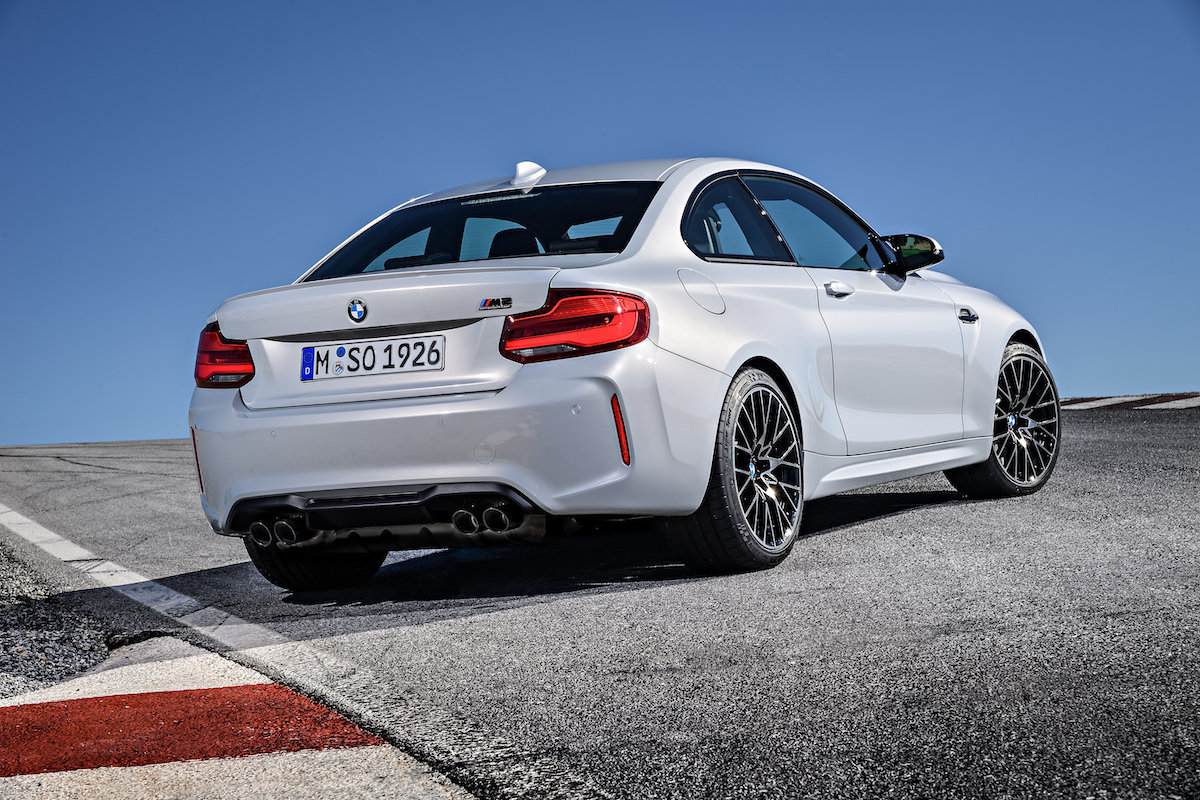
That was fixed in 2018 when the uprated BMW M2 Competition was launched (in fact it replaced the regular M2 entirely). It had more power (gone was the old single-turbo engine, in its place the twin-turbo unit from the bigger M3 and M4, but with 405bhp), more purposeful styling and, though it weighed a little more, significantly better body control, too. While used examples are yet to slip into the same realms of affordability as the M2, the much-improved M2 Competition is the model to aspire to nonetheless.
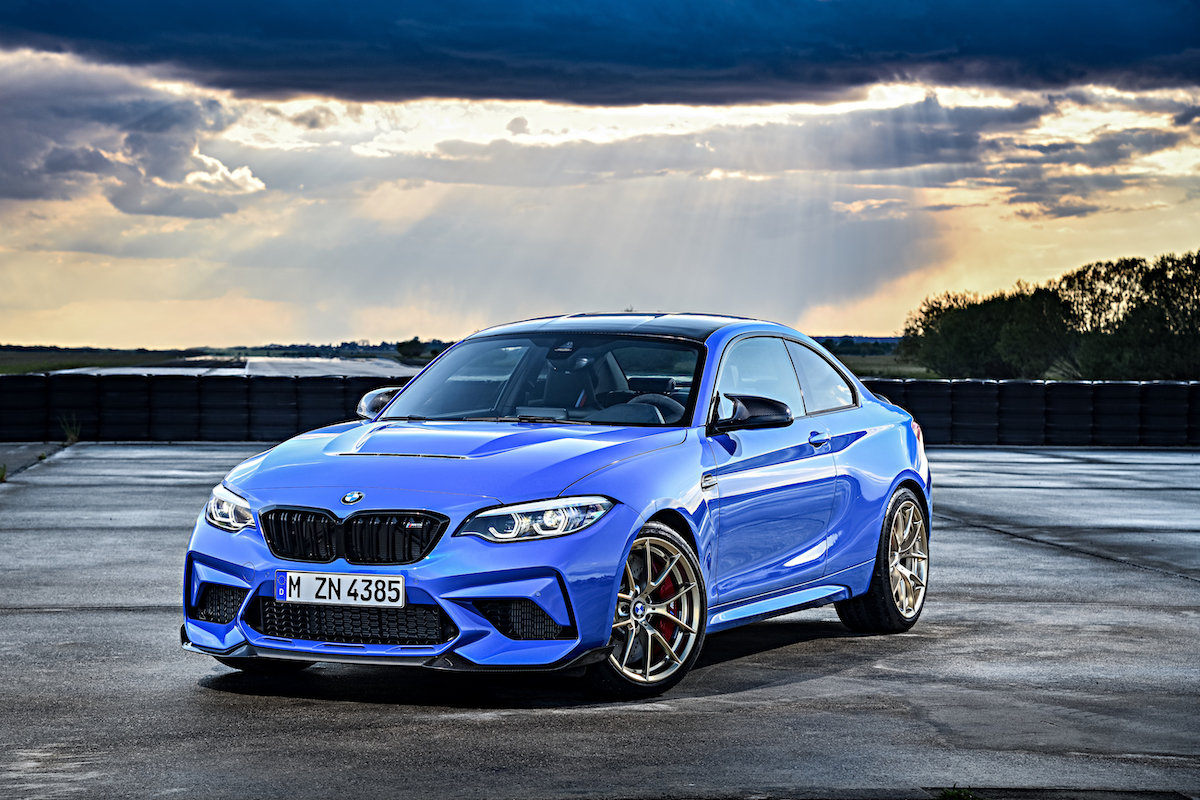
In 2020, an even faster and more focused version of the M2 arrived. The BMW M2 CS has more power still (now 444bhp), an aggressive body styling kit, a revamped interior and bespoke chassis tuning, making it the most extreme M2 of the bunch. But it’s also the most expensive one by some margin – at £75,320, it costs half as much again as the M2 Competition. Worth it? If you must have the latest and greatest (on-paper, at least) then perhaps. For everybody else, the M2 Competition is without question the sweet spot.
BMW M2 running costs
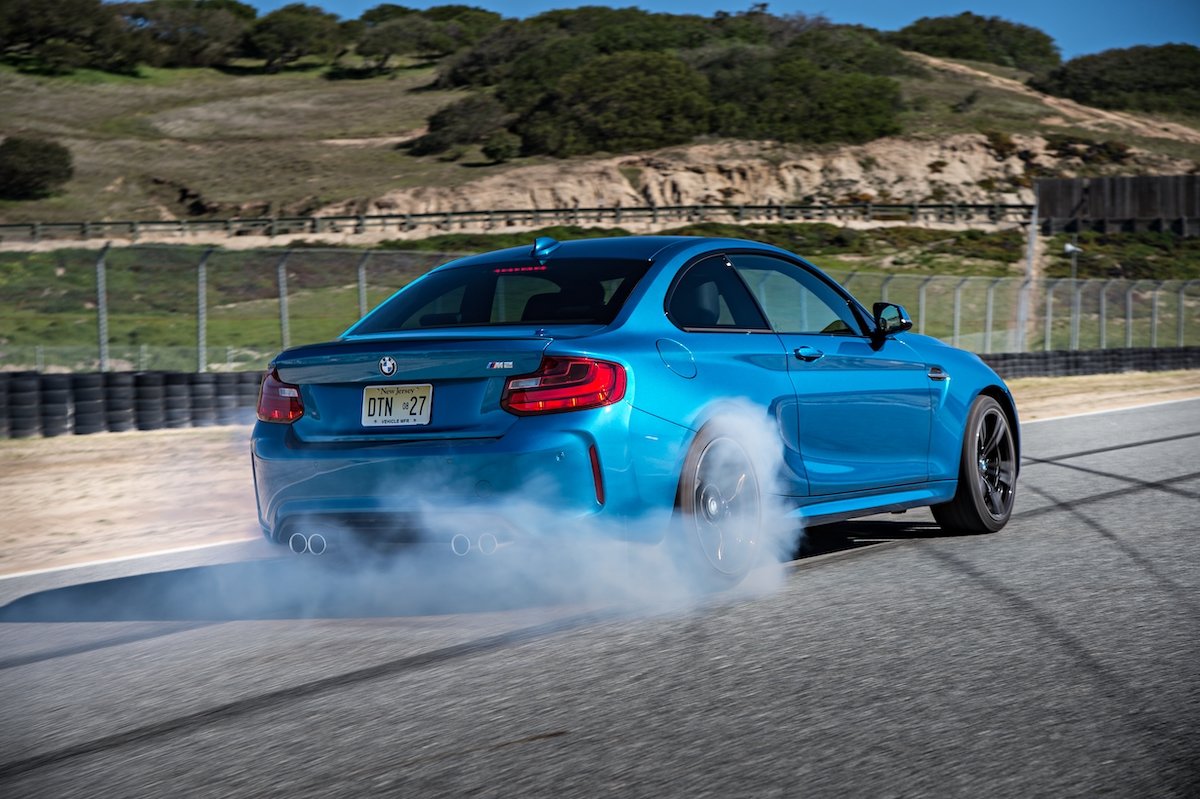
All two-wheel drive BMW M-cars have an appetite for rear tyres and the M2 is no exception – particularly if you regularly indulge in its playful and very controllable handling balance. A full set of rubber will cost around £500, which is very much par for the course for this sort of high-performance coupe.
Inevitably, there are plenty of other runnings costs that potential M2 owners need to be aware of. Although the car is actually a very humble 2 Series coupe beneath its skin, it is still a powerful sports coupe – the running costs will be more reflective of the latter point than the former. Insurance group 42 out of 50 means you’ll pay much more for your annual cover than you would for, say, a diesel-powered 1 Series, but other M-cars will cost even more to insure.
BMW reckons you should achieve around 30mpg, which is a realistic figure for mixed driving. Use your M2 in a more spirited manner, though, and you could well see sub-20mpg. Meanwhile, road tax can vary from as little as £260 per year to as much as £475, depending on model.
High-performance cars like the M2 need to be meticulously cared for if they’re to be kept in peak working order. BMW offers its Pay Monthly Service Plan, which allows owners to spread the cost of servicing over a period of 36 months. The plan also includes small incentives such as one free MOT and a complimentary clean inside and out every time your car goes in for a service. The monthly cost for M Division models is £45. These cars should go in for routine maintenance every 12,000 miles or so.
BMW M2 reliability
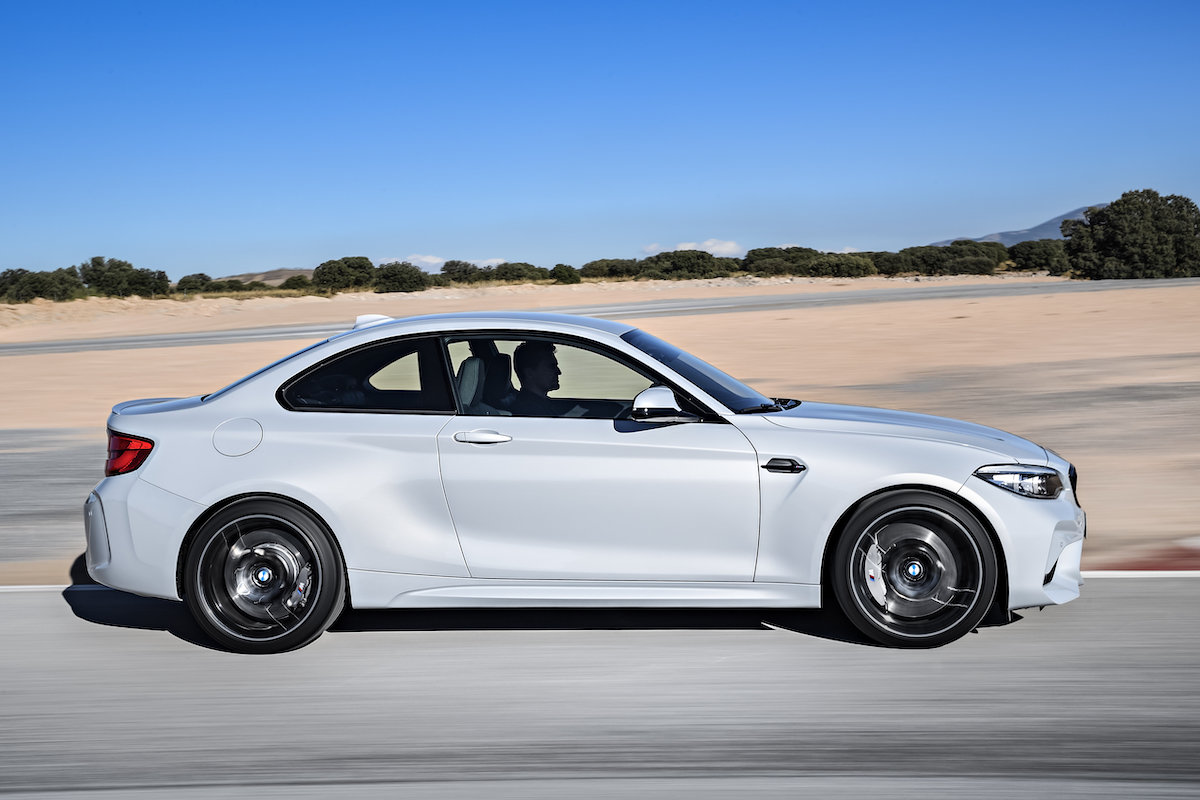
For many years, BMW M-cars have required what’s known as a running-in service. The same applies to the M2 and it must be carried out after 1200 miles. Skipping this service is a big no-no.
Very early M2s suffered issues with their differentials, or rather their half-shafts gradually becoming disengaged with the differential. This was rectified very quickly and for cars that were affected, remedial work was carried out under warranty at no cost to the owner.
Generally, the M2 is thought to be a very dependable and reliable car, and certainly there are no commonly occurring faults that buyers should be mindful of. However, as earlier examples slip out of warranty cover, these faults may slowly begin to emerge. New BMWs are covered by three-year/unlimited mileage warranties, although the company also offers warranty extensions. Owners can pay for an additional 12 months of cover at a time, as long as their car has been serviced according to BMW’s recommended schedule.
Just as you should when considering any second-hand performance car, you must inspect a used M2 very carefully indeed. Check for misaligned bodywork that might indicate hidden crash damage and look out for kerbed wheels, too. If the tyres are wearing unevenly, meanwhile, you will need to get the wheel alignment checked.
A diligent owner will make sure all four tyres match (both brand and tyre ‘model’) and if the car in question hasn’t clearly been serviced in line with BMW’s schedule, simply walk away. The M2 sold in very strong numbers and you’ll have plenty of cars to choose from.
- The original M2 was fitted with BMW’s 3.0-litre N55 engine. It was a lightly-uprated version of the same unit that was fitted to the M135i and M235i, and not really a proper M Division engine at all. That changed with the arrival of the M2 Competition, which got the more exotic S55 motor that was only used in top-spec M-cars. It’s more powerful than the N55 thanks to its pair of turbos and more responsive as well, although some people think it sounds less thrilling than the old single-turbo engine.
- In theory, the M2 is the lowliest BMW M-car of the lot. It’s the cheapest and least powerful car in the line-up and it’s physically the smallest as well. But in terms of the driving experience it offers, there’s nothing lowly about the M2. In fact, it’s more agile than the bigger M4 coupe and far more exciting than the (even bigger) 616bhp M8. When it comes to BMW’s high-performance models, less really has proven itself to be more.
- BMW launched the limited-edition M2 CS as a rival to Porsche’s 718 Cayman GT4 (the two are priced almost identically). With 444bhp, the CS is comfortably the most powerful M2 and it’s more potent than the Porsche, too. Its extensive chassis retuning does mean it’s a shaper and more engaging machine to drive than the M2 Competition, albeit not so much sharper or more engaging that it really justifies its enormous price premium.
- The all-rounder: the M2 Competition represents the best value in the M2 line-up, since it’s so much better to drive than the earlier M2 and so much more affordable than the M2 CS. Amongst its rivals from other marques, the M2 Competition also offers an unbeaten blend of performance, excitement and usability.
- On a budget: despite its handling flaws, the original M2 remains a brilliant driver’s car. Early examples are now several years old and can be picked up for around a third of the price of the new M2 CS. Many of the cheaper second-hand M2s are insurance write-offs, but you will find better cared-for cars at that money, too.
- The driver’s favourite: with typically-impeccable Porsche handling, the exquisite balance that comes with having an engine right in the middle of the car and exceptional steering, the 718 Cayman S is perhaps the best-handing car of its type. Pity about the underwhelming four-cylinder turbo engine, though.
- The left-field choice: the Alpine A110 earned rave reviews from the motoring press for its wonderfully supple ride quality and playful handling balance. One of the smallest and lightest cars of its type, the A110 doesn’t offer much in the way of storage space but is surprisingly usable nonetheless.


