Volkswagen Transporter T6 Review (2016-2024)
Volkswagen Transporter cars for sale
4.0
Expert review
Pros
Variety of van, MPV and campervan models to choose from
Beautifully made interior
Comfortable ride
Cons
Exhaust gas recirculation problems with BiTDi engine
More expensive to buy than most rivals
Can't match the outright capacity of a Ford Transit Custom
The CarGurus verdict
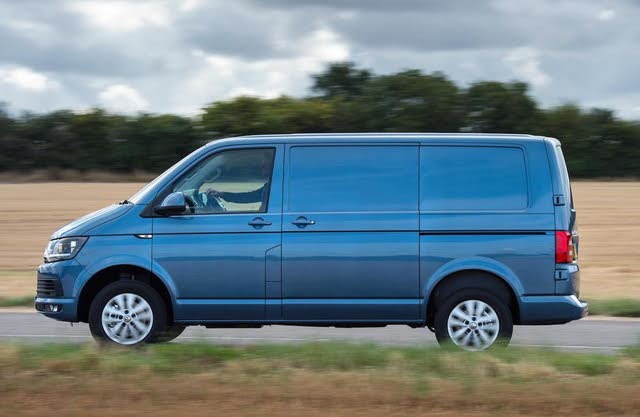
If you’re after a van with a little extra sophistication, the Volkswagen Transporter is hard to beat. Granted, it’s more expensive than most of its rivals on the used market, but given its beautifully built interior, well thought-out storage solutions, comfortable ride, not to mention the sheer variety of size, engine and transmission combinations available, for many people it will be well worth that premium.
What is the Volkswagen Transporter?
It’s easy to think of a van as a workaday tool – a box on wheels designed to get a job done, and little else. But vans can be status symbols, too, just as much as cars.
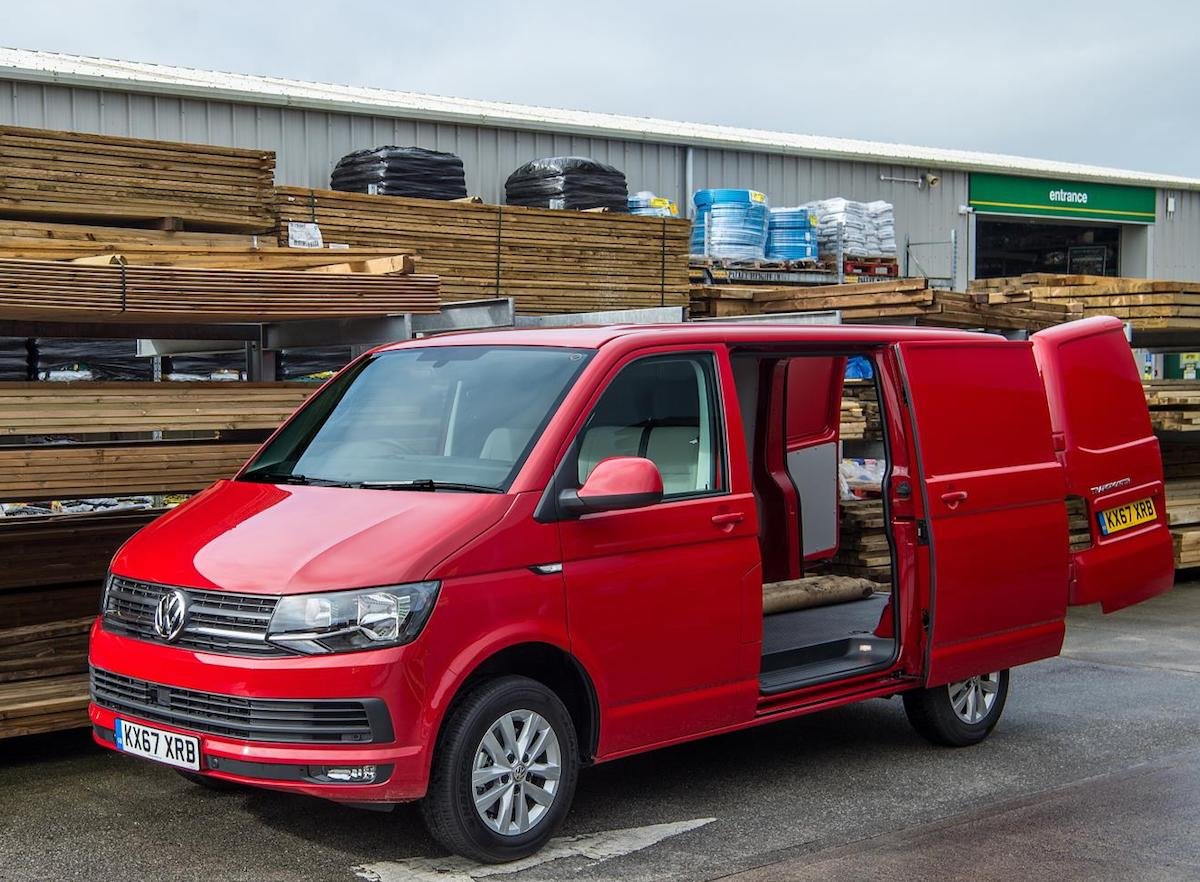
To see that’s true, you only need to take one look at what is one of the most desirable – and most coveted – vans: the Volkswagen Transporter. It can trace its roots back more than 70 years, and has been all things to an awful lot of people in that time.
How practical is it?
The sixth-generation Transporter - or Transporter T6 as it's otherwise known - really moved the game along. On the outside it’s about as classy as vans get, with a desirable badge and smart looks, while inside, the dashboard is smartly styled and built from solid, robust plastics. There’s a tonne of storage for all sorts of odds and ends, too, and in the cargo compartment the T6 excels, with a wide variety of body shapes allowing you pick one that exactly suits your needs. You have various choices to make over the dimensions of your van, including the length of your wheelbase and which of the various roof heights you want, and obviously all this effects the precise figures for your van's load length and payload. On the one hand, that makes your choice rather complex, but on the other, it makes it possible to find a van tailored to your specific needs.
In terms of outright capacity, the Transporter lags a little way behind. rivals like the Ford Transit Custom when compared pound-for-pound, but that doesn't mean it's not still a useful load lugger. It has a wide-opening sliding side door for easy loading, and at the tailgate end, the rear doors can be unlatched and opened at an angle of up to 250 degrees.
It's not just dimensions where you have choice, either, because there are various different flavours of T6 in other ways, too. If it’s passengers you want to haul around, there’s the Caravelle, a version of the Transporter that swaps solid metal panels and cargo volume for windows and seats. Seven seats, to be precise, as standard in both short- and long-wheelbase models; the latter can be had with eight seats, too. Crucially, all are full-size chairs, meaning you can carry adults in all of them in comfort, which is what sets the Caravelle apart from lesser people carriers and compromised seven-seater SUVs.
And if you need to seat even more people, there’s the Transporter Shuttle, which is more utilitarian than the Caravelle, but seats eight as standard, with the option to upgrade to nine.

What's it like to drive?
Whether you opt for a van or a passenger hauler, you get a vast choice of engine options, the vast majority of them being 2.0-litre diesel engines. The choice included outputs of 83bhp, 101bhp, 138bhp and 178bhp.
The weaker two TDI engines got a five-speed manual gearbox, while the stronger two came with a six-speed manual as standard, or could also be had with a seven-speed DSG twin-clutch automatic as an option. Two 2.0-litre petrol engines were also available. The 148bhp version came with front-wheel drive and a six-speed manual gearbox, while the 201bhp version had the DSG auto' and a choice of either front- or four-wheel drive.
Whichever version you plump for, the VW Transporter’s great to drive, with composed, predictable, car-like handling and one of the most comfortable suspension setups of any van around. And as many van owners cover vast distances and spend many, any hours at the wheel, that last bit is really important.
Technology, equipment & infotainment
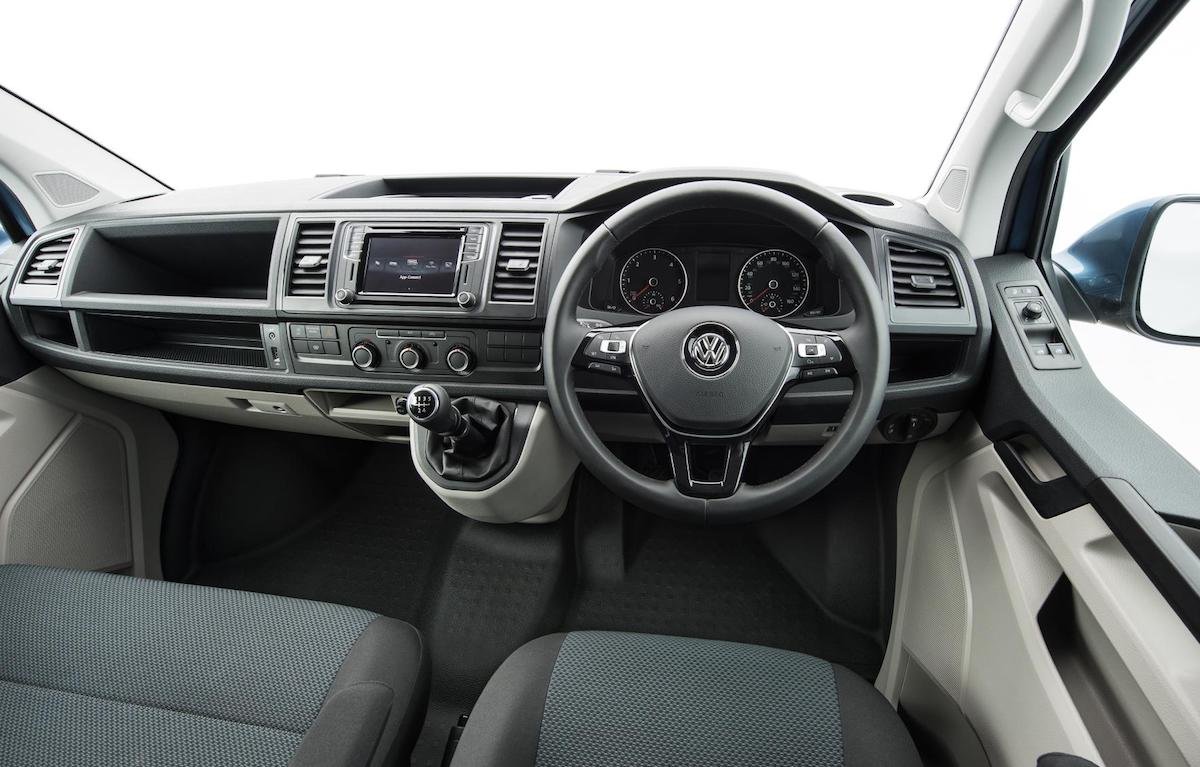
The Transporter range offers a variety of trim levels, the entry-level one being called the Startline. This one provides most of the basics, including a touchscreen infotainment system with DAB radio, Bluetooth, a USB socket and Volkswagen's Automatic Post Collision Braking system, which locks the stoppers on after a shunt to help reduce the risk of a secondary impact.
Trendline trim brings body-coloured bumpers, rear parking sensors, dimmable cabin lights, extra interior storage and grab handles for greater practicality, and extra sound insulation that's aimed at reducing road noise on the motorway.
Highline trim adds alloy wheels, a leather multi-function steering wheel, a heated windscreen, front foglamps and an alarm, while Sportline trim added even more goodies. These include sportier styling achieved by a revised grille, LED headlamps, lowered sports suspension and front and rear spoilers with chrome elements, and you also get leather upholstery, automatic air-conditioning, touchscreen satnav and front and rear parking sensors. Various special editions were also available throughout the T6's life, which came fully tooled-up.
Towards the end of 2019, the Transporter underwent a facelift, with vehicles produced after this time dubbed the Transporter 6.1. This brought about tweaks to the engine range and improved infotainment and connectivity throughout the range. Significantly, hydraulic power steering was replaced by an electromechanical system, which endowed the Transporter with a variety of new safety systems. This included Crosswind Assist, which automatically compensates for sudden sideways gusts, plus lane-keeping assist and an automatic parking function.
As an addition to that last item, you also get Trailer Assist, which is a clever system that takes care of the complicated counter steering required when you're reversing with a trailer: you simply tell your vehicle where you want to go by using the electric door mirror adjuster as a joystick. Such clever safety kit is all very handy, but the T6 hasn't been crash tested by Euro NCAP, so we don't know how it'll fare in a smash. Volkswagen's smaller van - the Caddy - has, though, and it achieved four out of five stars.
So, for a small business, the Transporter is as much a statement of class and quality as it is a practical workhorse, and that can be important sometimes. Whatever you priority, though, the fact remains that the T6 is one of the best compact vans out there.

Volkswagen Transporter running costs
The most efficient Transporters are the short-wheelbase, low-roof models with the smallest engines – as you might expect – and these should achieve around 35mpg on average when unladen.
Move up to the 2.0-litre TDI 150, and you’ll only lose a few mpg in terms of efficiency despite all that extra power, which is why we reckon it’s a smart choice. However, opt for the most powerful models and you can reckon on consumption dipping below 30mpg, and your fuel economy will drop further still if you choose one of the petrol engines.
Transporter vans are considered as commercial vehicles, and therefore taxed accordingly at the current flat rate no matter which engine or specification you choose. However, if you opt for a passenger-carrying variant, keep in mind it’ll be taxed as a passenger car, which means you’ll have to pay car tax rates. Those could be hefty if the Caravelle you’re looking at cost more than £40,000 when it was new which some did, as these versions are subject to a hefty tax surcharge.
There are two types of service schedules for the Transporter, one for high-mileage users, called Long Life servicing, under which a service must be carried out every two years or 18,000 miles, whichever crops up sooner. However, a lower-mileage van should be serviced every year or 12,000 miles, again depending on which of those comes up first. Servicing costs on the Transporter are a touch more expensive than you’ll find on some rivals, but on the whole they’re still pretty reasonable.
All Transporters of this generation are fitted with timing belts, which need changing at four or five year intervals or at varying mileages, depending on which engine you’ve got fitted. Expect each timing belt change to cost around £400.
Volkswagen Transporter reliability
Most reliability surveys revolve around cars rather than vans, but many of the parts used are the same or similar, so some learnings can be gleaned from the results. If you take the JD Power UK Vehicle Dependability survey as your yardstick, then Volkswagen doesn't do too badly as a brand, finishing mid-table of the 25-or-so manufacturers in the survey for the last three years, each time performing just ahead of the industry average. That doesn't quite reflect the reputation for steadfast reliability that the brand somehow seems to have built for itself, but at the same time, it means there should be little to worry about.
When considered as an individual model, then for the most part, the Transporter is a pretty reliable van. However, you’ll want to be careful of a serious problem with the exhaust gas recirculation system, which only seems to blight the 178bhp BiTDi engine. It can cause significant engine damage, and requires complete replacement of the engine to remedy. Look out for low coolant levels, low oil levels and rough running as possible symptoms.
As new, the Transporter comes with Volkswagen’s three-year warranty. The mileage on that warranty is unlimited for the first two years. For the third year of warranty cover to apply, the mileage of the van must be below 100,000. That's fine, but it's not as generous as the arrangement that Toyota gives you on the Proace. A Transporter that is under six years old and bought as part of Volkswagen’s approved used programme should also come with a warranty of at least six months.
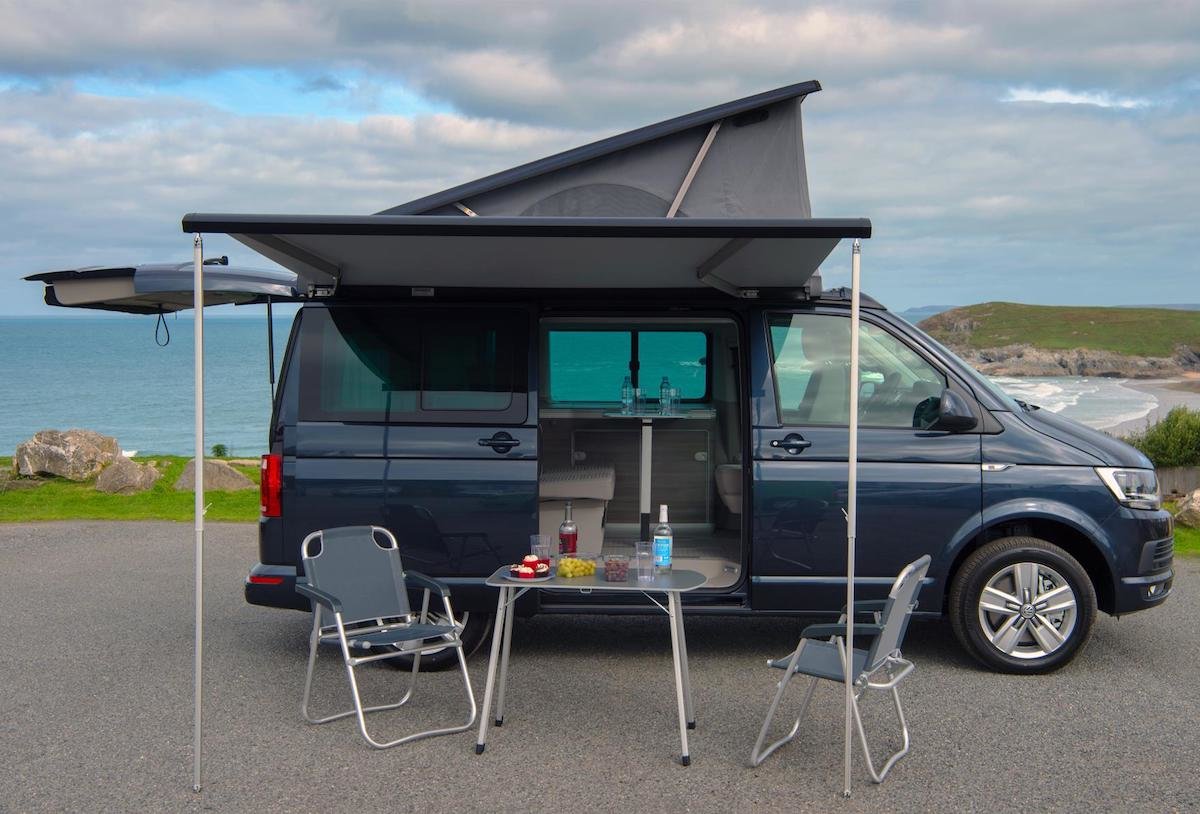
- Want a Transporter as a camper? Then take a look at the California, Volkswagen’s factory-built camper conversion. It’s one of the best campers around, and highly rated by owners – and of course, you get the comfort and quality of the standard Transporter built in.
- The Transporter is one of just two vans of its size available with four-wheel drive from the factory. It’s a rare option, but worth having as it maintains traction even in slippery conditions. So if you intend to boldly go where no van has gone before, look for examples badged ‘4Motion’.
- Long gone are the days when driving a van meant making do with a bare minimum of equipment. Transporters can be had with much of the equipment you’d find on a modern car, including adaptive cruise control, a heated windscreen, climate control, and even heated seats. That said, the most luxurious options are rare, so tracking them down on the second-hand market can be nigh on impossible.
- As an all-rounder: the 148bhp 2.0 TDI (badged ‘150’) is hard to beat. It offers a great blend of efficiency and grunt, and there’s enough of the latter to ensure you should be able to cruise up hills effortlessly even when fully loaded.
- If you’re going to be carrying or towing heavy loads: the 2.0 BiTDI engine is a real slugger, with vast amounts of torque on tap. It doesn’t come cheap, but its extra muscle could prove handy.
- If you’re going to carry passengers: the Caravelle would be our choice. It’s more expensive than the Transporter Shuttle, but its more upmarket interior fittings and more comfortable seats make it worth the additional cost.
- If you need to carry passengers and luggage at the same time: the Transporter Kombi. You get an extra row of seats fitted abreast of the sliding door, meaning it can seat five – but there’s also a large area for cargo behind, so you end up with the best of both worlds.


