Alfa Romeo Stelvio Review (2017-present)

Pros and cons
What we like
Exciting to drive, especially the Quadrifoglio
Good looks
High quality cabin
What to consider
Cramped in the back
Brittle ride
Thirsty petrol engines
The CarGurus verdict
Like any Alfa Romeo, the Stelvio will have plenty of admirers, but fewer buyers, because many will be put off by the brand’s poor reputation for reliability. There’s certainly a lot to like about it, from the exterior design and high-quality materials of the cabin, to the time spent behind the wheel. Its sportiness is both a blessing and a curse, though. The downside of the engaging driving dynamics is the firm ride, which can make longer journeys a little wearing.
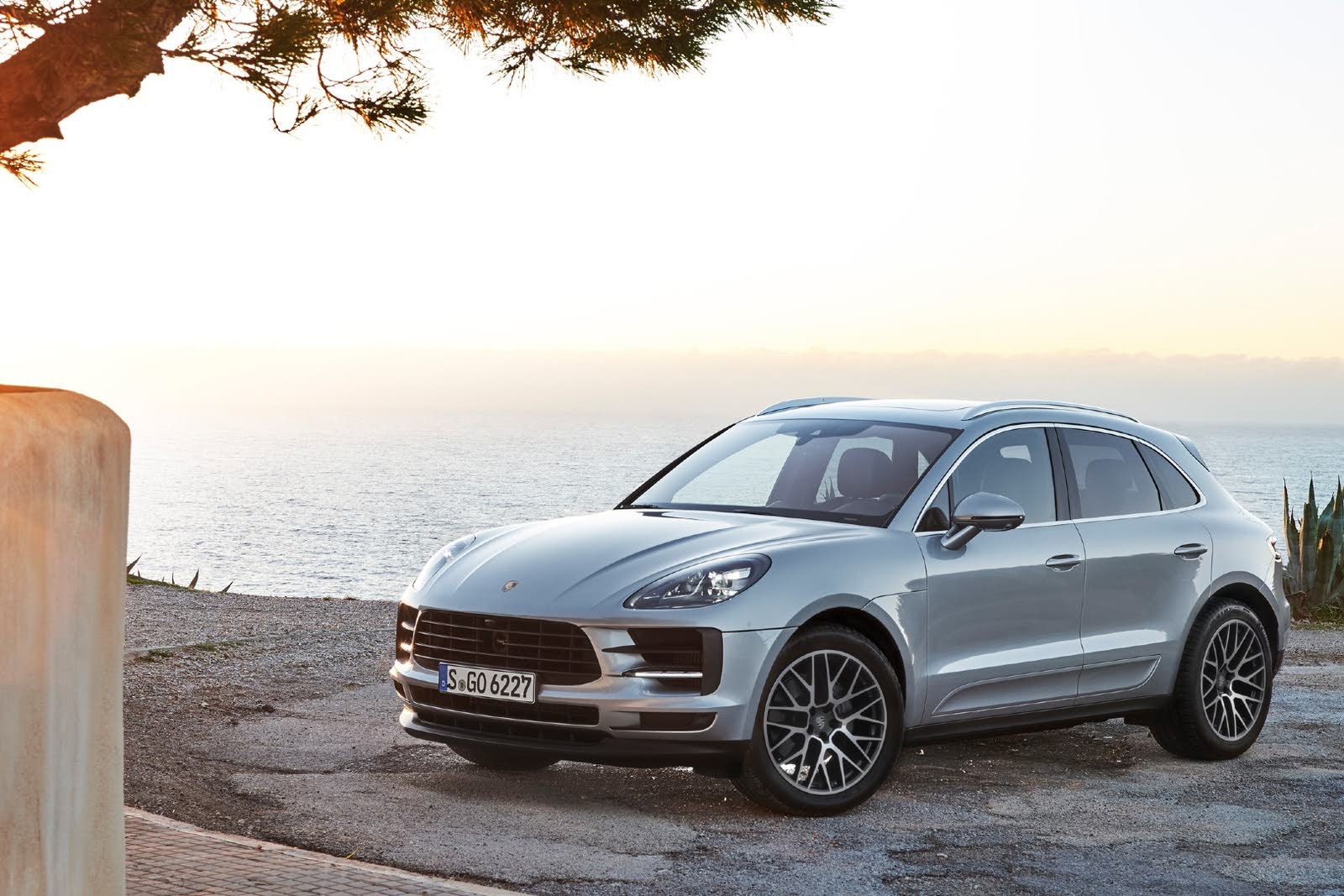
If these things present an issue, the good news is there are plenty of alternatives in this class, including the Porsche Macan, the Audi Q5, the Jaguar F-Pace, the BMW X3, the Mercedes GLC and the Volvo XC60. Just be aware that very few of them - if any - have the Stelvio’s flair.
out of 5 expert review
What is the Alfa Romeo Stelvio?
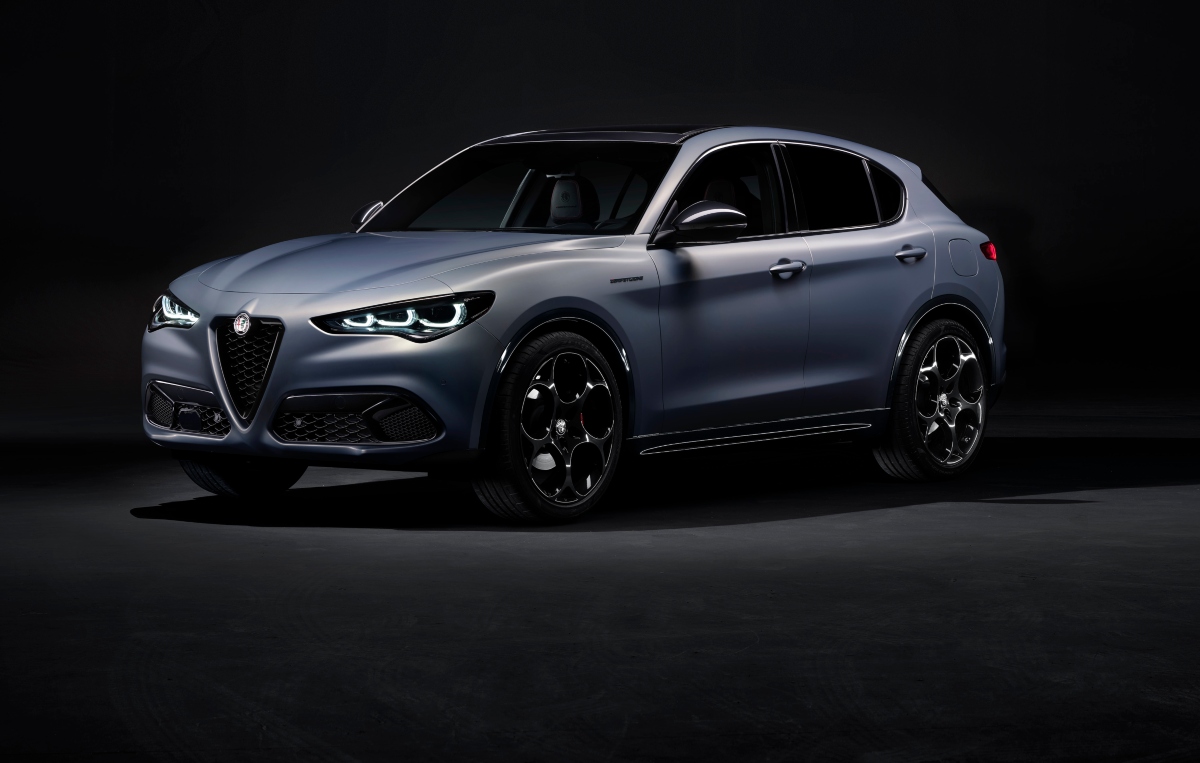
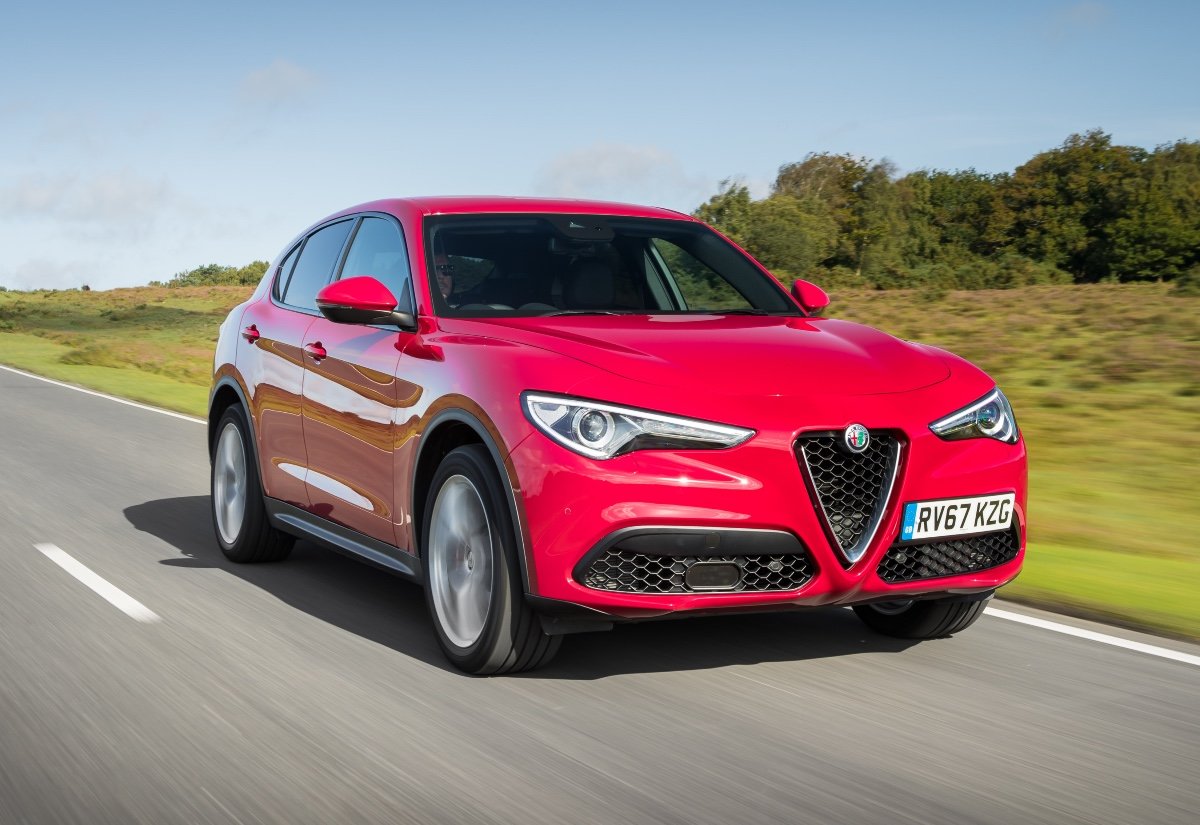
Sports Utility Vehicles (SUVs) have evolved over the years, as they have become more popular and mainstream, but in doing so, they seem to have emphasised the ‘Utility’ part of the name at the expense of the ‘Sports’ bit. Alfa Romeo attempted to address this imbalance with the Stelvio, which is designed to take two of the characteristics that the brand's cars are famous for – design and driving dynamics – and transplant them into the UK’s most popular type of car. We'd say Alfa got the design right. The Stelvio SUV is a good-looking car, with a sleek profile, sharp lines and a stance that shows its SUV nature, but without raising the body so high that it makes it stray into ‘box on wheels’ territory.
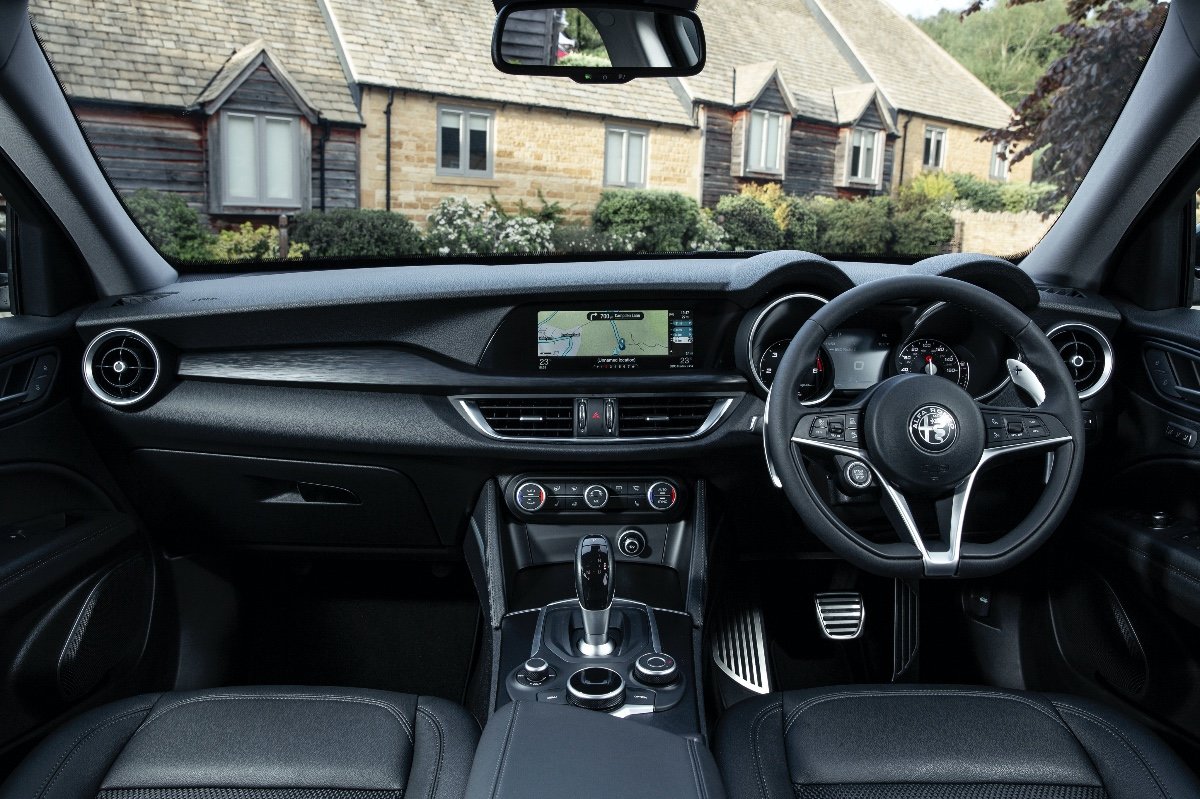
The interior is also well designed, with high-quality materials such as aluminium and wood, with tactile finishes. The dashboard is well laid out, with an 8.8-inch infotainment screen in the centre, the functions of which include smartphone connectivity including Apple CarPlay and Android Auto. The cabin quality isn’t quite up to the standards of the Audi Q5 or the BMW X3, but it’s nonetheless impressive.
Practicality
Practicality
With such sporty looks, utility and practicality take a bit of a back seat. The sloping roofline limits headroom in the rear, and legroom isn’t as easy to come by as it is in rivals such as the Land Rover Discovery Sport or Volvo XC60. Average-sized adults and children will have enough room in the rear, but taller adults and gangly teenagers might feel restricted.
The Stelvio’s boot capacity of 525 litres (expanding to 1,600 litres when the rear seats are folded down) is slightly smaller than in the Q5 or the X3, but more than in the XC60. It should comfortably swallow luggage for a family of four.

Driving
What's it Like to Drive?
The Stelvio's handling is as impressive as one would hope from an Alfa Romeo. It's not a sports car, but for a high-riding SUV, it provides a fine sense of balance and an ability to maintain grip even when pushed. The steering is super-quick to react to inputs, which enthusiastic driver will love, although more sedate drivers might find that it feels too twitchy for their tastes, so it's essential to try before you buy to work out which camp you fall in.
The downside of the Stelvio's handling sharpness is that the ride quality is a little brittle – especially on larger wheels – at all speeds, so long-distance cruising isn’t exactly its strongest suit.
Both petrol and diesel engines are offered in the Stelvio. The former starts with a 2.0-litre, four-cylinder turbocharged unit with either 197bhp or 276bhp. The 2.2-litre, four-cylinder diesel is available with 187bhp or 207bhp. These days, the engine range has been pared back to include just the two most powerful options.
That is, of course, if you discount the standalone range-topping version, the super-bonkers Stelvio Quadrifoglio. Powered by a monstrous 503bhp, twin-turbocharged V6 engine (later hiked by a further 10bhp), this is a car that has been built specifically for enthusiastic drivers, who are rewarded with ballistic speed and an even sharper, even more involving experience.

Tech and equipment
Technology & Equipment
Alfa has a habit of constantly meddling with the trim levels of its cars, both in terms of the names of the trims and what equipment is provided as standard with each of them. The fim is also very partial to a limited-run special edition. The Stelvio is no different. Brand new examples are sold in Sprint, Veloce and Tributo Italiano forms, but look at the used car market, and you'll find all sorts of weird and wonderful names to choose from.
Every version of the Stelvio, including the entry-level model, is available with an 8.8-inch central touchscreen to control the infotainment system, and all Stelvios are now equipped with satellite navigation.
The standard equipment specification also includes DAB digital radio, Apple CarPlay and Android Auto connectivity, Bluetooth and an eight-speaker audio system. Early Stelvios had analogure dials behind the steering wheel, but these were later replaced by a digital screen, as it the fashion.
Running costs
Running Costs
A mid-sized SUV like the Stelvio is never going to be among the cheapest cars to run, especially if, like the Stelvio, it’s a car that has driving enjoyment as a core - almost defining - value.
There are diesel engines for those owners who want the most efficient version they can get. There are two choices for used car buyers, both 2.2-litre engines, but with different power ratings. The lower-powered variant produces 187bhp and officially returns around 44mpg. Both are likely to be a lot lower in real-world conditions, especially with a keen Alfisti (the nickname for enthusiastic Alfa Romeo owners) behind the wheel. The other diesel has a 207bhp output and despite being more powerful, has similar official fuel economy, which again is more of an aspiration than a reflection of what it’s likely to achieve on a regular basis.
Petrol versions of the Stelvio employ a 2.0-litre turbocharged engine that again has two variants, producing either 197bhp or 276bhp, both of which are meant to return around 30mpg according to official figures. Again, we expect that to be lower in daily use.
The hot, range-topping Quadrifoglio has a six-cylinder 2.9-litre engine under the bonnet that is meant to return 28.8mpg, but if drivers test out the claim of 0-62mph in 3.8 seconds regularly, getting to 20mpg would be an achievement. This is an unashamed performance model, so running costs are unlikely to be a major priority for buyers.
CO2 emissions for most versions of the Stelvio aren’t exactly low, even if some the petrol cars do surprise in undercutting some of the diesels. In terms of running costs, this means that VED (road tax) will set owners back a hefty chunk of change in the first year of ownership. And as most Stelvio variants cost more than £40,000 from new, that means an additional £390 a year in VED for the first five years.

Reliability
Alfa Romeo is a brand that has a huge amount of goodwill out there in car-buying land, but even that hasn't been enough to make up for longstanding concerns about build quality and reliability of its models. Its recent launches, including the Stelvio, are a chance for the manufacturer to claw back some kudos.
It seems that that's a chance that Alfa hasn't exploited. The most recent What Car? Reliability Survey tells a familiarly bleak story. The brand ended up in 30th position out of 31 carmakers in the manufacturer standings (only MG performed worse), while in the family SUV category of the same study, owner feedback put the Stelvio 31st out of 33 models considered. Owners stated that 32% of Stelvios had experienced trouble, and these were mainly electrical and engine glitches.


What owners say
Car is a proper driving car, great handling and plenty space for a mid size SUV. Can’t think of any faults apart from a lack of dealership’s if something went wrong.
21 March 2023Its a very desirable car, but misses out on certain tech, such as HUD, Blind Spot alerts & also very confusing model variants. Im not sure if lack of touch screen on infotainment is good or not though. Personal choice, I guess.
14 August 2022Three things to know
- Alfa Romeo has paid a lot of attention to minimising the Stelvio’s weight. This is the result of using a lot of aluminium throughout the car and a carbon-fibre driveshaft, and it undoubtedly contributes to some of the deftness you experience when behind the wheel.
- The ‘hot’ Quadrifolglio variant of the Stelvio has been designed not only to take on the likes of the Porsche Macan, but also to feature the kind of automotive engineering that has made Alfa Romeo’s Italian sister brands - Ferrari and Maserati - so desirable. And as such, the Quadrifoglio is powered by a turbocharged V6 petrol engine developed by Ferrari. Plus, Alfa borrowed a chassis engineer from the very same brand to develop the car’s dynamic set-up.
- Every version of the Stelvio currently on sale comes with an eight-speed automatic transmission as standard, and Alfa Romeo’s four-wheel drive system, dubbed Q4.
Which one to buy
- For a car that will handle some semi-rough stuff: A diesel Stelvio should be your go-to for any kind of off-road antics. With that in mind, the 2.2 turbodiesel 187bhp Sprint should tick all the boxes. As well as having 4x4 capability, it has decent performance and keeps running costs to a respectable level.
- If you want a serious performance SUV: There’s only one real choice in the Stelvio range for performance fans: the Quadrifoglio. With its V6 engine pumping out 503bhp (later 513bhp), the Quadrifoglio can hit 62mph from a standing start in just 3.8 seconds, which is the kind of supercar pace that you don’t expect from an SUV, even one bearing an Alfa badge.
- If you're buying brand new: The Sprint version is currently the cheapest Stelvio on offer, and it's still very well equipped, so there's no real need to look further up the range unless you're desperate for leather upholstery.