Suzuki Jimny Review (2018-2024)
Suzuki Jimny cars for sale
2.0
Expert review
Pros
Brilliant to drive off road
Quirky and characterful looks
There's nothing else quite like it
Cons
Noisy and uncomfortable on tarmac
Cramped rear seats and tiny boot
Over-inflated used prices

The CarGurus verdict
It probably doesn’t matter what we say here. If you want a Jimny, you want a Jimny and there is simply nothing else like it out there. We wouldn’t blame you at all. The squee-factor of its looks, the general abundance of character it exudes on the road or off it, and the single-minded focus on durability and all-terrain utility is a breath of fresh air in a world of samey crossovers and soft roaders.
If that sounds like what you’re after, then don’t hesitate. This is already a cult classic, and while you pay a rather wince-inducing price for that given inflated used prices, it still comes back to the fact that there is literally no alternative if a new Suzuki Jimny (but used, if you know what we mean) is what best suits your needs or desires.
Just heed our previous warning about this not being a family car or daily commuter. Put bluntly, it is noisy, uncomfortable in the back and has such a tiny boot that you effectively have to choose between carrying people or belongings. This is no school run car, Suzuki has the Vitara for that. But then that, of course, is the whole point.

What is the Suzuki Jimny?
This is only the fourth generation of the Suzuki Jimny, but Suzuki’s dinky yet rugged off-roader has been in existence since 1970. It was the long-lived third generation that really established the model in the UK and Western Europe, having arrived in 1998 and carried on in production for another twenty years. This model does a fantastic job of taking the unmistakable boxy, owl-eyed look and modernising it, resulting in the achingly cool stance and style of a miniature Mercedes G-Class. For the looks alone, the Jimny gained an instant fan base, but sadly not enough to prevent it being taken off sale after only two years due to its high CO2 emissions.
Even in its most efficient guise, the Jimny produced 154g/km CO2; way off the 95g/km fleet average that Suzuki must achieve by 2021 in order to avoid heavy fines due to forthcoming EU legislation. As a result, it removed all of its non-hybridised models from sale in July 2020, and the Jimny was sold as a light commercial vehicle after that point. Still, such is the Jimny’s uniqueness and appeal that a used version is tempting despite the fact that its popularity and the small numbers brought into the UK have driven prices up.
How practical is it?
For some context to just how diminutive the Jimny is, at under 3.5 metres long and weighing only 1,135kg, it’s half a metre shorter and roughly the same weight as a Ford Fiesta. The Dacia Duster that is the Jimny’s closest rival (albeit more road focussed) is a full metre longer.
The front seats are comfortable enough but you’ll have back ache after a long journey, and probably tinnitus as well since the engine is buzzing away at 3,500rpm by the time you’re up to national limit speeds. Some drivers may also struggle to get a decent position due to the lack of reach-adjustment on the steering wheel, too.
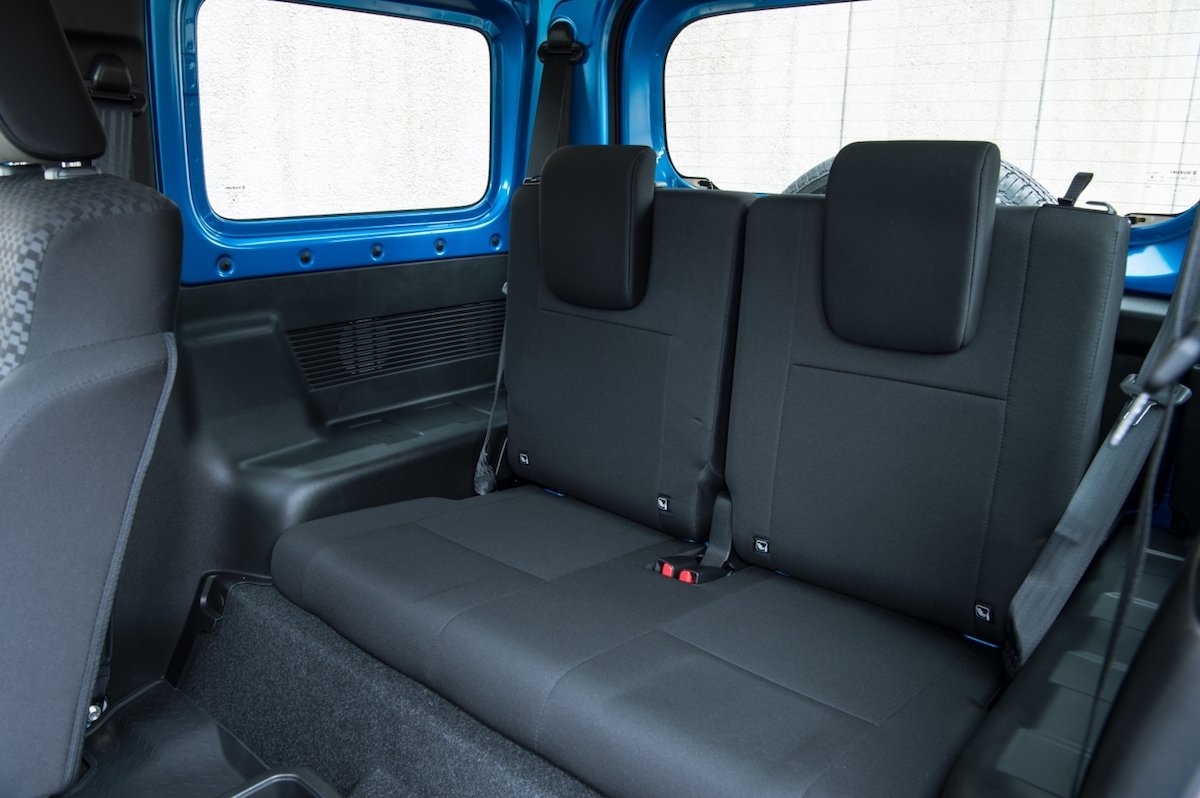
There’s enough space for a couple of children on the two-seat-only rear bench, but adults will find it a squeeze to even get into them (let alone to spend much time folded into them) since the Jimny’s three-door body doesn’t leave much access room, and there's not a lot of space above or in front of the rear seats.
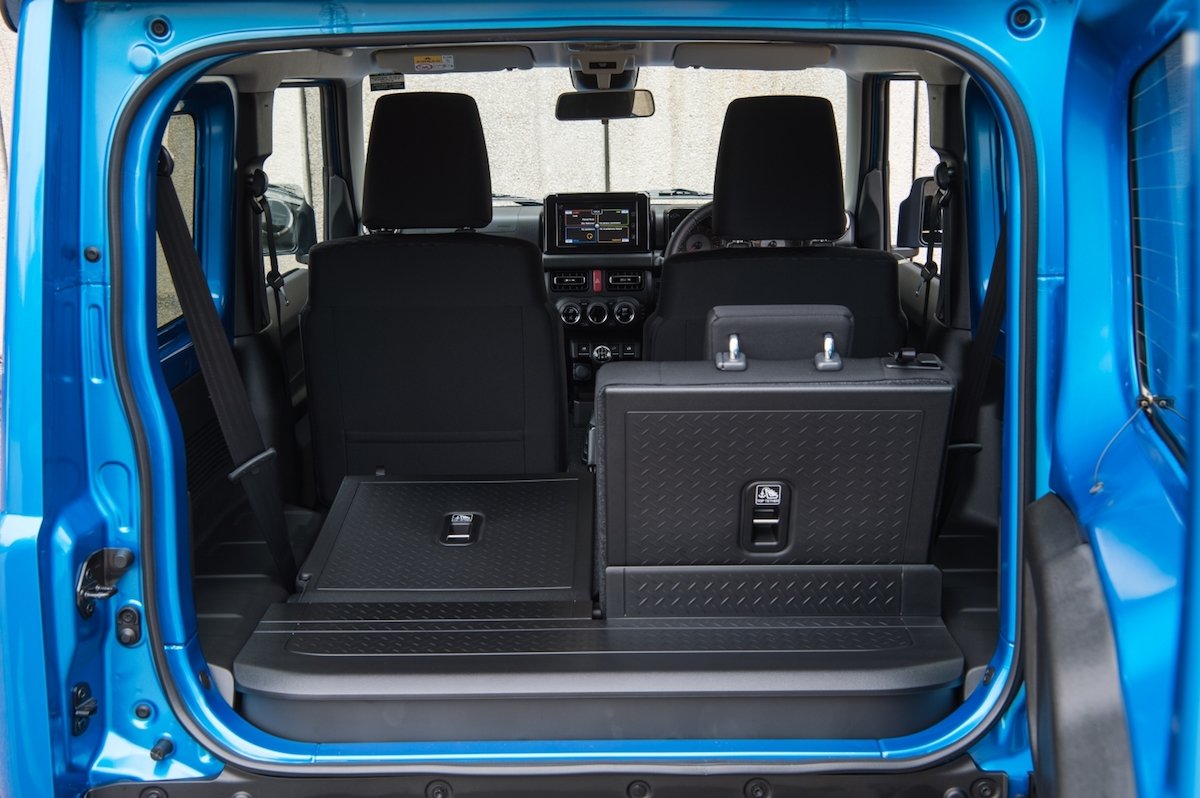
Boot space, too, is pretty dire. With the 50/50 split seats in place there’s enough room for a few soft bags, maybe a lightweight urban buggy if you’re lucky, but basically this is not a practical or spacious car by any stretch. Even with the rear seats folded you get just 377 litres of space, and that's less than in a VW Golf.
If you’re after a small family car with four-wheel drive to keep you going in rural, wintery conditions, options like the Fiat Panda 4x4, the Suzuki Ignis AllGrip or the bigger Dacia Duster offer more practicality, versatility and comfort thanks to their five-door bodies and better boot space. These rivals also compare well on price.
What's it like to drive?
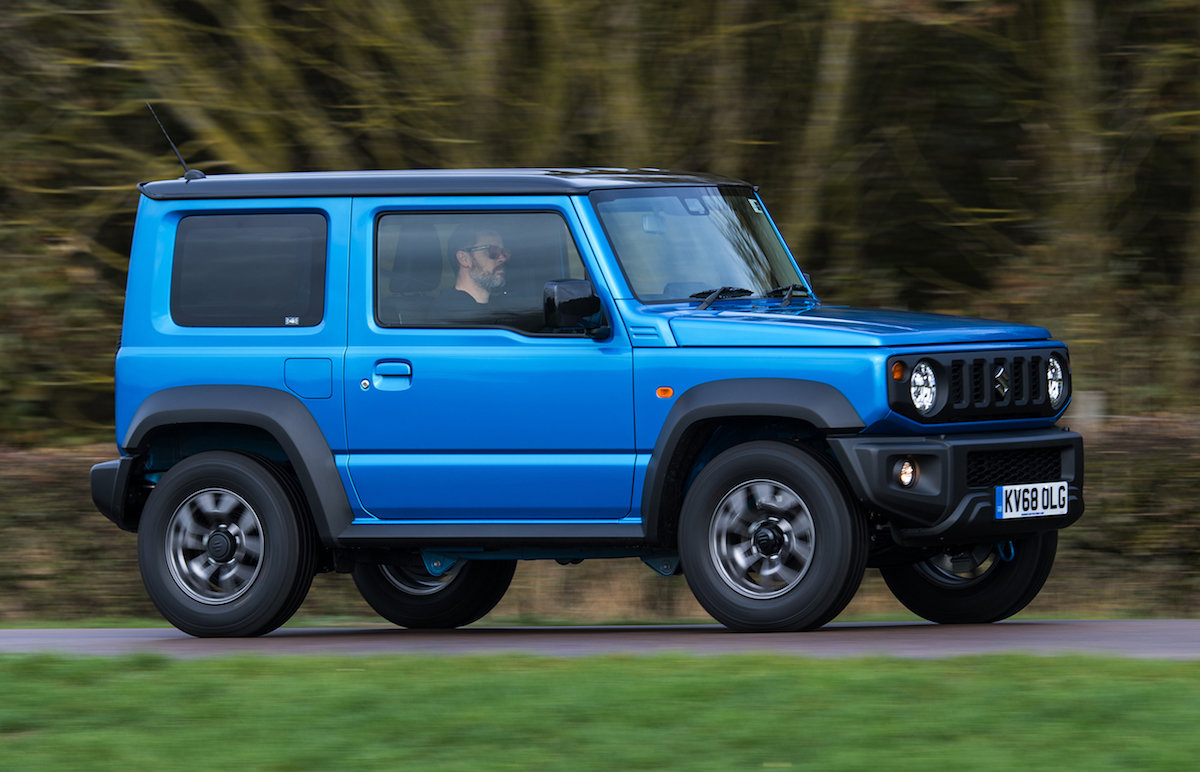
If you want a small SUV that costs a third of what a Jeep Wrangler, Land Rover Defender or Mercedes G-Class would set you back, yet offers three quarters of what they’ll do off-road, the Jimny is your car. It’s also brimming with character and, despite the numerous limitations we’ve mentioned, not a chore to use every day provided you’re expecting the shortcomings of a car designed for proper all-terrain use rather than daily comfort.
That non-turbo 1.5 petrol engine means the Jimny is not a fast car, nothing like. A top speed of 90mph and the fact that you’re doing such high revs at motorway speeds means that it feels a bit pained on longer journeys, while even mid-range acceleration is sedate, as a 0-62mph time of around 12sec suggests.
It feels light and nimble around town, with the narrow little body making for cheekily easy progress through single-track roads or traffic-clogged streets despite slow steering response. Pick up the pace, though, and the car feels progressively less stable, not to the point where it feels like it'll tip over at even moderate speeds, but you'll find that you have to slow down for bends a lot more than you would in a regular car, such is the level of body roll, and you'll notice the nose of the car rising and dipping as you touch the accelerator and brakes, respectively. And whatever, your speed, the ride feels lumpy and unsettled, despite the soft-spung suspension.
Of course, the payoff for the limited on-road ability is scarcely believable ability when you're off-roading. The short overhangs and lofty ground clearance let you scamper over rocks and slopes that you wouldn't think possible, while the low range gears mean that mud and standing water are no barrier to progress. And of course, more everyday 4x4 demands - such as needing to get up a slick, muddy track or finding yourself mired in snow - will be dispatched easily by the Jimny.
Technology, equipment & infotainment
Underneath is a ladder frame chassis and a switchable four-wheel drive system, which will send power to the rear wheels when in normal on-road mode, or can be set to permanent four-wheel drive, or four-wheel drive with a low ratio mode for full mountain goat capability.
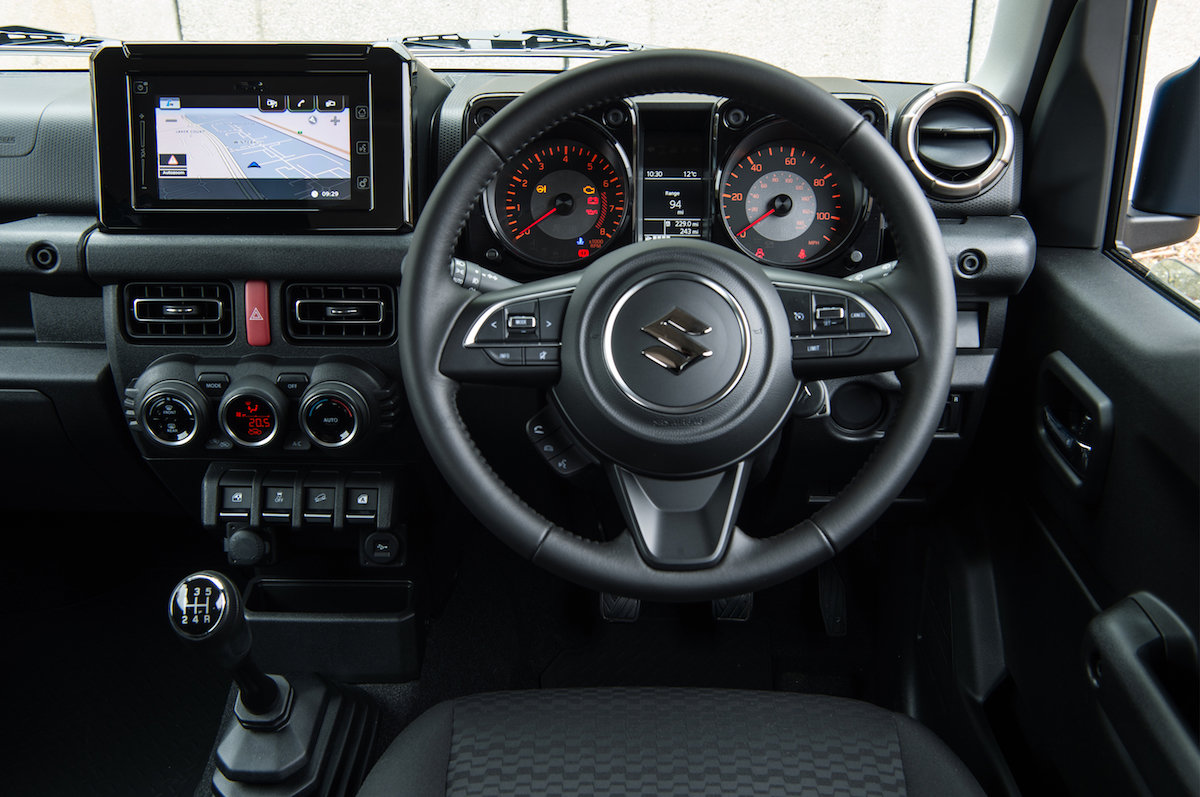
Various modern features include hill hold assist, traction control and descent control. Top-spec SZ5 cars get a 7.0-inch touchscreen infotainment system that adds satnav and voice control, but making use of the Apple CarPlay or Android Auto apps brings a more straightforward user interface.
The essential comforts are there, then, but this isn’t a terribly comfort-oriented car. All of the materials are certainly there to be durable rather than tactile, but there’s a charm to the bluff and utilitarian look of the Jimny’s interior.
Suzuki Jimny running costs
The Suzuki’s little 1.5-litre engine has an official WLTP fuel economy of 41.5 mpg, which you will be able to match in real world use provided you’re gentle with it. Expect more like 35 mpg in more strenuous use.
Insurance is very reasonable, with the Jimny falling into insurance group 13 or 14 depending on trim, and servicing costs are likely to be good since Suzuki typically offers affordable rates as well as fixed price deals. VED road tax will come in at £150 per year.
Overall, for a car with significant off-road purpose the Jimny is as cheap as it gets in terms of running costs. Not only that, its unfortunate short-lived time on sale in the UK, together with a cult following and unique appeal that nothing else of a similar price can match, mean that the Jimny is currently holding its value remarkably well. In fact, used examples currently cost more than when the Jimny was a brand new car, and that doesn’t look set to change any time soon. Great news if you've already got one tucked away in the garage, not so great if you're a used buyer on the hunt for some off-road fun.

Suzuki Jimny reliability
There’s not much reliability data on the Jimny, but Suzuki as a brand has a good reputation for reliability. It came 14th out of 31 brands surveyed (for reliability of cars up to five years old) in the 2020 What Car? used car reliability survey, while it finished 8th out of 30 manufacturers rated for overall customer satisfaction in the 2019 Driver Power survey.
There are no common faults currently reported on the Jimny, so just be conscious when viewing a used example that it will probably have gone off-road, so look for dings to the bodywork or damage underneath the car.
- The Suzuki Jimny has a maximum braked towing capacity of 1300kg (enough for a lightweight caravan) or the unbraked towing limit is 350kg. Just think carefully about using the Jimny for regular towing since power and torque are both in short supply as it is, and braking performance is middling at best, even without a caravan attached to the back.
- There is a chance that the Jimny may return to sale in the UK as a commercial vehicle, without its rear seats. This is unconfirmed but it’s known that Suzuki hopes to bring the Jimny back as a new vehicle offering in the UK. No surprise given the interest and demand that the cute-yet-utilitarian 4x4 commanded during the short time it was on sale.
- The Suzuki Jimny received a rather underwhelming three-star Euro NCAP result. Its adult and pedestrian protection proved perfectly acceptable in crash tests, but pedestrian protection and its driver aids were below par.
- The Jimny was only offered in two trims – SZ4 and SZ5. It’s rare to find an SZ4 since almost all buyers went for SZ5, which is the trim that we’d recommend anyway. It added the touchscreen with smartphone integration, making for a vastly better interface, as well as LED headlights, climate control, , privacy glass, a leather steering wheel, heated seats and alloy wheels.
- As we’ve said, the entry-level SZ4 trim is tricky to find but they do tend to be usefully cheaper if you can find one. The basic media system does allow for USB charging and phone connection, digital radio, Bluetooth and CD player but there’s no nav, and it also gets air conditioning and cruise control, so if you’re after the cheapest possible Suzuki Jimny and you’re not fussed about such modernities as nav and phone integration, the SZ4 is a solid bet provided you can find one. Steel wheels rather than alloys, though.
- For those considering the Jimny as an investment that will, at least, hold its value if not gain value, just make sure that you avoid the four-speed automatic. It’s rare to find this option, anyway, and while we haven’t tried it so can’t comment on what it’s like to drive, it isn’t a desirable thing to have on the Suzuki. Otherwise, go for SZ5 trim and don’t be afraid to go for one of the braver colours since there’s plenty of love for the Jimny in its more eye-catching paint finishes.
