Audi A5 Review (2007-2015)
Audi A5 cars for sale
3.0
Expert review
Pros
Handsome styling is ageing well
The cabin is very well made
There's a wide choice of engines to suit different priorities
Cons
Not especially spacious inside
Rivals such as the BMW 3 Series are more fun to drive
Ride comfort suffers on big alloys
The CarGurus verdict
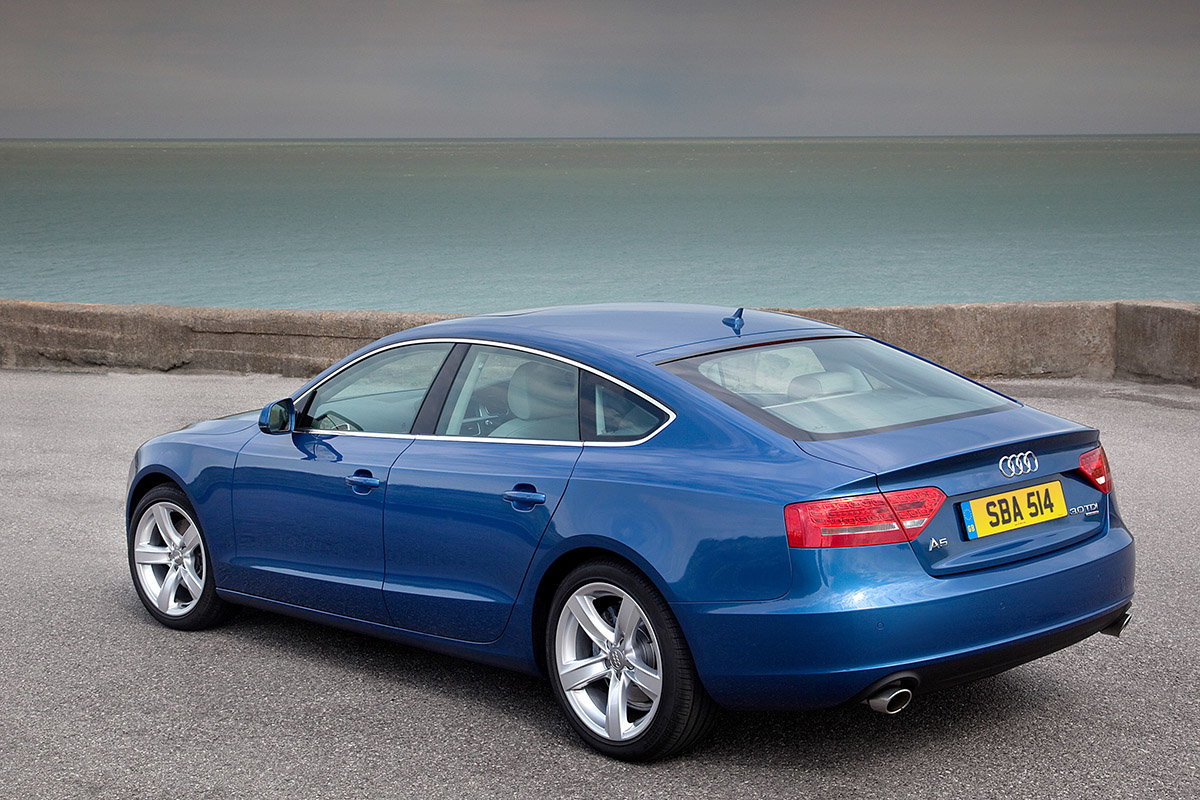
The Audi A5 is a suave choice, and one that’s only looking better and better as time goes by. Its biggest trump card is its beautifully put-together interior, wherein you’ll find plush materials and smart styling. And a wide array of engine options means you can pick the best blend of economy and performance for you.
The glamorous cabriolet gives open-top thrills for four, while also offering the safety and usability you’d expect of a modern Audi. And if you’re in need of something a little more practical, the Sportback boasts similarly handsome looks, with the added versatility of a big boot with a hatchback opening.
However, keep in mind that the A5 isn’t perfect. It isn’t the most spacious car of its type inside, for one thing, and nor is it the most exciting to drive. You’ll need to choose your specification carefully, too, in order to avoid an A5 with a bone-shaking ride.

What is the Audi A5?
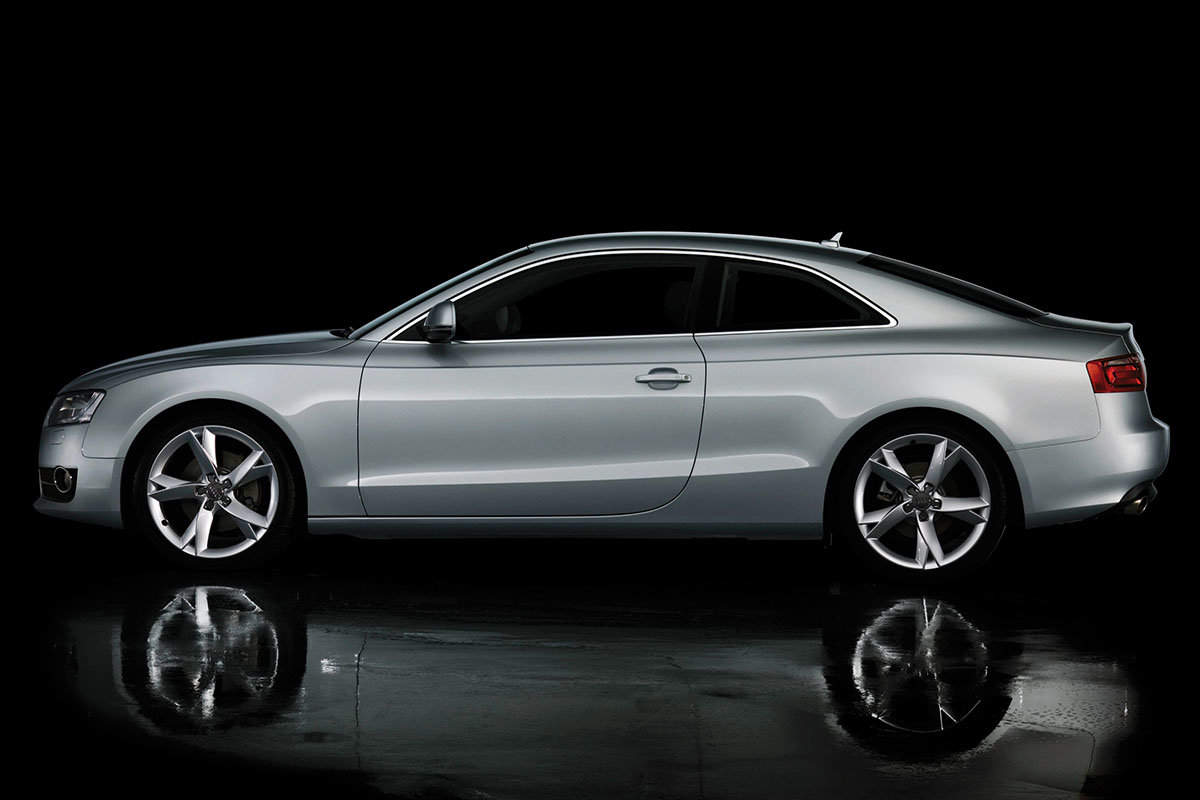
The Audi A5 was inevitable, really. Audi had long been without a smart two-door with which to challenge the hegemony of the BMW 3 Series Coupe, so it was only a matter of time before it came up with such a thing. The A5 was the result.
It was based heavily on the popular A4 saloon, and shared with it a range of engines and its dashboard layout. That was, of course, no bad thing, given the A4 was famed for its economical diesels and smooth petrols, not to mention a beautifully made and well laid-out interior.
How practical is it?
Beneath the surface, Audi pushed the engine further back in the chassis than the A5’s, the aim being to improve weight distribution and make the A5 feel sporty to drive. The downside to this move is that it means the interior isn’t quite as spacious as you might hope. The driving position is slightly offset, which might cause some people a little discomfort, while neither head nor leg room is enormously generous in the back.
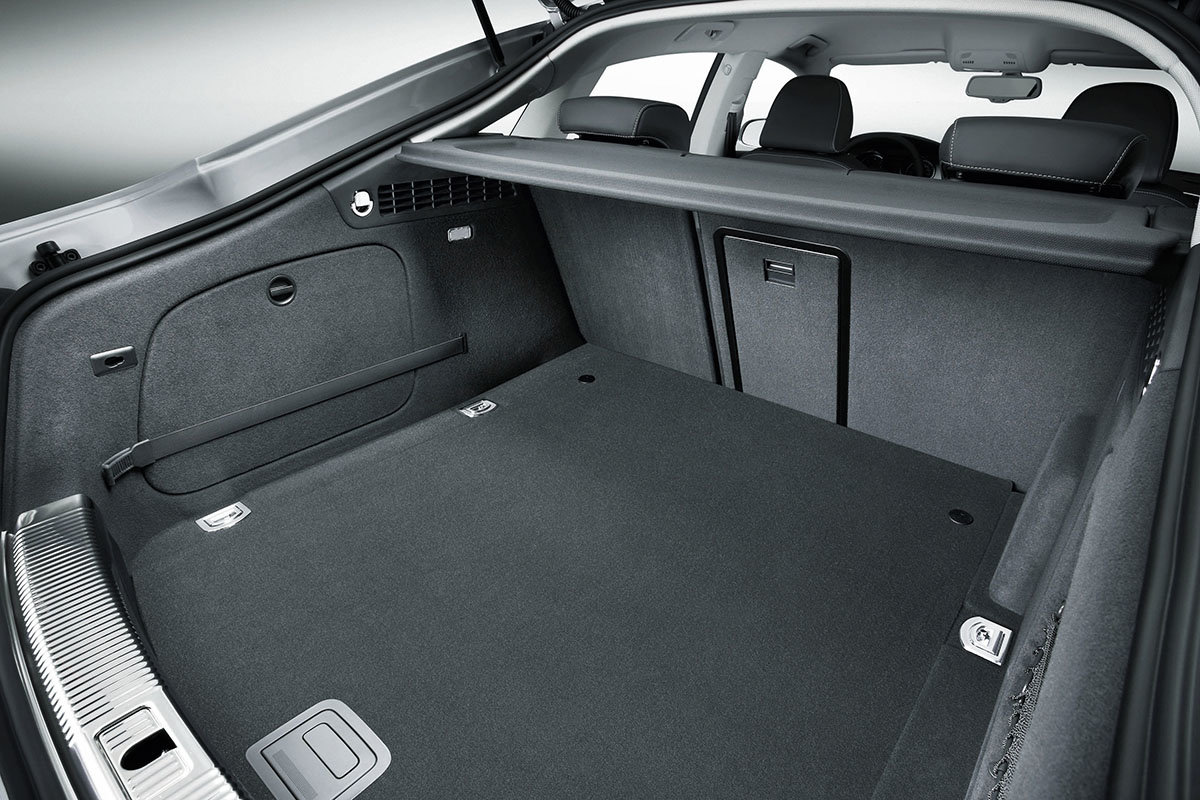
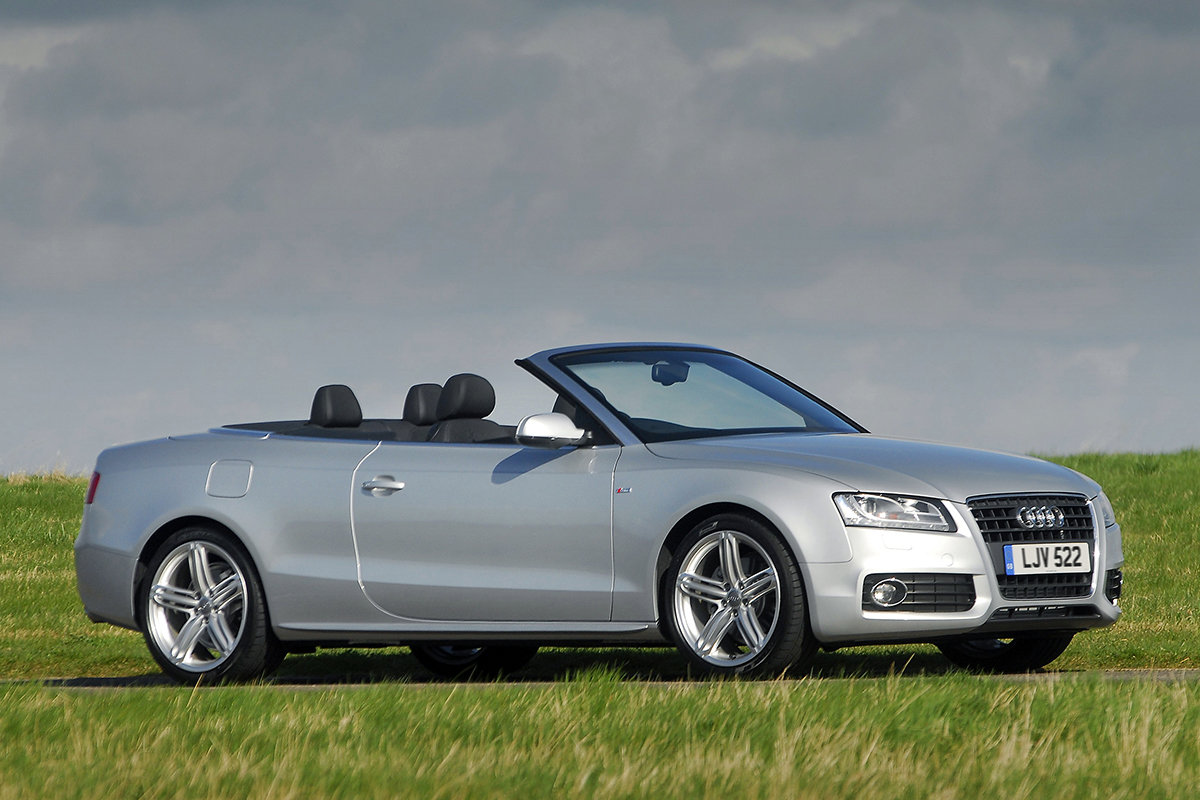
At least the boot’s a decent size at 455 litres, and if practicality is a concern, you can always opt for the Sportback version (480 litres), which adds two extra doors and a hatchback to the tail end while retaining the A5 Coupe’s low roofline. There’s a convertible version, too, if you’re feeling in the mood for a spot of sun worship, and because it gets four seats, three of which have Isofix, you can bring the kids along with you too.

What's it like to drive?
So, that clever idea of pushing the engine backwards to improve the A5’s handling: did it work? Well, not wholly; the A5 feels less nose-heavy than the A4, but the steering is similarly remote and overly light, while the slightly inert suspension setup means the A5 feels safe and predictable rather than agile and playful, such as a BMW 3 Series (or its successor, the 4 Series) would.
Choose one of the popular S-Line models, with their large wheels and lowered suspension, and you might find it to be unacceptably stiff; for that reason, we prefer the more pliant SE and Sport versions. They might not look quite as aggressive, but you’ll be glad of their greater comfort on your daily commute.
Technology, equipment & infotainment
You can take your pick from a wide range of engines; the A5 was made available with everything from a 1.8-litre four-cylinder to a 4.2-litre V8, with three diesels in between. Of these, the 1.8-litre petrol turbo suits the car best, though don’t underestimate the diesels; the 2.0-litre is impressively economical, while the V6s offer huge waves of torque that make them feel effortless.
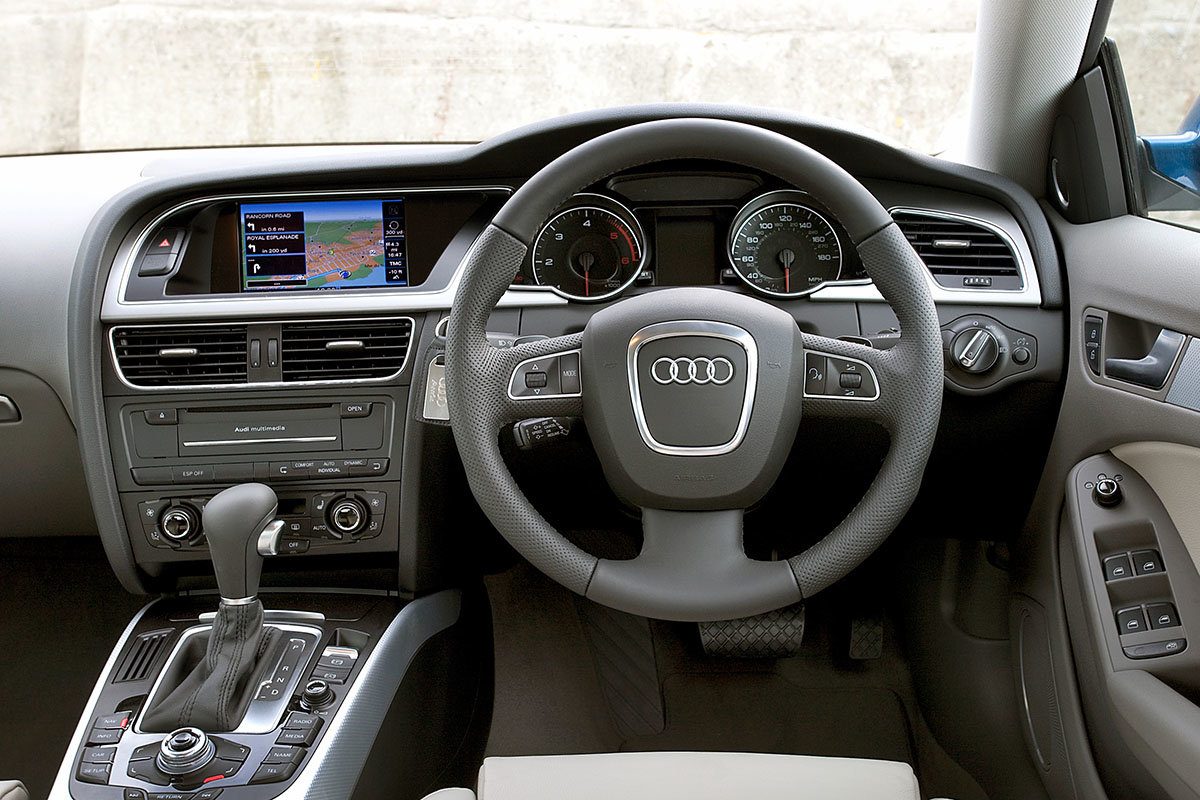
When the A5 was launched it was pretty well equipped; you got leather upholstery, three-zone climate control, electric windows, Xenon headlights, and even a powered boot lid as standard. A facelift in 2012 brought a more aggressive snout and LED rear lights, along with a few extra bits of kit; several of the engine options were upgraded, too, with better fuel efficiency and more power.
Audi A5 running costs
The most economical version of the A5 is the rare 2.0 TDI Ultra. Buy one, and you should see around 55mpg on average, which is a very respectable figure from a relatively big car with sporting overtones. However, keep in mind that the Ultra features a detuned engine that makes the A5 feel decidedly ordinary to drive.
Better, then, to stick with the standard 2.0 TDI, from which you should still see around 45-50mpg in real-world driving; or if you’d rather a petrol, the 1.8-litre version should manage 35-40mpg on average. Opt for a petrol V6, and that figure will dip below 30mpg, while an S5 or RS5 probably won’t get much beyond 20mpg even with careful driving.
Of course, if you choose one of the performance models, you’ll also need to be prepared for the fact that servicing and repair costs will be higher than with the standard A5; the larger wheels will need bigger, pricier tyres, for example, and beefier brakes will be more costly to replace.
Happily, the standard A5 shouldn’t be too expensive to service. Audi’s servicing costs are generally more reasonable than those of BMW or Mercedes-Benz, and because the A5 shares so much of its technology with lesser Audis and other cars from the wider Volkswagen Group, an independent garage should be able to look after it perfectly well.
Only the 2.0 TDI models are fitted with timing belts, and these will need changing every five years or 140,000 miles, whichever comes first. All other models are fitted with timing chains, and in theory, these shouldn’t need changing for the duration of the car’s life. However, some A5 engines have gained a reputation for snapping timing chains, and there’s more on this below.
Audi A5 reliability
The 1.8 and 2.0-litre petrol engines have been known to suffer from stretched timing chains. This can either be an expensive job to fix, if the problem is caught before it results in major engine damage, or if not, a very expensive one, as it’ll require a whole new engine – or at least a rebuild. Listen out for rattles around start-up and make sure you buy a car that’s been serviced regularly.
The above problem can be compounded by another issue peculiar to the 1.8 and 2.0-litre engines, which is that they can sometimes consume more oil than usual. The problem seems to exist mainly on cars registered in early 2011 and before, so it’s best to seek out a car made after this date.
The A5 has frameless doors, which rely on the seals being in tip-top condition so that they don’t let in water. However, the seals can wear or go hard with age, causing water to seep in in heavy rain. Look out for water marks on the interior of the door and check the carpets in the foot wells aren’t damp.
Diesel engines with manual gearboxes have also been known to suffer with dual-mass flywheel failure, which can result in a very costly bill. Unfortunately this problem can occur with no warning, but it pays to check the clutch operates as it should, with no odd noises.
- The slightly confusing performance end of the A5 range starts with the S5, which comes with a 360hp 4.2-litre V8 in coupe form, or a 333hp 3.0-litre supercharged V6 if you pick a convertible. The 0-62mph sprint comes up in 5.1 seconds for the former, and 5.6 seconds for the latter; unusually, though, it’s the drop-top that offers the better driving experience, the lower weight of its engine making it feel more nimble and alert than the heavier, more lumpen coupe. Above the S5 sits the RS5, with its 444bhp version of the same 4.2-litre V8; this, too, is blisteringly quick and incredibly good at covering ground, but in terms of sheer involvement, struggles to match up to a contemporary BMW M3.
- A six-speed manual gearbox was standard on most A5s, but if you want an automatic, you can take your pick from three main types. Two-wheel-drive A5s were available with a stepless automatic transmission that gives smooth acceleration, but causes the engine to be held at high revs when driven hard, which increases engine noise. This type of automatic gearbox, known as Multitronic, was replaced by the dual-clutch S Tronic gearbox on four-wheel-drive quattro versions, and the S Tronic is much nicer to drive. However, be aware that both types of gearbox have been known to suffer from expensive faults, especially if they aren’t well maintained. A third option, Tiptronic, was available on the S5, and sits between the two other automatics in terms of its driveability, though it has a better reputation for reliability than either.
- While Audi would like you to think of the Sportback as a four-door coupe, in reality it’s little more than a five-door hatchback, albeit one with a sleek roofline and a slimmed-down range of engines compared with the standard A5 and S5. Practicality is much better, though, as you’d expect. The big boot with its gaping aperture makes it easy to load larger items like bikes or flat-pack furniture, while the rear seats are almost as spacious as those of the A4 saloon. However, keep in mind that the Sportback’s ride is even firmer than that of the standard A5.
- If you want the best all-rounder: The Sport model offers a good compromise between smart looks and reasonable ride comfort, so that’s the one we’d choose. And given the A5 is no sports car, you don’t need to go mad with the engine; the 1.8-litre TFSI turbo will be more than enough.
- If you’re a high-mileage driver: The good news is that the A5’s diesel engines will help keep your costs down; a 2.0 TDI SE should provide a great mix of comfort and fuel economy.
- If you want a cabriolet: If you can stretch to it, the drop-top is best served in S5 form. This version gets Audi’s cracking S Tronic gearbox as standard, too, which gives smooth automatic shifts as well as whip-crack gear changes in manual mode when you feel like it.
- If you need a family car: Thinking about upgrading to the four-seat A5 because you’ve got children on the way,? Then consider the A5 Sportback instead. A 1.8 TFSI SE would make a great family car, and a more stylish alternative to a Ford Mondeo or Vauxhall Insignia.
- If you need an automatic: Make sure you choose a quattro model, in order to obtain the better S Tronic gearbox. Paired with the gutsy 3.0 TDI engine, this combination should offer effortless performance and unassailable progress in all weathers.


