Audi E-Tron Review (2018-present)


Pros and cons
What we like
Refined and roomy
Superb build quality more than lives up to the price
Class-leading infotainment system
What to consider
Not as enjoyable to drive as the Jaguar I-Pace
Tesla Model X has a longer range
More expensive than a Merc EQC
The CarGurus verdict
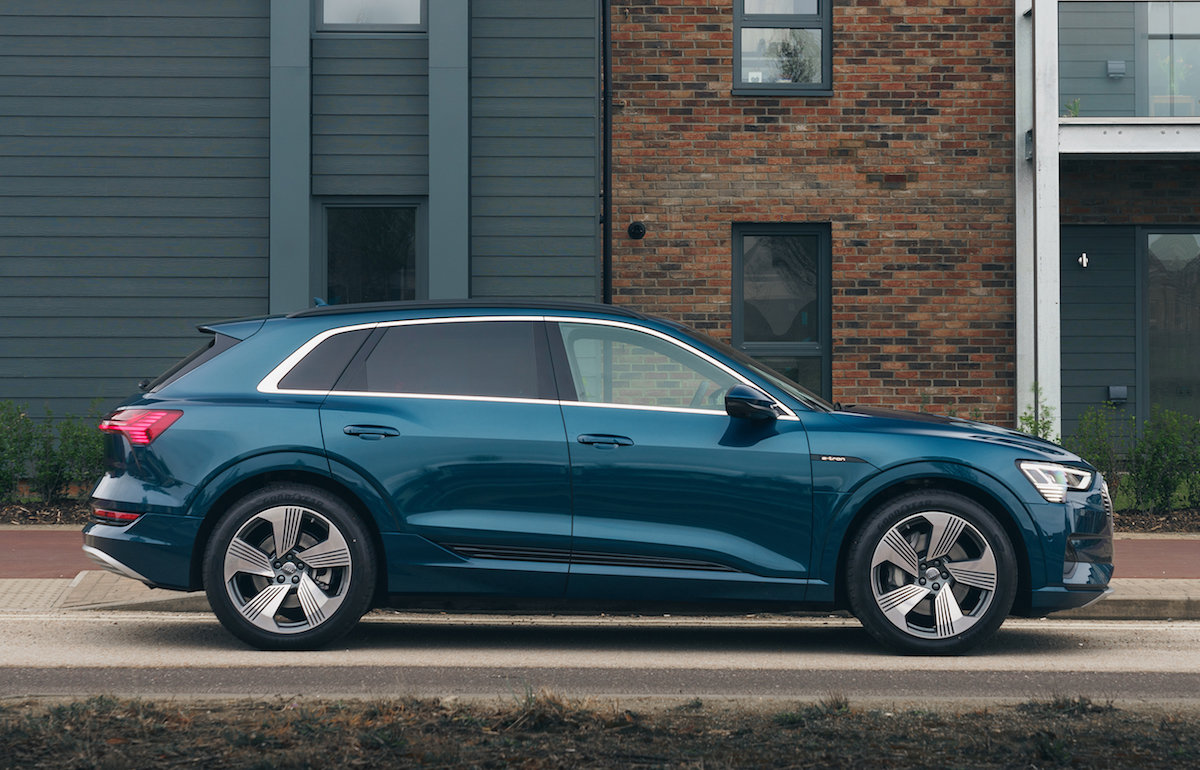
The Audi E-Tron is a pretty compelling car that feels every bit the expensive, plush SUV that you’d expect given a price starting at more than £60,000 when new. It has the sort of cabin finish that would feel appropriate in a car costing even more than the E-Tron, as well as a great infotainment system; that general over-indulgence, teamed with the E-Tron’s refinement and roominess are the key reasons you go for the big plug-in Audi.
However, for all its charms, the E-Tron isn’t anywhere near as fun as the Jaguar I-Pace, and isn’t as practical or as long-range as the Tesla Model X. Yes, it’s a sumptuous and classy car that oozes desirability, but in many ways the competition is even better.
out of 5 expert review
What is the Audi E-Tron?
Introduced in 2018 and a little larger than the Audi Q5, the E-Tron is a pure electric SUV that is offered with two battery sizes - a 95kWh or a 71kWh, badged the E-Tron 55 or 50 and offering an official range of 271 or 186 miles respectively. Only the larger battery was offered initially, with the smaller battery joining the range in late 2019, although all have two electric motors, adaptive air suspension and Audi's active quattro four-wheel drive.
We’re yet to try the E-Tron 50, but the 55 is a little disappointing in terms of its real-world efficiency. Our experience suggests you’ll only see around 2.0 – 2.3 miles per kWh, which equates to a range of around 180 – 200 miles in varied use.
In 2023, the e-Tron was renamed the Q8 E-Tron which couincided with a range of updates that included slightly bigger batteries – and therefore slightly longer ranges.
Practicality
How practical is it?
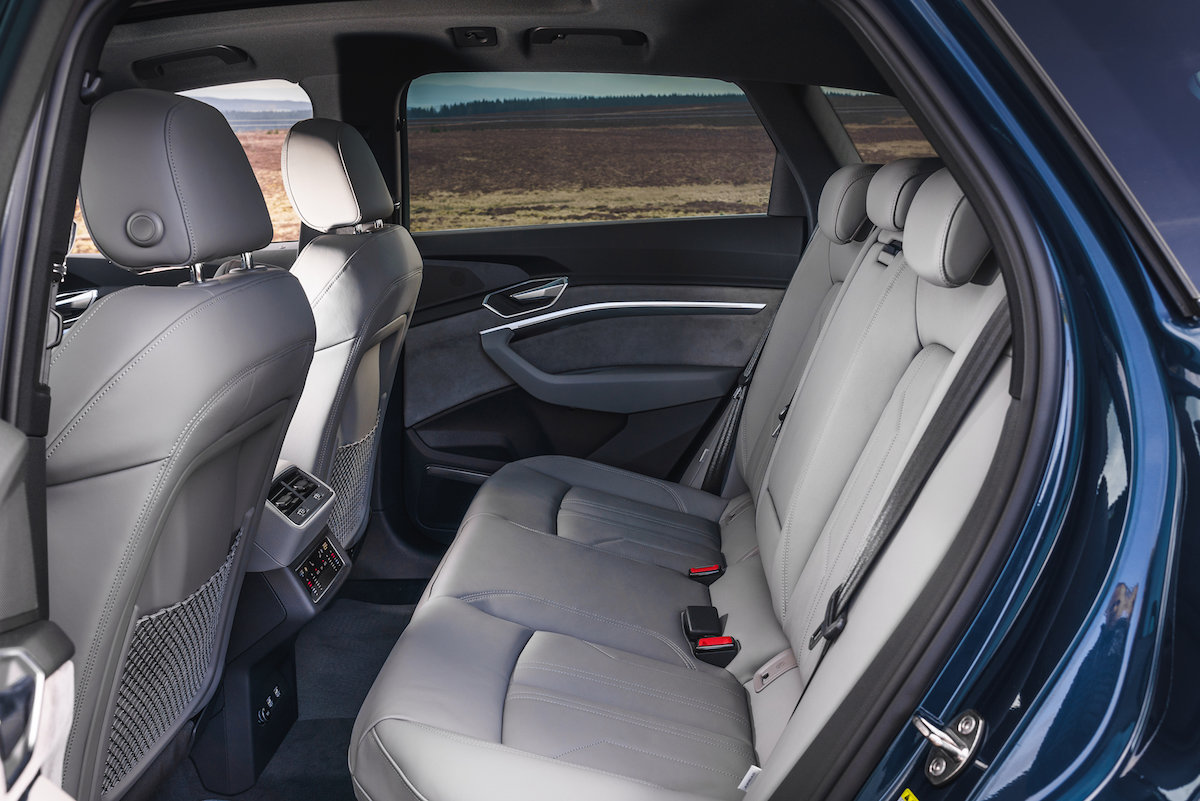
It’s pretty practical. In fact, the E-Tron is way bigger than the Jaguar I-Pace – both in terms of passenger room and luggage capacity – and its 605-litre boot is noticeably roomier than the 500-litre space in the Mercedes EQC. It’s not as spectacularly practical as the bigger Tesla Model X, which also offers a six or seven-seat layout that the E-Tron lacks, but by any five-seat SUV standard the E-Tron is a great family car.
Not a cheap one, though; it’s expensive to buy, as are all the luxury electric SUVs, but the E-Tron is particularly pricey if you go for a top-spec version, so stick to the well-equipped lower trims. Used versions are trickling on to the used market but the Audi is proving to hold its value well, so even used and nearly-new examples are pricey to buy or finance.
Driving
What's it like to drive?
With the cheaper E-Tron 50 still getting 308bhp and full-time four-wheel drive, it’s no slouch with a 0-62mph time of 6.8sec. Having said that, we’ve spent loads of time in the E-Tron 55 and it doesn’t feel quite as fast as you’d expect of a car with 402bhp and a 0-62mph time of 6.6sec. Even if you stick the E-Tron in Sport mode to access the full power on offer, it feels fast but not shockingly so – as a Jaguar I-Pace and Tesla Model X both do. We’ll have to wait and see if the forthcoming E-Tron S can amend that with its power output of 496bhp.
Nor is the E-Tron a fun or sporty drive like the Jaguar, so much as it is a resolutely brilliant cruiser, with a cushy ride and one of the nicest interiors you’ll find in any luxury SUV. This does come with the caveat that we haven’t yet driven the E-Tron Sportback, which promises to bring a bit more zing to the E-Tron’s slick but unexceptional handling. We’ll update this review as soon as we have.
Tech and equipment
Technology, equipment & infotainment
The late 2019 addition of the E-Tron 50 saw a change in trim levels. Originally offered with only three trims - standard E-Tron, the much pricier Launch Edition (which is so swanky that it gets cameras for wing mirrors as standard) and super rare Edition 1 – the update brought a full lineup of six trims. A sleeker coupe-SUV bodystyle named the E-Tron Sportback also entered the fray, but is only offered with the bigger battery, which also comes with more power and a substantially higher price tag whether you’re buying the standard E-Tron or more rakish Sportback.
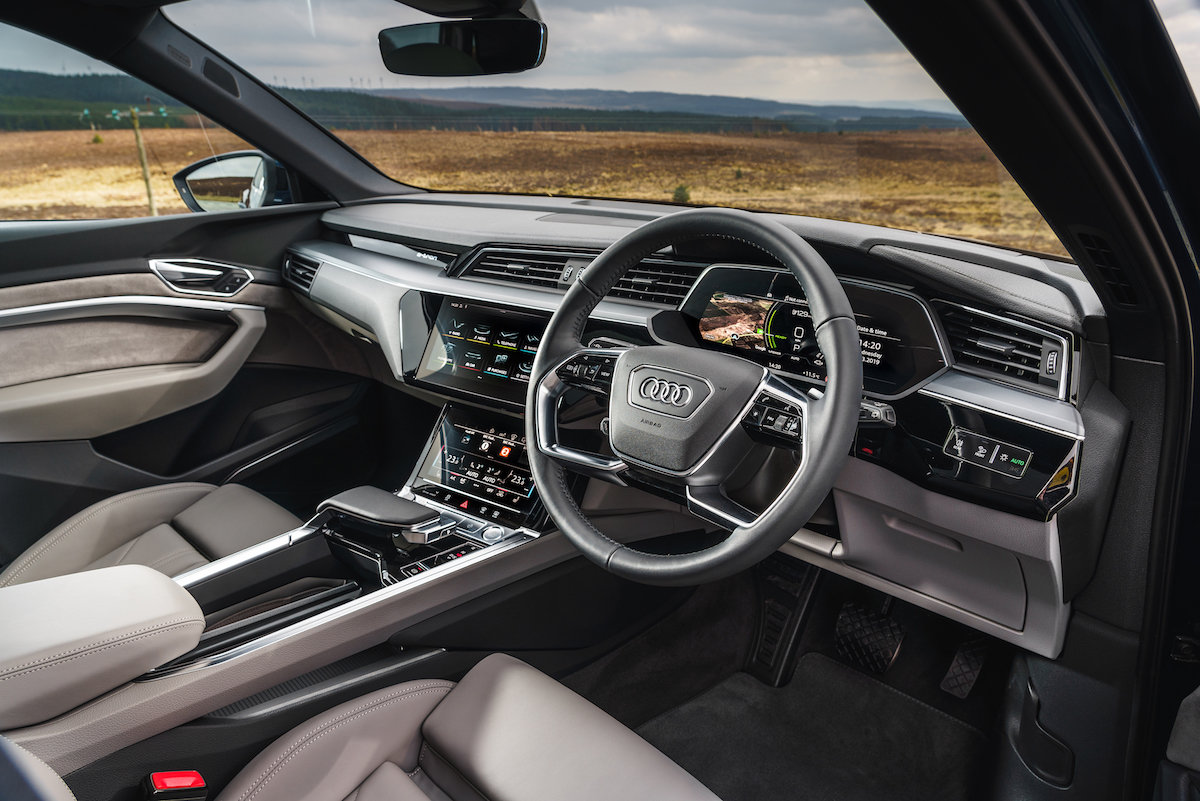
Still, every E-Tron gets a superbly finished cabin with huge touchscreen interface and digital dials offering variable views and tailored info readout; it’s one of the best infotainment systems you’ll find in any car and is complete with Apple CarPlay and Android Auto. In fact, the general lustre and finish of the interior, as well as the tech on offer, are key reasons why you would go for the Audi over its rivals.
Running costs
Audi E-Tron running costs
The E-Tron will be cheap to run in terms of fuel, since electricity is vastly cheaper than petrol. Even though it’s not terribly efficient by the standards of electric vehicles, if you go for the E-Tron 50 it’ll cost less than £20 to fully charge the car at home on the average domestic tariff. Using off-peak tariffs could save you as much as half that cost. Public rapid chargers that you typically use for motorway top-ups will cost significantly more.
However, charging costs aren’t the only expense involved, and other running costs on the E-Tron are high. Insurance falls in the two highest groups – 49 and 50 depending on trim - which is much the case for most SUVs with this sort of performance whether they’re petrol, diesel or electric. Tyres are huge, expensive and will get worn through just as quickly as any high-powered SUV will wear through tyres.
However, servicing is cheaper than on most alternatives. Intervals are every two years and 19,000 miles.
Audi’s new car warranty covered the E-Tron for three years and 60,000 miles, although that could be extended. An eight-year, 100,000-mile warranty covers the batteries, covering against failure or significant loss of performance.
Audi E-Tron reliability
The E-Tron came 12th out of the 16 cars in the electric SUV class of the 2024 What Car? Reliability Survey, which isn't a great showing for such an expensive car. Audi as a brand meanwhile came 24th of the 31 manufacturer included in the same survey, which again is below where you might expect for this premium German car-maker.

What owners say
Three things to know
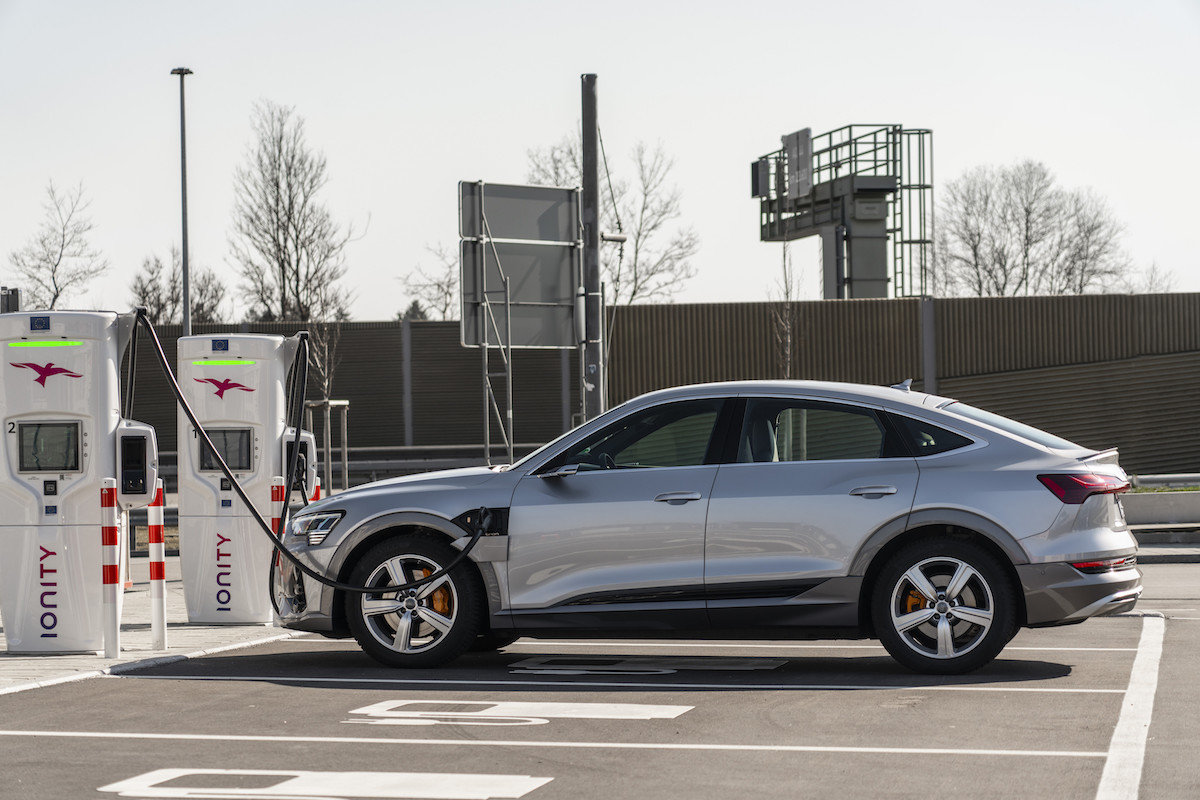
- When first launched, the E-Tron 55 had an official WLTP range of 248 miles. An update late in 2019 brought different software that improved the range by increasing the usable battery capacity (the quantity of cells that the car actually runs on, since all lithium-ion batteries keep a certain amount dormant in order to improve battery longevity) to 86.5kWh. It also improved efficiency by changing the E-Tron’s four-wheel-drive system to run solely on rear-wheel drive when conditions suited, resulting in the increased range of 271 miles.
- The E-Tron can charge at up to 150kW, making it one of the fastest charging electric cars on sale – faster than the Mercede EQC and Jaguar I-Pace. Plug it into a charge point capable of matching that 150kW speed and you’ll get 100 miles of range in as little as 15 minutes. Chargers of this speed are becoming more common, but more often than not in the UK you’ll find a 50kW charger at most motorway services, which will take more like 45 minutes to an hour for a top-up of 100 miles. Charging the E-Tron at home will take some 14 hours for a full charge from flat, but don’t forget that that’s seldom necessary. There’s also two Type 2 charging ports – one on each of the front wings – to make plugging in easier. Most drivers simply plug in overnight when necessary, and rarely dip below 20% charge. Staying between 20-80% charge in routine use and only using 100% of an electric car’s battery when you do a long journey will also help maintain the battery longevity.
- The Sportback loses 20mm of rear headroom to that sleeker profile, compared to the standard E-Tron, but it’s still a spacious family SUV that’s very comparable with the Jaguar I-Pace for roominess and comfort.
Which one to buy
- If you’re simply after the cheapest E-Tron you can get your hands on, don’t worry that you’ll be lacking in comfort and gadgets. The entry level Technik is generously equipped, with 20-inch alloy wheels, LED lights, heated leather seats, the fantastic touchscreen infotainment system and digital dials, adaptive air suspension and more.
- If you want something with a bit of vim to it, then the Sportline is a good option. The coupe-ish looks make it feel a bit glitzier than the standard SUV version, and it’s got a different four-wheel-drive setup that offers more rear-bias. It’s only offered with the 95kWh battery pack and 402bhp currently, although the performance-oriented E-Tron S gets 496bhp and is being offered in both Sportback and SUV bodies when it goes on sale in late 2020, so could be the best option if you want scorching pace. At nearly £90,000 it’s not cheap, though, so do consider the Jaguar I-Pace if you want driving thrills, since it’s much cheaper than the E-Tron S yet it’s hard to imagine anyone finding the Jaguar not fast or fun enough. We’ll report back on what it’s like when we’ve driven it.
- If you’re after the most technically spectacular version of the E-Tron, look to the Vorsprung trim – or if you’re buying used, the Launch Edition or Edition 1 are also dripping with tech. All of these get cameras in place of traditional side mirrors, which reduces drag for improved refinement and also promises better visibility – particularly in dark conditions. The cameras are impressive, too, beaming a clear feed to a screen at the base of the windscreen pillar, and offering much better visibility and contrast in the dark compared with a normal mirror.
- If range isn’t an issue and you only really do shorter journeys, the e-tron 50 with its 71kWh battery and 186 mile official range will be more than enough, especially given the rapid charging (the 50 charges at 120kW, so slightly slower than the 150kW that the e-tron 55 will do but still one of the fastest charging cars in the class). We haven’t driven it yet but we’d expect it to do around 150 miles in warm weather and normal use, or that could dip to as little as 130 in colder weather on a motorway journey, when electric cars are at their least efficient.


Pricing trends
Starting RRP
£51,100
Current avg. market price
£21,255
Trending up by 3.8% this month
April 2026 - October 2026
Compare 2022 Audi E-Tron Trims
The 2022 Audi E-Tron offers a range of trims from budget-friendly options to high-performance variants, all featuring AWD capability.
- Starting at £17,888
- Most Popular: 230kw 50 Quattro 71kwh Technik 5dr Auto
Trim Overview
Prices updated weekly from CarGurus listings.
| 230kw 50 Quattro 71kwh Technik 5dr Auto | 230kw 50 Quattro 71kwh Black Edition 5dr Auto | 230kw 50 Quattro 71kwh S Line 5dr Auto | 300kw 55 Quattro 95kwh S Line 5dr Auto | 300kw 55 Quattro 95kwh Black Edition 5dr Auto | 300kw 55 Quattro 95kwh Vorsprung 5dr Auto | |
|---|---|---|---|---|---|---|
| Starting MSRP | £61,320 | £69,670 | £69,920 | £79,020 | £80,570 | £95,920 |
| Avg. Market Price | £17,888 | £25,901 | £20,413 | £23,157 | £28,119 | £30,373 |
| Positioning | Best value | Adventure-ready | Adventure-ready | Adventure-ready | Adventure-ready | Trail-ready |
| Standout Features | Backup Camera, Heated Seats, Navigation System | Heated Seats, Privacy glass/Tinted windows, Leather Seats | Backup Camera, Navigation System, Heated Seats | Backup Camera, Heated Seats, Privacy glass/Tinted windows | Privacy glass/Tinted windows, Heated Seats, Backup Camera | Panoramic Roof, Climate control, Navigation System |
| Drivetrain | AWD | AWD | AWD | AWD | AWD | AWD |
| Listings Available | 45 | 13 | 18 | 25 | 17 | 10 |
Quick Compare Table
Listing prices sourced from CarGurus — updated weekly. OEM specs from manufacturer data.
| 230kw 50 Quattro 71kwh Technik 5dr Auto | 230kw 50 Quattro 71kwh Black Edition 5dr Auto | 230kw 50 Quattro 71kwh S Line 5dr Auto | 300kw 55 Quattro 95kwh S Line 5dr Auto | 300kw 55 Quattro 95kwh Black Edition 5dr Auto | 300kw 55 Quattro 95kwh Vorsprung 5dr Auto | |
|---|---|---|---|---|---|---|
| AI Summary | Best value option in the E-Tron lineup | Stylish with added features for adventure | Great mix of luxury and practicality | Performance-oriented with extra power | Premium features for a higher price | Top-tier luxury with advanced tech |
| Avg. Market Price | £17,888 | £25,901 | £20,413 | £23,157 | £28,119 | £30,373 |
| MSRP | £61,320 | £69,670 | £69,920 | £79,020 | £80,570 | £95,920 |
| Engine | 0.0cc 167.0 hp | 0.0cc 167.0 hp | 0.0cc 167.0 hp | 408.0 cv | 408.0 cv | 408.0 cv |
| Drivetrain | AWD | AWD | AWD | AWD | AWD | AWD |
| MPG/MPGe (City/Hwy) | 0.0/0.0 | 0.0/0.0 | 0.0/0.0 | 0.0/0.0 | 0.0/0.0 | 0.0/0.0 |
| Backup Camera | ✓ | ✓ | ✓ | ✓ | ✓ | — |
| Heated Seats | ✓ | ✓ | ✓ | ✓ | ✓ | ✓ |
| Parking Assist | ✓ | ✓ | ✓ | ✓ | ✓ | ✓ |
| Navigation System | ✓ | ✓ | ✓ | ✓ | ✓ | ✓ |
| Cruise Control | ✓ | ✓ | — | ✓ | ✓ | — |
| Air Conditioning | ✓ | ✓ | ✓ | ✓ | — | — |
| DAB Radio | ✓ | — | ✓ | ✓ | ✓ | ✓ |
| Keyless Entry/Start system | ✓ | ✓ | ✓ | ✓ | ✓ | ✓ |
| Alarm/Immobiliser | ✓ | — | — | — | ✓ | ✓ |
| isofix | ✓ | ✓ | ✓ | ✓ | ✓ | ✓ |
| Bluetooth | ✓ | ✓ | ✓ | ✓ | ✓ | — |
| Privacy glass/Tinted windows | — | ✓ | ✓ | ✓ | ✓ | ✓ |
| Leather Seats | — | ✓ | ✓ | — | — | — |
| AUX/USB connectivity | — | — | — | — | ✓ | — |
| Climate control | — | — | — | — | — | ✓ |
| Active Listings | 45 | 13 | 18 | 25 | 17 | 10 |
Missing data displayed as "—".
Trim Deep Dives
230kw 50 Quattro 71kwh Technik 5dr Auto — "Who It's For"
The Technik is the pick for shoppers who want a well-equipped electric SUV without the higher price of premium trims.
- Avg. market price: £17,888 (updated weekly)
- MPG/MPGe: 0.0 city / 0.0 hwy
- Inventory: 45 listings — lower availability; may limit negotiating room
- View Technik listings
230kw 50 Quattro 71kwh Black Edition 5dr Auto — "Who It's For"
The Black Edition is ideal for buyers seeking a stylish electric SUV with premium features without going for the top-tier models.
- Avg. market price: £25,901 (updated weekly)
- MPG/MPGe: 0.0 city / 0.0 hwy
- Inventory: 13 listings — lower availability; may limit negotiating room
- View Black Edition listings
230kw 50 Quattro 71kwh S Line 5dr Auto — "Who It's For"
The S Line is perfect for those who want a blend of luxury and practicality in their electric SUV without the highest price tag.
- Avg. market price: £20,413 (updated weekly)
- MPG/MPGe: 0.0 city / 0.0 hwy
- Inventory: 18 listings — lower availability; may limit negotiating room
- View S Line listings
300kw 55 Quattro 95kwh S Line 5dr Auto — "Who It's For"
The 300kw S Line is for shoppers who prioritize performance and features in their electric SUV without stepping up to the most expensive trim.
- Avg. market price: £23,157 (updated weekly)
- MPG/MPGe: 0.0 city / 0.0 hwy
- Inventory: 25 listings — lower availability; may limit negotiating room
- View S Line listings
300kw 55 Quattro 95kwh Black Edition 5dr Auto — "Who It's For"
The Black Edition is suited for buyers wanting a premium electric SUV with stylish features and a higher price point.
- Avg. market price: £28,119 (updated weekly)
- MPG/MPGe: 0.0 city / 0.0 hwy
- Inventory: 17 listings — lower availability; may limit negotiating room
- View Black Edition listings
300kw 55 Quattro 95kwh Vorsprung 5dr Auto — "Who It's For"
The Vorsprung is for those who want the ultimate luxury and technology in their electric SUV, regardless of the price.
- Avg. market price: £30,373 (updated weekly)
- MPG/MPGe: 0.0 city / 0.0 hwy
- Inventory: 10 listings — lower availability; may limit negotiating room
- View Vorsprung listings
Trim Recommendations
Most Popular — 230kw 50 Quattro 71kwh Technik 5dr Auto
With 45 active listings, the Technik is the clear volume leader in the lineup.
Best Budget Option — 230kw 50 Quattro 71kwh Technik 5dr Auto
At £17,888 avg market price — below the lineup median of £24,529 — it's the most accessible entry point.
These recommendations are based on CarGurus' proprietary market data from October 22, 2026, CarGurus experts' opinions, and generative AI.

