DS 3 Crossback Review (2019-present)
DS DS 3 Crossback cars for sale
2.0
Expert review
Pros
Stylish good looks
Fun to drive
Flamboyant cabin design
Cons
Unsettled and uncomfortable ride
Short on space for passengers and luggage
Expensive to buy
The CarGurus verdict
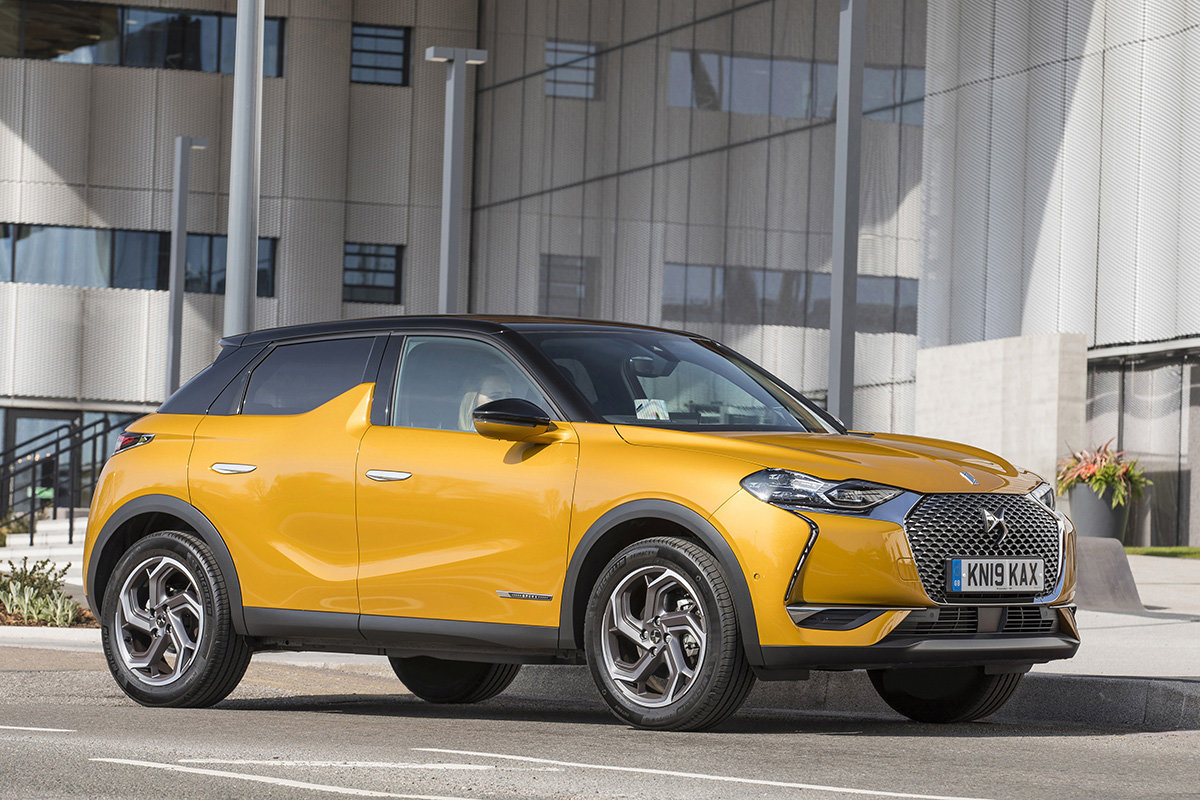
The DS 3 Crossback certainly stands out from the crowd, and inside it boasts one of the most interesting-looking cockpits of any new car. Trouble is, underneath those eye-catching looks it’s a car with some real drawbacks, most notably in terms of the space on offer in the rear seats and boot.
It also has a rather unsettled ride and the handling, while perky enough around town, can’t match some of the more sporty alternatives. Ultimately, there are much better compact SUVs out there, whether you’re after something stylish or something practical, and given its high price the DS 3 Crossback is rather difficult to recommend.
Looks aren’t everything. So the saying goes, but with the DS 3 Crossback, they count for a lot, as you can probably tell from the minute you clap eyes on it. Its wibbly-wobbly headlights, “shark-fin” side window line, pop-out door handles and chubby-cheeked hind quarters might not be to everyone’s taste, but we can all agree they make the DS 3 Crossback stand out from the crowd.
And it's a crowd that it needs to stand out from; as a compact SUV, it goes up against similarly fashion-conscious rivals like the Mini Countryman, Fiat 500X and Vauxhall Mokka, as well as more practical alternatives like the Volkswagen T-Cross and Seat Arona, as well as a host of other rivals all jostling for position in this packed corner of the market.
So the DS 3 Crossback will need more than just a sense of style if it’s to be deserving of your hard-earned. And on paper at least, first impressions are good, with a range of nippy-yet-economical petrol and diesel engines on offer, and even an electric option, and relatively generous equipment levels throughout.
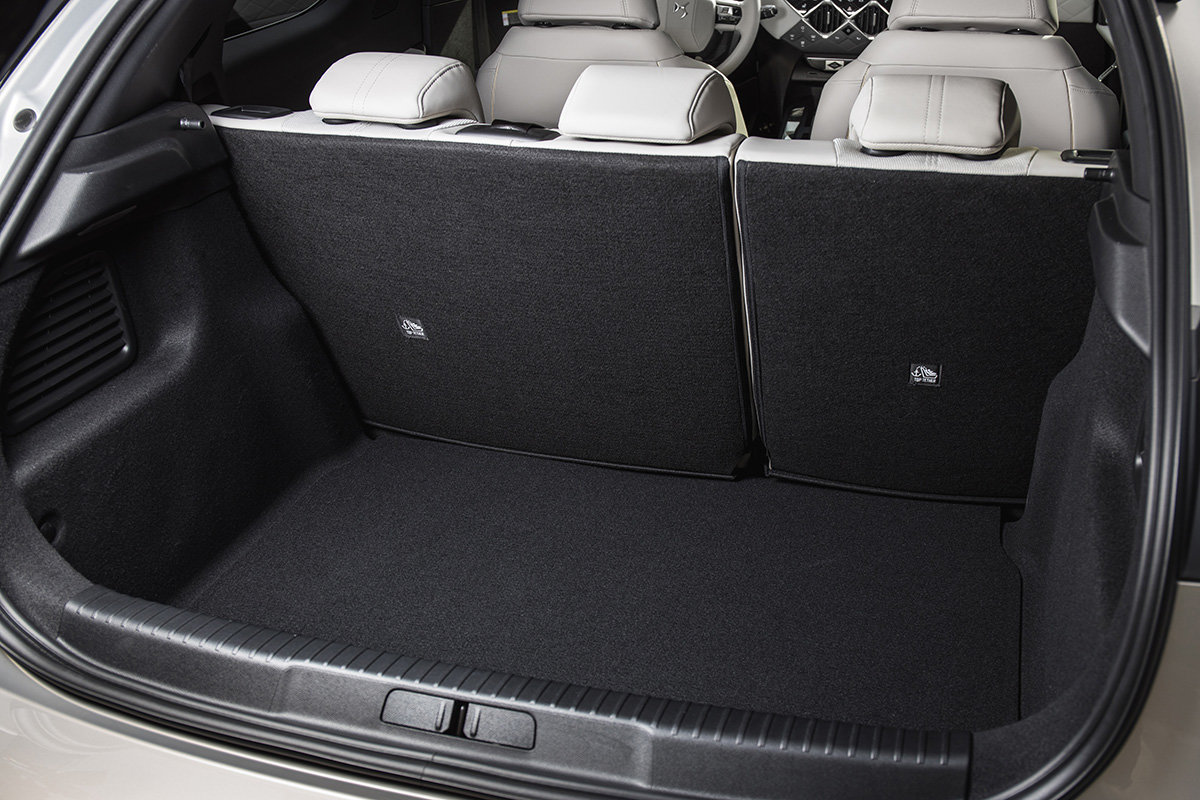
This is where things start to unravel somewhat for the DS 3 Crossback. For all its eye-catching looks, there’s not a great deal of space on offer. The DS 3 Crossback is cramped in the back and its boot is pretty small, and that means it loses out on practicality to quite a few of its more down-to-earth rivals.
Mind you, it’s just about roomy enough in the front, from where you get the full effect of the DS 3 Crossback’s flamboyant interior. Once again, it’s very much a case of function following form, with a diamond motif applied relentlessly to the air vents, switchgear, digital dials, and even the on-screen graphics on the touchscreen.

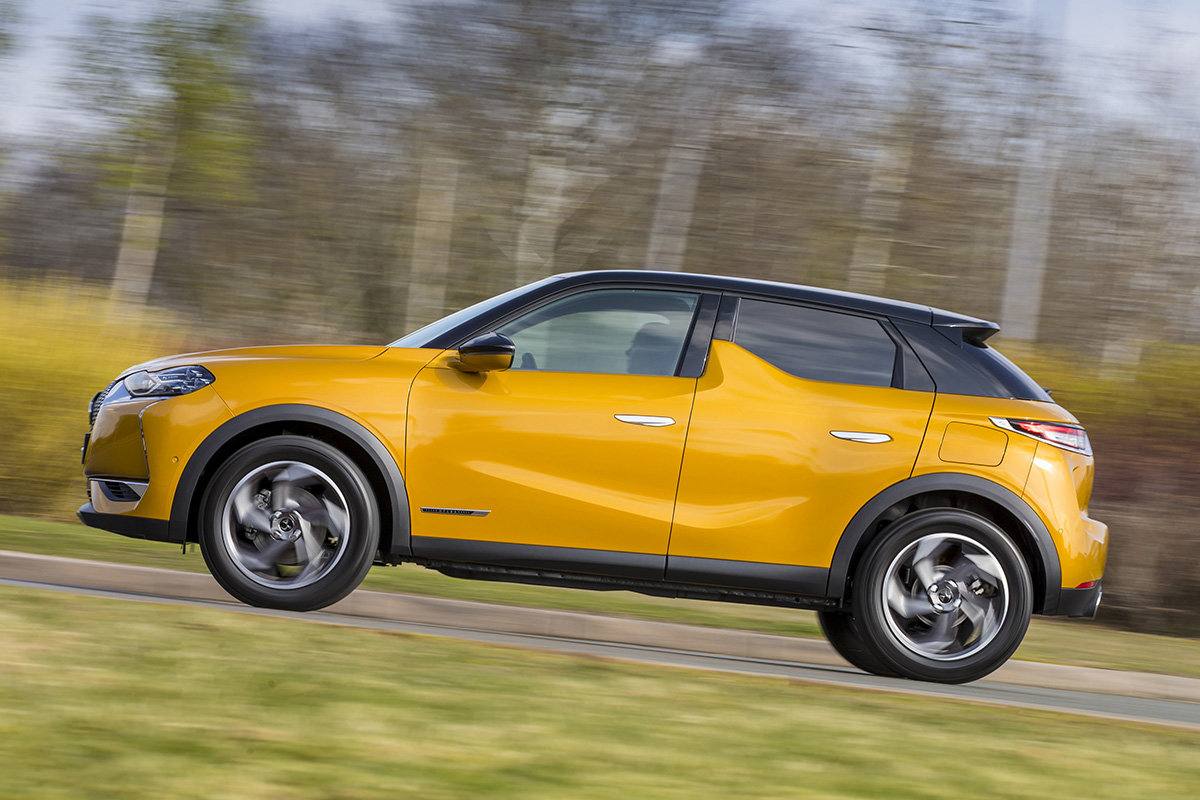
Dynamically, it’s a mixed bag. The good news is that the DS 3 Crossback is pretty nimble once it’s out on the road, and the petrol engines in particular offer plenty of punch, so it’s a willing and eager companion around town, and it feels quiet and stable out on the motorway. It’s also tolerably quiet at a cruise, with lower noise levels than you’d find in a lot of its competitors.
Beyond a certain point, however, the soft suspension causes the body to roll and wallow more than you’d expect, which blunts the handling. It doesn’t do any favours for the ride either, which tends to feel rather unsettled on the churned-up tarmac we’re used to in this country.
One trick the DS 3 Crossback does have up its sleeve is the option of an all-electric variant, known as the E-Tense. This suffers from many of the same drawbacks as the petrol and diesel versions – not least vague steering and an unsettled ride – but it also has the same principal benefits of eye-catching design and a stylish interior. Predictably, it’s also very refined, but that’s an electric car trademark that’s shared with others in this market – not least the closely-related and significantly cheaper Peugeot e-2008. Similarly, the range (212 miles on the WLTP cycle following a recent update) and performance (0 to 62mph in 8.7 seconds) are respectable, but not enough to make it stand out.
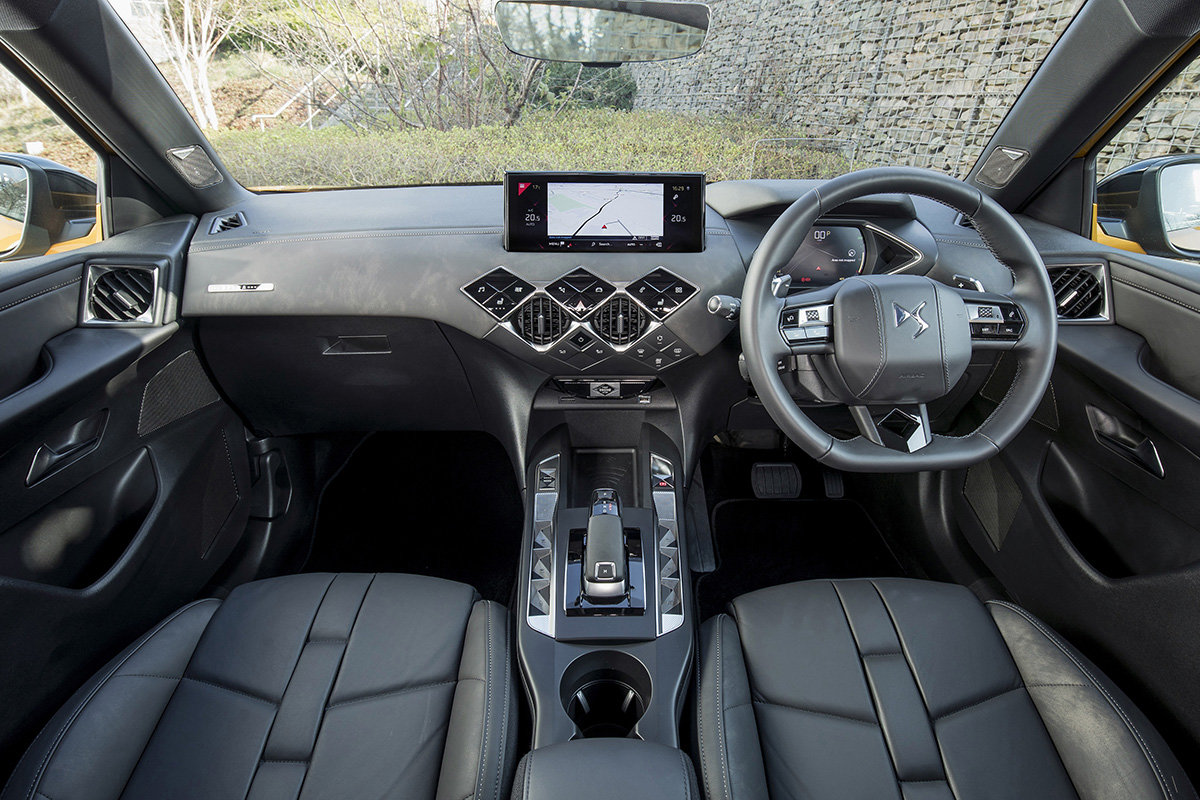
The distinctive interior design of the DS 3 Crossback sees the buttons on distributed in diamond-shaped clusters across the dashboard. You get used to the layout fairly quickly, but the trouble is that many of the “buttons” are of the touch-sensitive variety, and yet they’re not very sensitive. This means that you have to prod them quite hard to get them to work, and then double-check that they actually have. This is far more distracting than a simple switch.
The infotainment screen is fiddly to use, too, and because the climate controls are integrated into it, it follows that they can also be tricky to get to grips with, which takes your eyes off the road yet further.
The exact specification depends on which of the bewildering number of models and special editions you pick from. At the time of writing, the range kicks off with the Montmartre model – named after a lively and bohemian district of Paris – but the spec is more struggling artist than lavish gallery, with basic cloth seats and manual air conditioning. Bastille – named, somewhat confusingly, after a prison – adds automatic air conditioning and rear parking sensors. Rivoli models and above get a larger 10-inch touchscreen with voice recognition and connected navigation. Opt for the Performance Line or Performance Line Plus and you get sportier looks in lieu of some of the Rivoli’s extra toys.
In terms of the conventional engines, the most economical version of the DS 3 Crossback is, as you might expect, the diesel model. You should see around 55mpg on average in normal daily use, with a mix of motorways, A-roads and town driving.
Mind you, the petrol versions shouldn’t be too far behind on fuel economy; expect anywhere between 40mpg and 45mpg under the same circumstances, depending on which version you go for. The more powerful petrol versions, the Puretech 130 and 155, sit in a costlier tax band as a result of their higher CO2 emissions, which will increase the first year’s car tax you’ll have to pay on them, though thereafter, all versions will cost the same to tax.
The exception to this, of course, is the E-Tense, which will incur no tax at all. It’s also reasonably efficient, with an energy efficiency of 3.7 miles per kilowatt-hour (m/kWh). That's better than the Mazda MX-30, but not quite as good as the Hyundai Kona Electric.
DS offers a fixed-price servicing menu even for its newer cars, which is handy because it gives you a good idea of how much your servicing bills will be each year. Prices are very reasonable by the standards of the premium manufacturers it ostensibly goes up against, and even beat some more mainstream brands. With the exception of the E-Tense, all DS 3 Crossbacks are fitted with timing belts, which will need replacing after a certain amount of time or mileage (unlike timing chains which generally last the life of the vehicle). How often the belt will need replacing will vary depending on the engine, so you’ll need to double check with a DS dealer on the exact interval, but you can expect to pay £400-500 to have this done.
DS doesn’t sell that many cars in the UK, which makes it hard to draw concrete conclusions about their reliability; there simply aren’t enough examples around to get good sample sizes included in the big reliability surveys that are published each year.
That said, we can get a rough idea of how reliable the DS 3 Crossback will be by looking at cars which share the same basic mechanicals. With that in mind, the Peugeot 2008 and 3008, which both have the same engines, finished in mid-table slots in their respective categories in the latest What Car? Reliability Survey; Citroen, meanwhile, had an average score in the overall league table of all the manufacturers that were included, although Peugeot finished lower down the rankings.
What’s more, the petrol and diesel versions of the DS 3 Crossback only come with a three-year, 60,000-mile warranty, which is about the minimum you’d expect a new car to come with these days. The all-electric E-Tense is more generous, however, with eight years or 100,000 miles covered as standard.
- You might notice some similarities in the engine line-ups of the DS 3 Crossback, the Citroen C3 Aircross, the Vauxhall Mokka and the Peugeot 2008. No wonder, because beneath the skin, they’re all based on the same mechanical bits, as DS is part of what was called the Peugeot Group, or PSA for short (now part of the larger Stellantis organisation). Anyway, that means it’s worth shopping around to find out which version you like best. For guidance, the Peugeot offers more space with a similarly plush feel to the DS, the Vauxhall is a little less upmarket but just as fashion-conscious, and the Citroen is a cheaper and more practical alternative to its three cousins.
- If you’re ready to make the switch to an electric powertrain, you might be considering the DS 3 Crossback E-Tense. This electric version of the DS 3 Crossback has a very usable range and the same distinctive styling as the standard car. However, it’s quite expensive to buy, and suffers from many of the same flaws as the standard DS 3; with that in mind, the cheaper Peugeot e-2008 and Kia e-Niro might make more sense.
- DS cars are full of quirky little features, and this one is no exception. Opt for the Louvre edition and you get a slideshow of 182 artworks held in the famous Parisian museum pre-loaded on the infotainment system, complete with an audio commentary (no, really).
- If you want the best all-rounder: Given the DS 3 Crossback’s high prices, it makes sense to keep your spend to a minimum, and with that in mind, we reckon the 1.2 PureTech 100 Bastille is the model of choice. It doesn’t feel as stingily equipped as the entry-level MontMartre, yet at the same time it isn’t as expensive as some of the posher versions, whose prices really are hard to justify.
- If you want all the toys: You’ll be looking at £31,490-plus (new) if you want to get the extra toys and the standard leather trim on the Performance Line+ model. In our book, it’s just too much to pay for what is still a fairly small car.
- If you want an electric model: Prices for the electric E-Tense model are more expensive, even if you choose the most affordable version available, which in this case is the mid-level Bastille. It’s a stylish and distinctive option, but you can effectively get the same car for less, with more space and more equipment, by buying a Peugeot e-2008.
- If you cover lots of miles and want a diesel: There is one available, the 1.5 BlueHDI 110. It’s only available in Bastille or Performance Line trim, and only with a manual gearbox. But, given the rest of the range’s prices, it should come as no surprise that this too is quite an expensive buy.
