Dacia Sandero 2013-2020 review | A cheap and robust used supermini
Dacia Sandero cars for sale
3.0
Expert review
Pros
Very cheap to buy
Roomy and practical cabin
Affordable to fuel and insure
Cons
Modest safety standards
Stingy list of standard kit
Basic fit and finish
The CarGurus verdict
Judged on its own merits, there are a number of superminis that you would buy before the Sandero. The Ford Fiesta and Seat Ibiza are more fun to drive; the Skoda Fabia is more practical; and the Kia Rio and Hyundai i20 have stronger reputations for quality and reliability.
But the Sandero has its own USP: it's cheap and cheerful, and there’s a lot to be said for those low prices in these straitened times. If you want or need a car, and have a limited budget, you could do a lot worse than pick up a Sandero. True, it isn’t as good in most departments as more established rivals, but being inexpensive and reliable – which the Sandero is – it still has a lot going for it.
And it's not as if you have to hold your nose while driving it, either (which we wouldn’t recommend from a road safety point of view). It performs perfectly well, is comfortable enough to travel in and is spacious enough for most owners’ needs. It’s not going to win any engineering or styling prizes, but the Sandero is no joke.
What is the Dacia Sandero?
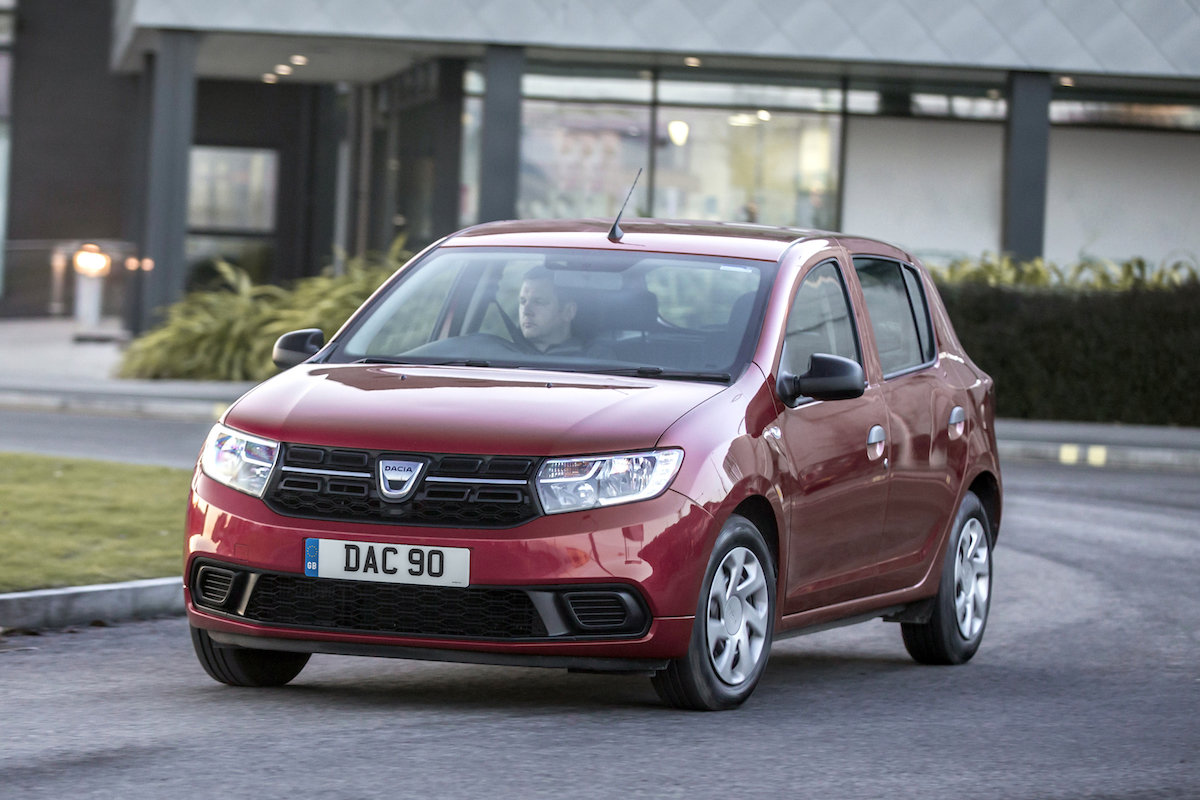
The Dacia Sandero is a joke. Or, at least, it was for many years on a certain popular TV car show. A supermini that would be the cheapest new car on sale in Britain? Built in Romania? Laughable.
But dismissing this second-generation Sandero is a fool’s errand. First off, Dacia is owned by Renault, which, it's fair to say, knows a thing or two about building cars. Secondly, Dacia took tried and tested technology to use as the basis for the Sandero.
The result is an inexpensive budget supermini that offers straightforward, accessible motoring to many drivers. Sure, rivals like the Ford Fiesta, Skoda Fabia might come with more toys, slicker styling or higher-quality materials – but the Sandero’s twin USPs are value and practicality, and if those are your priorities, it’s hard to match.
How practical is it?
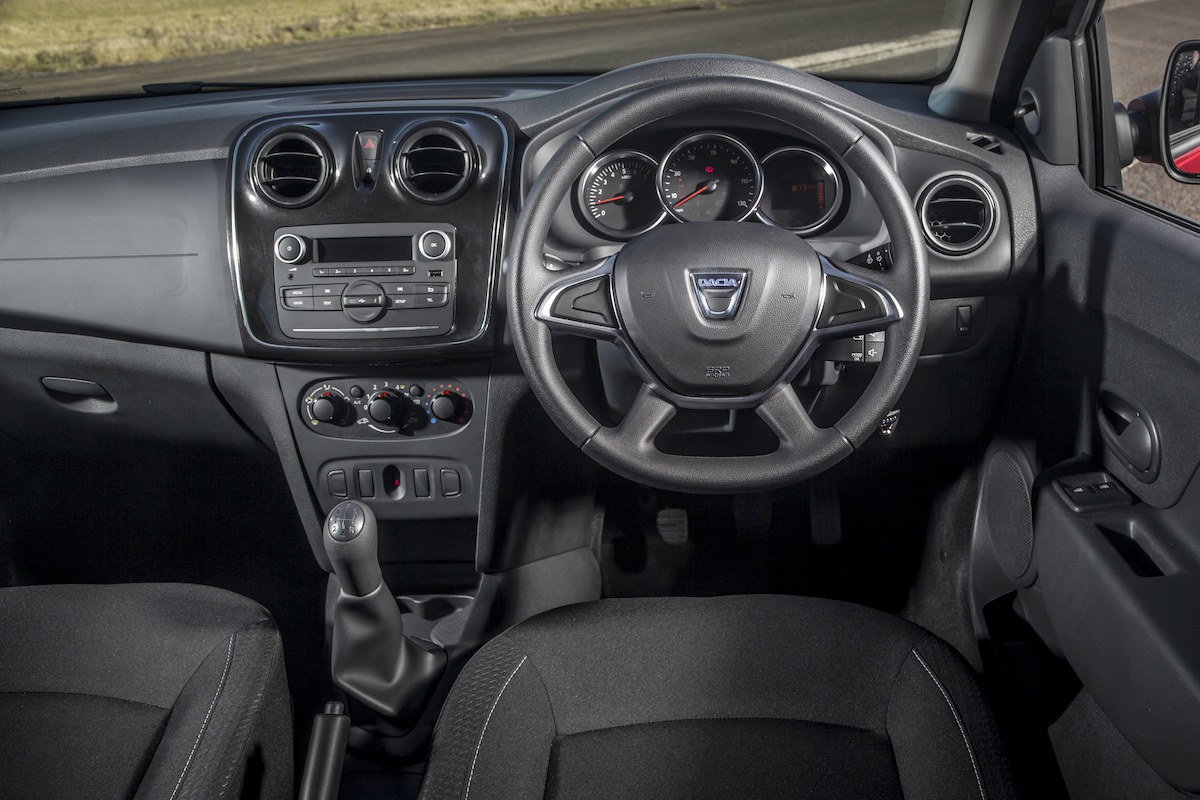
The cabin really highlights the budget nature of the Sandero, which can best be described as basic. Hard (and hardy) plastics abound and it all feels very functional. Revisions in 2016 did add a little more refinement, with chrome accents in the dashboard and on the air vent surrounds, while the steering wheel was given a new softer-feel finish.
An easy way to tell if a used example comes from before or after the facelift is to see where the electric window switches are located: the early cars had them in the centre console, but after 2016 they were moved to the more logical position on the actual doors.
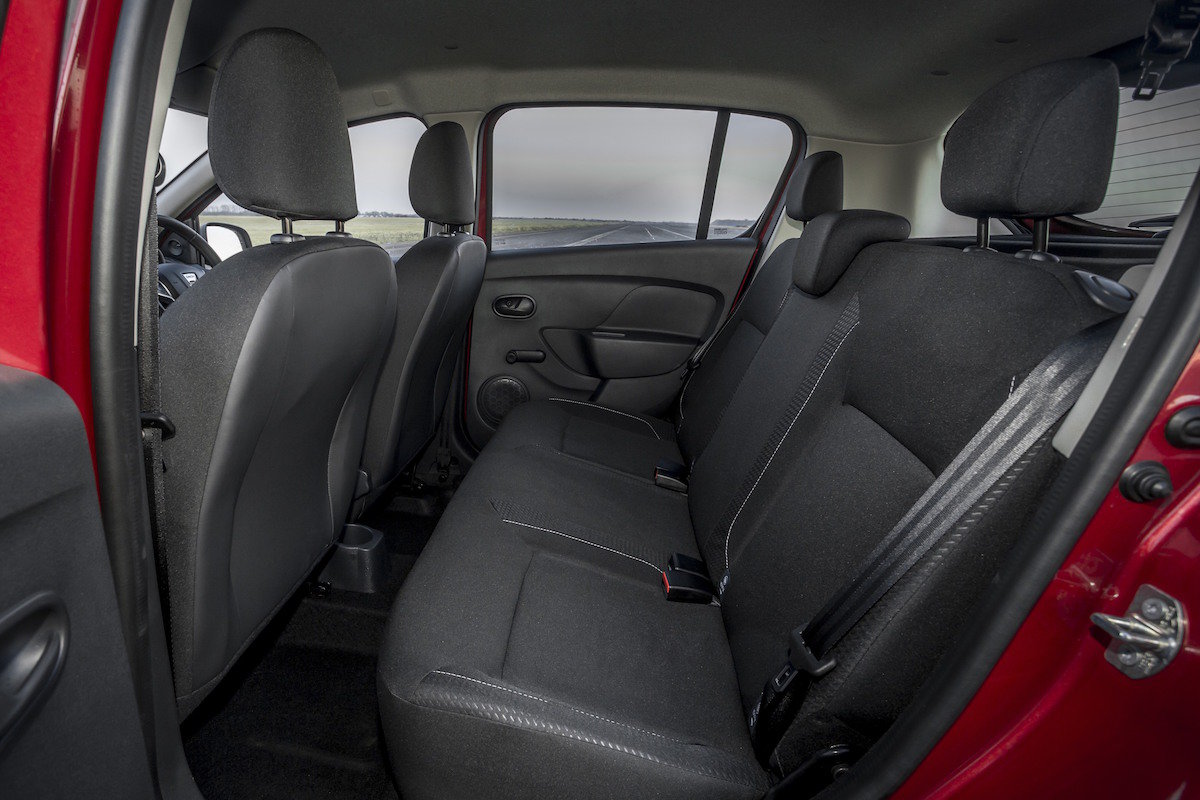
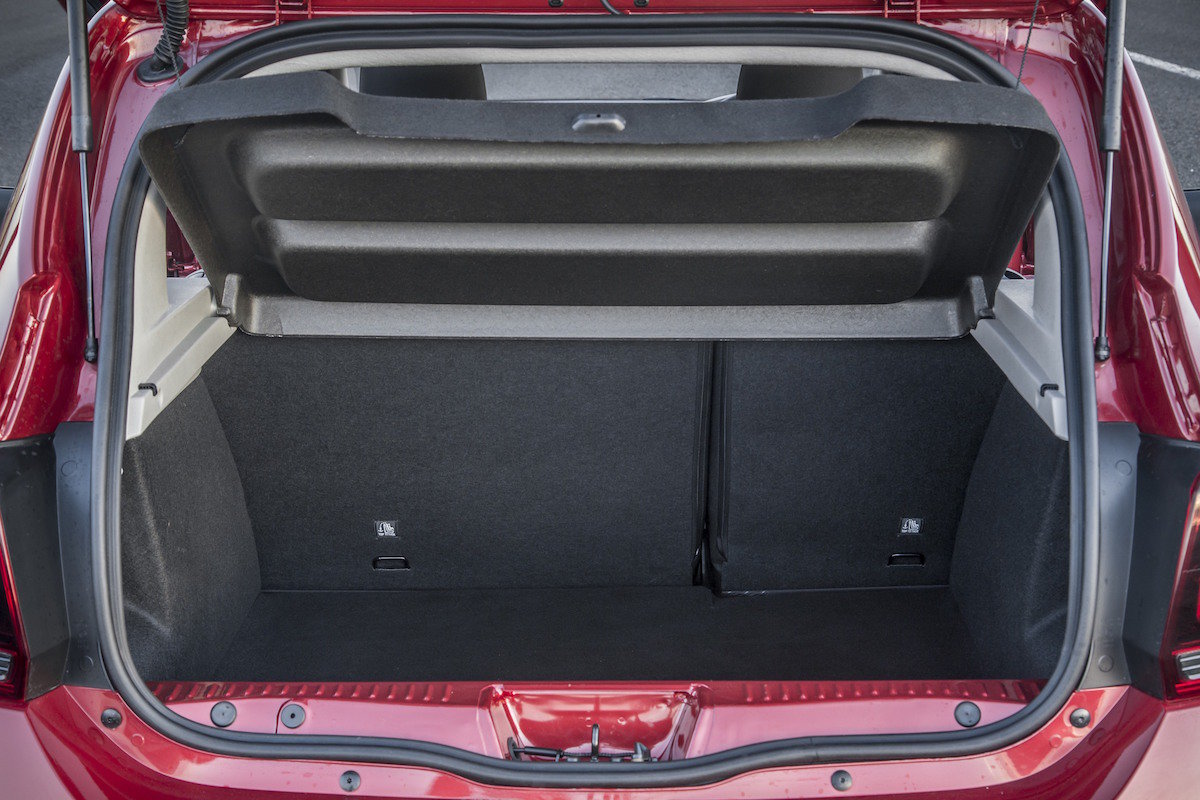
One advantage the Sandero has over many of its rivals is its practicality. The rear has really good head- and legroom, more than many of its contemporaries such as the Vauxhall Corsa and Volkswagen Polo, while the boot capacity of 320 litres (1,200 litres with the rear seats folded down) is only bested by the Skoda Fabia and Seat Ibiza.

What's it like to drive?
As you can imagine from a car built to a budget from older mechanical components, the Sandero isn’t as engaging to drive as the likes of the Ford Fiesta or Seat Ibiza. Early examples were available with a choice of two petrol engines – a naturally-aspirated 1.2-litre, and a turbocharged 0.9-litre – along with a 1.5-litre diesel.
Of these, the 1.2-litre is best avoided, as it’s pretty wheezy and unresponsive to drive. Thankfully, it was replaced early on in the Sandero’s life by a much more modern 1.0-litre engine, which is much sweeter to drive. Even so, the 0.9-litre turbo is probably the pick of the range, with plenty of mid-range punch, while the diesel is a solid option if you do lots of miles.
While the steering is a little heavy it’s accurate enough. There’s enough grip and while there’s a little more body roll than other superminis, it’s controlled enough in the hands of most drivers on most roads. The ride quality is better and the soft suspension does a pretty good job of ironing out some of the worst road surfaces, even if it still never quite manages to settle fully.
Where the Sandero does fall down is on isolation, or to be precise, a lack of it. There’s a fair bit of wind- and road noise, due to the absence of significant soundproofing, and the engines are fairly raucous. As a result, it isn’t the most relaxing car in which to cover long distances.
Technology, equipment & infotainment
Entry-level Access models are extremely spartan inside. They didn’t even come with a radio as standard, but they did cover the basics, such as electronic stability control, power assisted steering and rear ISOFIX points. To be honest, unless you’re in dire need of basic transport we’d probably steer clear of these examples.
The mid-spec Ambiance trim is a useful step up, with electric windows, a Bluetooth- and USB-enabled stereo with DAB radio, air conditioning and height adjustment for the driver’s seat and steering wheel.
Top-spec Laureate models were actually quite well-equipped for their original price. Alongside the refinements found on the Ambiance, you’ll get cruise control, rear parking sensors and satellite navigation. Compare this specification to an older Corsa or Fiesta for the same money and you might be pleasantly surprised.
In 2018, the Sandero’s trim levels were revised slightly. Ambiance became Essential, while Laureate was renamed Comfort.
For the most part, specifications remained the same, though there were a couple of tweaks. No longer were the driver’s seat and steering wheel height adjustable on the Ambiance – that luxury was reserved for the Comfort, which also gained Apple Carplay and Android Auto functionality.
Dacia Sandero running costs
The Sandero is cheap to buy and it's also relatively inexpensive to run, reinforcing its value-for-money appeal.
The diesel engine that was available in the Sandero was a 1.5-litre dCi 90 four-cylinder unit producing 89bhp (upgraded to 94bhp in 2019) that should manage around 60mpg on average in the real world.
Meanwhile, the 75bhp 1.2-litre engine that was available until 2016 should manage around 40mpg on average, though the 74bhp 1.0-litre that replaced should better this by three or four mpg.
The turbocharged petrol engine should attain pretty similar figures in real-world driving, so there’s really not much penalty for choosing it over one of the less powerful versions.
On tax, the Sandero’s low CO2 emissions once again help to keep the costs down. Diesel models emit less than 100g/km, which means if you pick up a car registered before 1 April 2017, it’ll sit in the lowest tax band, and cost you the minimum tax possible for a petrol or diesel car. After that date, the change in tax rules mean the Sandero will incur the same flat tax rate as any other car that cost less than £40,000 to buy new.
Petrol models, meanwhile, sit in slightly higher tax bands, but still shouldn’t cost too much to tax if registered before April 2017 (thereafter, the same flat rate applies). The exception is the 1.2-litre version, which has surprisingly high emissions figures, and can therefore be comparatively costly to tax.
You might expect such a cheap car to also be cheap to insure, and it is, with different versions ranging from group 5 to group 10. There are rivals with lower insurance groups, though - there are Fabia variants in group 1 and even Fiestas in group 2 - but the lack of better security equipment is likely to count against the Sandero.
Servicing is a straightforward proposition, with 12,000-mile intervals, and Dacia offers pre-paid service plans to help keep the costs more manageable.
Dacia Sandero reliability
The Sandero is built from parts and components that have been tried and tested over a number of years, and that means it’s mostly a dependable proposition. However, do bear in mind that early examples are now more than 10 years old, and given Dacias were always built down to a price, that’ll mean certain parts will be wearing out now.
Expect, therefore, your fair share of niggles, such as trim rattles and perhaps the odd leaky seal. Some Sandero owners have reported issues with catalytic converters and engine management systems, and rust is not unheard of on early Sanderos either. Fundamentally, though, the Sandero’s running gear is pretty robust, and should stay the course.
There have been four recalls for the Sandero. Diesel cars built between 2013 and 2015 were recalled for a potential fuel leak in June 2018. Some 2015 cars had a steering defect, with a risk of the drive rotor at the ball joint on the steering rod breaking due to excessive stress, so there was a recall in August 2018. The other two recalls – in August 2018 for cars built in late 2012 and January 2019 for cars built in April-August 2018 – related to concerns about airbags not deploying. If buying a car that might have been built in these slots, check whether it has been taken to a dealer to have the car checked out.
- The Dacia Sandero was once the cheapest new car on sale in the UK, with a starting price of less than £7,000 in Access spec. However, don’t expect to find many of these cars on the used car market: British buyers like a few creature comforts in their cars and the Access model has few of these. The fact that the windows are not electric might baffle some children who have never seen winders, for example, and you don't even get a stereo, let alone a touchscreen.
- The Dacia Sandero uses engineering technology that dates back to the early 2000s that was developed by the Renault-Nissan Alliance and used as the basis for a number of popular models. Think of the Sandero has a rehashed and mildly rejigged mk3 Renault Clio – the model that went on sale in 2005 – and you’ll have some idea of its origins.
- When it was crash-tested in 2013, the Sandero only managed a Euro NCAP score of four stars, which wasn’t too far behind the best in class at the time. It was given a score of 80% for adult occupant protection and 79% for child occupants. However, it’s worth keeping in mind that safety standards moved on rapidly in the ensuing years, so by the time it went out of production in 2020, this second-generation Sandero will have gone from being a bit behind its rivals, to well behind them. Just something to keep in mind if you’re comparing later examples with their contemporaries.
- If you want a budget option (of the supermini class’s budget option): try and find a Sandero in the entry-level Access trim. It is really basic, though; it was only available with white paint and black plastic bumpers, and you didn’t even get a radio – so only buy one if you’re prepared to make your own entertainment on longer drives.
- If you want the cheapest Sandero to run: the most economical version is the diesel-engined 1.5-litre dCi 90. It doesn’t exactly make for quick progress, with 0-62mph taking 11.8 seconds, but it should return around 60mpg in the real world.
- If you want the plushest Sandero around: Go for the Laureate (or Comfort after 2018). These were priced at £2,000 more than the base-spec model when the Sandero was new, but proved popular nonetheless, and as a result, there are plenty of examples floating around on the used market.
- If you want a fast Sandero: well, you’re fresh out of luck. None of the Sandero variants offer anything that could be considered strong performance, but the ‘quickest’ is powered by Renault's TCe 90 petrol engine that produces 89bhp and eventually finds its way to 62mph from a standing start in 11.1 seconds.


