Fiat 500X Review (2014-present)
Fiat 500X cars for sale
3.0
Expert review
Pros
Distinctive looks
Much improved drive from 2018 onwards
Lots of scope for personalisation
Cons
Not the roomiest or most practical compact SUV
Older examples are starting to feel their age
Shorter new car warranty than some rivals

The CarGurus verdict
There is a lot of talented competition in the compact SUV market, but the Fiat’s distinctive looks and practical, fuss-free nature mean it’s an interesting option, and even more so if you’re looking at one of the later updated and improved variants, as the earlier cars do feel long in the tooth now.
Buyers seeking something with more comfort, better handling and perkier performance, however, should look at cars from the Volkswagen Audi Group; Seat’s subtle but neatly built and finished Arona, for example, is better to drive and its TSI petrol engines are flexible and more efficient.
If you still like the idea of a new Fiat 500X, though, try and seek out a discounted model. It’ll make a purchase easier to justify for one thing, and will help offset some of the higher depreciation that the Fiat – compared with its better-regarded rivals – can experience.
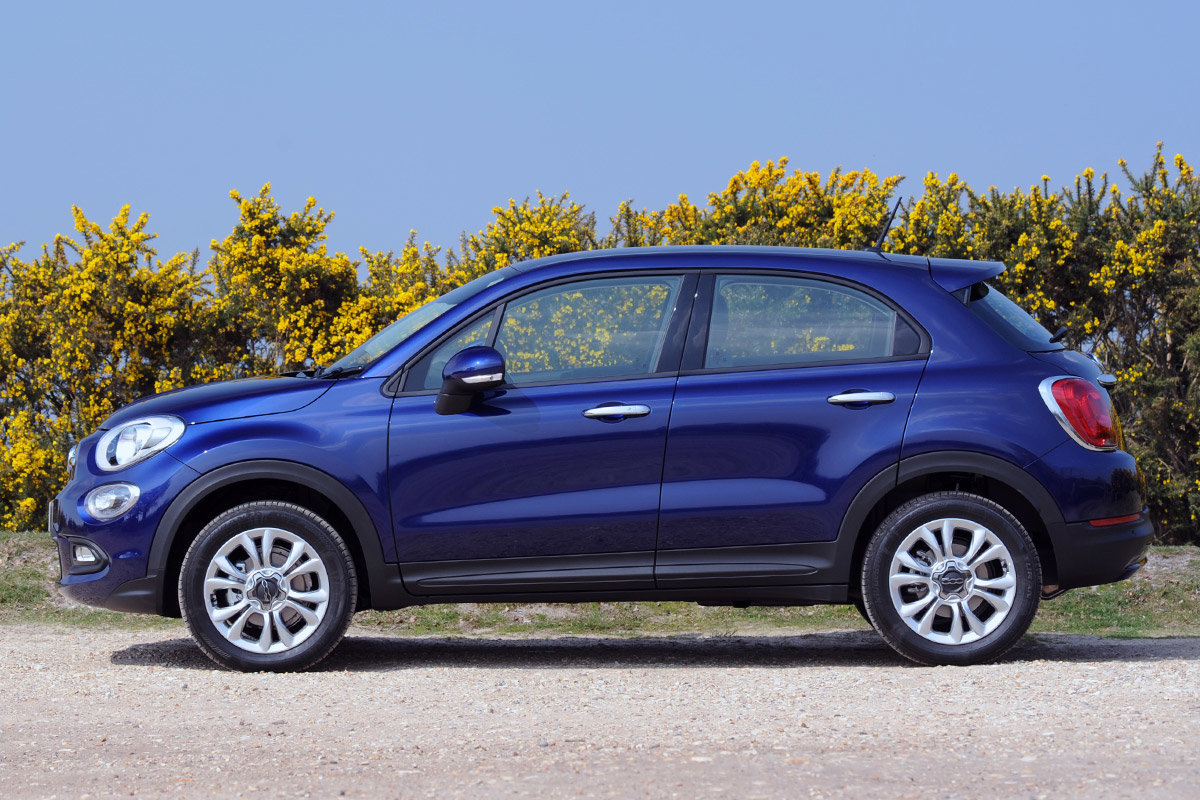
What is the Fiat 500X?
The compact SUV market is terrifically competitive, with highly regarded options such as the VW T-Roc, Seat Arona, Peugeot 2008 and Ford Puma topping most buyers’ shopping lists.
If you want something with a bit more charm, however, you could opt for the retro-styled Fiat 500X. It was introduced to the UK market in 2015 as an alternative to cars such as the Nissan Juke, Renault Captur and Skoda Yeti, and it shared its underpinnings with the similarly distinctive - although in a very different way - Jeep Renegade.
A wide variety of versions have been offered, including petrol and diesel all-wheel drive models, as well as variants with automatic or manual transmissions. Standard equipment has always been decent, too; the first base model, called the Pop, came with air conditioning, cruise control, a speed limiter, remote central locking, electric windows and a height-adjustable driver’s seat.
Fiat has tweaked and fettled the 500X range over the years but, in late 2018, a major update boosted its appeal considerably. New engines were introduced, along with a dual-clutch transmission option, while new styling and tech put the Fiat back on a par with its rivals.
If you’re buying new, the engine line up is now much simpler, because a 1.5-litre 128bhp mild hybrid petrol is now the only engine option, as part of Fiat's move to electrify its entire range.
Although these updates have boosted the desirability of the 500X, many of the rivals are now more modern. They may not have the same retro charm or plush interior, but they are better cars overall and are available with more modern tech, better safety ratings and a wider array of engines. As a result, while the Fiat’s not a bad choice, you’ve got to love the way it looks and feels to justify putting it at the top of your list.
How practical is it?
Imagine, for a second, that you’re Fiat. Your most successful car is the pint-sized Fiat 500 and you need something with a little more space for buyers to graduate to once they have children or pets or other commitments that have outgrown a tiny city car. What do you build? A compact SUV, of course!
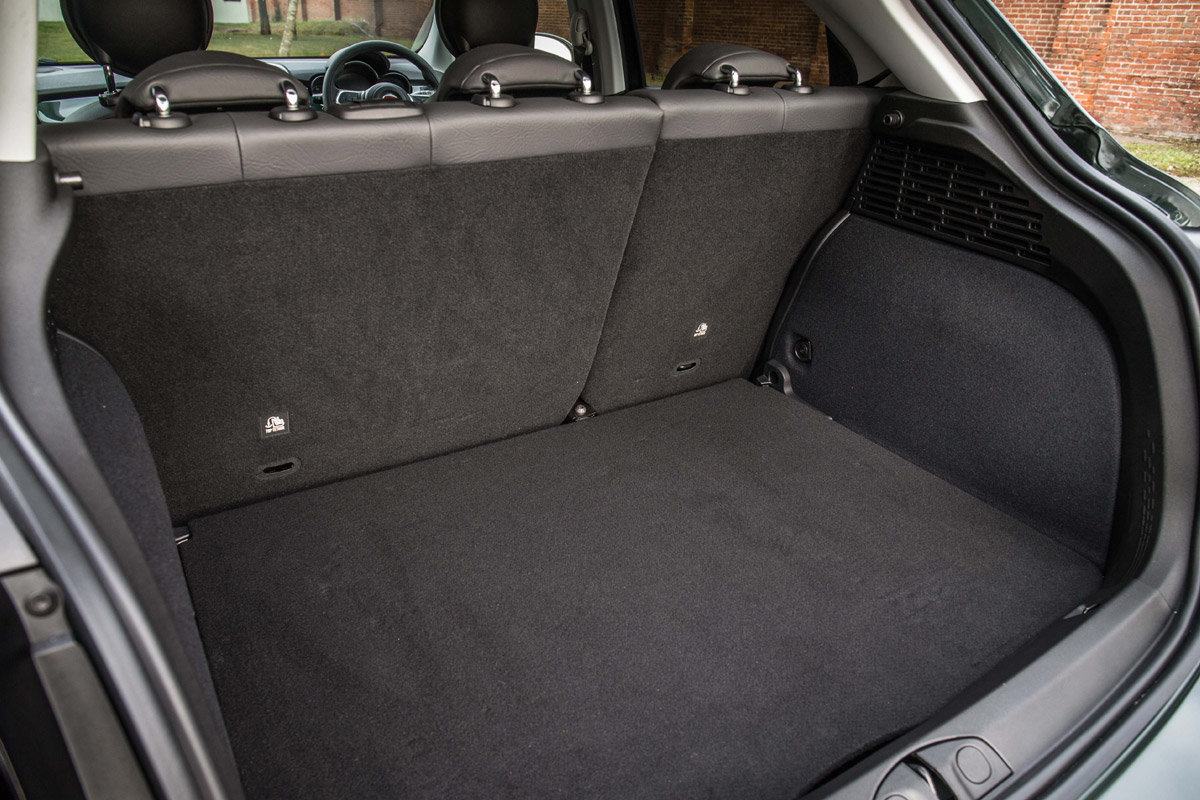
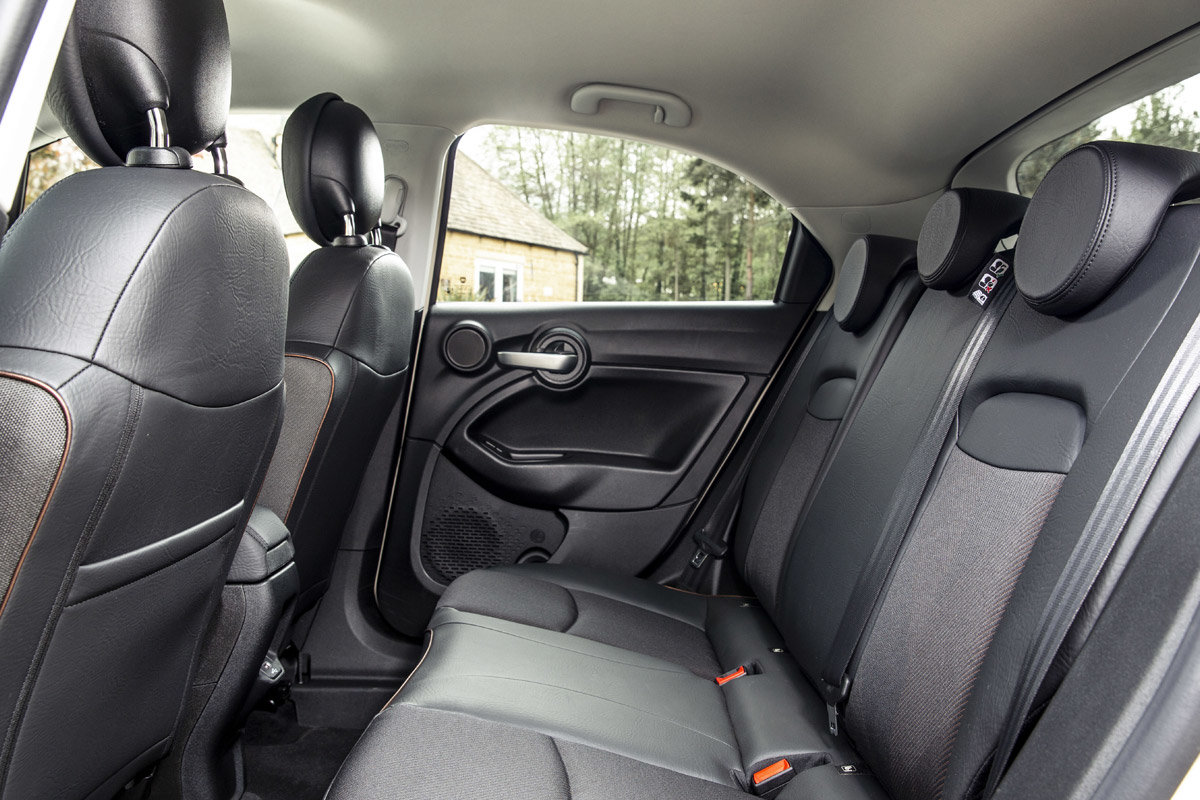
Being usefully bigger than a Fiat 500 sets a pretty low bar by SUV standards, but that’s basically what the 500X needs to achieve. And it does so, with comfortable space for four adults and various storage bins dotted around the stylishly-appointed interior. If you’re looking for more than that, however, you might be disappointed. At 350 litres, the boot dwarves that of the 500, but it’s significantly smaller than a lot of rivals in this class. That said, it’s still big enough for a buggy or a set of suitcases, and the 60/40 split seats can fold almost completely flat to extend the luggage space.

What's it like to drive?
Both engines offered (and, in the case of the hybrid, still offer) similar performance to their comparably-sized competitors, such as the Volkswagen T-Roc and the Ford Puma, with the 1.0-litre engine recording a 10.9-second 0-62mph time, while the larger mild hybrid unit cuts that to a sprightly 9.4 seconds.
That makes it reasonably adept for driving in town, where it nips around with ease. It's not really what you'd call a natural motorway cruiser, though, so those covering high annual mileages should probably look elsewhere.
The 500X handles fairly neatly too, although there’s a fair amount of body roll and the vague steering doesn’t inspire confidence. Alternatives such as the Seat Arona and Volkswagen T-Roc do offer a more refined and rewarding driving experience. Versions with larger wheels can also be a bit rough on the ride front, so it's worth steering clear of them.
Technology, equipment & infotainment
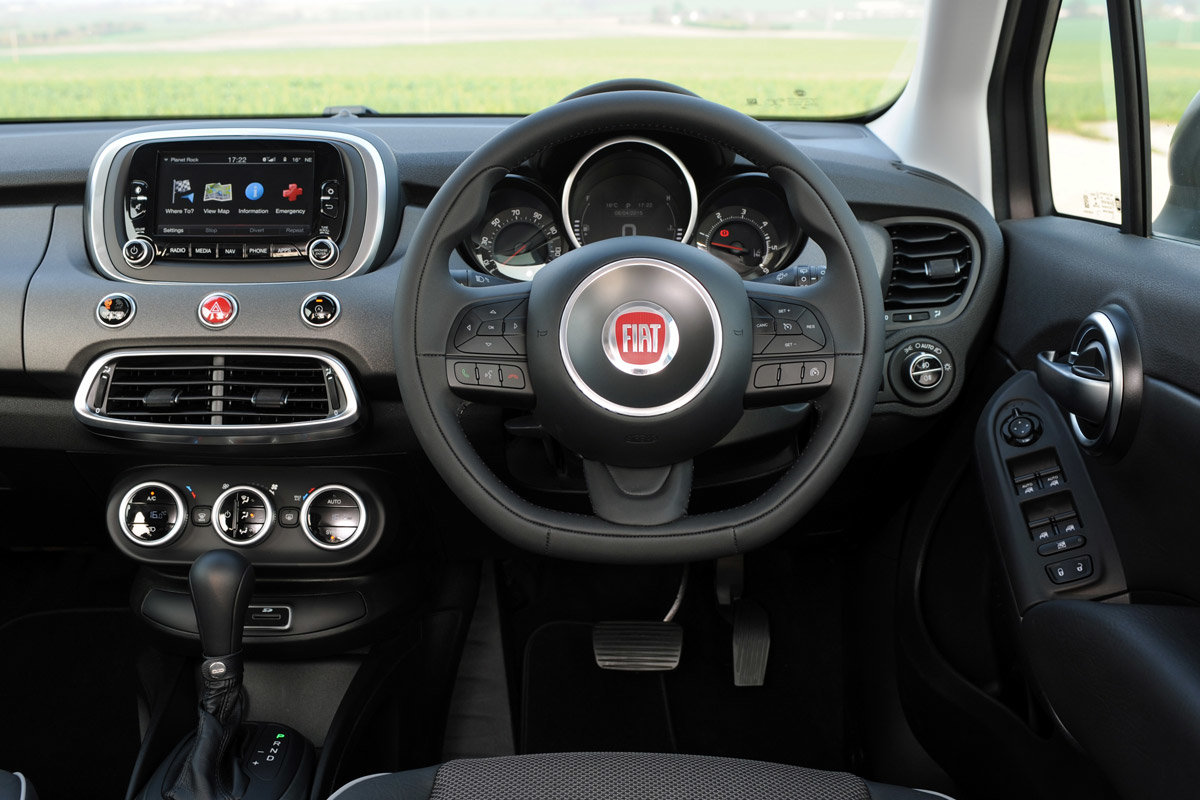
When Fiat first introduced the 500X, it came in a choice of Pop, Pop Star, Lounge, Cross or Cross Plus models. The entry-level Pop model came with features such as air conditioning, cruise control and a basic audio system; the mid-spec Pop Star benefitted from upgrades including the touchscreen Uconnect infotainment system with Bluetooth, plus dual-zone climate control.
Opting for the Lounge added navigation, a colour driver’s display, bi-xenon lights and creature comforts such as a front armrest. The well-equipped Cross and Cross Plus models, as the name suggests, featured off-road styling and the option of all-wheel drive. This doesn’t turn the 500X into a rough and ready 4X4 in the spirit of the surprisingly-capable (and closely related) Jeep Renegade Trailhawk, however. Four-wheel drive was an option on earlier models, but it was discontinued in 2018.
The 2018 updates brought improved equipment levels across the board. Traffic sign recognition, a speed assist and lane-keeping system were made standard on all, for example, and all now feature a touchscreen media system with Apple CarPlay and Android Auto support.
As with the Fiat 500 city car, there are also some quirky special editions around. The Fiat 500X RED, for instance, was created in partnership with public health group RED and comes with a gel dispenser for hand sanitiser and cabin air filter that includes an anti-bacterial treatment. We kid you not.
Fiat 500X running costs
A Fiat 500X, whether you go for an early 1.6-litre petrol model or a facelifted 1.5-litre mild hybrid version, won’t cost much to run. The early 1.6-litre petrol, for example, was claimed to average 44.1mpg and emit 147g/km of CO2 in basic form, or 47.8mpg and 139g/km of CO2 respectively when equipped with stop-start.
That meant you’d pay £180 a year in VED for the standard 1.6, or £165 for the more advanced stop-start model if it was registered before 1st April 2017. Only versions such as the early powerful 1.4 Multiair with 4x4 cost more, with some derivatives commanding £220 a year. If you go for a brand new 1.5-litre mild hybrid model the VED will cost £190 in the first year, followed by a flat rate of £165 a year thereafter.
If you’re buying a new 500X, you can opt for a series of maintenance plans that last up to five years and 60,000 miles. Servicing costs shouldn’t prove extortionate, in any case, but do remember to check the service history of any used example and make sure all the appropriate work has been carried out on schedule.
If you’re looking second hand and torn between all-wheel- and front-wheel drive, it’s worth considering that the lighter and less complicated front-wheel-drive version of the 500X will cost less to run. A set of appropriate tyres will also help it tackle the worst of road conditions that most will throw at it, so it’s only worth going for the all-wheel-drive versions if you are regularly going to head off the beaten path or deal with heavier snow. And, even then, you’ll still need to outfit an AWD 500X with proper tyres; a FWD version in the snow, on winters, should outperform an AWD model on summer tyres.
You may want to factor depreciation into your running costs calculations, especially if you’re looking at new 500X models. The Fiat 500X will potentially not hold onto its value as well as some more highly regarded and more desirable alternatives, so deprecation could cost you more over your ownership period. Buy one that’s a few years old, though, and you’ll dodge the worst.
Fiat 500X reliability
A new Fiat 500X will come with a three-year, unlimited-mileage warranty, a three-year paintwork warranty and an eight-year anti-corrosion warranty. Many rival brands, such as Volkswagen and Seat, offer similar three-year main warranties, so the Fiat is competitive in that respect.
However, both Hyundai and Toyota offer five-year warranties, while Kia offers a stellar seven-year warranty. If you want to keep your potential future expenditure to a minimum, and want as little fuss as possible, it’s perhaps worth considering a car from one of those brands.
Unsurprisingly, those manufacturers also outstrip Fiat in terms of reliability and customer satisfaction. That’s not to say that Fiat is terrible by any stretch; in fact, its cars often fare far better on the reliability front than many expect. Not many major problems have been reported with the 500X, either, so you need not necessarily steer clear of one as a result.
Additionally, Fiat does offer some warranty extension options on new cars, and these could be worth considering if you intend to own your new 500X for some time.
There have only been three recalls on the 500X since it was introduced, which bodes well. Do use the government recalls website to check the details of any used Fiat 500X you’re interested in, though, to establish whether you need to get the car updated.
Many used Fiat 500Xs will have spent their life around town, so it’s worth checking for obvious damage such as kerbed wheels, car park dents and excessive interior wear. Make sure the clutch isn’t showing signs of stress, either, if you’re looking at a manual car. Aside from the standard checks, inspect for electrical glitches, incorrect fluid levels and leaks as well, and make sure the car has been serviced properly and on time.
If you’re shopping for a used 500X, you could opt for one from Fiat itself. Its Found Approved and Used car programme offers cars with a minimum of 12 months’ warranty, 12 months’ breakdown cover and a 30-day exchange guarantee. Every car is comprehensively inspected before it is sold on, too, so problems should hopefully be few.
- The Fiat 500X was comprehensively updated in August 2018 and received new styling, additional equipment and a revamped engine line-up. Fiat also simplified the line-up, offering Urban, City Cross or Cross Plus models. The Urban got the entry-level 109bhp 1.6-litre E-Torq petrol engine and manual transmission, while the City Cross and Cross Plus models were available with the new three-cylinder 118bhp 1.0-litre turbocharged Firefly petrol engine or the four-cylinder 148bhp 1.3-litre turbocharged Firefly petrol engine. These were offered either with a six-speed manual transmission or a six-speed dual-clutch automatic. The option of all-wheel drive, however, was removed.
- A 500X Sport model was added to the range in late 2019. It benefits from upgrades including tuned suspension and a 13mm drop in ride height, and also comes with 18-inch wheels, although 19-inch wheels with performance tyres are available as an option. Equipment levels are high, with standard kit including cruise control, rear parking sensors, climate control, traffic sign recognition, lane-keeping assistance and the 7.0-inch touchscreen Uconnect infotainment system with navigation. Both 1.0- and 1.3-litre Firefly-engined models were offered initially, while the upmarket Lounge version of the 500X was also briefly reintroduced.
- If you want to get muddy: No version of the 500X is really intended as a serious off-roader, but if you want something that can tackle the occasional farm track or festival car park, you may be able to find one of the 500X 4X4 models second hand. However, one of the more utilitarian alternatives such as the Jeep Renegade or the Dacia Duster might be a better bet if you plan to do such things regularly.
- The best all-rounder: Go for a new or used facelifted version of the 500X, as these benefit from an extensive range of upgrades. Each comes with a 7.0-inch touchscreen infotainment system with Apple CarPlay and Android Auto support, for example. Go for one of the newer 1.0- or 1.5-litre turbo versions, where available, as these offer adequate performance and efficiency. Some buyers may prefer the manual gearbox in the 1.0, though. Keep an eye out for upgrade packs such as the Winter Pack, which adds a heated windscreen and heated front seats, and the City Pack, which adds front parking sensors and a rear camera.
- For the eco-minded: The mild hybrid system on the latest petrol engine is more about gently assisting the engine once the car is on the move rather than propelling it on electricity alone, so don’t expect a radical reduction in fuel consumption (or carbon footprint). However, it does manage to eke out a few extra miles to the gallon at 49.6 mpg, as opposed to 47.1 mpg for the old 1-litre non-hybrid unit. Drive gently and the difference may be greater than this in the real world, with the hybrid system allowing the car to coast with the petrol engine turned off. If you’re looking at used 500Xs, however, you could opt for the frugal 1.6 MultiJet II diesel model. It was claimed to average 68.9mpg (albeit on an older, less realistic test cycle than the current WLTP, so take that with a pinch of salt) and emits just 109g/km of CO2.
- If you’re on a budget: The most affordable model in the current 500X range is the 500X Club at £22,345 with the 1-litre engine and the manual gearbox. This is due to be discontinued shortly, which means that the entry price will no doubt rise to reflect the switch to the new hybrid engine. It’s not as cheap as some of the earlier iterations, such as the now-defunct naturally aspirated 1.6 petrol model in Urban spec, but it’s still less expensive than a Jeep Renegade.

