Ford Kuga Review (2008-2011)
Ford Kuga cars for sale
4.0
Expert review
Pros
Much more fun than most SUV rivals
Good looks
Economical diesel engines
Cons
The cabin is not especially roomy
Reliability issues with the PowerShift gearbox
The petrol version is very thirsty

The CarGurus verdict
The Ford Kuga is a very likeable car. It’s a good looker, its cabin ambience and equipment levels will convince you that you’ve spent your money wisely every time you climb inside, its engines are sprightly, economical and refined, it rides comfortably for this class of car, and it’s a pleasure to steer along winding roads.
While the Kuga’s cabin isn’t as roomy as those of some rivals, that isn’t likely to be much of a concern if you’re hooked on the way the car looks, and the same applies to the fact that its rear seat folding mechanism isn’t as versatile as others’.
Although the Kuga isn’t trouble-free, it is more reliable than most, provided you stick with an example with a good service history and a file of bills confirming recent work done on the car. And because it was such a popular buy in the small SUV/crossover market, you won’t be short of choice.

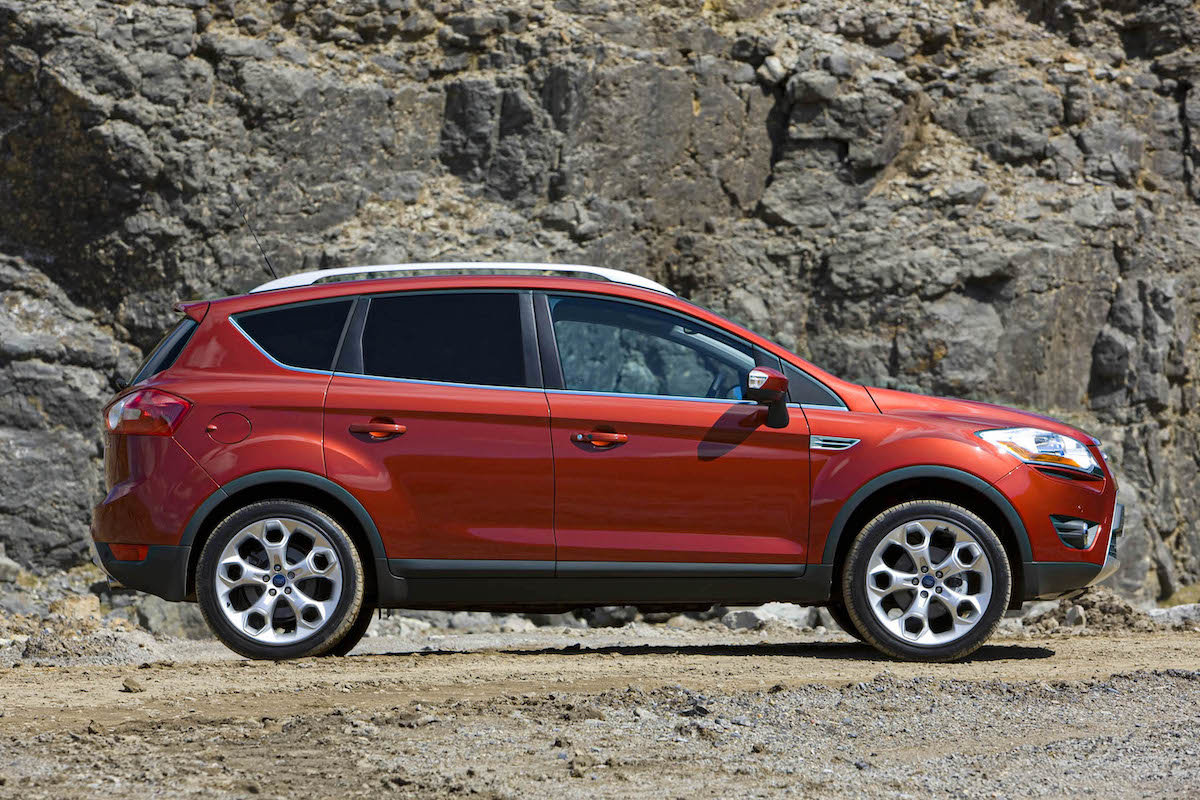
Ford may not have been the first to the small SUV/crossover party, but its first Kuga demonstrates that the company knows how to learn lessons from the endeavours of others. The Kuga mk1’s styling neatly spans the genres between small soft-roader and urban crossover, with an interior that mostly exudes premium quality, although some of its plastics let the side down a bit. Ford entered this section of the market keen to upgrade its mainstream image, so the Kuga was launched early in 2008 with just a couple of upmarket trim packages (Zetec and Titanium) and in four-wheel drive guise only.
Before the end of 2008 a front-wheel-drive model was introduced and the sole 136hp 2.0-litre TDCi turbodiesel engine was complemented by a turbocharged 2.5-litre five-cylinder petrol motor, borrowed from the Focus ST hot hatch.
While a spirited performer it’s also a thirsty beast and costly to insure and tax, so it’s a comparatively rare machine on the used car market. The Kuga’s engine range was refreshed again in June 2010 when a 163hp version of the 2.0-litre diesel was introduced. At the same time, the power of the existing 2.0-litre was boosted slightly to 140hp.
The mk1 Kuga was replaced by a larger and all-new, but very similar-looking, model in 2012.
The Kuga’s cabin isn’t as spacious as that of some rivals’, but it should have more than enough room for most growing families. It’s based on the second generation Focus, so there’s a similar amount of head and legroom in the rear, which essentially means anyone up to six-feet tall will have very little to complain about.
Up front, the driver gets plenty of seat and wheel adjustment, which means getting comfortable behind the wheel is a doddle. And of course that elevated driving position gives a great view of the road ahead - although the narrow rear window and thick C-pillars means your vision is a little restricted to the rear, making parking sensors an option that’s well worth seeking out.
Given its family-friendly status, it’s no surprise to find the Kuga is packed with handy storage, including a covered tray between the front seats that also doubles up as a cupholder, a large glovebox and doors that feature not one, but two useful bins (a larger one lower down and a smaller area just below the electric window controls. There’s also a non-slip tray on top of the dashboard, while lower down are slots to hold credit and debit cards.
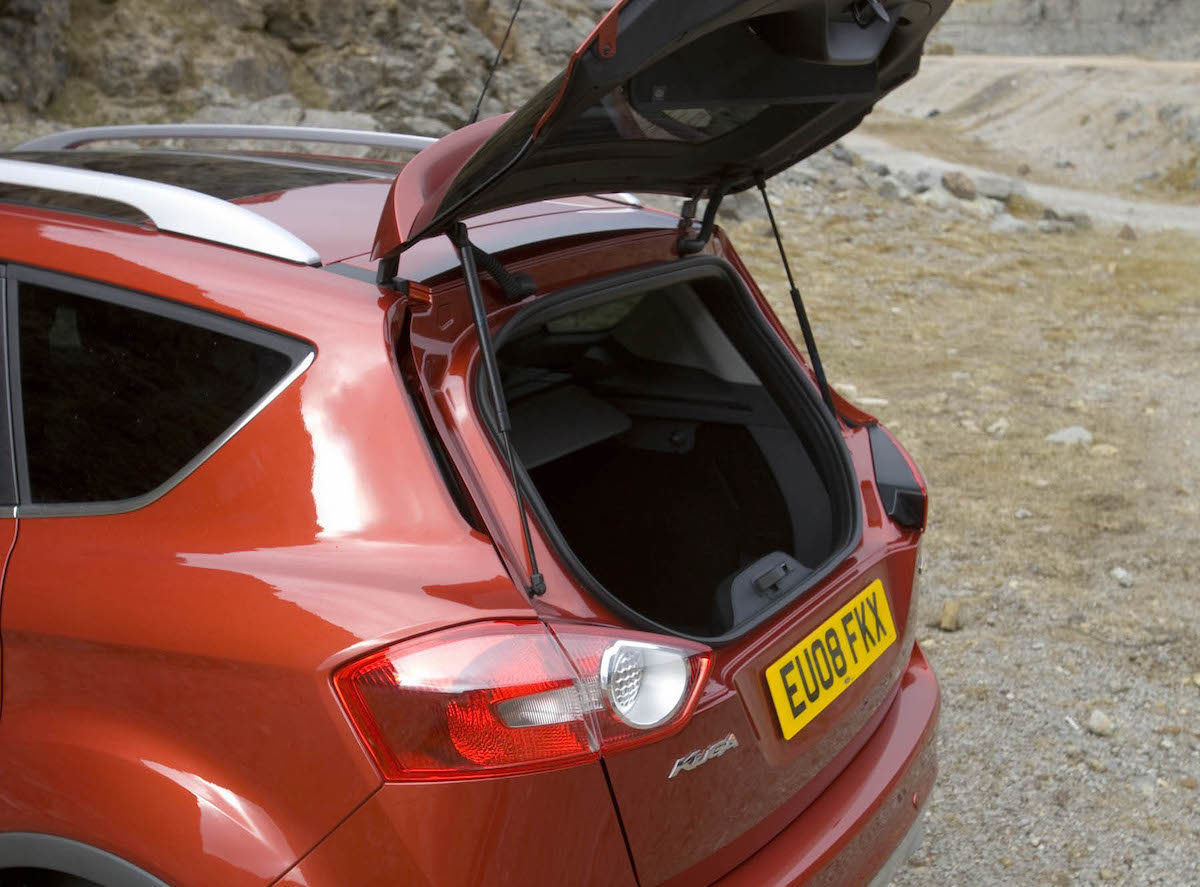
Although the Kuga’s boot space isn’t the biggest in its class at 360 litres, the tailgate is a two-piece arrangement that adds to its practicality. It means you can simply lift the glass to chuck in things like a few bags of shopping, or you open the whole thing when you need to load larger objects. The folding mechanism of the rear seat is a bit clumsy, but lowering them liberates a handy 1,355 litres of carrying capacity.

The Kuga’s 2.0-litre diesel engine is generally a refined unit with plenty of everyday flexibility and punch, and lively performance for those with places to go in a hurry. It’s available with either 136hp in two-wheel drive or 163hp on four-wheel drive models, but in terms of real world urge there’s really very little difference between them.
The only petrol option is the 2.5-litre turbocharged petrol, which has high running costs but it is a fair bit of fun. It does 129mph flat-out and scurries from 0-62mph in 8.2 seconds. It's essentially a slightly detuned version of the five-cylinder engine used in the Focus ST hot hatch, and it sounds almost as good in the Kuga as it does its smaller brother. If you don’t do a lot of miles annually but you do enjoy the occasional blast down a back-road, then this model is worth seeking out.
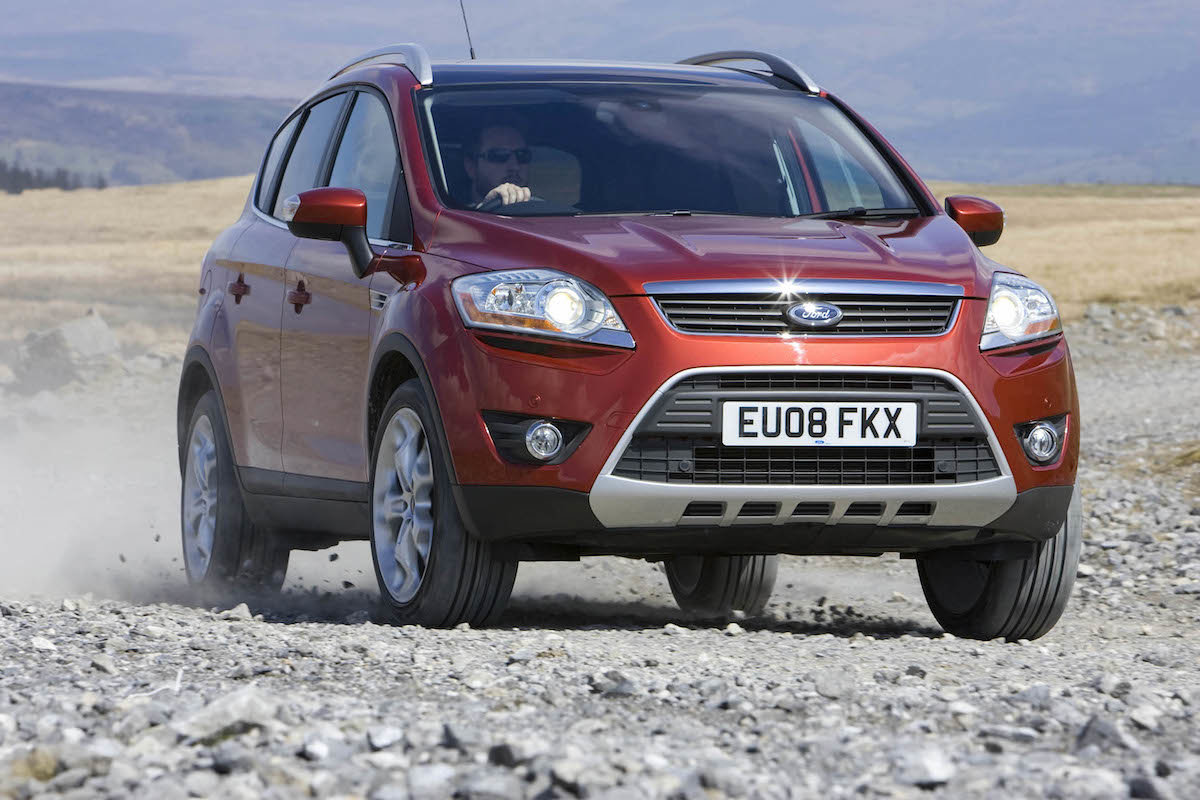
Regardless of engine choice, the Kuga is great to drive for such a tall, SUV-inspired machine. Thanks to its Focus underpinnings, the high-riding Ford benefits from accurate and well-weighted steering and handling that’s almost as engaging. There’s a decent amount of grip, while body control is excellent for this type of car, the Kuga never feeling top-heavy and unwieldy. Better still, it combines this agility with surprisingly civilised ride comfort and strong refinement, making it a stress-free choice for both the school run and long motorway schleps.
A six-speed manual gearbox is standard on the Kuga mk1, but the car is also available with a five-speed automatic and a six-speed PowerShift dual-clutch automatic, the latter being the auto option for the later four-wheel drive models. Although it’s a sophisticated gearbox, the PowerShift is known to suffer reliability issues. The manual on the other hand is tough and benefits from a light and precise action for easy gear changing.
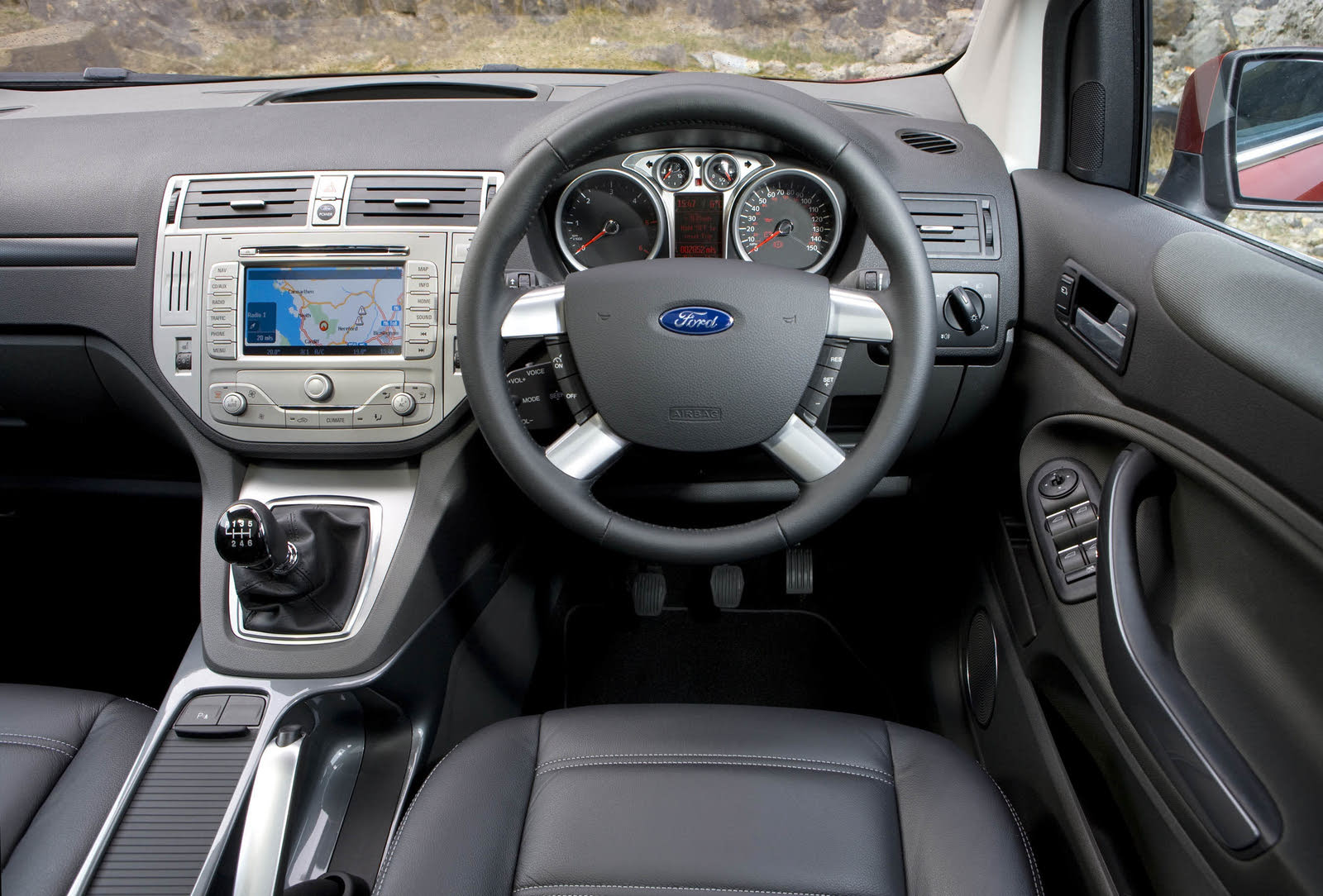
All Kuga mk1s are very well equipped with alloy wheels, keyless engine start and air-conditioning as standard, even on the entry-level Zetec. Also included on all models is the firm’s excellent Quickclear heated windscreen. Move up to the Titanium and you’re treated to automatic headlights and windscreen wipers, cruise control and part-leather upholstery, while the Titanium X (introduced in 2010) gives you a panoramic sunroof, heated front seats and power-adjustable driver’s seat.
In terms of infotainment, the Kuga’s age means that it’s fairly basic by the standards of today. A CD player and radio are standard on all models, as is an aux-in connection for an external music player. Bluetooth was available as an option, so check to see whether any potential purchase has it fitted. It was also possible to upgrade to a touchscreen system with sat-nav, although the blocky graphics and limited functions mean the system feels very dated now.
As with the infotainment, the Kuga’s age is highlighted by its relative lack of safety equipment. Six airbags are standard, as are ABS brakes and electronic stability control, but there are none of the active driver safety aids such as autonomous emergency braking or lane keep assist. On the whole though, the Kuga mk1 is relatively cheap to run, a pleasure to drive and satisfying to own.
Owners of older cars quite rightly tend to drift away from the dealer network, but in the case of the Kuga it’s worth checking out Ford’s Motorcraft servicing scheme, as its prices are more reasonable than you might imagine. If nothing else, it will give you a benchmark against which to measure costs at other garages.
A Kuga mk1 requires servicing every 12 months or 12,500 miles. Typically a minor service should cost in the region of £190, an intermediate about £210, and a major roughly £260. Another cost to bear in mind given the mileage that many Kuga mk1s are likely to have racked up by now is a cambelt change – this is due every 10 years or 100,000-120,000 miles, and costs about £350, and you might want to budget for a further £150 to replace the water pump at the same time. It’s easier and therefore cheaper to get at the water pump while the cambelt is off.
Although not outrageously expensive, be aware that the Kuga mk1 requires a brake fluid change every two years (about £40), new coolant every couple of years (another £40 or so), and an air-conditioning service every three years (in the region of £80). Four-wheel-drive versions of the Kuga mk1 also appreciate an occasional flush-out of the drive system’s internals, together with a fresh filter and oil, which will set you back around £380, so check when – or if – this was last done.
In common with so many modern diesel cars, there’s also a chance that the Kuga you’re looking at will suffer an issue with its diesel particulate filter (DPF), so be financially prepared – a new DPF can cost up to £1,200, but the good news is that there are several specialist companies that can clean out your existing unit for about a quarter the price. Another big ticket item to brace your wallet for is a failing turbocharger – many are getting tired by the 100,000-mile mark, and a reconditioned replacement should cost between £400 and £500 fitted.
In terms of everyday running costs, the Kuga mk1 isn’t too bad. Average mpg figures for the diesels range from 41-48, with annual Vehicle Excise Duty of between £205 and £265. Diesel insurance groups are 18-23. Running the 2.5-litre turbocharged petrol version is considerably more expensive in every respect.
Despite the premium looks and feel of its interior, the Kuga mk1 does suffer from rattly trim. The protective lacquer on some alloy wheels peels with age and can leave the oxidised metal underneath looking scabby, while leaking seals around the tail-lamp clusters can let in water, which will make their insides go mouldy and may even short-out a bulb or two. Also unsightly and potentially expensive, the bonding around the windscreen of a used Ford Kuga can fail and let in water which may frazzle the electrics. Resolving this could land you with a £1,200 bill.
Kugas equipped with the PowerShift dual-clutch automatic gearbox need a fluid change every three years or three services, or else gear shifts can become jerky. However, as there was some confusion over this servicing requirement when the car was new, it wasn’t always done.
Four-wheel-drive examples of the Kuga are extremely sensitive to the circumference of the tyres, and many garages and owners recommend swapping the tyres between front and rear once the fronts have reached about half their tread depth.
Some Kugas suffered from defective clutch master slave cylinders, which in some cases required the replacement of the clutch and the dual-mass flywheel, at a cost of about £1,500. We mentioned the diesel particulate filter, or DPF, as an item likely to fail in the Running Costs section: there’s also a chance that the DPF sensor will fail, which will trigger a warning symbol on the dashboard and put the car into limp-home mode. At about £120 a replacement sensor isn’t too costly, but then it’s a further £320 or so to fit it.
The Kuga mk1 was subject to a few recalls, although by now they ought to have been attended to. It never hurts to check, though. The most serious was for 2.0-litre diesel Kugas built between November 2008 and March 2009: a fault with the brakes could make the brake pedal very hard to depress and hugely increase braking distances. Compared with that, a recall for heated washer jets that could overheat seems trifling.
If a Kuga equipped with a PowerShift automatic gearbox isn’t changing gears smoothly on a test drive, walk away – a replacement could cost as much as £5,000 at a Ford dealer, or £3,500 at a gearbox specialist.
- The Kuga’s styling is very suggestive of it being four-wheel drive, and for many people that’s a major part of its appeal. However, unless you live on a farm or regularly need to tow a trailer or a caravan, it’s better to go with a front-wheel-drive version. Front-wheel drive makes the Kuga lighter, which in turn gives it better fuel economy and lower emissions, reducing running costs. And four-wheel-drive systems are more mechanically complex, so will cost more to fix should something go awry.
- Although the Kuga’s boot space isn’t the biggest in its class, the tailgate is a two-piece arrangement that adds to its practicality. It means you can simply lift the glass to chuck in things like a few bags of shopping, or you can also fold down the lower section to create a carpeted bench that you can use as a picnic table or seat, just like on a Range Rover. Ford used to call such touches ‘instances of delight’ – small things that add to the ownership experience.
- While we would advise you to avoid the 2.5-litre turbocharged petrol engine variant of the Kuga on the grounds of high running costs, it is a fair bit of fun. It does 129mph flat-out and scurries from 0-62mph in 8.2 seconds. Because it costs a fortune to fuel and tax, huge depreciation means prices tend to be on the low side – if you don’t do a lot of miles annually but you do enjoy the occasional blast down a back-road, the pros might start to even out the cons.
– If you’re after the best value option: Because Ford pitched the Kuga as a premium product, all versions have, as a bare minimum, air-conditioning, alloy wheels, keyless start, stability control and MP3 connectivity. That makes the Zetec trim level – which was very popular when new – a great choice. Find a front-wheel drive model with the 136hp diesel engine (pre-June 2010) and modest mileage and it should prove a bargain. – If you live in the sticks and have big things to tow: Four-wheel drive versions of the Kuga aren’t necessary for everyone, but if you live in an area where snow-ploughs don’t often go or you need to tow a horsebox out of a muddy paddock, then the 163hp 2.0-litre diesel engine coupled with Ford’s all-wheel drive (AWD) transmission makes sense. It’s a system that runs on front-wheel drive most of the time with the rear wheels kicking in only when required, so fuel economy penalties aren’t as great as with permanent 4x4s. – If you want all the mod cons: The Titanium trim package gives you rain-sensing windscreen wipers, automatic headlights, part-leather upholstery, cruise control and dual-zone climate control. The Titanium X – a sort of ‘with extras’ package – adds a panoramic sunroof, rear-facing parking camera, and a DAB radio. If you can find one with optional full leather upholstery, that’s a bonus. – If you can’t stand diesel: Ford was so convinced that most Kuga buyers would opt for diesel propulsion it produced only one petrol version – the 200hp 2.5-litre five-cylinder turbo engine that also does service in the contemporary Focus ST hot hatch. It’s an extremely left-field choice because fuel consumption is poor and other running costs high: as a consequence its resale values are low, which if your annual mileage is low could compensate for the cost of keeping the car on the road.


