Hyundai i10 Review (2014-2019)
Hyundai i10 cars for sale
5.0
Expert review
Pros
Very practical for such a small car
Well-deserved reputation for reliability
Well built and nicely finished
Cons
Not as fuel-efficient as some rivals
Bland styling
Not as much fun to drive as a Volkswagen Up
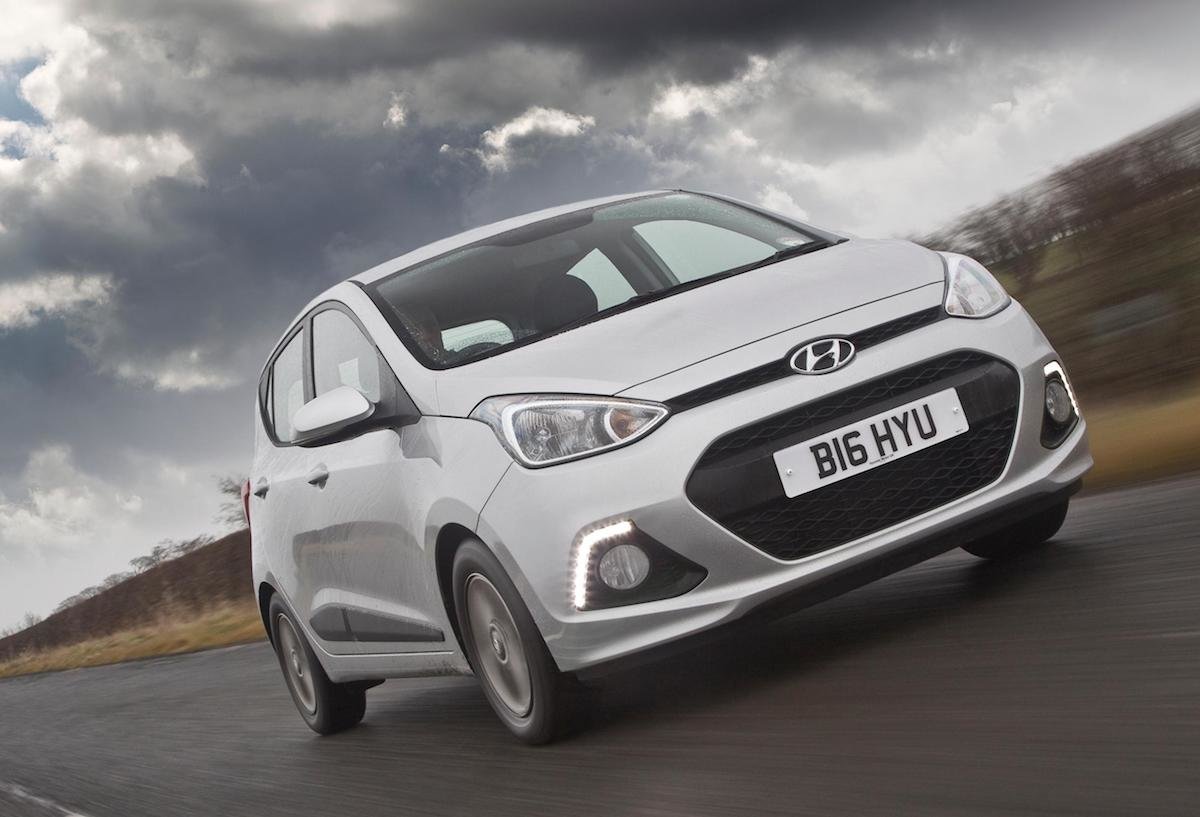
The CarGurus verdict
The Hyundai i10 is a very likeable little car. More than that, though, it’s spacious, practical and dependable, too. In fact, the only blot on its copy book is its high fuel and tax costs, but even this downside is mitigated somewhat by cheap running costs elsewhere. In short, the i10 is one of the best used city cars there is. It comes highly recommended, so much so, in fact, that it was named our Best Used City Car in the 2019 CarGurus Used Car Awards. And praise doesn’t come much higher than that.

What is the Hyundai i10?
Once upon a time, the idea of getting around in a small Korean hatchback might not have been terribly enticing. Plasticky interiors, weedy engines and a soulless driving experience used to be the hallmarks of such cars. But no longer, for city cars from Korea are among the best there are, and the Hyundai i10 is a case in point.
The original made its debut in 2007 and offered low running costs, plenty of kit for the cash and, of course, the Hyundai’s generous warranty. Yet it was in this second-generation guise that appeared in 2014 that the i10 really came of age.
All the old car’s strengths remained, but the new model was more practical, stylish and far more grown-up to drive. Better still, it felt far more upmarket inside, giving occupants the feeling they were sitting in something bigger and costlier.
In 2017 the i10 was given a modest mid-life refresh that ran to a subtly revised nose and front bumper, plus some suspension tweaks aimed at improving ride comfort. Either way, it continued to be a big hit with buyers, remaining a strong seller for Hyundai until the Mk3 i10 replaced it late in 2019.

How practical is it?
One of the big practical selling points of the i10 is that it's a five-door hatchback: unlike some rivals, there’s no three-door option. What’s more, while it’s compact on the outside, the Hyundai manages to offer loads of space inside. More importantly, that interior is trimmed in quality plastics that look smart, which means you don’t feel like you’ve opted for the budget option.
Every model from the SE above gets a height adjustable driver’s seat, while all have a steering wheel that can be adjusted for rake (although not reach), so sorting a comfortable driving position is a doddle. The dashboard also looks good and is logically arranged, meaning you rarely have to take your eyes off the road for long.
Given its dinky exterior dimensions, the i10 has a decent amount of space for rear seat passengers, and even taller adults will have little to grumble about, particularly in terms of headroom. There’s also a surprising amount of storage, with door bins front and rear, a large glovebox and a handy tray ahead of the gear lever that’s perfect for your phone (not least because it also features a USB socket and 12V charging point).
The Hyundai also leads the city car competition when it comes to boot space, with 252 litres of capacity available. All models apart from the fuel efficiency-themed SE Blue features a split/fold rear seat that can be lowered to liberate a generous 1,046-litre load bay. The floor isn’t totally flat with the rear bench folded and there’s a high load lip, but if you’re looking to frequently haul big loads, then the i10 probably isn’t the car for you anyway.

What's it like to drive?
Perhaps the biggest surprise with the i10 comes in the way it drives. Grown-up feeling suspension delivers a comfortable ride, while fast, direct steering inspires confidence. Indeed, with lots of grip and feel on offer, the i10 can even be pretty good fun to drive. It’s perhaps not as entertaining as one of the VW Up/Seat Mii/Skoda Citigo trio, but it’s not far off.
As you’d expect, the i10 feels right at home around town, where its small size, light controls and good visibility make it child’s play to drive and park. Yet it’s equally capable when you escape the urban jungle, with low noise levels and decent comfort allowing it to tackle the sort of longer journeys you’d normally reserve for bigger machines.
The post 2017 facelift car’s got revised suspension for a slightly better ride, but in fairness the changes are slight. Both versions deal with bumps well, with only bigger potholes and imperfections upsetting the small car’s composure.
That said, if you do plan on using your i10 as a regular long haul express, then the larger 86bhp 1.2-litre petrol is the better bet. It’s no hot hatch, but it’ll happily keep up with the flow of faster traffic and won’t struggle on longer inclines. The smaller 66bhp 1.0-litre three-cylinder is happy to be worked hard, but it’s better suited to local duties, with a sluggish 0-62mph time of 14.7 seconds, some 2.6 seconds behind the 1.2-litre.
A slick and precise five-speed manual gearbox is standard across the range, although the 1.2-litre was available with a four-speed automatic.

Technology, equipment and infotainment
There’s a choice of models, starting with the fairly basic S, which gets electric windows, Bluetooth, a USB connection and trip computer, but little else. For most, the SE is the best bet, which gets air-conditioning, central locking, electric rear windows and a height-adjustable driver’s seat.
Also worth keeping in mind is the rare SE Blue version, which has a number of tweaks to make it more fuel-efficient, including smaller wheels and the deletion of the central rear seat. If you want a little luxury in your small car, then the Premium adds a leather steering wheel and gear lever, alloy wheels and LED running lights, plus it was available with an optional electric sunroof.
Equipment levels had a bit of a boost when the i10 was facelifted in 2017, with the biggest change being the addition of a seven-inch touchscreen infotainment system for the Premium model, which featured Apple CarPlay and Android Auto. But all i10s got Hyundai’s five-year factory warranty, which could be a big bonus for a used car buyer.
In terms of safety kit, the i10 gets the basics but not a lot more, which explains its four-star Euro NCAP rating. There are six airbags, stability control and tyre pressure monitoring on all models, while facelift SE and Premium versions were available with Driver Assist Pack that added autonomous emergency braking and lane departure warning.

Hyundai i10 running costs
No city car is particularly costly to buy and run, but the i10 can’t quite match its best rivals in terms of fuel economy. The SE Blue can achieve as much as 70.6mpg, and while that does best the Skoda Citigo and Toyota Aygo, the standard versions’ consumption figures fall behind.
Partly as a result of this, tax costs on examples registered before April 2017, when the tax system changed from an emissions-based system to a flat rate, are quite high. The 1.2-litre falls into Band D, which means it’ll set you back far more than most city cars. For that reason, we reckon the 1.0-litre version is a better bet for most buyers. If you do want a newer i10, though, keep in mind that that flat rate tax system now in place means higher tax on all models.
If day-to-day running costs are a little higher than rivals’, then lower maintenance costs will at least partially help to mitigate these; even at a main dealer, servicing charges are pretty reasonable.
And once your i10’s out of its warranty period, it can benefit from Hyundai’s menu servicing scheme, which offers main dealer services at a discounted price that’s fixed throughout the country.
What’s more, you won’t need to budget for regular timing belt changes, because all i10 engines come equipped with a timing chain instead, which should last the life of the car.

Hyundai i10 reliability
Happily, the i10 is a very reliable little car, but there are a couple of issues you should check out if you’re thinking of buying one. First, have a look at the rear brake discs. These are known to corrode quite quickly, which can result in grinding noises from the rear when the brakes are applied. The only remedy is to replace the brake discs, and you’ll need a new set of brake pads at the same time, a job that will leave you with little change from £300.
The other thing you’ll want to check, if you’re looking at an i10 equipped with air-conditioning, is that it still works. The i10's air-conditioning systems are prone to leaking away their gas quite quickly, so if the air-con doesn’t get cool, it will probably need to be regassed.
- You might want the extra power of the 1.2-litre engine if you’re going to spend a great deal of time on dual-carriageway A-roads or motorways, but the 1.0-litre should be zippy enough for most. It’s also much cheaper to tax (see the ‘Running costs’ section).
- If you want an automatic city car, the i10 is a good bet. Most city cars come with sub-standard automatic gearboxes, but the i10’s is pretty good, shifting relatively smoothly and quickly compared with most rivals’.
- The i10 got five seats as standard, a bonus compared with some city cars, such as the Volkswagen Up and Skoda Citigo, which only have four. The exception is the SE Blue model, which made do with four seats as a weight-saving measure.
- Our favourite version: For our money, the 1.0-litre engine is plenty for most people in this type of car, and the mid-level SE trim gives you enough features without costing too much.
- If you want an automatic: Only the 1.2-litre engine comes with the option of an automatic gearbox, so that's the one you'll have to go for. Once again, we'd opt for the SE trim as the one to have.
- If fuel economy is important: The 1.0 SE Blue already has the most efficient engine in the i10 range, but on top of that it has several other tweaks to further improve fuel economy. It also has lower CO2 emissions which, for pre-April 2017 cars, mean you won't have to pay any Vehicle Excise Duty.


