Range Rover L405 Review (2012-2021)
Land Rover Range Rover cars for sale
4.0
Expert review
Pros
Goes anywhere in style and luxury
Huge interior of long-wheelbase model
Very able off road
Cons
Seriously expensive to buy and run
Its sheer size can be intimidating
Reliability worries could keep you awake at night
The CarGurus verdict
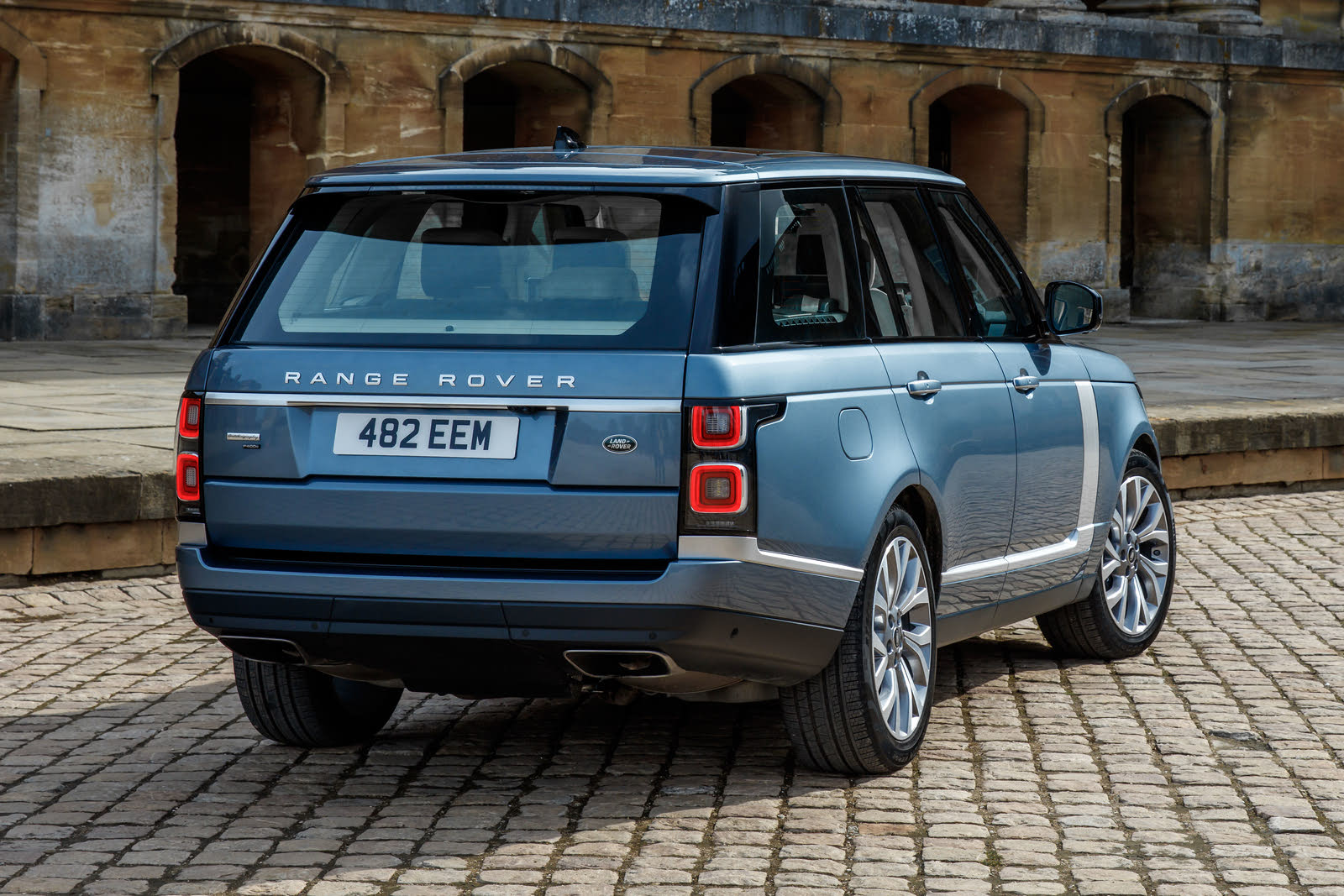
Few owners will ever take advantage of a modern Range Rovers' off-road ability, but if you intend to, then there’s simply nothing else that will go as well in the rough stuff and offer such plutocratic progress on tarmac.
Even if you’re planning to stay on paved roads, the Range Rover’s comfort and luxury are almost unmatched, but if that’s the case, then you might also want to check out a Mercedes S-Class, because that’s even smoother.
As good as it is, though, there are two big issues to keep in mind. The first is cost: the Range Rover is seriously expensive both to buy and to run, so you’ll need deep pockets, even if your car is reliable. The second issue is that it probably won’t be reliable.
Be conscious of the strain a Range Rover will put on your wallet, and it’s a car that’ll swaddle you in luxury, waft along the motorway with unerring ease, and climb up a gully should you ever need it to. And even if you don’t, it’s nice to know you can.
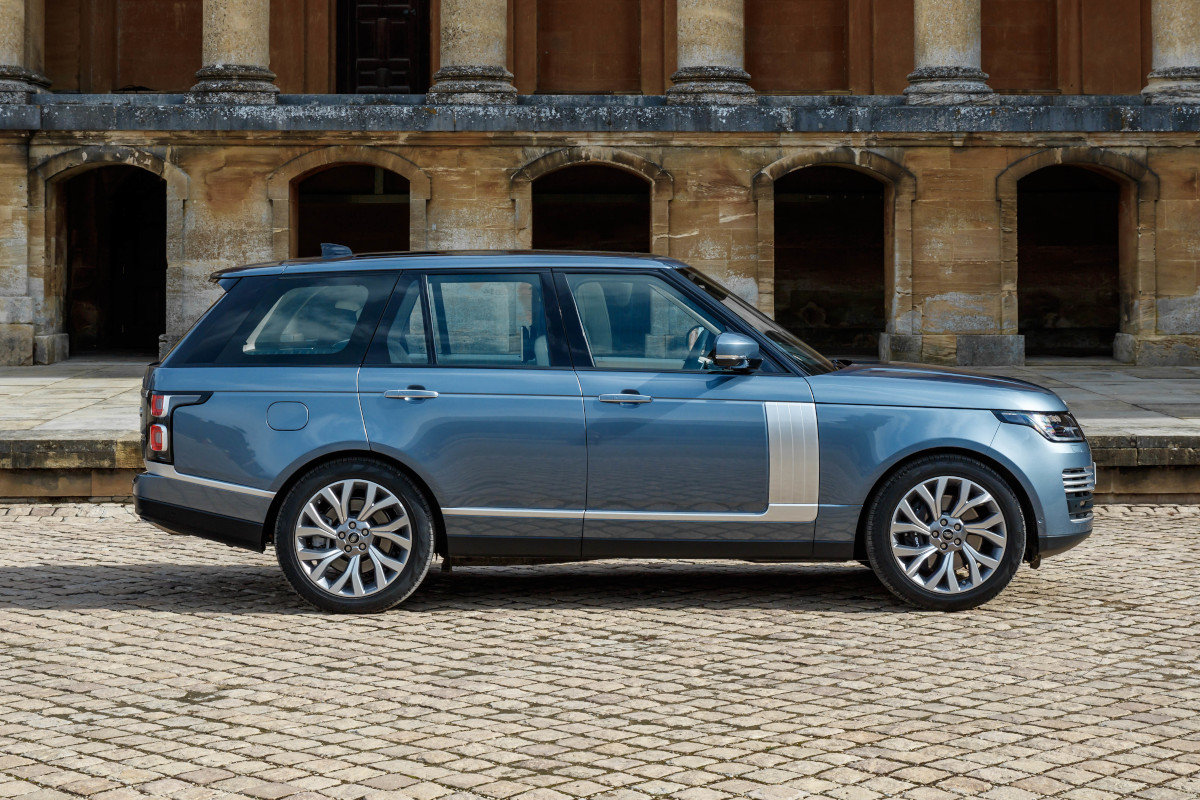
It’s nice to know you can. That’s why people buy SUVs, especially Range Rovers, even when they have very little intention of taking them off road. This is a luxury car that can scale hills and ford streams, and even if it never does, there’s something reassuring about the knowledge that, while you surround yourself with the finest trimmings money can buy, you’re prepared for anything life might throw at you.
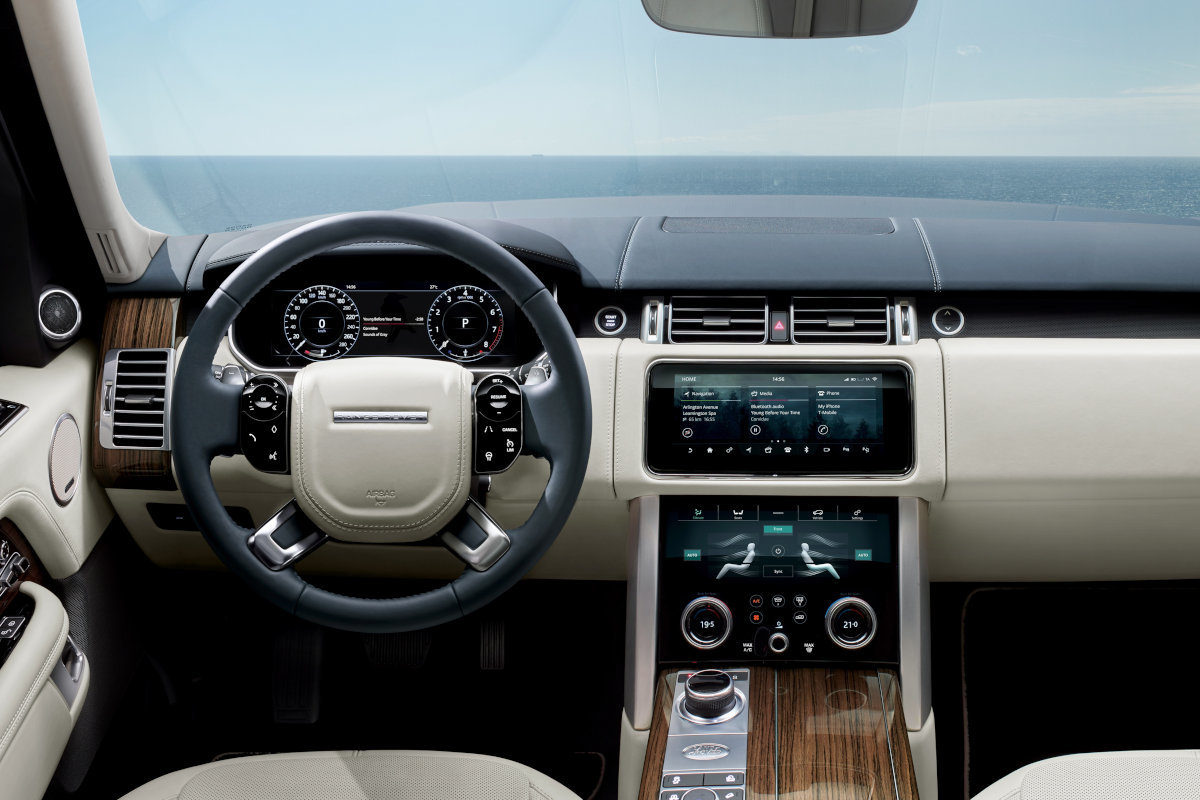
The original Range Rover, launched in 1969, was a revelation, sold as the car you could use on the farm during the week, and drive into town at weekends. By today’s standards, those early models are pretty utilitarian, but these days, the Range Rover is a byword for luxury. Climb aboard even a standard example, and you’ll find a leather-swathed cockpit with lashings of wood and the feel of an expensive powerboat or boutique hotel.
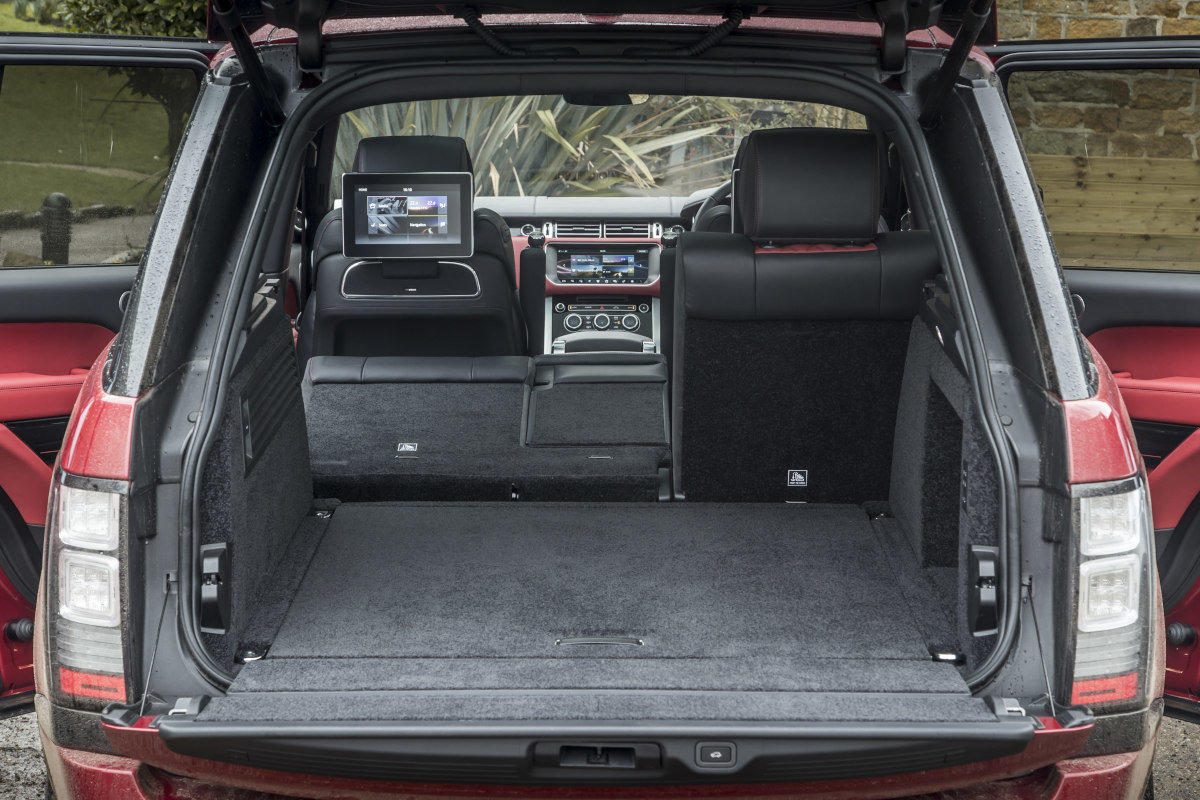
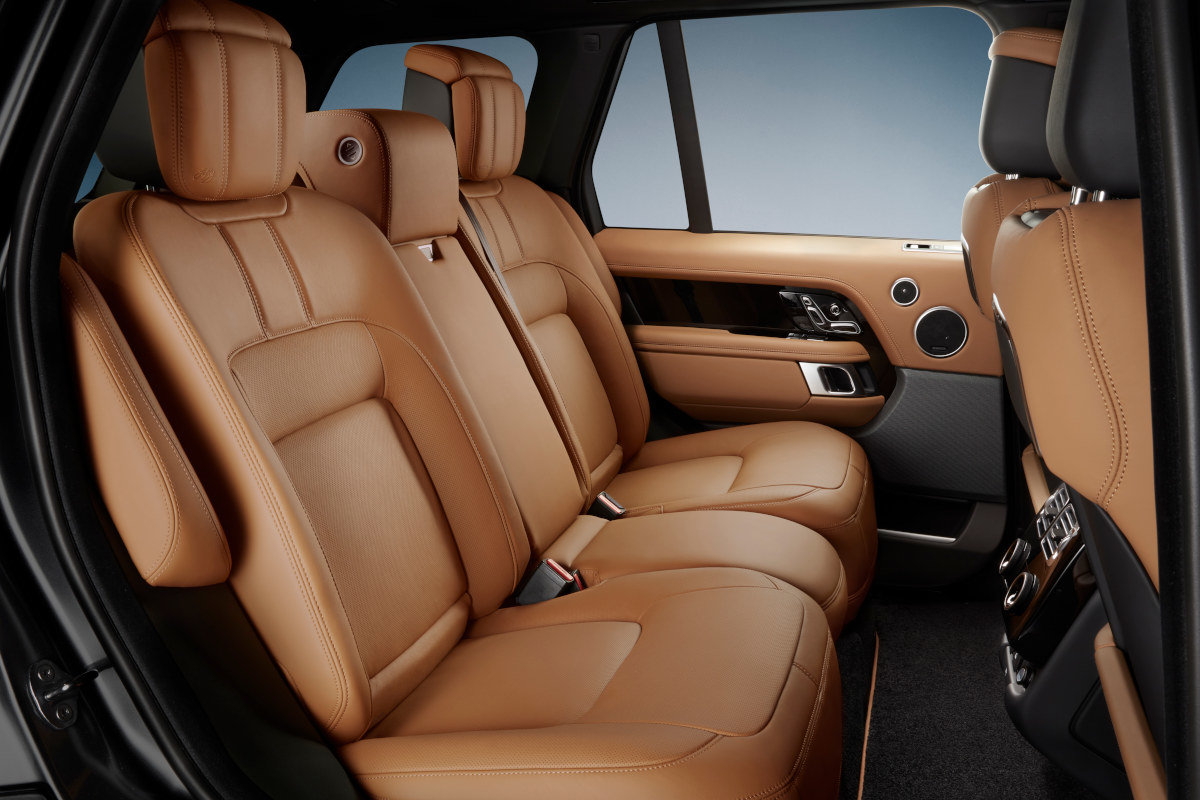
The Range Rover is strictly a five-seater – if you want space for seven, then you'll need to look at the Range Rover Sport instead – but those five passengers get acres of room to stretch out. In the front, meanwhile, palatial armchairs swaddle you from all sides, and there’s a terrific view out through the big windscreen and windows.
The boot is massive, too. You get 900 litres in all versions except the P400e hybrid, which loses 98 litres to accommodate its battery and electric motor, but that’s still not what you’d call small.

Palatial, because once you start it up and get moving Range Rover feels more like a small building than a car. Turn the steering wheel, and the nose responds slowly and deliberately; carry too much speed into a corner and it’ll lean over on its side like a ship in a gale. Until, that is, you flip it into ‘Dynamic’ mode, when it performs a miraculous transformation, suddenly feeling half the size and hustling down back roads remarkably well.
This is still no sports car, though, and you’re always aware of its size and weight, and that clever four-wheel-drive system is especially heavy. If it’s a sporting SUV you want, you’re better off at the helm of an Audi SQ7, but what the Range Rover offers instead is uncompromising dedication to comfort – something few SUVs even at this price do this well.
Don’t take from that that the Range Rover is slow, however. Even the least powerful engine in the range, the D250 diesel, produces 246bhp, enough to get it to 62mph in 8.1 seconds, while the most powerful diesel in the range, the 346hp D350, can do the same in 6.8 seconds. These ‘Ingenium’ straight-six diesel engines were introduced for the 2021 model year, replacing the older V6 and V8 diesels.
The newer engines are a bit less effortless in their power delivery than the older V6 and V8 diesels, but they are more economical offering up to 33mpg. They’re also cleaner, meeting ‘RDE2’ and Euro 6d-final regulations – which sounds complicated but means they can travel into all current and planned urban low-emissions zones in the UK with fear of attracting a penalty charge.
If you want a bit more pace – and you can afford the fuel bills – you can also specify your Range Rover with one of three petrol engines, the fastest of which is the P565, which reduces the 62mph sprint to just 5.1 seconds, making this leviathan quick enough to keep pace with some of the quickest hot hatches around.
Palatial, because once you start it up and get moving Range Rover feels more like a small building than a car. Turn the steering wheel, and the nose responds slowly and deliberately; carry too much speed into a corner and it’ll lean over on its side like a ship in a gale. Until, that is, you flip it into ‘Dynamic’ mode, when it performs a miraculous transformation, suddenly feeling half the size and hustling down back roads remarkably well.
This is still no sports car, though, and you’re always aware of its size and weight, and that clever four-wheel-drive system is especially heavy. If it’s a sporting SUV you want, you’re better off at the helm of an Audi SQ7, but what the Range Rover offers instead is uncompromising dedication to comfort – something few SUVs even at this price do this well.
The Range Rover certainly isn’t slow, though. Even the least powerful engine in the range, the TDV6, produces 271bhp, which is enough to get it to 62mph in 7.4 seconds. For truly imperious performance, you’ll want the TDV8, which kicks out 334bhp and lops half a second off that 0-62mph time.
If that’s not fast enough for you, and you can afford the fuel bills, there are also three petrol engines, the fastest of which is the P565, which reduces the 62mph sprint to just 5.1 seconds, making the Range Rover quick enough to keep pace with some of the fastest hot hatches around.
Never was the old adage ‘if you have to ask, you probably can’t afford it’ truer. If you’re worried about the cost of running a Range Rover, you probably shouldn’t be thinking of buying one. Cars this heavy are never easy on fuel, and you’ll struggle to average more than 30mpg even in the most economical Range Rover of all, the SDV6.
In which case, you might as well upgrade to the SDV8, which only loses a few mpg. The plug-in hybrid’s 83.2mpg official fuel economy figure sounds miraculous by comparison, but take it with a pinch of salt. In the real world, you’ll probably average less than half that, even if you plug it in regularly.
Petrol versions are, of course, the thirstiest. Even the mild hybrid P400 will struggle to exceed 25mpg, and if you plump for either of the more powerful petrol engines, expect average fuel consumption figures of less than 20mpg.
Along with those high fuel bills come high servicing costs. The Range Rover needs to be serviced every year or 16,000 miles, whichever comes up first, and it’s a big, heavy, and mechanically complex car, especially in hybrid form. There plenty to check during a service and lots to go wrong, and parts are also expensive. You can buy service packages from Land Rover, which allow you to pay monthly and spread the cost.
Most Range Rovers use a timing chain, which you shouldn’t need to change throughout the life of the car. However, if you choose the TDV6 model, you’ll need to be aware that it’ll require a new timing belt every seven years or 105,000 miles.
Unfortunately, the Range Rover has a terrible record for reliability. As a brand, Land Rover finished 29th out of 30 manufacturers, in the 2021 What Car? Reliability Survey, and the Range Rover itself came seventh out of eight cars in the luxury SUV category. Only the Land Rover Discovery was worse, and Land Rovers and Range Rovers made up the bottom half of that group.
Electric issues a very common, and owners report that problems are not only frequent but expensive to put right. With that in mind, it’s well worth considering extending the warranty when it runs out. The Range Rover was sold with a with a three-year, unlimited mileage warranty from new, and for an additional cost, you can extend this until the car is up to 10 years old and has up to 100,000 miles on the clock.
Land Rover also has an approved used car scheme for second-hand models sold via its franchised dealers. These come with a 12-month warranty and a year’s roadside assistance.
- If you want the level of comfort for which the Range Rover is famed, then the smaller the wheels, the better. Cars with optional 22-inch wheels have thin tyres that cause them to thump into potholes, so keep the wheel size to a minimum to get the most out of the gloriously smooth air suspension.
- There are two hybrid versions of the Range Rover in addition to the standard petrol and diesel models. The least powerful petrol engine in later models comes with a small electric boost, which makes it a mild hybrid (MHEV), but in a car this heavy, that doesn’t make much difference to its fuel consumption. The other hybrid, the P400e, is a plug-in (PHEV), which means it has a dedicated electric motor and can run on electricity alone for 20 miles or so before the petrol engine kicks in. If you’ve got somewhere to charge it, it’s well worth considering. If you haven’t, it’ll be very thirsty, because it’ll be lugging around a heavy battery that isn’t doing anything.
- The Range Rover is available in either standard or long-wheelbase guises. The latter stretches the body for more leg room in the back – 192mm, to be precise. Long wheelbase versions cost a good bit more than the standard models when they were new, though. They were only available with the most luxurious models and most powerful engines, which put the price into six figures.
- If you want to see behind you: The Range Rover is a hefty beast, so the 360-degree parking camera and additional parking aids you get with the Vogue SE version make it worth upgrading to. Pair that model with the D350 diesel engine, and you have what to many will be the perfect Range Rover – though if you’re buying new, you’ll probably want to peruse the options list to really make it your own.
- If you’ve got somewhere to charge it: If you’ve a parking space and the ability to add a charging point to it, we’d opt for the P400e version instead. It’s slightly cheaper to buy than the D350, and because you get the ability to tool around town on petrol power, you’ll also save money on your fuel bills – and be able to waft along in blissful silence, too.
- If you want the fastest Range Rover going: It has to be the supercharged P565, though this is only available with the most expensive SVAutobiography Dynamic equipment level, and that makes it eye-wateringly costly.
- If you’re planning to be chauffeur-driven: It’ll have to be the long-wheelbase version. The D350 engine will keep fuel cost vaguely reasonable, and the Autobiography is the most affordable model. Better to go for that, then top up the specification with whichever options and packages appeal to you – you’ll probably still spend less than if you shell out for the top-of-the-range SVAutobiography model.


