Mercedes-Benz A-Class (1998-2004) review | Spacious and surprisingly versatile small hatchback
Mercedes-Benz A-Class cars for sale
2.0
Expert review
Pros
Innovative design and engineering
Lots of space for such a small car
Improved quality after 2001 facelift
Cons
Hard and crashy ride
Atrocious reliability
Repairs could cost more than the car is worth
The CarGurus verdict
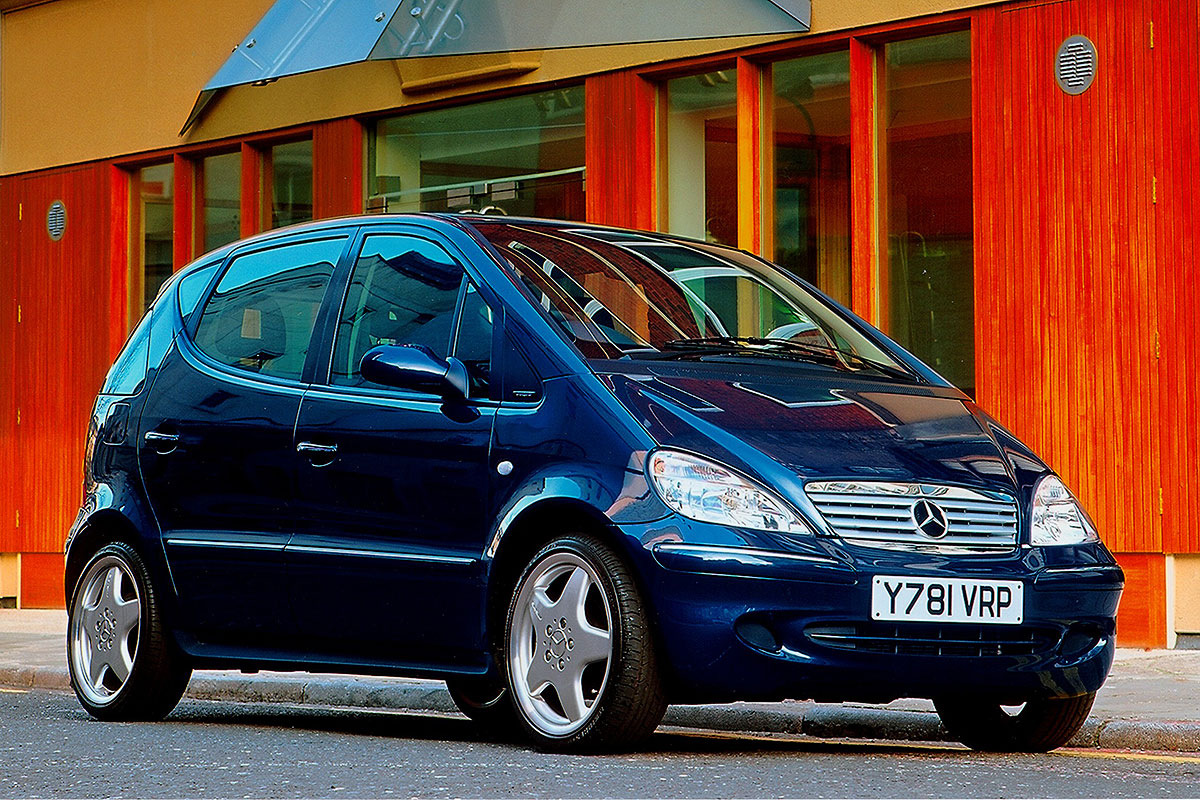
The original Mercedes-Benz A-Class is an interesting and surprisingly practical small car. Its clever packaging, upright driving position and compact dimensions still make sense today, while facelifted models in particular can feel well equipped for their age.
However, reliability issues and repair costs mean the A-Class is not an easy car to recommend. A well-maintained example owned by an enthusiast or looked after by a Mercedes specialist will be a safer bet than a cheap, neglected car with patchy history.
Buy carefully and the W168 is an unusual and characterful small hatchback that’s now becoming a classic in its own right. But buyers should budget realistically for maintenance and not assume the Mercedes three-pointed star will guarantee reliability and modest running costs.
What is the Mercedes-Benz A-Class?
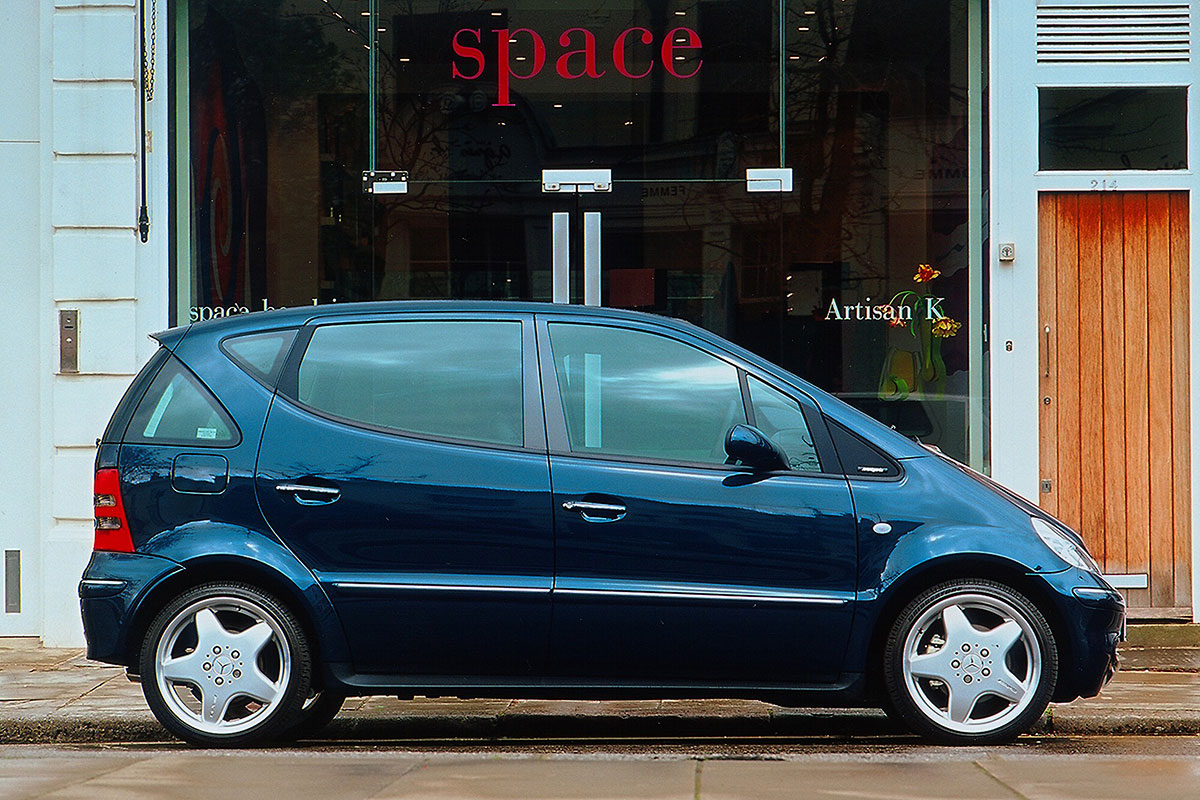
In a break from its traditional saloon, estate and coupe models, Mercedes-Benz launched the original A-Class in 1997. The tall-bodied five-door hatchback was unlike anything else in the firm’s range, arriving years before rivals such as the BMW 1 Series and Audi A2 appeared.
The A-Class stood out for its unusual ‘sandwich floor’ design, which helped create a surprisingly spacious cabin despite the compact exterior dimensions. Its upright shape may not have been to everyone’s taste, but it gave the car excellent visibility and plenty of interior room.
Petrol and diesel engines were offered during the model’s lifespan, alongside both short- and long-wheelbase versions. A facelift in 2001 brought revised styling, updated equipment and improvements to refinement and safety.

How practical is it?
The Mercedes-Benz A-Class W168 is short and easy to park, but its tall body means there is enough room inside for four adults in reasonable comfort. When it was launched, Mercedes-Benz claimed the A-Class offered interior space comparable with cars from the class above.
Clever packaging was one of the A-Class’s main selling points. The rear seats could slide backwards and forwards to prioritise passenger or boot space, while the rear bench and even the front passenger seat could be removed entirely to create a surprisingly useful load area. Boot capacity ranged from 390 litres in standard form to more than 1,300 litres with the seats removed.
A facelift in 2001 brought styling and equipment updates, while long-wheelbase versions offered additional rear passenger and luggage space. The high seating position and large windows also make the A-Class easy to manoeuvre in town.
What's it like to drive?
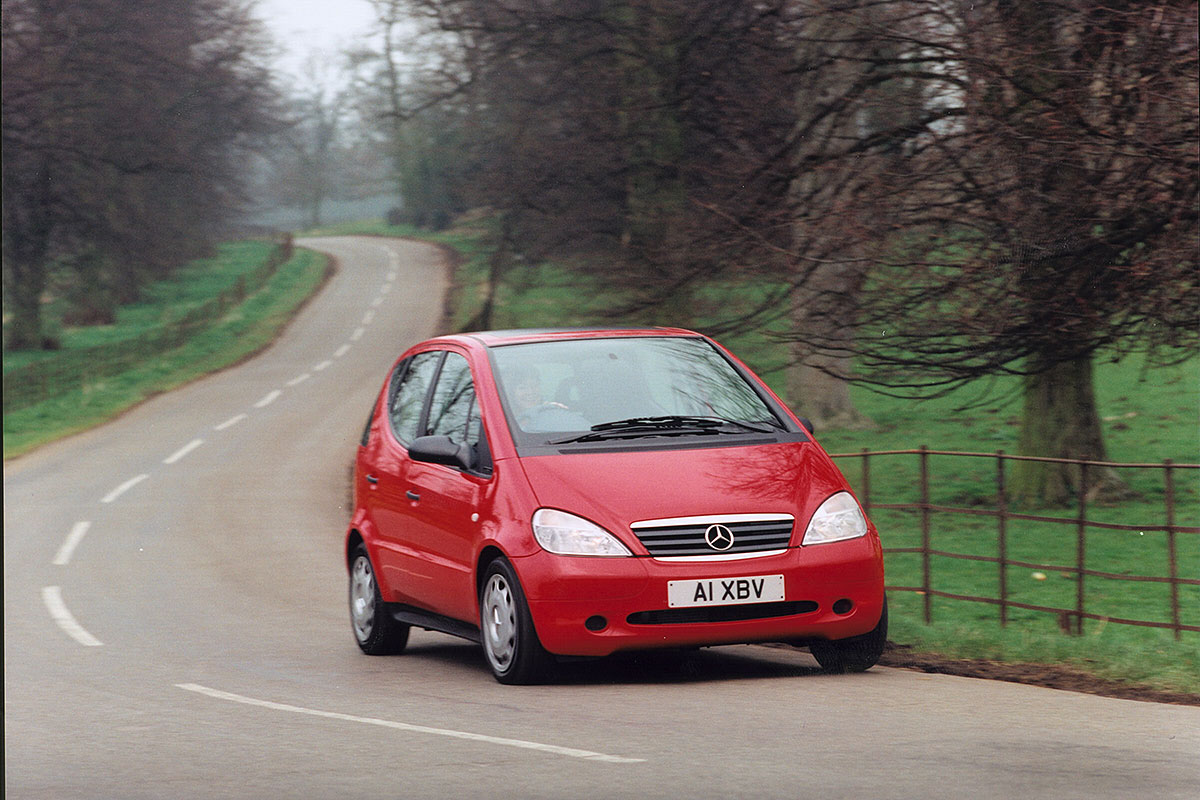
The original A-Class hit the headlines after failing a Swedish magazine’s high-speed ‘Elk Test’, in which the car overturned during an emergency avoidance manoeuvre. Mercedes-Benz responded by delaying the UK launch while it revised the suspension, lowered the ride height, fitted wider tyres and made electronic stability control standard across the range.
Around town, the A-Class is easy to drive thanks to its compact dimensions, large windows and upright seating position. However, the tall body shape means it can feel unsettled at motorway speeds – especially in strong crosswinds or on the UK’s notoriously potholed roads.
Ride comfort is firm by the standards of a small family hatchback, with sharper bumps sometimes making their way into the cabin. Long-wheelbase versions are slightly more settled, while petrol and diesel engines generally prioritise economy over outright performance.
Petrol engines ranged from a modest 1.4-litre unit to larger 1.6-, 1.9- and 2.1-litre options, while the 1.7-litre CDI diesel offered stronger mid-range performance and better fuel economy. The entry-level A140 petrol can feel underpowered out of town, so diesel models are generally the better choice for regular long journeys.

Technology, equipment & infotainment
Compared with modern hatchbacks, the A-Class’s technology feels fairly basic, especially when the dashboards in new Mercedes-Benz cars are dominated by digital screens. That said, higher-spec models came with features that were impressive for a small car in the late 1990s and early 2000s. Depending on trim, buyers could have air conditioning, cruise control, alloy wheels and a CD player, while electronic stability control became standard after the well-publicised ‘Elk Test’ controversy.
The dashboard layout is simple and easy to understand, although some of the plastics and switchgear now feel dated. The upright design does at least provide good visibility, and many owners appreciate the high driving position.

Mercedes-Benz A-Class running costs
Age is now the biggest running-cost consideration for an A-Class W168. Even well-maintained examples can require expensive repairs, partly because the car’s compact engine bay makes some jobs labour-intensive. Items such as alternators, suspension components and steering parts can prove costly to replace.
Independent Mercedes-Benz specialists are usually a better option than main dealers, both for servicing costs and their model knowledge. Routine servicing itself is reasonably affordable, but buyers should budget for unexpected maintenance on older, higher-mileage cars. On the plus side, most A-Class models of this age have hit the bottom of the depreciation curve, so you shouldn’t lose too much money when it’s time to sell.
Official fuel economy figures for petrol models ranged from the mid-30s to high-30s mpg, while the diesel A160 CDI and A170 CDI were capable of more than 50mpg in real-world driving. Road tax (VED) costs vary depending on engine and gearbox choice, but most versions remain relatively affordable by modern standards. The same can be said for insurance, with some of the earliest models now eligible for a classic car policy.
Mercedes-Benz A-Class reliability
Reliability can be hit-and-miss with the A-Class W168, particularly as even the newest examples are now more than 20 years old. Some cars will have been run on a small budget and corners may have been cut when it comes to essential maintenance. Electrical faults are fairly common, including issues with window switches, dashboard trim, remote locking and alarm systems.
Suspension and steering components are known weak points, especially on higher-mileage cars, while some diesel models can suffer from expensive injector and turbocharger problems. Rust is generally less severe than on some rival cars of the same era, although corrosion can appear around the wheelarches and base of the A-pillars.
Buyers should also be cautious of models fitted with the automated manual gearbox, as repairs can be costly. A full service history is desirable, but specialist inspection is strongly recommended before you purchase.
- Early A-Class models can suffer expensive age-related faults, so a full service history alone is no guarantee of a trouble-free car. A specialist inspection before purchase is strongly recommended.
- Independent Mercedes-Benz specialists are usually a better choice than main dealers for servicing and repairs, especially given the low values of most W168 models today. Use outlets like eBay and Autodoc to source spare parts, and consult online forums for helpful advice.
- Long-wheelbase A-Class versions, introduced as part of the 2001 facelift, offer noticeably more rear passenger and luggage space while remaining easy to drive and park around town.
- Best for the original A-Class experience: The standard-wheelbase A-Class has an impressive Tardis-like quality, feeling tiny on the outside but surprisingly spacious inside. A post-2001 facelift car in Classic SE trim or above is the best bet, preferably with the 1.7-litre A170 CDI diesel engine for its blend of performance and fuel economy.
- Best petrol model: The 102bhp 1.6-litre A160 engine suits the A-Class’s relaxed character better than the more powerful A190. A long-wheelbase version in Elegance trim will have desirable extras such as alloy wheels and air conditioning.
- Best for performance: The rare A210 Evolution uses a 2.1-litre petrol engine with 140bhp, cutting the 0-62mph time to 7.9 seconds. It’s still not a traditional hot hatch, but it feels noticeably quicker than other A-Class models and comes in sporty Avantgarde trim.
- Best for something unusual: Some A-Class models were heavily optioned when new, including panoramic sunroofs, upgraded audio systems and Mercedes-Benz Designo interior packages. A well-specified example can feel genuinely distinctive today.