Renault Clio Review (2019-2023)
Renault Clio cars for sale
3.0
Expert review
Pros
Grown-up, comfortable driving experience
Economical E-Tech Hybrid
Very safe should the worst happen
Cons
Rear-seat space could be more generous
A Ford Fiesta is a lot more fun to drive
Infotainment isn't as slick as the best

The CarGurus verdict
The fifth-generation Renault Clio is considerably better than its predecessor and, while it still doesn’t drive as well as a Fiesta, it's grown-up, quiet and comfortable nature means it will appeal to many. It’s also an affordable option, with sensible running costs and lots of equipment, which serves to bolster its desirability further.
Renault’s smartly styled Clio isn’t without its issues, though. Rear room could be better, which is a consideration if you’re regularly going to be carrying passengers, and its media system isn’t on a par with those found in the Skoda Fabia or Volkswagen Polo. It’s not quite as neatly finished inside, either, and it’s a shame that the petrol models can’t be had with a slicker, sweeter six-speed manual gearbox.
Nevertheless, the Renault is a temptingly capable supermini that packs a lot of positive traits into a smart and refined package that’s easily appreciated. If you’re looking for a family hatch or smaller car, it’s consequently deserving of a place on your shopping list.
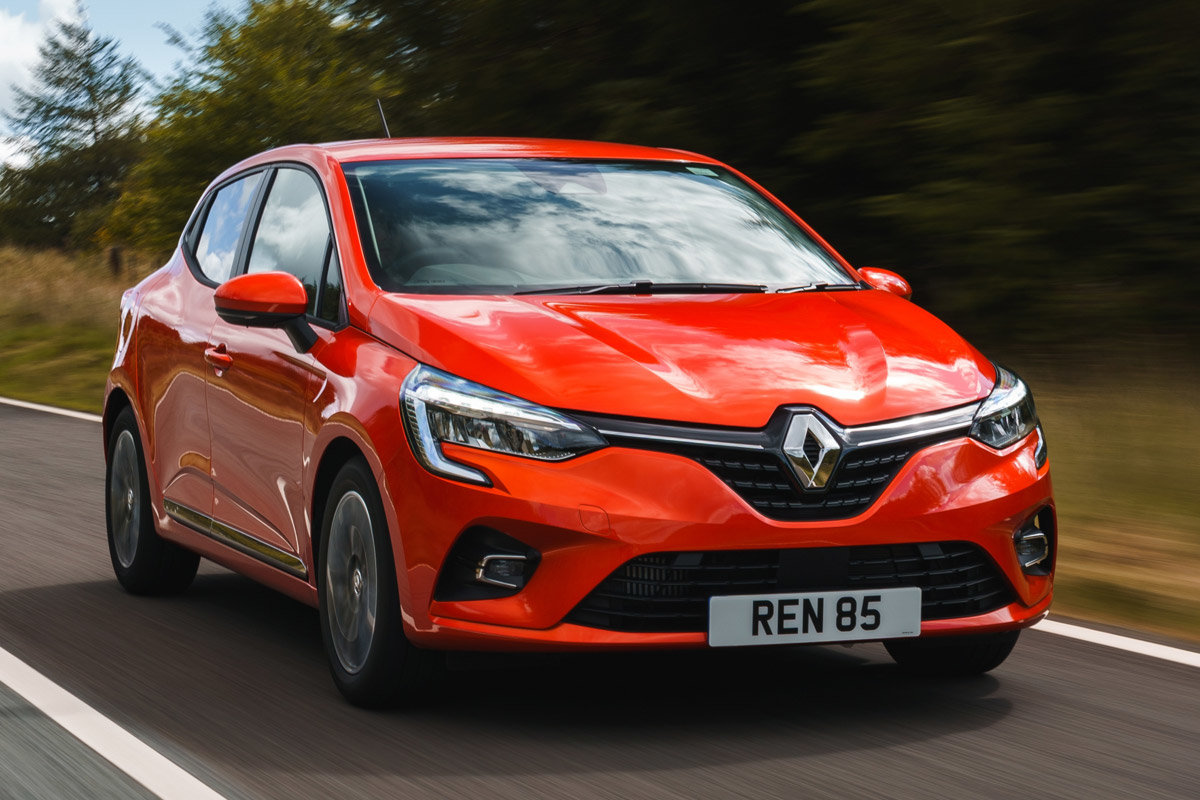
The Renault Clio, which is the best-selling French car to date, is now in its fifth generation, and compared to its predecessor, the latest Clio offers more creature comforts, improved refinement, increased safety and more efficient engines options.
It isn’t just a facelifted version of the previous model, either. Despite the visual similarities, the fifth-generation Clio is a new car from the ground up and uses a modern platform called CMF-B. It was launched in 2019, in a range of trim levels and with a selection of petrol and diesel engine options (a hybrid model followed later), and pitched squarely against cars such as the Ford Fiesta, Skoda Fabia, Vauxhall Corsa, Volkswagen Polo, Toyota Yaris, Hyundai i20 and Kia Rio.

The fifth-generation Clio’s interior is much better than its predecessor, offering clear instrumentation and better-quality materials. The switchgear and interfaces are all well thought out as well, while the media system benefits from upgrades including Apple CarPlay and Android Auto.
It’s more comfortable, too, because there’s a little more room on offer in the rear, but it’s still a bit tight in the back compared with the roomiest rivals and long trips might induce some discomfort for adults. The boot, however, continues to offer an impressive amount of storage space.
Out on the road, the new Clio is smooth, refined and easy to drive. It’s not quick but if you go for the turbocharged model, it’s punchy enough that you won’t get frustrated. Some might be disappointed by the lack of a six-speed manual transmission, though, as the five-speed gearbox blunts the Renault’s performance a little.
Unsurprisingly, a Ford Fiesta still handles in a sharper and keener fashion, but the Clio’s far from being leaden or sluggish, and it rides in a very mature and relaxed fashion. Be it on the motorway or around town, it feels at home and relaxed.

The entry-level version of the Clio is called the Play. Unlike the previous base model, however, it comes with a lot more kit. Standard features include air-conditioning, one-touch electric front windows, cruise control, automatic lights, Bluetooth connectivity, traffic sign recognition, active emergency braking and hill-start assist. Step up to the Iconic model and you’ll benefit from upgrades including LED front fog lights, a leather steering wheel and the seven-inch touchscreen Renault Easylink infotainment system with satnav and Apple CarPlay and Android Auto support. S Edition models get creature comforts such as parking sensors, climate control and a 9.3-inch touchscreen, while the sporty R.S. Line versions feature bespoke trims and exterior details.
The Renault is also a safe option, as it scored the maximum five-star rating in Euro NCAP crash testing. It was also awarded an impressive 96 percent for adult occupant protection and 89 percent rating for child occupant protection. The Ford Fiesta, for comparison, achieved 87 percent and 84 percent, respectively.

The Clio isn’t particularly expensive to buy and, pleasingly, it’s not an expensive car to run. All versions are frugal, particularly the turbocharged petrol and diesel options, and getting a Clio serviced won’t break the bank.
The base SCe 75 averages a claimed 52.3mpg but, if your budget permits, it’s the TCe 100 that’s the better bet. It’s more powerful, more flexible and averages a higher 54.3mpg on the WLTP test cycle. It also emits fractionally less CO2. The automatic TCe and TCe 130 versions are thirstier, but not excessively so, while the Blue dCi 85 1.5-litre diesel averages an impressive 67.2mpg and emits 109-110g/km.
If you want maximum economy but without visiting the diesel pump, however, you’ll need to opt for the E-Tech Hybrid 140 Auto. Renault claims 64.2mpg on the combined cycle and, beneficially, CO2 emissions of just 98-99g/km.
First-year VED rates are all sensible, although the conventional automatic models will set you back more than the manuals and hybrid, and the second-year tax cost and onwards will be £150 for the normal Clios and £140 for the hybrid.
Servicing is required every 18,000 miles or one year, whichever comes sooner, and Renault offers Easylife three- and four-year service plans that start from £9.99 a month. Alternatively, you can pay £499 up front for the three-year, 30,000-mile plan or £749 for the four-year, 40,000-mile plan.
You don’t have to buy an Easylife plan immediately, though, as Renault will allow you to opt into the scheme up to 12 months after the vehicle is registered or before the first service.

You don’t need to worry too much on the reliability front, when it comes to the new Clio, as it comes with a five-year, 100,000-mile warranty. That’s an impressive offering and much better than that offered by many other manufacturers, such as the three-year warranties offered by Volkswagen and Ford.
The Clio also comes with three years’ roadside assistance, a three-year paintwork warranty and a 12-year anti-corrosion warranty, so major hassle should be rare. Renault does have somewhat of a mixed history when it comes to reliability and customer satisfaction, though, but its more recent cars are much improved and the lengthy warranty is indicative of a vote of confidence in the new Clio.
If you’re set on buying the most reliable small hatchback, however, it is probably better to opt for a car from Hyundai, Kia or Toyota, as these brands perform better in customer satisfaction and reliability surveys, and their cars also come with similar or better warranties.
Buying a used fifth-generation Clio can be a good way to dodge some depreciation and, fortunately, Renault offers its own used approved car scheme to make such a move as painless as possible. The Renault Approved Programme offers cars that are up to seven years old, and with fewer than 70,000 miles on the clock, with a minimum of 12 months’ unlimited-mileage warranty.
The Renault Approved Programme cars also come with five days’ free insurance, 12 months’ roadside assistance, a 30-day exchange programme and a host of other benefits.
- Renault has introduced a hybrid version of the Clio called the Renault Clio E-Tech Hybrid. It blends a 1.6-litre petrol engine with a large electric drive motor and a high-voltage starter/generator motor, all of which collaborate to deliver the most efficient driving experience. The six-speed transmission is automatic, so you just put it in drive and go, and Renault claims the combination of a petrol engine and electric motor grants a 0-62mph time of 9.9 seconds and a combined mpg of 64.2mpg on the WLTP test cycle. We've had a go in the E-Tech, and while it doesn't feel awfully quick, it juggles between power sources fairly smoothly and imperceptibly, keeping life easy and civilised.
- Engine options otherwise include the naturally aspirated 1.0-litre SCe 75, the turbocharged 1.0-litre TCe 100, the 1.3-litre TCe 130 and the 1.5-litre Blue dCi 85. The SCe 75 is best left to around-town duties, as it takes a pedestrian 16.4 seconds to reach 62mph, but the TCe variants are all much quicker and more flexible. Even the TCe 100, for example, gets from 0-62mph in a perfectly serviceable 11.8 seconds. The diesel’s a bit slower, though, at 14.7 seconds, and considering the efficiency offered by the TCes, it seems a bit of an irrelevance. The lower-output petrols come with a five-speed manual gearbox, and the diesel with a six-speed manual, but the TCe 100 can be specified with a CVT. The TCe 130, however, is only offered with a seven-speed dual-clutch automatic.
- If you're buying brand new and you're not prepared to pay extra for the paint on your Clio, then the car you recieve will be white, as that's the only standard colour. Six other metallic colours can be selected, but you'll have to cough up more dough for them.
- The best all-rounder: Every Clio comes with lots of equipment but, if your budget permits, we’d recommend going for the higher-specification Iconic model so you get the Easylink touchscreen media system with CarPlay and Android Auto support. Upgrades such as rear parking sensors will also make it easier to live with. The TCe 100 is also much better than the SCe 75, especially on the motorway, so go for that if you can. Just be mindful, if you need an automatic, that the more flexible E-tech 140 Auto hybrid isn’t hugely more expensive than the TCe 100 Auto CVT model.
- For the eco-minded: The hybrid is the fuel economy king on the petrol front, returning a claimed mpg of 64.2 on the WLTP test cycle and CO2 emissions of 98-99g/km. The diesel’s good, too, averaging 67.2mpg while emitting 109-110g/km of CO2. No Clio is particularly thirsty or dirty, though, and the TCe 100 offers a good blend of price, performance and efficiency.
- If you’re on a budget: The cheapest new Clio is the Play version with SCe 75 engine option. You still get a good amount of kit and the naturally aspirated 1.0-litre engine can average 52.3mpg. Its CO2 emissions are also reasonable, at 121g/km of CO2. It’s not very quick, though, so it’s worth paying the premium for the TCe 100 if you can stretch to it.


