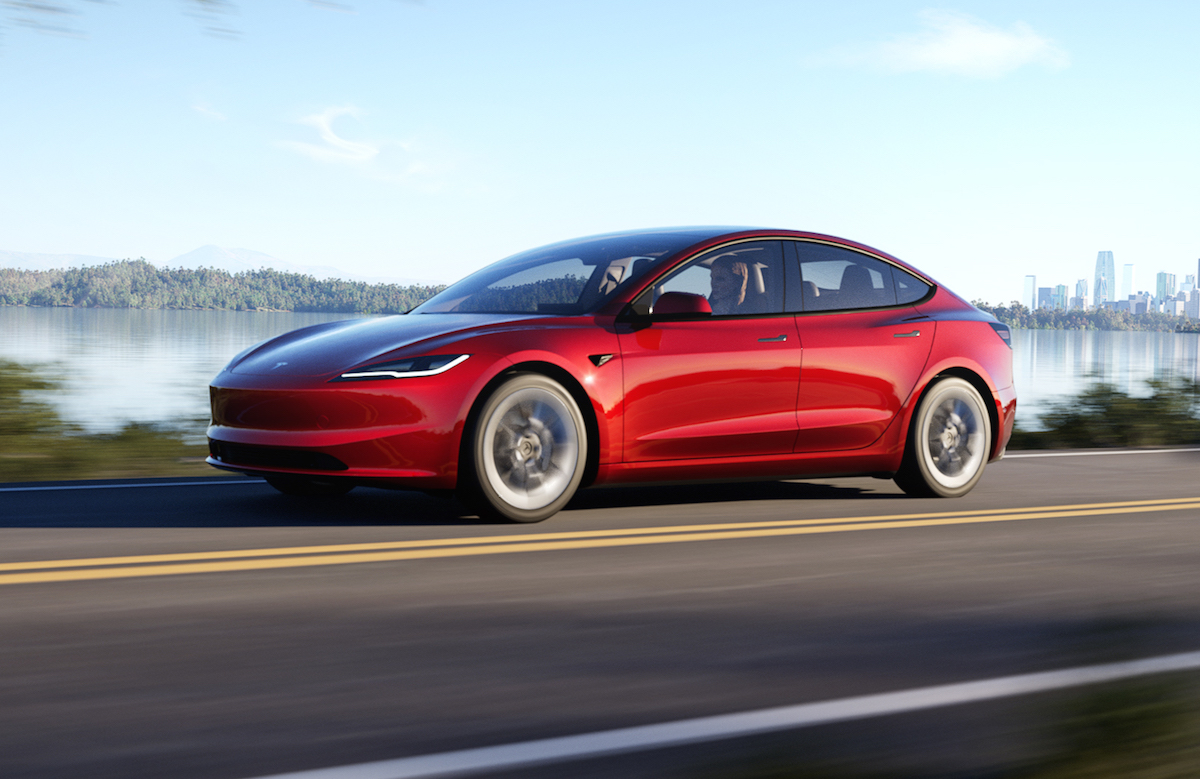
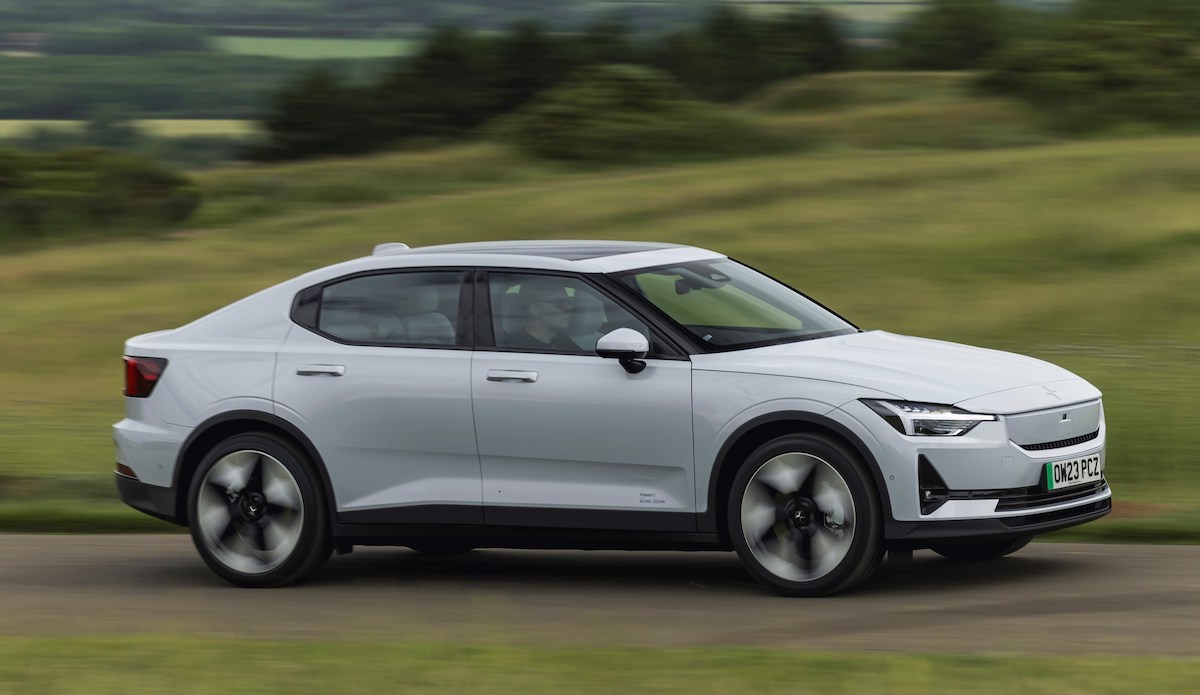
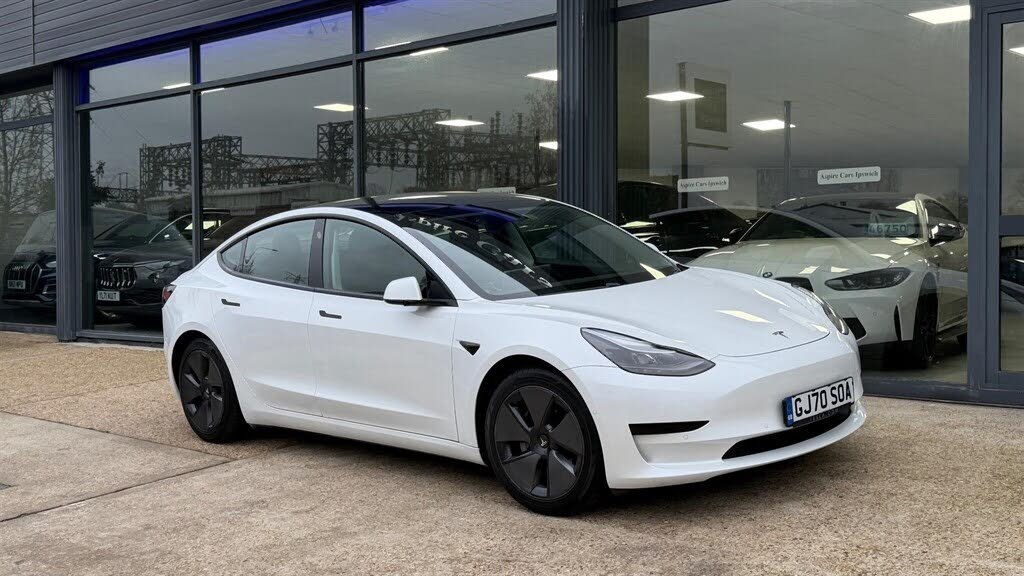
If you're looking for a premium electric car, the Tesla Model 3 and Polestar 2 are two of the strongest options on the market. Both offer a desirable alternative to traditional executive saloons like the BMW 3 Series, but they go about it in very different ways.
The Model 3 has become the benchmark for mainstream EVs, championing a minimalist design, impressive efficiency, and cutting-edge technology. In the other corner, the Polestar 2 leverages its Volvo heritage to deliver a car with striking Scandinavian style, a more conventional premium interior, and an engaging driving experience. So, which of these electric pioneers is the right fit for you?
Tesla Model 3 vs Polestar 2
Practicality
Tesla Model 3 practicality score: 3/5
Polestar 2 practicality score: 3/5
Neither of these cars is a class-leader for practicality, but they both offer enough space for a small family. Rear passenger room is adequate in both, though adults might find it a bit snug on longer journeys, especially compared to a conventional saloon.
Where the two differ is in boot space. The Polestar 2 has a 405-litre boot, but its big advantage is the large hatchback opening, which makes loading bulky items much easier. The Model 3 has a traditional saloon boot opening, which is less versatile, but it counters with a larger overall luggage capacity when you combine the boot and the generous storage area under the bonnet, or 'frunk'. The Polestar also has a small frunk, which is handy for storing charging cables. Ultimately, it's a trade-off: the Polestar's boot is easier to access, while the Tesla offers more total volume.
Driving Impressions
Tesla Model 3 driving score: 4/5
Polestar 2 driving score: 4/5
As you'd expect from high-performance EVs, both cars are quick. The entry-level models will get from 0-62mph in around six seconds, while the top-spec dual-motor versions manage the sprint in a sports-car-scaring 4.2 seconds. Acceleration is smooth, silent, and instant.
On the road, their characters begin to diverge. The Model 3 is confident and composed, and updates in 2024 improved both ride comfort and handling. It's a relaxing and easy car to drive, prioritising efficiency and stability. The Polestar 2, however, feels a little more engaging. The steering is direct and it feels agile on a twisty road, but without sacrificing ride comfort. It also feels a touch more refined at motorway speeds, with less wind and tyre noise than the Tesla. Both cars offer effective one-pedal driving modes, but for the keenest drivers, the Polestar has a slight edge.
Technology and Equipment
Tesla Model 3 technology and equipment score: 5/5
Polestar 2 technology and equipment score: 4/5
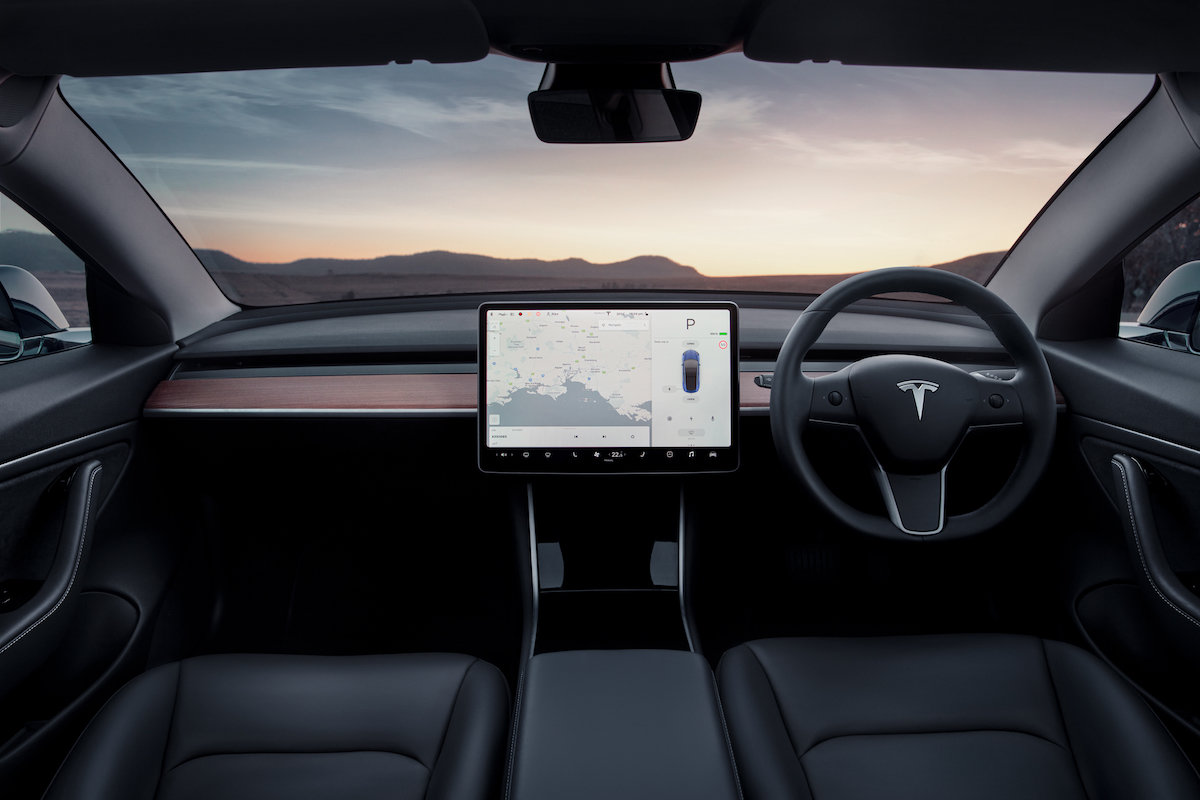
This is where the two cars show their biggest philosophical differences. The Tesla's cabin is a masterclass in minimalism. There are no driver's dials and almost every single function, from adjusting the mirrors to opening the glovebox, is controlled via the huge 15-inch central touchscreen. It's a futuristic approach that you'll either love or find frustrating.
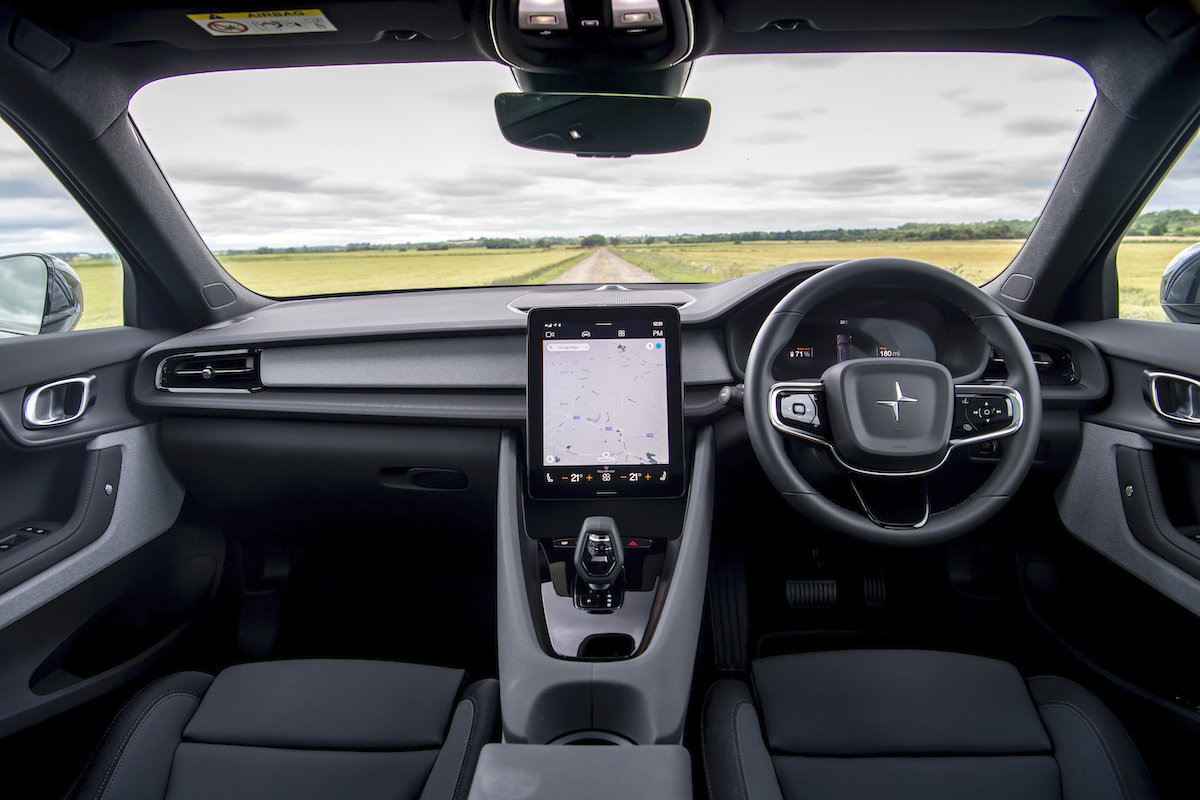
The Polestar 2 takes a more conventional route. It has a large 11.1-inch tablet-style screen, but it's powered by Google's Android Automotive OS, which is slick and intuitive. It also retains a more traditional dashboard layout. The build quality feels solid and the materials are high-quality. While the Polestar's system is excellent, the Tesla's boundary-pushing tech, including its advanced Autopilot driver assistance features and seamless over-the-air updates, gives it the win in this category.
Running Costs
Tesla Model 3 running costs score: 5/5
Polestar 2 running costs score: 4/5
When it comes to keeping costs down, the Tesla Model 3 has a distinct advantage. It's generally cheaper to buy than the Polestar 2 and is one of the most efficient EVs on the market, meaning you'll get more miles from every charge. A real-world range of over 300 miles is easily achievable in the Long Range model.
The Model 3's biggest trump card, however, is its exclusive access to Tesla's Supercharger network. This network of rapid chargers is widespread, reliable, and often cheaper to use than other public charging providers, making long-distance travel simple and cost-effective. While the Polestar is still cheap to run compared to a petrol or diesel car, the Model 3's combination of a lower purchase price, better efficiency, and superior charging infrastructure makes it the clear winner on running costs.
CarGurus Buyer Insights
|
Tesla Model 3 Review (2018-present) |
Polestar 2 Review (2020-present) |
| CarGurus expert rating |
5 out of 5 |
4 out of 5 |
| CarGurus user rating |
4.2 out of 5 |
0.0 out of 5 |
| Percentage of good/great deals available on CarGurus* |
34.0% |
34.1% |
| Overall CarGurus rating |
4.4 out of 5 |
3.9 out of 5 |
The Verdict
Tesla Model 3 Overall CarGurus rating: 4.4/5
Polestar 2 Overall CarGurus rating: 3.9/5
Both the Tesla Model 3 and Polestar 2 are excellent electric cars that offer a glimpse into the future of motoring. They are fast, stylish, and packed with technology.
However, based on our comprehensive CarGurus Buyer Insights, the Tesla Model 3 is the clear winner in this comparison. Its higher overall rating is driven by its outstanding scores for technology and running costs. The combination of class-leading efficiency, a lower purchase price, and exclusive access to the superb Supercharger network makes it a strong proposition from a financial perspective.
That isn't to say the Polestar 2 should be overlooked. If you value a high-quality, premium-feeling interior and a more engaging driving experience, it could be the car for you. It successfully blends EV technology with the feel of a traditional premium car. But as an overall package, the Tesla Model 3's blend of innovation, performance, and value is hard to ignore, making it our winner.
Tesla Model 3 Pros and Cons
| Pros |
Cons |
| Excellent efficiency and low running costs |
Minimalist interior isn't for everyone |
| Access to the superb Supercharger network |
No Apple CarPlay or Android Auto |
| Groundbreaking on-board technology |
Saloon boot is less practical than a hatchback |
Polestar 2 Pros and Cons
| Pros |
Cons |
| High-quality, premium-feeling interior |
More expensive to buy than the Model 3 |
| Engaging and refined driving experience |
Less efficient than its Tesla rival |
| Practical hatchback boot opening |
Rear passenger space is still tight |
*The Overall CarGurus rating that informs these recommendations is based on CarGurus' proprietary market data from May 2026, CarGurus expert reviews, and CarGurus user reviews.
Read Our Full Reviews: