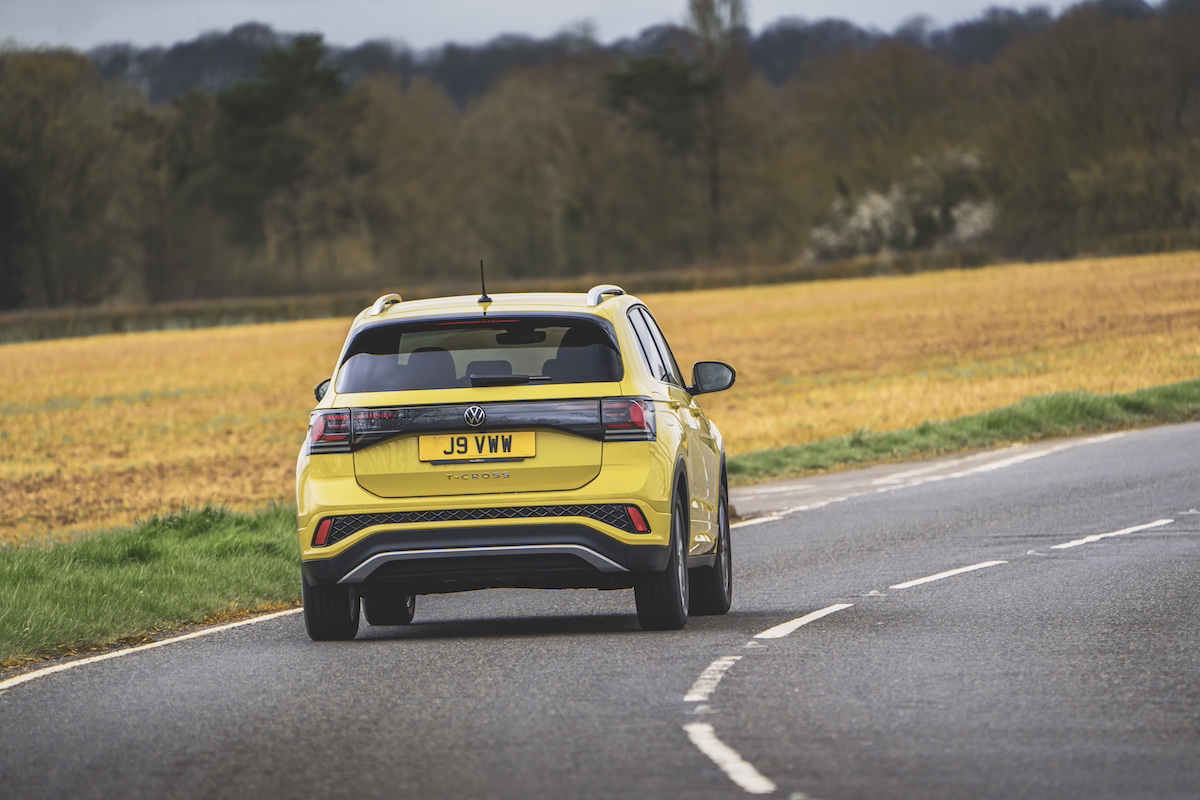
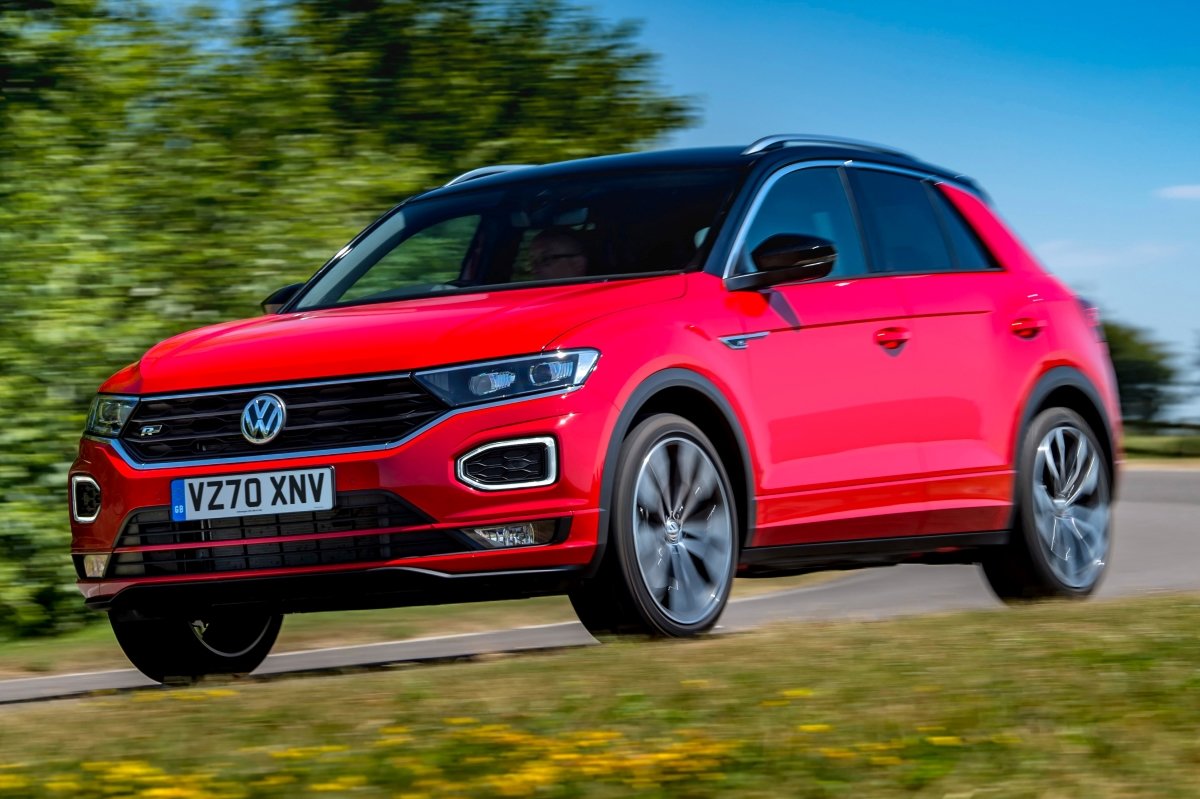
If you're looking at Volkswagen's SUV line-up, you might find yourself weighing up two of its smallest offerings: the T-Cross and the T-Roc. They’re both compact, stylish, and wear the same familiar badge, but they cater to slightly different needs and priorities.
The T-Cross is VW's smallest SUV, based on the Polo hatchback. It focuses on clever packaging and practicality in a compact footprint. The T-Roc, based on the larger Golf, aims for a more premium feel, offering a wider range of engines and a bit more space. Both have proven popular, but which of these in-house rivals is the better buy?
Volkswagen T-Cross vs Volkswagen T-Roc
Practicality
Volkswagen T-Cross practicality score: 4/5
Volkswagen T-Roc practicality score: 3/5
This is where the T-Cross plays its trump card. It comes with a sliding rear bench seat, a feature the T-Roc lacks. This allows you to choose between maximising rear legroom or expanding the boot. With the seats pushed back, the boot holds 385 litres; slide them forward, and that grows to a useful 455 litres. The T-Roc offers a larger fixed boot at 445 litres, which is a good size for the class.
In the cabin, the T-Roc feels a little more spacious, particularly for rear passengers, offering decent leg and headroom. The T-Cross is fine for space, but rear legroom is compromised when you slide the seats forward for more boot capacity. Both cars had interiors with some hard, scratchy plastics early on, but facelifts in 2024 (T-Cross) and 2022 (T-Roc) brought welcome improvements in material quality. For sheer versatility, the T-Cross has the edge, but the T-Roc offers more consistent passenger space.
Driving Impressions
Volkswagen T-Cross driving score: 4/5
Volkswagen T-Roc driving score: 4/5
Neither of these SUVs is designed to be a sports car, and both prioritise a comfortable and secure driving experience. The T-Cross, being based on the smaller Polo, feels nimble and easy to drive around town, and its suspension delivers a comfortable ride, soaking up bumps well.
The T-Roc also provides a comfortable ride, but it feels a bit more substantial and planted on the road, like the Golf it's based on. It handles neatly, though there is a little more body roll in corners compared to the T-Cross. The T-Roc’s main advantage is its broader engine range, which includes more powerful petrol and diesel options, four-wheel drive, and even a high-performance 296bhp T-Roc R model. For most day-to-day driving, there’s little to separate them, but if you want more power, the T-Roc is the one to have.
Technology and Equipment
Volkswagen T-Cross technology and equipment score: 3/5
Volkswagen T-Roc technology and equipment score: 3/5
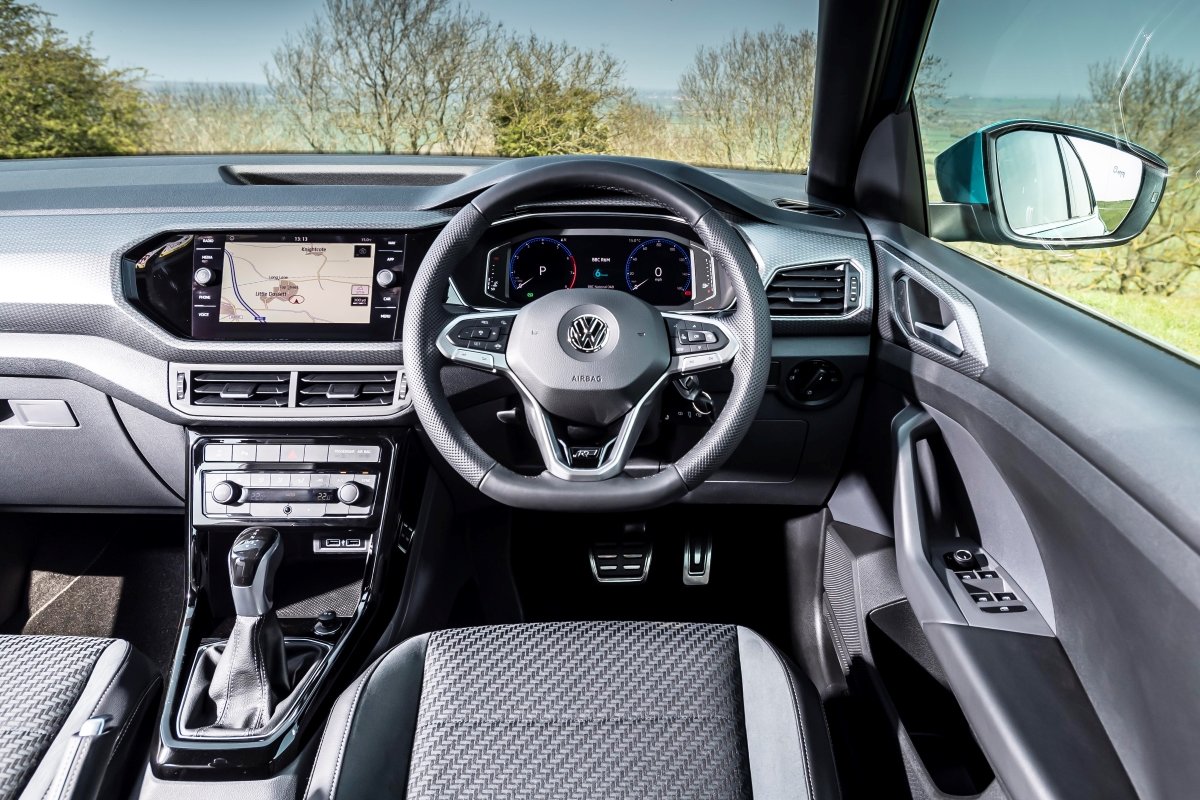
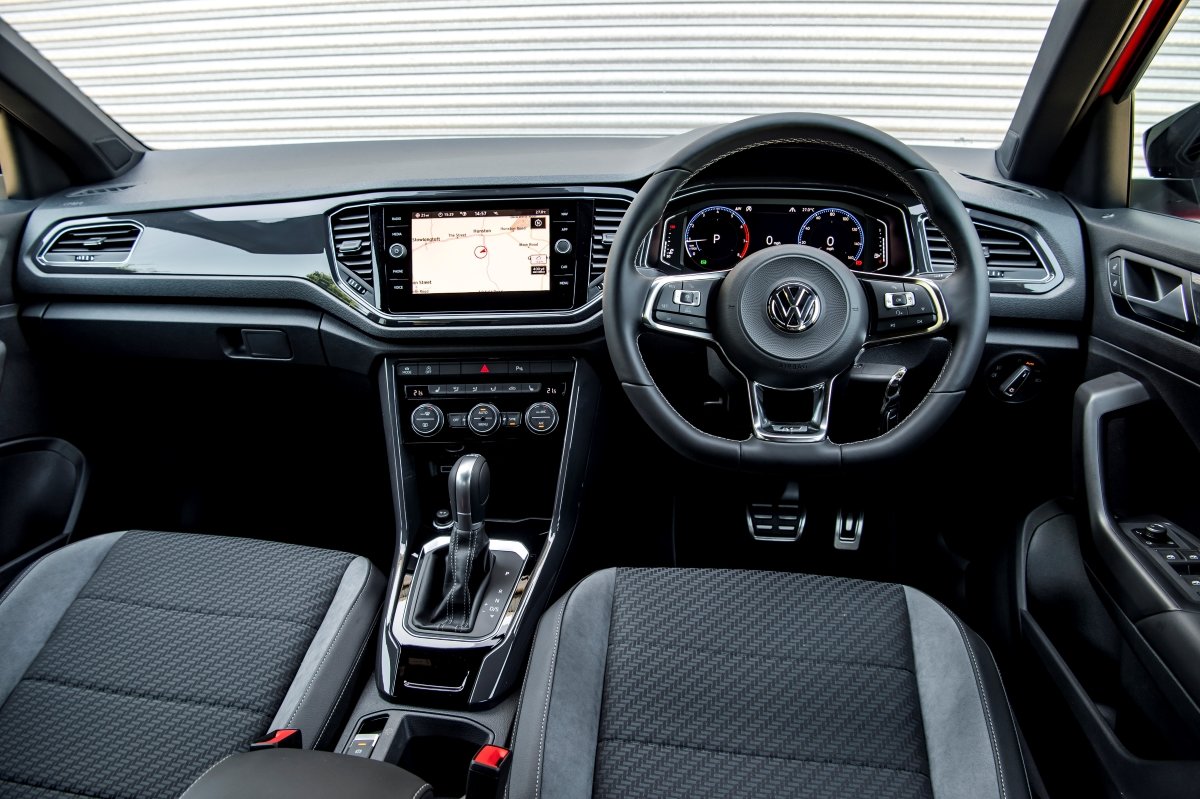
Both cars come with a good level of standard equipment, especially after their respective facelifts. Entry-level models for both get alloy wheels, an 8.0-inch touchscreen with Apple CarPlay and Android Auto, and a suite of safety features including autonomous emergency braking.
The infotainment systems have evolved over time. Early T-Cross models had a screen neatly integrated into the dash with physical climate controls, but the 2024 facelift brought in a new freestanding screen and less intuitive touch-sensitive sliders for the heating. The T-Roc followed a similar path, with its 2022 update also introducing touch-sensitive controls that can be fiddly to use on the move. Both cars earned a five-star safety rating from Euro NCAP, so you can be confident in their ability to protect your family. It’s a dead heat here, as improvements in screen tech have been offset by less user-friendly controls in both cars.
Running Costs
Volkswagen T-Cross running costs score: 4/5
Volkswagen T-Roc running costs score: 4/5
With a shared line-up of core engines, there’s not much to split the T-Cross and T-Roc on fuel economy. The popular 1.0-litre TSI petrol engine will return around 50mpg in both cars, while the more powerful 1.5-litre TSI manages about 47mpg. Diesel versions, available on earlier models, offer even better economy.
The main difference in running costs comes if you opt for the more powerful T-Roc models. The 2.0-litre petrol and the high-performance T-Roc R will be significantly thirstier, and also command higher insurance premiums. The T-Roc R also falls into a higher tax bracket, incurring an extra annual charge for the first five years from new. For mainstream models, however, running costs are broadly identical, with both cars being efficient and sensible choices.
CarGurus Buyer Insights
|
Volkswagen T-Cross |
Volkswagen T-Roc |
| CarGurus expert rating |
4 out of 5 |
4 out of 5 |
| CarGurus user rating |
4.0 out of 5 |
4.1 out of 5 |
| Percentage of good/great deals available on CarGurus* |
31.1% |
32.3% |
| Overall CarGurus rating |
4.2 out of 5 |
4.3 out of 5 |
The Verdict
Volkswagen T-Cross Overall CarGurus rating: 4.2/5
Volkswagen T-Roc Overall CarGurus rating: 4.3/5
This is an incredibly close contest between two competent and desirable compact SUVs. Both offer a comfortable ride, solid build quality, and sensible running costs. The T-Cross impresses with its clever sliding rear seats, which add a layer of versatility that’s genuinely useful for a small family car.
However, based on our comprehensive CarGurus Buyer Insights, the Volkswagen T-Roc narrowly takes the win. It scores slightly higher with users, there are more good deals available, and it has a marginally better Overall CarGurus rating. Its more consistent passenger space, more premium feel, and the availability of more powerful engines give it a broader appeal. While the T-Cross is a brilliant choice if you value maximum flexibility in a compact package, the T-Roc’s all-round abilities make it the slightly better buy.
Volkswagen T-Cross Pros and Cons
| Pros |
Cons |
| Sliding rear seats add versatility |
Interior quality on early models |
| Comfortable ride |
Rear legroom tight with seats forward |
| Efficient engines |
Limited engine range |
Volkswagen T-Roc Pros and Cons
| Pros |
Cons |
| Wide range of engine options |
Fiddly touch-sensitive controls post-facelift |
| More premium feel than T-Cross |
Lacks the T-Cross's sliding rear seats |
| Spacious cabin and good-sized boot |
More body roll than some rivals |
*The Overall CarGurus rating: that informs these recommendations is based on CarGurus' proprietary market data from January 2026, CarGurus expert reviews, and CarGurus user reviews.
Read Our Full Reviews: