Toyota Prius Review (2009-2016)
Toyota Prius cars for sale
4.0
Expert review
Pros
Economical around town
Very reliable
Spacious and comfortable cabin
Cons
Iffy ride quality
Noisy engine while accelerating hard
Economy on the motorway is not so impressive
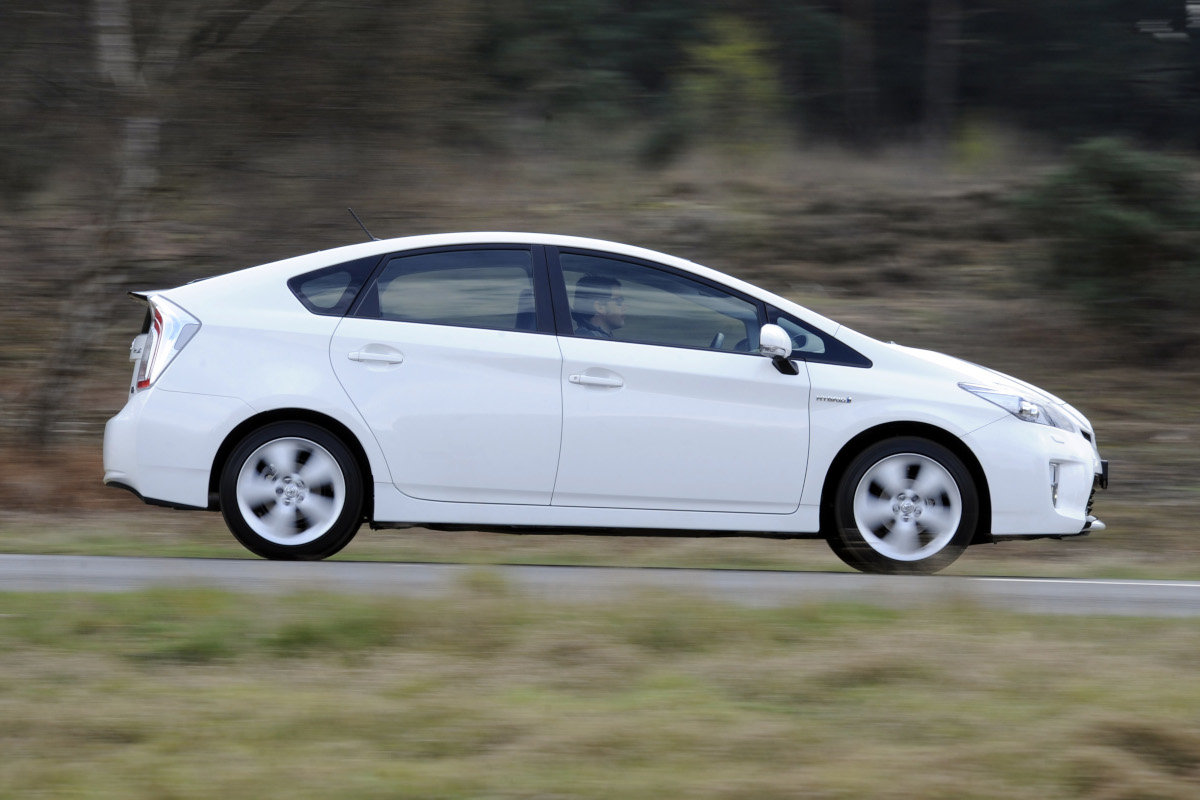
The CarGurus verdict
It’s not the kind of car that will excite you to your core, but a used Toyota Prius should offer cost-effective family motoring, especially if most of your driving is around town, and prove dependable, spacious and pretty comfortable. However, we’d advise thinking carefully before buying one if you plan to spend most of your time on the motorway, where a comparable diesel will prove more economical. All in all though, if it fits into your planned way of using it, the Prius is well worth considering as your next car.

What is the Toyota Prius
Even if you don’t know anything about cars, chances are you’ll have heard of the Toyota Prius.
Over the years, its name has become synonymous with environmentally conscious motoring and hybrid car technology. In some areas, too, its popularity with minicab and Uber drivers has made it as ubiquitous a sight on the road as a Belisha beacon or a Give Way sign.
It has existed in various forms since 1997, and the third generation reviewed here, was replaced in 2015.

How practical is it?
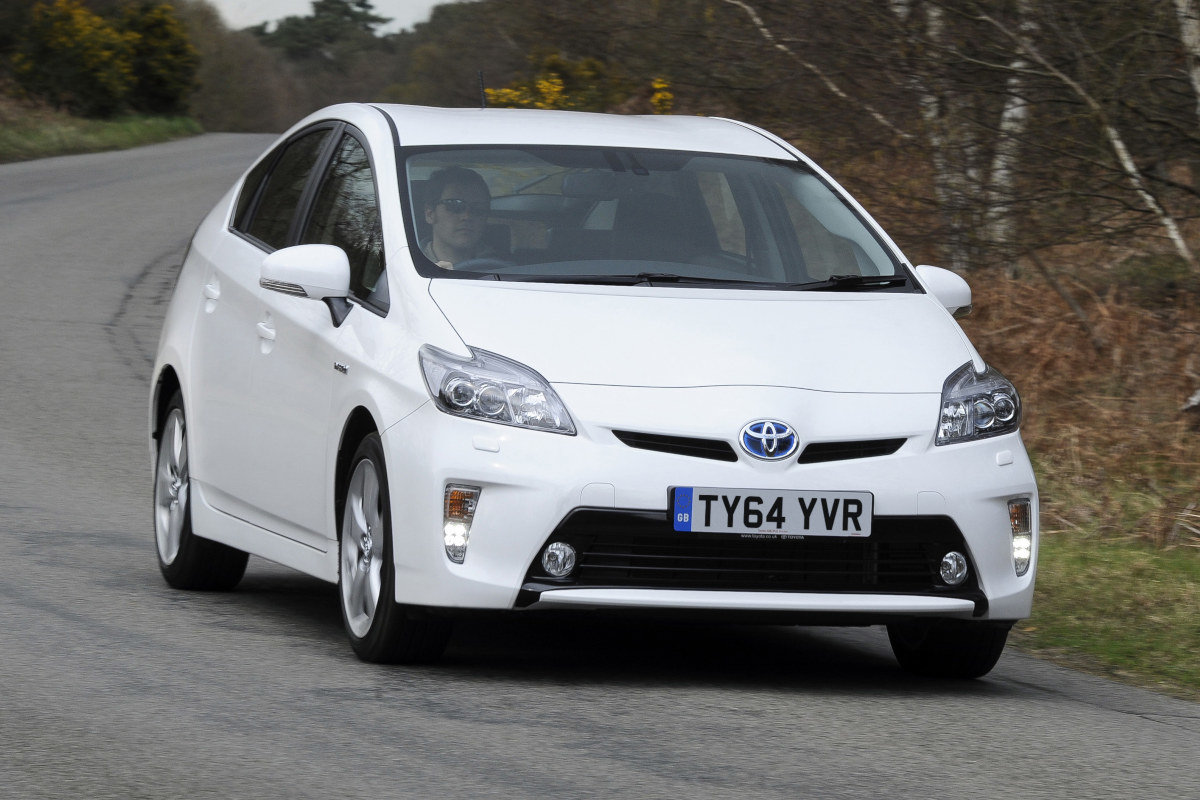
The first generation Toyota Prius hybrid was introduced way back in 1997, and this third-generation model took the successful recipe of its predecessors – an efficient powertrain, a wind-cheating yet family-friendly five-door body and lots of neat weight-saving tricks, all conceived to reduce fuel consumption – and combined it with more practicality, more modern technology, and a better driving experience.
Design tweaks for this model freed up an extra 30 litres of luggage space over the second-generation model. That created a 445-litre boot – bigger than average for the class at the time and room enough to carry three golf bags, according to Toyota – which rose to 1,120 litres with the rear seats folded flat.
What's it like to drive?
Of course, on that last count, the Toyota Prius was always something of an acquired taste, and the third generation is no exception.
The way the engine gets rowdy if you accelerate hard, the lifeless steering and the so-so ride quality are all factors that might put you off.
On the flip-side, the Toyota Prius is quiet when it’s driven gently, there’s plenty of space, it feels well screwed-together and it has a fantastic reputation for reliability.

Technology, equipment & infotainment
Three Toyota Prius models are available: entry-level T3, mid-range T4, and top-spec T-Spirit. Owning any of these versions is not a bare bones experience in the name of efficiency; you'll still find a navigation system, air-conditioning and cruise control as standard on all of them.
There’s only one powertrain option, though, which combines a 1.8-litre petrol engine with an electric motor and a continuously variable, or CVT, automatic gearbox. This setup delivers a maximum output of 134bhp, which results in a credible 0-62mph time of 10.4 seconds, an impressive official fuel consumption figure of 72.4mpg, and CO2 emissions of 89g/km.
There is one more Prius hatchback that you can buy, though, and that’s the Toyota Prius Plug-In. As its name suggests, this is a variant that can be plugged in to charge up the electric battery, and consequently offers the ability to run on electric-only power for around 15 miles. Even if you don’t charge them up, the Plug-In version also offers better fuel economy and lower CO2 emissions than the standard Prius, though because they’re much rarer, you’ll have to look hard to find one.

Toyota Prius running costs
As we’ve mentioned, the standard Prius achieved 72.4mpg in lab tests, though in the real world that figure’s likely to be closer to 60mpg, depending on how much of your driving is on the motorway and how much is around town. Keep in mind, too, that the 17-inch wheels that come as standard on the T4 and T-Spirit versions drop the fuel consumption slightly, which is one reason we prefer the T3, with its 15-inch rims.
Happily, low CO2 emissions across the range mean no matter which model you choose, a Prius will cost you nothing at all to tax each year.
There’s more good news when it comes to maintaining your Prius: despite the complex hybrid system, it should cost you no more than a standard Toyota to maintain. What’s more, Priuses that are five years old or more will be covered under Toyota’s Essential Care offering, which means you can get a minor service for £120, or a major service for £200 – considerably less than some other manufacturers will charge you under similar schemes. You’ll need a service every year or 12,000 miles, whichever crops up first, which is about normal for this type of car.
All Priuses come with timing chains, and these should last the life of the car. That means you don’t have to worry about changing a timing belt every few years.

Toyota Prius reliability
Toyota has an excellent reputation for reliability, and as you might expect, that means there’s very little to worry about going wrong with the Prius. However, there have been a few cases of issues with the Prius’s steering rack, so listen out for odd knocking or tapping noises from the steering that may change when the wheel is turned.
The third-generation Prius has been subject to several recalls since it was released, including an issue with the car's failsafe mode that could cause it to stall. Most of the affected cars will likely have been fixed by now, but it would still pay to give your local Toyota dealer a call and check whether the car you’re thinking of buying was affected and, if so, had all the work needed carried out. If it hasn't they should be able to do the work gratis.
- While the Toyota Prius is usually incredibly economical around town, it can be less so out on the open road. That’s because more power is needed in these conditions, so the petrol motor must stay running for more of the time, and because there’s little braking or coasting to help recharge the battery, the petrol engine has to do that, too. As a result, a Prius makes a great deal of sense if most of your driving is around town, but it’ll be a thirsty option if you spend lots of time on the motorway, and lower your mpg more than necessary.
- A ‘10th Anniversary’ special edition was released in late 2010, celebrating 10 years of the Prius. Based on the top-spec T-Spirit version, it came with embossed leather seats, 17-inch alloy wheels, and a sporty-looking bodykit.
- A mild facelift in 2012 brought minor tweaks to the Prius’s styling. There were more substantial changes inside, where Toyota’s new touchscreen infotainment system became standard across the range, coming with satnav on the T-Spirit. Toyota’s engineers also stiffened the body to improve the car’s handling and ride, while plusher materials made the interior fittings feel more upmarket.
- Our favourite version: The Hybrid T3 is the entry-level model but it's still well equipped and represents the best value for money. Features on even the earliest version included a head-up display, air-conditioning and keyless entry and start, and more features were added throughout the car's life.
- If money’s no object: The Hybrid T-Spirit model is the top of the range, and can be found with all the toys you could need, including – if the original owner ticked the option box – a solar-powered ventilation system.
- If you want to plug in: The ability to plug in the Plug-In hybrid model means that if you use it correctly, your fuel efficiency can improve dramatically. If you have somewhere to charge the battery, and mostly do shorter journeys or city driving, you can cut your petrol usage right down.
