Volkswagen Up Review (2012-2023)
Volkswagen up! cars for sale
4.0
Expert review
Pros
Fun to drive around town
Competent out of town
GTI model is a great warm hatch
Cons
Watch out for neglected examples
Mechanically identical Skoda Citigo and Seat Mii are cheaper to buy
Basic infotainment system
The CarGurus verdict
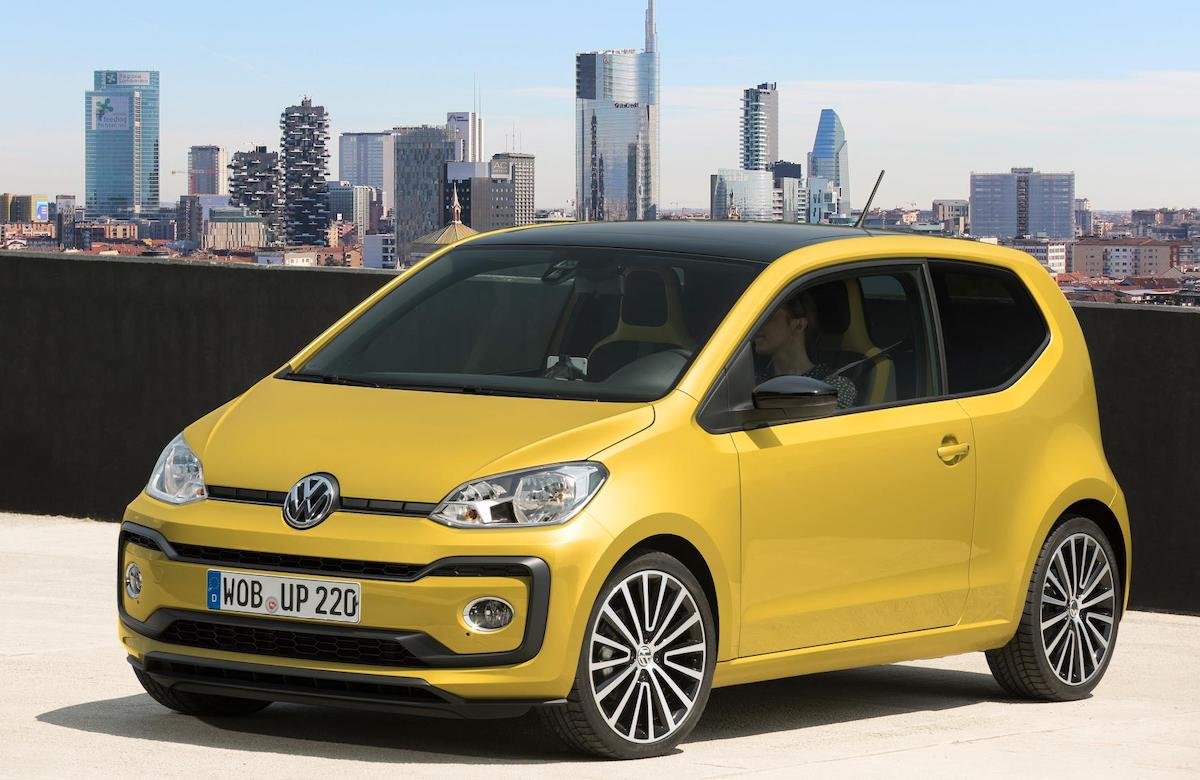
One of the best small city cars of this era or any other, the VW Up demonstrates that very affordable cars needn’t be short on ability or charm. Into a very compact footprint it crams a spacious cabin, relatively high-grade materials and switchgear, plenty of kit (as long as you avoid the most basic models) and a handsome exterior design. Even the seemingly miserly 1.0-litre engines are actually energetic and full of pep.
The earliest cars are now more than a decade old and, as long as they’ve been cared for, they’ll have plenty of life left in them. Driving enthusiasts of all persuasions will find a good deal to like about the very nippy GTI variant, while in the city the battery-powered e-Up is in its element. Fun to drive, safe in an accident and surprisingly grown-up on the motorway, VW’s tiniest hatchback is a masterstroke.
What is the Volkswagen Up?
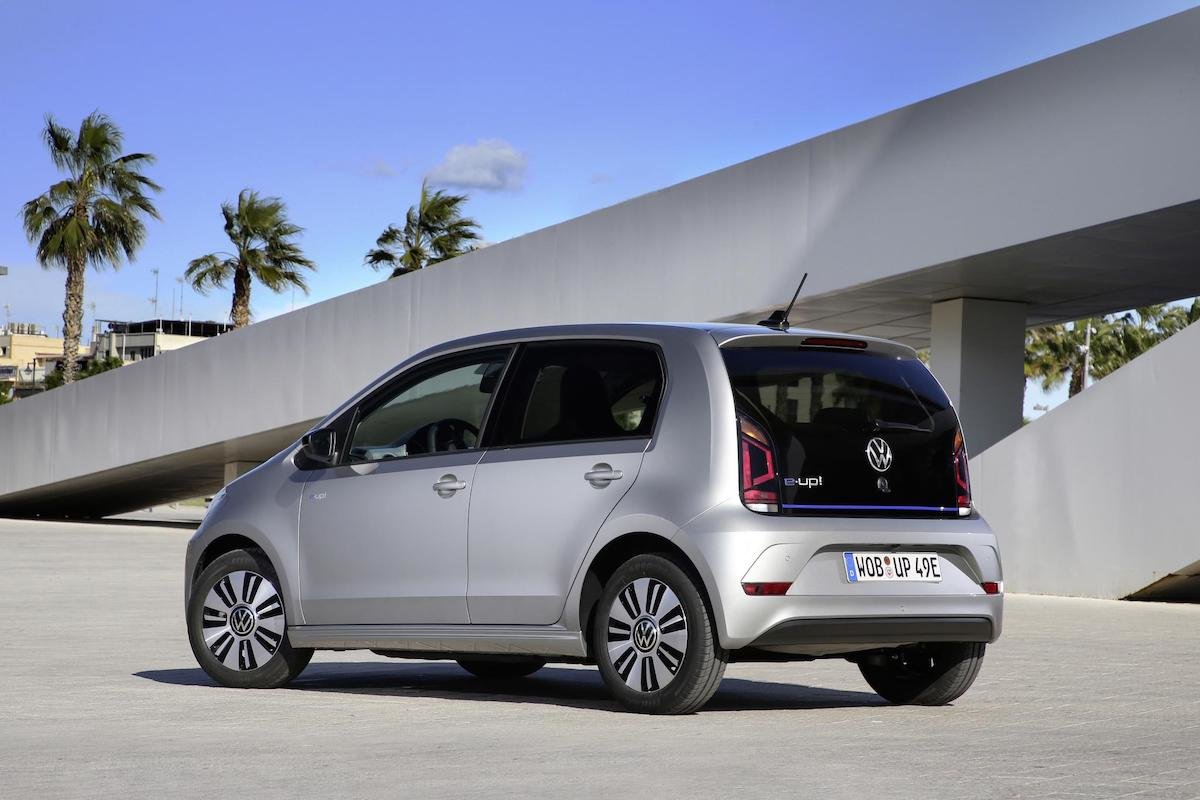
Even now, several years after the model first appeared, the Volkswagen Up is one of the most desirable city cars on sale.
Its overall shape is determined by the need to accommodate four in a very compact package, but there is something pleasing about its styling nonetheless, particularly in the confident up-tick of the window line on three-door models, plus its wheel-at-each-corner stance.
Production ended in 2023 and there was no direct replacement.
How practical is it?
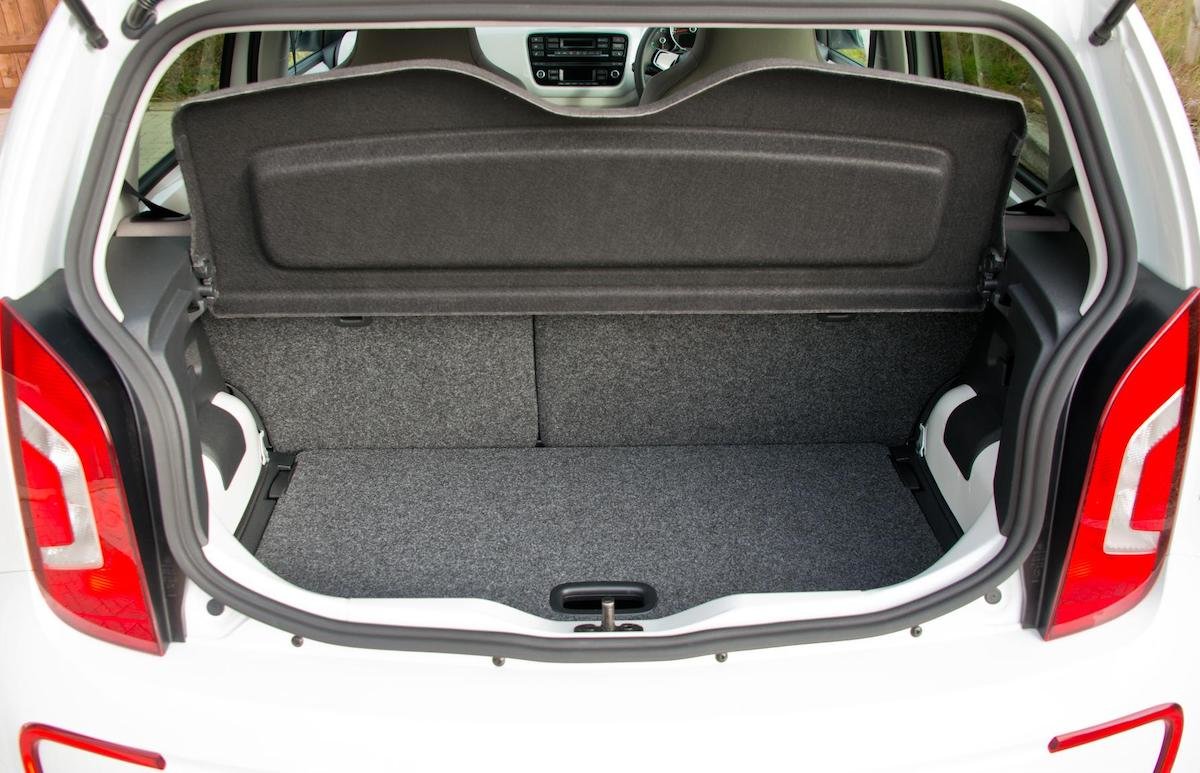
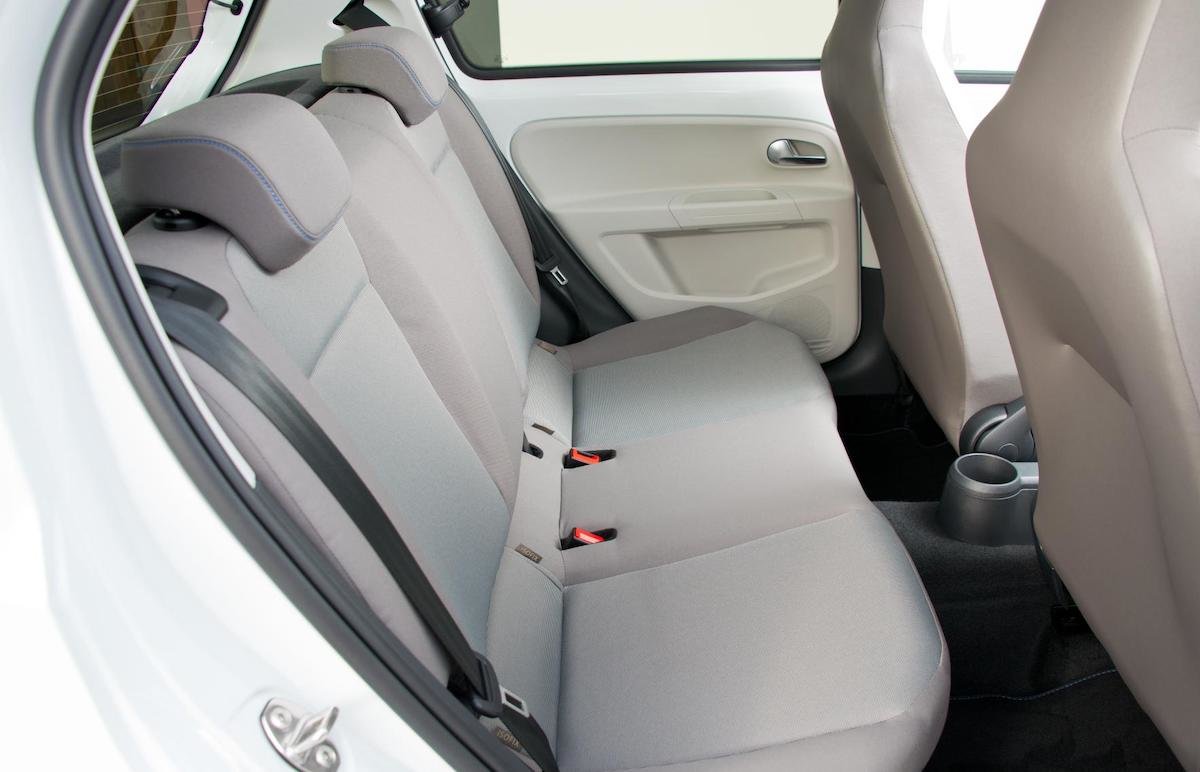
As long as you don’t need a lot of boot space (251 litres is useful but hardly generous), the Up is surprisingly practical, too. It’ll seat four adults in reasonable comfort and, depending on trim level, it can come really well equipped. The Up is very safe, it’s efficient and it’s even fun to drive, so perhaps it’s little wonder it has been the pick of the city car class for so long.
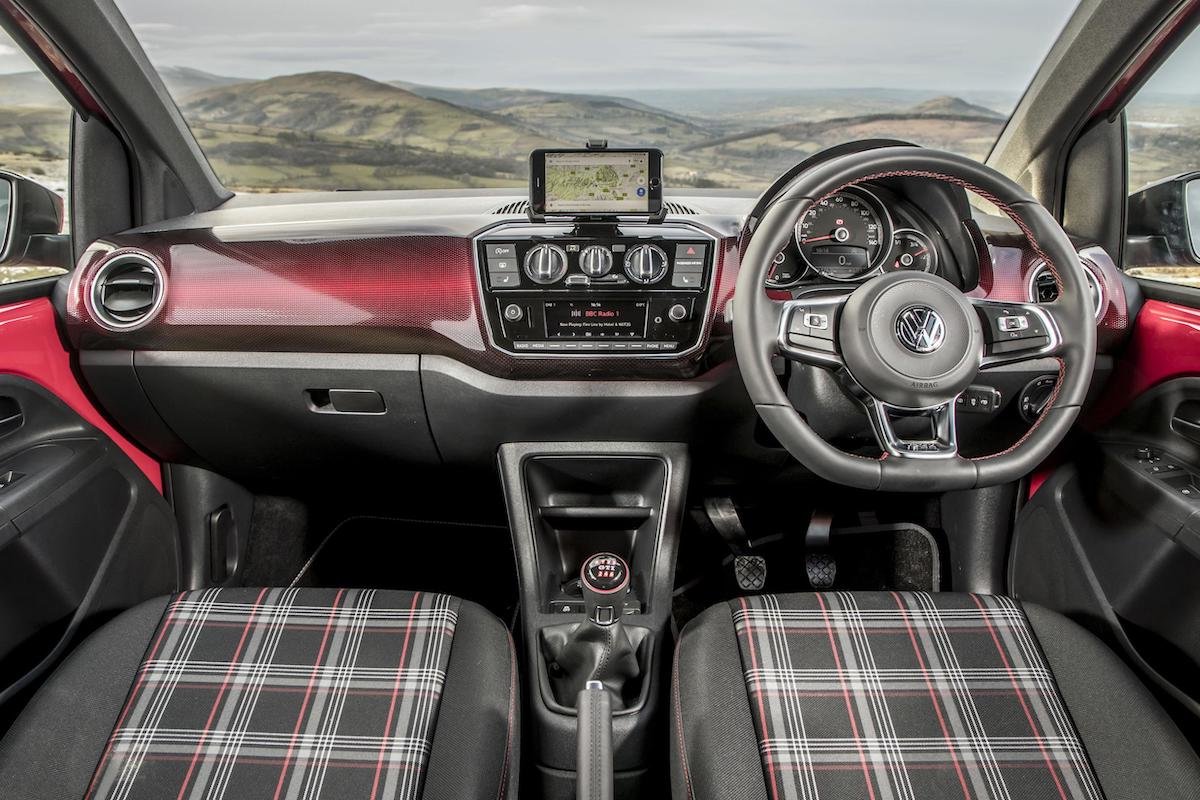
The Up’s interior is simple and uncluttered, but describing it as basic or spartan wouldn’t be fair. There is a robustness about the dashboard’s construction that is uncommon for this type of vehicle, while all but the most basic model got air conditioning, remote central locking and a split-folding rear seat as standard. Later Ups have a handy smartphone mount positioned on top of the dashboard with a USB charging point built-in. That makes it very easy indeed to use your phone for navigation, meaning you don’t need a separate satnav unit.

What's it like to drive?
With crisp steering, agile handling and a comfortable ride (the latter not always a given in very affordable hatchbacks with short wheelbases), the tiny VW set new standards for this sort of vehicle when it arrived in 2012. Cleverly, it also manages to feel grown-up on the motorway, more like a scaled-down VW Golf than a typical city car.
The engine line-up is populated by 1.0-litre, three-cylinder petrol units only, although the all-electric model, the e-Up, dispenses with pistons and cylinders altogether. A limited driving range means the e-Up is very much a city car only, but with modest weight (particularly for an electric car) and a torquey motor, it’ll zip around city centres with more urgency than most bigger petrol-powered machines.
Combustion-engine models feature either a five-speed manual gearbox (slightly vague in its shift quality but basically pretty good) or a somewhat unsatisfying robotised-manual automatic transmission. If you prefer driving autos, this gearbox is frustrating enough that you would be well advised to consider a different city car altogether, one with a much better automatic transmission. The odd one out is the sporty Up GTI, which uses a six-speed manual.
Technology, equipment & infotainment
Although it was an optional extra rather than standard equipment, the Up was notable at the time of its launch for being the first such car to offer automatic emergency braking, or City Emergency Braking, as VW calls it. The system prevents low-speed head-on collisions by scanning the road ahead, and slamming on the stoppers if it thinks a collision looks imminent. As well as the obvious safety benefits, this also spoke of the basic appeal at the heart of the Up; it’s a big, clever car in the body of a small, simple one.
At launch, the model range started with the entry-level Take Up. It came with anti-lock brakes and power steering, but not much else. Next was the Move Up, which added air-con, a 60:40 split-folding rear bench, electronic stability control and remote central locking. On top of that lot, the High Up got heated front seats, bigger wheels, enhanced phone connectivity and heated/electric door mirrors. The range-topping Black and White variants, based on the High Up, had bigger wheels still (16-inches in diameter) and chrome door mirror casings. These trim levels have since been replaced – the range now goes Up, Beats, Black Edition, White Edition, R-Line and GTI.
Volkswagen Up running costs
With a very small and affordable car come very modest running costs. In real-world driving the little engines will return as much as 60mpg, although the sporty GTI model will only manage that if you drive with a very light right foot. Use all of its performance regularly and you’ll see mpg drop into the low 40s, and that’s despite it having a sixth forward gear that should, in theory, make it more fuel efficient than other variants on the motorway.
Certain models have stop-start systems that kill the engine when you’re sat stationary, helping to improve fuel economy slightly. Of course, the cheapest version to run will be the all-electric e-Up. Depending on where and how you charge its batteries (doing so overnight at home will cost very little; using a public fast charger will be pricier), your running costs could be all but negligible.
Moreover, all electric cars are exempt from paying London’s Congestion Charge. As other cities consider introducing similar schemes of their own, e-Up drivers could make further savings in the years to come.
Very small and light cars like the Up use consumables (such as tyres and brake pads) very sparingly, making them even cheaper to run. Reckon on paying something like £250 for a set of tyres, although it’s worth bearing in mind that with bigger wheels come greater tyre costs. Insurance will come pretty cheap, too. Certain models sit in the lowest group there is (1 out of 50) while even the sporty GTI will be very reasonable to insure.
It is worth paying attention to a car’s date of registration, however, because that can have a meaningful impact on how much road tax you pay. All cars registered after April 2017 will cost £140 to tax, while those registered before then will cost no more than £20. Certain Ups are even road tax exempt.

Volkswagen Up reliability
The Up hasn’t proven itself to be the most reliable car of its type, but nor has it ever disgraced itself in that regard. In owner satisfaction surveys, the VW has fared less well than rivals such as the Hyundai i10, Kia Picanto and Toyota Aygo, but far better than the ever-popular Fiat 500. As a brand overall, VW tends to finish slap-bang in the middle of the usual mass-market car manufacturers in terms of reliability.
City cars live their lives in built-up areas and are often parked cheek-by-jowl with other cars on busy roads. It therefore isn’t at all uncommon for them to show signs of wear and tear on their bumpers, doors and wheels. Make sure you check thoroughly for signs of damage, although what damage there is should be used as bargaining chips rather than taken as a reason to walk away altogether.
Town driving involves lots of pulling away from a standstill and plenty of reasonably heavy braking, too. That can eventually take its toll on clutches and brake discs and pads. Any clutch slip when pulling away will indicate a clutch nearing the end of its life (this isn’t an unusual malady on these cars), while scraping or grinding noises while braking suggests new pads and discs will be needed.
Brand new Ups are covered by the same three-year/60,000-mile warranty as all Volkswagens. That’s fairly typical for a mainstream manufacturer, although the likes of Hyundai and Kia are more generous still with their five and seven-year warranties. VW does offer extended warranties, however, and it’s possible to be covered for up to five years or 90,000 miles for a bit of extra cash. Meanwhile, the e-Up’s battery pack is covered for eight years or 100,000 miles.
- The Up is identical beneath the skin to VW Group stablemates from Seat and Skoda. In fact, the Mii and Citigo are built on the very same production line in Slovakia, all three variants based upon the same platform.
- The least powerful petrol engine in the line-up produces 59bhp. That’s a very modest figure indeed, but in a small car that's as light as the Up, it’s not exactly insufficient. For driving outside of city centres, you might want a little more power, in which case VW also offered engines with 74bhp or 89bhp. As a rule of thumb, fuel efficiency goes down as power goes up. Incidentally, the higher-powered engines were only made available on higher-spec models.
- The Up was facelifted midway through its life in 2016. The styling was tweaked (particularly at the front of the car), there was new tech inside and the 89bhp engine was introduced, complete with a low-pressure turbocharger. With much more torque than the normally-aspirated engines, this turbo unit made the Up much brisker in real-world driving. It was with this facelift that VW introduced the convenient smartphone mount.
- For city driving: the most basic 59bhp engine will be plenty sufficient for most people around town. On faster roads away from the city, though, the entry-level power unit could feel somewhat out of its depth, particularly if the car is loaded up with passengers and their luggage.
- For the motorway: search out the 89bhp engine if you do a lot of motorway or quick A-road driving. Its turbocharger gives it much more mid-range torque than the lower-powered engines, meaning you won’t have to work it so hard to keep up with traffic.
- For a clean conscience: the zero-emissions, all-electric e-Up is one of the most affordable such cars there is. The original version had a modest 18.7kWh battery and a slightly mean 100-mile range. The updated model (2019 onwards) has a 36.8kWh battery and a handy 160-mile range.
- For hot hatch thrills: the Up GTI is a hugely entertaining thing to drive and it’s dripping with character. It arrived in the UK in 2018 and was so popular VW couldn’t meet demand. It went off sale for a short while and reappeared in 2020 with engine tweaks to meet emissions regulations, plus a 15 per cent higher price tag.


