Citroen Grand C4 Picasso Review (2013-2020)
Citroen Grand C4 Picasso cars for sale
4.0
Expert review
Pros
Brilliant cabin, with space for seven and lots of clever features
Soft suspension delivers a comfortable ride
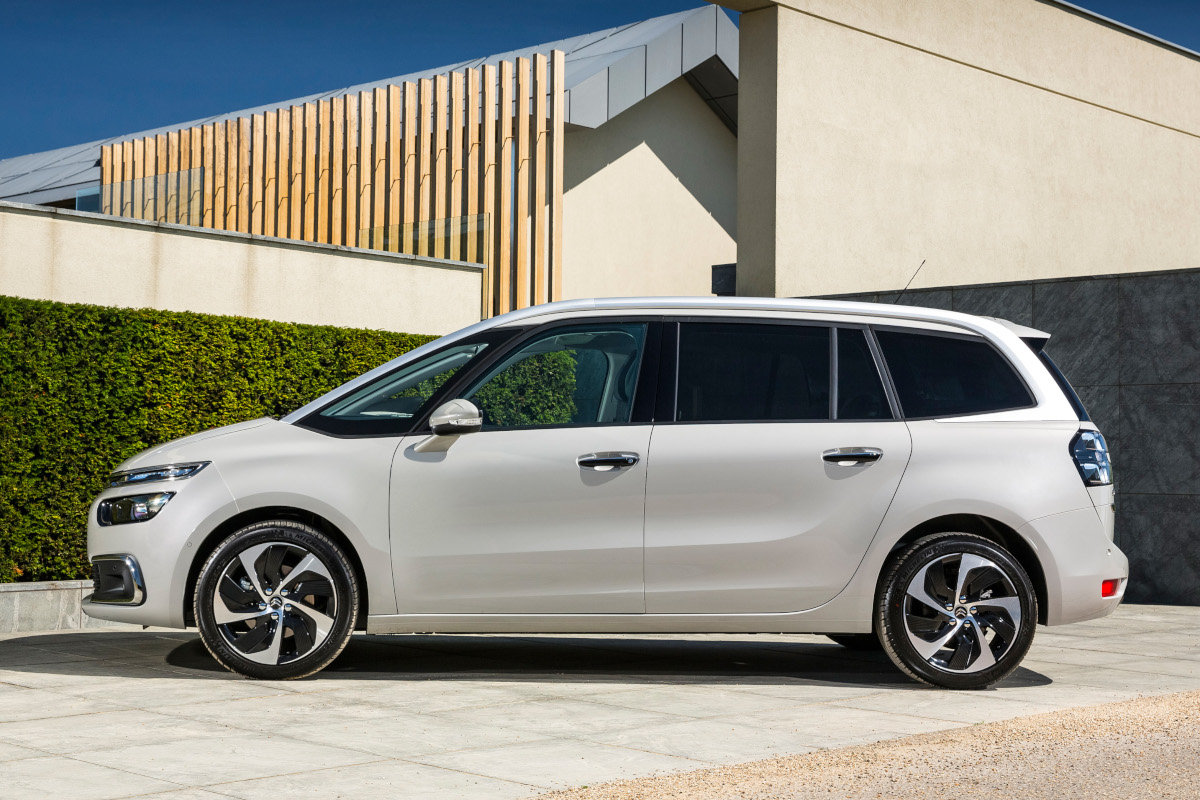
Good looking for an MPV
Cons
Not as fun to drive as a Ford S-Max
Steering is overly light and remote
Some owners report electrical faults

The CarGurus verdict
The Citroen Grand C4 Picasso is an excellent family car. Its interior is extremely spacious and intelligently designed for maximum versatility. Three adults can sit comfortably together in the middle row of seats, and the side window line is low enough that kids get a clear view out of the car. The third row of seats – stowed in the boot floor until you need them – will just about accommodate adults, but are a boon to parents whose offspring want to bring friends home to play.
And in a clear sign that Citroën understands the car’s audience, ride quality and quietness take priority over handling prowess and perky performance.
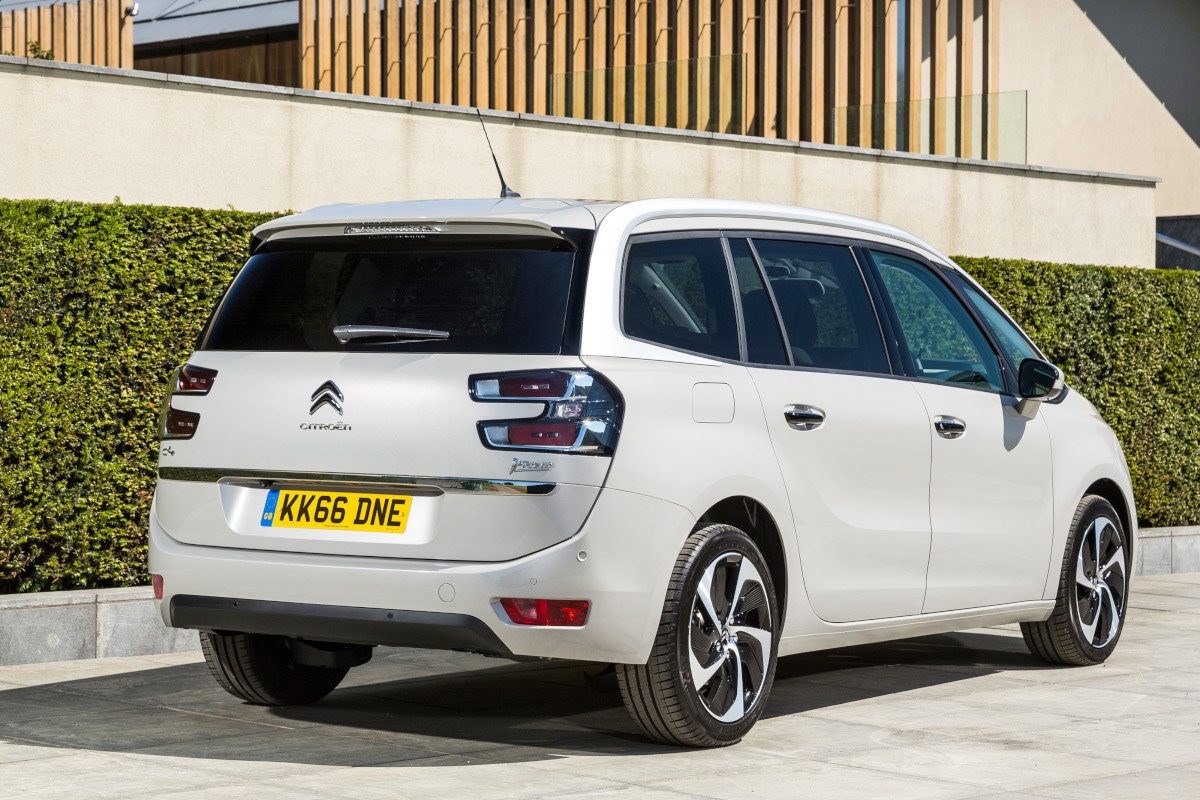
Sometimes a car maker absolutely nails a product. Citroen did when it launched the stylishly different second-generation seven-seater Grand C4 Picasso MPV in 2013. The previous model is still highly regarded on the used market, but the newer version really moves the game on, and taps into the core of what families want from their MPV.
The second-generation Grand Picasso enjoyed a facelift in 2016 and then in 2018 was renamed as the SpaceTourer. Even base models are well equipped but, as with so many cars, buying the best Grand C4 Picasso possible requires a little inside knowledge, as we’ll explain below.

The Citroen Grand C4 Picasso is incredibly practical. In fact, cars don’t actually get a lot more practical than this. The first ingredient to that recipe is space: there’s absolutely bags of the stuff, thanks to a long wheelbase, a high roof and boxy design. The panoramic windscreen extends over the heads of the driver and front passenger - meaning that the front portion of the roof is glass rather than metal – and this makes the cabin feel even lighter and roomier. Clever bit of design, that.
And that’s just the beginning where clever design is concerned. The super-skinny windscreen pillars mean forward visibility is as clear as it is in any car we can think of, and the low window line throughout gives kids a great view out, too. Then there’s the seating system, which is a work of art.
There are three full-sized seats in the central row that individually slide fore and aft, and they recline and fold individually, too. There’s also a flat floor in front of them, meaning plenty of foot space for everyone.
The third-row seats pop out of the boot floor effortlessly, and thanks to the clever way that the chairs in front flip and slide out of the way, access to the rearmost seats is superb. There’s just about enough from back there for a six-foot adult to be happy on short trips, while a smaller child will sit comfortably for hours on end.
Even with all seven seats in place, the boot is still decent, with room for a few shopping bags. Convert the car to five-seat mode, and you’ll have a boot that’s big enough to the needs of pretty much any family.
All five of the rear seats can be folded to create an enormous space with a perfectly flat and level floor, giving you the versatility of a van without having to remove – and thus lift and store – any of the seats. There’s also a huge amount of cabin storage, including under-floor bins.
In a car built to ferry families around, you want comfort and quiet above all else, and to an extent, that’s precisely what the big Citroen delivers. The suspension is super-soft, and whether you’re trundling along over broken-up urban surfaces or blatting down the motorway, it does an excellent job of absorbing lumps and bumps in the road. With excellent suppression of wind-and road noise, plus a range of engines that’s mostly smooth, quiet and flexible (if not all that fast), such activities are conducted in an impressively tranquil manner, too.
The softness of the suspension isn’t quite so welcome on an undulating country road, though, as the body tends to slosh about from side to side. You’ll feel the nose rising and falling as you get on the power and brakes, respectively, and there’s a distinct amount of body roll even at moderate speeds, and it gets much more severe if you enter a bend too quickly by mistake. The light, remote-feeling steering isn’t hugely confidence-inspiring here, either, but it’s fabulous in town when you’re trying to manoeuvre into a tight parking spot.
In essence, if you keep your driving style as relaxed as you possibly can and try not to go anywhere in a hurry, the Grand C4 Picasso will make a very pleasant family companion.
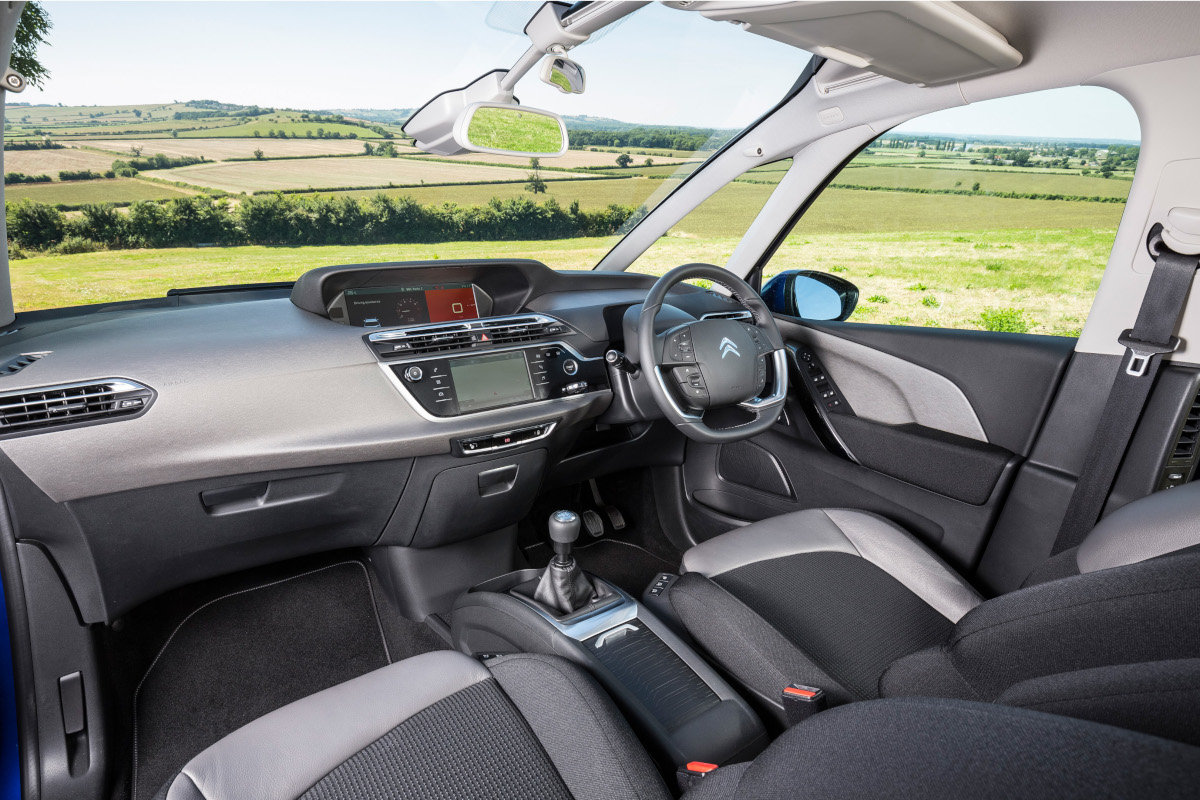
The entry-level trim level is called Touch, and even this version gets a very decent amount of standard equipment. This includes 16-inch alloy wheels, two-zone climate control, cruise control with speed limiter, automatic lights and wipers, reversing sensors and an infotainment system with Bluetooth, USB and AUX connections.
Feel trim is next up, and adds rear electric windows, front parking sensors, and air-con vents for those in the back.
Flair trim extends those vents to those in row three, and lots of other luxuries besides, including massaging front seats, an electric tailgate, parking assistance, integrated rear window blinds, a blind spot monitor and a front passenger seat that folds flat, allowing you to carry particularly long items.
The 2016 facelift brought various equipment enhancements, so on those cars, you can expect a few more items than those stated here.
A 1.6-litre BlueHDi 100 diesel registered before April 2017 is road tax exempt because of its low CO2 emissions, but the most you’ll pay yearly for the privilege of driving on the Queen’s highways is £140. While quoted fuel consumption figures for the popular turbodiesel engines hover around the 70mpg mark, back in the real world expect 50-60mpg on a longish run, and the mid 40s around town – one owner of a 2.0 BlueHDi claims to have averaged 40mpg on a 4,000-mile trip whilst towing a 1.5-tonne caravan, which is good going.
The turbocharged 1.2-litre PureTech petrol engine delivers around 50mpg on a long run but is a better bet than the diesels for long-term urban driving – frequent short trips can clog up diesel particulate filters leaving you with the expense of having them cleaned or replaced. The diesel engines’ AdBlue refill interval of every 16,000 miles won’t necessarily tally with your car’s service intervals of 18-20,000 miles or every 12 months, which means you may have to visit your local garage twice a year.
Citroen offers a fixed-price servicing menu for Grand Picassos more than three years old, with an interim service and MoT for £175, and a full service, again with MoT, for £285.
In terms of insurance, the Grand C4 Picasso ranges from group 18 for the 1.2-litre petrol model, through to group 26 for the BlueHDi 150, which is on a par with key rivals.

The 2.0 BlueHDi was subject to a safety recall to replace a wrong specification bolt in the front suspension – check that this was done as in faulty condition it can lead to uneven front tyre wear. In a few cases there have been problems with the rear suspension resulting in the subframe having to be rebuilt, so listen out for strange noises at the back.
As ever in modern cars, the Grand C4 Picasso suffers from electrical woes, many of them connected with the infotainment system. A small number of touchscreens required replacement, while some owners report the whole system crashing on a frequent basis: the satnav is known to freeze intermittently, and the iPod docking can be temperamental.
Other occasional electric issues include failure of the parking sensors and of the Park Assist system, blown LED daylight running lamps, oil level sensor failure, and a malfunction of an engine sensor that convinces the management system that there’s an overheating problem and triggers the ‘limp home’ setting.
All of these electrical faults are not endemic to the Grand C4 Picasso, but it’s wise to be aware of them. When testing a potential purchase try out all of the electrical items to ensure that they work the way they should, as tracing problems can be time-consuming and therefore costly.
In a few instances alternator belts have snapped – the stop/start system uses the alternator to restart the engine and this can put a strain on the belt. The engine auxiliary belt has been known to fail, too, but in very small numbers.
- The facelift of 2016 also gave the Grand C4 Picasso the option of an improved infotainment system called Citroen Connect Nav. This includes real-time traffic updates and voice recognition control.
- Looking for a car that can fit three child seats side-by-side in the rear? Well, this is one of the few that can. Each of the middle-row seats gets its own Isofix child seat mounting points, too.
- While most cars have their instrument panel tucked away behind the steering wheel, the big Citroen’s sit slap-bang in the middle of the top of the dashboard. It’s not as strange as it might sound, as your eye falls to it quite naturally, and there’s less of a difference in eye movement depending on whether you’re looking at your instruments or your infotainment screen.
- The best all-rounder: The 120bhp 1.6 BlueHDi-engined facelifted model with Feel trim combines a punchy, fuel-efficient diesel engine with generous equipment.
- For all the gizmos: The Flair Edition with its updated infotainment system, smartphone compatibility, and driver assist systems such as traffic sign recognition, lane departure assist and driver condition monitoring, should cover most bases.
- For lowest running costs: Any model with the 100bhp 1.6 BlueHDi turbodiesel engine, which has the potential to do 74mpg and CO2 emissions of just 99g/km.
- On a budget: Just about any of the pre-facelift (2016) second generation cars are bargains. Just make sure you find one that’s in good condition.
