Audi R8 Mk1 Review (2007-2015)
Audi R8 cars for sale
4.0
Expert review
Pros
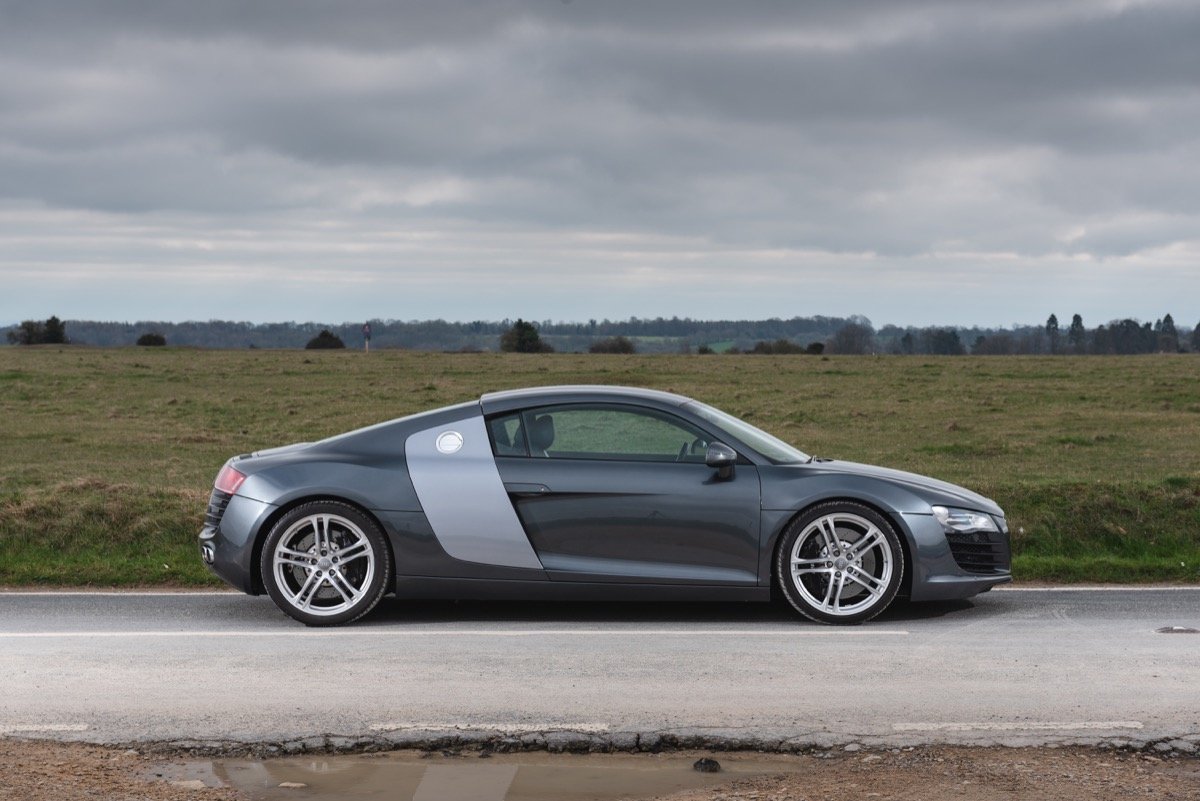
Stunning looks
Choice of coupe and convertible body styles
Sensational to drive
Cons
The V10 is not much quicker than the V8
Unsurprisingly, the R8 is very thirsty
Be aware of some high parts prices
The CarGurus verdict
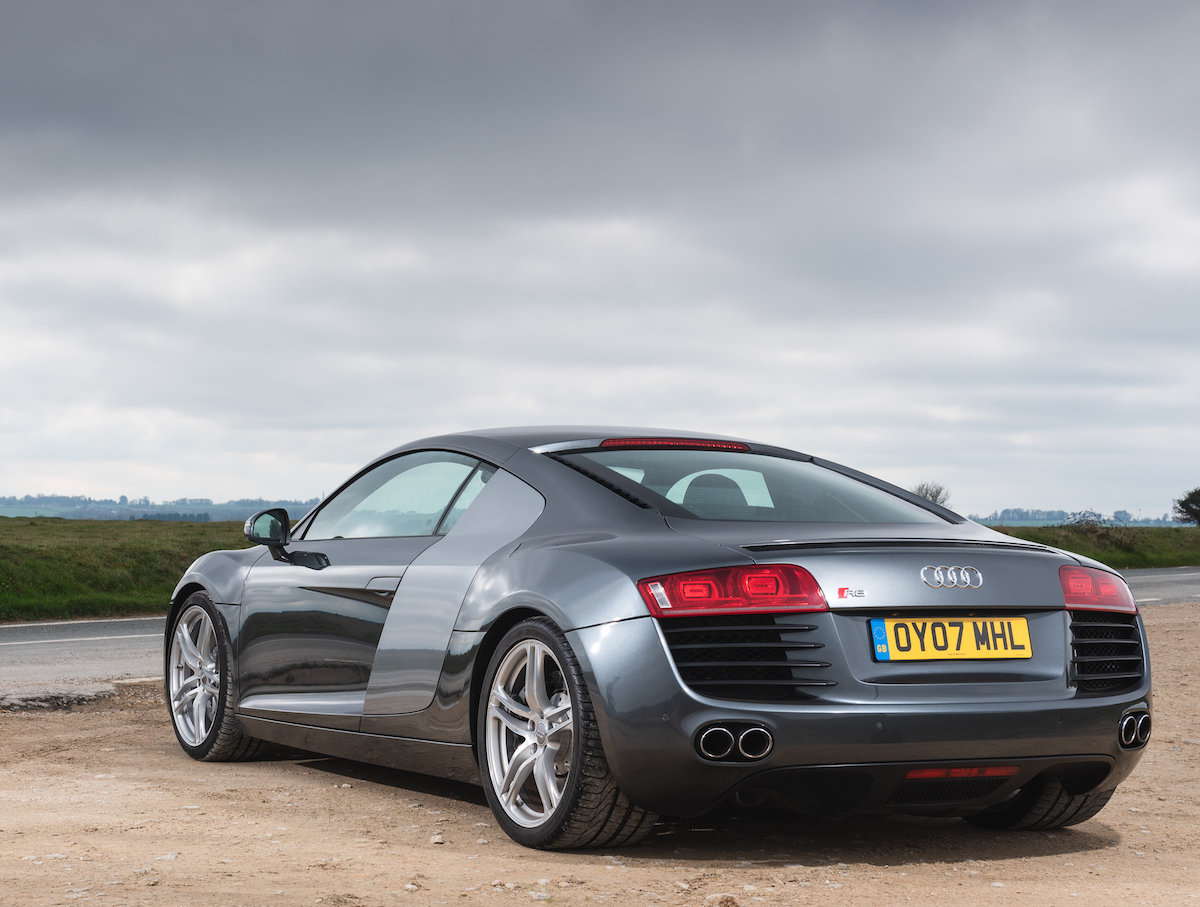
With the Porsche 911 now so ubiquitous that it’s next to invisible out on the road, the R8 makes a spectacular alternative for anyone wanting a supercar to use on a daily basis. Despite that usability, the Audi’s mid-engined configuration makes it feel and look exotic in the same way as a Lamborghini or Ferrari does, even if the R8’s cabin isn’t as special as those of the two Italians.
The driving experience is exceptional, with raging performance from all models accompanied by an evocative soundtrack. That the R8 is also largely reliable and can be serviced at your local Audi dealer, is a very welcome bonus in this lofty sector of the sports car market.
What is the Audi R8?
Before the arrival of the mid-engined R8 in 2007, Audi produced some extremely fast cars, but not a head-on rival to the likes of the Porsche 911. What enabled Audi to take the step up to the supercar league was having Lamborghini within its parent company, the Volkswagen Group. The R8 is based heavily on the Italian company’s Gallardo model, including its V10 engine in some versions.
The result is a mid-engined sports/supercar that set the performance car world alight when it arrived on the scene. At a time when Audis were known for being capable, refined and perhaps a little dull to drive, the R8 was a sensation. Pointy, agile, balanced and terrifically involving, it caught the attention of motoring enthusiasts around the world.
How practical is it?
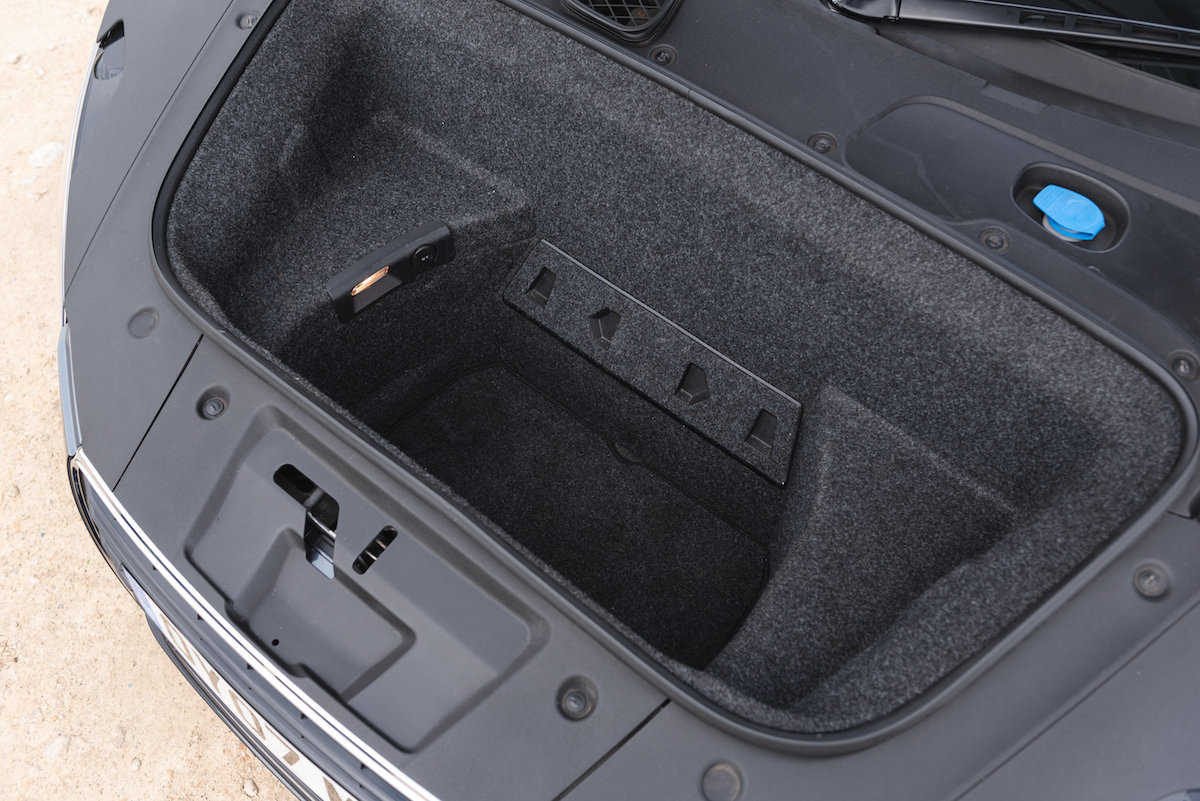
The Audi R8 isn't exactly practical – but what do you expect when you buy a mid-engined, two-seater sports car? For what it is, the R8 does OK, with plenty of space for its two occupants and lots of storage for odds and ends dotted around the cockpit.
In the nose, there’s a small 100-litre luggage bay, which is augmented by a shelf behind the driver, though in total, luggage space is not hugely generous, and there’s more room in a 911, so for multi-day road-trips or weekends away, the Porsche is a better bet
What's it like to drive?
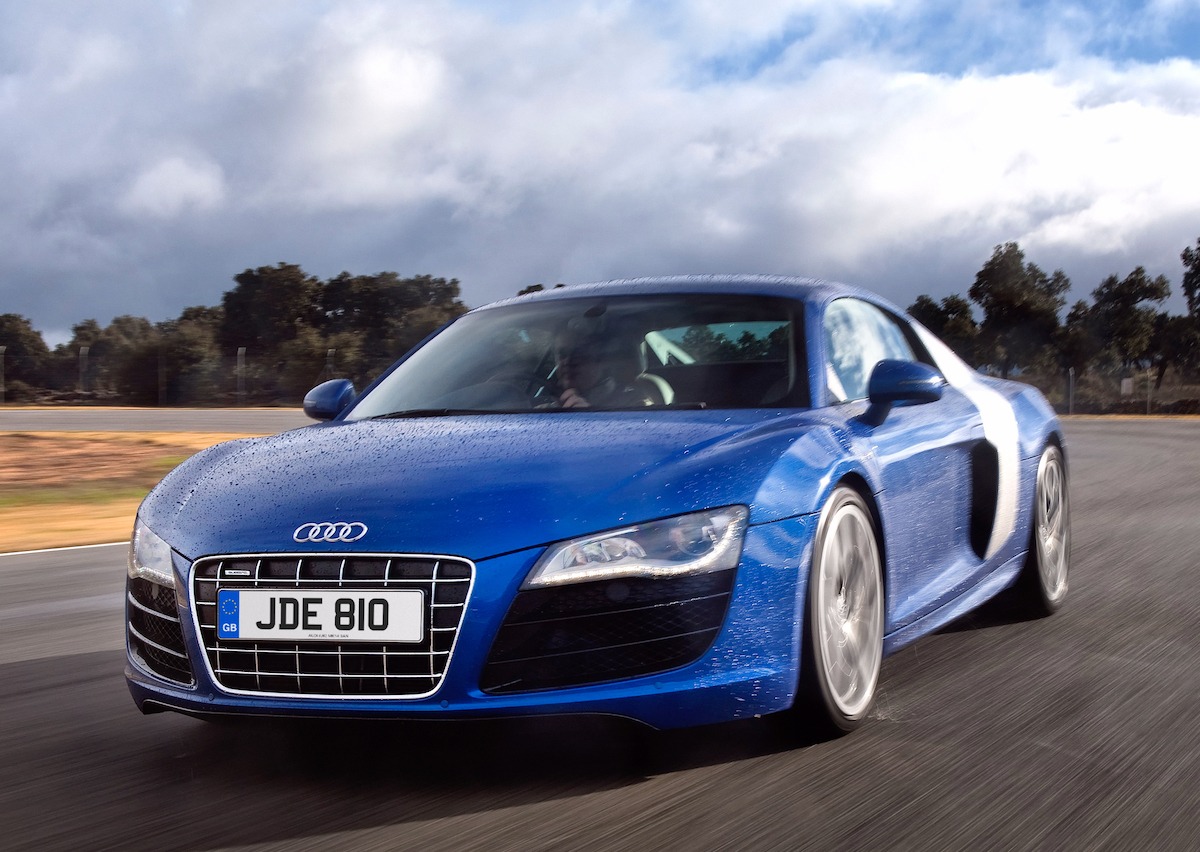
The four-wheel-drive R8 is every bit as sensational to drive as it is stunning to look at, and although it’s Audi’s first supercar it ranks amongst the very best of the breed. And because it’s built to Audi standards and is easy to drive in everyday traffic, it’s a supercar that you don’t have to mollycoddle too much. That includes a ride that is perfectly acceptable on craggy city streets yet still offers excellent body control on faster roads or if you decide to use the car on track.
With its mid-mounted engine, the R8 offers a fantastic sense of balance without being intimidating to drive. It's a bit like a bigger and more powerful Porsche Boxster in that respect. The steering is sharp and full of feedback, and the nose dives into corners with enthusiasm. Once tucked into a bend the car is willing to adjust its attitude on the throttle, including pushing the rear wide under power if desired.
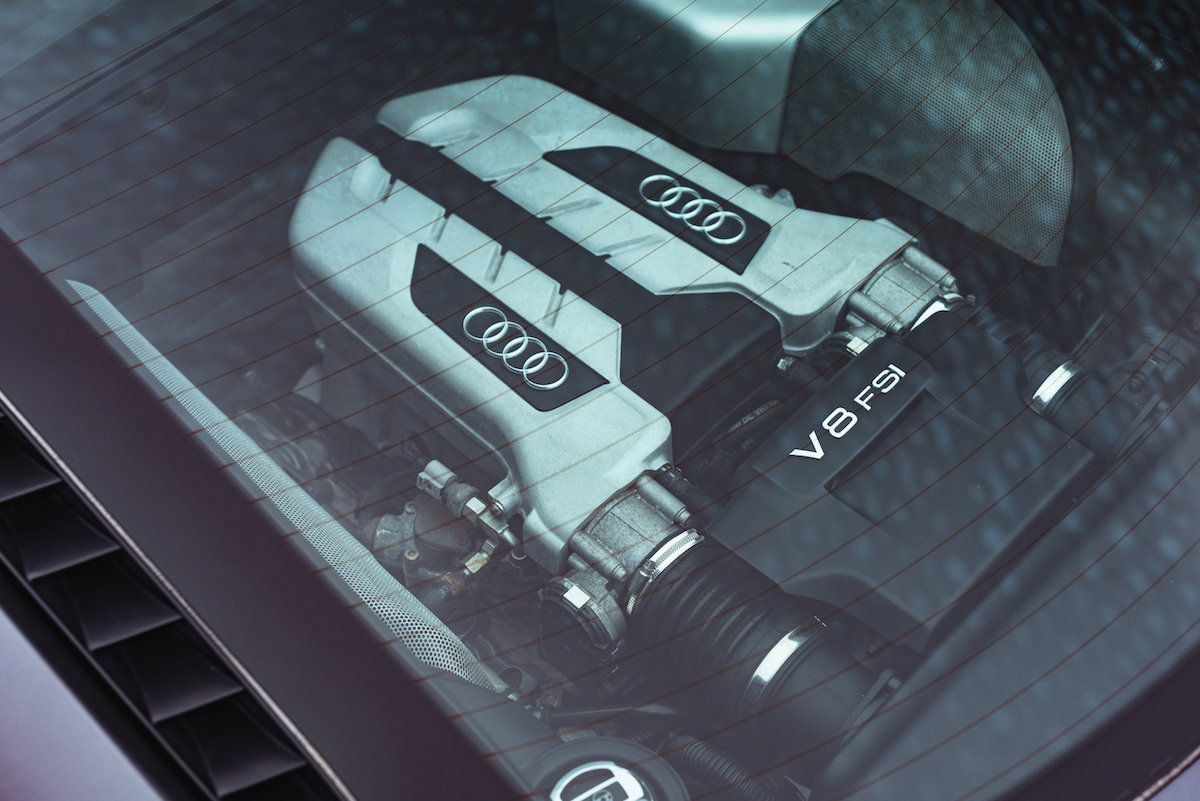
Speaking of power, at launch the R8 was powered by the 414bhp 4.2-litre V8 from the Audi RS4. In September 2010 this engine was revised to produce 424bhp. In 2009 a 518bhp 5.2-litre V10 (from the Lamborghini Gallardo) was introduced, its output ultimately peaking – within the regular R8 line-up, at least – at 543bhp when fitted to the R8 Plus of 2012. A convertible Spyder version with the V10 was launched in 2010, and the V8 derivative a year later: all models were treated to a facelift in July 2012.
Both engines are great, but offer distintly different driving experiences. Some prefer the V10 for the way it blends effortless muscularity with a sonorous top end. Others prefer the smaller engine for its classic V8 soundtrack and the energetic way in which it builds revs. Pair either with the open-gated manual gearbox for full control over the sonic experience. If you must have an automatic be warned that the R tronic system on earlier R8s is a robotised manual that serves up the kind of jerky shifts that somewhat spoil the driving experience. The later dual-clutch S tronic is a vastly superior automatic.
Lightweight GT models of both coupe and Spyder were produced between 2010 and 2012, powered by a 552bhp version of the V10 engine. And all R8s had the option of automated manual transmissions, initially the six-speed R tronic, and then coinciding with the 2012 facelift, the much improved dual-clutch seven-speed S tronic.
Technology, equipment & infotainment
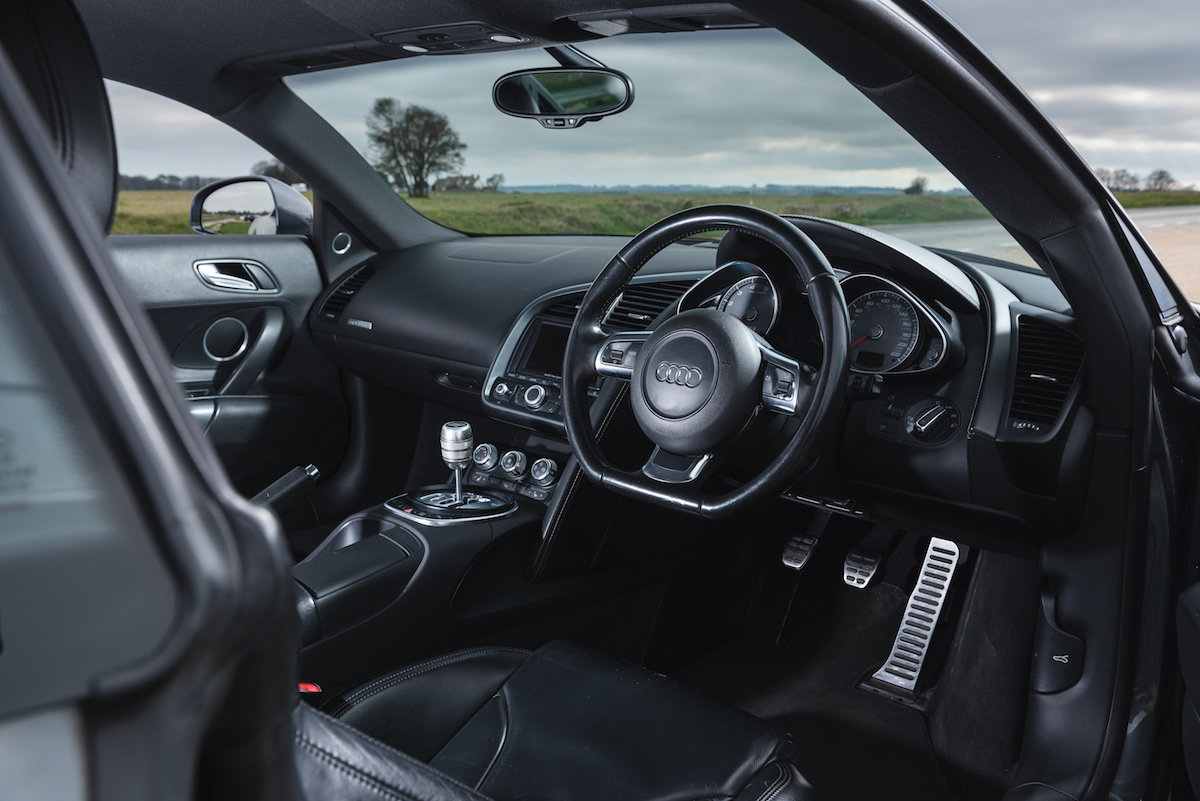
The original R8 is a fairly old car now, with the first models hitting the road in 2007. As such, the in-car technology feels approriately dated, with analogue dials and a touchscreen that has much more dated graphics than you'll find in modern Audis. That said, it's all completely intuitive to use and, lack of Apple CarPlay or Android Auto aside, has basics such as satnav and Bluetooth phone connectivity covered.
Where the R8 excels for technology is in its design and construction, which makes extensive use of aluminium to keep its weight down. Be in no doubt despite its dated infotainment, this is still a hi-tech car.
Audi R8 running costs
The original owner of the R8 you’re looking at probably took a mighty hit of depreciation, but that doesn’t alter the fact that the mid-engined Audi remains an expensive car that's costly to run. Fuel consumption barely makes it out of the teens, and you’re filling up exclusively with super unleaded. And no matter which version of the R8 you buy, there’s no escaping an annual road tax charge of £580 (as of 2020), and that's likely to rise in future years.
With even the ‘slowest’ R8 capable of 187mph, components such as tyres and brake pads are premium items. Bank on a set of tyres setting you back about £1,000 and a set of brake pads £360 or so. And if your R8 has the optional carbon-ceramic brake discs, replacing four of those is £1,600 or more. The Audi Magnetic Dampers on early R8s are starting to get a bit tired, so be aware they’re about £800 per corner and are best bought in pairs. Some owners have been replacing them with high quality coilover units.
Another item that might give you pause for thought is the clutch. The R tronic automated manual transmission has been known to chew through clutches in as little as 25,000 miles, and a replacement is £3,500. Fortunately the clutches in manual transmissions typically last 40,000 miles.
But running an R8 isn’t all wallet-wilting woe. A minor service for a V8 is about £500 and a major one just shy of £1,000. Stick another £100 or so on top of those prices to service a V10. That isn’t so bad given what sort of a car the R8 is. You’ll pay ordinary Audi prices for more mundane tasks such as re-gassing the air conditioning (£80ish) or replacing the brake fluid (circa £90).
Audi R8 reliability
Unlike supercars of yore, the R8 has proven remarkably robust and largely trouble-free. But not totally so. In a very few instances there have been bottom-end bearing failures on the V8 engine, so if you hear any untoward noises, walk away. If the engine’s just misfiring slightly, that could be faulty ignition coils – again, though, this isn’t a widespread problem.
Keep an eye on oil consumption on low-mileage examples of both the V8 and V10. The former is known to churn through a litre of fully synthetic lubricant every 1,000 miles, the latter half that amount. But once the cars have passed the 20,000-mile mark, this drinking problem seems to abate. Yet it’s reason enough to seek out R8s that have been serviced annually – some examples are on two-year/19,000-mile service schedules.
In common with other ground-skimming sports cars, with radiators mounted low in the nose, leaves, mud and other road crud can amass around the radiators, causing them to corrode around their seams and leak out coolant. Another casualty of year-round use can be the rear suspension. To reduce weight the R8 makes extensive use of aluminium, including for the rear suspension, but where steel bolts and nuts are in contact with it, galvanic corrosion can occur causing the steel components to seize. That can be the kiss of death for the rear lower wishbones and result in the replacement of the whole rear suspension assembly at a cost of £3,000. And that's just for the parts.
- If you simply must have an automatic, make sure it’s the later S tronic rather than the R tronic robotised manual. The later dual-clutch gearbox is smooth, fast and fun, a genuinely good alternative to the manual. The manual, meanwhile, has an open metal gate for the gear lever, just like a Ferrari.
- Not everyone is a fan of the R8’s Audi Magnetic Dampers (optional on the V8, standard on the V10). When on a test drive, flick between Sport and Normal settings to check that they suit your driving style, as you may prefer the standard suspension.
- Although it’s four-wheel drive, the R8’s quattro system has a rear-wheels bias, as all great sports cars should.
- Our favourite model: The facelifted V8 coupe with manual transmission is, in the real world, pretty much as quick as the V10. It feels more agile, and makes an awesome sound.
- If you want to go hardcore: The GT coupe is 100kg lighter than regular models and features optional carbon-ceramic brake discs.
- For those seeking rarity: The limited edition (just 99 made) V10 LMX of 2014 boasts 562bhp and laser technology headlights. Good luck finding one though...
- For tackling modern traffic conditions: A V8 coupe with the S tronic automatic transmission.


