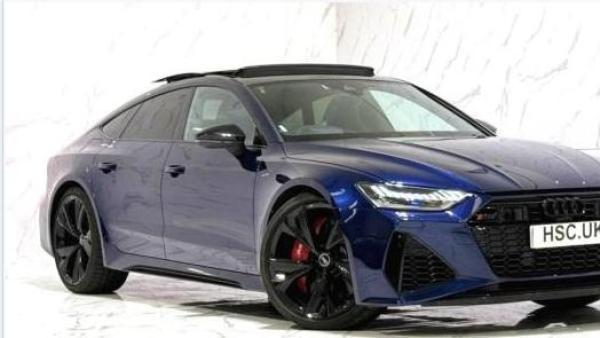
Audi RS7 Review (2019-2025)

Pros and cons
What we like
Laugh-out-loud fast, thanks to bi-turbo V8
The interior is superbly made, and more practical than you might expect
Luxuriously equipped as standard
What to consider
Expensive to fuel, insure, and service
Lacks the wild side of a Mercedes-AMG GT
Electric rivals like the Tesla Model S offer similar performance for a fraction of the RS7's running costs
The CarGurus verdict
The Audi RS 7 Sportback has a remarkable spread of talents. Granted, it’s not the ultimate driver’s choice in the class, but it is hard to fault the balance of pace, refinement, practicality and luxury that it offers. It’s an impressive machine, and if it fits your exacting requirements then don’t hesitate: you’ll be brimming with smugness every time you get in.
However, you really need those very niche requirements to justify it. If you can cope without the full limo-size and coupe looks, a BMW M5 or Mercedes-AMG E63 are cheaper and more fun (we particularly love the E63 Estate). Alternately, the Tesla Model S does much of what the Audi does and will cost buttons to run by comparison, thanks to its electric powertrain.
We’d have the exquisite Porsche Panamera Sport Turismo over all of the above, especially since it has bonkers petrol models, or even a bonkers plug-in hybrid should you want it. So, yes, the RS 7 is impeccable. But you have to discount a lot of even more outstanding cars before you land on the big Audi as the answer to your luxury car needs and wants.
out of 5 expert review
What is the Audi RS7?
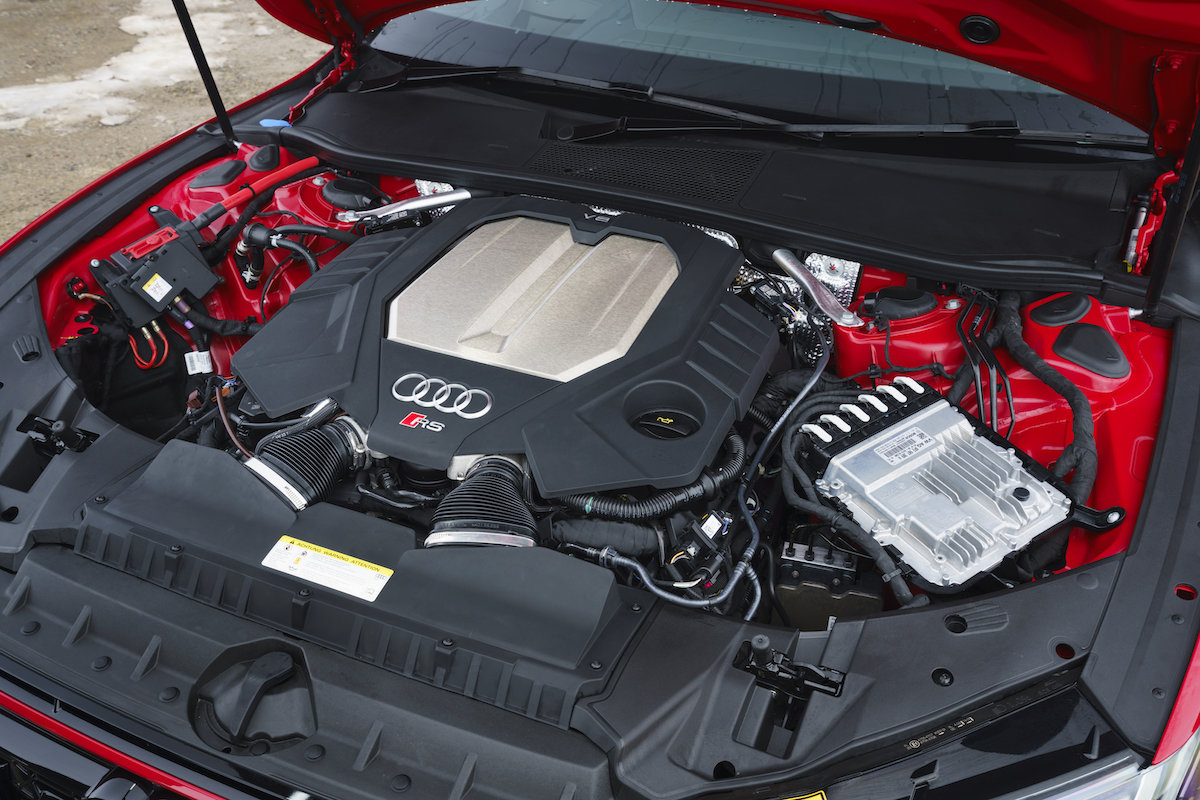
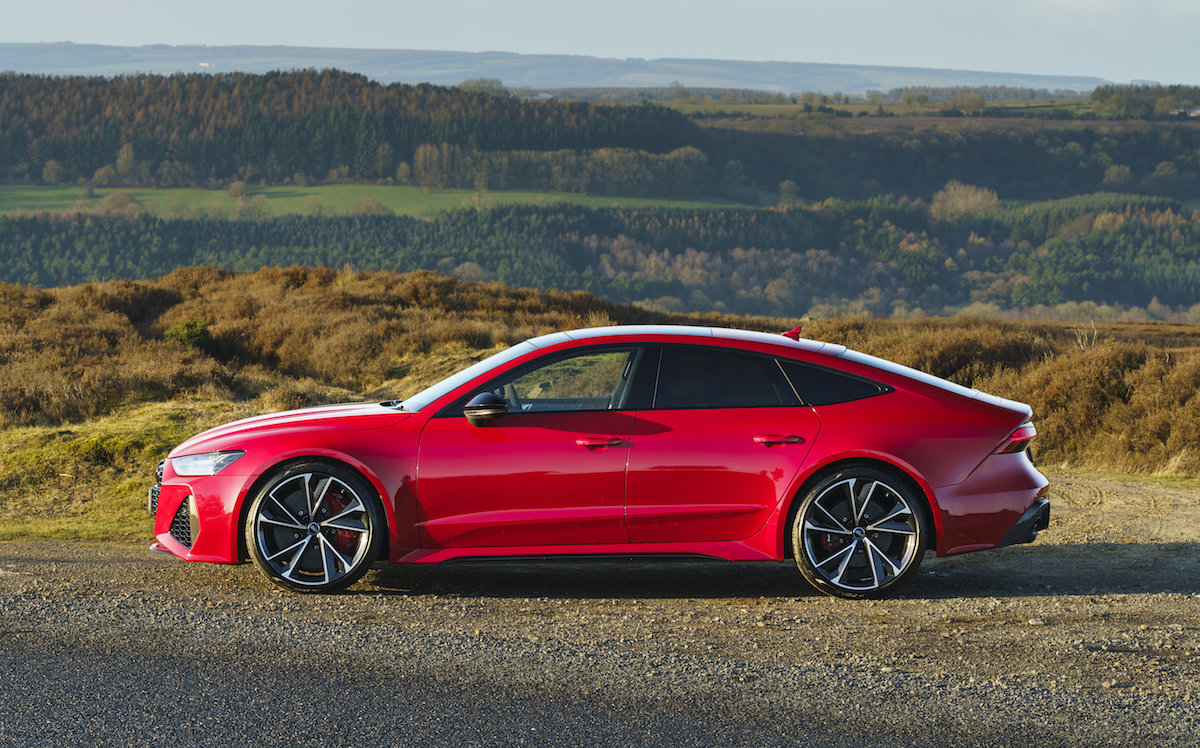
This is the second generation of the Audi RS 7 and it's a bit of a multi-tasker: a big four-door coupe that, with its sweeping silhouette, hatchback boot and storming twin-turbo 4.0-litre V8, is something of a limousine, estate and sports-coupe montage.
As you’d expect of a luxury sporting executive car costing £100,000, the Audi RS 7 specialises in brute force matched with impeccable long-distance manners, high-tech features and interior finish.
Practicality
How practical is it?
The driving position is hard to fault, with a huge range of electric adjustment, the 'virtual cockpit' digital instruments and great forward visibility; day or night, thanks to the standard Matrix LED lights.
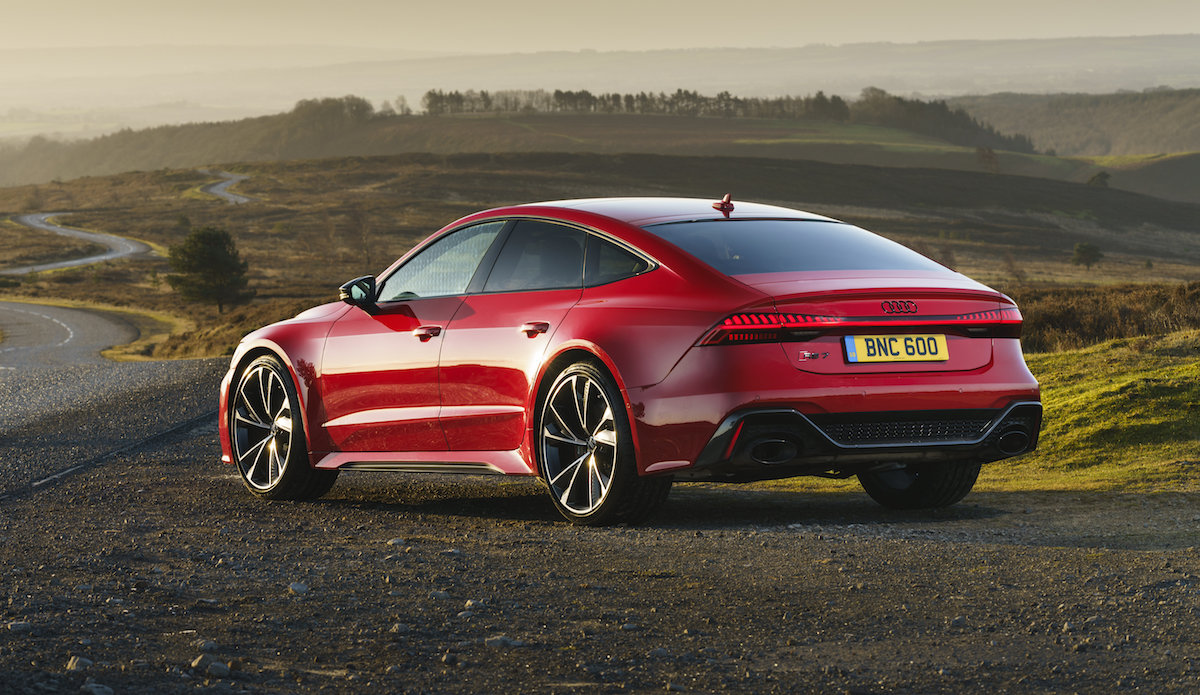
There’s also masses of space in the back seats. Even tall adults will be able to lounge in comfort, while the big hatchback boot makes this a surprisingly practical option in the class.
The 535-litre boot is bigger than you get in the Porsche Panamera Sport Turismo (520 litres), even, and the 40/20/40 split folding rear seats make it easy to load longer items and still carry passengers. It’s certainly one to consider if you want a luxury GT that’ll carry all your ski gear and do the run down to your chalet with indulgent ease.
Driving
What's it like to drive?
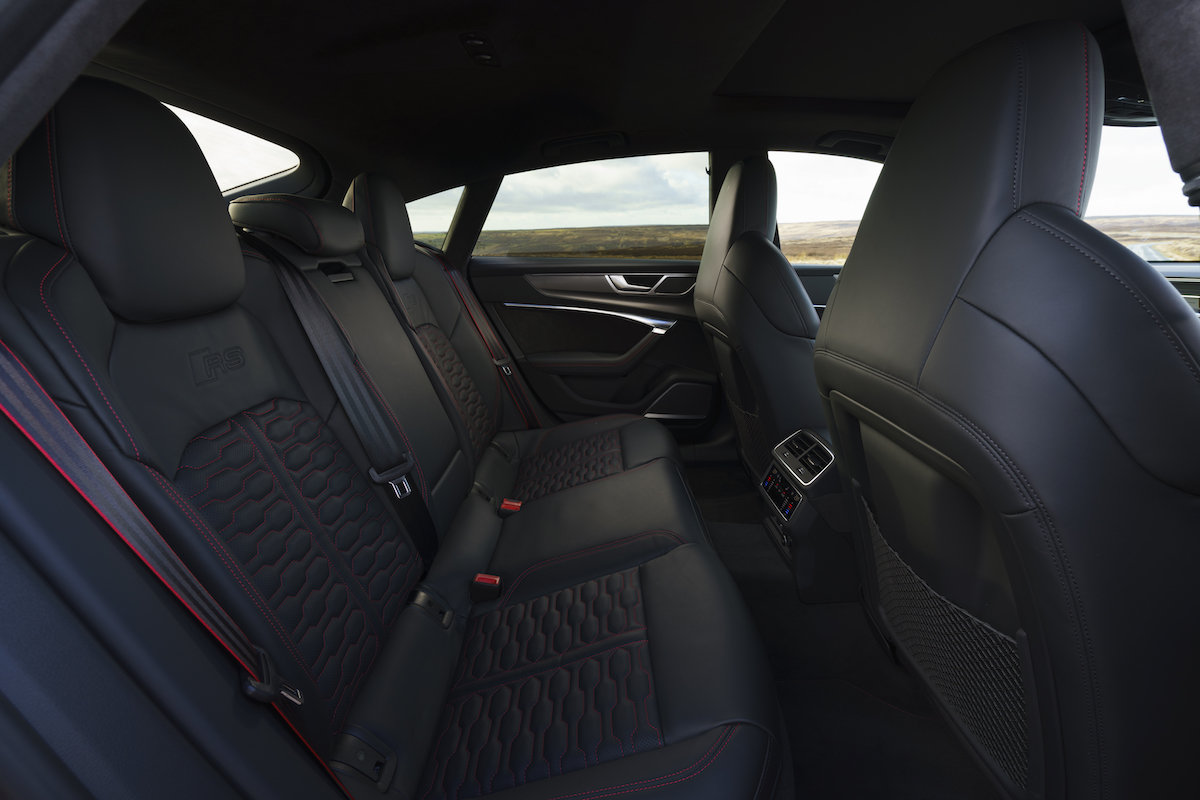
Oddly, despite having a stomach-churning 600hp, and the ability to punch past 62mph in 3.6sec despite its 5.0 metre-long frame, the RS 7 is not the luxury GT for you if it’s tactile, involving handling that you’re after. For that, you’d be better off looking to more playful-feeling Porsche Panamera, or the delightfully lairy Mercedes AMG GT.
There are two suspension options; adaptive air suspension is standard, or the optional ‘RS-sport suspension Plus’ brings steel coils and adaptive dampers. We’d save the money and stick with the standard height-adjustable air suspension, which is cushy and cosseting on anything but very scruffy surfaces provided you've selected Comfort mode from the drive select system. Dynamic mode makes the ride firm and unsettled but otherwise the Audi is a comfortable cruiser.
Four-wheel steering is standard, too, and it’s very effective. Together with the quattro four-wheel drive system it makes the Audi feel agile yet predictable, even if there’s little of the adjustability of those more engaging cars we’ve already mentioned. Rather, the four-wheel drive and neutrality of the Audi’s responses make it a car you trust even at crazy speeds, yet it never encourages enthusiastic progress on a good road. Even the V8 exhaust burble is a distinctly executive-level distant burble, rather than the raucous soundtrack you get with the Mercedes AMG GT.

Tech and equipment
Technology, equipment & infotainment
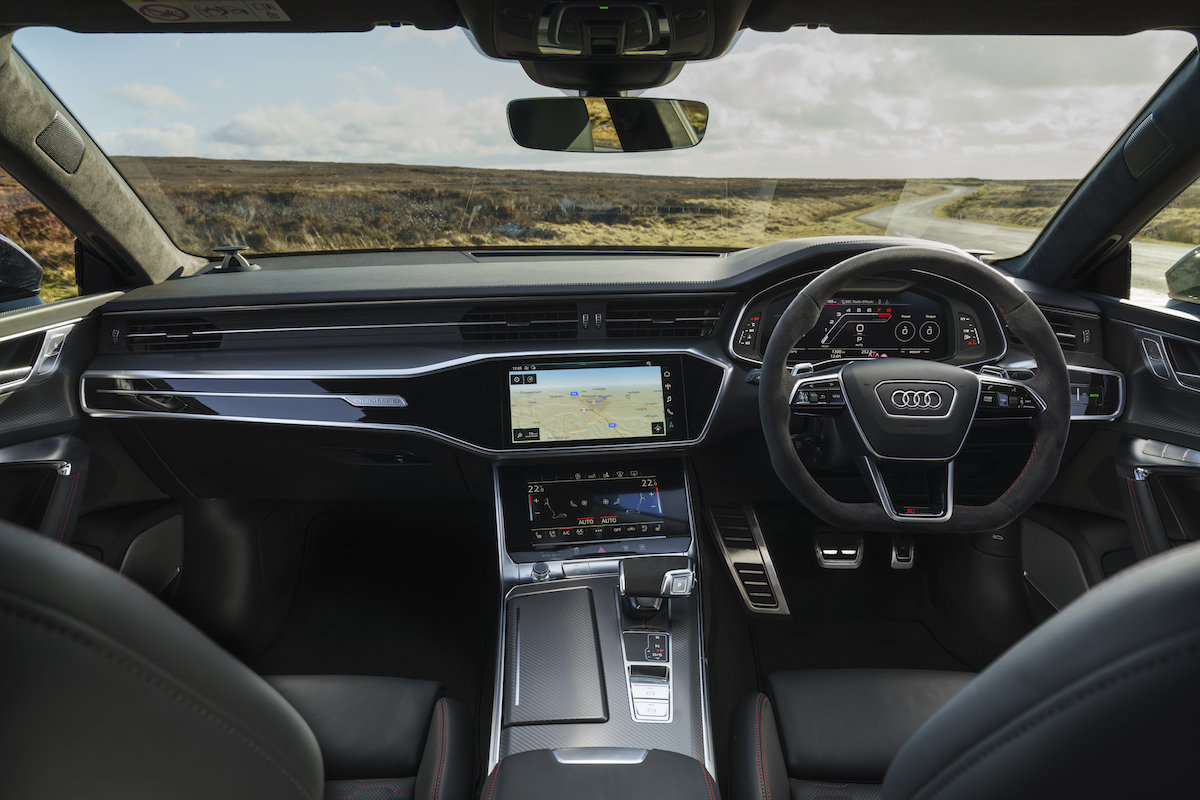
The Audi’s interior is a real selling point. Exquisitely finished with the sort of precision and attention to detail that’s not far off what you get in the more minimalist Porsche Taycan, it’s finished with the double-touchscreen infotainment setup that also features in the Audi A8. This infotainment system has all the features you’d ever want, including Apple CarPlay, Android Auto, online functionality and more.
The upper screen deals with all your media and nav, while the lower is dedicated to temperature control and other comfort features. The rotary controller of the iDrive system in the BMW M5 and M8 Gran Coupe is easier to use, as is the huge single touchscreen in the Tesla Model S, but even if the Audi's system isn't the most user friendly, it’s still one of the better systems on the market and doesn’t take long to get used to.
Running costs
Audi RS7 running costs
The Audi RS 7 is going to be prodigiously expensive to run, as you’d expect of a big, V8 performance car. However, it does come with a 48V mild hybrid system that helps to simultaneously boost performance while saving on fuel, and the V8 engine can also shut off some of its cylinders when it doesn’t need all of the available performance. So by the standards of a V8 with two turbochargers and nearly 600bhp, it’s one of the more economical options. Fuel consumption could nudge over 25 mpg on an unhurried motorway run.
Unfortunately, the Audi RS 7 Sportback is likely to depreciate very quickly. There are already a fair few pre-registered cars and ex-demonstrators with barely more than delivery miles on offer for some £10,000 - £15,000 under list price, so buying nearly-new is a very savvy option. To be fair to the RS 7, high performance limos and coupes such as this are notorious for losing value very quickly, so most rivals will be have a similar cliff face of depreciation to face at the edge of the forecourt. Alternatives like the Porsche Panamera, however, show that there are alternatives that hold onto their value much better.
Insurance, servicing and tyres will be very costly. This is, after all, a four-door luxury coupe with near supercar performance, and you’ll pay near-supercar amounts of money to maintain it properly.
Audi RS7 reliability
There’s very little reliability data on the RS 7, or even its less rarefied S7 and A7 Sportback derivatives. However, Audi as a brand came a rather poor 22nd out of 31 brands covered in the 2020 What Car? Used Car Reliability survey, which covers cars up to five years old. It came a similar 21st out of 30 manufacturers included in the 2020 Driver Power survey, which covers ownership satisfaction as well as reliability for new cars.
A three-year, 60,000-mile warranty is standard, and can be extended for a price.

What owners say
Three things to know
- The standard RS 7 is incredibly well equipped as standard, with plush leather upholstery and all the comforts and luxuries you’d reasonably expect, but if you need more style or performance in your RS 7, there’s always the Carbon Black or Vorsprung trims, which both add 22-inch alloy wheels (up from 21-inch) and carbonfibre highlights all over. The top-spec RS 7 Vorsprung going further still with its panoramic glass sunroof, RS-sports suspension and a top speed raised from a limited 155mph to 174mph.
- You’d be forgiven for thinking that a car of this price and fairly niche appeal would have few rivals. But, in truth, the RS 7 can easily be said to compete with everything from long-established performance saloons like the BMW M5 and Mercedes E 63 AMG, to electric alternatives like the Tesla Model S and Porsche Taycan, not to mention conventional fast limos like Audi’s own S8 and the BMW 750i. You could even throw in left-field alternatives like the surprisingly excellent Kia Stinger GTS (don’t laugh, it’s really very good), before you even touch on the various performance SUV alternatives such as the Range Rover Sport and Porsche Cayenne. Then there are the direct rivals of the Mercedes-AMG GT, or perhaps the Mercedes CLS 53 is closer… However you look at it, the RS 7 has a lot of rivals.
- This new generation of four-wheel steer is clever enough to decide the angle and direction that the rear wheels point in (in relation to the fronts) depending on a variety of inputs, including cornering loads, available traction and more. It doesn’t simply gauge the wheel angle depending on speed as was the case with older, often erratic-feeling equivalents.
Which one to buy
- The RS 7 has only one powertrain option; that excellent 4.0-litre bi-turbo V8 matched to its slick eight-speed tiptronic automatic transmission and rear-biased all-wheel drive system, so whatever your priorities, that’s the setup you’re getting. However, if you’re not too fussed about having an exclusive finish or lashings of carbonfibre, stick with the standard RS 7 as the two higher-spec trims are all about posturing and it comes at a high price.
- If posturing is exactly what you’re after, and you’ve got deep pockets, go for the Carbon Black model. It gets gloss carbon finish side sills, rear diffuser and front spoiler, as well as ‘carbon twill’ inlays inside. You can also have any paint colour you choose from Audi’s exclusive paint palette, and there are a selection of matt paint finishes available as well, although these are all available on any RS 7 Sportback model.
- For Autobahn warriors, the Vorsprung is for you. With a derestricted top speed of 174mph, as well as the RS sport suspension, it’s the most full-on version of the RS 7.