Audi TT Review (2006-2013)
Audi TT Coupe cars for sale
4.0
Expert review
Pros
Betters the original Audi TT in almost every way
The cabin is stylish and finished to a very high standard
Sensible running costs for a sporty car
Cons
Back seats are very cramped
Not as engaging as a BMW 1 Series
Four-cylinder engines don't sound very sporty
The CarGurus verdict
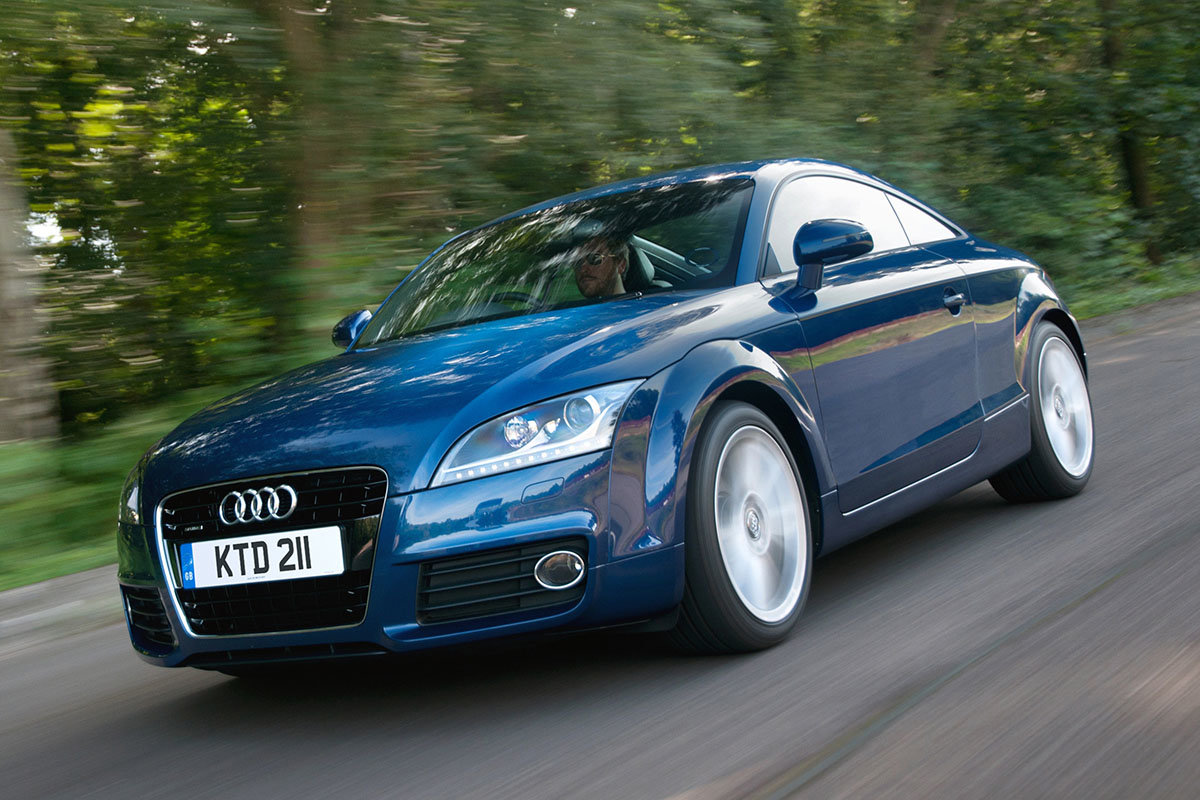
The second-generation Audi TT is a consummate all-rounder, and if you’re after a second-hand sporty coupe that doesn’t cost too much, it makes a lot of sense. You get the sort of looks that still catch the eye, even though it’s almost 15 years since it was launched, but this is a car with plenty more going for it besides.
The slick, beautifully finished interior is always a pleasing place to be, and while those rear seats are tiddly, they’ll be enough if you need to carry small children around. The hatchback adds to the TT’s usability and practicality, too.
And while it isn’t quite as sharp as the best sports cars to drive, the TT’s still plenty of fun, and fast enough to be exciting, whichever engine you choose. It’s even relatively affordable to run, with reasonable servicing costs and fuel economy that won’t eat you out of house and home. No wonder it’s one of our favourite used cars.
What is the Audi TT?
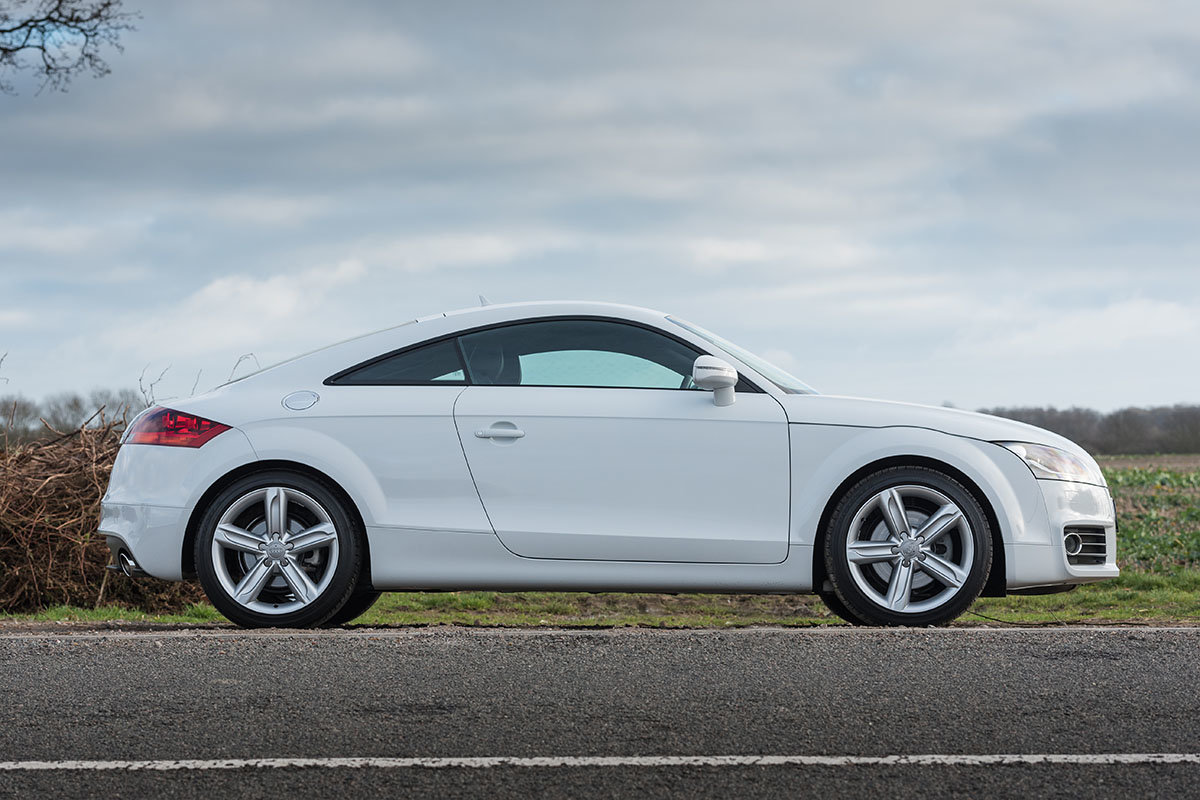
The Audi TT is a style icon – at least the first-generation car certainly was – but the second-generation model adds a touch more practicality and usability to the mix.
It is one of those cars whose reputation precedes it. With its pretty lines and fashionable image, no wonder it’s often driven by the style-conscious – or that it even turns the heads of those who aren’t.
Those who don’t know better might dismiss the TT as a car that puts style over substance. But that couldn’t be further from the truth, because beneath its pert exterior sits one of the best and most rewarding coupes there is.
In 2014, the mk2 model was replaced with the Audi TT mk3, which lasted all the way until 2023
How practical is it?
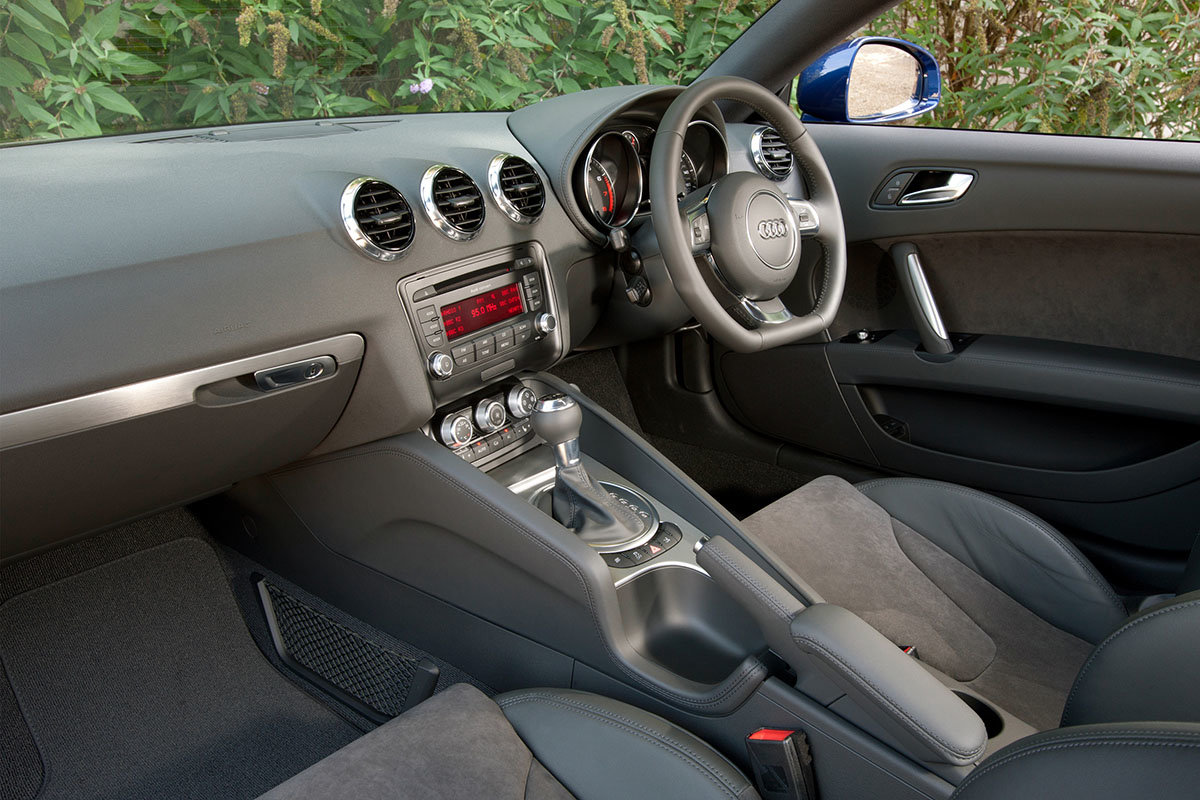
You only need to climb aboard the TT to realise it’s about more than just looks. Inside, you’ll find a sturdy dashboard that feels pleasingly over-engineered, with metal-ringed dials and slick switches that lend a real touch of class. There are high-quality plastics throughout, and slabs of real metal or carbon fibre, depending on which model you choose.
The TT Coupe does have back seats, although they’re very small. That said, you can use them to carry small children in a child seat – just. Further back, the TT’s practicality is further aided by the hatchback bootlid which greatly aids access to the 290-litre boot, something that some rivals, like the Peugeot RCZ and BMW 1 Series Coupe, don't have. What's more, you can fold the rear seats down to turn the TT into a two-seater with space for a mountain bike in the back.
You can also get a convertible version, called the Audi TT Roadster, but we'll cover that in a separate review.
What's it like to drive?
Out on the road, the TT gets better. You get a choice of front-wheel drive or four-wheel drive, and even the former serves up plenty of grip. However, the four-wheel-drive TTs, badged ‘quattro’, deliver better traction on slippery roads, and that might come in handy at the height of the British winter.
Neither version is quite as involving as the BMW 1 Series, but the TT’s faithful responses, excellent body control and sharp responses from the steering wheel still make it invigorating to drive.
Most TT Coupes are equipped with a 2.0-litre four-cylinder turbocharged petrol engine. And while the sound won’t do much for you, these engines still give you plenty of accessible power to play with, making progress brisk.
You can also opt for a 3.2-litre V6, which sounds more interesting, but adds weight and uses quite a lot of fuel. At the other end of the fuel economy spectrum, meanwhile, this was the first TT to be offered with a diesel option, a 2.0-litre that provides lots of low-down grunt. Most engines come with a slick six-speed manual gearbox, although the 2.0 quattro uses Audi’s quick-shifting dual-clutch automatic, branded ‘S Tronic’.
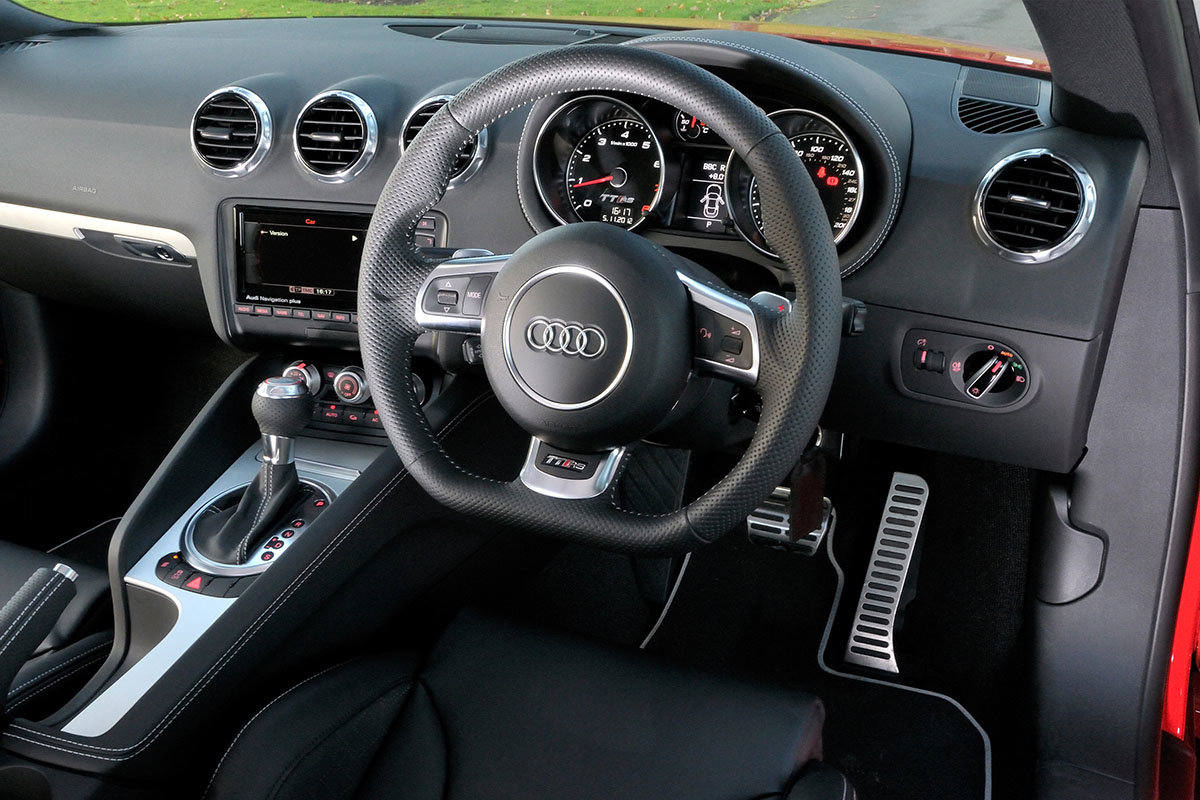
Technology, equipment & infotainment
The entry-level 1.8-litre model, known simply as the TT, came reasonably well equipped, with electronic climate control, a CD player, sports seats, traction control and a retractable rear spoiler coming as standard.
2.0-litre variants got leather and faux-suede upholstery, while 3.2-litre models got full leather upholstery, as well as heated front seats and four-wheel drive.
Upgrading to the S-Line variant bought you bigger wheels, lowered suspension, a sportier bodykit and a short-shift gearbox, while the performance versions gained magnetic adjustable suspension dampers and Xenon headlamps.
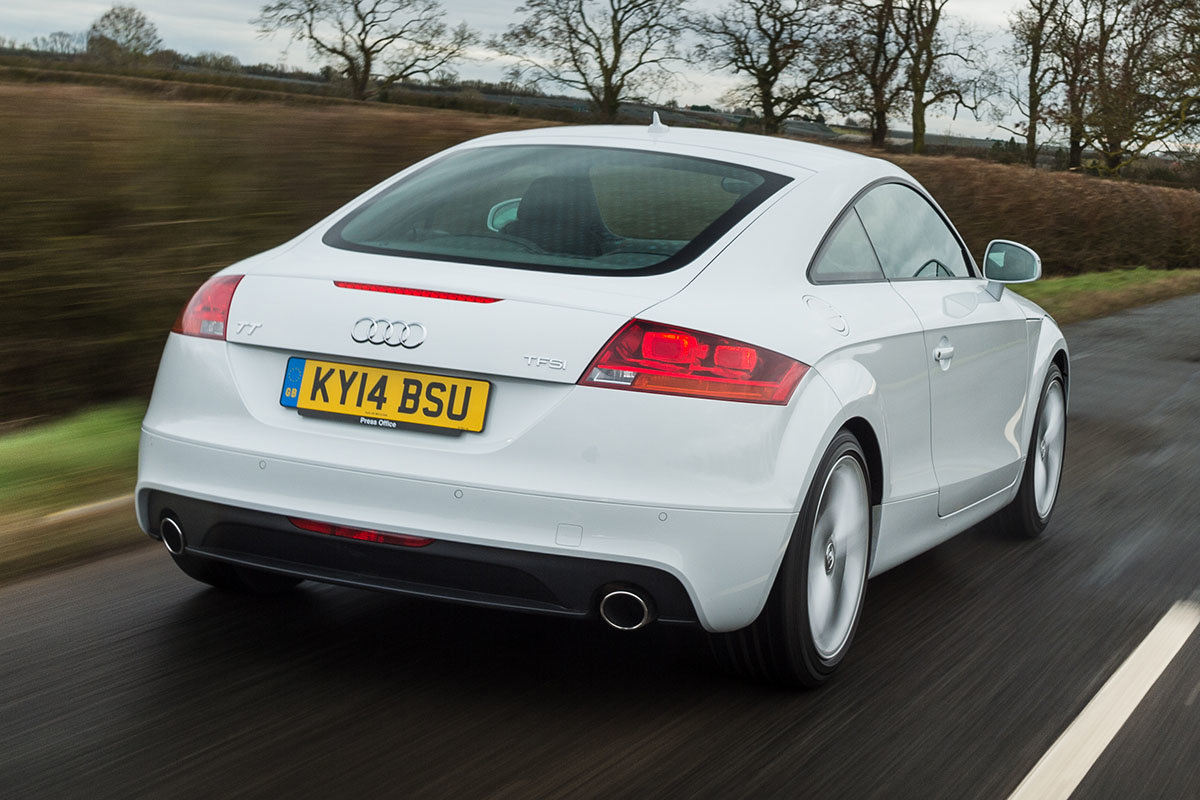
Audi TT running costs
The cheapest TT Coupe to run is, unsurprisingly, the diesel model. Reckon on seeing around 45mpg on average in day-to-day driving, though this will obviously drop off a little if you like to drive quickly.
Of the petrol versions, it’s the standard 2.0-litre that’s the most efficient, and we wouldn’t be surprised to see anywhere between 30 and 35mpg on average, depending on your driving style.
Reckon on that dropping off by 1-2mpg if you go for the 2.0 quattro, while the 3.2-litre engine will sink your fuel consumption further, to somewhere in the order of 20-25mpg. In fact, the more powerful TT S is actually more economical, thanks to its impressively efficient 2.0-litre four-cylinder engine; you should see a shade below 30mpg on average. The same goes for the TT RS, which should be able to crack 25mpg on average.
All mk2 TTs are now old enough to qualify for Audi’s fixed-price servicing offer, and because that’s one of the most reasonable of any premium manufacturer’s, it means you can get your car serviced at an Audi dealership for a decent price. Having said that, if you take it to an independent specialist, you’ll pay even less.
Opt for a 2.0-litre petrol TT built before 2009 or one of the diesel versions, and you’ll need to plan on changing the timing belt every five years or 120,000 miles, at a cost of around £600. Post-2009 2.0s and all V6s used a timing chain instead which, in theory, shouldn't need changing for the duration of the life of the car. Remember, too, that four-wheel-drive TTs will need to have the oil in their Haldex coupling changed every three years or 18,500 miles, whichever comes up first, although this shouldn’t cost you much more than a brake fluid change.
Audi TT reliability
The TT’s 2.0-litre petrol engine has been known to suffer from a stretched timing chain. Even if the problem is caught before it results in major engine damage, this can be an expensive job to fix, and if not it becomes eye-wateringly so, as you’ll need to rebuild or replace the engine. Listen out for rattling noises when you start the car, and make sure you buy a car that has evidence of regular maintenance.
The above problem can be compounded by another peculiar to the 1.8-litre and 2.0-litre engines, which is that they can sometimes consume more oil than usual. The problem seems to exist mainly on cars registered in early 2011 and before, so it’s best to seek out a car made after this date.
Most TTs are fitted with standard leather seats, but if you’re looking at one that has the optional upgrade to the softer Nappa leather, it’s worth remembering that these seats have been known to wear more quickly than the standard ones, so they can look tatty sooner, and can also start to sag.
You’ll also want to listen out for knocks, clunks and rattles when you’re driving with the front wheels turned. It’s caused by a noisy steering rack, and while not a safety issue, it is annoying, and can cost a lot of money to repair, as the entire rack needs to be replaced.
- You might imagine that the extra traction of the four-wheel-drive TT quattros would make them better to drive, and indeed they are quicker off the line because they don’t spin their wheels as easily. However, the two-wheel-drive TT is the better of the two to drive, as its lower weight results in more agile handling. So if you’re after a TT that’s fun to drive, have a go in both to see which you prefer. If that is indeed the two-wheel-drive car, it’ll save you some cash, as they generally cost less.
- A diesel-powered TT Coupe is undoubtedly the one to have if you want to save money on fuel, but just keep in mind that buyers of diesel-powered coupes are now relatively scarce. As a result, you might find it hard to sell your diesel TT on, and you might have to cut the price to get it gone, denting or even eliminating all the savings you’ve made on fuel in the meantime.
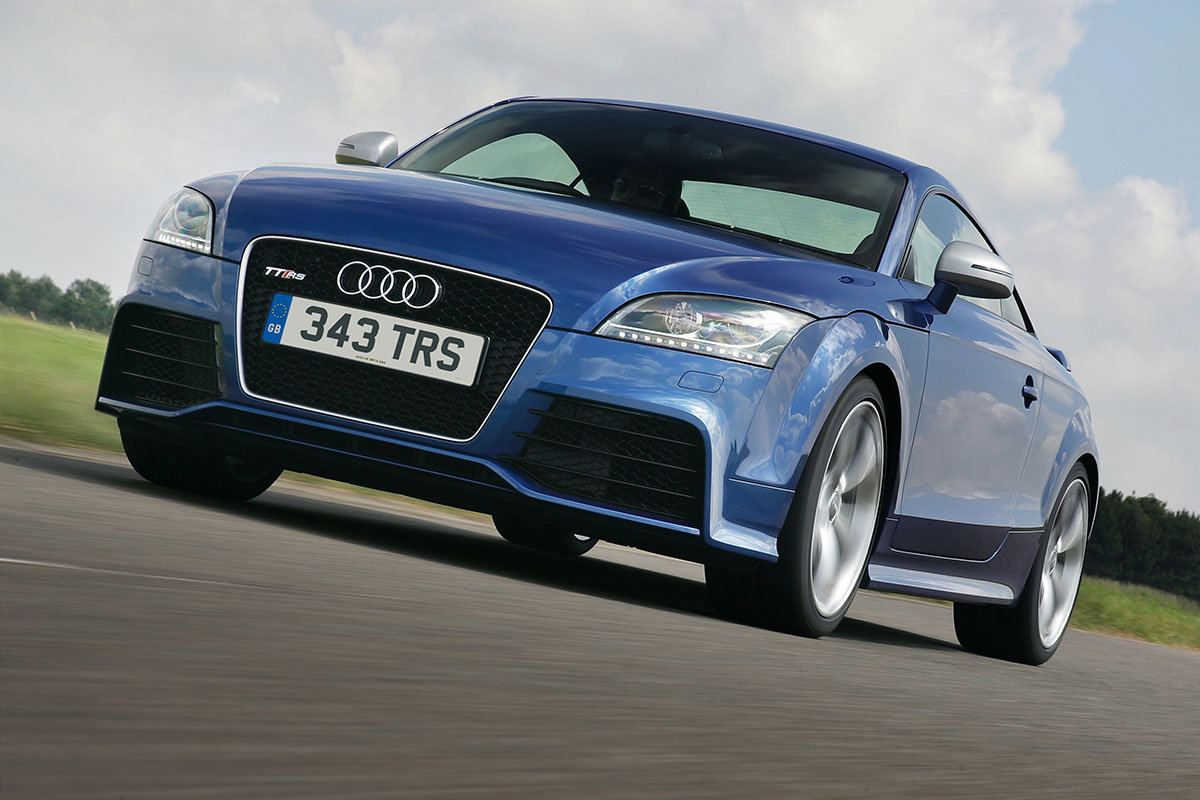
- If you want a faster TT, there are two performance versions to consider. The TT S comes with adjustable suspension and a 268bhp 2.0-litre turbo engine as standard, while the TT RS comes with a characterful five-cylinder engine that kicks out a whopping 335bhp. You can upgrade that yet further by choosing the TT RS Plus. However, keep in mind that as fast as the RS is, it lacks the involvement you might find in some rivals that can be had for the same sort of money, namely, a Porsche Cayman.
- If you want the most rounded model: We reckon the TT Coupe is best served simple, which is why we’d opt for the standard 2.0-litre model. It’s the lightest of all the mainstream models, which makes it the best handling, and without the extra weight of four-wheel drive, fuel consumption is more reasonable. It also happens to be the cheapest version of the TT, and its 197bhp engine is more than enough to make it pretty quick.
- If you fancy more toys: You could always upgrade to the Exclusive Line version, which gets leather seats and a few other extras. We’d be cautious about choosing the sporty-looking S Line or Black Edition, with their firmer suspension and bigger alloy wheels, as those make the ride quite stiff.
- If fuel economy is your biggest concern: You’ll probably want to consider the TT 2.0 TDI. The diesel engine gives the TT the sort of fuel consumption you’d normally expect from a humdrum hatchback, but with 168bhp on tap, it packs almost as much of a punch as the 2.0-litre petrol.
- If nothing but the fastest Audi TT of all will do: It has to be the TT RS Plus. Expect it to crack the 0-62mph benchmark in a blistering 4.3 seconds, and go on to an electronically limited top speed of 174mph.

