BMW 2 Series Coupe 2026 review | A driver-focused compact coupe
BMW 2 Series cars for sale
4.0
Expert review
Pros
Lithe handling
Smart interior
Roomy by coupe standards
Cons
No hatchback boot
Length and width make it less manoeuvrable in town
Not as practical as its four-door rivals

The CarGurus verdict
There are very few compact two-door coupes left on sale, and the BMW 2 Series Coupe stands out by offering rear-wheel-drive balance, strong performance and genuine everyday usability. It’s more practical than most cars of its type, feels suitably upmarket inside, and now comes with a modern infotainment system and a generous standard equipment.
The range ticks a lot of boxes, from sensible four-cylinder models through to the very quick M240i xDrive and hardcore M2. It isn’t cheap and it won’t suit buyers who need four doors, but if driving enjoyment matters – and you want a compact coupe that still works day to day – the BMW 2 Series Coupe is one of the best options available.

What is the BMW 2 Series Coupe?
The BMW 2 Series Coupe is something of a rarity in today’s new-car market: a compact, two-door coupe that prioritises driving enjoyment over outright practicality. As most manufacturers move towards SUVs and crossovers – both the Audi TT and Toyota GR86 have been axed since the arrival of the current 2 Series Coupe – BMW has chosen to stick with a traditional rear-wheel-drive layout, giving the 2 Series a distinct identity among modern performance cars. It sits closer to vehicles such as the Alpine A110 and Porsche 718 Cayman than most mainstream coupes, without being as single-minded.
The current 2 Series Coupe is larger and more aggressively styled than its predecessor, with a wider track, muscular bodywork and a focus on performance. Under the skin, it uses a bespoke platform rather than sharing heavily with front-wheel-drive BMWs. This allows it to retain classic BMW traits such as rear-wheel drive (or rear-biased all-wheel drive) and a strong emphasis on balance and handling.
This isn’t a one-size-fits-all proposition, as the 2 Series Coupe range goes from relatively restrained four-cylinder petrol models through to more powerful M Performance versions, then culminates in the hardcore M2 (which sits firmly in modern BMW M-car territory). Whether you’re after a car for commuting or something sportier to rival a Porsche, there will likely be a 2 Series Coupe that suits you.

How practical is it?
As with any two-door coupe, the BMW 2 Series is compromised by its lack of rear doors. In that respect, four-door alternatives such as the Mercedes-Benz CLA, or BMW’s own 2 Series Gran Coupe, are easier to live with day to day – particularly if you often carry rear-seat passengers.
That said, by two-door standards the 2 Series Coupe is surprisingly spacious. The rear seats are fine for occasional adult use, and there’s ample room for two child seats to fit side-by-side in the back. Compared with older two-door coupes, the cabin feels noticeably more usable, and it’s closer in overall space to much larger cars like the Ford Mustang than you might expect.
Boot space is one of the BMW’s strengths. At 390 litres, it’s a good size for this type of car and large enough for a weekly shop or a couple of weekend bags. While it doesn’t offer the convenience of a wide-opening hatchback like some rivals, practicality is boosted by the 40:20:40 split-folding rear seats. These allow longer items to be carried while still leaving some space for rear passengers.
What's it like to drive?
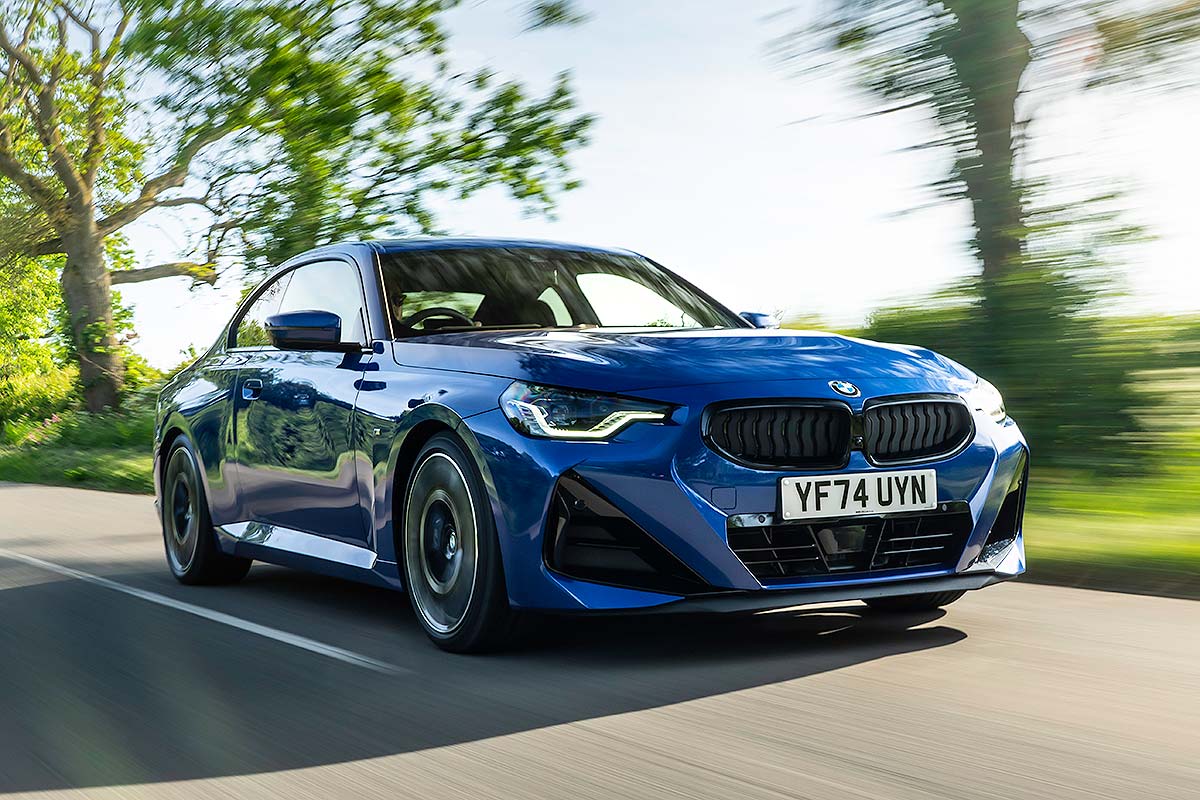
One of the BMW 2 Series Coupe’s biggest selling points is that it sticks with rear-wheel drive on most versions. Notably, this is in contrast to the four-door 2 Series Gran Coupe, which has front-wheel drive. The former layout brings clear benefits if you enjoy driving, by allowing the front wheels to focus on steering while the rear wheels deal with putting the power down. It all results in better balance and a more engaging feel.
In standard four-cylinder guises such as the 220i and 230i, the 2 Series Coupe strikes a good balance between usability and driver enjoyment. Its chassis feels well judged, with strong grip, predictable handling and steering that’s more communicative than you’ll find in most modern cars. These versions are enjoyable on a B-road without feeling intimidating or overly extreme.
Step up to the M240i xDrive, and the car’s character shifts noticeably. With significantly more power and all-wheel drive, it delivers very strong straight-line performance and huge grip, but it feels more like a compact performance car than a traditional rear-drive coupe. With a 0-62mph time of 4.3 seconds, it’s certainly fast, but it feels less playful than the rear-wheel-drive models.
At the top of the range sits the BMW M2, which turns things up to 11. This is a full-fat M car, with a firmer ride, sharper responses and a far greater focus on outright performance. The 0-62mph time drops to around four seconds, and while it’s thrilling to drive, the overall experience is less forgiving and less comfortable than other models. A car best suited to enthusiasts, then.

Technology, equipment & infotainment
The BMW 2 Series Coupe now comes with more equipment as standard than earlier versions. All models feature BMW’s Curved Display, which combines a 12.3-inch digital driver display with a 14.9-inch touchscreen infotainment system that runs the latest BMW iDrive system with Operating System 8.5. This brings sharper graphics, faster response times and a revised layout designed to reduce the need to dive into sub-menus.
Standard kit across the 2 Series Coupe range is strong, with even the entry-level M Sport model boasting the likes of 18-inch alloy wheels, heated sports seats, dual-zone climate control, M Sport suspension, cruise control and parking assist. Upgrading to the M Sport Pro adds extra equipment, such as adaptive LED headlights, 19-inch alloy wheels, more M Sport cosmetic upgrades, a rear spoiler and an upgraded audio system.
The 2 Series Coupe received a mid-life facelift in 2024, including new paint finishes and a revamped interior with a new steering wheel, plus extra alloy wheel and upholstery options. The overall impression is of a cabin that feels modern and suitably premium, without losing BMW’s famous driver-focused layout.
That said, the move to BMW OS 8.5 does mean the loss of some traditional controls. Climate and ventilation are now largely operated through the touchscreen or voice commands, and the reliance on digital interaction won’t suit everyone. While the system is more intuitive than earlier touchscreen-only BMW setups, it still demands more attention than the older, button-heavy interiors.

BMW 2 Series Coupe running costs
For buyers looking at the used market, it’s worth noting that the now-discontinued 220d diesel was the most economical model in the range. In real-world use, fuel economy of around 50mpg was achievable, particularly on longer motorway runs. It also remains one of the few compact two-door coupes offered with a diesel engine, making it an unusual but appealing choice for drivers with a long commute.
Most buyers, however, will opt for one of the petrol models. The 220i can return low-40s mpg, according to official figures, while the 230i sees a slight drop to around 40mpg. There’s a noticeable drop-off for the M240i, which offers low- to mid-30s mpg, thanks in part to its all-wheel-drive system. That’s still impressive for a performance coupe, but don’t forget to factor in the cost of tyres, insurance and maintenance.
Servicing costs for the 2 Series Coupe tend to be higher than for more mainstream rivals. BMW maintenance is generally more expensive than Audi’s and significantly pricier than brands such as Ford and Toyota. On the plus side, all engines use a timing chain rather than a belt, avoiding a major scheduled replacement expense later in the car’s life. BMW’s service plans can help spread costs over time, too.

BMW 2 Series Coupe reliability
The BMW 2 Series Coupe is still a relatively new model, so there isn’t a large pool of long-term reliability data specific to this car. However, we can get a useful indication of what ownership might be like by looking at related BMW models and broader brand performance.
In the 2025 What Car? Reliability Survey, BMW finished sixth out of 30 manufacturers: a strong overall score that placed it ahead of rivals such as Audi, Jaguar, Mercedes-Benz and Porsche. That suggests BMW’s engines and electronics are generally dependable, even if they’re not quite up to the Lexus standards.
The 2 Series Coupe itself placed eighth out of 12 cars in the latest list of coupes, convertibles and sports cars. That’s not terrible, but it certainly suggests there are other, more reliable options out there.
When new, the 2 Series Coupe comes with a three-year, unlimited-mileage warranty. This level of cover is typical for a premium manufacturer, but is less generous than the five- and seven-year warranties offered by some rivals.
- It’s rear-wheel drive (or rear-biased all-wheel drive). Unlike BMW’s smaller hatchbacks, the 2 Series Coupe sits on a dedicated rear-drive platform derived from bigger BMWs. That’s why it feels more balanced and engaging to drive than front-wheel-drive alternatives, and why it’s noticeably larger and roomier than the previous model.
- The standard cars, M Performance model and M2 are very different propositions. Four-cylinder versions such as the 220i and 230i are quick, well balanced and usable every day. The M240i xDrive adds a turbocharged six-cylinder engine and huge performance, blending straight-line speed with all-weather security. At the top of the range, the M2 is a no-excuses BMW M car with a much sharper focus, firmer ride and 473bhp from its six-cylinder engine.
- It has automatic transmissions only – except for the M2. Every BMW 2 Series Coupe comes with an eight-speed transmission as standard. It’s smooth and responsive in everyday driving and suits the car’s character well, but buyers looking for a manual gearbox need to splash out on the M2 model and select the optional six-speed ’box.
- For most buyers, the best all-rounder in the BMW 2 Series Coupe range is the 220i. It’s the most affordable version, but still delivers strong performance, rear-wheel-drive balance and enough pace to feel genuinely sporty on the road. It’s also the easiest to live with day-to-day, combining respectable fuel economy with a generous level of standard equipment.
- If you want a noticeable step up in performance without going all-in with an M car, the M240i xDrive makes sense. Its turbocharged six-cylinder engine delivers effortless speed, and the rear-biased all-wheel-drive system provides huge traction even in poor weather. It’s very fast, extremely capable, and more usable than the extreme M2, though it is less playful than the rear-wheel-drive models.
- At the top of the range sits the BMW M2, which is a very different proposition. This is a proper M car, with a sharper chassis, firmer ride and far greater performance potential than the rest of the line-up. It’s hugely rewarding to drive, but it’s also the least comfortable 2 Series Coupe and the most expensive to run, making it better suited to enthusiasts than those looking for a sporty daily driver.
- The 230i sits neatly between the 220i and M240i, offering extra punch over the entry-level car without the cost and complexity of the six-cylinder models. It’s worth considering if you want extra performance but still have one eye on running costs.