BMW M5 Review (2017-2023)
BMW M5 cars for sale
4.0
Expert review
Pros
Blistering performance
Sublime CS version
Can switch between two- and four-wheel drive on demand
Cons
CS model is extremely pricey
Lacks the drama of some rivals
Not as practical as it could be

The CarGurus verdict
The BMW M5 is a remarkable piece of kit, managing to combine the high-luxury feel of the standard 5 Series with incredible performance and surprisingly agile handling. It lacks the outright bombast of the Mercedes-AMG E63 S (unless you opt for the extraordinary CS), mind you – but for some buyers, that’ll be a positive, rather than a negative.
Of course, it’ll be expensive to run, and it isn’t the most practical car among its rivals, but if you can live with that, the latest M5 is a fast, precise and well-honed thing that’s more than worthy of the badge it wears.
What is the BMW M5?
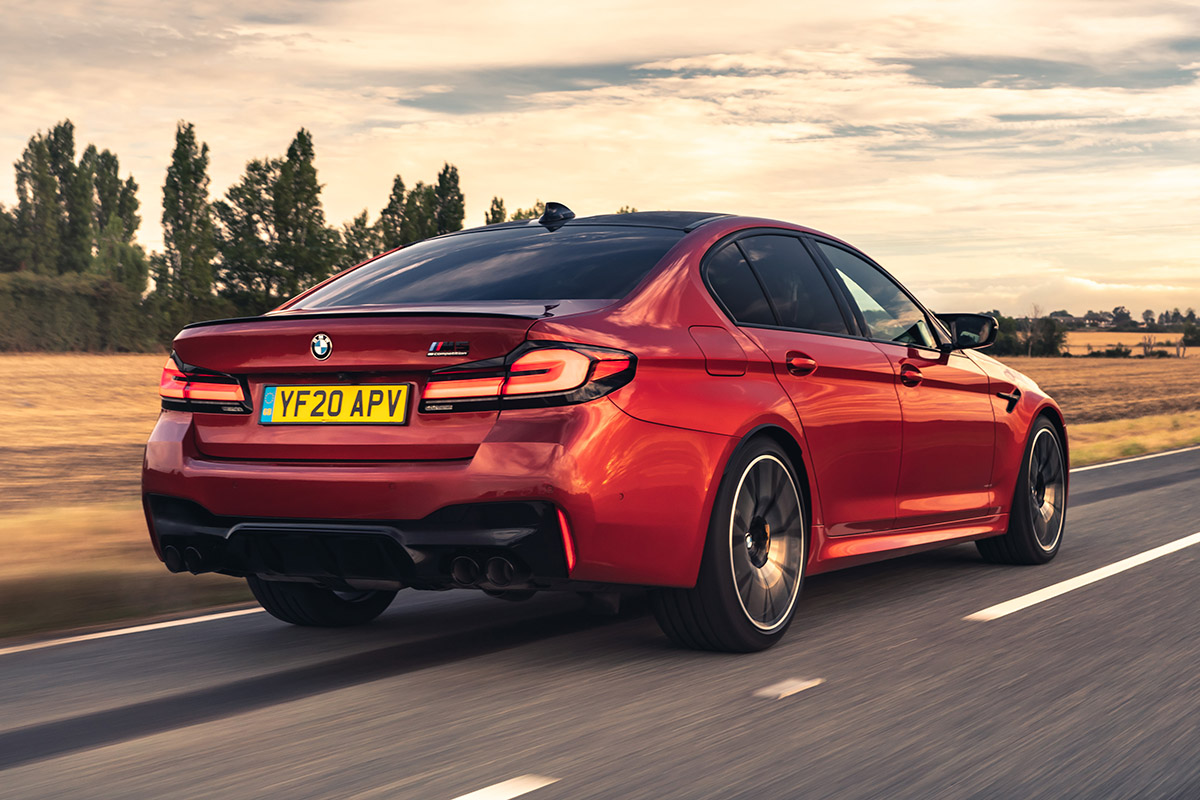
The BMW M5 is the flagship of the BMW 5 Series range; a four-door saloon with a 4.4-litre twin-turbo V8 engine that produces no less than 616bhp, an exceptional figure that’d be at home in most supercars. And it teams that power with all the motorsport-derived chassis nous of BMW’s M Division, turning this vast, thumpingly powerful car into one that can dance down a B-road just as well as it can wolf down an autobahn.
How practical is it?
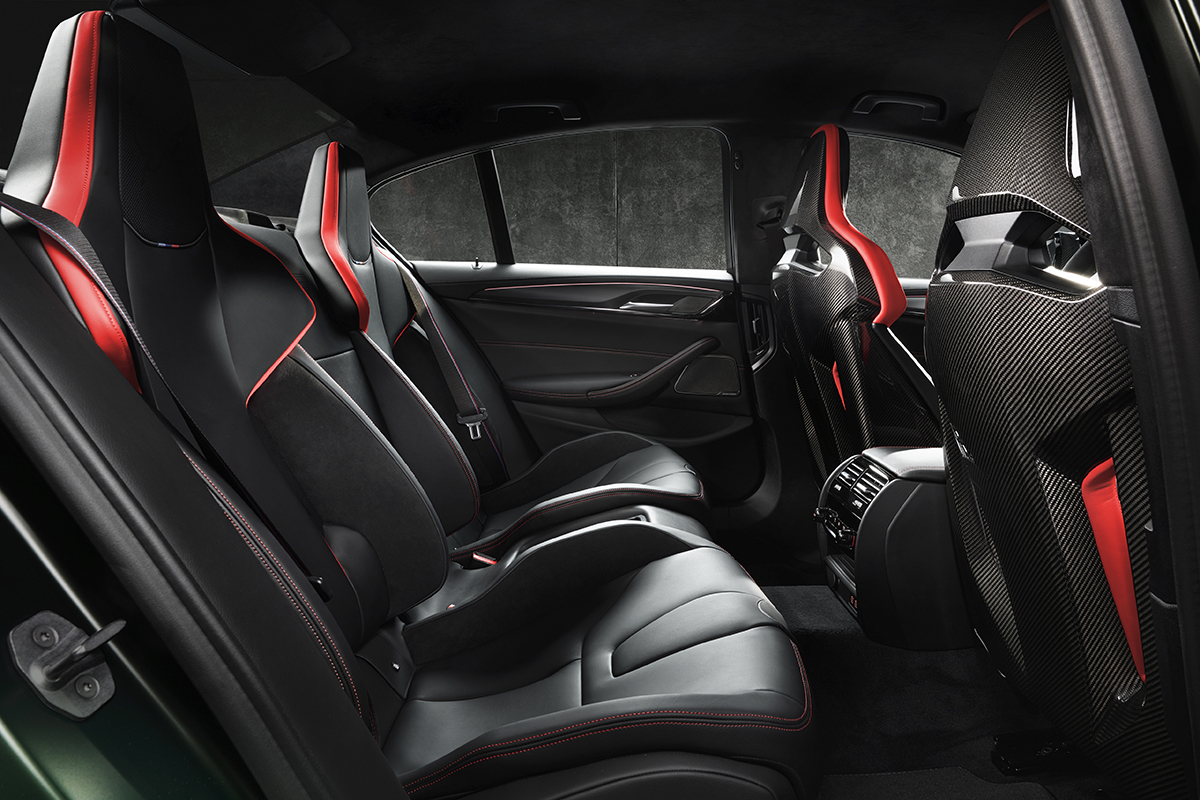
The M5 is reasonably practical. You get a 530-litre boot, and five roomy seats (though the M5 CS only gets four, because the two in the back are individual bucket seats). The rear seats also split and fold in a 40:20:40 format, which helps with the car's functionality (though again, the M5 CS is the exception, because its rear seats are fixed in place).
However, while the boot is a decent size, it’s less useful than its rivals’. Both the Porsche Panamera and Audi RS7 come with huge hatchback boot lids, which make it easier to load larger items, and while the Porsche’s boot is smaller on outright volume, the RS7’s is a touch larger.
The Mercedes E63 S’s is even bigger still, and while it’s a saloon like the M5, the E63 S can be had as an estate should you need more room; the M5 can’t.
What's it like to drive?
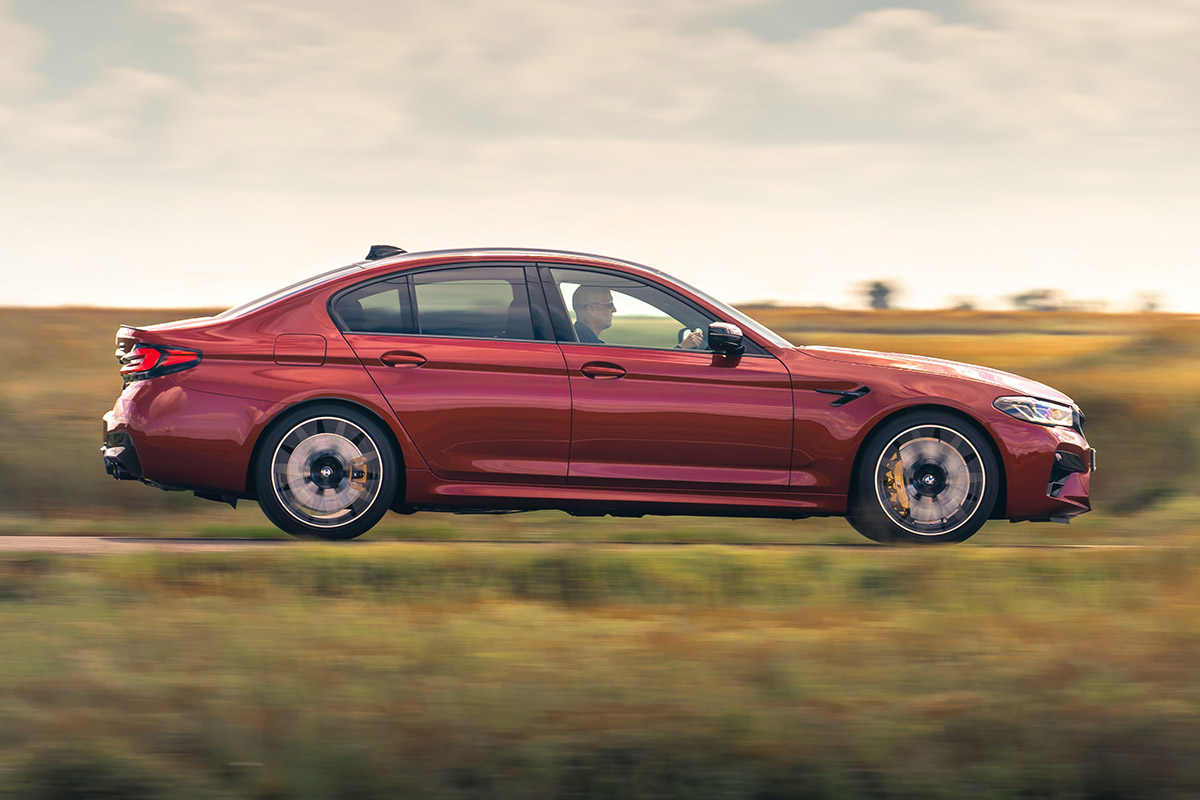
The first time you drive an M5, it won't take you long to notice is that it is extraordinarily fast. Prod the throttle, and you can end up going 20mph faster than you were in an instant. And its sheer pace is unrelenting, too; even at motorway speeds, the way the M5 takes off and hurtles down the road is not a little bit mind-bending. It'll continue on to a top speed that's electronically limited to 155mph, too.
It does tend more toward comfort than outright thrills, though. Even in Competition form, the M5 rides smoothly and while its engine makes a great sound, the exhaust note is slightly muted from within the cockpit, the better to soothe you as it whisks you along like an express train.
Having said that, the M5 can really move when you ask it to. On a back road, it’s remarkably light on its feel, belying its near-two-tonne weight astonishingly well. Again, it lacks the lairy kicks of a Mercedes-AMG E63 S, but the M5's driving experience deals instead in deft responses, neat lines through bends, and pin-point precision.
Technology, equipment & infotainment
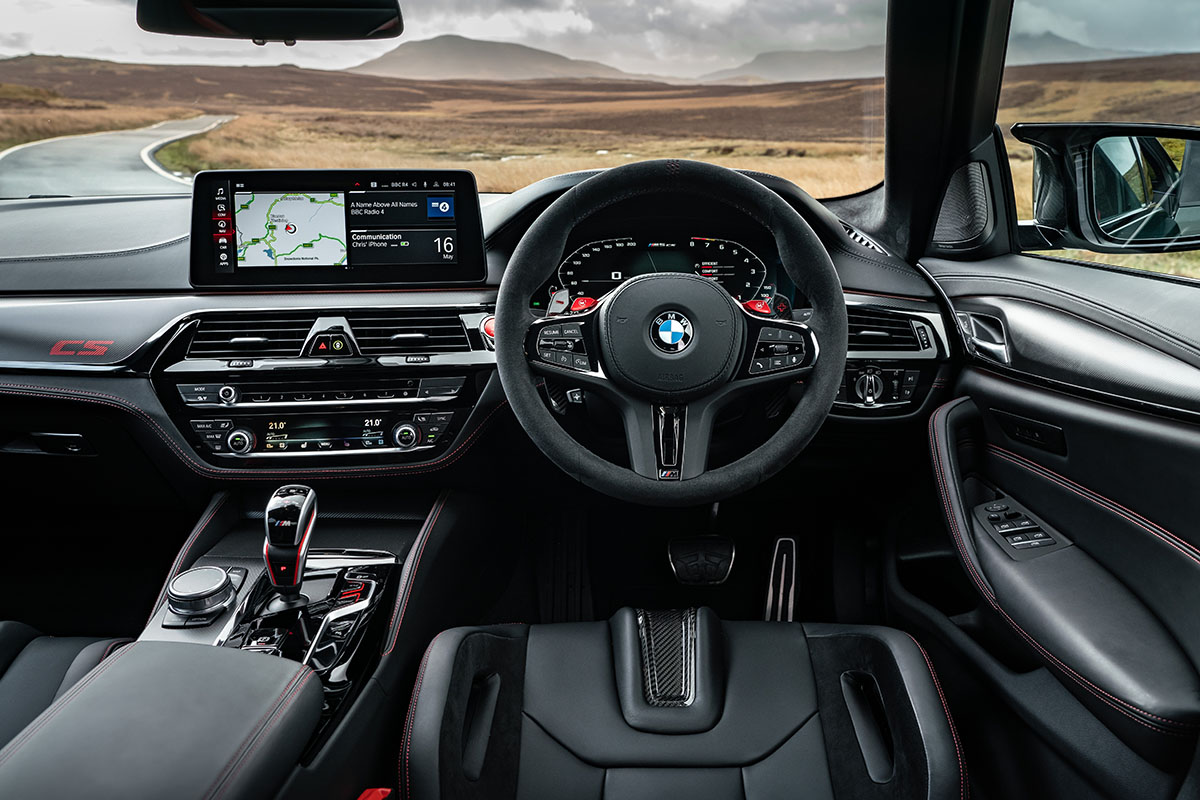
The M5 is intended as an all-singing, all-dancing super-saloon, rather than a lightweight track special, and as such, it gets all the bells and whistles you’d expect from a top-of-the-range 5 Series.
As you can tell from a glance at its specs. There’s four-zone climate control, a Harman Kardon sound system, adaptive LED headlights, adaptive suspension, Android Auto, Apple CarPlay, a head-up display, an eight-speed automatic gearbox tuned specifically for quick shifts, heated front seats, ambient lighting, and all manner of smart bits of gloss black trim to differentiate the M5 from the standard 5 Series models.
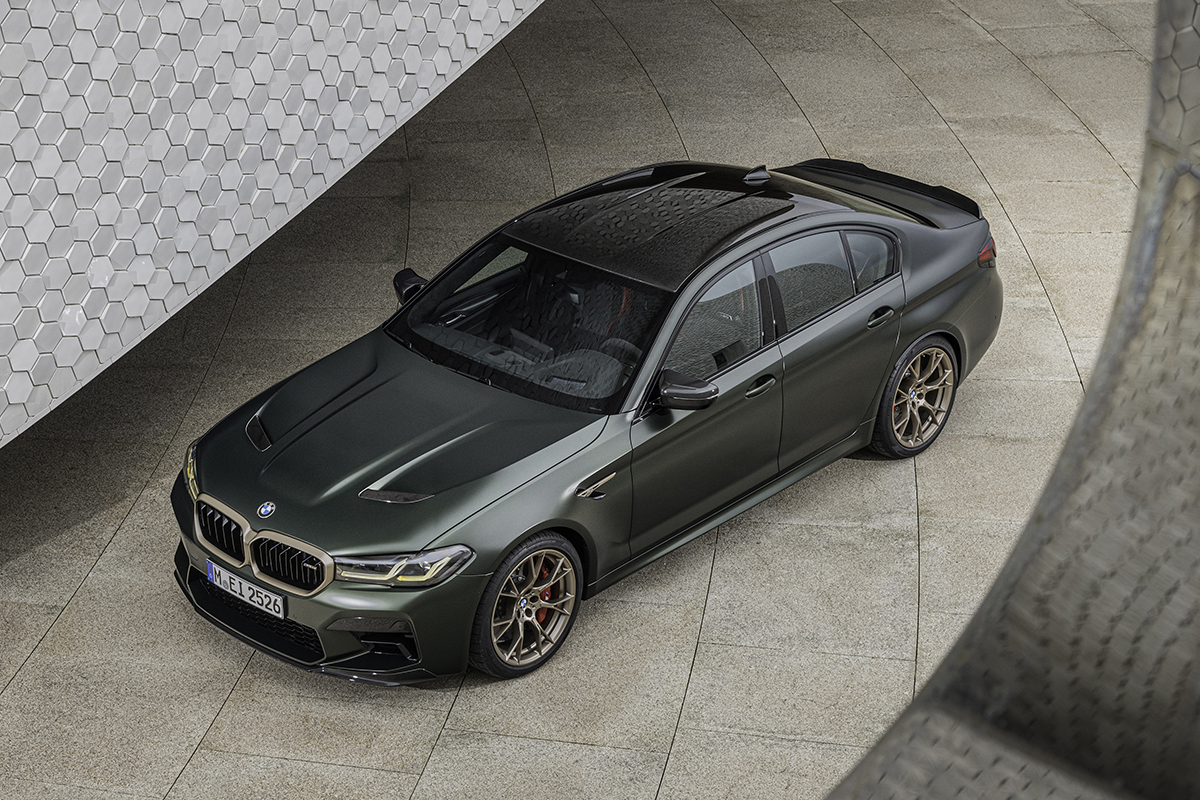
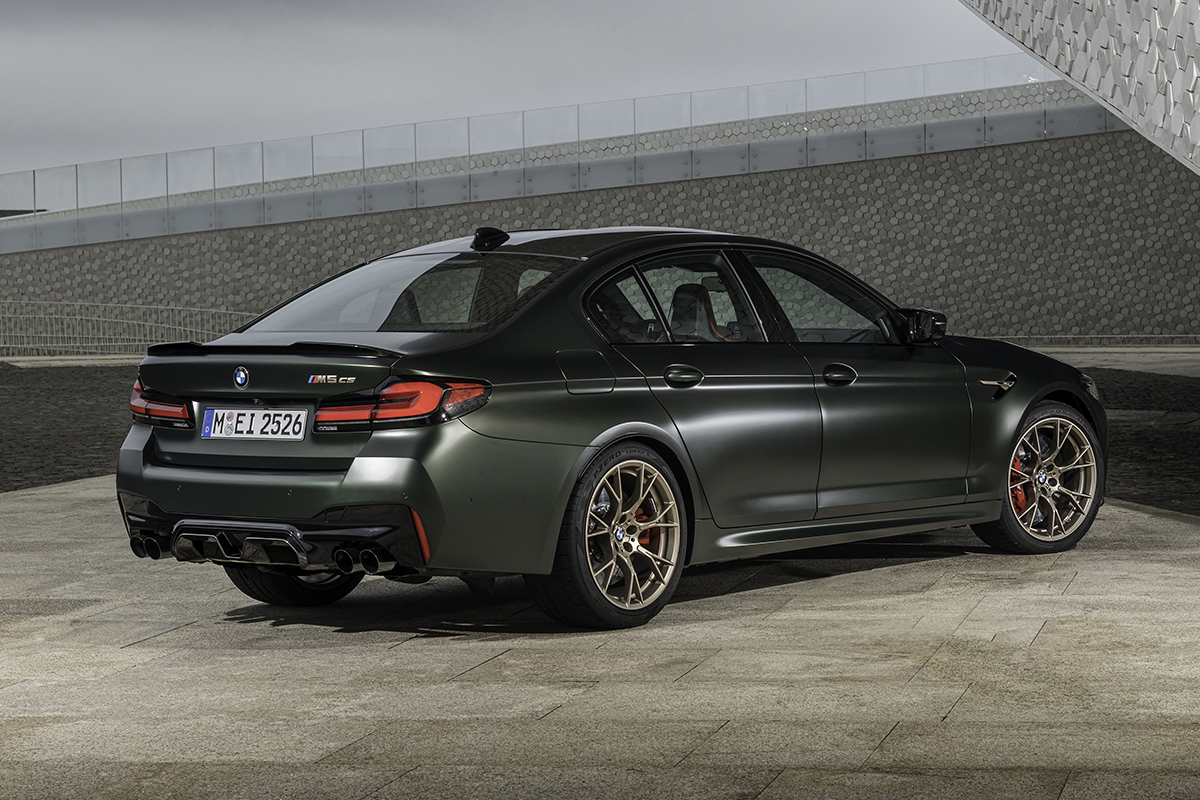
The M5 Competition goes further, with extra cooling for the engine, a rejigged exhaust system, and lowered and tweaked suspension, while the M5 CS gets more carbon-fibre on the bonnet and bodykit and carbon-fibre bucket seats with a Nurburgring pattern embossed into the leather headrests, as well as grippier tyres and thoroughly reworked suspension.
BMW M5 running costs
Let’s face it: you aren’t going to be buying a BMW M car if you’re in any way concerned about fuel economy. And indeed, whichever version you go for, the M5 probably won’t see much more than 25mpg in everyday use, so it isn’t really worth fretting about which model will offer the best fuel consumption.
Having said that, the M5 does look a fraction more efficient than its rivals, all of whom look to achieve around 2-3mpg less in similar circumstances. So if you need a reason to justify buying one, well, there’s one for you.
Mind you, don’t forget that maintenance won’t be as cheap as it will with a regular 5 Series, either. Expect to pay the same for a minor service on an M5 as you would for a major service on a ‘normal’ car – and a major service will set you back around double that.
Tyres, too, will not be cheap; the M5 features 20-inch wheels, and they’re wide ones at that. Even the Competition’s tyres won’t be cheap, then, but to replace the grippier tyres fitted to the M5 CS, you’ll be paying an eye-watering sum.
What’s more, all M5s will incur the higher rate of tax applied to cars that cost more than £40,000 when new – this will mean an additional surcharge on your car tax bills until the car is six years old, at which point the M5’s tax cost will drop to that of every other petrol car.
BMW M5 reliability
BMW’s reliability has improved over the past few years, if the most recent reliability surveys are anything to go by. Indeed, the petrol-powered BMW 5 Series finished top of the luxury car class in the most recent What Car? Reliability Survey, with a very credible score of 96.9%.
Don’t go imagining the M5 will be fault free just yet, mind you. This is an extremely complicated and highly-strung piece of machinery, there are lots of bits that might fail you. And if and when they do, it’ll be an expensive car to fix. That shouldn’t be an issue if your car is still under the three-year, unlimited-mileage warranty – but it is a shame BMW doesn’t offer more than that, given some other manufacturers are now offering five- and even seven-year guarantees.
- This sixth-generation M5 is the first to feature all-wheel drive. This system, known as xDrive, was added by BMW in order to keep pace with rivals from Audi and Mercedes-Benz. However, given the M5 was renowned for offering rear-biased handling, BMW opted to make the four-wheel-drive system rear biased; in fact, it transmits power only to the rear wheels until such time as it senses they’re losing traction, at which point it starts to shuffle power forward to the front end of the car in order to make sure all of the power can be deployed effectively. You can, however, lock the M5 into two-wheel-drive mode should you wish, so that it drives like an entirely rear-driven car; with the traction control turned off, this allows for some lurid tail-happy behaviour.
- When the M5 was launched early in 2018, the standard, 600hp car was the only version you could buy, but toward the end of the year the BMW M5 Competition joined the range. The Competition, with an additional 25bhp, was intended to sit alongside the M5 in the range, as a more hardcore alternative, but it ended up superseding it; some time before the M5 was facelifted in 2021, the standard M5 was quietly dropped from the range, leaving the Competition as the only M5 you could buy until the M5 CS came along.
- And what of the BMW M5 CS? Well, the first thing you’ll note about it is undoubtedly its price, which is well and truly in supercar territory. But when you drive the CS, it becomes clear why; along with 10bhp over and above the Competition, its tweaked suspension, carbon ceramic brakes and lower weight make it feel even more lithe than the standard M5, giving it truly supercar-rivalling pace on a back road. Yet the CS isn’t compromised when being driven normally; indeed, while its ride is more taut than the standard car’s, it’s also a little more composed with less vertical body movement. It’s also pliant enough to be an easy companion on a longer journey, so even in CS form, the M5 still fits its original brief. If you want one, though, you’ll have to buy one second-hand; BMW has already sold out its entire UK allocation.
There are only two models to choose from, and given you can only buy one of them brand new, it’ll have to be the M5 Competition. Not that that’s a bad thing; frankly, it’s probably the more sensible of the two M5s currently available brand new, and while the CS is undoubtedly a more impressive thing, the Competition’s price tag is a good deal less eye-widening. What’s more, the more luxury-biased interior is easier to live with day-to-day – and of course, you get the added practicality of three rear seats with a folding backrest.


