Bentley Flying Spur Review (2019-present)
Bentley Flying Spur cars for sale
4.0
Expert review
Pros
Delivers pace and luxury in equal measure
Cabin shows exceptional craftsmanship
Composed handling for such a large and heavy car
Cons
High running costs, especially if you choose the W12
Bentley has a poor reputation for reliability
Surprisingly small boot
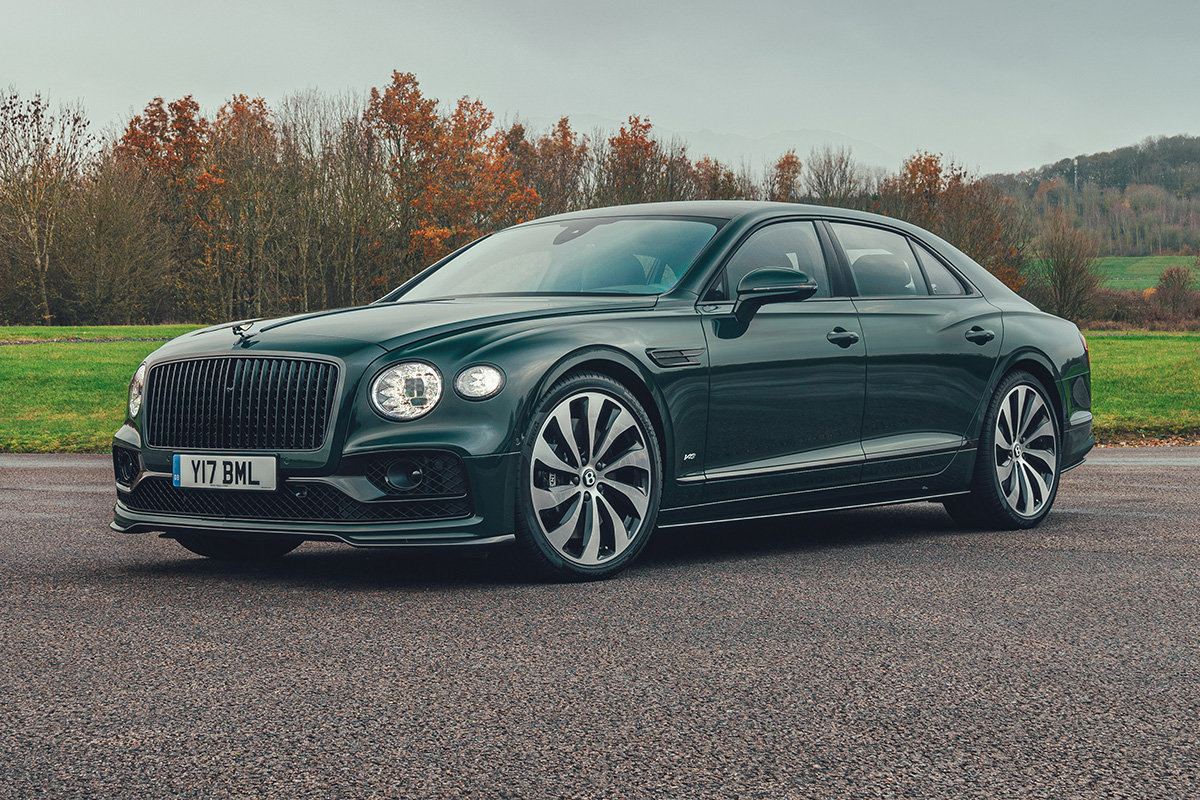
The CarGurus verdict
It’s fair to say that buying and owning a Bentley Flying Spur is not one of the cheapest ways of getting around. In fact, it’s one of the most expensive.
If you stick to the cheaper V8 version, though, you’ll not only save yourself a bit of cash, but you’ll also get the better of the two available models; it’s almost as fast as the W12 in the real world, it drives better, it handles better, and it’s even a little less costly to run.
Whichever Flying Spur you buy, you can at least see where all that money’s going; this is one of the finest cars around, and all but unequalled in terms of craftsmanship, comfort, and old-fashioned luxury. It isn’t perfect, by any stretch, but the Flying Spur’s flaws are easy to forgive in light of its sheer magnificence elsewhere.
What is the Bentley Flying Spur?
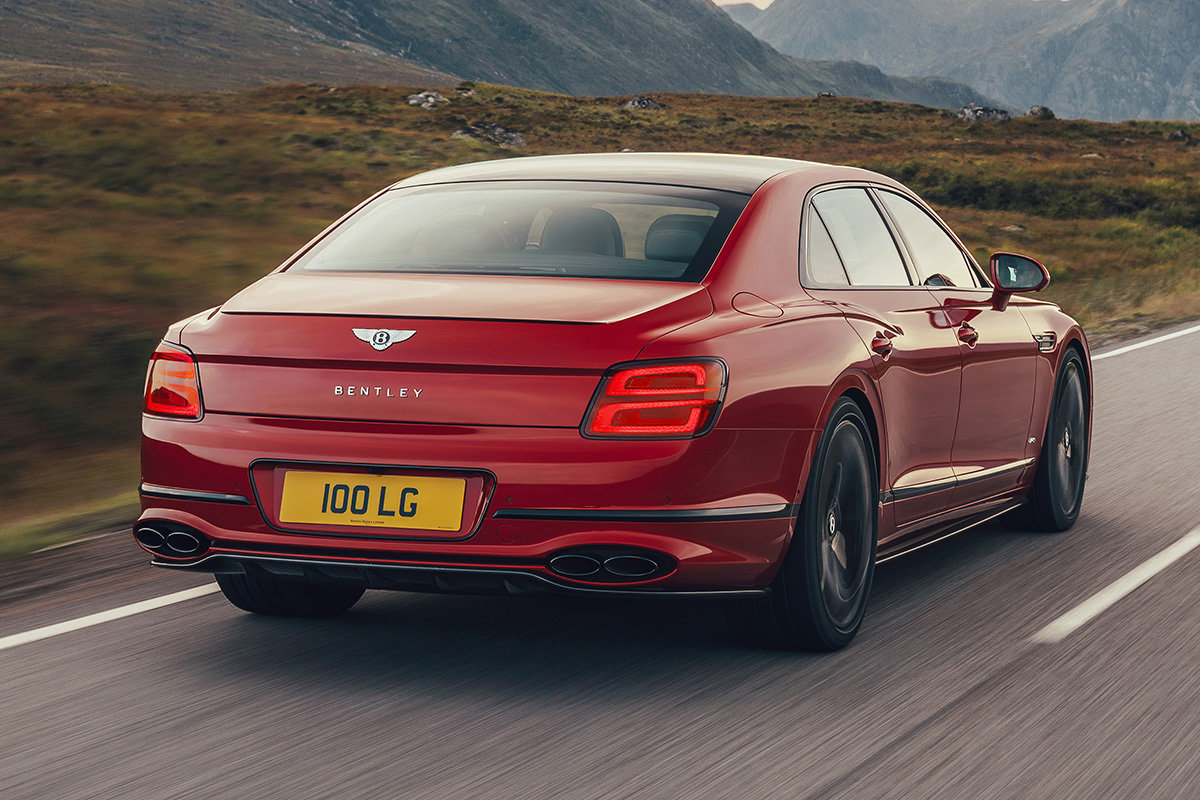
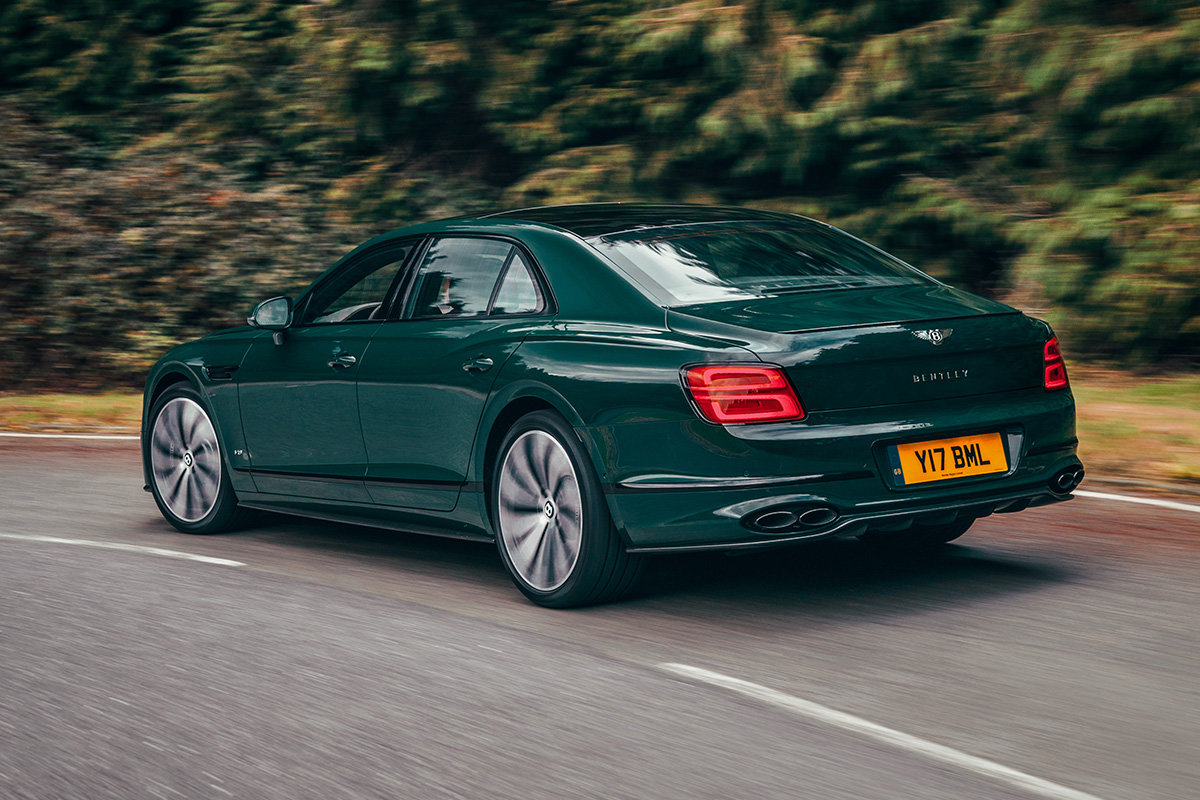
From the moment you set eyes on the Bentley Flying Spur, you know you’re in for something special. It is far more imposing in the metal than in pictures, and its sheer size is only obvious when it’s parked among more ordinary cars for a sense of scale.
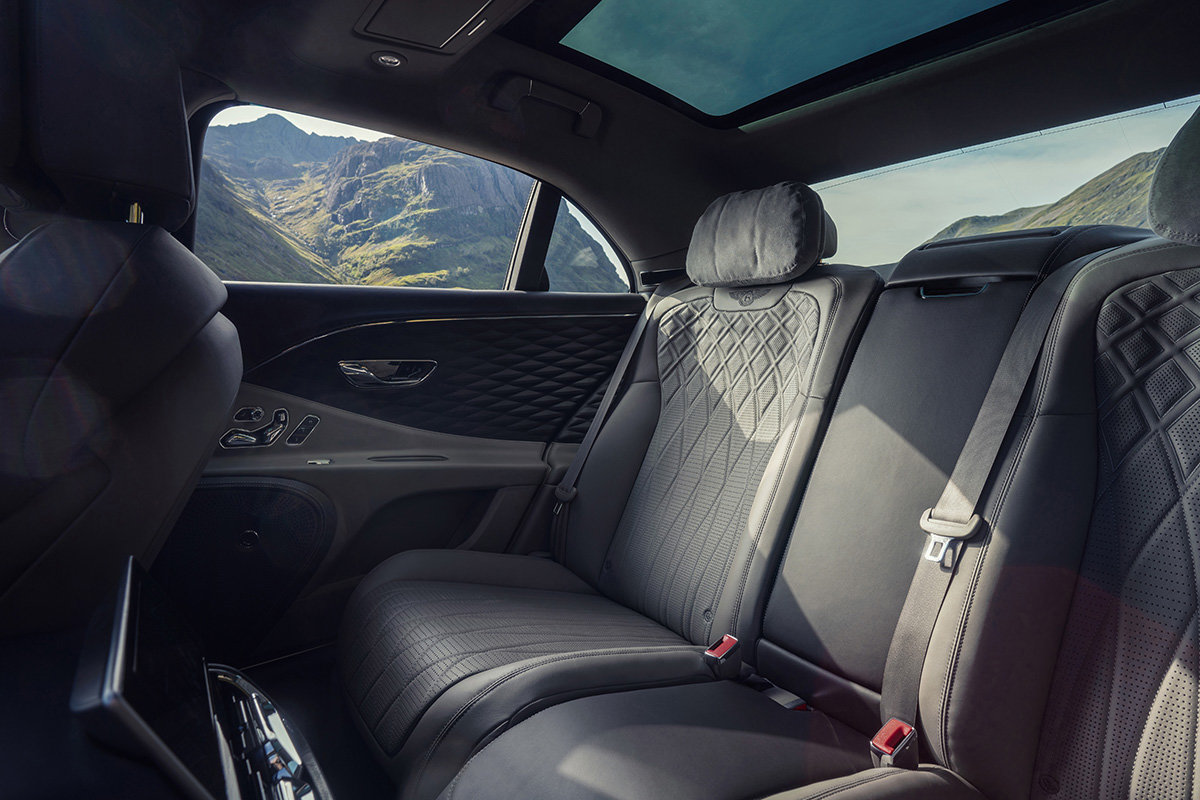
It carries its heft gently, its softly flowing lines hiding its bulk well and avoiding brashness. Inside, great slabs of beautifully finished wood veneer are recessed within swathes of soft, thick leather, shot through with knurled chrome switchgear that glides and clicks with the same satisfying heft you get from a really good crystal tumbler.
This Flying Spur feels a cut above the previous iteration. Both cars are, in effect, four-door versions of Bentley’s glamorous Continental GT coupe, but in this latest form, the Flying Spur feels more like a distinct model in its own right. It’s classier, too, with more bespoke switchgear, and fewer contributions from the parts bin of Bentley’s owner, the Volkswagen Group.
How practical is it?
For such a big car, the Flying Spur’s boot isn’t particularly large. Its total volume is 420 litres, which makes it smaller than that of an Audi A3 Saloon, which is almost a metre shorter in length.
The Bentley’s luggage compartment should still be big enough for a couple of hefty suitcases, but keep in mind that if you want to carry much more than that, you might need to use the back seat – most undignified.
What's it like to drive?
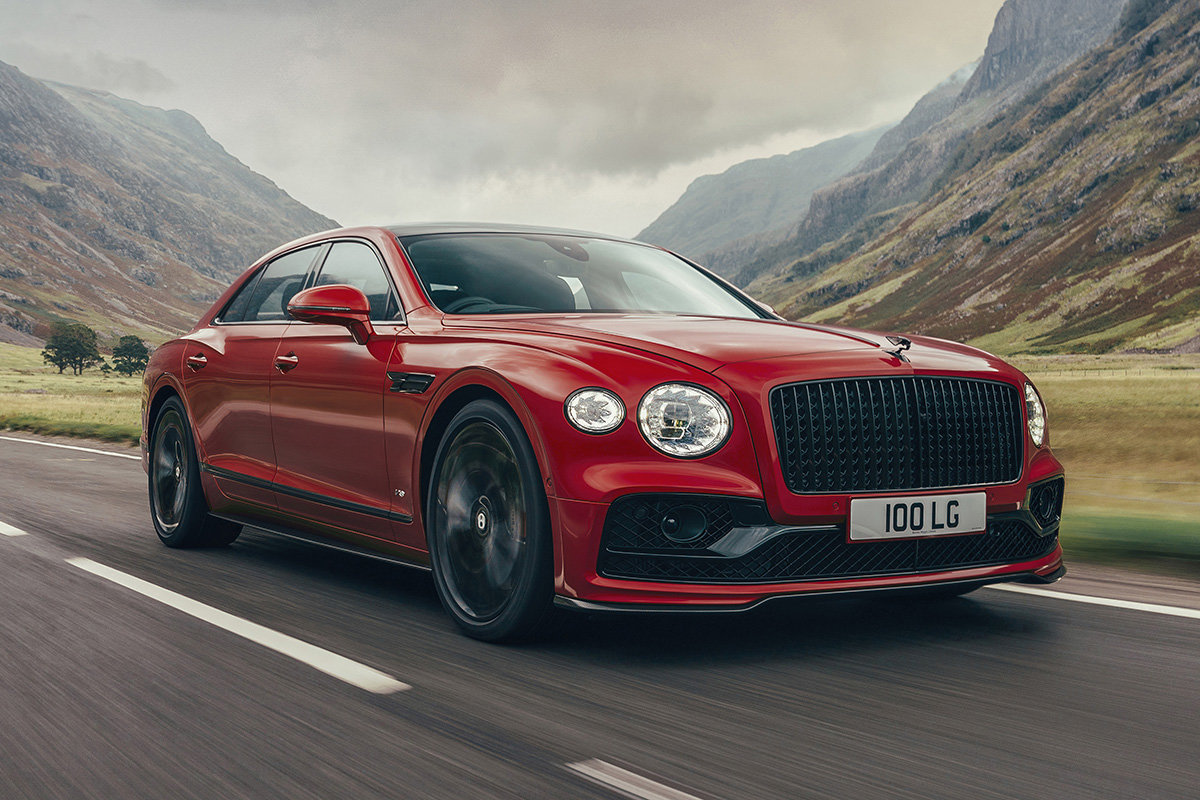
There are two versions to choose from: the V8 and the W12. The 542bhp 4.0-litre V8, sourced from Audi, is the cheaper of the two and more economical – though only by a small margin – while the 626bhp 6.0-litre W12 is more potent and pricier.
You might think that in a car like this, you should blow the budget and buy the most extravagant model of the two, but those in the know will choose the V8 over the W12. Despite all that extra power, there’s actually very little real-world difference between the two cars’ performance, plus the V8’s deep, rumbling engine note is more characterful than the subtler whispers and rasps of the W12.
The V8 also weighs around 100kg less than the W12, and that means it changes direction more swiftly. While you’ll never entirely forget that this is a large car, the Flying Spur is still surprisingly happy to be hustled along, given its considerable mass.
Both models come with air suspension, which means they normally ride with exceptional smoothness. However, the large wheels mean that on the odd occasion, sharp potholes can send an unseemly jolt through the car. This effect is less noticeable in the V8, not only because it comes with smaller wheels as standard, but also because it’s that bit lighter.
No matter which Flying Spur you choose, you’ll be getting one of the finest luxury saloons out there. Yes, it’s expensive, nothing out there for the price offers quite the same blend of comfort, craftsmanship and glamour.
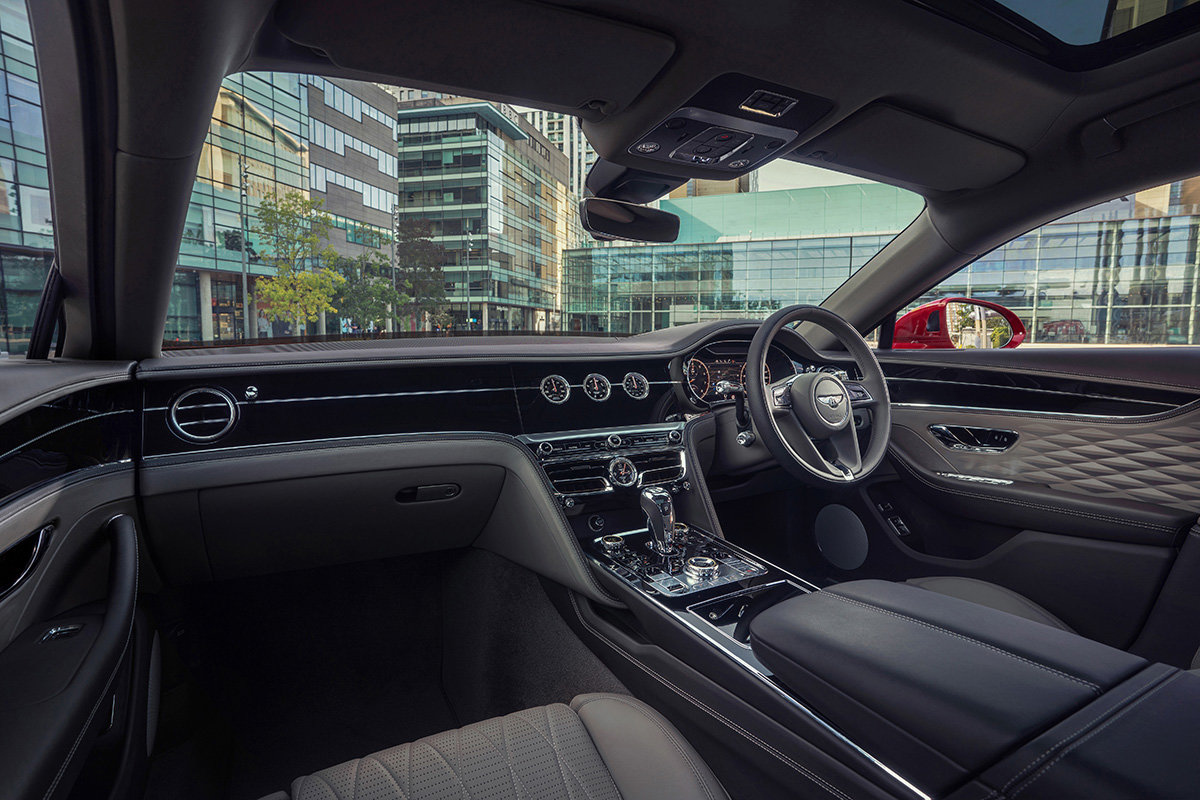
Technology, equipment & infotainment
You might expect a car that costs as much as the Bentley to come with all mod cons, and it does – to an extent. You’ll find a big, crisp, clear touchscreen, not to mention sat-nav, heated seats, virtual dials, and a slew of driver aids and safety equipment.
Having said that, the specification could be more comprehensive. For example, where you’ll find adaptive cruise control coming as standard-fit on some family cars these days, it’s an option you must pay more for in the Bentley, and the same goes for LED mood lighting.
Bentley would argue that you’re paying instead for the skills that go into building one of the world’s finest luxury cars, but still, you might be nonplussed to spend all that money, yet find your friend’s Volkswagen Golf has equipment your Bentley hasn’t.
Bentley Flying Spur running costs
It’d be pushing the limits of credibility to say that the Flying Spur is good value. Nevertheless, it will set you back roughly the same as a Mercedes-Maybach S-Class, and less than a Rolls-Royce Ghost. Even so, the six-figure sums you’ll need to spend even to get into a V8 aren’t exactly pocket change, and a W12 will set you back even more.
This is without troubling the vast list of options which, as we’ve mentioned, is something you might have to do to bring the Flying Spur’s complement of equipment up to scratch. And if you want to add more luxurious touches – diamond stitching, for example, or perhaps a wine cooler in the back seats – you’ll have to spend even more.
If you’re in the market for a Flying Spur, you’re probably not short of a bob or two, and that means fuel economy isn’t likely to be high on your list of priorities. For what it’s worth, the W12-powered version is catastrophically thirsty: don’t reckon on more than 18mpg on average, less still if you spend a lot of time driving round town. The V8 is a smidgen better, and should see somewhere between 20 and 25mpg, given careful use.
It goes without saying that the rest of the Flying Spur’s running costs will be similarly vertiginous. Whether you’re planning to buy one yourself or run it on the company, taxing a Flying Spur will be stupendously expensive, given that both models sit in the highest bands for both private and company car tax.
Servicing and repair costs are similarly hefty, as are prices for wear-and-tear parts, such as tyres. And don’t forget that when you do want to get your car looked at, you might have to travel a little way to get to a Bentley dealer, because they’re spread quite far apart.
Bentley Flying Spur reliability
Bentley doesn’t often feature in reliability surveys, and as a result, we don’t really have much to go on in working out how dependable the Flying Spur will be. The exclusive nature of the brand means there aren’t that many Bentleys around, so reliability analysts can’t build up an accurate picture of their dependability.
The last time any data on Bentley’s reliability was published was all the way back in 2015. Back then, Warranty Direct’s Reliability Index, which analysed claims to draw its conclusions, placed Bentley last out of 37 manufacturers, based on not only the number of repairs required but also the cost of each one.
It’s worth noting that this data was obtained a long time ago now, and Bentley’s reliability may have improved since then. That said, the Flying Spur shares some of its mechanicals with top-end Audi models, and given Audi consistently finishes toward the bottom of most reliability surveys, that doesn’t bode particularly well.
- The Flying Spur has all-wheel steering, which means the rear wheels turn in tandem with those at the front, although not to the same degree. That makes it a little more agile on the move but it’s also useful at low speed because it renders the car really quite manoeuvrable. Rather handy for something that’s 5.3-metres long.
- Choosing the V8 does leave you at a disadvantage when it comes to personalising your Flying Spur. Buyers of the W12 can choose between 17 different standard exterior paint schemes and 15 leather colours, with two-tone finishes at no extra cost. V8 buyers, however, only get seven paint finishes and five single-tone interior hues to choose from as standard. Having said that, there’s a huge range of colours to choose from at extra cost, and these are available on both models. If money really is no concern, Bentley will even colour-match your car’s paint or interior trim to an object of your choice – perhaps a favourite shirt or a piece of jewellery.
- The standard sound system is a 650-watt, 10-speaker affair and far from short on quality or power, but two more extravagant – and more expensive – versions are available. The mid-tier is a 1,500-watt, 16-speaker Bang & Olufsen system, and the top-end offering is a 2,200-watt Naim job.
- As we’ve mentioned, there are only two Flying Spurs to choose from, and while it might not sound like the obvious choice, we reckon the V8 one to have. It might seem like the lesser of the two cars on paper, but it barely gives anything away to the W12 in terms of real-world performance. Its more vocal engine suits the Bentley’s vaguely raffish air, too, and because it’s lighter, it treads more softly, glossing over bumps better and changing direction more swiftly. And the kicker? It’s slightly cheaper to buy and a smidgen more economical.

