Citroen C3 Picasso Review (2009-2017)
Citroen C3 Picasso cars for sale
4.0
Expert review
Pros
Good looking for a mini-MPV
Spacious and versatile interior
Comfortable to travel in, easy to drive
Cons
Reliability can be an issue, especially with the diesels
You'll be lucky to get near the official economy figures
The EGS gearbox is jerky
The CarGurus verdict
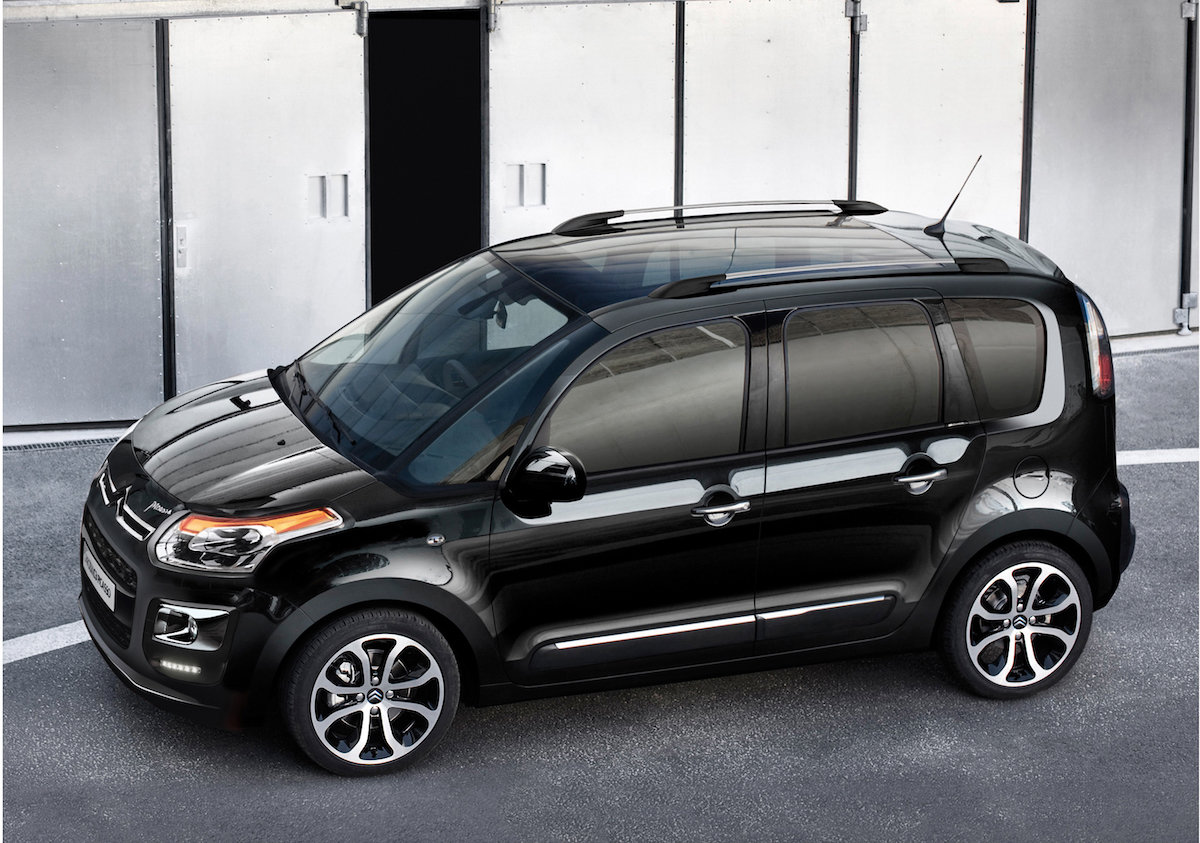
The term family car is often synonymous with dull and boring, but the Citroen C3 Picasso proves that you can enjoy space, practicality, and versatility in a car with bags of style and individuality inside and out. Its footprint is supermini small, yet it can transport five adults and their luggage with ease. It’s a masterpiece of packaging.
Full credit to Citroen for prioritising the desires of its customers – a comfortable ride, ease of driving – ahead of trying to satisfy motoring magazine road testers obsessed with assessing all cars like they are sports cars.
There are reliability issues to be wary of, however, especially with the diesel models, and fuel economy lags behind official claims. But if you’re looking for a family wagon with panache, or a practical yet charismatic car for your retirement, then the C3 Picasso deserves to be on your shortlist.
Having enjoyed huge success with various iterations of the C4 Picasso, Citroen introduced the C3 Picasso in 2009. A mini-MPV with a similar overall length to a regular supermini hatchback, the C3 Picasso employs a comparatively tall body – which features van-like upright sides and tailgate – to maximise interior volume and create class-leading cabin and boot space.
Although not the most dashing car dynamically, the C3 Picasso is distinctive and, on the whole, very well made.
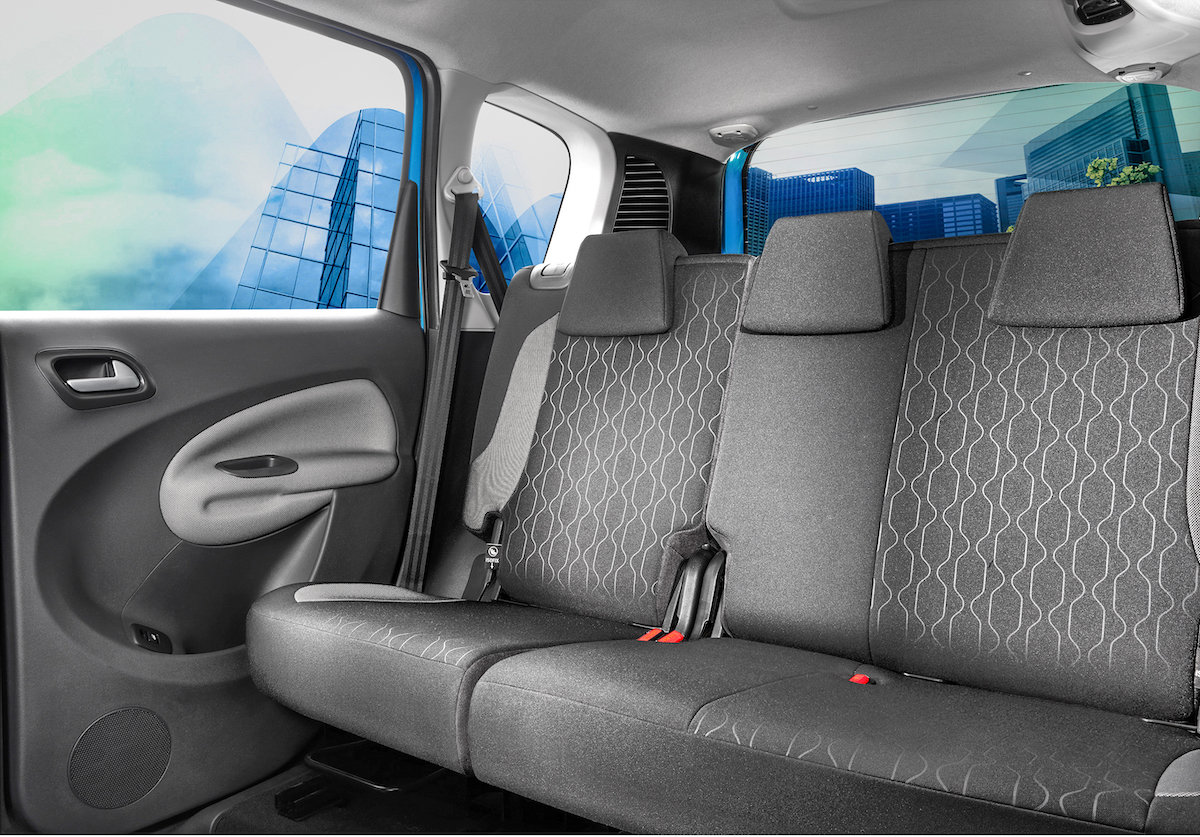
At its smallest the boot is larger than that of a Volkswagen Golf from the next class up, and with the sliding rear seat pushed forward (but not folded flat), there’s up to 500 litres of boot space, which is comparable to BMW’s 5 Series executive saloon.
Although the C3 Picasso’s seats are mounted high and you sit upright, there’s no shortage of headroom. Even when sitting behind a tall driver, rear seat passengers enjoy ample space for their knees as long as the 60/40 split bench isn’t all the way forward. It can slide fore and aft, either as a single piece or in separate parts, to increase the size of the boot or for limo-level legroom. The rear seat(s) can also be folded flat one-handed to accommodate bigger loads and, in some models, the front passenger seat’s backrest also folds flat so you can carry items up to 2.41 metres long.

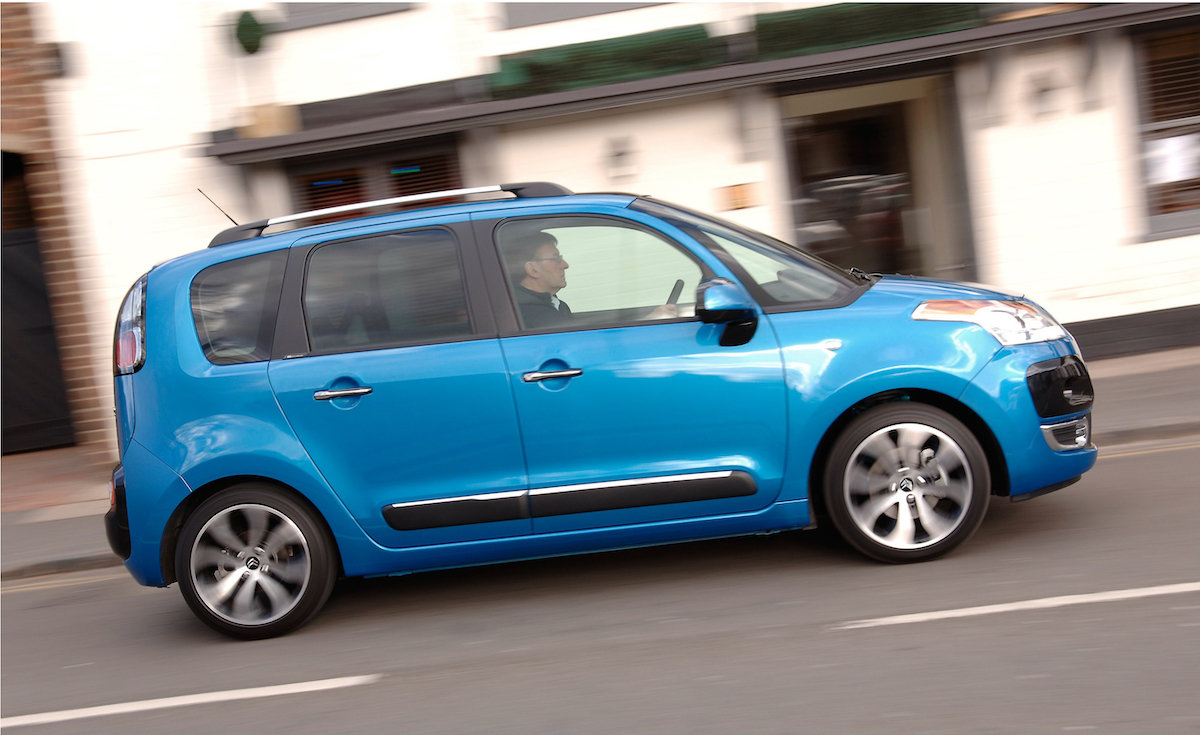
There’s criticism from some quarters that the C3 Picasso isn’t much fun to drive and suffers from excessive body roll, but Citroen has instead focused on making its little people mover comfortable and easy to drive. The ride is soft – except on models with 17-inch alloy wheels – and the steering light enough to make urban driving and parking a doddle.
The C3 Picasso’s range of petrol and diesel engines are feisty enough for the character of the car, although they can be a bit vocal on the motorway. The 95bhp 1.4-litre petrol unit offers only insipid performance, so the 120bhp 1.6-litre is a much better choice. Introduced late in the C3 Picasso’s life, there’s also a 1.2-litre turbocharged three-cylinder Puretech engine that develops 110bhp.
All the diesel engines are 1.6-litre HDi turbodiesels, early examples of which being 16-valve units with 90bhp and 110bhp, while from late 2010, cleaner, more efficient eight-valve versions took over, although they had the same power outputs.
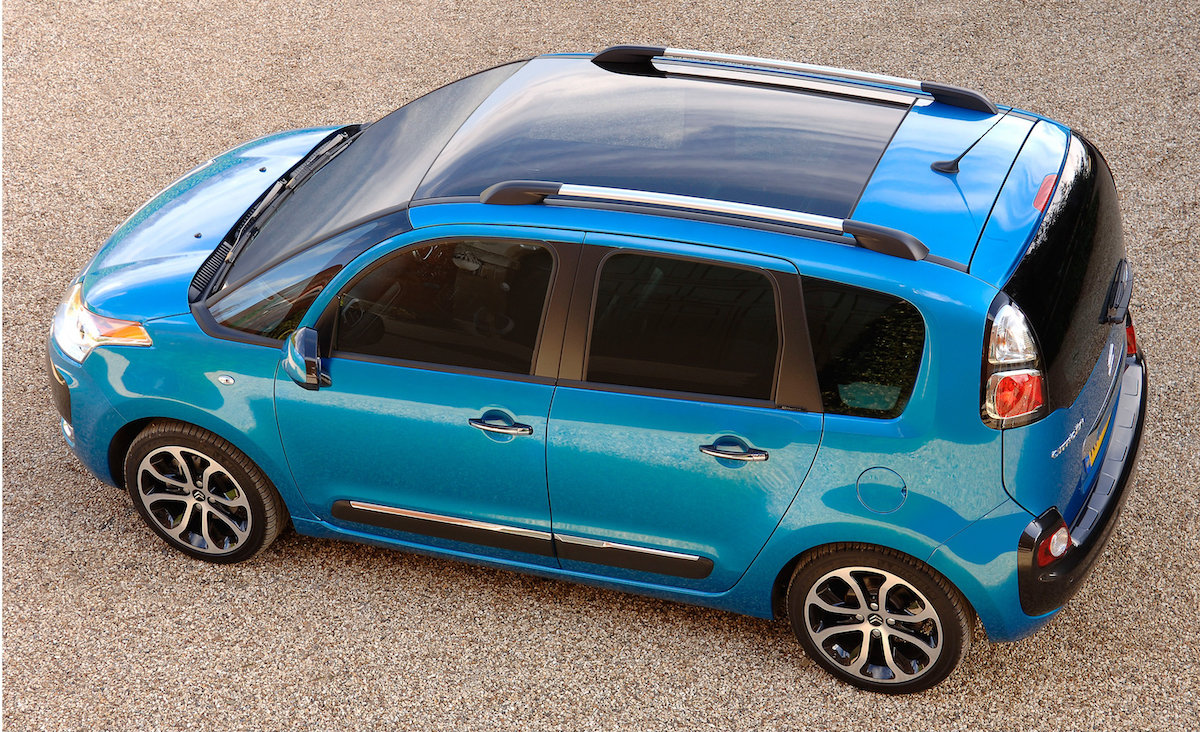
The C3 Picasso is available in three basic trim grades – VT, VTR+ and Exclusive. While VT has central locking, electric front windows, and a pair of front airbags, it’s bereft of alloy wheels and – more importantly given the big glass area of the car – air-conditioning. The VTR- gives you the latter plus 16-inch alloys, side airbags and cruise control.
Move up to the Exclusive and the aircon becomes dual-zone climate control, there are electric windows in the rear, automatic wipers and lights, rear parking sensors, and the backrest of the front passenger seat can be folded flat to accommodate extra-long loads.
Diesel versions of the C3 Picasso require servicing every 12,500 miles or 12 months, while the petrols can stretch it out to 20,000 miles. It is, however, worth having an annual oil and filter change on cars that are outside their warranty period. Citroen runs its own fixed-price servicing scheme for cars older than three years, and main dealer servicing costs are generally reasonable, even if prices are typically lower at good quality independent garages.
In modest driving, the front brake discs should last about 45,000 miles before they need to be replaced. On older models with high mileages, the clutch is probably getting a little tired, and they can be expensive to replace. Alternators may also be feeling the strain by now.
Official fuel consumption figures suggest that the 1.4 and 1.6 petrol engines will give you 44-47mpg, with the more modern three-cylinder 1.2-litre Puretech pushing up that figure to 55mpg: the diesels are quoted to achieve between 58 and 74mpg. However, many owners report being disappointed with actual fuel consumption, with the diesels more likely to return between 55 and 60mpg.
Diesel-engined C3 Picassos fitted with a DPF (Diesel Particulate Filter) which are not driven often at high revs and at speed, run the risk of the filter failing to ‘regenerate’ – essentially burning off the trapped particulates – and becoming blocked. The back pressure this creates in the exhaust system can damage the turbocharger, while the diesel fuel that assists in the regeneration process may be forced into dripping down into the engine sump, diluting the oil and bloating the amount in the system. If you tend to do short journeys, then get yourself a petrol-powered Picasso, or you may need to pay for a forced regeneration, or for cleaning the DPF.
Leaking windscreen washer reservoirs can cause damage to the car’s fusebox – Citroen has replaced many of them – and exhaust brackets are starting to fail with age. Also known to fail is the electric motor on the electric power-assisted steering (EPAS), and if you’re lucky you might find that Citroen is willing to carry out a free replacement as a goodwill gesture on cars up to eight years old and with up to 80,000 miles on the clock.
The C3 Picasso’s gearchange is notoriously notchy as it is, but there are several reports of premature gearbox failures, as well as faulty clutch master cylinders. Sometimes, the engine cooling fan continues to run after the engine has been turned off: this is a software glitch that should by now have been sorted by a Citroen dealer.
Cambelt failure is a known, if not common, issue with the 1.2-litre Puretech petrol engine, together with fuel pump failure, while turbodiesel models also suffer from problems with the exhaust gas recirculation valve (EGR), mass air flow sensor (MAF), and electronic turbo valve: there are also reports of engine oil leaks and fuel injector woes.
On early examples of the C3 Picasso, the rubber seals around the taillights are starting to perish and let in water. Suspension component wear is starting to become more commonplace, most notably the front top mounts and rear trailing arms.
- In addition to a rear seat that slides back and forth to alter the amount of boot space and a bi-level boot floor, the C3 Picasso has other interesting storage solutions. Some models have storage bins set into the floor of the rear passenger compartment, while airline-style trays that fold down from the front seat backs –complete with reading lights and cup-holders – were available as an option. However, the glovebox is dismally small and the front door bins unhelpfully narrow.
- The C3 Picasso’s engine line-up was severely pruned in July 2015. The 1.2 Puretech become the sole petrol representative, with diesel duties were left to the high efficiency 100bhp 1.6 BlueHDi, claimed to return up to 72mpg on the old NEDC test cycle.
- The C3 Picasso enjoyed several upgrades during its lifespan, starting with the introduction of a cleaner, more efficient 1.6-litre HDi turbodiesel in November 2010. It was facelifted in January 2013 with a tweaked nose, a fresh batch of colours, enhanced interiors, and the introduction, as an option, of the EGS automatic gearbox for the 1.6-litre petrol engine.
- If most of your miles are in short bursts: because of issues with their Diesel Particulate Filters (DPF), diesel versions of the C3 Picasso need regular hard driving. If you live in a town and seldom travel too far, you’re better off with the 1.6-litre petrol engine: it’s better on dual carriageways and when the car’s fully laden than the 1.4. As for a trim grade, aim for at least a VTR+.
- If you don’t want to change gear yourself: an automatic version of the C3 Picasso was a long time coming; it didn’t arrive until the facelift of 2013, and the EGS transmission was available only in conjunction with the 1.6-litre petrol engine. It’s automated manual transmission but, unlike the DSG dual-clutch system developed by the Volkswagen Group, the EGS is very jerky. If you must have an auto, then it will suffice. If not, choose a manual.
- If you want something a bit special: Citroen is one of the grand masters of limited editions, and several are available for the C3 Picasso. One of the more notable ones is 2010’s Blackcherry, based on the VTR+ version of the 90bhp 1.6 HDi. Its bodywork gleams with Cherry Red and Metallic Black paint, there’s a host of gloss black detailing, fancy 17-inch alloys with red highlights, roof bars, aircon, cruise control, and a Connecting Box for the infotainment system, comprising a USB socket and Bluetooth connectivity.
- If you want the most economical one: obviously you’ll be looking at one of the diesels, and two versions are more economical than the others. The 100bhp 1.6 BlueHDi is claimed to give 72mpg on the old NEDC combined cycle, but the limited edition Airdream does slightly better still at 74.3mpg and CO2 of 99g/km. In real-world driving, both those figures are more likely to be in the low 60s.


