Cupra Ateca Review (2018-present)
Cupra Ateca cars for sale
4.0
Expert review
Pros
Terrifically quick in a straight line
Four-wheel drive copes well with the Cupra's power
Just as practical as a regular Ateca
Cons
Not as rewarding as a lower-slung hot hatch
More expensive to run than a mainstream Ateca
Costs almost as much to buy new as a Porsche Macan
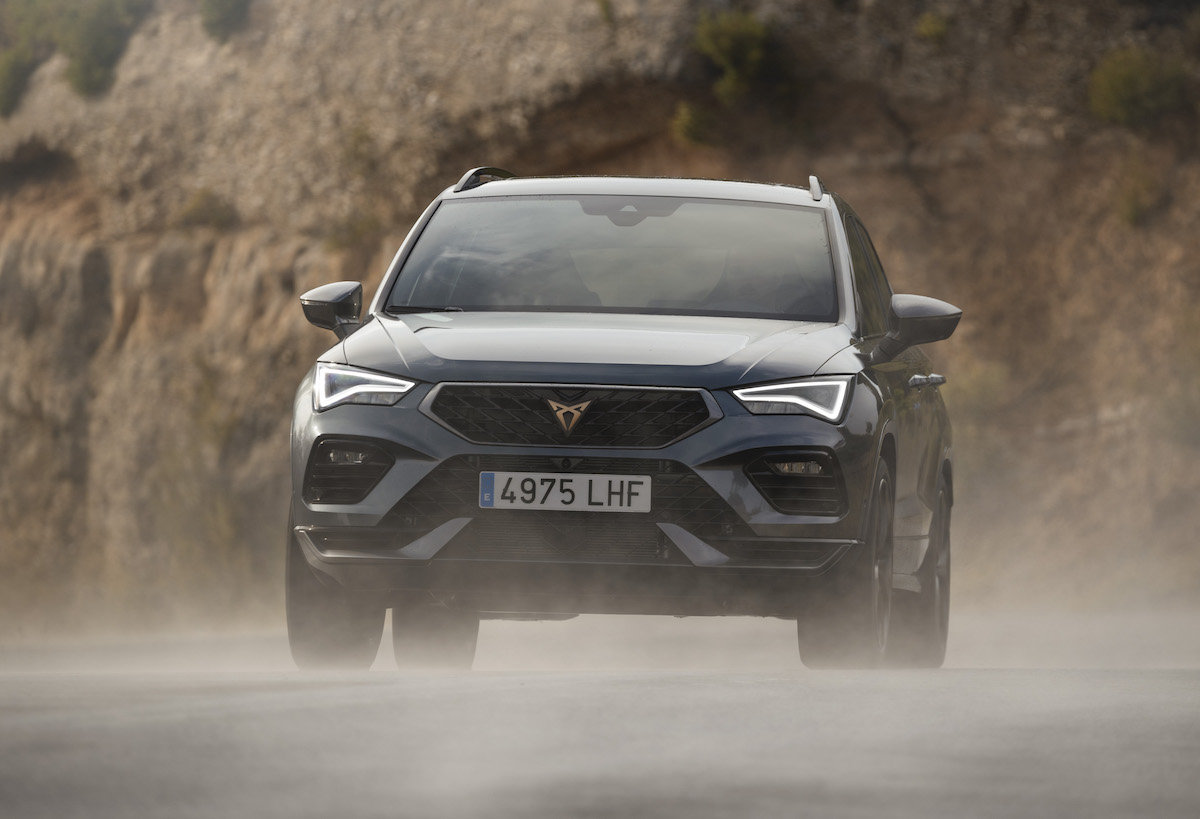
The CarGurus verdict
Despite the popularity of SUVs, high-performance models such as the Cupra Ateca will always be of limited interest among buyers. After all, they cost more to buy and run than their mainstream counterparts and, though they can be very quick in a straight line, they aren’t by their nature well suited to high-performance driving. It’s therefore a narrow cross-section of buyers who actually find such cars appealing.
But for those who do, the Cupra Ateca is undoubtedly a very compelling proposition. Its styling is suitably sporty, it comes very well equipped as standard, there is an appeal in the Cupra badge itself, and with almost 300bhp, the Ateca is terrifically quick. It's great fun to drive in a loutish, unruly kind of way. Just don't be duped into getting yourself one of the later versions with less powerful engines and watered-down performance: we see very little point to these.
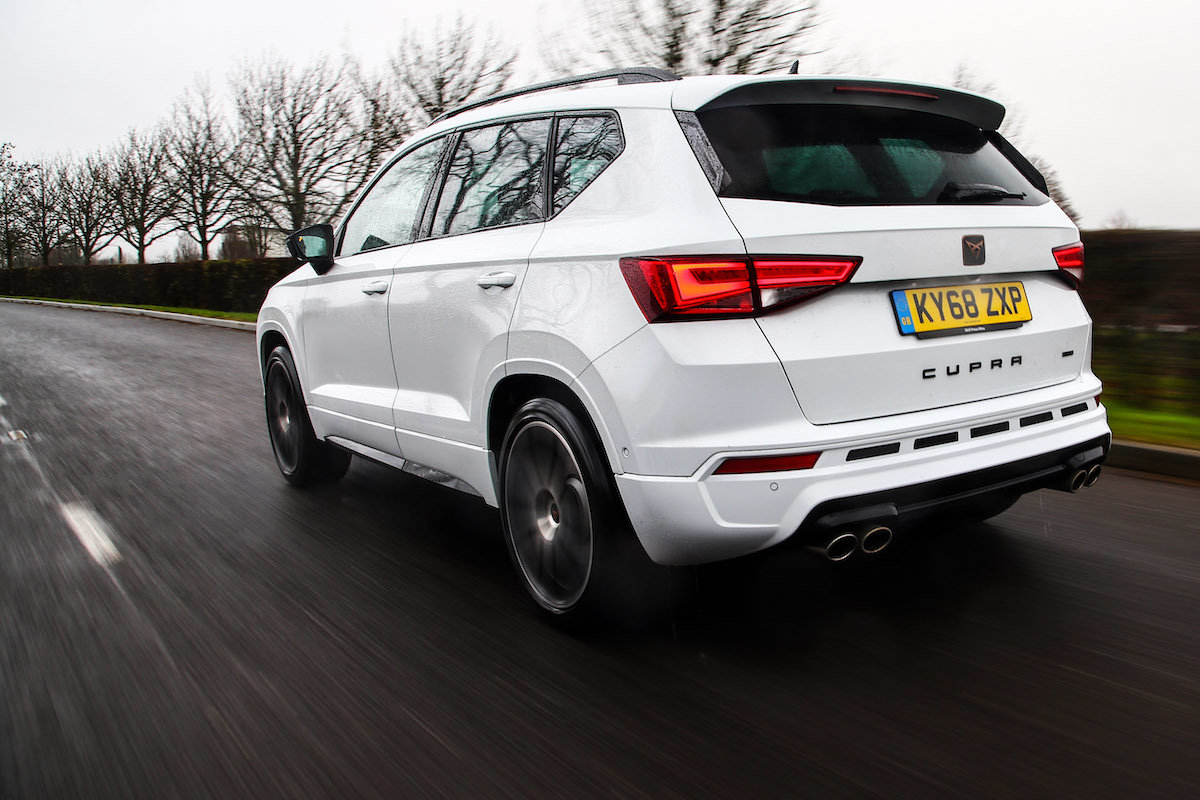
What is the Cupra Ateca?
For many years, Cupra was Seat’s high-performance road car and motorsport division (the Cupra name comes from Cup Racing). It was to the Spanish manufacturer what M is to BMW. Sporty Seats wore their Cupra badges proudly, starting with the Ibiza Cupra in 1996.
That all changed in 2018 when Cupra was pulled out from Seat’s enormous shadow and repurposed as a standalone brand in its own right. Seat and its parent company, the VW Group, had spotted an opportunity to leverage the desirable Cupra name and turn it not only into its own car company, but an entire way of life. Or at least that’s what the marketing department would like you to believe; as well as driving its cars, you can also wear Cupra sunglasses and ride Cupra bicycles.
The Cupra Ateca was the first car to come from the fledgling brand, and it’s no secret that it’s heavily based on the Seat Ateca. That’s no bad thing, as it gives the sportier model a spacious and well-proven starting point. It is something of a niche proposition, however, as for the vast majority of its life, the only powertrain option was a 296bhp 2.0-litre turbocharged petrol engine paired with a DSG gearbox and an all-wheel drive transmission. Not everyone will be looking for a medium-sized SUV that can outsprint a Porsche 718 Boxster from 0 to 62mph, but for those who are, it’s a very accomplished package.
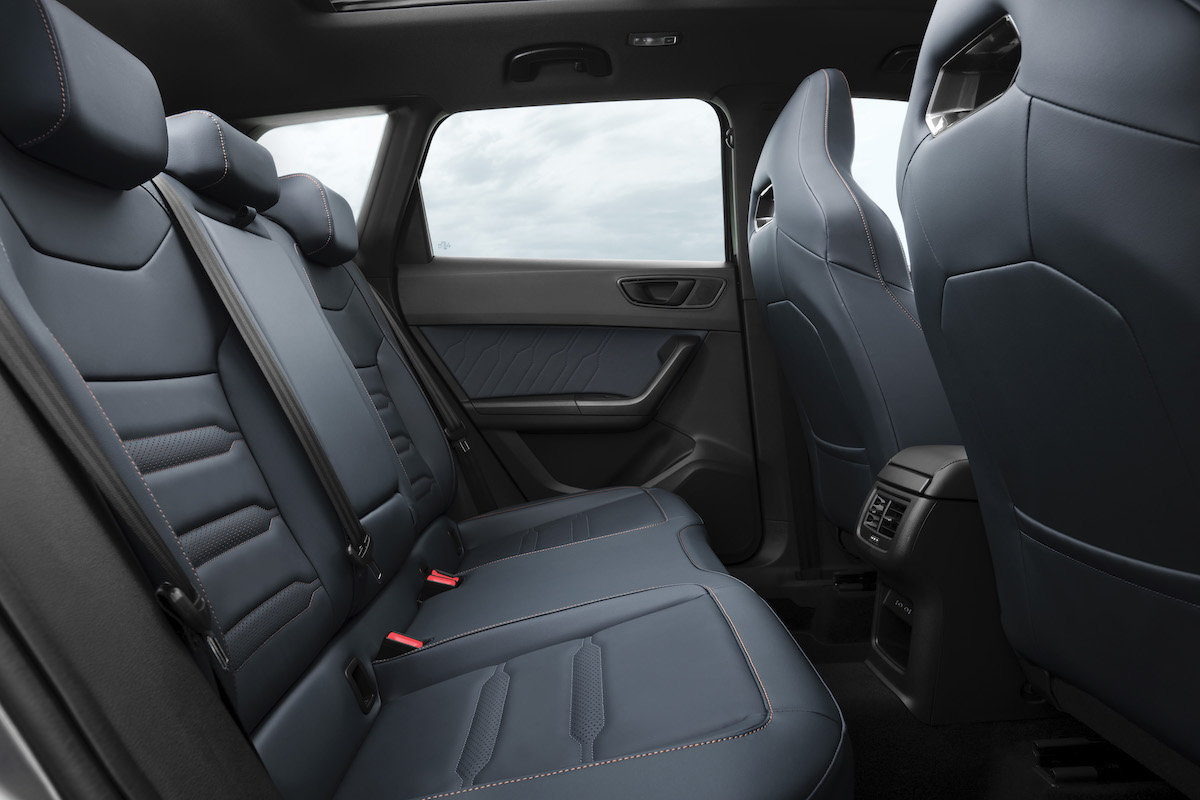
How practical is it?
Not surprisingly, the Cupra Ateca runs its Seat sibling pretty close when it comes to practicality. You only concede 25 litres of boot space (from 510 down to 485), which puts the Cupra Ateca ahead of both the VW T-Roc R and the Audi SQ2 in terms of carrying capacity. It'll happily swallow a pram or enough luggage for a family holiday.
There’s plenty of space for rear-seat passengers, too. Headroom and legroom are both above average for the class, allowing tall folk to stretch out in comfort, although it can’t match larger performance SUVs like the contemporary Skoda Kodiaq vRS.
Get yourself an example fitted with the optional tow bar, and you can tow up to 750kg, or 2,100kg with a braked trailer, such as a caravan.
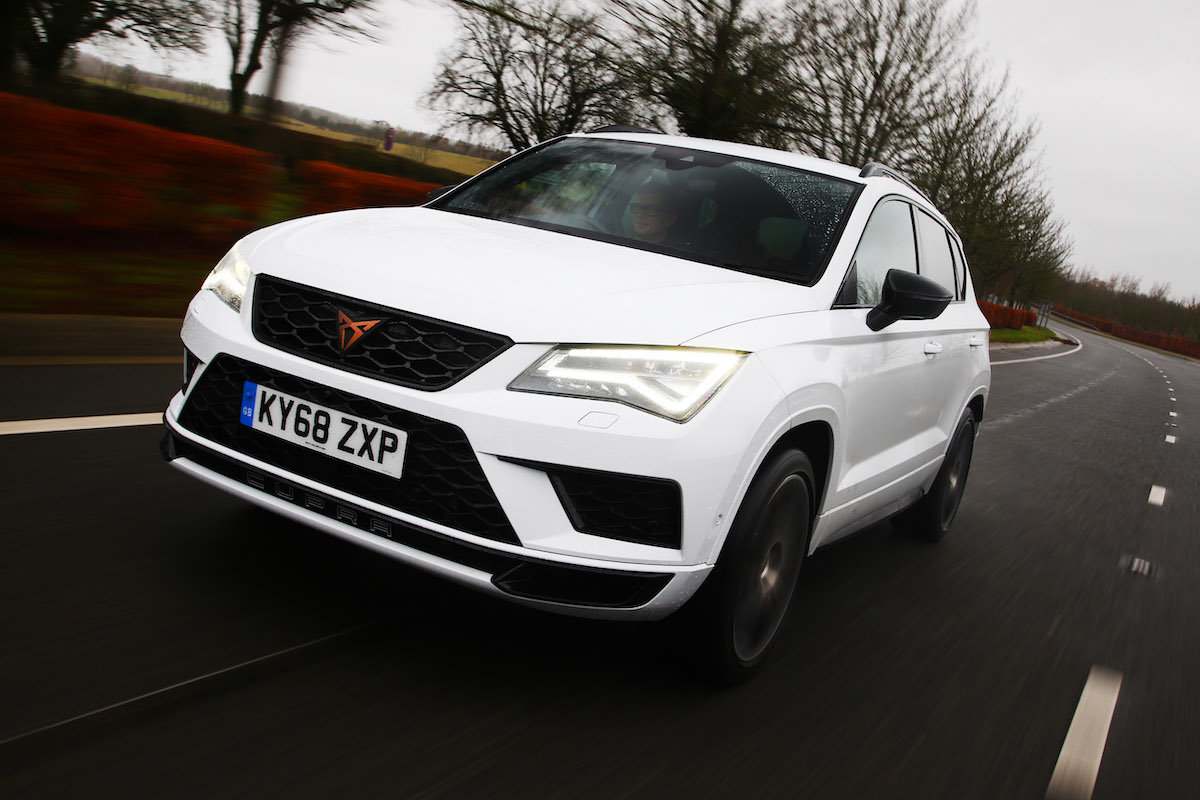
What’s it like to drive?
The Cupra Ateca is one of those cars whose character is defined by its engine. The powerful turbocharged petrol unit is shared engine with many other VW Group cars, such as the Volkswagen Golf R and Golf GTI, the Audi S3, and others besides. It's a responsive and eager engine that makes very light work of the Cupra's substantial mass.
It’s in the car’s self-referential 'Cupra' driving mode that you get the firmest suspension, the most vocal soundtrack, and the quickest gearshifts. Configured that way, the Cupra Ateca is extremely fast and commendably agile, but given its high ride height and substantial kerb weight (1,628kg), it could never be truly rewarding to drive the way a great hot hatch can be. There are also driving modes geared around fuel efficiency and comfort, plus a customisable setting.
Instead, what impresses about the Cupra Ateca is its broad capability, from genuinely comfortable and practical everyday SUV on the one hand, to alarmingly accelerative and surprisingly grippy performance car on the other. And, with all-wheel-drive, there's an added degree of stability in poor conditions. Just don’t embark on Cupra Ateca ownership expecting your understanding of the thrill of driving on great roads to be completely redefined. It's great fun, just in a raucous, slightly unpolished kind of a way.
A facelifted variant arrived in the middle of 2020 with revised styling front and rear, plus minor revisions within the cabin, including electrically-adjustable seats and the latest infotainment system. There were also small changes to the steering and the throttle response, but the car’s fundamental technical make-up was unchanged. The 2.0-litre engine still delivered its power to all four wheels via a seven-speed dual-clutch gearbox, while the suspension still features adaptive dampers to give a blend of ride comfort in normal driving and handling precision when pressing on.
Given that the car had been so defined by its engine for the entirety of its already long life, Cupra did a rather odd thing in late 2023. The firm made the car available with other, less potent petrol engines, these being a 1.5 with 148bhp and front-wheel drive, and a 2.0-litre with 187bhp and four-wheel drive. These were intended to broaden the appeal of the Cupra Ateca, but for many, they simply served to blur the car's identity, and eliminate what had separated it from its Seat sibling in the first place. We've not tried them, so we can't say whether they do or don't, but we have to say that we share the suspicion that they might.
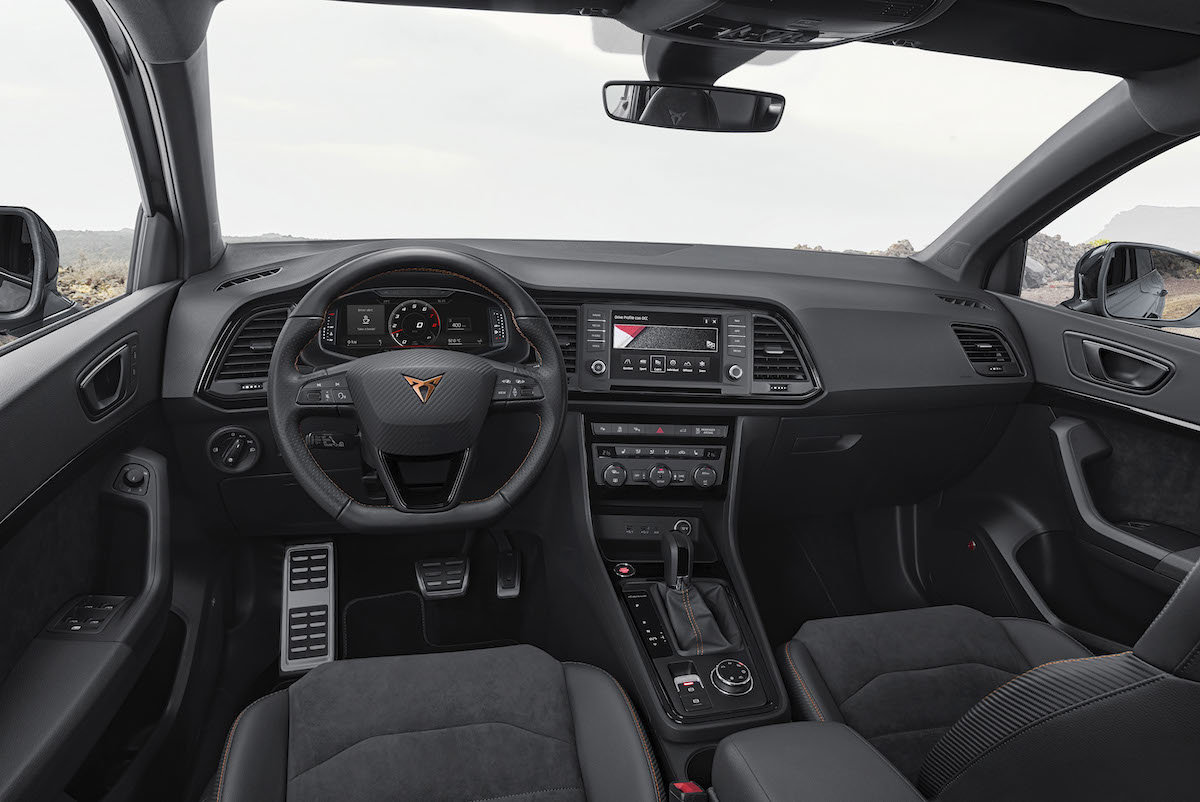
Technology, equipment and infotainment
Inside, you’re greeted by a smart if slightly sombre cabin. The Ateca features the same double digital display arrangement that can be found in scores of its siblings from Volkswagen, Audi, Seat and Skoda.
The first display is the Digital Cockpit that sits behind the steering wheel where a traditional instrument binnacle would otherwise be, and measures 10.25-inches across. It can be customised to display traditional-style dials with a small navigation map, or much smaller dials and an enormous map. The second screen is a more conventional central touchscreen measuring 9.2-inches across (pre-facelift versions from before 2020 had a smaller 8.0-inch screen). Apple CarPlay, Android Auto and wireless phone charging are all standard equipment.
The Ateca also works with Cupra’s mobile app, which allows you to connect your car to the outside world. From the car side, it enables you to control smart home devices via Amazon Alexa: for instance, you can turn your home's heating on in time for when you arrive. Similarly, if you’re away from the car, you can use the system to pre-set the climate control or check if you locked the doors. You can even ask it to beep the horn if you’re trying to locate your Ateca in a crowded car park.

Cupra Ateca running costs
The Cupra Care package (see Reliability section below), included in the buying price, will help keep running costs down for the first three years since it covers all servicing expenses. While the Cupra Ateca shouldn’t be especially costly to maintain, there are a number of areas where it’ll ask more of your wallet than the more mainstream Seat Ateca will.
Fuel economy, for instance. Cupra says you’ll see 31.4mpg in mixed driving, which equates to something like 28mpg in the real world. Expect that figure to drop rather a long way further when you really exercise the 296bhp engine to its full potential. Meanwhile, fitting the 19-inch alloys with fresh tyres could cost as much as £800. Insurance group 33 (out of 50) means you’ll face another sizeable bill every 12 months.
Of course, you could trim these costs by downsizing your performance expectations and going for the 1.5-litre engine (42.2mpg, insurance group 18) or the lesser 187bhp 2.0-litre engine (35.8mpg, insurance group 24). Then again, if you do that, then there seems little point in having a Cupra Ateca at all: you might as well settle for the Seat version.
Cupra Ateca reliability
All Cupras are covered by the company’s Cupra Care package, which for three years or 30,000 miles, includes the car’s first three scheduled services and a brake fluid change, as well as UK and European roadside assistance over the same term. When the Cupra Ateca first went on sale, it came with the same bog-standard three-year, 60,000-mile warranty as all other VW Group products, which is the bare minimum that any new-car buyer should expect these days. In more recent times, though, Cupra has improved its arrangement to provide five-year, 90,000-mile cover, the only one of the VW Group brands to do so.
And until recently, you'd have been extra thankful for the newfound generosity of that warranty, because Cupra's reliability picture did not look good. The 2023 What Car? Reliability Survey saw the brand rooted to the foot of the table due to a spate of (mainly electrical) glitches. More recent editions of the same survey have seen the green shoots of recovery, though, with the 2024 study placing the firm in 17th place of the 31 carmakers considered. The Cupra Ateca itself wasn't included, but the mechanically identical Seat Ateca placed 15th of 23 models in its category (although Seat languished down in 26th place in the manufacturer standings).
- The 2020 facelift brought a series of minor changes to the Ateca's appearance. This included new bumpers, a revised radiator grille and LED headlights. The wheel designs were also new, and there were yet more copper-coloured accents to emphasise the sporty styling. Inside, the main changes were the introduction of standard-fit sports seats, a new steering wheel and the revamped infotainment system.
- With 296bhp, 295lb ft of torque and Cupra’s 4Drive four-wheel drive system, the 'proper' Cupra Ateca (later badged VZ after the introduction of the less potent engines) is quicker than the car’s SUV proportions would have you believe. Cupra quoted a 0-62mph time of 5.2 seconds for the pre-facelift model, although independent tests suggested it was slightly quicker still. The updated version, says Cupra, is even faster, clocking 62mph in 4.9 seconds. Both boast a top speed of just over 150mph.
- Predictably, the later versions with less powerful engines saw a pretty huge drop-off in performance. The 1.5- and 2.0-litre models (available in V1 and V2 trims) put in 0-62mph figures of 9.3 seconds and 7.2 seconds, respectively. That's not exactly the bare-chested lunacy that Cupra Ateca buyers have become accustomed to over the years.
- The only choice: If you're not worried by power or performance then you might as well save yourself a few quid and have the bog-standard Seat Ateca. If plumping for the Cupra, it only makes sense to go for the full-fat 300-horsepower version.
- Moving upmarket: a highly-specced Cupra Ateca only costs a few grand less than an entry-level Porsche Macan (this doesn't apply to the latest electric Macan, of course). For many, the allure of the Porsche crest will be too much to resist. The Macan will be slightly down on power compared to the Ateca (it uses the same basic VW Group engine), but it’ll be even sharper to drive.
- The other rival within: the VW Group offers another alternative to the Cupra Ateca, that being the smaller but no less powerful Volkswagen T-Roc R. Their prices are very similar and they use the same 296bhp 2.0-litre turbo engine. Whereas the Cupra is bigger and more usable, the Volkswagen is smaller and more fun to drive.


