Dacia Sandero Stepway 2013-2020 review | A cheap yet rugged supermini
Dacia Sandero Stepway cars for sale
3.0
Expert review
Pros
Rugged good looks
Practical interior and roomy boot
Low running costs of Bi-Fuel model
Cons
Basic and unsophisticated driving experience
Not as much fun as a Ford Fiesta Active
Despite the SUV looks, there's no 4x4 version
The CarGurus verdict
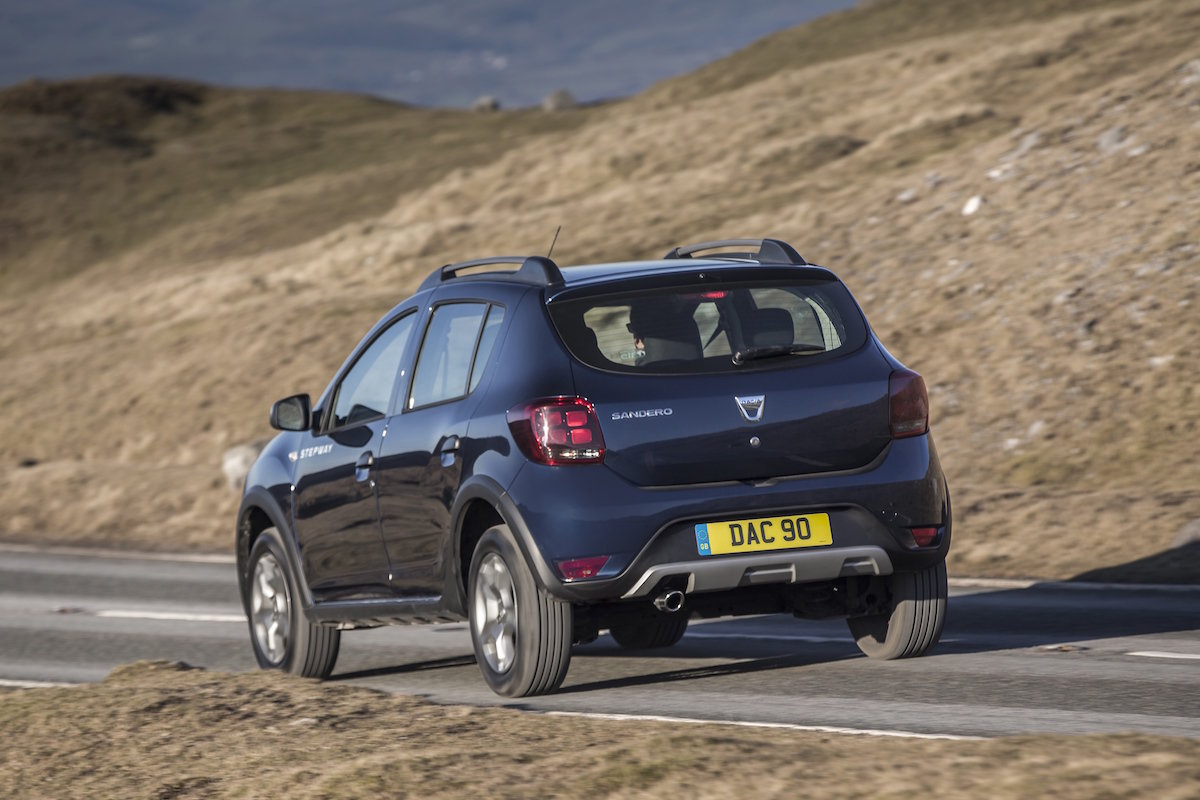
The Sandero Stepway provides access to crossover ownership on a budget and, as long as buyers understand that from the outset, with the accompanying compromises, they should be happy enough. The Stepway certainly represents a good value-for-money proposition: it has more than acceptable looks (the rugged styling elements elevate the Sandero’s design significantly), it should be reliable, inexpensive to buy and run, and practical, too.
It won’t be a match on the road for the Fiesta Active or something more refined such as the Seat Arona, but as the old saying goes, you pay your money – in this case, not very much, relative to its rivals – and you take your choice. If you want a little more sophistication, the two aforementioned cars are better bet, as is the Hyundai i20 Active, but if a cheap, rugged-looking runabout fits your bill, the Stepway will do the business
What is the Dacia Sandero Stepway?
Dacia’s original Sandero hatchback was the cheapest new car in the UK when it was launched in 2013. But the Renault-owned Romanian brand also had a canny eye on what buyers wanted, and then, as now, it seemed that everyone wanted an SUV, or at least something that looked like an SUV. Which is where the Dacia Sandero Stepway comes in.
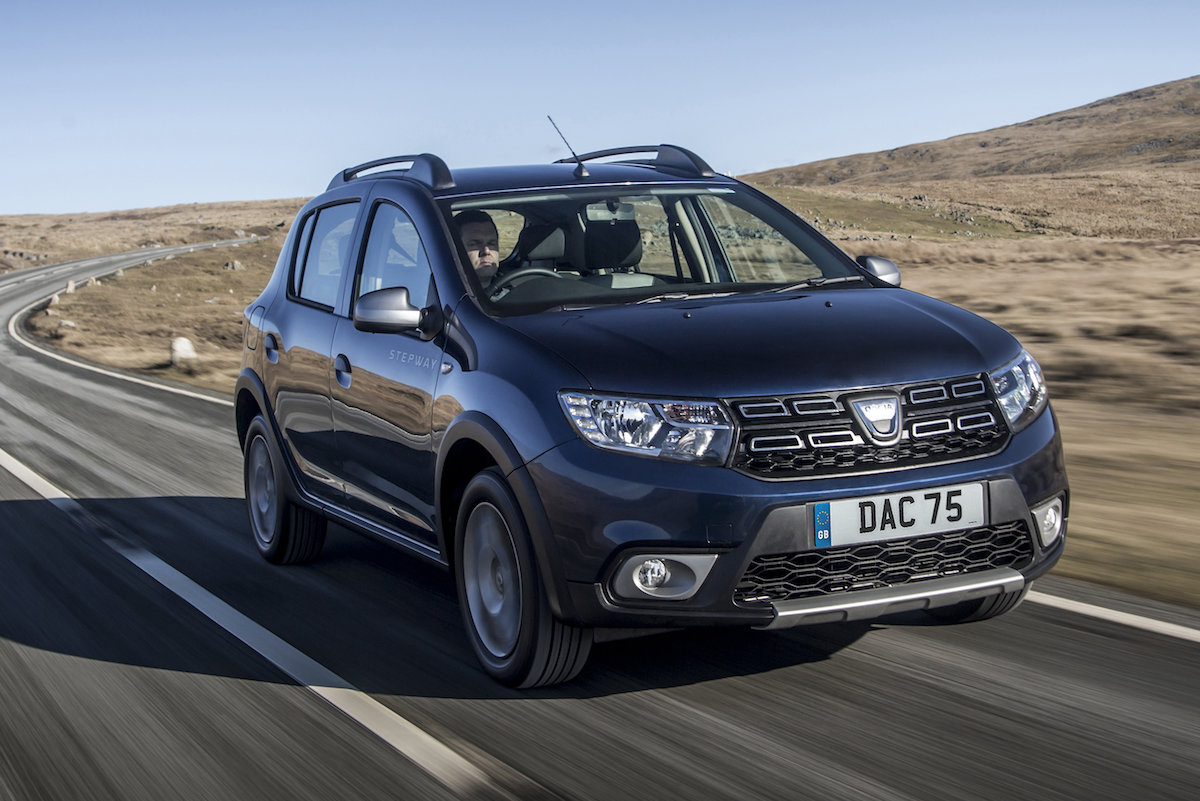
The Stepway is a Sandero on steroids, jacked up, with a raised ride height to give it more ground clearance and with addition of some styling features that make it look more rugged. It's not really ready to take on rougher terrain, though, as there’s no four-wheel drive to enable it to handle anything more challenging than wet grass and a bit of mud. But as most 4x4 drivers never actually take their cars off-road, that lack of capability is a minor detail.
The SUV looks come from that higher-riding aspect and some rugged body cladding on the lower body, wheelarches and roof rails. These additions impressively transform the standard Sandero supermini into something a lot more SUV-like in its appearance, which is clearly something that British buyers like, as it accounted for around 70% of all Sandero sales (a trend that’s set to continue with the new model).
SUVs’ popularity means that many buyers are happy to settle for even a small one. When it was new, the entry-level Stepway was more than £2,000 cheaper than the Suzuki Ignis and about four grand cheaper than the Renault Captur, Peugeot 2008 and Nissan Juke. True, it was an appreciably more basic car in pretty much every possible way, but the rugged little Dacia made a strong case for itself in the new car market, and it still does as a used buy.
How practical is it?
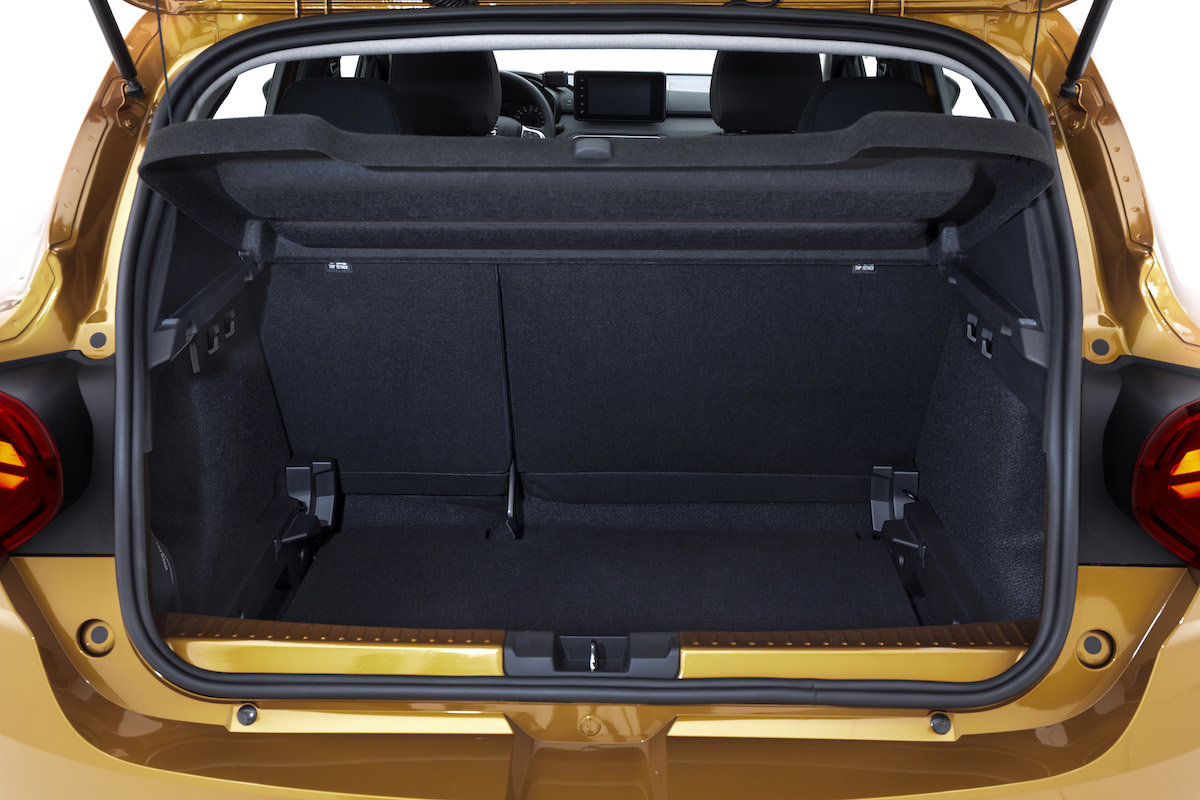
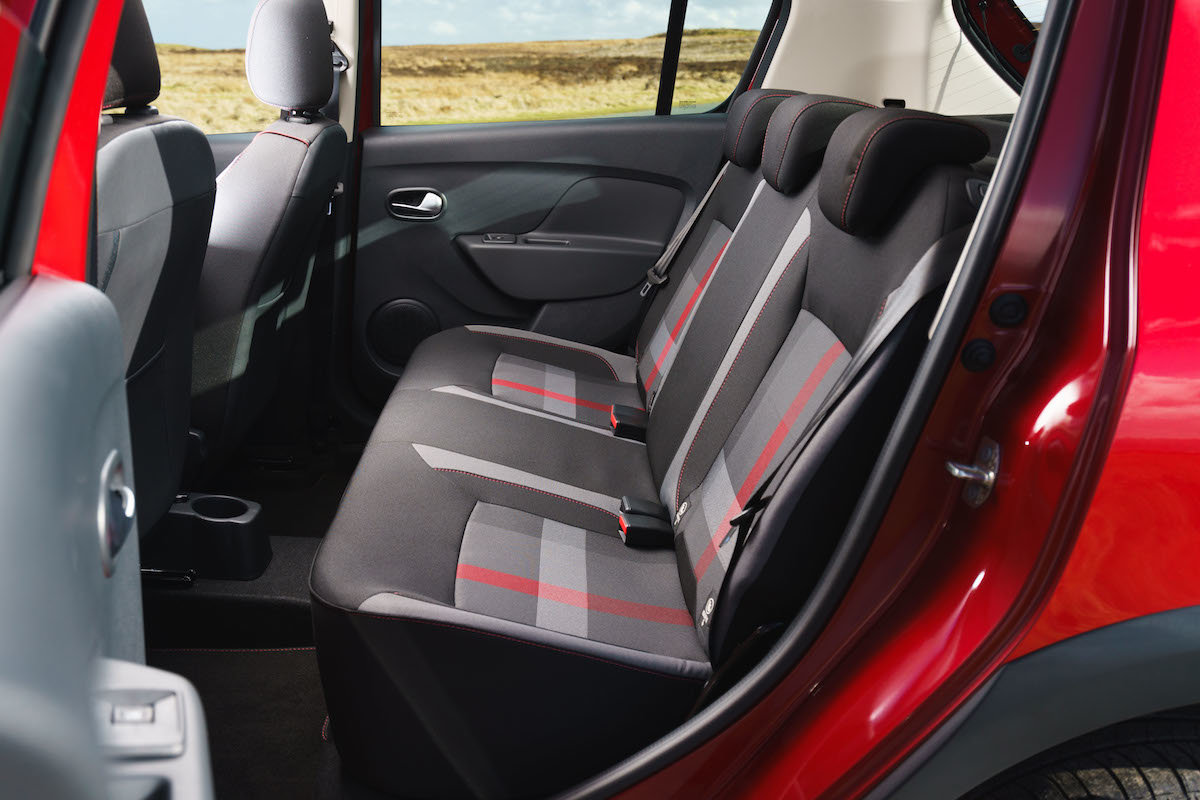
Don’t be fooled by the SUV tag – the Stepway is still a small car, and it offers essentially the same space as the Sandero supermini. But that’s no bad thing by the standards of this class. There's plenty of room in the rear seats and its 320-litre boot capacity (1,200 litres with the rear seats down) comfortably trumps the 292-litre Ford Fiesta Active or the 267-litre Suzuki Ignis of the same era.
There’s the same hardwearing feel to the interior as you get in the regular Sandero, although you do get slightly different trim. Perhaps the most significant change with the higher-riding Stepway is that it’s easier to get in and out.
If you’re looking for luxury trimmings inside, you might be disappointed. As with the standard Sandero, the Stepway’s super-cheap plastics mean it very much feels built down to a price inside. For all that, though, the switchgear is well placed, and there’s a decent amount of storage for your odds and ends. Just keep in mind that the seats lack support, and that can leave you with back ache on a longer trip.

What's it like to drive?
Despite being a cheap car, the Stepway isn’t too bad to drive. It can’t really compete with the Ford Fiesta Active, but the handling is consistent, the steering is accurate enough and despite the additional 40mm between the car and the ground, there isn’t excessive body roll in the corners. It also rides fairly comfortably, thanks to a soft suspension set-up.
Thankfully, when the Sandero Stepway was launched, the wheezy 1.2-litre petrol you could get in the standard Sandero didn’t make the cut, which meant you were left with a choice of just one petrol engine, a 0.9-litre turbo (badged TCe 90) along with a 1.5-litre diesel (dCi 90).
The former is a probably the pick of the range. While no ball of fire, it offers a respectable amount of mid-range grunt. The diesel engine is a solid alternative if you do lots of miles.
In 2019, Dacia added the naturally aspirated 1.0-litre engine that had replaced the 1.2-litre in the standard Sandero to the Stepway range. It’s a sweeter engine, but still feels rather underpowered, and it’s only available in the most basic Essential model. At the same time, the diesel engine was given a 5bhp boost and renamed Blue dCi 95.
Technology, equipment & infotainment
The Stepway was launched with just two trims: Ambiance and Laureate levels, with the names changed to Essential and Comfort in 2019.
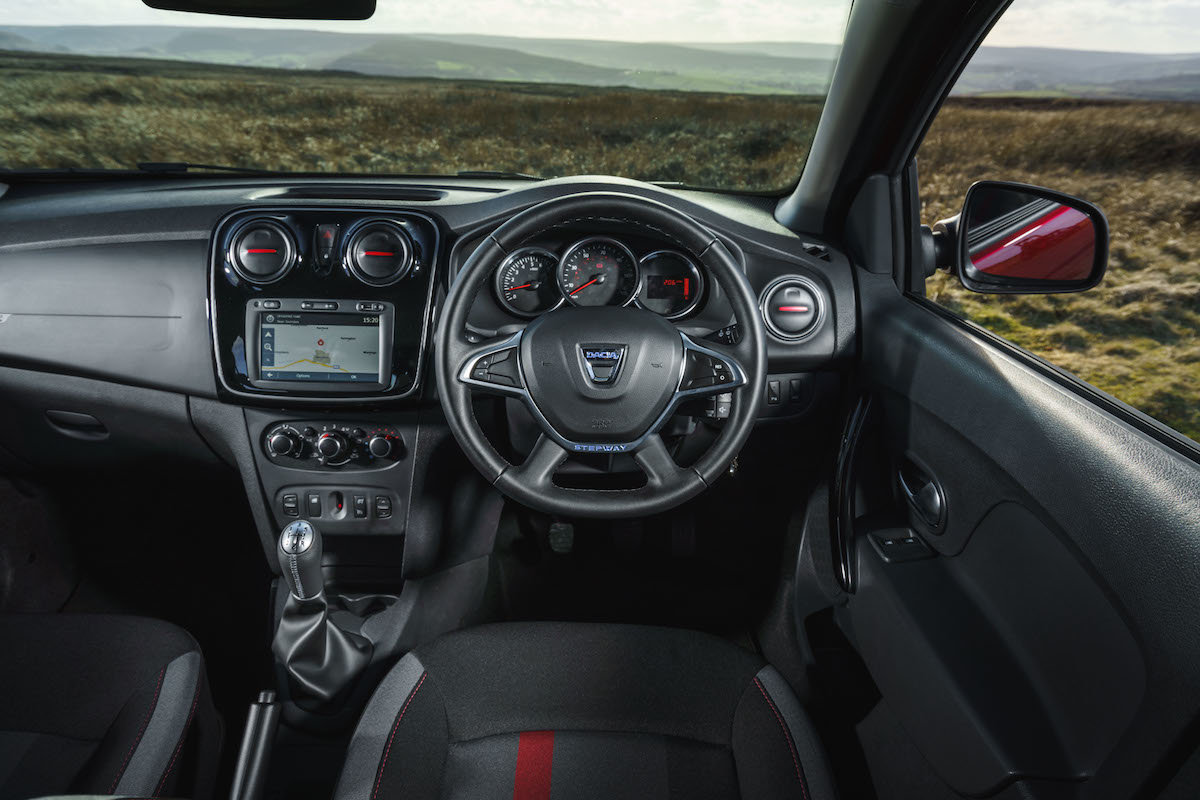
The entry-level Access version offered on the regular Sandero wasn’t available on the Stepway, so you won’t find any that are quite so basic. When the car was launched, Ambience came with alloy wheels, LED lights and tinted rear windows as standard. A mid-life refresh at the end of 2016 saw the addition of chrome accents and a new steering wheel, plus equipment such as air conditioning DAB radio with Bluetooth and USB ports.
Laureate/Comfort trim got air conditioning from launch, by comparison, in addition to a multimedia system including satellite navigation and seven-inch touchscreen, cruise control, front fog lights, height-adjustable driver's seat and steering wheel and rear parking sensors. It’s still not exactly lavish, but it compares favourably to most small cars that you’re likely to find for a comparable price on the used market.
Toward the end of the Sandero Stepway’s life, an additional model was added to the range, called the Techroad. This was only available with the TCe 90 petrol engine, and it was essentially a style pack that offered two eye-catching metallic paint finishes, red accents splashed around the interior, and red stripes on the door mirrors.
Dacia Sandero Stepway running costs
In addition to the relatively low purchase price of a Stepway, compared to its main rivals, it's also a car that is fairly cheap to run, although its use of older Renault engines does mean that some of the cars it's up against have more modern, and therefore more efficient, engine technology.
Most buyers will go for the 89bhp turbo TCe 90, which should get around 45mpg in the real world. And while you think opting for the less powerful SCe 75 might return better fuel economy, that’s actually not true – in fact, you’ll only see around 40mpg in day-to-day driving. What’s more, you’ll have to live with a 0-62mph time of 16.7 seconds, which is why this version is so hard to recommend.
The most economical versions of the Sandero Stepway are, somewhat unsurprisingly, the diesels. Expect to get around 50mpg on average from the earlier dCi 90, and two or three mpg more from the Blue dCi 95, which is slightly more efficient.
Tax will vary depending on whether you choose a car registered before the tax regime changed on 1 April 2017.
If you do, the diesel models will prove very cheap to tax, as they sit in the lowest possible tax band. Petrol models will also be pretty affordable, given they’re in the next tax band up. Cars registered after this date will all be taxed at the flat rate, which in most cases will work out more expensive.
The Stepway is a relatively cheap car to buy, so it’s also cheap to insure, with different versions ranging from group 3 to group 9. Servicing is straightforward, with Dacia specifying 12,000-mile intervals. Dacia also offers service plans that help to keep the costs under control.
Dacia Sandero Stepway reliability
The Sandero Stepway is built mostly from old Renault bits that have been tried and tested over a number of years, and that means it should be fairly dependable. However, do bear in mind that early examples are now getting on a bit, and given Dacias were always built fairly cheaply, that’ll mean certain parts will be starting to feel rather creaky.
Expect, therefore, your fair share of quality glitches – rattly trim and perhaps even the odd leaky seal, for example. Dacia owners across the board have also reported issues with catalytic converters and engine electrics, and bodywork corrosion can be an issue too. Fundamentally, though, the Sandero’s oily bits are pretty dependable, and should remain so.
There have been four recalls for the Sandero Stepway. Diesel cars built between 2013 and 2015 were recalled for a potential fuel leak in June 2018. Some 2015 cars had a steering defect, with a risk of the drive rotor at the ball joint on the steering rod breaking due to excessive stress, so there was a recall in August 2018. The other two recalls – in August 2018 for cars built in late 2012 and January 2019 for cars built in April-August 2018 – related to concerns about airbags not deploying. If buying a car that might have been built in these slots, check whether it has been taken to a dealer to have the car checked out.
- From 2020, Dacia introduced an LPG Bi-Fuel engine option, replacing the diesel variants, and designed to be less expensive to run and emit less CO2. Running on LPG, the Stepway Bi-Fuel emits on average 11% less CO2 than an equivalent petrol engine and Dacia claims it can travel more than 800 miles with the two tanks, a 50-litre petrol tank and 40-litre LPG tank.
- Interestingly, while later Sanderos fell behind their contemporaries, these earlier examples weren’t far adrift, scoring four stars in Euro NCAP crash tests and actually bettering the crash test scores of their successors – though you must offset that against the fact that the test was toughened up in the intervening period, too. Either way, if you’re comparing this model of the Sandero Stepway against its contemporaries, it’s no poor relation.
- Although Dacia doesn’t really go in for optional extras, there are a few to look out for. Metallic paint was a cost-option on all models. Leather upholstery and a rear parking camera were also available on the up-spec Comfort model.
- If you want the most fuel-efficient version: as you might expect, it’s the one with a diesel engine. The dCi 90, which has an output of 89bhp, a 0-62mph time of 11.7 seconds, an official consumption figure of 74.3mpg (as calculated under the older NEDC testing regime) and CO2 emissions of 98g/km. From 2019, the diesel was given a power boost of 5bhp, which reduced fuel economy to 72.4mpg.
- If you want a cheap-to-run car that isn’t diesel: the Bi-Fuel car, produced in 2020 only, uses both petrol and liquid petroleum gas (LPG). Do be aware, however, that the availability of LPG in the UK is a bit patchy, so you should check your usual filling stations before committing to buy. The LPG fuel economy isn’t as good as petrol – 37.6 mpg, compared to 47.1 mpg – but LPG is less than half the price, which is where the saving comes in.
- If you want a Stepway with the most up-to-date technology: you should try and pick up a car in Comfort trim from early 2019 onwards, as these have an upgraded multimedia and infotainment system, with an improved satnav system, as well as Android Auto and Apple CarPlay smartphone integration.
- If you want the cheapest Stepway: happily, you don’t have to live with no toys and a sluggish engine – unlike with the standard Sandero. Look out an early TCe 90 Ambiance, and enjoy some truly frugal motoring.


