Fiat 500 Review (2008-2020)
Fiat 500 cars for sale
3.0
Expert review
Pros
Cute and cheerful retro styling
Lively to drive around town
Wide range of colours, upholsteries and finishes
Cons
Cramped for people and luggage
Unreliable dual-clutch auto transmission
Noisy on the motorway

The CarGurus verdict
Looking for space and practicality? Look elsewhere… Those things are not what the Fiat 500 is about. Style, charm, cheek, emotional attachment, this is the stuff that makes the Fiat 500 so wonderfully appealing to buyers keen to avoid life’s mundane burdens.
If you’re a sucker for the Fiat 500’s looks then nothing much is going to put you off it. And frankly none of its deficiencies are so great as to affect your decision. However, we would advise thinking carefully before opting for the Dualogic automatic gearbox.
But we do suggest that you look long and hard at the Fiat 500s on the market. Check their specifications closely, consider the equipment you get with the myriad special editions. The selection process for your Fiat 500 can be almost as much fun as owning one.
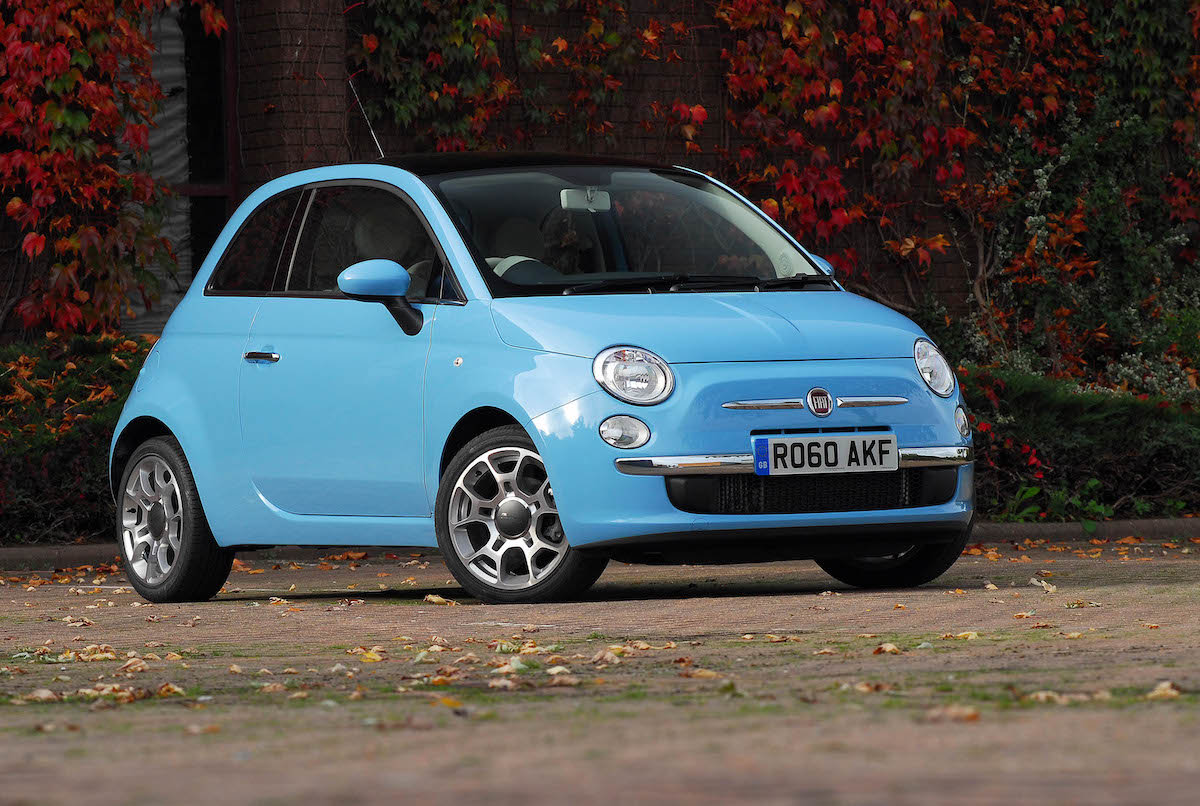
What is the Fiat 500?
When the Fiat 500 arrived in British showrooms in 2008 its design was criticised by some for looking backwards and not forwards: 14 years later and counting, the Fiat 500 is still in production, still putting smiles on owners’ faces, and those critics’ doubts have been overwhelmed by the little hatchback’s sales success.
In some ways Fiat has kept things simple with this small car. Although there have been a couple of spin-offs from the 500 brand in the form of the 500L and the 500X, essentially there’s just the one body style, a three-door hatchback, which is also available with retractable full-length canvas roof and known as the 500C. At launch there were just three engines in the line-up, 1.2-litre and 1.4-litre four-cylinder petrol units, and a 1.3-litre diesel turbo. Within a couple of years all three were equipped with stop/start technology to improve fuel consumption and emissions, while in 2009 a 133bhp turbocharged 1.4-litre petrol engine was introduced to power the sporty Fiat 500 Abarth model (subsequent versions had 143bhp, 163bhp and 178bhp).
The regular 1.4 petrol was ditched a year after the 2010 introduction of the turbocharged 900cc two-cylinder TwinAir petrol engine, which at 84bhp is powerful for its size but has to be revved so hard to give reasonable performance that its claimed fuel economy advantage is rendered redundant.
The higher-powered 104bhp version of the TwinAir came with a slick six-speed manual gearbox, but the rest of the engines make do with a slightly vague and notchy five-speed. There was also a five-speed automatic transmission using dual-clutch technology and called Dualogic, but that’s best avoided unless you absolutely need an auto, for reasons that we’ll discuss below.
In 2020, a new Hybrid model was introduced, which is now the only conventional engine offered in the 500 range (which you can read about here). For this used review, however, we’ll be focusing on the older models with the conventional petrol and diesel engines.

How practical is it?
The original Fiat 500, which inspired the design of the current car, dates back to the mid-1950s. Fiat was by no means the only brand that set about reinventing an iconic design in the mid 2000s and with the exception of the MINI, it arguably did a better job than the others – resulting in a car that was cheap and useable as well as stylish.
But for all the 500’s appeal as an urban runaround, the cute styling did little for its practicality. It’s very cramped in the rear seats, especially for adult passengers and, at 185 litres, the boot is titchy. But then, you’re not buying a car like this for its practicality, and if space and clever interiors are what you're after, you're better off looking elsewhere.
What you are buying a Fiat 500 for is its quirkiness and there’s plenty of that on show, particularly in the flamboyant and colourful dashboard design: body-coloured panels, big buttons and dials, chrome flourishes, all complemented by fun fabrics on the seats and door panels.

What's it like to drive
Confined to an urban environment, the Fiat 500 is a decent drive, being agile and brisk, but it’s less at home on the open road. The suspension is quite stiffly sprung, so the ride is noticeably choppy on country roads.
This does add to the 500’s sense of agility at lower speeds, though, which can make it feel quite fun to chuck around, but keen drivers will ultimately be left disappointed by the steering, which is very light and offers little in the way of feedback.
The TwinAir engine has plenty of character, with its eager (if modest) power delivery and distinctive twin-cylinder thrum. It can get quite noisy on the motorway, though, especially if you’re going uphill, where the little Fiat will need to be worked quite hard to maintain progress. None of this is likely to be a deal-breaker, however, especially if you’re hooked on the car’s shape.

Technology, equipment & infotainment
The Fiat 500 had three main trim levels at launch – Pop, Lounge and Sport. Pop doesn’t give you much beyond electric windows and door mirrors, but the other two have air conditioning, alloy wheels, and smartphone connectivity.
There’s also the 500 Abarth with a much higher level of standard spec, which Fiat initially tried to sell as a separate sub-brand. To confuse the spec picture, there have been numerous Fiat 500 special editions (Gucci, Diesel, GQ and many others) and, in August 2012, the Colour Therapy range was launched that reinvented some of Fiat’s trendy colours from the 1970s.
As with practicality, cutting-edge tech has never really been what the 500 is about, so buyers seeking touchscreen infotainment systems loaded with the latest apps should look elsewhere.

Fiat 500 running costs
Trendy it may be, but mainstream versions of the Fiat 500 give the insurance industry no great cause for concern – they’re rated at groups 8 to 15. It’s a different story with the Abarths, but even groups 26 to 27 isn’t too bad. In terms of annual road tax, a Fiat 500 TwinAir registered before April 2017 is the one to go for, as these examples will be exempt from paying anything because of their low CO2 rating. Larger engined models of the same era will range from £20 a year for the diesel up to £165 for the early 1.4-litre petrol. Again the Abarth versions are hit harder, with road tax ranging from £165 to £220. Cars registered on or after 1st April 2017, however, fall under a simpler tax system, which means they will all pay the same £165 flat fee – even the TwinAir.
Official average fuel consumption figures for the Fiat 500 paint a pretty picture of modest thirst across the range, unsurprisingly with the 1.3-litre diesel the most frugal at up to 72.4mpg, followed by the 70.6mpg TwinAir, the 58.9mpg 1.2-litre, 48.7mpg 1.4, and 43.4mpg Abarth. Fiat 500 owners, however, report that real world consumption figures are much lower, and rather tellingly, when the latest WTLP official fuel consumption testing protocol came into force, the figure for the TwinAir dropped back to 52.3mpg: Fiat discontinued the TwinAir in July 2019 because of problems meeting the tougher economy and emissions regulations.
Most Fiat 500s of this generation will now be outside of their manufacturer warranty, so you may want to consider going to a reputable independent garage for servicing rather than a main dealer. The Fiat 500 needs servicing only every 18,000 miles or two years, but while a Fiat dealer might charge in the region of £500 for a full service, we’ve seen prices as low as £175 in the independent network. Similarly, an interim service at an independent specialist is from around £115, but £270 or so at a Fiat dealer: a major service that includes a timing belt change – every fourth service – is roughly £700 at a dealer, or from £225 at an independent specialist.
The Fiat 500 requires a new timing belt and water pump every five years or 60,000 miles, at a cost of around £350, so bear that in mind when budgeting for maintenance costs. New tyres are about £60 to £80 each if you want to stick with a premium brand, while if you have to park on-street in an area of rubbish drivers, it’s worth knowing that a new door mirror will set you back about £250.

Fiat 500 reliability
Earlier in this car review we mentioned our reservations about the Dualogic dual-clutch automatic transmission – we’ve seen a disturbing number of reports about complete gearbox failure, with some bills amounting to £4,500 for a replacement. In some cases that represents more than the value of the car. Our best advice is that, for the sake of your wallet, avoid the Dualogic if you can.
Be careful of the 1.3-litre Multijet diesel turbo, too. Or at least be wary of its Diesel Particulate Filter (DPF). A problem that affects many modern diesel engines thus equipped, if the DPF doesn’t get hot enough to trigger its regeneration cycle – for instance, if it spends most of its life in town – then the diesel fuel used as part of that regeneration process trickles down into the engine sump, both diluting the lubricant oil and raising its level: this combination can wreck the engine. So always ask how a diesel Fiat 500 has been regularly driven, and if the answer is 'mainly short urban journeys' then consider investing in a forced DPF regeneration at a specialist in such things. Another potential engine wrecker with the diesel is the fact that the turbocharger’s oil cooler sits inside the regular coolant radiator for the engine: the oil cooler has been known to leak and mix oil in with the coolant with disastrous results.
Less traumatic but still quite costly, the wiring loom as it passes through the tailgate can get trapped and eventually breaks, potentially landing you with a £400 to £1,200 bill and non-functioning boot release catch, tail-lights, and rear wiper. Not as harmful to your wallet, but annoying all the same, is the fact that the Fiat 500’s trim can rattle and squeak quite badly, and there are several reports of the driver’s side door handle breaking off. Also on the inside, ensure that all the instruments are working as they should. Instrument clusters are known to fail, and while it’s not a common occurrence it can cost almost £600 to fit a replacement.
- The original Fiat 500 was an international style icon. First launched in 1957, it was intended as a cheap and economical runaround for post-war Italy. It was powered by a 479cc engine, the capacity of which was rounded up to give the ‘500’ name. With just 13bhp, it had around the same power as a modern go kart, but its diminutive size was perfect for Italy’s narrow streets.
- Although the modern Fiat 500 has enjoyed ongoing tweaks and upgrades throughout its life, the most notable of these was a facelift and refresh in July 2015. There were new headlights and tail-lights, modified bumpers, new colours, and a fresh line-up of alloy wheels. There were upgrades inside, too, including the addition of a five-inch touchscreen for the infotainment system. While you can definitely spot the differences between a facelifted Fiat 500 and the earlier versions when they’re parked side-by-side, at a casual glance they’re much the same.
- The joy of a Fiat 500 is the amount of personalisation on offer and how it makes you feel when you walk out the front door and see it parked on your driveway or out on the street. It'll give that burst of Italian flair to brighten your day. There are so many variations of colours, upholstery, wheels, stickers and equipment that choosing one might at first seem slightly bewildering. But used Fiat 500s are plentiful, so you can take your time researching an example that gives you the biggest buzz from such an emotional purchase – you don’t want to rush into buying one, then see the Fiat 500 of your dreams the following day.
- If your travels take you out of town a lot: Although all Fiat 500s are in their element in an urban setting, if you regularly travel further afield the early 1.4-litre petrol models will be best for you. Their extra power over the 1.2 petrol is welcome on a long run, they’re more refined than the 1.3-litre diesel, and you don’t have to drive them as frantically as the 0.9-litre TwinAir two-cylinder petrol just to make decent progress. Go for Lounge or Sport trim.
- If good fuel economy is top of your wish list: According to official fuel consumption figures, the 1.3-litre Multijet diesel engine averages 67.3mpg, rising to 72.4mpg when equipped with stop/start technology. Using the same testing regime, the two-cylinder TwinAir hit up to 70.6mpg. And yet the diesel is coarse and the TwinAir unlikely to come anywhere near its official consumption figure. Perhaps, then, the 58.9mpg 1.2-litre petrol is the one to go for.
- If you can only drive an automatic: The Fiat 500’s Dualogic dual-clutch automatic is best teamed with the 1.3-litre Multijet diesel engine. But we’re nervous about recommending the automatic – when working as Fiat intended is doesn’t provide the smoothest gear-shifts, and its reliability record places an even bigger question mark over it. Clearly we haven’t spoken to every Dualogic owner, but the feedback we have seen suggests that choosing the auto can be a If you want a Fiat 500 with a sting in its tail: The scorpion-badged 500 Abarth may not be the most refined hot hatch, but it’s fun and exciting and looks the business inside and out. Over the years several special editions of the 500 Abarth have pushed up its power from the standard 133bhp to 178bhp in the Competizione special edition. As the Abarth range has become more specialised it has taken on a cult status, rather like the John Cooper Works models in the MINI line-up.

