Fiat 500L Review (2013-present)
Fiat 500L cars for sale
3.0
Expert review
Pros
Versatile and practical cabin
Available with five or seven seats
Cheap used car prices
Cons
Basic standard of finish
Poor real-world economy of TwinAir models
Not at all sporty to drive
The CarGurus verdict
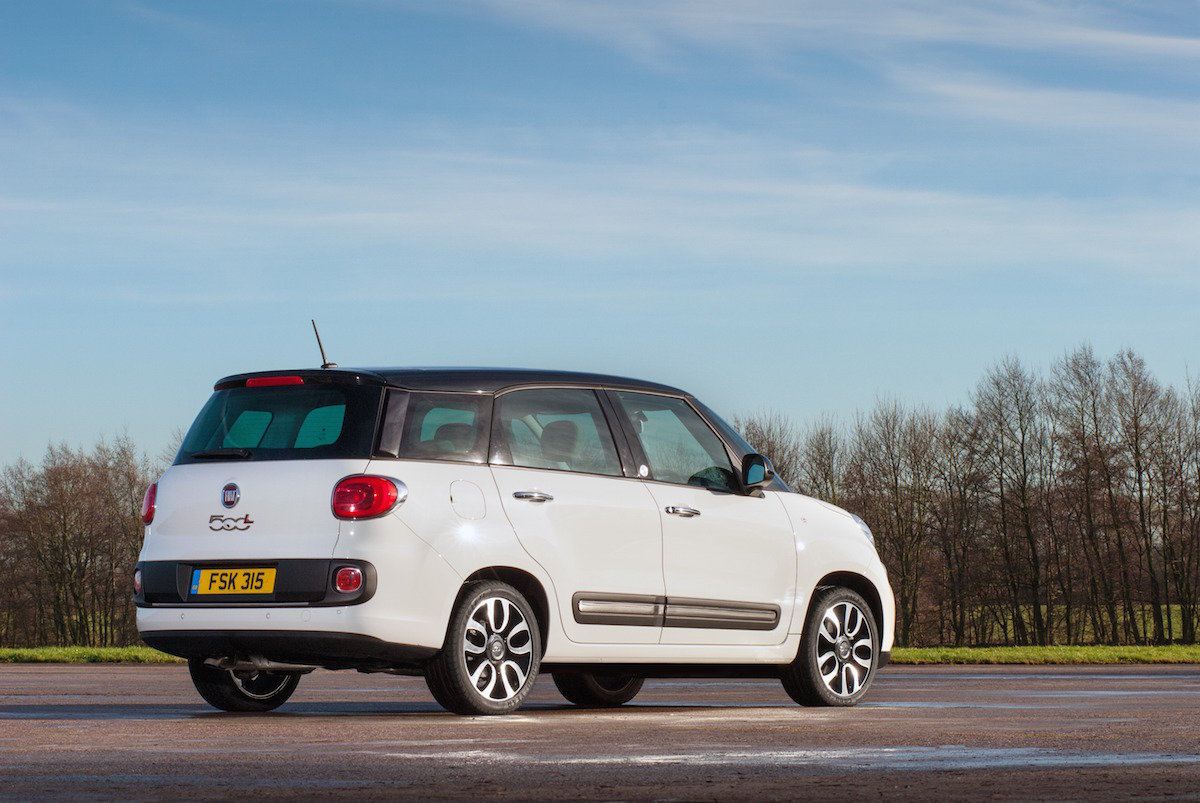
Granted, the 500L’s looks are a bit of a Marmite thing, but if you’re a fan and you like the idea of standing out from the crowd then 500L is among the most versatile small MPVs you can buy; and let’s face it, that’s basically what an MPVs are all about.
It’s a comfortable - rather than a sporty - car and if you choose the right engine it’s also reasonably refined. What’s more, it will be cheap to run, and the higher spec models come with impressive amount of equipment.
It’s also one of the few compact MPV’s available with five- or seven seats, and if you’re inclined to a wee bit of weekend adventure, the Cross or Trekking models - with their elevated ground clearance and clever traction control system - will get you up most green lanes.
The 500L wasn’t a particularly cheap car new, but residual values are weak so it’s not difficult to find low-mileage pre-owned models for relatively little money.
You have to imagine there’s a special place out the back of every car design studio where first-year students are given a box and told to go nuts with it.
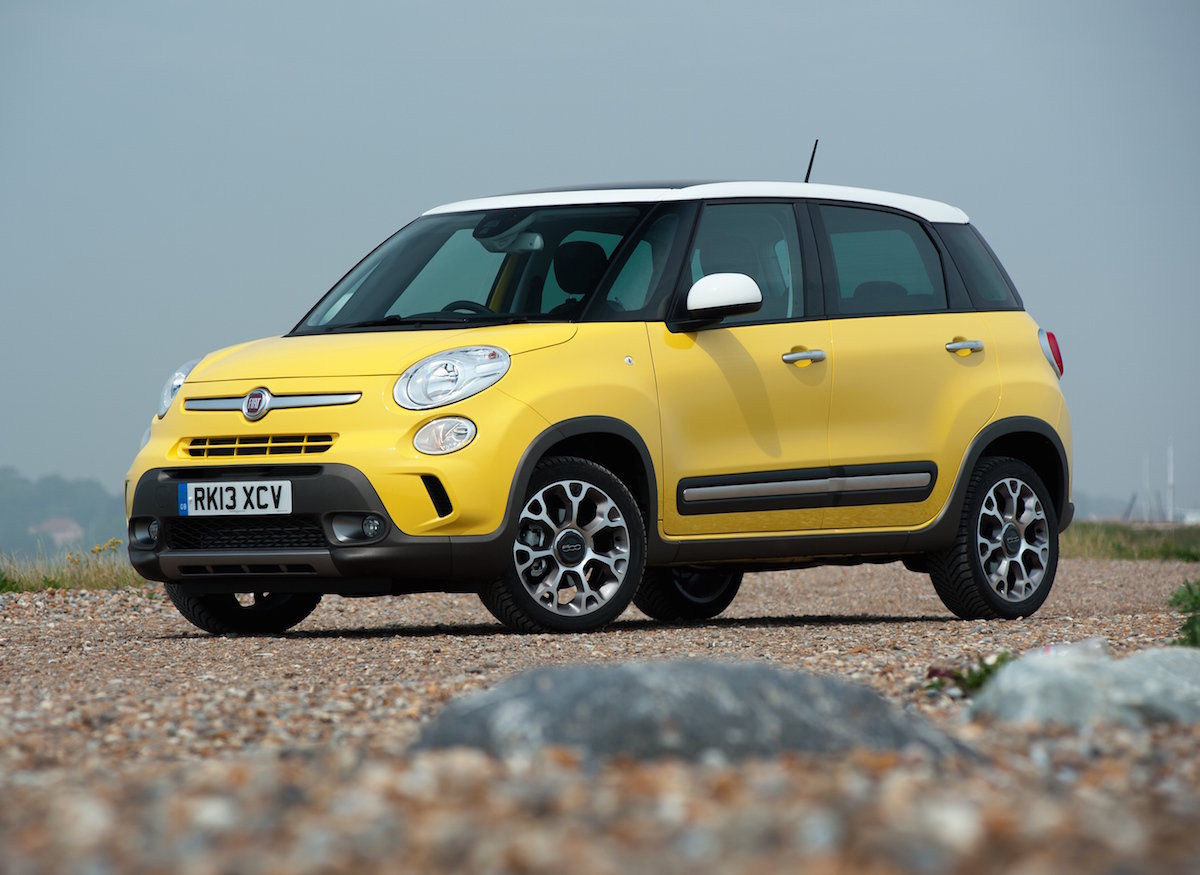
Nowhere is there greater evidence of this than at the budget end of the MPV sector, where cars like the Citroen C3 Picasso, Skoda Roomster and Fiat 500L all look as if they have taken their stylistic inspirations from a kaleidoscopic episode of Andy Pandy.
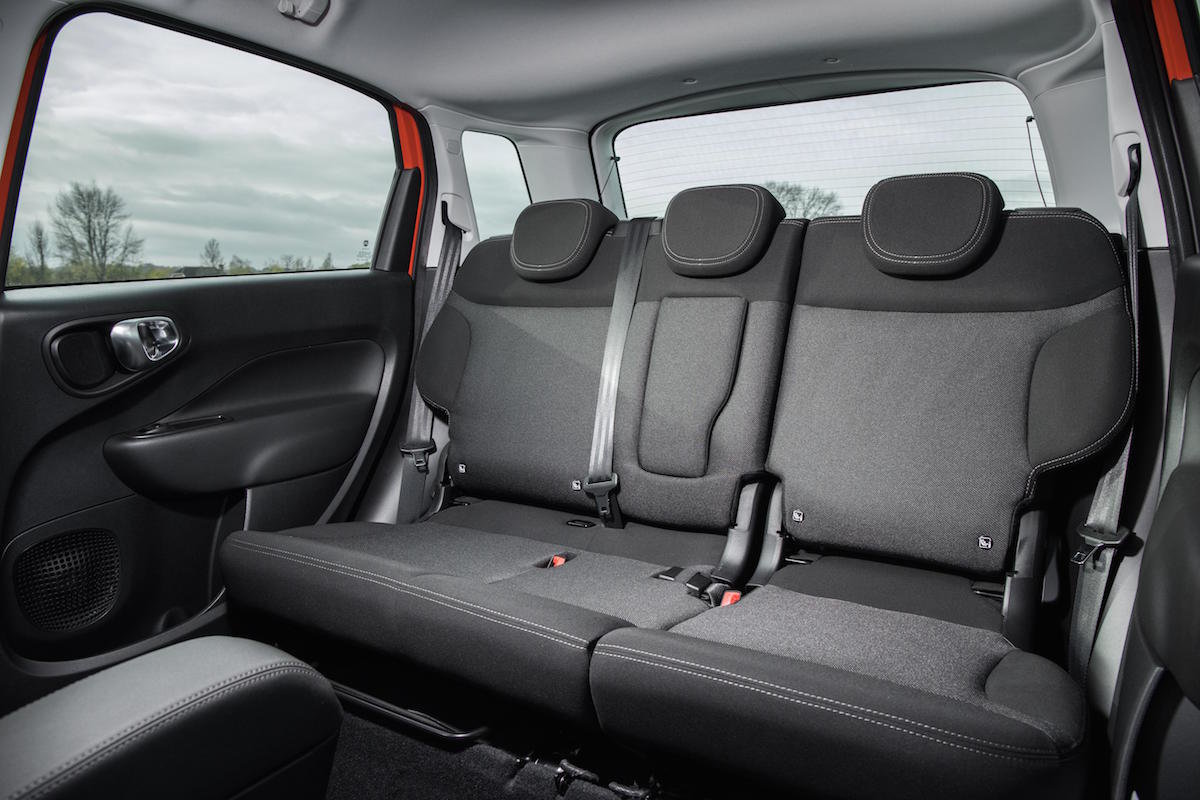
Aesthetic influences aside, because the 500L is effectively a glorified delivery van with seats, it provides a surprising amount of interior space. Although the cabin is quite narrow, it is also quite upright, so there’s plenty of headroom and legroom in the front seats and its large side windows make the cabin seem even airier. The dash is pretty cheery, too, with many models featuring a combination of body-coloured plastics with chunky switches and dials. Depending on your point of view, you’ll either see the cabin’s basic, scuff-resistant plastics as cheap and nasty, or just the job for all those wipe-clean episodes heading your way.
In standard form, you could charitably claim that the 500L at least vaguely resembles the chic Fiat 500 city car that inspired it. However, there’s also a stretched version known as the MPW or Multi-Purpose Wagon, which bludgeons any remaining cuteness out of the design, but does bring additional interior space and seating for seven people.
There’s ample legroom further back, but because the seats are set high to afford little un’s a better view out, headroom for grownups is on the tight-side.
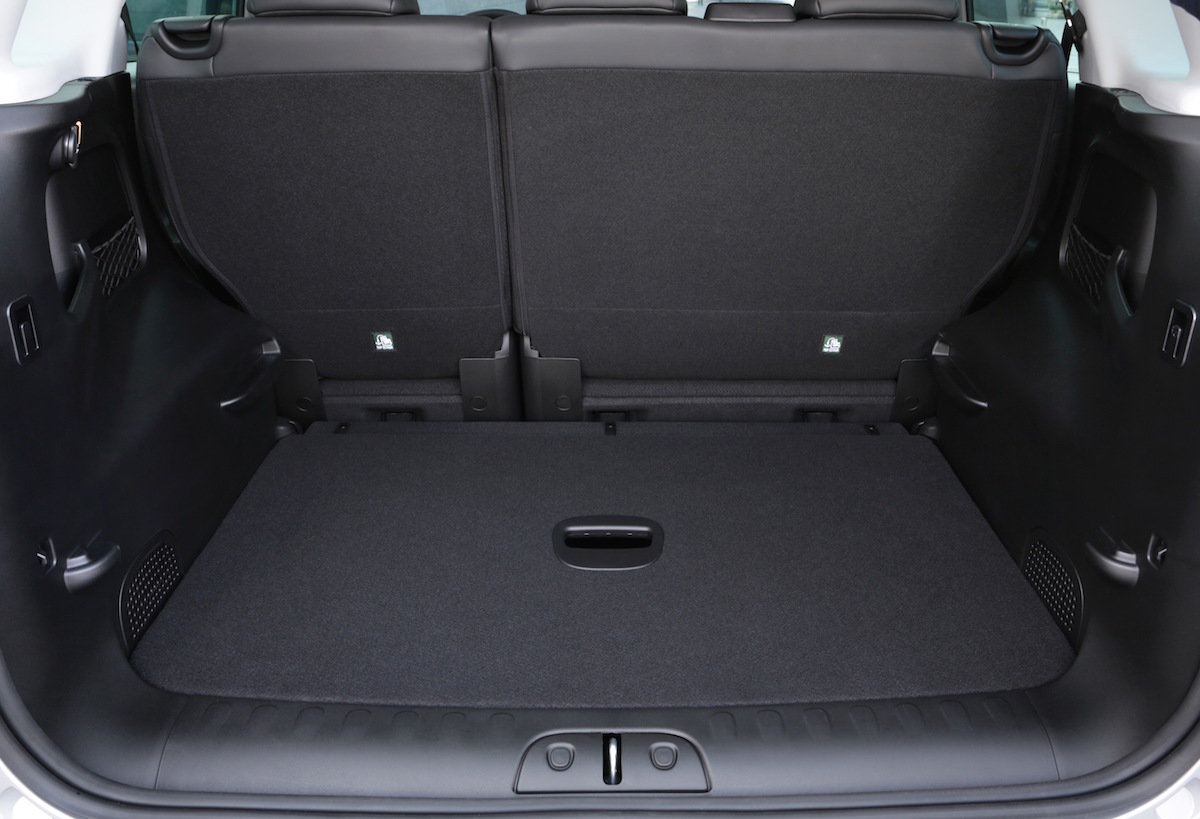
Boot space in the standard 500L is around average for an MPV, but it offers significantly more space than a conventional family hatchback. It helps that the 60/40 split second row of seats slide back and forth, which will come in handy if you need to share seat- and boot space out asymmetrically, or drag one of the seats forward to create a demilitarized zone between squabbling siblings. If you need more capacity, then the rear seats fold down quickly to reveal a flat load space, and on some versions, you can also drop the front passenger seatback onto its cushion to help transport longer items.
When it was launched, the MPW version was said to be the most-compact seven seater on the market, combining generous interior space with an external footprint that was still quite manageable if you needed to thread it through city traffic or narrow country lanes. The third row of seats does eat into the boot space considerably, but there’s still enough room for a set of shopping bags. Folding these gives you a boot that’s around 10 per cent larger than the standard 500L’s at 493 litres, while folding the middle row as well increases that to an impressive 1,509 litres.

As for the drive, it is generally pretty cushy. Although the engines are a bit shouty and you do hear a good deal of thud and wallop as the suspension goes about its duties, the soft springs and relatively long-travel suspension do their best to prevent lumps and bumps creating too much havoc.
The steering is lightly weighted but is deadly slow, and consequently, when you turn into a bend it can feel like ages before the front wheels catch up. But, it’s like that for a reason as it helps reduce the inherent body roll and should help prevent the kids from feeling too icky.
The 500L performed well in Euro NCAP crash tests, earning a maximum five-star rating. Standard equipment includes six airbags and all the usual stability and braking systems. All things considered, if you can get on board with the eccentric styling and the basic cabin materials, then the 500L is one of the most affordable and versatile budget mini MPVs you can buy.
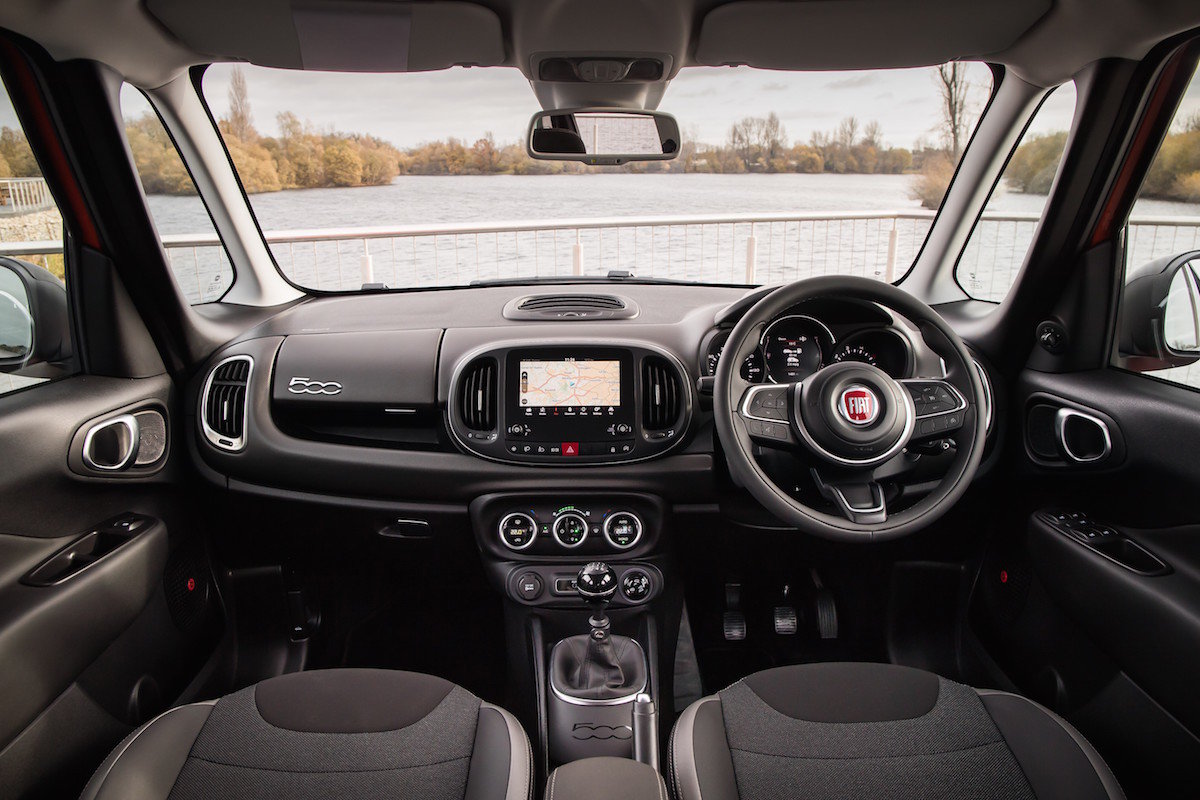
All versions get remote central locking, air con, selectable city and highway electric power steering, electric front windows, rear parking sensors, a height-adjustable steering wheel and driver’s seat, while the latest models are available with optional Apple CarPlay and Android Auto connectivity.
The range kicks off with the Pop trim that comes with a 5-inch touchscreen display with Bluetooth connectivity and Fiat’s Uconnect system, which combines hands-free calling, voice activation and audio streaming. Step up to Lounge specification and you get dual-zone climate control, cruise control, a larger 7.0-inch infotainment touchscreen and a fixed glass roof. It also brings nicer interior materials, and some examples can be found with Apple CarPlay and Android Auto as optional extras.
All models were offered with a number of packs, including City, which includes a rear parking camera and electric folding-door-mirrors with illuminating puddle lights. The Safety Pack is the one to look out for as it adds city speed autonomous braking.
The two-cylinder TwinAir unit offered on some 500Ls will go probably down in history as the Fiat engine that promised the most and delivered the least. Needing to be thrashed for all its worth to motivate the 500L, even when driven solo, the engine really struggles when the car is fully loaded, and with it, the claimed 58mpg fuel economy becomes the stuff of fantasy.
The 1.4-litre petrol engines are four-cylinder units and so much smoother, and because you don’t have to wring their necks, they will get a lot closer to their claimed mpg. As well as being sneakily quick, the 118bhp turbocharged 1.4 Multiair engine’s 40.9 mpg is not a lot less efficient than the non-turbo 94bhp Fire engine’s 45.6mpg.
The 1.3-litre Multijet diesel engine is on a different planet when it comes to efficiency. Fitted with the semi-automatic gearbox it is claimed to do 70.6mpg, while the manual version returns 67.3mpg, according to official figures. The 1.6-litre diesel with its six-speed manual gearbox is almost as impressive, as it is claimed to return 62.8mpg.
Another thing to bear in mind is resale. Fiat would love it if the 500L had the same kind of stellar residual values as its stylish 500 supermini. Sadly, this is not the case. While the supermini will retain as much as 50% of its original purchase price after three-years and 36,000 miles, the worst-performing 500L will be closer to 30% after the same period. Unsurprisingly, the dunces of the class are TwinAir versions.
Newer 500L’s – registered from 1st April 2017 onwards – will all fall under the £165 fixed rate for road tax. Earlier examples will depend on the individual model’s CO2 rating, which vary considerably. The 1.3 Multijet diesel, for instance, rated at 105g/km will cost just £20 a year to tax, while the 0.9 TwinAir petrol is barely any more at £30. The 1.4 MultiAir petrol, however, will set you back a more significant £220, due to its 159g/km rating.
Thankfully, the days of wildly unreliably Italian cars are long gone, and Fiat registered a respectable 12th place out of 31 manufacturers surveyed in the latest What Car? reliability survey.
That doesn’t mean the 500L is without its issues. Although they generally only require routine maintenance for the first three-years, like every other car on the road, problems begin to increase as the cars get older. Electrical gremlins are not uncommon, hand brake cables are known to be weak points, as is rainwater ingress and suspension bush wear. Additionally, heavy oil consumption with relatively low mileage TwinAir engines is not unheard of, so the levels should be checked on a regular basis. There has been a recall on some late-model manual gearboxes, and problems with the Dualogic automatic gearboxes have thrown up some hefty bills for owners. Particulate exhaust filters on diesel-engined models are also known to clog on cars that spend most of their lives driving in urban conditions.
At least replacement parts are cheap and readily available from Fiat dealers and motor factor outlets. According to the RAC, a set of brake pads can be had for between around £22-£45. Brake discs themselves can be had for as little as £50 a pair. While air filters and oil filters are around £10 to £12, you can pay as little as £9 for a wiper blade. Replacing a timing belt at a drive-in discount outlet should be around £200, while shock absorbers are priced in the £42 to £93 bracket. Less encouraging is the price of parts which might commonly be damaged in a low-speed ding, such as a rear light cluster, which will cost around £240 to replace or a headlight, which will set you back around £80.
- For a motor that has such iconic city car connections, you’ll be amazed at the amount of space inside the 500L. That’s because it is based on the larger Punto platform rather than the dinky 500 hatchback's. That said, the engine line up and the marketing philosophy are very similar to the little hatchback.
- Although the interiors are quite sober, predominately black or grey, with the odd model featuring dashboard panels matched to the body colour, the exterior is quite another matter as it can be specified in myriad brash colours, including Hip Hop Yellow, Sicilian Orange, Beatbox Green and Donatello Bronze. Along with contrasting roofs and various alloy wheel designs, there are a vast array of distinctive cars out there.
- Alongside the regular model, there’s the 500L Trekking – a kind of crossover version that gets a 4x4-style makeover. There’s some rugged exterior cladding and it sits a little higher off the ground, but four-wheel drive was never an option. What you did get were all weather tyres, along with Fiat’s Traction+ and Gravity Control systems, which were designed to maintain stability when climbing and descending slippery slopes. Neither are a true substitute for four-wheel drive, but they should help in wintry conditions.
- If you need more versatility: The stretched, seven-seat variant known as the 500L MPW (later cars were renamed Wagon). The two extra folding rear seats will allow you to ferry the under-nines five-a-side team, but the rear seats are far too cramped for adults, so it is better to think of the MPW as five-seater with a bigger boot.
- If you’re a bit of an outdoorsy type: The Trekking and later Cross models are certainly worth considering if you’re drawn to rural areas on a regular basis. They’re instantly recognisable thanks to a 25 mm increase in ride height, chunkier bumper design, side protectors and front and rear skid plates.
- If you’re regularly carrying three or more passengers then all those models we’ve mentioned above feel far more capable when specified with either the 1.3- or 1.6-litre Multijet diesel engines, due to their stronger low and mid-range pulling power.
- If you need an automatic: The 1.3 diesel is the only engine in the line-up that’s available with a 5-speed Dualogic automatic gearbox. Although it will take the strain off your left leg, it’s not a particularly sophisticated device, because its shifts are quite jerky and its power take-up is a bit hit and miss, so it requires your full concentration when attempting to park in snug spaces.

