Fiat Panda Review (2012-present)
Fiat Panda cars for sale
3.0
Expert review
Pros
Affordable to buy and cheap to run
4x4 versions are handy for country-dwellers
Cute and distinctive looks
Cons
Lacks the safety features of more modern rivals
The Panda isn't very well equipped
Not as fun to drive as a Ford Fiesta

The CarGurus verdict
It’s often difficult to recommend a Panda, given that most recent conventional city cars are better equipped, better to drive and far safer. However, the Fiat is not a car without appeal; while it may be flawed in areas, its outright charm and practicality can make it a compelling choice.
Affordable pricing, an array of options and neat detailing further bolsters its appeal, particularly alongside more humdrum alternatives. Those wanting a compact car with the option of all-wheel-drive, which is an uncommon combination, will also appreciate the availability of the 4x4 variants on the second hand market.
That all said – and if you’re otherwise just looking for a frugal and functional car – alternatives such as the Hyundai i10 would prove a more competent and safer option. You could also consider a used Volkswagen Up if budget is a concern, or the similar Skoda Citigo or Seat Mii, all of which are safer than the Panda.
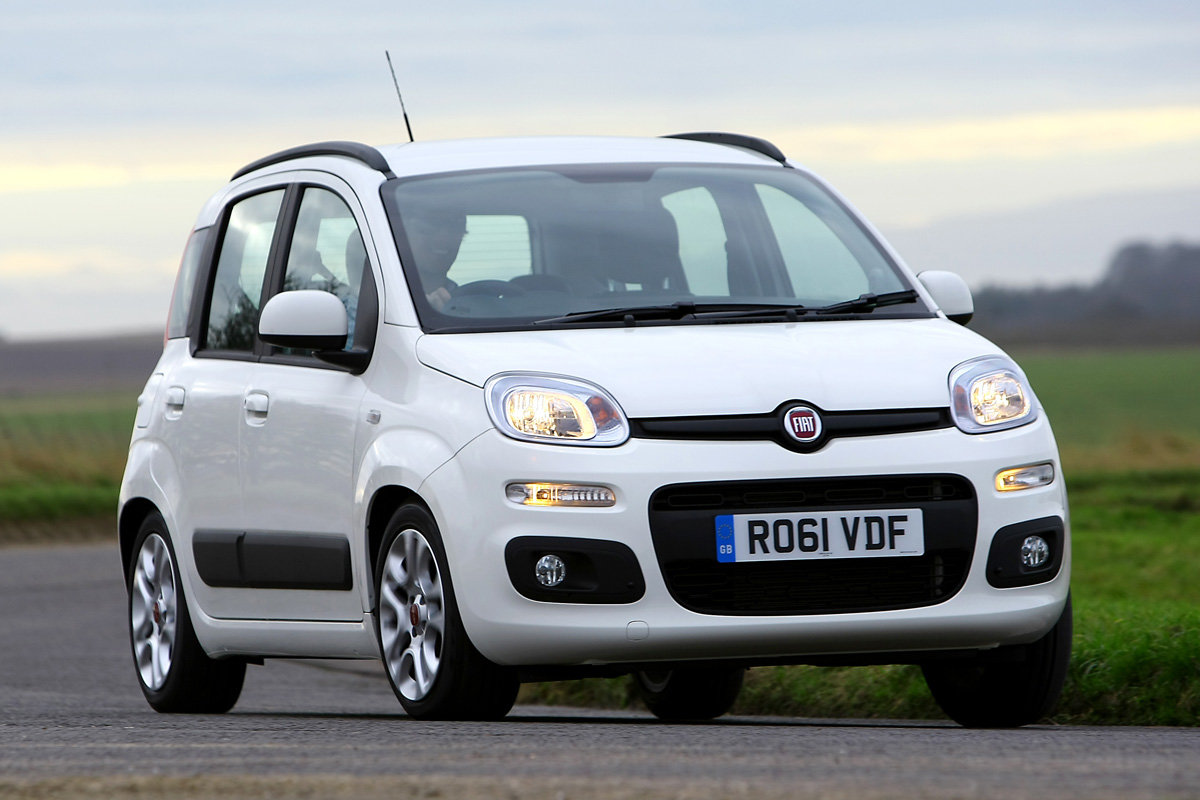
What is the Fiat Panda?
The Fiat Panda is a practical and inexpensive runabout that competes with city cars such as the Kia Picanto, Citroen C1 and Volkswagen Up, as well as other myriad small cheap hatchbacks. It’s the sort of car that the Italian brand does very well – honest and unpretentious and yet quite characterful as a result. The Panda name stretches back to the early eighties with the boxy-but-brilliant original. It’s now in its third generation, which arrived in the UK back in 2012, although an all-new replacement is expected soon.
One major issue is that the Panda suffers when it comes to safety, a point emphasised by the fact that it scored zero stars in Euro NCAP crash testing in 2018. This is in part due to the way testing has changed and the requirement for more safety systems, which the ageing Panda lacks; when first tested back in 2011, the Fiat totted up four stars out of a possible five.
While this might not trouble some, it’s worth considering that the Panda scored miserably for child occupancy safety in the 2018 test – earning a 17% rating, whereas cars such as the compact Volkswagen Up scored an impressive 83% rating for child occupancy and three stars overall. Even the extremely affordable Dacia Sandero, which was launched in 2013, netted itself 79% and four stars respectively. Consequently, if you intend to regularly carry children around, the Panda probably shouldn’t be on your shortlist.
The Panda is starting to show its age in other places too, such as the odd bit of poorly finished trim and – in some models – a complete lack of Bluetooth audio streaming, but the overall impression is of a friendly, flexible and frugal runabout that doesn’t feel cheap.

How practical is it?
There’s plenty of room inside the Panda, with three adults just about managing to sit abreast in the back, while rear head and leg room are both generous for such a small car. The boot is a surprisingly decent size too, with a clever system that allows the rear seats to be slid forwards or backwards to trade passenger legroom for additional luggage space. As you’d expect, the rear seats also fold down (with a 60/40 split) to provide additional flexibility. All this, of course, is relative, but for its size the Panda is quite a practical choice.
What's it like to drive?
The Panda is a pleasingly competent companion on the road; no version could ever be called quick but none feel pedestrian, while the ride is comfortable and the handling reassuring. It’s an easy car to drive and it doesn’t feel out of its depth on the motorways either, with surprisingly low noise levels for a car of this class. Sure, a Suzuki Swift or Ford Fiesta would be far more compelling to drive, but they cost far more.
At present, there’s only one engine option if you’re buying new, a 1-litre 69bhp mild hybrid unit coupled to a six-speed manual gearbox. It’s not the quickest car around, with a 0-62mph time of 13.9 seconds and a top speed of 102mph, but adequate progress can be made if you work it hard.
For those browsing the second hand market, the engine choices are more varied. The current generation Panda was originally introduced with a 1.2-litre 68bhp petrol engine, a 73bhp 1.3-litre diesel and an advanced 85bhp 0.9-litre petrol engine called the Twinair that suited the Panda’s character with its appealing twin-cylinder thrum. Manual transmissions were standard, but some Twinair models were available with an automated manual gearbox called the Dualogic until early 2019. This works more-or-less like a regular automatic when it’s functioning correctly, but they’re known to have reliability issues.

Technology and equipment
The Panda range is essentially split between city-focused Panda Life and the pseudo-SUV Panda Cross models. Sadly, the latter is now basically just a regular Panda with a beefy bumper and some roof rails – the quirky and surprisingly capable Fiat Panda 4X4 has been axed from the range.
The Panda City Life is pretty basic. It comes with steel wheels, DAB radio, air conditioning and not a lot else, but it is relatively cheap at £14,085. Opt for the Panda Cross and you get a series of different sub-models to choose from. The City Cross is the core offering and it’s marginally better equipped than the City Life, adding front fog lights and steering-wheel mounted audio controls to the list.
Things get more interesting, but also somewhat more expensive, with the RED and Garmin models. These take the chunkier silhouette of the Cross and add more toys. In the case of the RED, you get a 7-inch touchscreen infotainment system with Bluetooth, DAB radio, Apple CarPlay and Android Auto, plus various red accents in the cabin, and a special RED kit that includes a cabin air filter, antibacterial treatment on the surfaces and a hand sanitiser dispenser. Meanwhile, the outdoorsy Garmin edition includes unique Foresta Green paintwork with orange details and matt grey side mouldings, along with heated front seats and a Garmin smartwatch.

How much does it cost to run?
No Panda is going to cost a terrific amount to run as all variants are light, efficient and straightforward. The older 1.2-litre Panda should easily average in the region of 50mpg, for example, while the Twinair versions will often return around 40mpg – or more, if driven carefully, even in the case of 4x4 models.
Vehicle Excise Duty (VED) costs vary throughout the range, however, and vary depending on the year of the car you’re looking at. Any new Panda will cost you £170 to tax for the first year and go onto the flat rate £165 scheme thereafter. If you’re buying second hand, some of the early Twinair models can actually be free to tax under the pre-1 April 2017 rating system, thanks to their 99g/km CO2 figure; later examples would pay the same flat-rate fee of £165. Other pre-2017 cars vary. None are eye-wateringly expensive, but it’s worth checking the potential tax costs of the specific example you’re looking at.
Fiat also offers an Easy Care service plan, which makes budgeting easier by providing fixed-price servicing for up to five years or 45,000 miles. At the time of writing, Fiat was offering three years of Easy Care for a discounted £299 (normal prices are in the region of £599). Apart from that, you’ll only have to budget for consumables such as brake pads and tyres – but, in part due to the Panda’s light weight, wear tends to be glacial. Insurance costs are also low, which further helps keep the Panda’s overall running costs down.
The 1.2-litre petrol engine has a timing belt but replacing it is relatively easy and inexpensive to change; Fiat recommends changing it every 72,000 miles or five years, or four years if the car spends a lot of its time in traffic or idling. The Mild Hybrid, Twinair and Multijet engines have a timing chain, however, so there’s little to worry about on that front as they shouldn’t need replacing. Do, however, keep an ear open for excess noise that could indicate a timing chain-related issue.
Is it reliable?
Every new Fiat comes with a 24-month, unlimited-mileage warranty. Perforation of the metalwork by corrosion is also warranted against for a total of eight years, which should help keep concerns to a minimum. This lags somewhat behind the usual three-year warranty offered by most other manufacturers, not to mention the seven-year warranty offered by Kia.
Fiat also typically delivers middling results in reliability and customer satisfaction surveys, far behind companies like Suzuki and Kia. The Panda is a well-proven car, however, and often uncomplicated. Major problems with new examples, as a result, should be few and far between.
Many used Pandas will have potentially spent a lot of time sat in traffic and crawling around town, so make sure that servicing has been carried out regularly and that the clutch and gearbox are in good order. It’s also worth casting an eye over the exterior, just to check for any parking dings and dents. Look out for faulty rear boot latch and handle mechanism as well, as the entire assembly can sometimes require replacing in order to fix it.
The all-wheel-drive Pandas can suffer from oil leaks from the rear differential and the rear disc brakes in Cross variants can squeal when reversing. Fortunately, an inexpensive fix is available.
Twinair models can weep oil from their myriad sealing surfaces so it’s worth checking underneath for any signs of obvious leaks. Using the right oil is important, too, as is ensuring that the oil level is precisely maintained. However, the long plastic dipstick is very difficult to read, making what should be a quick and simple check a real chore. Lifting it straight up and pressing it to a clean piece of paper can help you more accurately ascertain what the real level is.
If you are in the market for a used Panda, it’s worth looking at official approved used examples. These come with a 12-month comprehensive warranty, as well as 12 months’ breakdown cover and a 30-day exchange guarantee.
- Unsurprisingly, given that it’s a budget car, the Panda doesn’t come with much in the way of equipment. There are plenty of options, however, ranging from climate control to the Winter Pack, which adds a heated windscreen and heated front seats. You can also opt for a spare wheel, so you don’t have to rely on an oft-useless tyre repair kit. It’s otherwise very important to look out for options such as a height-adjustable driver’s seat, if not standard, and the split-folding rear seats; without these features, comfort and practicality can be significantly limited.
- Many buyers will find the performance of the standard 1.2-litre engine or newer Mild Hybrid model adequate, especially if the car’s primarily for around-town work. The 0.9-litre Twinair is less refined but offers more punch, so keeping up with traffic is less of a chore, particularly on the motorway. It does take some getting used to though, both in terms of how it sounds and how it performs; don’t use the Eco button, as it cuts performance and can actually deliver worse real-world economy. You may encounter older 1.3-litre Multijet diesel models, which can be efficient but can also suffer from the usual diesel drawbacks.
- Although the Panda Cross now comes with a regular front-wheel drive transmission, the name was originally used for a range-topping version of the Panda 4X4. It came with a terrain selector switch to simplify off-road driving. This, in conjunction with redesigned bumpers that offer more clearance, improved its rough-road capabilities. The same styling kit could be had with a front-wheel drive transmission – effectively the same combination as you get with the new Panda Cross – in a model called the Trekking.
- A new car on a budget: The Panda City Life might not be the last word in luxury, but it’s capable runaround that can be bought new for the second hand price of some of its rivals. It should be cheap to run too, with a claimed 57.6mpg on the WLTP cycle.
- For the eco-minded: All Pandas that are currently offered new use the same mild hybrid engine. This features a small electric motor that captures wasted energy, assists the engine and provides an engine stop/start function. The level of hybrid assistance is very low (hence the mild tag) so the driving experience is largely unchanged from a conventional petrol engine. There’s not much to choose between them, but the City Life is fractionally more economical than the chunkier Cross models.
- The best all-rounder: In the new market that’s arguably the Panda Cross RED. It’s a small step up in price from the basic City Cross, yet it brings a few welcome additions, such as an improved infotainment system with Apple CarPlay and Android Auto. If you’re looking second hand, the regular Panda in Lounge specification offers a good balance between price and features, with air conditioning and electrically adjustable and heated mirrors.
- If you’re after a used car bargain: Make a beeline for a 1.2-litre Pop if keeping costs to the absolute minimum is key, as it’s the least expensive Panda variant. More recent versions came with air conditioning, as well as features such as a radio and CD player, USB connectivity, electric front windows, electronic stability control and tyre pressure monitoring. The Pop, as a result, isn’t a completely bare-bones offering, but it is cheap.

