Ford C-Max Review (2011-2019)
Ford C-MAX cars for sale
4.0
Expert review
Pros
Fun to drive for an MPV
Practical and roomy cabin
Grand C-Max has room for seven and sliding doors
Cons
Pre-facelift cars feel a bit cheap inside
Models with an auto gearbox have worse fuel economy
Not as many driver aids as some more modern MPVs

The CarGurus verdict
The Ford C-Max isn’t the most practical of this generation of MPVs, but it’s well up there with the best all-rounders and it offers an engaging, fun driving experience that none of its rivals can provide. If you need to transport your family and all their paraphernalia, but don’t want to sacrifice that feeling of excitement behind the wheel, then the C-Max is an excellent option. MPVs might not resonate with the population as much as SUVs do now, but that’s just keeping prices down, which means savings for you. It’s well worth checking out.
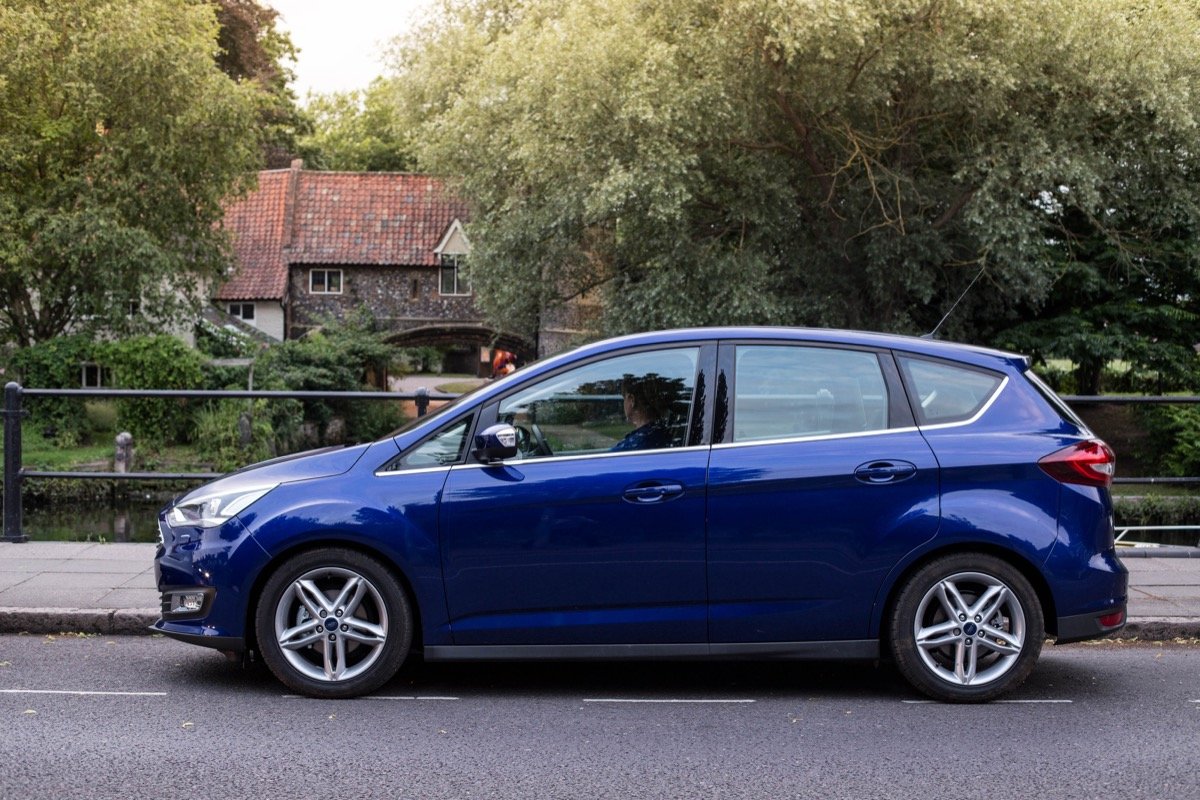
Before SUVs took over the world, the obvious choice for family transport was the MPV. The C-Max, first introduced in 2003, took the Ford Focus hatchback and extended it upwards to create a compact MPV with more interior space, all without substantially altering its footprint. This is the second-generation version, introduced in 2011 and sold until 2019. It got much sharper looks than its predecessor, and seats five in its standard form or, as the Grand C-Max, seven. Like so many modern Fords, it’s fun to drive and has a range of strong engines. A subtle facelift in 2015 added a reprofiled nose on the outside and a slightly smarter interior with enhanced infotainment. At the time it was new, the C-Max faced numerous rivals, such as the Renault Scenic and Citroen C4 Picasso. Both of these French machines offer more distinctive styling and greater interior space and flexibility, but neither is as robust and reliable as the Ford, or as engaging to drive.
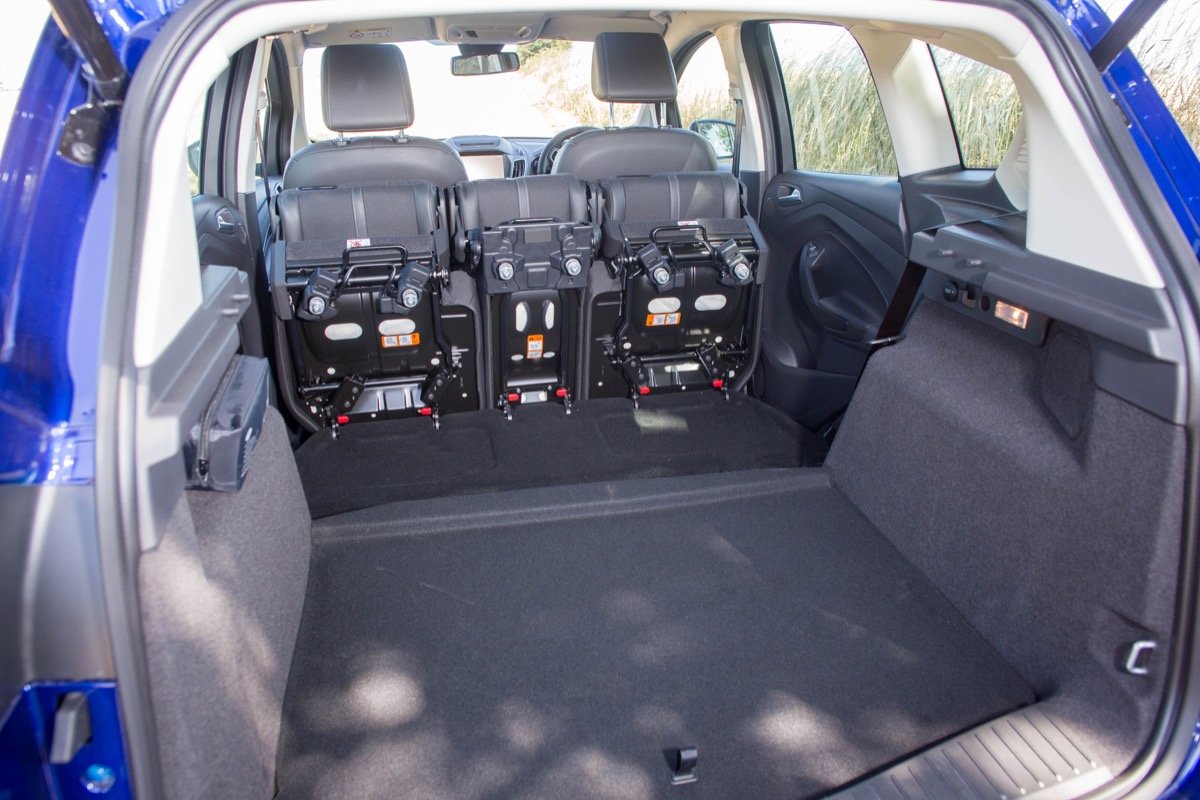
Practicality is the C-Max’s USP. There’s loads of space inside, and while the middle rear seat is on the narrow side, there’s plenty of head- and legroom front and back, and a big boot, too. The rear seats slide backwards or forwards depending on whether you want to maximise boot space or passenger space, and they also fold down in a 40/20/40 split should you need to carry larger loads. Speaking of the boot, it has a fairly healthy 471-litre capacity, which is more than the Renault Scenic. Lower the rear bench flat and you’ll have a van-like 1,851 litres of space to play with, making the Ford fairly useful family holdall. That said, cars like the Citroen C4 Picasso (later the C4 Spacetourer) benefit from three individual rear seats, each with their own ISOFIX child seat connection – the C-MAX only has two. The driving position is very good, with plenty of adjustment on both driver’s seat and steering column, and good visibility all around. The dashboard in older models isn’t as slick and premium-feeling as that in the facelifted model, and the infotainment system is set quite deeply into the dash, which can make it quite hard to use. The C-Max and Grand C-Max were given a facelift in 2015, with refreshed exterior looks and an interior overhaul that made the new cars feel considerably better inside, as well as bestowing them with an updated infotainment system.

On the move, you’d hope the C-Max would give you a comfortable ride, and that’s indeed the case. With supple suspension that smoothes away the worst road surfaces and decent refinement, the Ford offers a stress-free way of getting around. What you might not expect, though, is that it’s actually enjoyable to drive as well. The steering feels sharp and alert and the car is surprisingly nimble and composed through the corners. You can’t say that about its rivals. When it comes to engines, there’s a range of petrol and diesel options. Early cars had a choice of three petrol engines and two diesel engines. The petrol models started with a 105hp 1.6-litre Ecoboost engine, which was also available with 125hp and 150hp The diesel range featured a 1.6-litre TDCi Duratorq engine with 115hp, and a 2.0-litre with 140hp. The latter was available with an automatic gearbox, while the others were manual. New engines were introduced in 2012. For petrols, the range started with a 1.0-litre, three-cylinder EcoBoost engine with 100hp. It’s impressively punchy for its size, but we think the same engine with 125hp is better suited to the C-Max, especially if it’s fully loaded. There’s also a 150hp, 1.5-litre engine, which has plenty of power but is quite thirsty on fuel. Arguably, the diesel engines better suit the character of C-Max, as they give more oomph low down in the rev range, although they’re also a bit noisier. The 1.6-litre diesel was replaced by a much more efficient 1.5-litre engine in 2015. It was available with 105hp, which was a bit short on grunt, and there was a 120hp version as well. This does the job very nicely, but if you regularly have a full car then the 150hp version of the 1.5 may be more appealing. Most models have a manual gearbox, which will be with five or six-speed. Both have a light and precise action, meaning gearchanging is never a chore. An automatic transmission is available, but the twin-clutch Powershift unit isn’t as fast and smooth as the DSG set-up found in the VW Touran, plus it does have a negative impact on efficiency
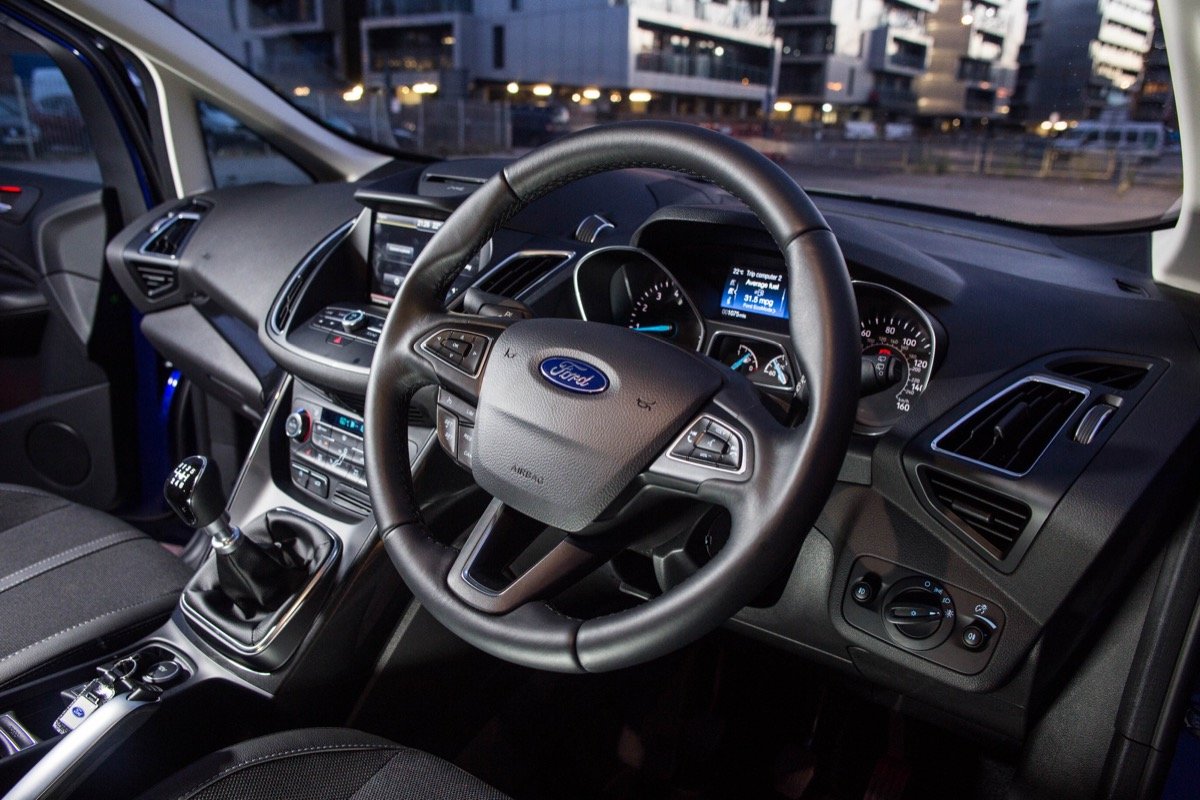
Ford kept things simple with the C-Max, so there are just three trim levels – Zetec, Titanium and Titanium X. The Zetec gets 16-inch alloy wheels and air-conditioning, as well as a DAB radio and Ford’s excellent Quickclear heated windscreen. The Titanium adds features like automatic headlights and dual-zone aircon, as well as a larger touchscreen infotainment system. This is the sweet spot between price and features, and used examples aren’t likely to be much more than the Zetec. The Titanium X, introduced in 2012, is the fully-loaded model, with 17-inch alloys, part-leather heated seats and a panoramic sunroof. If you can find one for not too much more money, maybe it’s worth splashing out, but those bigger wheels do the ride no favours. In terms of infotainment, earlier cars have a much more fiddly, button-heavy set-up that can be frustrating to use on the move. They also featured a smaller screen with dated graphics, even on models equipped with sat-nav. There was a Sony upgrade, but the increase in sound quality is fairly negligible. Much better are the later cars fitted with the brand’s SYNC3 system, which features a large touch screen and much improved connectivity. Its eight-inch display is responsive and its menus are easy to access, while linking your phone is straightforward thanks to Bluetooth and USB. There’s even a fairly good voice recognition system.
All of the engine choices in the C-Max are efficient for their time and size, but the later engines will drink through fuel a little more slowly. The downside, of course, is that newer cars with newer engines will cost more to buy, so keep that in mind. It’s worth working out how many miles you’re likely to do and whether the extra purchase price will be offset by fuel savings in more recent cars.
For the original engines on early cars, the 1.6-litre, 104bhp petrol has an official fuel consumption figure of 44.1mpg, while in the diesels the 1.6 TDCi will give you 62.8mpg, and the 2.0 TDCi 55.4mpg.
Among the newer engines, the 1.0-litre Ecoboost engine has an official rating of 55.4mpg, and impressively that’s the case for both power outputs. The 1.5 TDCi is the most economical of the lot, with an MPG of 74.3 for the 104bhp version, 68.9mpg on the 118bhp model and 64.2mpg for the more powerful 148bhp model.
You’ll need to service your C-Max every year or 12,500 miles. Diesel models will cost a bit more than petrol cars to service. Cars with more than 125,000 miles on them (100,000 for the 1.0-litre models and 150,000 for the 1.6 petrol) will need the cambelt changing, so check if this has been done to avoid a fairly sizeable bill of between £400 and £500. While Ford dealer servicing is very reasonably priced, it might be worth checking out independent garages, especially on older models, as they could well be cheaper still.
When it comes to Vehicle Excise Duty, much will depend on when your C-Max was first registered. If it was before 1 April 2017 then VED will be based on the CO2 emissions figure, while later cars will have a flat annual rate. As a general guide, prices will range between £30 and £205 a year.
Insurance groups range between 10 and 26 out of 50, with the more powerful Titanium X models setting you back more in premiums.
Independent reliability and owner satisfaction surveys throughout the C-Max’s life paint a reasonable picture, but it seemed to drop down the order in later years. This suggests more than ever that it’s worth checking service histories carefully, and watch out for any issues when you test drive.
Common problems reported include electrical issues, such as water ingress through the wing mirrors, which can short out various circuits. A blocked hose in the aircon system can cause water leaks into the footwell, so check for any damp on the carpets.
There have been several recalls on the C-Max and Grand C-Max. Issues have included seat belt anchorage bolt problems, clutch issues and cracked oil sumps, as well as structural worries about alloy wheels, cracked cylinder heads and airbag deployment problems. All these issues should have been sorted by now, but it’s still worth checking with Ford dealer, who will be able to check if the car you’re looking at was affected.
- While the C-Max has plenty of talents, it’s lacking a bit in the safety stakes. Although it scored the maximum five stars when tested by safety organisation Euro NCAP back in 2010, a test of the facelifted model in 2017 gave it just three stars. It received particularly poor scores for its assistance systems, even though cars from 2015 could be specified with automatic emergency braking.
- There are three trim levels. The Zetec gets 16-inch alloy wheels and air-conditioning, as well as a DAB radio. The Titanium adds features like automatic headlights and dual-zone aircon, as well as a larger touchscreen infotainment system. This is the sweet spot between price and features, and used examples aren’t likely to be much more than the Zetec. The Titanium X, introduced in 2012, is the fully-loaded model, with 17-inch alloys, part-leather heated seats and a panoramic sunroof. If you can find one for not too much more money, maybe it’s worth splashing out.
- The Grand C-Max is longer, has sliding rear doors and a third row of two seats, although they’re best kept for children and they dramatically reduce boot space. If you do need to seat seven, it might be better to consider the larger S-Max.
- If you want the best fuel economy: The more modern engines are more efficient than the line-up when the car was originally released. The lowest-powered 1.5-litre diesel will give you the best fuel economy, with an official figure of more than 74mpg.
- If you want all the toys: The top-spec Titanium X model was a bit too pricey when the C-Max was new, but as a used buy it could give you a lot of features for your money, so keep your eyes peeled. You’ll get part-leather upholstery, brighter headlights and a panoramic sunroof, as well as heated front seats and electric adjustability on the driver’s seat.
- If you want the cheapest: For the most affordable way into C-Max ownership, keep an eye out for an early, entry-level Zetec trim with the 1.6-litre petrol engine. You’ll miss out on a few toys, but with so many C-Maxes on the market, you should be able to pick up a good example for relatively little cash.
- If you want extra space: The seven-seat Grand C-Max will fit two more children in the back, and comes in the same trim levels as the regular car. It’s also similarly good to drive and similarly good value for money.


