Ford Cougar Review (1998-2002)
Ford Cougar cars for sale
2.0
Expert review
Pros
Cheap to buy
Reasonable ride comfort
Rarity value
Cons
Cheap interior
Hard to find a good one
Not that much fun to drive
The CarGurus verdict
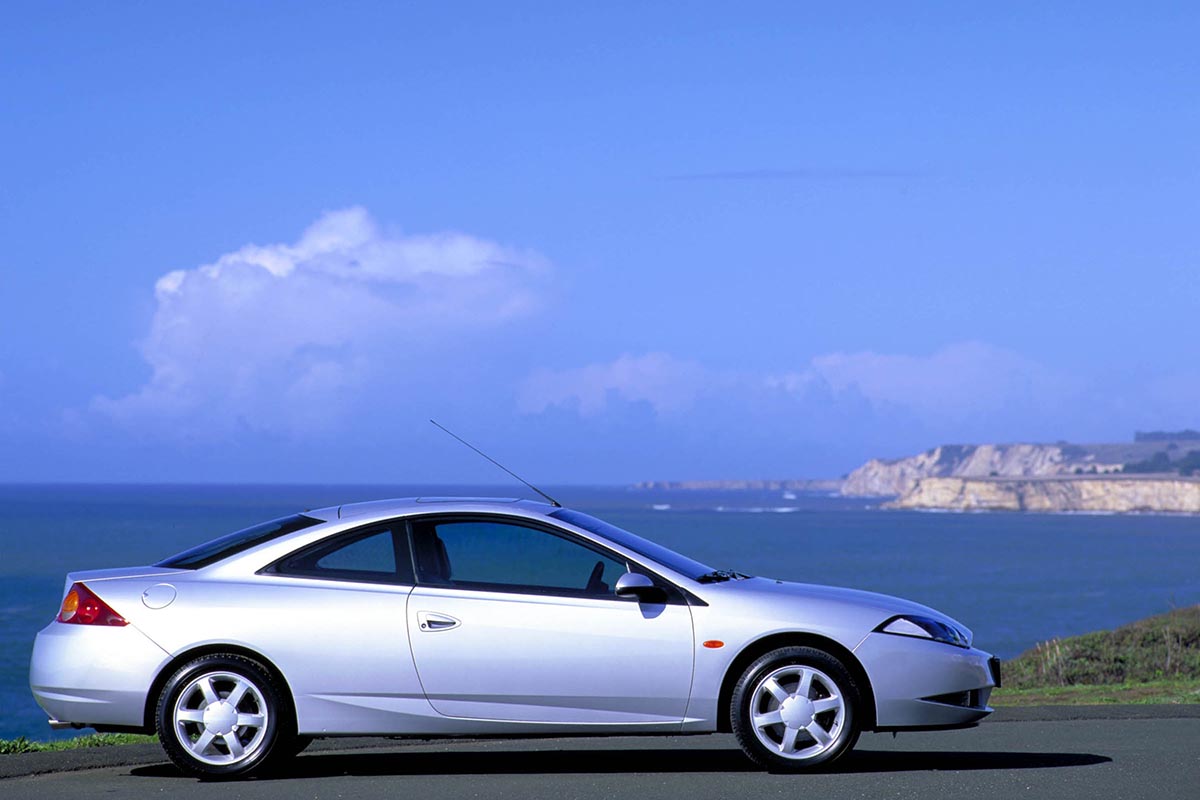
It wasn’t hugely popular when new, but that was largely down to the fact that customer demand for coupes had collapsed by the time the Cougar arrived. Find a good one that’s been well looked after, and it’ll offer comfortable, reasonably stylish motoring with a helpful dose of practicality by coupe standards.
The trouble is finding a good one. So many Cougars have headed to the scrap yard, and many tatty, neglected examples are halfway there. The Fiat Coupe and Peugeot 406 Coupe are more widely available and so much prettier, so you might reckon it isn’t worth the effort.
By the mid-1990s, Ford was looking at a 1-1 draw in the battle of the coupes. Its larger offering, the Probe, which was based on the Mazda MX-6, was decidedly underwhelming, but the little Puma, based on the Ford Fiesta supermini, was a roaring success.
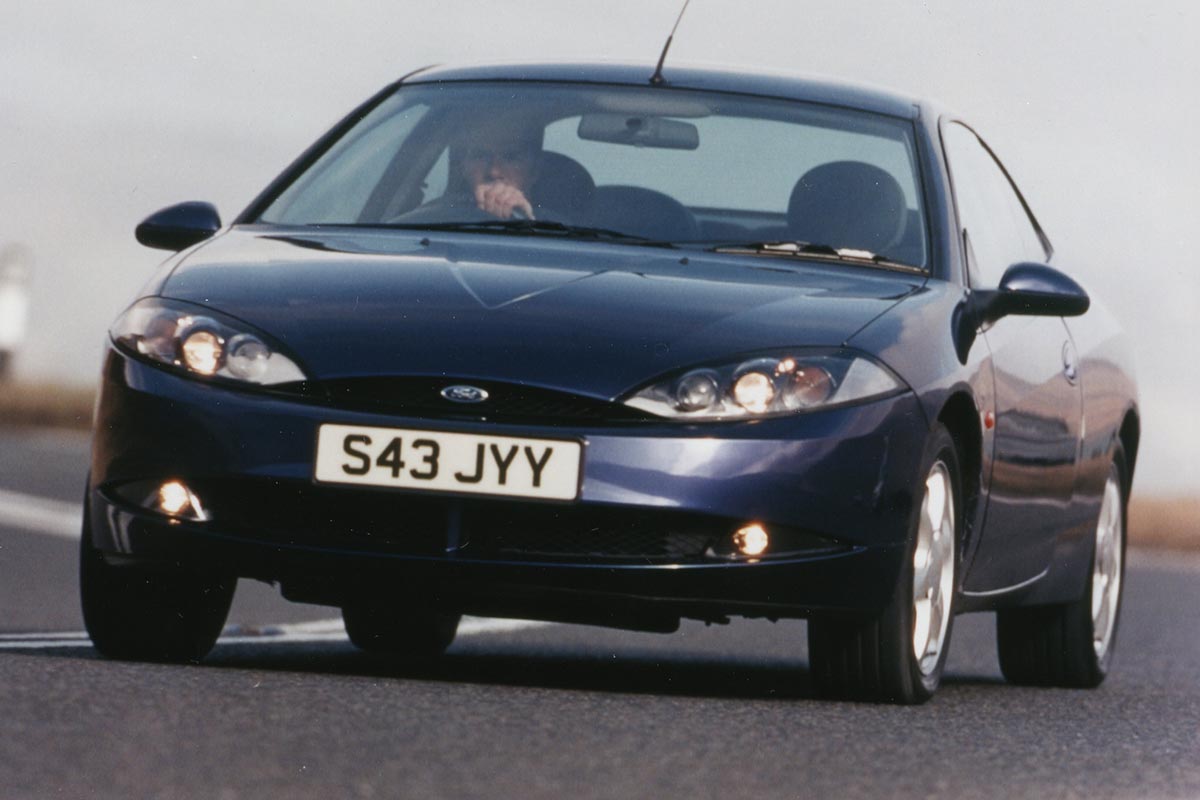
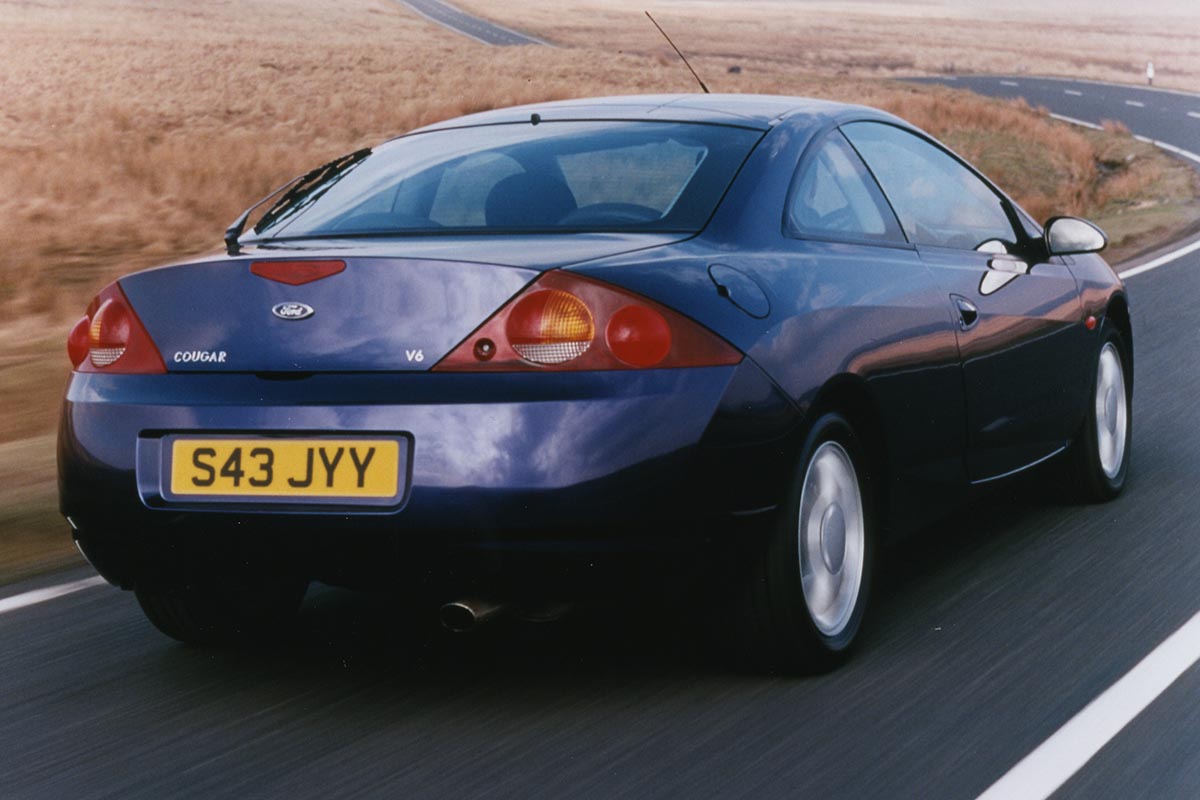
Ford tried to replicate the Puma recipe with the Probe’s replacement, which was based on the excellent Ford Mondeo and fitted with the same gutsy 2.5-litre V6, housed in a sleek body with a hatchback tail for practicality. In-keeping with the Puma's big cat name, Ford christened its new car the Cougar.
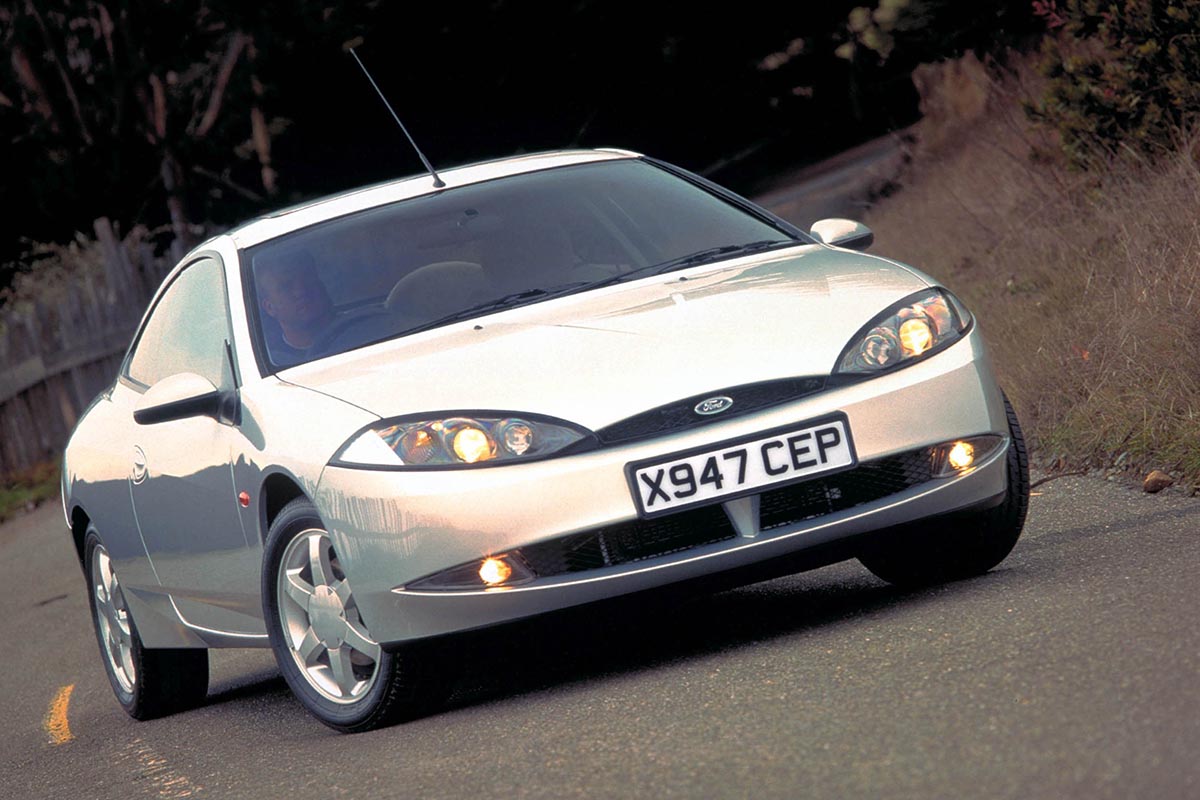
There was also an entry-level 2.0-litre model, but apart from discreet badging Ford kept the looks of both identical (the smaller four-cylinder was a 16V, the more powerful V6 a 24V). That meant it featured the latest take on the firm’s ‘New Edge’ design language that was first seen on the original Focus family hatchback.
The Cougar is a coupe, which means it naturally isn't as roomy as a saloon or hatchback of the same size. For a coupe, though, it’s extremely practical, as you might expect given that it’s based on the Ford Mondeo, itself a capacious family car.
Not only does the boot boast a very handy 410-litre capacity, it is accessed using a versatile hatchback opening, making the Cougar far more useful than most rivals. Incidentally, this also means you get a rear wiper to clean the screen, something you don't get with most of the Cougar’s rivals.
The two rear seats have a split back and each side can fold down onto its base individually, so you can carry one rear passenger as well as a longer load. Lower the rear bench completely and there’s a very useful 930-litres of space to play with. With both seats up, there’s quite a bit of legroom and headroom for passengers – far more than in a Honda Prelude or a Fiat Coupe – and the large doors make access a breeze, even if they are a little heavy, particularly noticable when you’re parked facing uphill.
If you’re expecting the lively cornering of a Puma, you’ll be a little underwhelmed, as indeed were some contemporary car reviews of the time. The front-wheel-drive Cougar lacks its smaller stablemate’s outright agility and direct steering. However, it’s still a responsive and balanced car to drive, with plenty of grip and lots of feedback through the steering. You’ll enjoy feeding it along a back road, even if you won’t be tempted to take it for a spin just for the sake of it.
It’s also comfortable, with a loping ride quality that makes it an excellent grand-tourer, and the strong blend of all-round ability makes it a satisfying all-rounder of a coupe, if not a hugely exciting one. In fact, unusually for a Ford, it was arguably the most lacklustre model to drive in the class, with models such as the Peugeot 406 Coupe and Alfa Romeo GTV feeling far more engaging.
The 128bhp 2.0-litre Zetec four-cylinder engine is competent if a little humdrum, while the 168bhp 2.5-litre Duratec V6 makes a far more pleasing noise, delivering a satisfying growl when it’s worked hard. It also feels fairly fast, with decent muscle in the mid-range - although bear in mind examples fitted with the optional four-speed automatic gearbox are actually slower than the manual-equipped 2.0-litre.
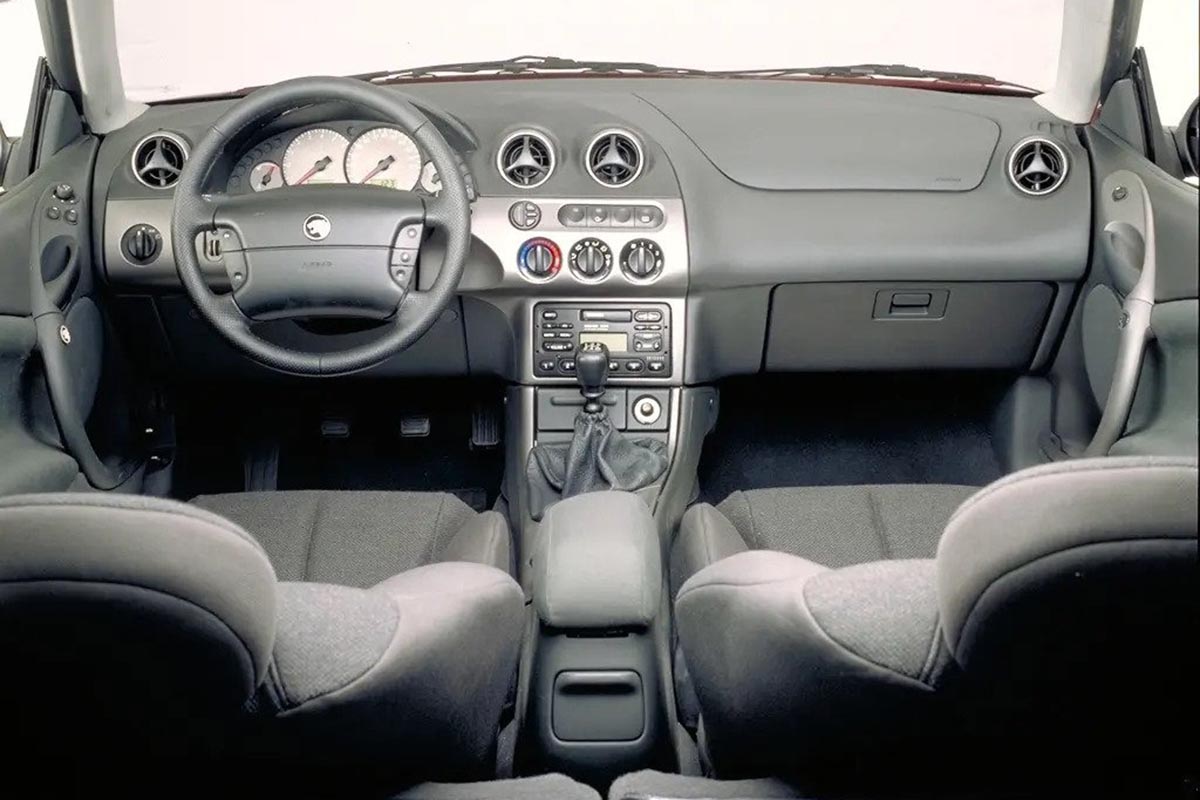
In its day, one of the Cougar’s strongest points was its high specification. Even the entry-level version came with climate control, ABS, driver-, passenger- and side airbags and a sunroof, while the top-spec X Pack (only available with the V6 engine) added electrically adjustable leather seats, heated in the front, and that oh-so-90s marker of automotive luxury: a six-disc CD autochanger.
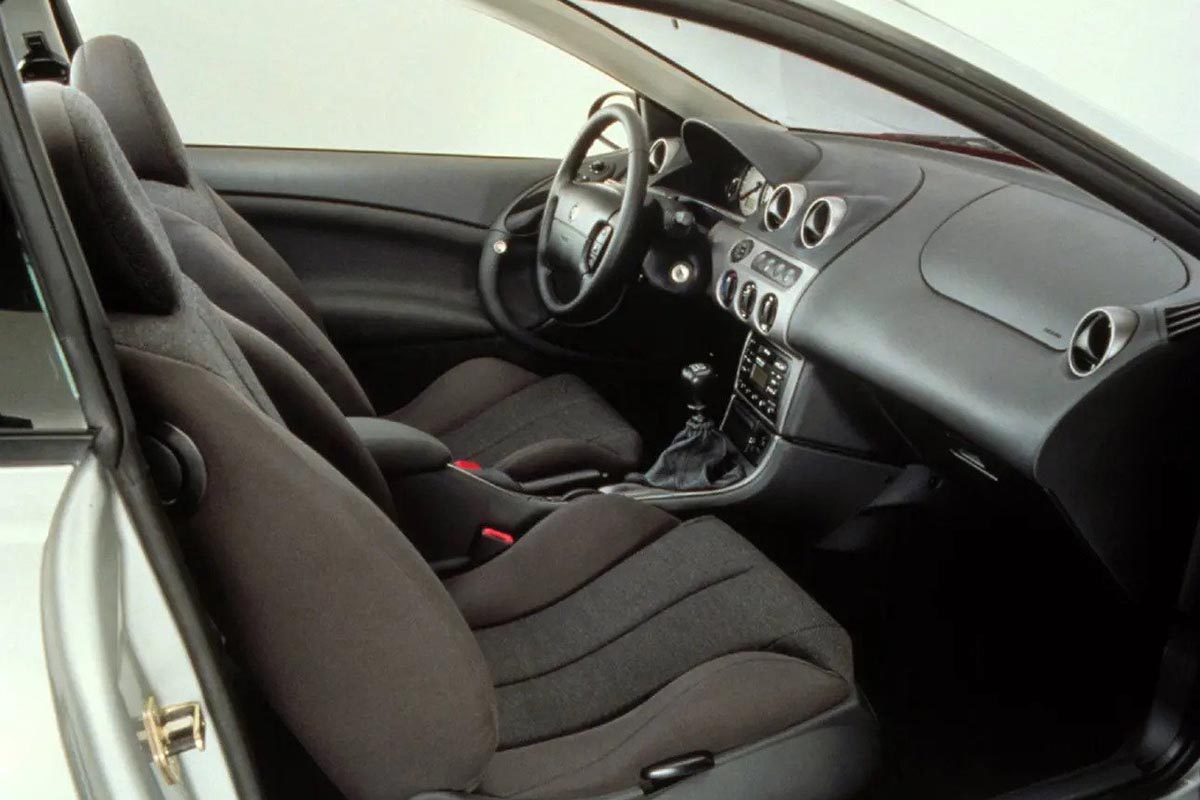
It is a shame, though, that for all its trappings of luxury, the Cougar’s interior isn't more upmarket. Shiny, flimsy plastics abound, and the dashboard is, like the exterior, somewhat over-styled, as its array of different shapes and textures make it a bit of an eyeful. The overall effect is intended to be eye-catching, but in reality, it looks a bit cheap and nasty.
If you’re looking to buy a late Ninties coupe, then it's unlikely that safety will be at the top of your shopping list. That said, the Cougar gets front- and side airbags for the driver and front seat passenger, plus the side-impact beams in the doors that were a big selling point when the Ford was new. Anti-lock brakes were also standard across the range, while traction control was fitted to the 24V.
It’s pretty obvious that the 2.0-litre is the more economical of the two models, but even then, the Cougar isn't a particularly frugal car; expect to see no more than about 30 mpg on average. The V6 is even thirstier: 25 mpg will be good going.
Keep in mind, too, that Cougars registered on after 1 March 2001 will be taxed based on their CO2 emissions, which are pretty high. Even the 2.0-litre engine sits in the third-highest tax band, while the 2.5 V6 is in the second-highest.
All Cougars have the same size alloy wheels, so tyre replacement costs don't vary between models. However, the V6-engined cars will go through front tyres slightly faster than the 2.0-litre models, because the front wheels have to handle more power on the road.
You make back some of the running costs of the V6-engined car every few years, though, because it doesn’t need a timing belt change: instead, it has a metal timing chain that lasts the life of the car. The 2.0-litre engine's rubber timing belt will need changing every few years (Ford says every 10 years or 100,000 miles, but for safety’s sake we’d recommend you do it sooner) and it’s recommended that you change the rather weak water pump at the same time. The bill for the whole job will be somewhere between £400 and £500 if it's done properly.
The Cougar was hardly the most dependable car of its time. It finished 136th out of 144 cars in the 2002 JD Power/What Car? customer satisfaction survey, which is pretty dismal.
Most Cougars will also have been run on a shoestring for at least the last few years, because they haven’t been worth much for a long time, and poor maintenance will just exacerbate those reliability foibles.
Electrical glitches are widespread, and you might find yourself constantly chasing interior trim rattles. The 2.0-litre engines are pretty solid, if well maintained, but the V6 can suffer from several known issues, one of which causes the intake manifold runners to remain partially closed, hampering performance and increasing fuel consumption. A rare fault with earlier versions of this engine is an oil pump break up, which results in oil starvation and serious engine damage.
Rust is by far the Cougar's most common problem. As with all Fords of its era, Cougars rot with abandon. The sills, the trailing edges of the rear wheel arches and the rear subframe (underneath the car) are the main trouble spots.
- As we mentioned, the Ford Cougar was based on the Mondeo family car, which maintained a tradition that started with the iconic Ford Capri, itself based on the Ford Cortina of the time. Although its everyman origins counted against it in the public eye, the Cougar benefited from its underpinnings, as the Mondeo was one of the best family cars of its time, and certainly the best to drive. That's good news for modern buyers, too, because the Cougar’s engines, and many of its suspension and interior components, are shared with the Mondeo, which means those parts are widely available, despite the fact that it's becoming a rare used car. If you fancy a Cougar but need more space, have a look at a Mondeo ST24 instead. They’re just as cheap to buy and almost identical to the Cougar V6 to drive, but have two extra doors and a bigger boot.
- Ford was trying to please two very different markets with the Cougar, which explains its slightly hit-and-miss vibe. It was designed to suit both the US and the European markets, so it was built to suit American prices and tastes, which explains the cheap interior and heavy-handed styling. Thankfully, it was more accommodating of the European market than its predecessor, the Probe, which was designed from the outset with the American market in mind.
- Optional extras available on the Cougar included a heated windscreen with heated washer jets, an electric sunroof and metallic paint. Also available with the V6 model was an automatic gearbox, which came with optional cruise control.
- Cougars are so rare these days, and so frequently in used and abused condition, that it's best just to buy the cleanest example you can find. If you happen to have the choice, the V6-engined cars are the best to drive, and those fitted with X Pack are as good as the Cougar got.
- You might want to consider the 2.0-litre four-cylinder if fuel economy is a consideration, because the V6 can be quite thirsty. It'll be cheaper to buy, too. However, because fewer have survived and they’re less highly prized so even fewer people want one, these examples are harder to find.


