Ford EcoSport Review (2014-present)
Ford EcoSport cars for sale
2.0
Expert review
Pros
Cheap to run and affordable to buy
Good choice of petrol and diesel engines
Improved interior after 2018 facelift
Cons
Doesn't deliver the sharp drive you'd expect of a Ford
Irritating side-opening tailgate
Early cars weren't well equipped
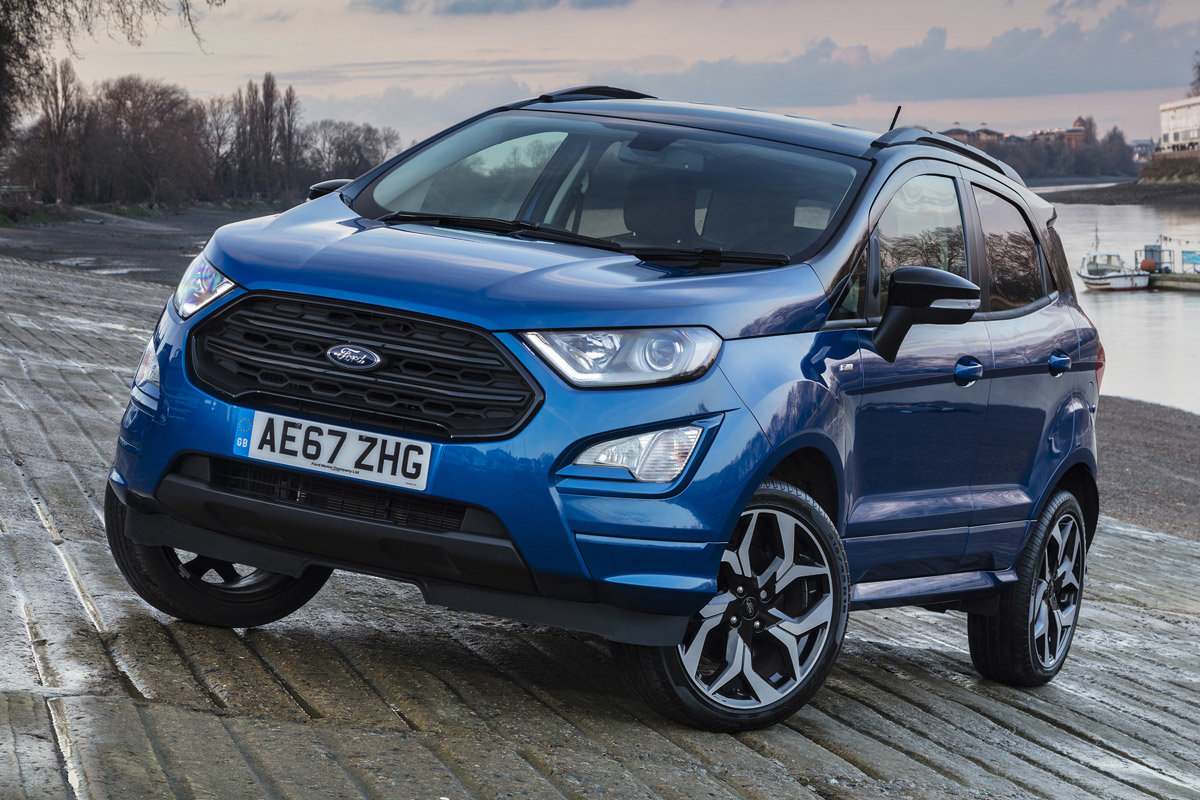
The CarGurus verdict
Ford’s EcoSport missed the mark when it came out but, credit where it’s due, the company did act and the car improved over the years. In particular, the updated models introduced in early 2018 are significantly better than the earlier models.
While it’s not without its charms, such as the decent EcoBoost engines and good equipment levels, it’s difficult to recommend over its many smarter, sleeker and more practical rivals. It’s also not cheap enough to swing the balance in its favour, either. The highly regarded Ford Puma, for example, isn’t much more expensive, and that’s a much newer, sleeker and more modern car that’s way better to drive.
Consequently, a new EcoSport makes little sense. A used example, on which depreciation has already taken its toll, perhaps makes more of a case for itself. Just try and stick to a post-facelift version with the newer interior, though, as the earlier cars are far worse propositions.
It’s not often that a manufacturer gets things completely wrong these days. A car might occasionally come with an uninspiring engine or be missing a key bit of safety tech, but the overall package is still usually pretty tolerable.
However, when Ford launched the EcoSport in 2014, it transpired to be a distinctly half-hearted effort. Keen to cash in on the booming sales of small SUV models, the Blue Oval tried to shortcut the route to success by shipping over this model that was originally designed and developed for its South American division.
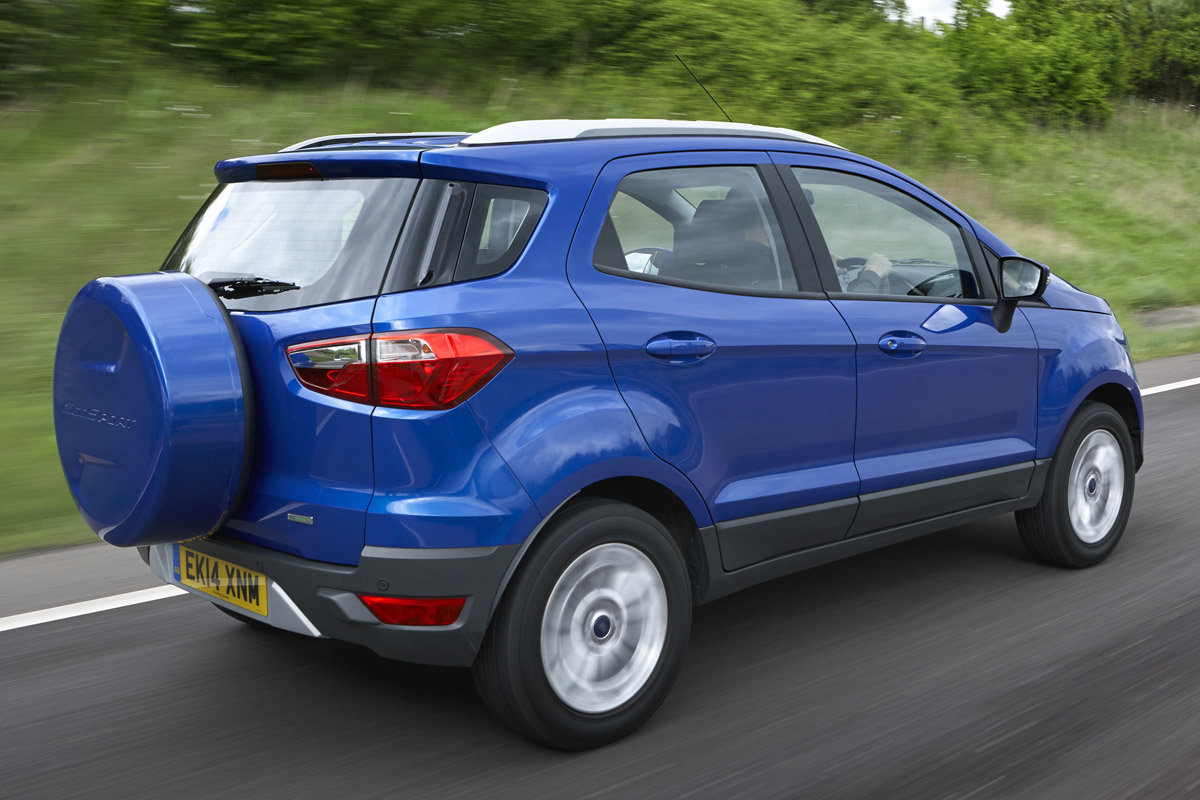
On paper it ticked all the boxes, but in reality It didn’t drive with the verve that you’d expect of a Ford, while the dated interior, awkward exterior styling and less than solid build meant it trailed European rivals.
Fortunately, Ford was quick to respond and a series of updates were rolled out that did significantly improve the EcoSport: in particular, the major facelift for 2018 models made them far more competitive and appealing. Crucially, aside from freshening up the exterior, Ford introduced a far more modern interior that echoed those seen in its more recent cars.
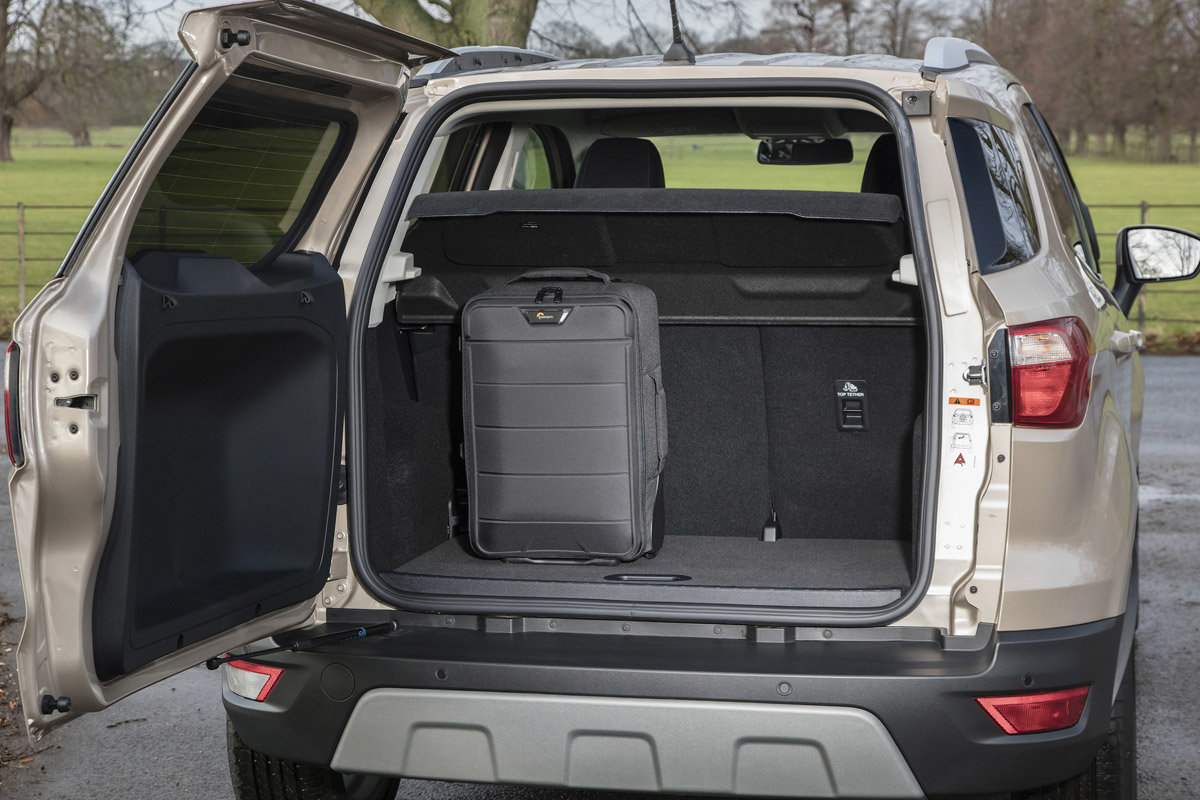
There were some annoying practicality stumbles, too. While the EcoSport offered up adequate interior space and a sensibly sized boot, the tailgate swung open to the left instead of upwards. This meant you needed space behind the EcoSport to access the boot but, annoyingly, also meant that you could often block off quick and easy access to the pavement you’d parked next to. While accessing the boot is a bit of a faff, once the tailgate was open you’d discover a decent amount of luggage capacity. With the rear seats in place there’s a handy 356-litres, which is on par with many compact family hatchbacks, while lowering the 60/40 split-fold rear seat liberates a very useful 1,238 litres. Flexibility is further boosted by a variable height boot floor that can be raised or lowered to suit your needs. All versions of the EcoSport are reasonably roomy inside, with enough space to squeeze in four adults without complaint. The driving position is pretty good, with enough wheel and seat adjustment to allow most to find a comfortable driving position. And you do sit a little higher in the EcoSport than many rivals, meaning you do get the elevated view ahead that makes the SUV so appealing to so many. You’ll also find a decent amount of storage in the Ford’s interior, with a large glovebox and lidded cubby between the front seats, plus the usual cupholders and a trinket tray ahead of the gearlever. One neat touch is the hidden drawer that slides out from underneath the front passenger seat.

Ford has forged a fine reputation for delivering cars that are as easy to drive as they are fun, but with the EcoSport it dropped the ball. Yes there’s a Fiesta lurking somewhere under the rather ungainly body, but much of that car’s poise and panache got lost in the translation from supermini to SUV
For starters, its ride quality and refinement leave a lot to be desired, lacking the plushness and well-insulated feel of the firm’s other cars. There’s no escaping its dated nature, either. The excellent Seat Arona, for example, feels far more refined and modern, and it even costs slightly less. The steering is direct and accurate and the EcoSport clings on gamely through a series of corners, but there’s a fair amount of body roll while quick direct changes can leave the car and driver feeling a little discombobulated.
On the plus side, the post 2018 cars feel a fair bit better, Ford’s engineers having managed to inject some of the dynamic sparkle found in models such as the Fiesta. However, take a drive in the firm’s newer, pricier but similarly-sized Puma and the EcoSport’s failing will once again be brought into sharp focus.
At least the engines are strong, the smooth and eager turbocharged three-cylinder EcoBoost petrol units being preferable to the occasionally gruff diesel options. All the power units are mated to s slick and precise manual gearbox, plus there was a twin-clutch automatic transmission option that Ford dubbed Powershift.
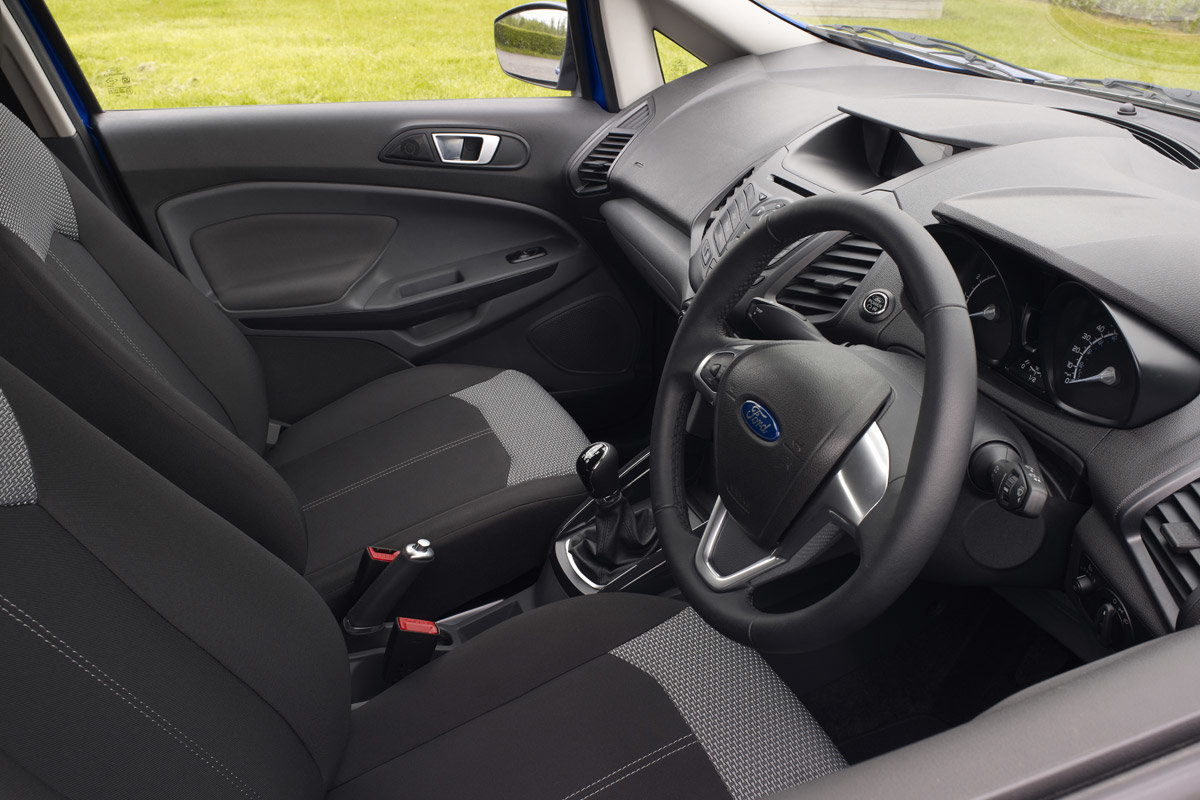
It wasn’t all bad news, though. Ford ensured that the EcoSport came with plenty of kit. Even at launch, the basic model packed features such as alloy wheels and air conditioning. And while the early cars had a fairly basic infotainment system, it did offer Bluetooth USB connectivity and DAB radio. There was also a sat-nav option, although it’s fairly rudimentary by today’s standards, with dated graphics and small screen.
The later cars benefitted hugely from Ford SYNC3 infotainment, which is far easier to use and packed with more useful features. The touchscreen is responsive, the menus are clear and Apple CarPlay and Android Auto connectivity makes it easy to hook up your phone. There is even the option of a Bang & Olufsen audio upgrade, which sounds surprisingly good.
Over the years, the trim levels have consisted of Zetec, Titanium, ST-Line and Active models. Zetec models come with lots of kit, including a heated windscreen, cruise control and, while Titanium models get upgrades including a colour driver’s display, a rear-view camera and climate control, while the flagship ST-Line model features bespoke styling and sports suspension. The Active trim gets everything a Titanium has, yet adds a rugged off-road look courtesy of some chunky plastic cladding for the wheel arches and lower body.
A range of upgrades are available as well, including the Winter Pack, which adds heated front seats and a heated steering wheel.
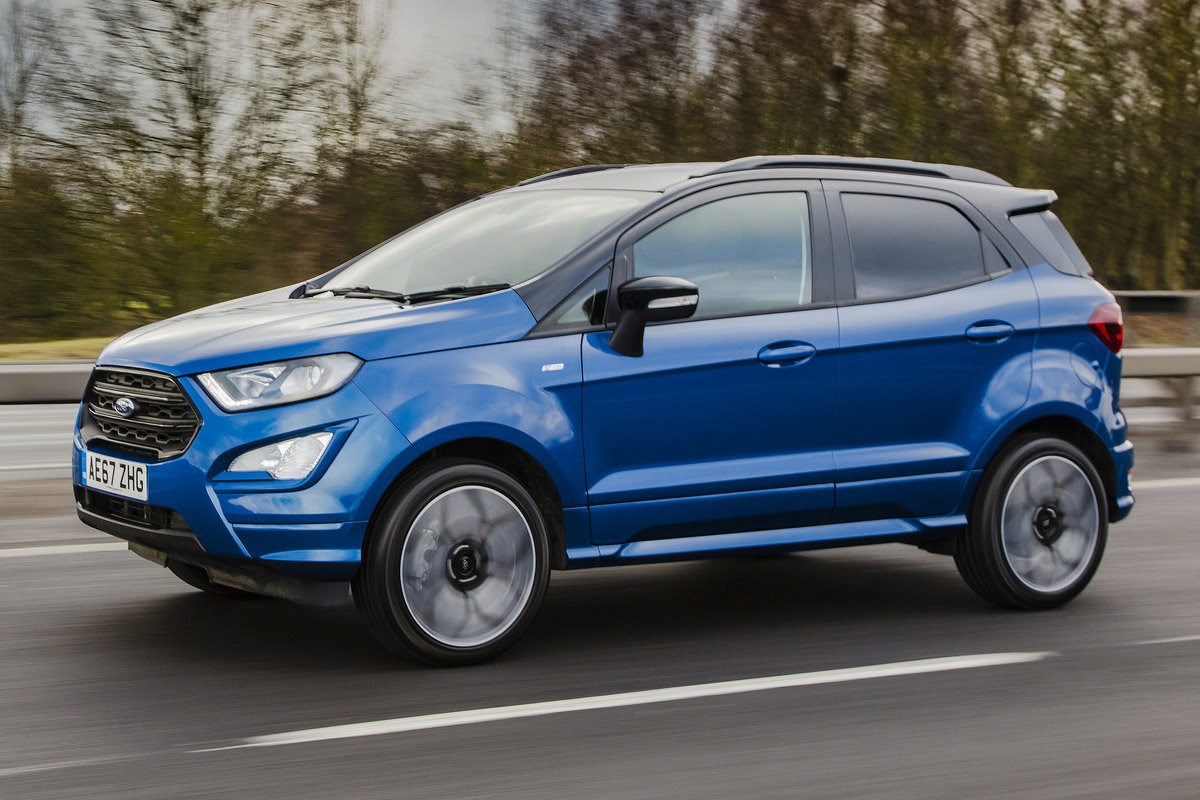
One of the saving graces of the EcoSport is that it’s not an expensive car to run. The engines are frugal and relatively clean, it’s not a complicated car and it’s not excessively heavy, so it won’t overly tax its brakes or tyres.
The diesels are the most efficient, predictably. The early 94bhp 1.5 Duratorq TDCi, as a case in point, averaged a claimed 64.2mpg and emitted 115g/km of CO2. It wasn’t quick, dispatching the 0-62mph sprint in 14.0 seconds, but that wasn’t really the point of the EcoSport.
Expect to see closer to 50mpg in the real world, though, based on owners’ reports. The more modern EcoBlue diesel engine has a worse claimed mpg, but it is based on the more realistic WLTP test cycle, with an mpg range of 53.3 to 57.6 depending on which variant you go for. Don’t discount the EcoBoost petrols based on their mpg figures, though, as they can still often average around 40mpg in the real world.
All new EcoSports will cost £150 a year to tax but some of the more powerful, higher-specification and heavier variants will cost more in the first year, so do check because the difference in first-year rates can be hundreds of pounds. Older versions, registered before 1 April 2017, tend to cost around £150 a year. There are some earlier models, such as the 1.5 TDCi Zetec, however, which cost just £30 to tax.
Servicing is cheap, too. Ford offers a range of service plans for new EcoSports, costing from £239 to £319 (at the time of writing). These can be paid for monthly, through a 0% finance scheme, which could further help you spread the cost of your ownership. Servicing is generally every year, but some variants can be serviced every two years instead of annually.
In any case, fuel, VED and servicing costs are unlikely to prove major stumbling blocks. Depreciation can be a factor, though, as the EcoSport is not a popular model. It’s best to keep to the more affordable versions, as a result, as the effects of depreciation will be less severe. Alternatively, go for a used example to dodge the hardest hits.
Buy a new Ford EcoSport and it’ll come with a three-year, 60,000-mile warranty. That’s on a par with some rivals, such as the Nissan Juke and Seat Arona, which both come with an identical warranty.
The Ford’s warranty can also be extended to four- or five years in total, which could be a sensible option if you’re considering long-term ownership. However, cars from Toyota and Hyundai have a five-year warranty out of the gate. Kia, too, offers an excellent seven-year warranty.
Ford does at least have a sound reputation for customer satisfaction and reliability but, again, companies such as Hyundai and Toyota often better it in both respects. Consequently, while the EcoSport is by no means awful in the reliability and warranty front, there are better alternatives out there, especially if you’re just looking for a compact SUV that’s inexpensive and easy to live with.
If you’re buying used, aside from the usual wear and tear, it’s worth checking any prospective purchase out on the government recalls website. There have been a few recalls on the EcoSport and it would be best to ensure that any used buy has been attended to beforehand. PowerShift automatic versions can be problematic, too, so test any prospective purchase carefully and consider a warranty if possible.
Buying a used EcoSport need not be a complicated process, though, as Ford itself offers two ways to get your hands on one. There’s the Ford Approved scheme, which offers cars up to five years old and with 70,000 miles on the clock, or the Ford Direct scheme, which is for nearly new cars.
In both cases the cars are inspected and prepared for sale but, on the Approved scheme, you only benefit from the remainder of the original warranty. Go through the Direct scheme, and you’ll instead get a two-year, unlimited-mileage warranty.
- One of the positives of the EcoSport was that, at launch, only two trim levels were offered, which greatly simplified the purchasing process. The base model was the Zetec, which came with features such as 16-inch alloy wheels, air-conditioning, USB and auxiliary connectivity, an alarm and electric mirrors. The higher-spec Titanium model benefitted from upgrades included partial leather trim, keyless entry, climate control, cruise control and 17-inch alloys. Engine options included a stout turbocharged 123bhp 1.0-litre petrol EcoBoost, a 111bhp 1.5-litre Duratec petrol and an 89bhp 1.5-litre Duratorq TDCi diesel. All came with a five-speed manual transmission, but the Duratec was later offered with a Powershift six-speed automatic.
- Due to the poor initial reaction to the EcoSport, Ford was quick to update it. The revamped version was on sale by July 2015 and featured more equipment, improved interior trim, the option of no rear-mounted spare, an improved tailgate action for easier access and retuned suspension. The diesel engine was made slightly more powerful, too. Even so, these revisions still left it trailing the pack. A more significant overhaul followed, with deliveries beginning in January 2018, and these EcoSports benefitted from a more modern interior, revised styling, a new ST-Line trim, the option of all-wheel drive and a range of other refinements. It was a significant step forwards, and did improve the reputation of the EcoSport, but it still was by far from the best choice in the compact SUV market.
- The modern EcoSport line-up consists of Zetec, Titanium and ST-Line models. Zetec models come with lots of kit, including a heated windscreen, cruise control, air conditioning and an eight-inch touchscreen infotainment system with DAB, Apple CarPlay and Android Auto support, USB connectivity and six speakers. Titanium models get upgrades including a colour driver’s display, a rear-view camera and climate control, while the flagship ST-Line model features bespoke styling and sports suspension. Engine options consist of 1.0-litre EcoBoost petrols in 123bhp or 138bhp outputs, depending on model, or a 99bhp 1.5-litre EcoBlue TDCi petrol. A range of upgrades are available as well, including the Comfort Pack, which adds heated front seats and a heated steering wheel.
- The best all-rounder: It’s best to avoid spending too much on an EcoSport, given the rivals available for similar money. Fortunately, the basic Zetec model comes with a decent amount of equipment, although it’s only offered with a 99bhp version of the 1.0-litre EcoBoost or a 99bhp 1.5-litre EcoBlue diesel. The EcoBoost is cheapest, so it’s best to stick to that. If you must have the 123bhp EcoBoost, however, you’ll need to upgrade to Titanium trim.
- For the best economy: The most efficient option in the new line-up is the 1.5-litre EcoBlue diesel. Ford claims that, on the more realistic WLTP test cycle, the engine can return up to 57.6mpg on average. The 1.0-litre EcoBoost petrols are still frugal, though, with all averaging over 47mpg. Unless you’re doing lots of miles, they’re probably the better bet.
- For the most toys: If you’re dead set on an EcoSport, and you’re not swayed by the ST-Line’s sporty nature, go for the Titanium. It comes with a host of creature comforts, including an auto-dimming rear mirror, ambient interior lighting, a seven-speaker stereo, a rear-view camera and rear parking sensors. You might want to consider adding some of the upgrade packs, too, but an EcoSport of that specification and cost isn’t a great buy.
- For off-road use: If you like the idea of an EcoSport but want to head down rougher roads or trails from time to time, you could opt for a used all-wheel-drive variant. They weren’t available for long and were offered only in higher-spec diesel form, but they are out there. Just remember, if you’ve winter use in mind, that it’s the tyres that make the biggest difference, not the drivetrain.

