Ford Fiesta Mk6 Review (2008-2017)
Ford Fiesta cars for sale
4.0
Expert review
Pros
Comfortable and entertaining drive
Excellent Ecoboost engines
Low fuel and insurance bills
Cons
Not quite as reliable as a Hyundai i20
Underpowered entry-level 1.25-litre engine
So-so build quality

The CarGurus verdict
There’s a good reason the Fiesta has proven so popular over the years: it’s an excellent small car that’ll keep both your head and your heart happy. Not only is it spacious enough to serve as a town-friendly family car, but it’s supple and quiet enough to be well-suited to longer journeys, too. And because there are simply so many Fiestas out there, you shouldn’t have a hard time finding a good example in the right specification for you.
Some versions might have their reliability foibles, but on the whole, the Fiesta makes a great used buy, and should prove both cheap to run and satisfying to own.
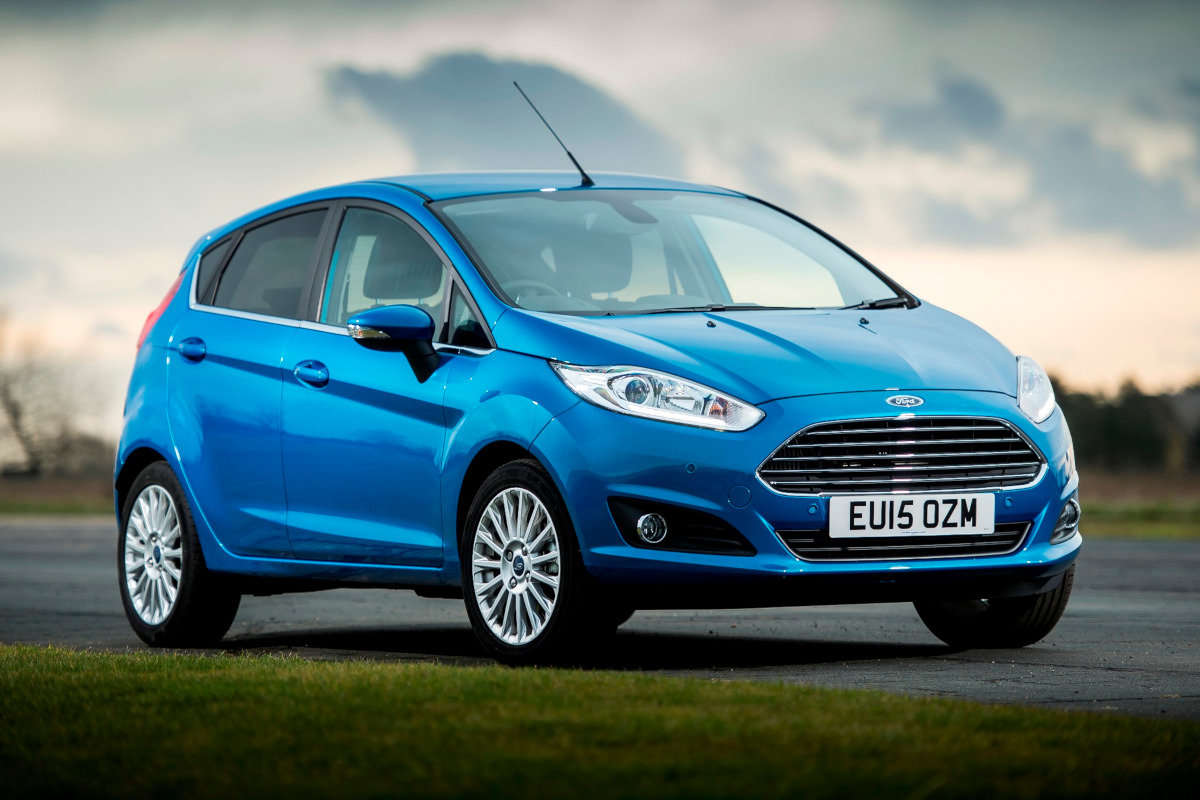
What is the Ford Fiesta?
Considering that the Ford Fiesta has traditionally been the nation’s best-selling car, it probably needs little or no introduction for the average British car buyer. If, however, you’re one of the few folk that’s still unfamiliar with the Fiesta, it is - well, was - Ford’s small supermini hatchback, which slotted into the range beneath the larger Ford Focus family hatchback, and the even larger Ford Mondeo family saloon. In this review, we're talking about the sixth-generation version of the Fiesta, sold between 2008 and 2017.
In many ways, the Fiesta does a similar job to other contemporary cars in the supermini class, such as the Vauxhall Corsa, Peugeot 208 and Volkswagen Polo. It manages to provide a decent amount of practicality despite its teeny dimensions, it comes with most of the kit you need and it’s affordable to buy and run. That’s all the basics covered, then.
Where the Fiesta really marks itself out against the competition, though, is with the quality of its driving experience. It delivers a near-perfect blend of a comfortable ride and crisp, engaging handling, and it's polished enough to shame most cars that cost twice (or even three times) as much. It's the only supermini to have if you love driving, and even if you don't, you'll love the feeling of safety, control and alertness the car gives you. Who knows, it might even provoke a love of driving you never knew you had.

How practical is it?
It would be a stretch to claim the Fiesta was among the class-leaders in this area, but it does a thoroughly decent job in comparison to rivals, and most small families will have no cause for complaint.
At 290 litres the boot was one of the biggest in the class for the time, and is actually only 26 litres down on the brand’s larger fourth-generation Ford Focus. This means your weekly shop will fit without a problem, and 60/40 split-folding rear seats allow you to boost your load-carrying capacity when the rear seats aren't needed, although the backrests don't lie perfectly flat. There is a substantial lip that you'll need to lift heavy items over when loading, but the same applies to most other superminis of the day.
The rear seats have just enough headroom and legroom to allow a six-foot adult to get comfy, although some rivals are roomier in the back, and you won't want to cram three people back there if you can avoid it due to the narrow cabin. As you’d expect, the five-door models are more versatile, allowing much easier access to the rear seats – although the three-door version does feature a wide opening thanks to its longer doors, plus front seats that tilt and slide forward to ease access.
Up front, there's plenty of space, lots of adjustment for your driving position and decent visibility. The dashboard is logically laid out and neatly designed, so everything is easy to find and use. It also has all the handy storage you’re likely to need, such as a pair of cupholders in between the front seats, long door bins and a large glovebox. However, the design shows its age in a lack of anywhere suitable to store your smartphone.
The quality of the interior is neither as plush nor as solid as those in some rivals, but again, it does a decent enough job on that score and doesn't feel like a poor relation, especially on the post 2013 facelift models, where the materials were improved a little in key areas.
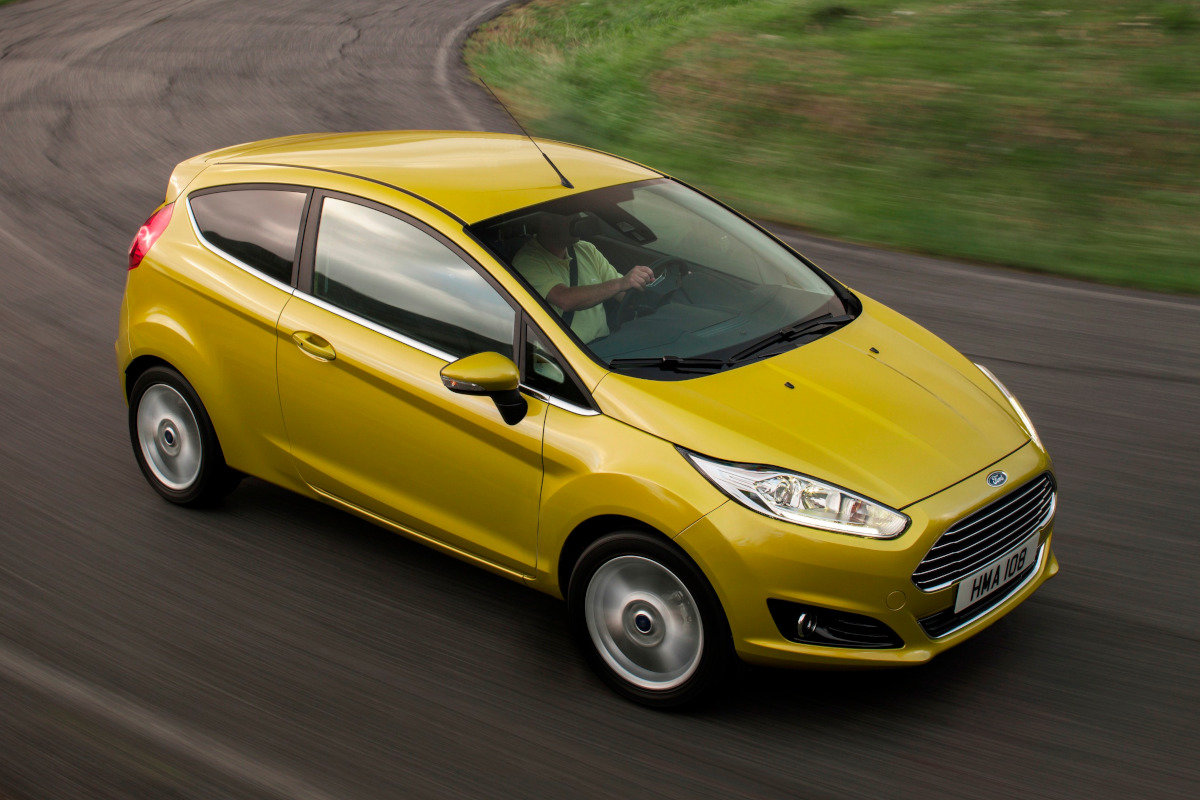
What's it like to drive?
Where the Fiesta really marks itself out from the rest is how it feels from behind the steering wheel. This car has a level of dynamic polish that shames many cars costing much, much more. First of all, and most importantly for most people, it’s comfortable. The suspension absorbs lumps and bumps more effectively than most rivals at all speeds, so life stays settled and relaxed at all times.
However, it manages to combine that comfort with a barely believable level of agility. The taut body control, strong grip and pin-sharp steering not only make the car engaging and entertaining in a set of bends, but they also help make the car feel nimble and manoeuvrable in town, settled and stable on the motorway, and safe and secure pretty much everywhere. Such is the brilliance of the Fiesta’s driving experience that if you ask any owner what they think of their car, they’ll always tell you that they love driving it, even those who don’t usually get excited about driving cars.
The Fiesta also offers a wide range of engines, most of which strike a very decent compromise between performance and economy. And if you’re looking for a sportier Fiesta, you’re well catered for, too. Top dog is the ST, with its 1.6-litre Ecoboost petrol turbo engine and snappy six-speed manual gearbox, which is one of the best hot hatches money can buy. If you fancy something that’s more cost-effective to run but still with a sporting bent, you could plump for one of the Zetec S or ST-Line models, both of which are available with a choice of petrol or diesel engines.

Technology, equipment & infotainment
There’s a huge range of models in the Mk6 Ford Fiesta range to choose from, kicking off with the most basic Studio and Style trims, and running right up to the plush Titanium X. Our favourite model, however, is the well-equipped Titanium version, which comes with plenty of toys and is widely available, yet tends to cost barely any more than the more basic Zetec version on the used market. However, we’d steer clear of the bottom-of-the-range models, because while they feature electric windows and central locking, they lack must-have creature comforts such as air-conditioning.
One notable piece of kit that all Fiestas of Zetec and above trim came with was the 'Quickclear' heated windscreen. Doesn't sound all that exciting, right? Well, see if you still agree with that statement the morning of a hard frost. While all your neighbours are scraping away at their windscreens, you simply get in, hit a button, wait a minute or so, and then simply wipe all the iciness away with one swish of your wipers. It's a great feature, and we're not entirely sure why all cars don't have it.
One thing that does date the Fiesta is the infotainment, which when new was said to be inspired by mobile phones, but think Nokia 3310 rather than the latest iPhone. There are many buttons and a small screen set far back in the dashboard, making it a bit of a faff to operate on the move. Bluetooth connectivity was standard on most models, but you’ll need to invest in a facelifted car if you want USB connectivity and DAB radio. Later SYNC units are better and feature voice control and emergency assistance.
Speaking of safety, all Fiesta models got seven airbags, while stability control was only omitted from very early versions of the entry-level models. However, if you want up to date tech such as autonomous emergency braking then you’ll need to seek out one of the facelifted cars, although bear in mind it was an extra cost option, so not many examples had it fitted.

Ford Fiesta running costs
Petrol versions of the Fiesta should return fuel economy of anywhere between 40- and 50 mpg in normal driving, though the thirstier 1.6-litre might return slightly less if you’re heavy on the throttle, and the same goes for the hot ST with its 1.6-litre turbo.
Diesel models, however, are capable of some astonishing economy figures, with the most efficient versions of the 1.5-litre capable of as much as 88mpg according to official figures, although you can expect that to drop to around 65-70mpg in the real world.
All Fiestas have the same service schedule, which dictates that they need to be serviced every year or 12,500 miles, whichever comes first. Repairs tend to be cheap - with the exception of timing belt issues, which we'll talk about in the Reliability section below - and because the Fiesta is mechanically pretty simple, most garages should be able to work on it.
If you have an allergy to giving too much money to the exchequer then you'll want your Fiesta to be cheap on road tax. Quite a few of the diesels - and even a few of the Ecoboost petrols - qualify for no road tax at all due to their super-low CO2 emissions, and even those that don't will probably only land you with an annual bill of £20 or £30. Most of the other versions will saddle you with a bill of between £125 and £150, the latter of those two figures being what you'll pay for the sportiest ST version. Interestingly, though, that's not the most expensive Fiesta on tax. That doubtful honour falls to the 1.4 petrol automatic with its £205 annual burden, but in fairness, that's not an engine we'd recommend anyway, and not just for the tax implications. And remember, if you find one of the handful of the mk6 Fiestas produced on or after April 1st 2017 when the tax rules changed, you'll pay annual tax at a rate of £195 per year regardless of which engine you pick.
Many Fiesta drivers - particularly young ones - will also want their car to be good on insurance, and the car does well here, too. Some Fiestas sit a low as group 3 for insurance, while many of the more modestly powered option sit in group ten or below. When you consider that insurance groups range from 1 to 50, cheapest to most expensive, respectively, then you can tell that premiums should be very affordable on most versions. The STs sit in group 30, but otherwise, groupings don't get anywhere higher than 19.
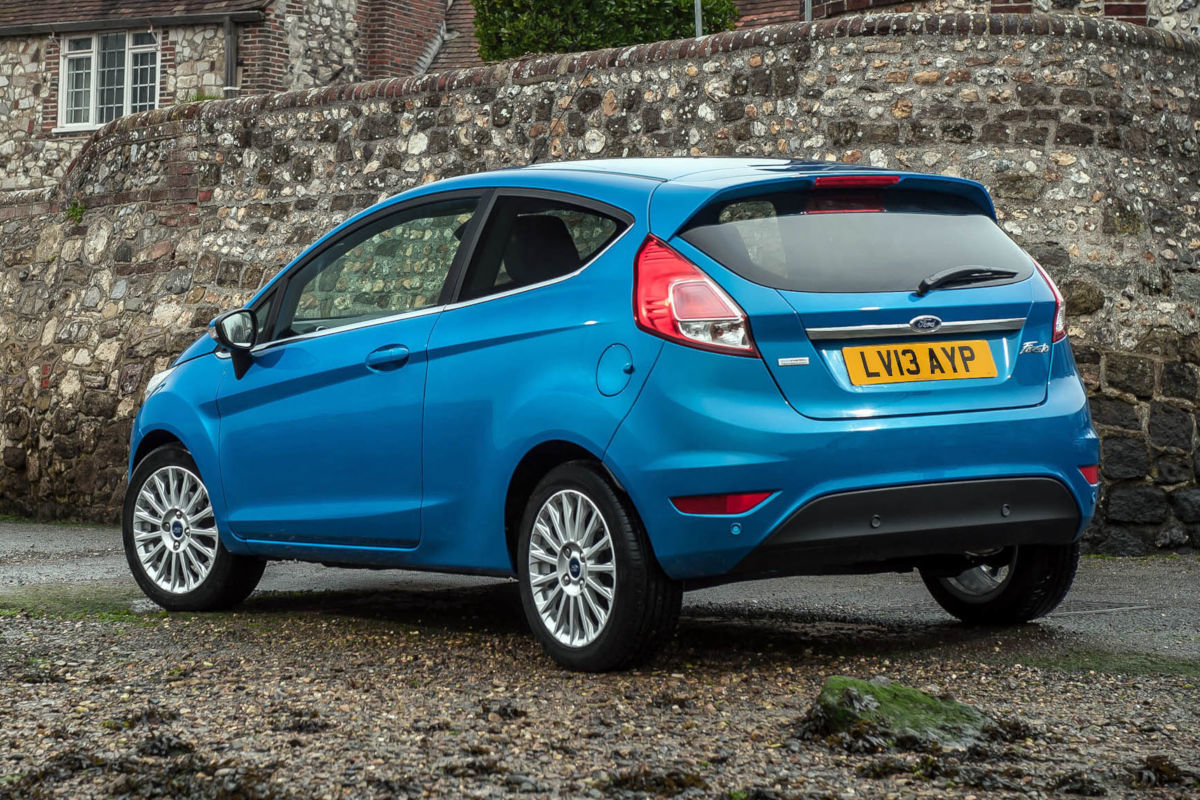
Ford Fiesta reliability
The Fiesta is generally a pretty reliable car, although it can’t quite match rivals like the Toyota Yaris and Hyundai i20 in this regard.
There are relatively few major faults to worry about, but Fiestas do occasionally suffer with niggling electrical issues, so be sure to check everything works on your test drive. Listen out for knocks and rattles from the suspension and avoid cars which look and feel neglected or poorly maintained.
There have been numerous reports of issues with the 1.0-litre Ecoboost petrol engine, though, which is such a shame given that it's such a brilliant engine in other ways. These are said to centre around a rubber belt that perishes and blocks up the oil system, starving the engine of the oil it needs and causing catastrophic damage. Make sure that any used example you're considering has had its cambelt changed according to schedule.
Diesel models are fitted with a particulate filter, and will require a high-speed run on a motorway every few weeks to allow this filter a chance to clear itself out. Without this, the filter will become clogged and require costly replacement. For this reason, it’s worth avoiding a diesel model if most of your driving will consist of short journeys in town. Diesel models have also been known to suffer with injector failure, which can be costly to remedy, so avoid any car that struggles to start.
Early examples of the Powershift automatic transmission, which was introduced in 2013, have been known to suffer from juddering as a result of fluid leaching past the transmission oil seal and onto the clutch pack. The seal has been modified, so if this problem affects your car, it is fixable, but it’s a costly repair, so avoid any automatic Fiesta that doesn’t pull away cleanly.
Finally, build quality isn’t as good as on some rivals, so check carefully for snapped pieces of trim and other broken bits around the interior.
- The Ford Fiesta has enjoyed a long and very successful history, but the mk6 really was a turning point in the car's history. Previous iterations - the Ford Fiesta mk5 being case-in-point - were always a lot of fun to drive compared with rivals, but they lacked a little bit of ride comfort and interior quality, and that prevented them from being the outright class leaders. With the mk6, though, Ford managed to combine the agile handling with scarcely believable comfort, and while the interior still wasn't the poshest, it was a lot better. So good was it, that the Fiesta mk7 that replaced it didn't really change much, it simply built on the mk6's virtues.
- An important facelift (known as the Ford Fiesta mk6.5) in 2013 brought with it big changes in the engine line-up, including the introduction of a 1.0-litre petrol turbo engine, known as the ‘Ecoboost’, which greatly improved the car, with perky power delivery, good refinement and strong running costs. The engines do have their reliability issues, though, so tread carefully.
- The facelift also brought about various changes in the trim structure, but all versions of the car came reasonably well equipped for the time. The entry-level car - known as Edge or Style depending on the age of the car you're looking at - came with air-conditioning, remote locking, electronic stability control and a bunch of airbags, but you had to upgrade to the Zetec for alloy wheels and the excellent Quickclear heated windscreen That's not to be confused with the Zetec S, which was a racier version that added sportier styling such as bodykits and spoilers.
- If you want the best all-rounder: The Ford Fiesta 1.0-litre Ecoboost turbo, available from 2013 onwards in 100hp, 125hp and 140hp versions, is a brilliant engine. The 100hp versin is punchy enough, and our pick of the range, but if you fancy a bit more poke, the more potent 1.0s will put a big smile on your face.
- If you're on a budget: The zingy 1.25-litre engine is carried over from previous Fiestas in 60hp and 82hp formats. Avoid the former, as it is rather underpowered, but the latter feels great, perky, willing and smooth, if not quite as lively as the 1.0 turbo. This is definitely the model to pick if you can’t stretch to a facelifted Fiesta.
- For outright fun: The Ford Fiesta Zetec S with its 1.6 naturally aspirated petrol engine and lowered sports suspension is good, but for something sensational, try the hot Ford Fiesta ST version with its high performance 1.6 Ecoboost engine. The engine was an absolute corker that loved to rev but still had loads of low-down grunt, while the six-speed manual gearbox was a joy to use. Even better, the handling had an agility and precision that belied the car's super-affordable price tag.
- For the best economy: The 1.5 TDCi diesel was introduced with the 2013 facelift, and replaced the 1.4 TDCI, superseding it as our favourite diesel engine. Fantastically efficient, it'll save you bags of money at the pumps and will be super-affordable on VED tax (cars of that age were classified for VED according to their CO2 emissions, which were very low with this engine). Find a car with an Econetic badge, and this will have a 1.6 diesel drivetrain optimised for efficiency, and most of these will cost you nothing at all in road tax.


