Ford Kuga Review (2012-2019)
Ford Kuga cars for sale
3.0
Expert review
Pros
Reasonable cabin and boot space
Generously equipped
Good to drive
Cons
Reliability issues with the Powershift gearbox
Poor fuel economy if you choose a petrol
Some low-rent materials in the cabin
The CarGurus verdict
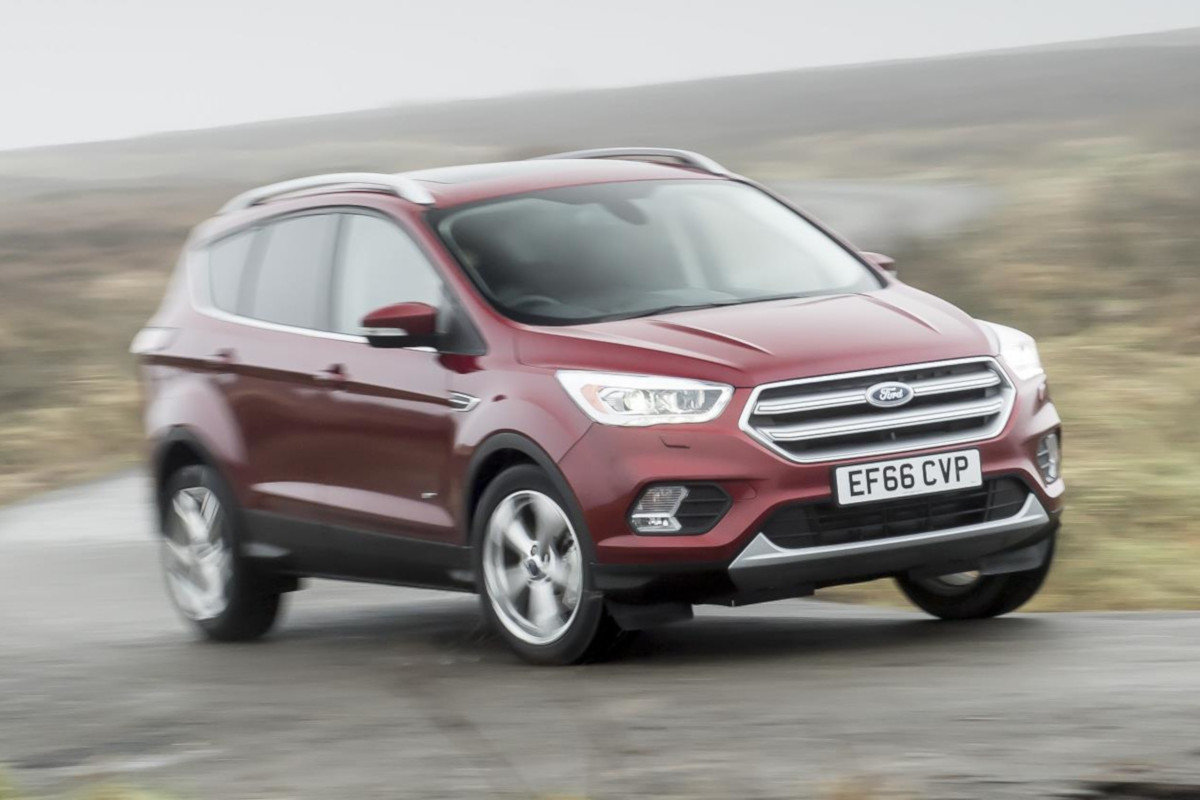
Although trailing its rivals in every respect from performance to economy, interior space to the quality of its cabin materials, the second generation Kuga is not without appeal. It’s smartly styled, generously equipped, brisk enough for family motoring, and decently refined. And it handles well, which you may appreciate when you find yourself on an interesting back road and minus any passengers.
It has sold in reasonable numbers so there’s plenty of choice on the secondhand market, although there’s a slightly bewildering number of trim, engine and transmission variations: make sure the dealer explains precisely which model you’re looking at, and what you’re getting in it.
Whilst not a front-runner in its class, if you like the way the Kuga looks then you’re unlikely to be disappointed by the ownership experience – but do check that any recalls have been carried out on the car you’re thinking of buying.
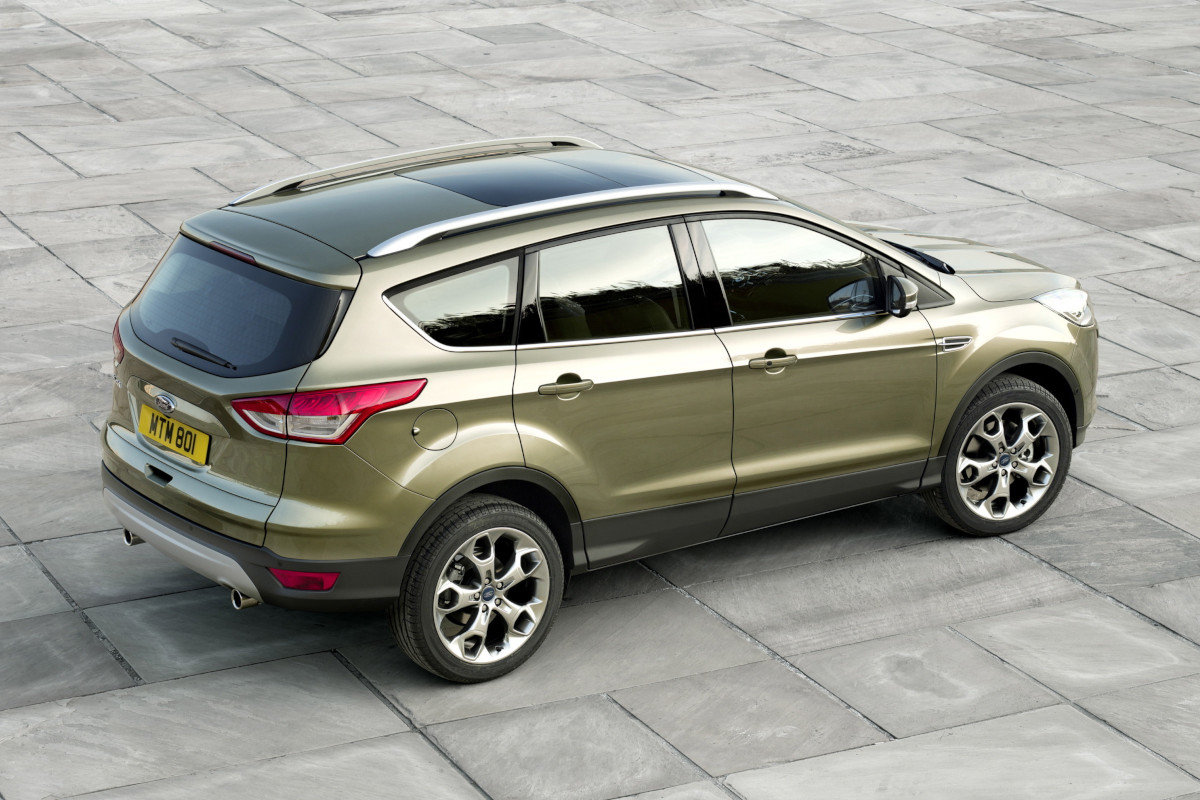
The second-generation Ford Kuga was sold between 2012 and 2019 and is a reasonably compact SUV model that was intended as rivals for models such as the Nissan X-Trail, Honda CR-V and Toyota RAV4.
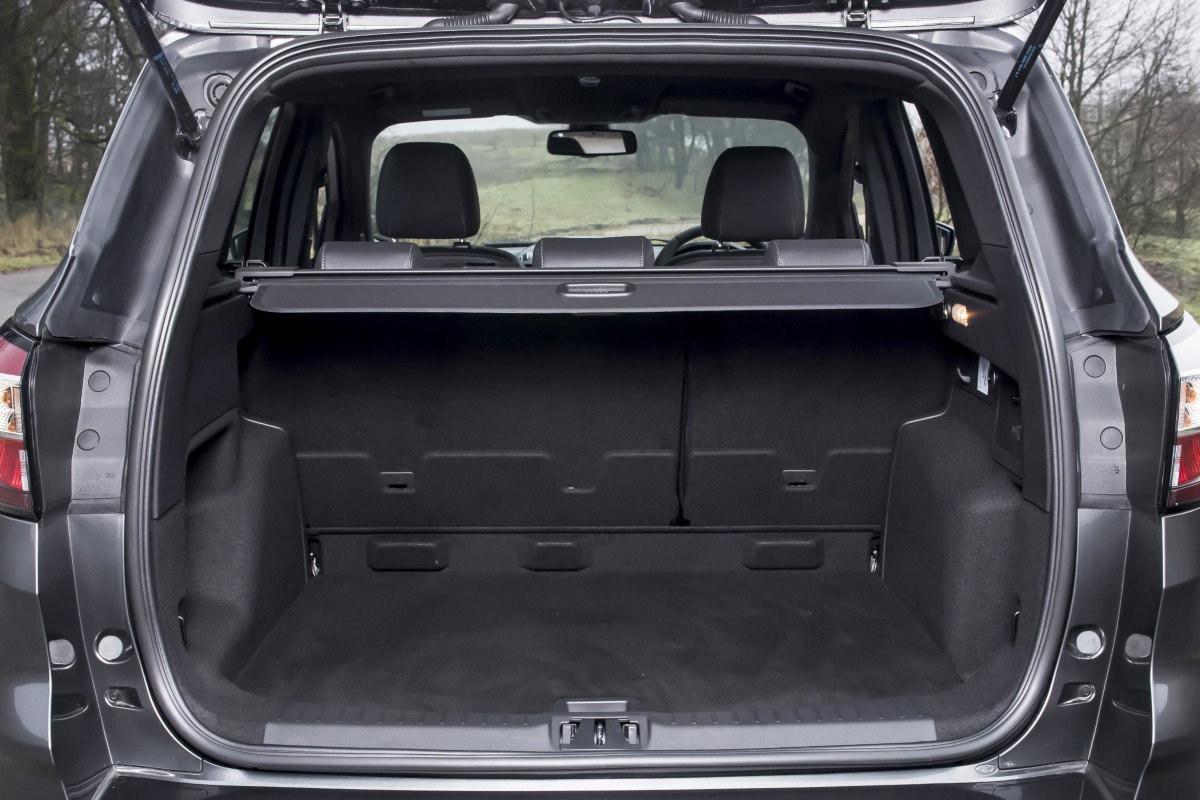
It's not only the space for passengers that improved with the launch of the mk2 Ford Kuga – the boot is bigger than the mk1’s, too, and whilst not as commodious as those of some rivals, it should cope with most families’ luggage requirements. Rear doors that open particularly wide also mean easy access to the Kuga's rear seats.
Like its predecessor, the mk2 Kuga is good to drive, with assured handling and a reasonably comfortable ride. There’s also a wide range of engines to choose from, including frugal diesels and powerful petrol. However, unlike its rivals, Ford never offered the Kuga with a hybrid powertrain, at least not in the UK or Europe.
In 2016, the Kuga was treated to a mid-life refresh, and these revised cars are easy to spot on account of having a completely redesigned front end. At the same time, the mk2 Kuga received some engine revisions and equipment updates, all adding to its appeal.
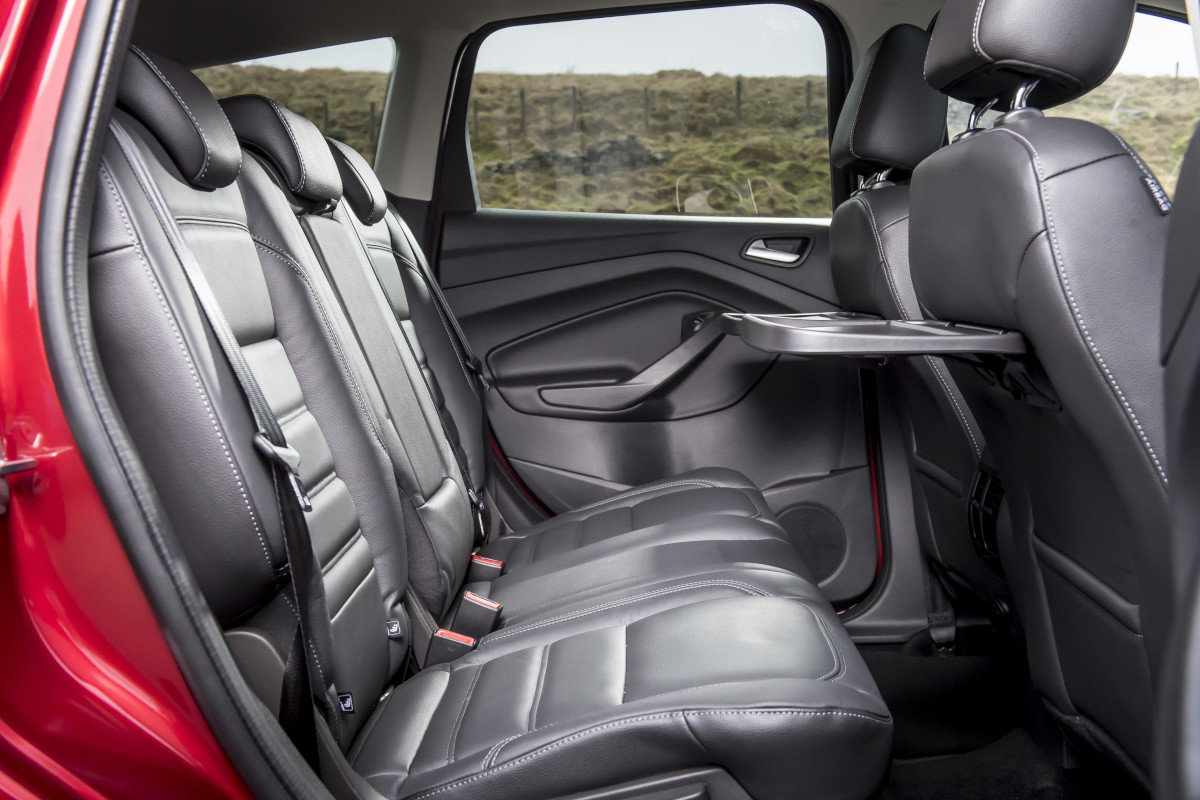
One of the big improvements of the mk2 Kuga over its predecessor is the increase in space, particularly for those sitting in the back. Here there’s generous head and legroom, while the wide rear bench will comfortably accommodate three adults. A reclining function also allows for greater comfort on longer journeys. It’s a similar story up front, where the driver gets a wide range of seat and wheel adjustment, plus the elevated driving position gives a good view of the road ahead.
Ford clearly designed the Kuga with families in mind, because there’s loads of useful storage, including deep door bins, numerous cupholders and a large glovebox. Many examples are also fitted with handy, aircraft-style fold out picnic tables for rear seat passengers, while separate air vents for those in the back help keep them cool or toasty depending on the conditions.
At 456 litres, the mk2 Kuga’s boot isn’t the biggest in the class, but it’s large enough for most family needs, plus it’s well-shaped with minimal intrusions and benefits from not having a prominent loading lip. Folding the rear seats is straightforward and leaves a totally flat floor, plus a generous capacity of 1,653 litres.
If you plan on towing, then it’s worth keeping in mind that the entry-level petrol is limited to a maximum braked trailer load of 1,500kg, while the smallest diesel is lower still at 1,200kg. For the larger diesels and other models the figure is a far heftier 2,100kg.
Propelled by a range of 1.6-litre and 1.5-litre EcoBoost turbocharged petrol engines, with power outputs ranging from 120hp to 182hp, and a 2.0-litre TDCi turbodiesel, available with several power outputs from 140hp to 180hp, the Kuga is a spirited, if not spectacular, performer and moderately economical and efficient across the whole range.
A smooth-shifting six-speed manual is the standard gearbox choice, although a PowerShift dual-clutch automatic is also available for diesel models (and standard on the all-wheel drive 180hp TDCi models): the latter isn’t the smoothest auto around and is more costly to run and maintain. Petrol models have a traditional torque convertor automatic.
Whilst looking like a compact off-roader, the Kuga line-up is predominantly front-wheel drive, although Ford’s ‘Intelligent All-Wheel Drive’ system (which kicks into four-wheel drive only when extra traction is required) was available as an option when the Kuga was new.
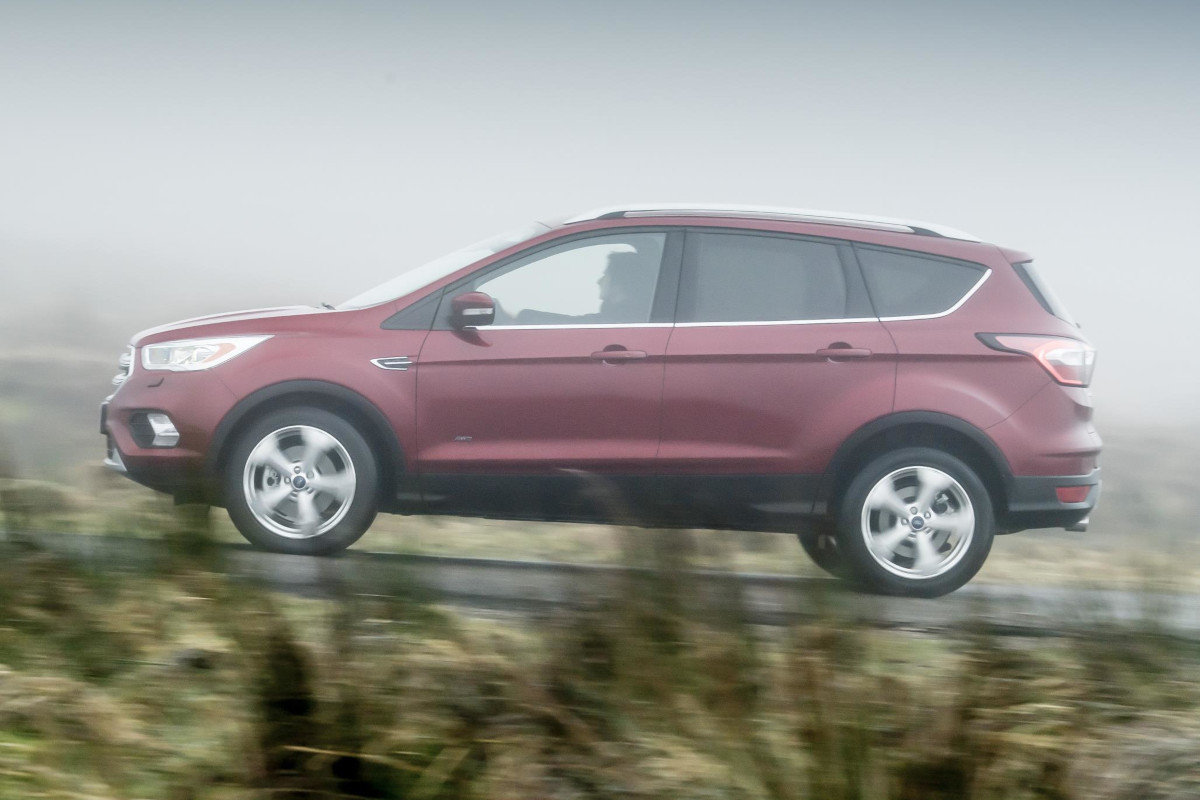
Despite slightly rubbery steering, the Kuga is one of the best handling cars in its class and, as long as you don’t choose the sporty ST-Line model, also has comfortable ride quality. It’s not as nimble and engaging as its predecessor, but the mk2 Kuga carves through corners with real poise, feeling more agile and poised than almost all its SUV rivals.
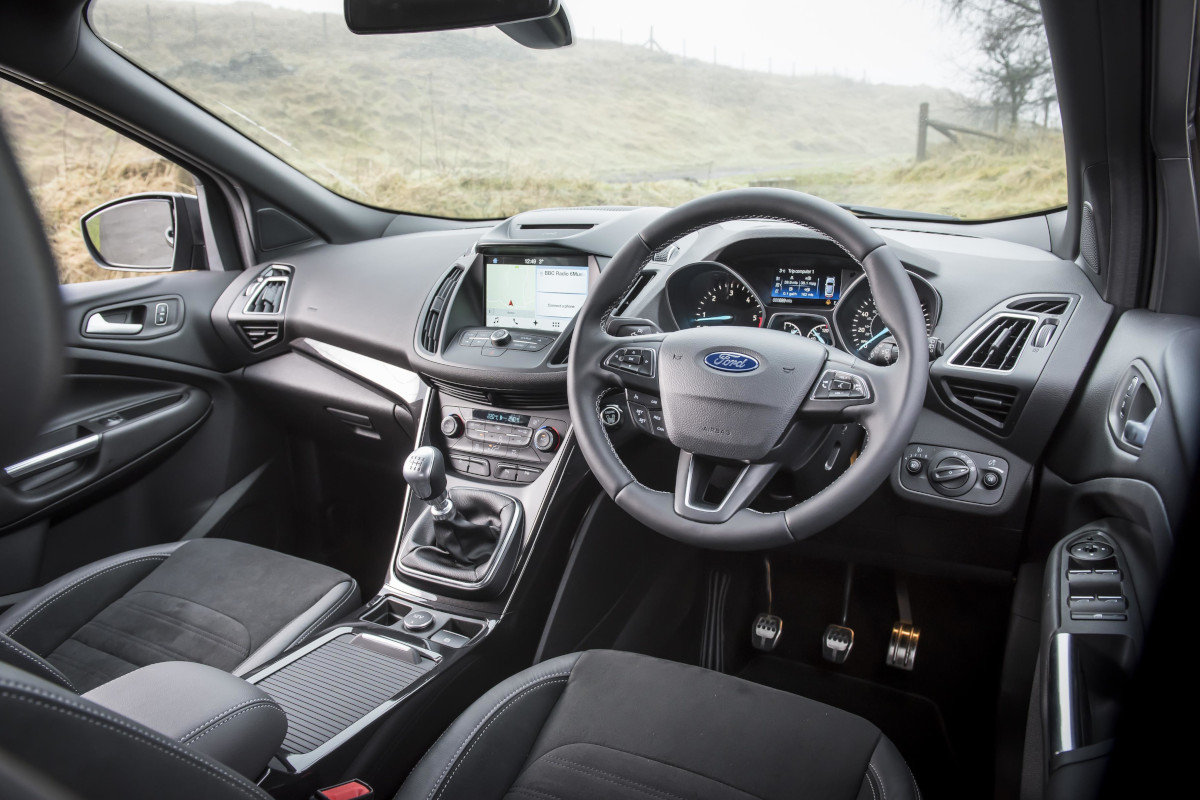
The Kuga is well-equipped regardless of the model you choose, with even the entry-level Zetec model featuring air-conditioning, cruise control, a DAB radio, Bluetooth connectivity and the brand’s excellent Quickclear heated windscreen.
Stepping up to the Titanium adds half leather trim for the seats, sat-nav and automatic operation of the lights and wipers. The Titanium X gets all this kit, plus a panoramic glass roof, 19-inch alloy wheels plus full leather trim and powered and heated front seats.
For the ultimate in luxury there’s the Vignale, which is identified by its unique front grille and multi-spoke alloy wheels, while inside there’s quilted leather for the seats and ambient lighting. At the other end of the spectrum is the ST-Line, which adds a sporty bodykit, some racy interior trim embellishments and a slightly firmer suspension set-up. The ST-Line addition added a panoramic roof and keyless entry to this tally.
In terms of infotainment, Titanium models and above benefited from Ford’s eight-inch touchscreen SYNC system that added sat-nav and easier phone connectivity. For the 2016 facelift, the more advanced SYNC 3 set-up was added, which includes voice recognition, a more intuitive interface and some screen mirroring for smartphones.
The Kuga was awarded the full five stars when tested by EuroNCAP, thanks to its strong structure, multiple airbags, electronic stability control and a speed limiter function for its cruise control. However, it's worth seeking out cars that have been fitted with the optional Driver Assistance Pack, which adds autonomous emergency braking, adaptive cruise control and traffic sign recognition.
The Kuga’s day-to-day running costs – namely fuel – vary greatly depending on which engine and gearbox/transmission you’ve plumped for. At a claimed 64.1mpg the front-wheel-drive 1.5 TDCi turbodiesel goes furthest on a gallon, although you can expect its real world economy to be in the mid-50s mpg at best. At the other end of the fuel consumption scale, a 174bhp front-wheel drive 1.5-litre EcoBoost turbocharged petrol-engined model in Titanium X trim has an official economy figure of 31.0mpg, which translates into an everyday figure in the mid-20s: pretty poor by the standards of its rivals.
The 2.0-litre TDCi – the popular engine choice when the car was new – gives a quoted consumption figure of 60mpg, an impressive achievement given what a punchy performer it is. The majority of Kugas cost £145 a year to tax, but some models – the 180bhp 1.5 EcoBoost turbo petrol with four-wheel drive and automatic transmission in Titanium X trim, for example – will be substantially more. If road tax is an issue for you, make sure to ask what it is for your potential purchase before you sign on the dotted line.
Buyers of new Kugas were offered the chance for fixed price servicing for a one-off up-front payment: either two services in a two-year period (about £390) or three services in a three-year period (in the region of £590). The scheme is transferable to a second owner, so you may be able to enjoy the residue of the original servicing plan. Even if you’re not that lucky, Fords tend to be inexpensive to run (roughly £125 for a minor annual service, £195 for a major service), and spares are fairly cheap (£70 or so for a water pump).
Be aware that the Powershift dual clutch automatic transmission needs servicing every three years/38,000 miles and it can cost £400 for an oil and filter change.
In the US where the Kuga is known as the Ford Escape, 160,000 vehicles with the 1.6 EcoBoost petrol turbo engine were subject to a recall to attend to oil and fuel leaks that could lead to engine fires; after a number of reported engine fires, the Kuga was also subject to a recall in South Africa. The UK seemed to avoid this problem, but on some 2.0-litre turbodiesel engines produced in 2014 and 2015, there was a recall for an engine overheating problem that ultimately could breach the sump and cause terminal oil loss. And then in 2018 some models suffered from low coolant levels, which combined with a software issue could cause the cylinder head to crack, posing a fire issue.
Another UK recall was for the clutch pressure plate, which could break and cause a total loss of drive. If you want to check whether the vehicle you’re looking at is subject to a recall, visit the Government's recall checker website. For peace of mind it’s well worth doing, and you must also check with a Ford dealer that the remedial work has been done.
As is often the case with modern cars, the Kuga suffers from electrical woes, several of them connected with the infotainment system. Some owners report that the satnav maps are out of date and that the screen is prone to freezing, others that the Bluetooth connection is hit and miss, and others that even when the ignition is off, the Bluetooth continues to operate and hunt for devices to connect to, draining the battery. Ask if the latter has been a problem in the car you’ve looking at, as some dealers struggle to identify the source of the problem.
- Some Kugas are fitted with a powered, retractable tow hook and Ford’s excellent Trailer Sway Control system – if you tug caravans or trailers behind you, look out for these models.
- The rear doors open to almost 90 degrees, giving superb access to the back seats for parents loading kids into their safety seats.
- A handy option well worth hunting out is the automatic tailgate opening system – as long as you have the key in your pocket you simply wave your foot under the rear bumper and the tailgate opens without you having to touch it.
– For the best fuel economy: any model with the 1.5-litre TDCi turbo diesel engine – its best claimed consumption figure is 64.2mpg, though few drivers will ever achieve that. – If you do a lot of towing: a 2.0-litre TDCi-powered model produced from October 2014 – it has a stonking 295lb ft (400Nm) of torque. Its emissions are also Euro 6 compliant. – For optimum performance: the 2.0-litre TDCi ST-Line. A torquey, powerful turbo diesel engine combined with lower, stiffer suspension. The downside is that the ride quality around town is even more agitated than that of models with standard suspension. – The best all-round package: the 1.5-litre TDCi turbo diesel in Titanium trim. Reasonable performance, fair fuel economy, good emissions, and as many goodies inside as you’ll ever really need.

