Ford Ranger Review (2011-2020)
Ford Ranger cars for sale
4.0
Expert review
Pros
Healthy payload and a big loadbed
First pick-up to score five stars for safety from Euro NCAP
Handles well for such a big workhorse
Cons
Low-quality cabin before 2015 facelift
Beware of fragile oil pumps
Not as civilised as a VW Amarok
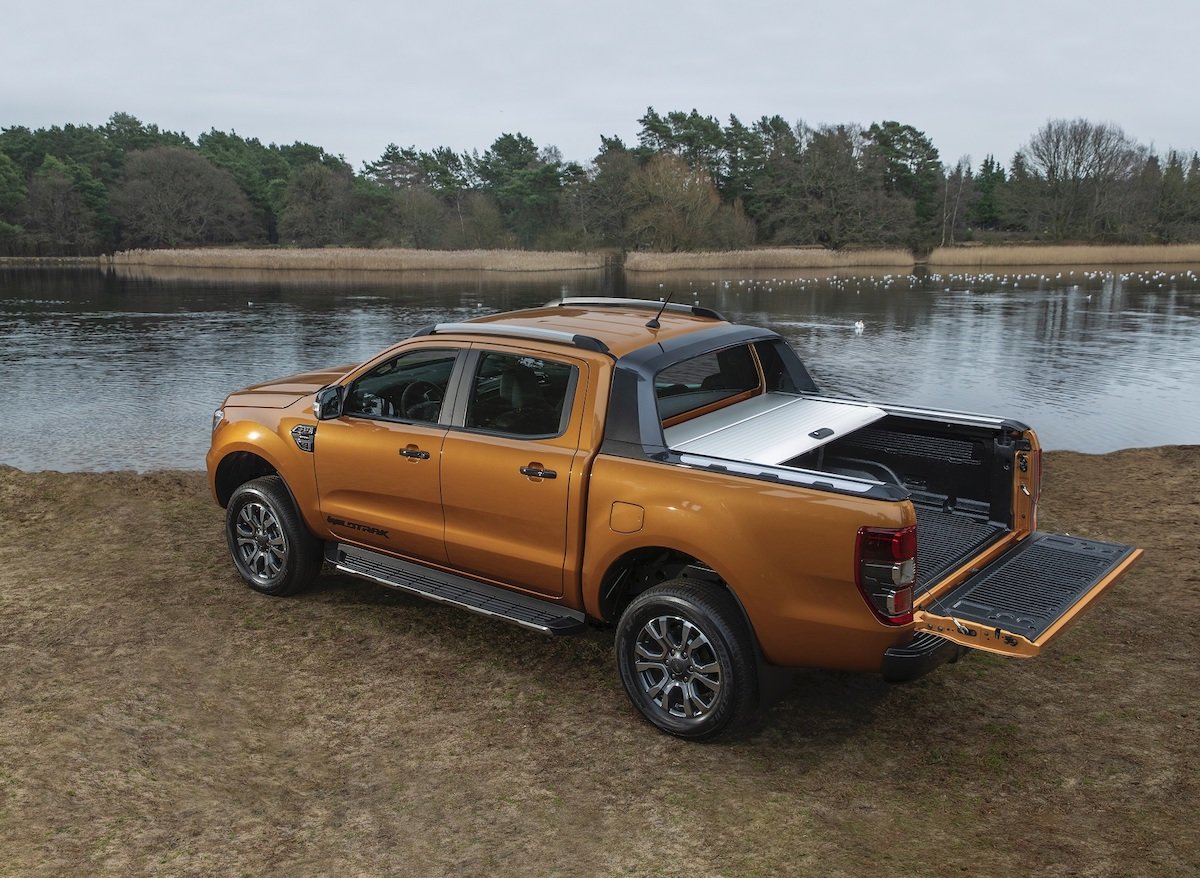
The CarGurus verdict
The Ranger is one of the better handling vehicles of its type, steering with more precision and resisting body roll more convincingly than rivals from Nissan, Isuzu and Mitsubishi. Comparable machines from VW and Mercedes-Benz, however, are more refined and civilised on the road.
Durable, reliable, tough and effective off-road, too, the Ranger is a very capable all-rounder. It was also the first pick-up truck to score a five-star Euro NCAP crash rating when it arrived several years ago, so it was even something of a pioneer.
The key to buying a good Ranger is identifying the type of cabin and the exact engine and transmission that would suit your requirements, then searching for a suitable example that has clearly been well looked after. Be mindful of the vehicle’s known weaknesses, too, such as fragile oil pumps. Get all of that right, though, and you’ll soon see why the Ford Ranger is the UK’s favourite pick-up truck.

The real difference between North America and the United Kingdom? Size. That’s true as far as pick-up trucks go, at least. Whereas the gargantuan Ford F-150 is the best selling truck on the other side of the Atlantic (and, in fact, the best selling car of any type Stateside), over here the F-150’s smaller, more manoeuvrable sibling, the Ranger, is the most popular pick-up. These things are relative, though – compared to most vehicles, the Ranger is a very sizeable machine indeed, being 362mm longer than a Range Rover. While the Ford isn’t necessarily best-in-class at any one discipline – the Volkswagen Amarok is more refined, for instance, and the Mitsubishi L200 more rugged – the Ranger does perform strongly across the board. That makes it a fine all-rounder and perhaps explains its immense popularity. Commercial vehicles like the Ranger offer very significant tax incentives, as long as they are bought solely for business use and have a payload capacity of more than 1,000kg (which all Rangers do, apart from the high-performance Raptor model). This tax saving is primarily enjoyed by the first owner, who can reclaim the VAT on a vehicle that is used solely for commercial purposes. Those that chose the Ranger as a company car also make savings, as the Benefit-in-Kind tax is rated at flat (and low) rate, regardless of the car’s price and CO2 emissions. The current Ford Ranger pick-up has been on sale since 2011, albeit with a very significant overhaul in 2015 that introduced more modern styling, a smarter cabin that brought a bit closer to SUV standards, and updated engines. If your budget allows, a post-facelift Ranger will prove to be more enjoyable to own and cheaper to run than the pre-facelift model.

The three body styles in the line-up include the two-seat Regular Cab, the Super Cab with its occasional-use two-seat rear bench, and the Double Cab, which is a full five-seater with four doors. The extra passenger space does mean a shorter load bay, however. For most buyers, the Double Cab layout will be the best choice, as the flexibility of being able to carry up to four passengers outweighs the marginal improvement in load carrying. What’s more, those sitting in the back get a decent amount of leg and headroom, while the driver gets a wide range of seat and wheel adjustment to fine-tune their driving position. And with its elevated suspension, the Ford affords occupants a great view out as it towers over most normal vehicles. Whichever cab configuration you prefer, all versions of the Ranger have generous enough load bed space to accept a standard-sized euro pallet, meaning they tick pretty much any practicality box you can mention. Bear in mind, however, that the flagship Raptor model can’t carry as much weight (all other versions have a payload of at least 1,000kg), meaning it’s less useful if you’re using your pick-up as a genuine workhorse rather than a family-friendly show pony. However, whatever you’re planning to use the load bed for, whether it's bags of luggage rather than bags of cement, you might want to invest in a roll-top loadbay cover, or even a full-on hard top, so that your belongings or materials don't get wet. Or stolen. If you need to tow, then the Ranger is more than up to the task, with pretty much all versions rated to pull a 3,500kg braked trailer. The exceptions are at the extremes of the line-up, with both entry-level 130hp models and the top-of-the-range Raptor limited to a more modest 2,500kg under the same conditions.

If you're comparing the Ranger's road manners to those of a family SUV, it'll feel decidedly rough-and-ready, but by the standards of the pick-up truck world, the Ranger is actually fairly civilized. The ride is flatter and less bouncy than in most pick-up trucks, so it's more comfortable and settled, both at town speeds and on the motorway. And like with all pick-up trucks, things improve if you put lots of heavy stuff in the load bed. It's also one of the more agile trucks you can buy. Okay, so it won't be dancing around corners with the precision of an exotic Italian thoroughbred, but it controls its body movements well, grips strongly and has responsive, well-weighted steering. That said, the range-topping Ranger Raptor is surprisingly fun to drive thanks to its bespoke suspension set-up that uses a wider track and Fox Pro dampers. It’s particularly effective on rutted off-road tracks, where it will happily swallow bumps that send the standard car into orbit. It’s still a bit agricultural on the road, but that long travel suspension means it rides in a more supple and controlled manner. Pick-ups tend to be used more for heavy duty commercial work than serious off-roading, but the Ranger does perform well away from the highway nonetheless: all but the most basic versions have four-wheel drive and a switchable low-ratio transmission. Initially, power came either from a 2.2-litre TDCi common-rail turbodiesel with 125hp or 150hp, or a usefully powerful 200hp, 3.2-litre, five-cylinder turbo diesel. This power was sent to either the rear or all four wheels via a six-speed manual gearbox or a six-speed automatic. A facelift in 2015 saw power in the entry-level 2.2 hiked up to 160hp, and automatic stop-start was added to help improve fuel economy. In 2019, both the 2.2 and the 3.2 were dropped in favour of a range of 2.0-litre EcoBlue diesel engines with a choice of 130hp, 170hp or 210hp. The latter is twin-turbocharged and is mated to a 10-speed automatic gearbox, which is an option on the 170hp models. All other versions get a six-speed manual, which isn’t exactly slick, but its slightly clunky nature is in keeping with the Ranger’s rough and tumble character.
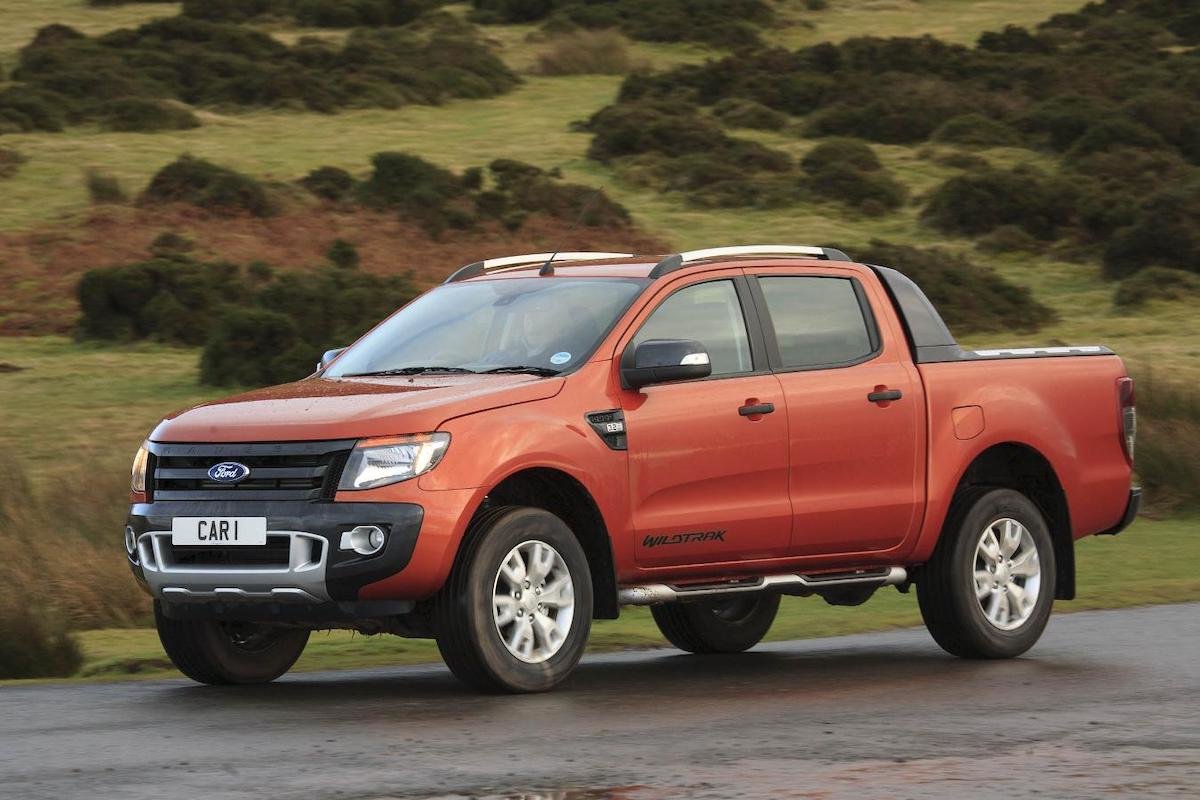
Trim levels range from the entry-level XL and XLT to the top-of-the-range Wildtrak and the hardcore Raptor. Entry-level XL models have manual air conditioning and ride on steel wheels, but alloy wheels are included on all other versions. The XLT adds little luxuries such as a leather steering wheel and powerfold door mirrors, plus a basic SYNC infotainment system that adds AppLink and Emergency Assist to the XL’s simple Bluetooth and USB connections. Mid-spec Limited models and above include the excellent SYNC3 touchscreen infotainment system with both Apple CarPlay and Android Auto for smartphone integration. They also get rear parking sensors and a rear-view camera. Other additions include powered and heated leather seats, a cool box between the front seats and xenon headlamps. Wildtrak models get all this and a more purposeful look thanks to various extra trim pieces and some natty logos. For the Raptor there’s a unique front grille complete with huge Ford script, bespoke bumpers and smaller 17-inch alloys wrapped in chunky off-road tyres. Finally, be aware that Ford has churned out numerous special editions of the Raptor over the years. Most of these feature little more than some additional body graphics and different paint finishes, but always double check the exact kit on the car you’re looking at.
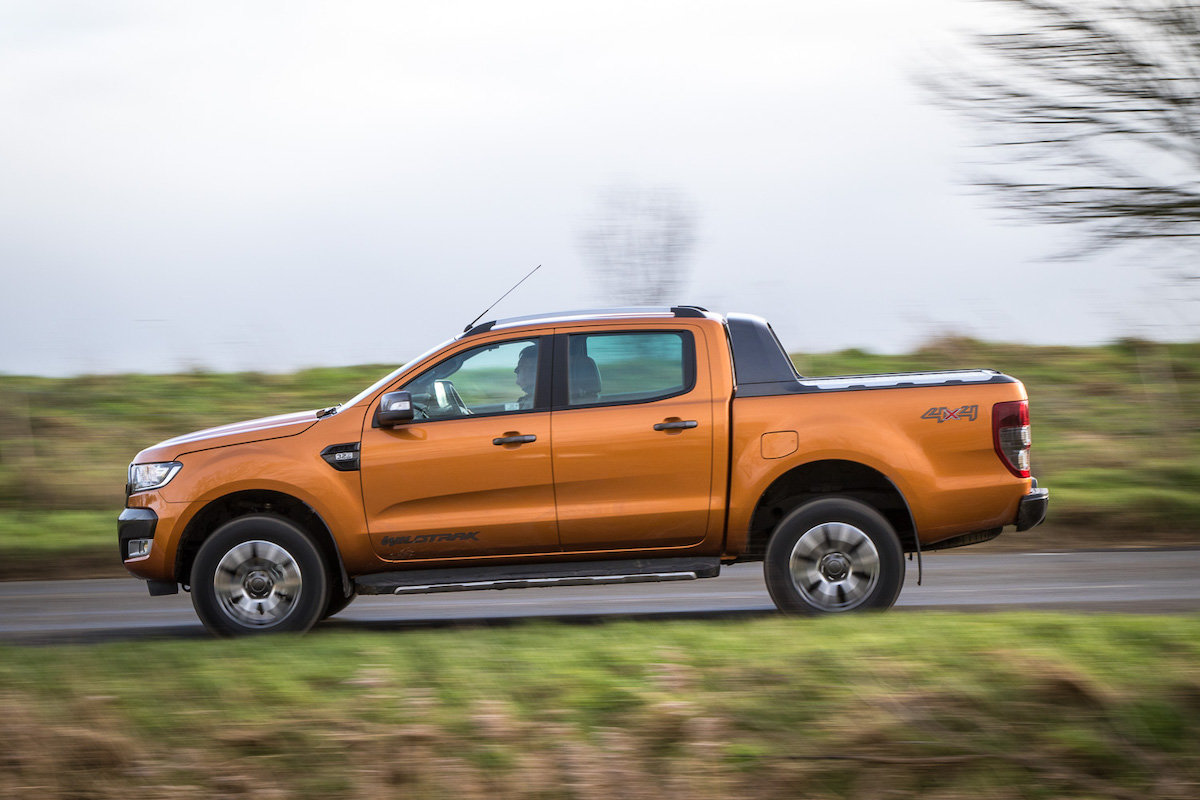
The Ford Ranger is one of the cheaper pick-up trucks to insure, although the cheapest, least powerful Ranger models still sit in group 37 (of 50). That’s substantially higher than a family saloon, for instance. More potent versions sit in group 42, while the performance-oriented Raptor will cost more again come insurance renewal time. Vehicle excise duty, or road tax, meanwhile, is charged at a light commercial vehicle flat rate of £140 per year.
Rangers should be serviced annually, or after 20,000 miles if that comes sooner. Servicing costs at a Ford main dealer shouldn’t be expensive, a major service costing around £250. Replacement parts can set you back somewhat more, however, with a clutch likely to cost three times that sum. It’s therefore important, if you’re considering a used example, to check that it has plenty of life left in its clutch. For peace of mind you may want to purchase replacement parts only from Ford, although you’ll make savings by buying them elsewhere (the same applies to servicing; for older vehicles in particular, there’s no particularly good reason not to go to a reputable independent garage). A pair of front brake discs will cost around £60 from an online retailer and brake pads £40 or so. An upper suspension arm costs around the same and a front shock absorber in the region of £80 (you’ll pay more on top for fitting, of course).
Given their size and weight, pick-ups aren’t as fuel efficient as conventional cars. The 3.2-litre five-cylinder turbodiesel will average around 25mpg, while the four-cylinder versions should return fuel economy figures in the mid-30s. If you’re towing (the Ranger has a braked trailer towing limit of 3,500kg) or you have a substantial item in the load bay, expect those mpg numbers to slip somewhat.
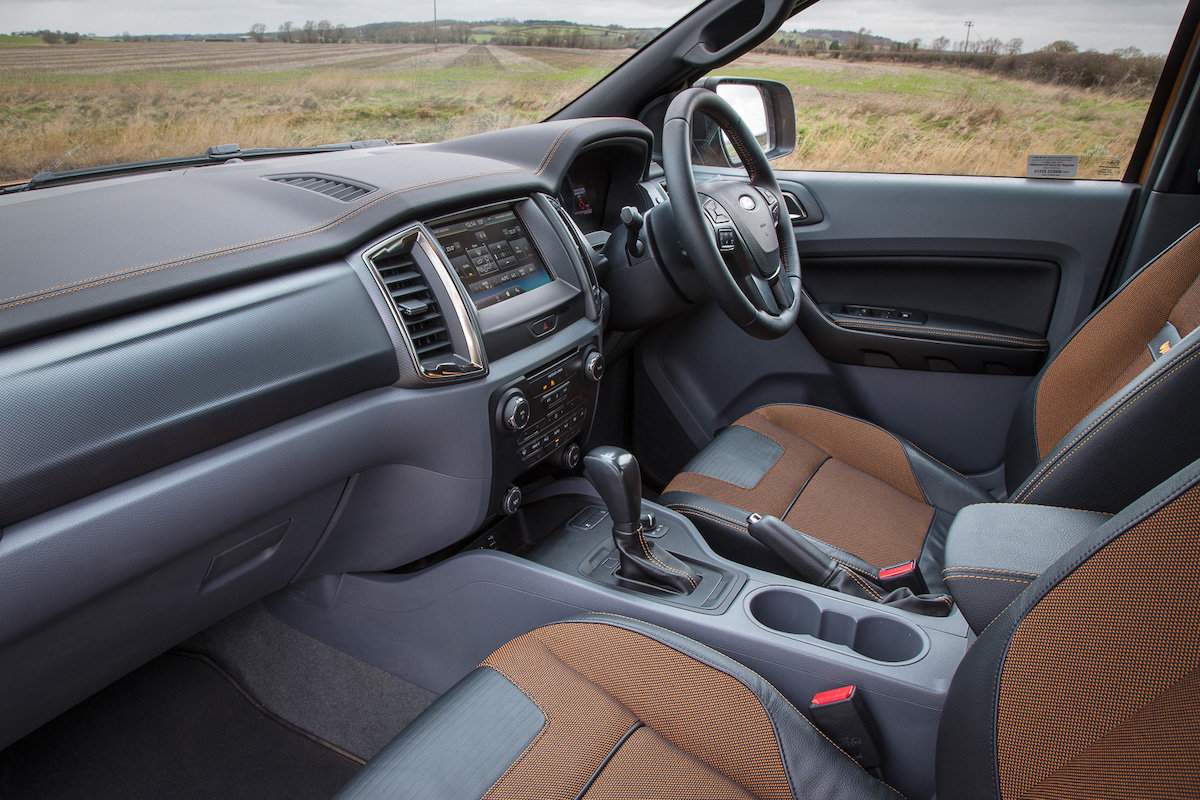
Pick-up trucks are work horses. That means they tend to live punishing lives, carrying or towing heavy loads over long distances, and being driven off-road and through muddy building sites. Their cabins often show the signs of a demanding working life after only a couple of years.
They are built to take that sort of punishment, however, and as long as the vehicle has been properly maintained it shouldn’t feel fragile. Nonetheless, you should inspect any potential purchase even more thoroughly than you would a conventional passenger car for signs of damage, mistreatment and wear and tear.
Off-road use can result in significant damage, particularly to the underside of the vehicle. Give it a thorough going over for signs of the body structure, suspension arms, prop shaft and driveshafts having impacted against immovable rocks or rough gravel tracks. Meanwhile, a pick-up that has regularly towed or carried heavy loads will have taken more life out of its engine and transmission than one that hasn’t. Check that the gearbox operates smoothly and effortlessly.
Ranger-specific faults include failing mass airflow sensors, which results in poor fuel efficiency and reduced performance. Oil pumps are another known weakness on the Ranger. If allowed to fail the engine can let go altogether. Check for a rattling sound from the engine bay and a warning light on the dashboard as a minimum, although you’d be well advised to have a replacement pump fitted if the vehicle in question hasn’t received a new one in recent years. The part itself isn’t expensive at £100 or so, but you’ll pay another £500 to have it fitted.
Finally, whether you’re buying from a main dealer or an independent garage, ask for proof of any relevant recall work having been carried out.
- The Ranger was originally developed by Ford of Australia and was only introduced to North American markets in 2019. There are currently five factories around the world manufacturing the Ranger.
- The Ford Ranger was the first ever pick-up truck to be awarded the full five stars in Euro NCAP crash tests. That's an accolade it earned back in 2012, and the testing standards have got tougher since then, but thankfully, Ford has made improvements since to keep safety levels up to date. As part of a 2015 facelift, new driver assistance features were added, including a lane-keeping aid, adaptive cruise control with ‘Forward Alert’, front and rear park assist, and a useful rear view camera.
- While we're on the subject of that 2015 facelift, it also brought a posher-feeling interior, something the Ranger badly needed, and a much larger 8.0-inch central touchscreen for the Sync 2 infotainment system. In 2019, the infotainment software was upgraded to Sync 3, and Apple CarPlay and Android Auto were added.
– For lighter loads: most people in the market for a pick-up expect four-wheel drive and a strong engine. For those with lighter loads to carry, however, the entry-level EcoBlue 130 with rear-wheel drive might be sufficient. – For heavier loads: the range-topping 3.2-litre five-cylinder diesel engine with closer to 200hp and four-wheel drive makes light work of a hefty payload. – For family use: Forget the single cab version and even the Super Cab, the four-door Double Cab is the only model of Ranger that will be effective as a family vehicle. A mid-ranking EcoBlue engine will be more than adequate. – For off-road racing wannabes: Like its bigger brother the F-150 Raptor, the Ranger Raptor is a sort of off-road, high-performance model that isn’t well-suited to commercial work. Whereas the F-150 Raptor has a 450hp 3.5-litre twin-turbo V6, the Ranger Raptor uses a much less impressive 210hp four-cylinder turbodiesel. With a 0-62mph time of around 10.5 seconds, don't expect to be winning any drag races, but it is fun on the road and, with a strengthened chassis and a suspension that's been completely reworked, it's fabulous off-road.

