Honda CR-V Mk4 Review (2011-2016)
Honda CR-V cars for sale
4.0
Expert review
Pros
Comfortable ride and composed handling
Lots of passenger and boot space
Efficient 1.6-litre diesel
Cons
Not as enjoyable to drive as a Mazda CX-5
Some reports of clogging diesel particulate filters
Pre-facelift cars lack some modern kit and safety features
The CarGurus verdict
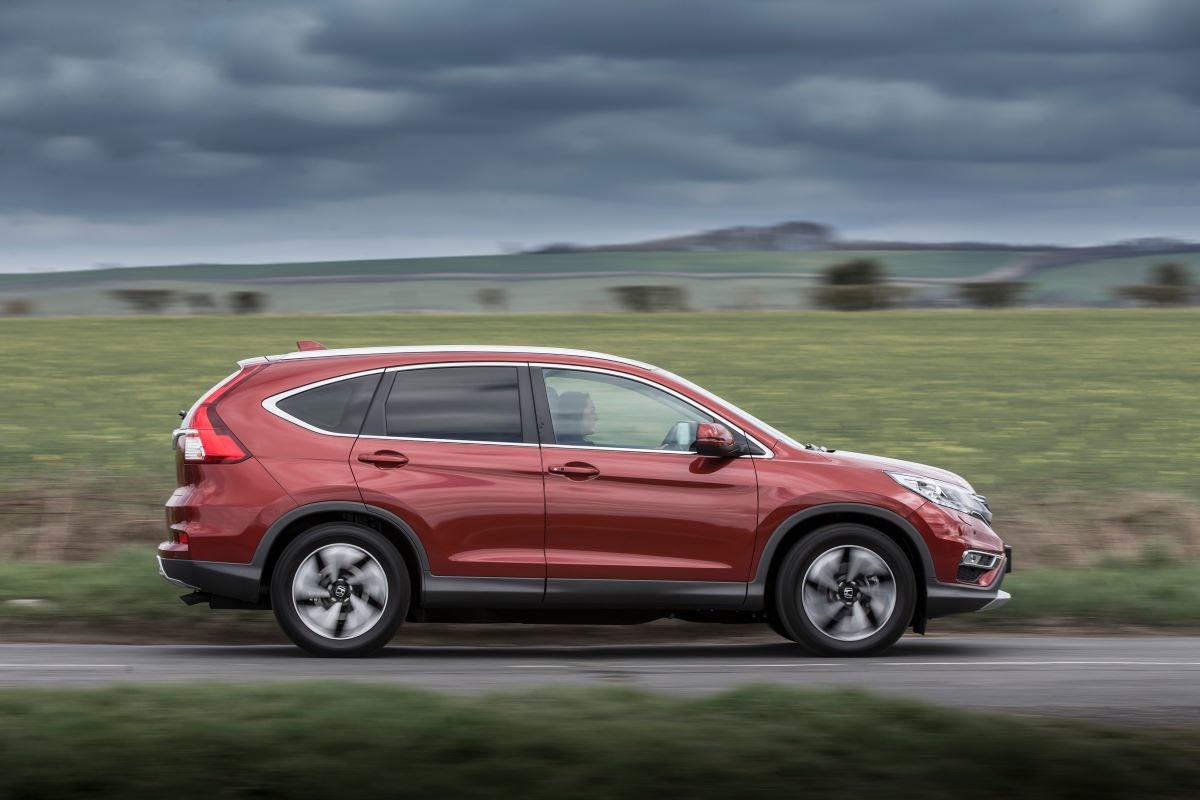
The Honda CR-V is an excellent choice if you’re looking for a family car with a bit of style. It looks good, even when stood next to SUV rivals, and inside, it feels impressively classy and impeccably well built. Crucially, the cabin is roomy enough and clever enough to deal with pretty much anything a family can throw at it, making it one of the most practical cars in the class. It’s a comfortable, quiet, and relaxing car to drive, too, with a plush ride and excellent rolling refinement.
Sure, it’s not as entertaining as a Mazda CX-5, but you’ll probably be so relaxed that you just won’t care, and it always stays secure and predictable. Most importantly, Honda has a reliability record that’s the envy of the motor industry, and when you’re buying a used car, that sort of reassurance counts for a lot. A really impressive all-rounder that should provide years of loyal service.

SUVs are hugely popular, but they’re nothing new. The Honda CR-V, for example, has been kicking around since the mid-1990s, and the iteration we’re talking about here, sold between 2011 and 2016, is the fourth in the model’s lineage.
Over that time, the CR-V has become a very popular choice in the UK for a variety of reasons. Firstly, while many SUVs take the meaning of the moniker (Sports Utility Vehicle) literally by trying to give them a sporty driving experience, the CR-V takes a very different approach. It’s a car that concentrates on comfort by providing a plush, cosseting ride, and it’s a trick that the car pulls off very effectively indeed.
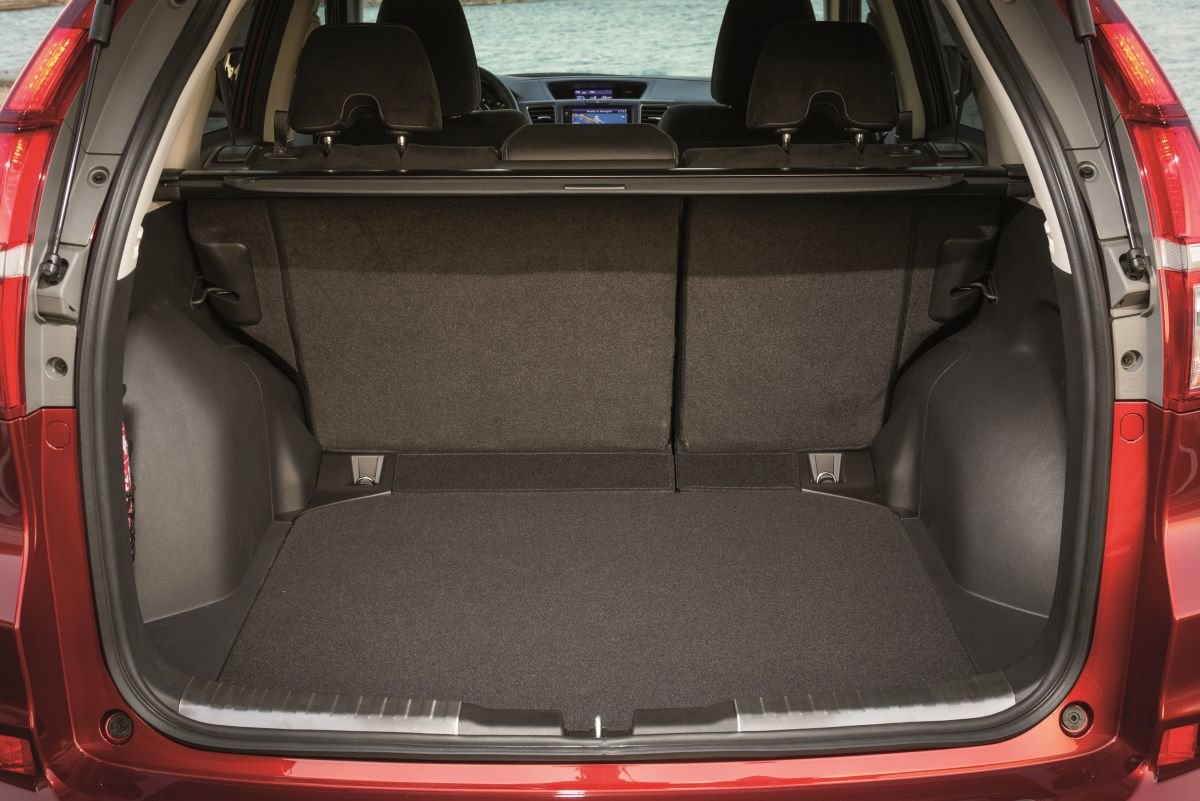
Practicality is another thing it does extremely well because it’s one of the roomiest cars in its class. Passenger space is generous in any of the five seats, and because the rear bench has a wide middle seat with a flat floor below it, it’s more comfortable than most rivals when carrying five people. At 559 litres, the boot is appreciably bigger than those of most competitors, and when you need to fold the rear seats down, you simply pull a catch up in the boot and the spring-loaded chairs drop themselves into the floor automatically to leave you with a flat, flush load floor and 1,648 litres of space (1,669 with a space saver spare wheel). Clever stuff.
Otherwise, the interior is a bit of a mixed bag. Ergonomically, the dashboard could be a bit better, because you have vast amounts of buttons smattered around the place, so finding the one you want at a glance is tricky. On the plus side, though, the build quality is fabulous, with nice, touchy-feely materials and a solid standard of assembly that gives you the impression the car will last a lifetime. And being a Honda, it probably will, such is the brand’s incredible reputation for reliability.

This comfort is complemented by a generally impressive level of rolling refinement, which makes the CR-V a relaxed and civilised car to roll around in. The handling, meanwhile, is very secure, with decent grip and responsive steering. Granted, the car leans over a wee bit in corners, due to the tall body and soft suspension, but it’s worth the payoff for the level of comfort. Besides, who needs a sports car when you’re driving kids to school?
The engine range isn’t vast, but it contains one or two real crackers that impress with their combination of performance, economy, and refinement – most notably the 1.6-litre i-DTEC diesel, which is available with either 118- or 158bhp. This arrived in late 2013, and the CR-V was initially available with Honda’s 2.2-litre diesel engine which, though potent, was more expensive to run than the excellent 1.6. A 2.0-litre VTEC petrol was also available but, at the time, diesels were the fuel to have, especially in SUVs of this size, so don’t expect to find many second-hand petrols.
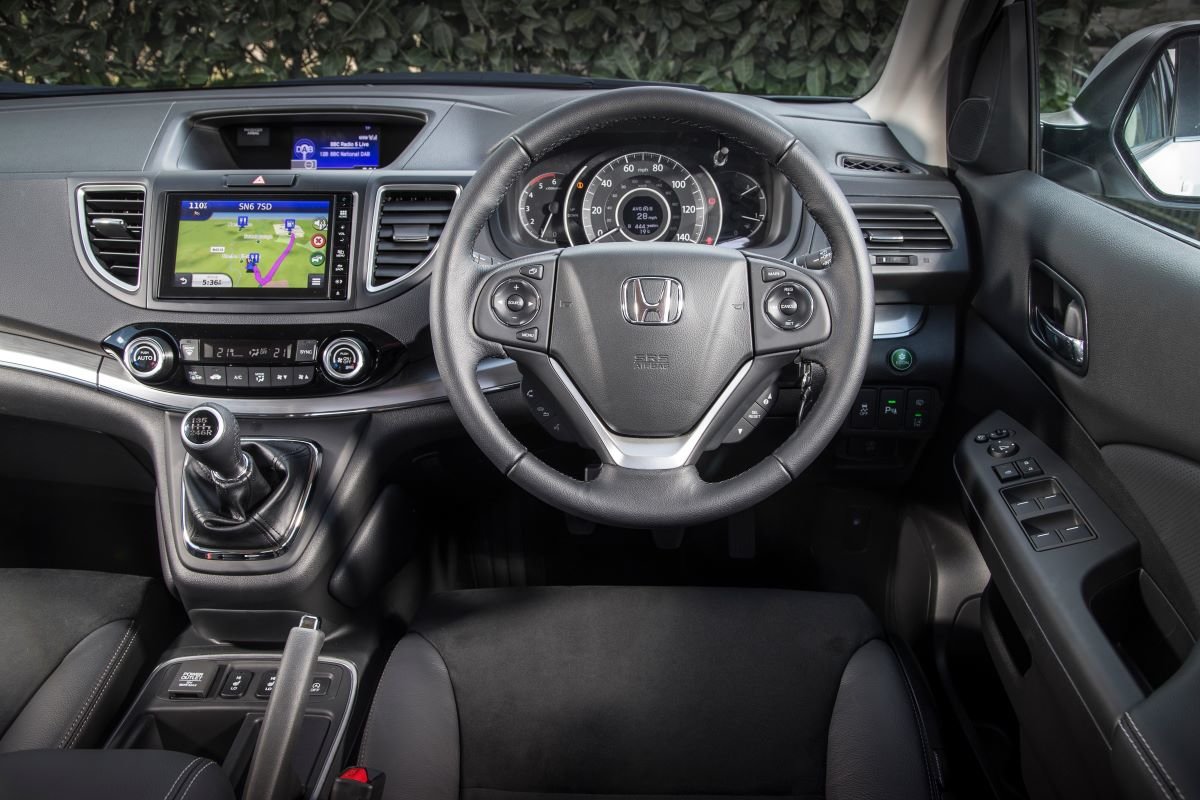
There were four trims available when this generation of Honda CR-V first went on sale. Entry-level S was reasonably well stocked, with dual-zone climate control, alloy wheels, cruise control, daytime running lights, remote locking, trailer stability assistance, and a CD player with USB/aux-in connectivity and audio controls on the steering wheel. However, it’s worth upgrading to SE trim for its Bluetooth phone connection, automatic lights and wipers, front and rear parking sensors, reversing camera, and leather steering wheel.
SR adds part-leather trim, heated front seats, a DAB radio, ambient lighting and upgraded headlamps with high-beam assist, while EX gives you keyless entry, a powered driver’s seat, a powered tailgate, a panoramic roof, full leather upholstery, and sat-nav.
Prices were fair-to-middling when the CR-V was new, as were its resale values, meaning that prices for used examples will be very similar to those of major rivals such as the Toyota RAV4 and the Kia Sportage.
In terms of efficiency, the 1.6 diesel is the star of the show, and by quite some distance. With front-wheel drive and 118bhp, you’d get between 62mpg and 64mpg according to official NEDC cycle figures, and even in cars with four-wheel drive and 158bhp, the figure was somewhere around the mid-fifties. With the earlier 2.2-litre diesel, economy stood at around 50mpg when paired with the manual gearbox, but that dropped closer to 40mpg if you went for the automatic. Meanwhile, no version of the 2.0-litre petrol could crack the 40mpg mark and, as with all these official figures, matching them in the real world will also prove nigh-on impossible, so expect a lower day-to-day return.
Insurance groupings range from 22 to 28, so whichever engine you choose, there won’t be a huge difference in the size of premiums.
Honda’s reputation for reliability is second to none among carmakers, and it’s well deserved. Dust off pretty much any reliability survey doing the rounds, and you’ll find Honda on or near the top of the table, such is the dependability of its cars. That includes the Warranty Direct Reliability Index, although to be fair, the CR-V isn’t the firm’s top performer in the study, but it’s still comfortably inside the top 100 of all cars considered. So, as long as the car has been maintained properly, you can reasonably expect many years of trouble-free motoring. For maximum confidence, always insist on a full and detailed service history.
One or two common problems have been reported, though. With the diesel, we’ve heard quite a few accounts of particulate filters sooting up after repeated short-haul use – but that’ll happen on any diesel car. To avoid problems, make sure you drive far enough to get the engine up to its full operating temperature on a regular basis. If that doesn’t suit your driving habits, you’re probably better off with a petrol engine. We’ve also heard plenty of reports on clutches going, so check that the biting point feels sensible, and that there’s no juddering when you pull away.
- The CR-V was facelifted in 2015, and more standard equipment – very desirable standard equipment at that – was introduced across the range, including an automatic emergency city braking system that helped to prevent accidents below 20mph. Bluetooth phone connection and a DAB radio were also made standard from entry-level S trim upwards. The renamed SE Plus trim gained a 7.0-inch touchscreen infotainment system with internet radio, while the SR trim added Garmin satnav to the system. The range-topping EX trim remained largely the same.
- This generation of CR-V was the fourth iteration of the car, the first appearing in 1996. This mk1 car was petrol only, while subsequent generations offered either petrol or diesel power. For the generation after this one, diesel power was dropped in favour of a petrol-electric hybrid drivetrain.
- There’s some debate about what the name CR-V means: some reckon it stands for ‘Comfortable Runabout Vehicle’, while others say it’s ‘Compact Recreational Vehicle’. Whatever the case, the CR-V has been a popular choice in the UK market for a long time.
- If you’re on a budget: If you need to settle for a very early example, then you’d probably be best off with the 148bhp 2.2-litre diesel instead of the 2.0-litre petrol, which were the only options at launch. It had a lot more low-down grunt, which made your progress easier, but it still wasn’t exactly what you’d call quick. It was available with either a manual gearbox or an automatic but choosing the auto’ makes the car considerably less efficient, so we’d stick with the manual.
- If you simply must have a petrol engine: You’ll be very much in the minority if you want a petrol-powered CR-V because most buyers prefer diesel. If that’s you, then the 2.0-litre unit we just mentioned is your only option. It’s more powerful than the diesel with 153bhp, but because you have to work it harder for equivalent performance, it’s actually a less relaxed companion. Like the 2.2 diesel, it was available with either manual or automatic gearboxes, but your choice between them didn’t make a lot of difference to efficiency.
- The best all-rounder: We reckon the best choice will be the 1.6 i-DTEC diesel that was introduced in 2013. It only had a very modest 118bhp, but it was so punchy and eager that you’d never know it. It was also considerably smoother and quieter than the bigger diesel, which helped the already refined CR-V become even more cultured. The 1.6 was also more efficient than the 2.2, but if you’re planning to tow or go mud-plugging, bear in mind that this engine was only available in front-wheel drive form.
- If four-wheel drive is a must: For an AWD CR-V we’d recommend a later post-facelift car if you can afford it. During this facelift in 2015, the 2.2 diesel was dropped altogether, and replaced by an updated version of the 1.6 engine that came with a stronger 158bhp and four-wheel drive. Again, refinement, efficiency and flexibility were all superior to early four-wheel-drive cars, so that’s the one to go for.


