Honda Jazz Mk4 Review (2020-present)
Honda Jazz cars for sale
4.0
Expert review
Pros
Space and clever seating make the Jazz very practical
Slick infotainment system
Expect very good reliability
Cons
Rivals from Renault and Toyota have longer warranties
Not as much fun to drive as a Ford Fiesta
Noisy petrol engine and CVT combo
The CarGurus verdict
The Honda Jazz makes no bones about the fact it puts practicality first. Granted, it isn’t all that exciting to drive, but it doesn’t really need to be.
What matters more is its roomy interior, and its clever seating. If you want to carry adult passengers or bulky loads in a small car with manageable dimensions, the Jazz fits the bill very well indeed.
That hybrid powertrain isn’t the quietest, but it is economical, and makes the Jazz a doddle to drive. It’s comfortable whether you’re bimbling round town or cruising on the motorway, too.
So while you’ll likely want to look elsewhere if you like a dash of excitement in your daily driving, for everyone else the Jazz is a solid, sensible choice that should prove both reliable and reasonably affordable.

What is the Honda Jazz Mk4?
Once upon a time, the multi-purpose vehicle, or MPV, was king. They were everywhere, and while their boxy profile meant they weren’t exactly attractive, they offered lots of space and clever seating, making them great family cars.
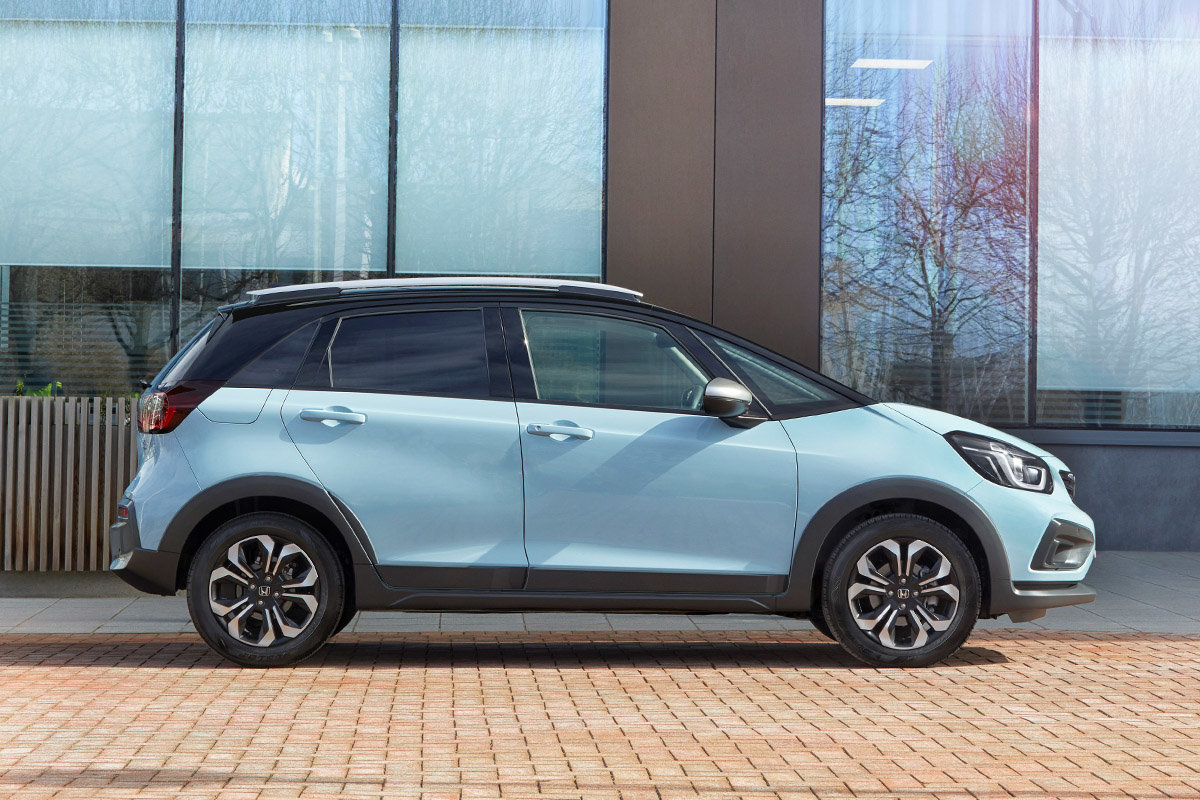
Today, MPVs have mostly gone the way of the dodo, but their legacy lives on in cars like the Honda Jazz. While the Jazz’s compact dimensions pitch it up against superminis like the Ford Fiesta and Peugeot 208, its high roof, big windows and upright stance are far more like the MPVs of old.
How practical is it?
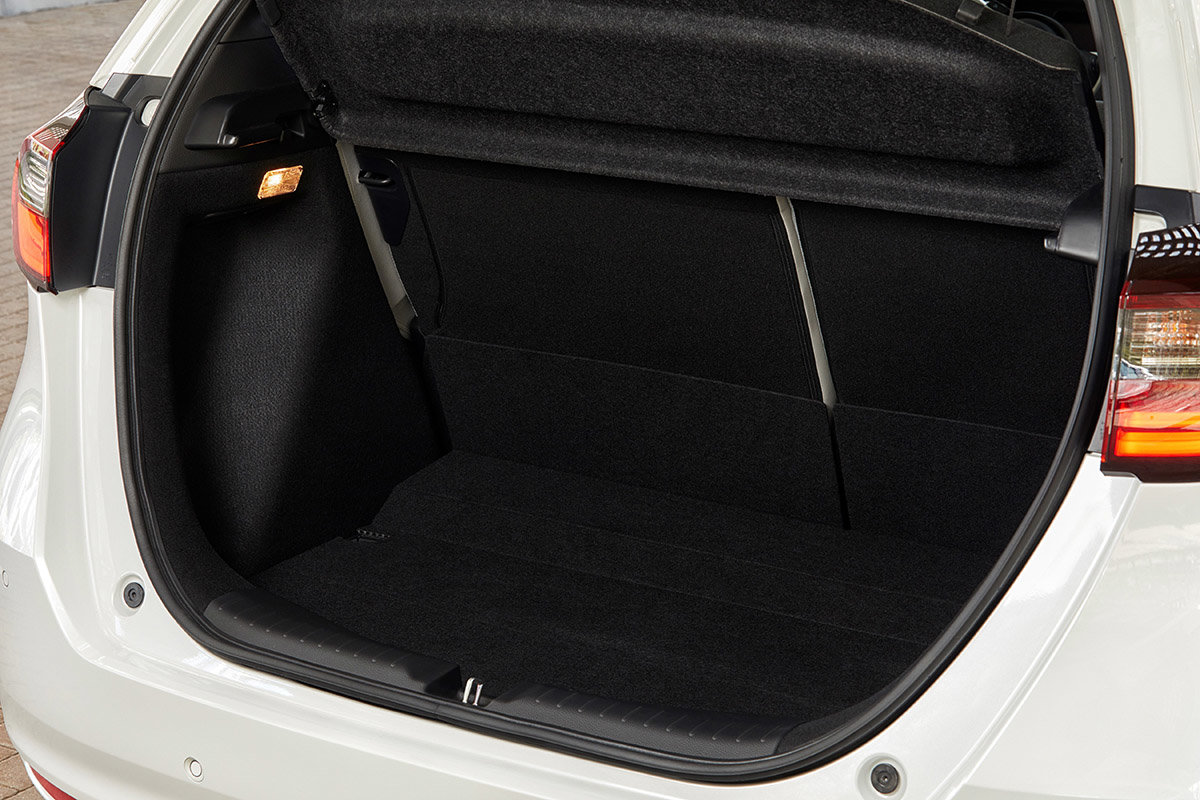
The Jazz majors on practicality, and its best party trick is found inside – more specifically, in the back seats. Not only are these far more spacious than you’ll find in most other small cars, but they also flip up, like cinema seats, and latch into place. Honda calls this system its ‘magic seats’, and they mean you can carry taller loads in the space left behind.
Of course, the rear seats also split and fold conventionally, enhancing the already plentiful boot space. There’s 304 litres of boot capacity in the Mk4 Jazz, as well as useful touches such as underfloor storage and a low loading lip so you don’t have to lift heavy bits of luggage too far to slide them in. This, in short, is about the most practical and versatile supermini out there.
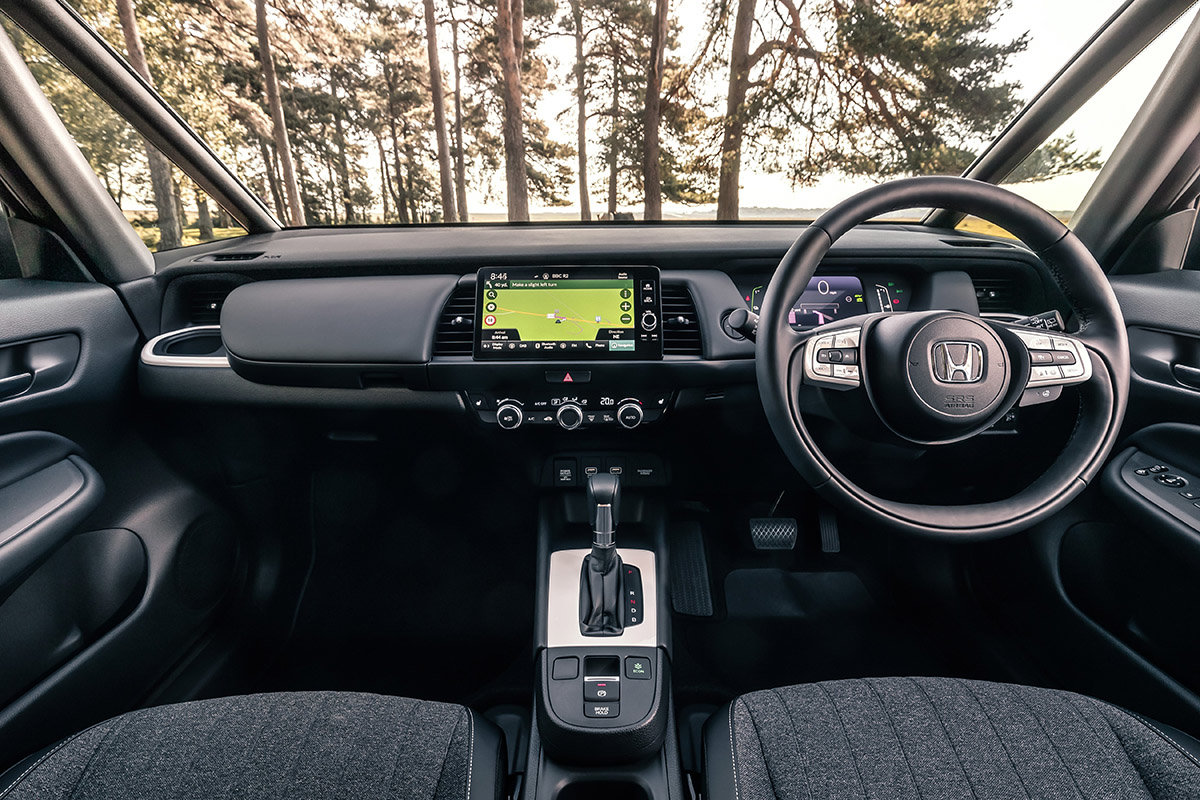
So even though it’s not quite as chic as its rivals on the outside, inside the result is a clever interior that offers lots more room than most other small cars can muster. It’s a smart interior, too, with lots of useful nooks and crannies, and a slick infotainment system with a clear, crisp screen.
What's it like to drive?
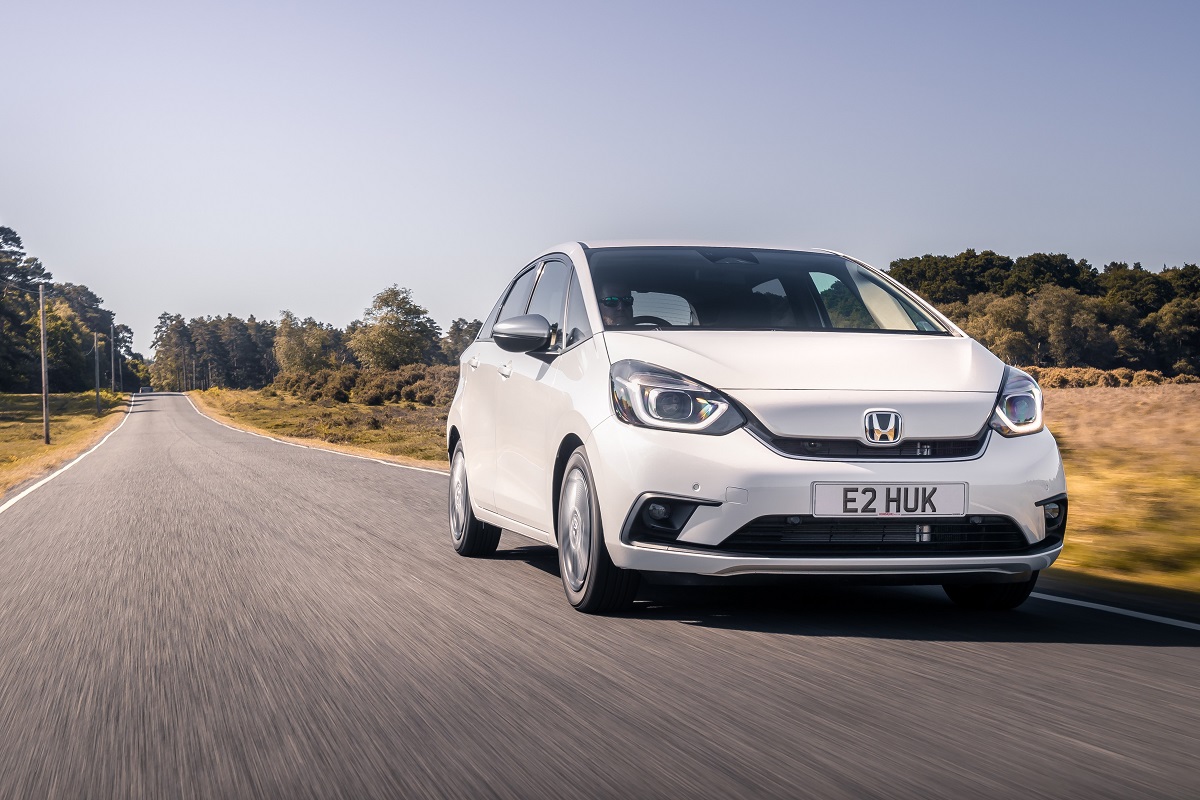
The Jazz is very easy to drive, too. As it’s a hybrid, it starts up silently, the petrol engine only cutting in once you’re on the move. The big, clunky gear selector feels a little out of place, but once you’ve stuck it in ‘D’ (or ‘B’, to enhance the friction effect of the regenerative brakes when you lift off the throttle), you needn’t touch it. And those big windows and slim A-pillars mean visibility is excellent, and parking a cinch.
A touch of the throttle pings you forward, the electric motors responding pretty much instantly. Around town the Jazz is quiet and composed, its suspension riding most of the bumps well, and only really thrown off by larger ruts, which send a shudder through the car.
Once the road opens up and you press the accelerator harder, however, the engine makes a great deal more noise; it can be rather intrusive, in fact, and grows tiresome if you’re trying to maintain speed up a steep hill, as the CVT automatic gearbox keeps the engine revs high.
Noisy it may be, but the Jazz does at least feel perky. There’s plenty enough vim from the engine to keep up with traffic, and on the motorway the Jazz never feels out of its depth.
And happily, its suspension composure remains at these speeds; when you’re cruising along, the Jazz feels stable and secure, and out on a faster country road, the same goes. Turn the steering wheel, and the nose follows quickly and crisply.
Granted, there’s not very much feel, so you can’t tell what’s going on beneath you, and as a result, the Jazz isn’t as much fun to drive as a Fiesta or 208 – but it’ll still feel predictable and responsive in an emergency manoeuvre, and for many Jazz buyers, that’ll be all that matters.
Technology, equipment & infotainment
There are three versions of the Jazz to choose from. The entry-level SE misses out on a couple of bits of equipment, like alloy wheels and an alarm, but it does at least get adaptive cruise control, climate control, automatic wipers and LED headlights.
SR adds the alarm and alloy wheels, plus front and rear parking sensors and a larger infotainment screen, while EX gets you heated front seats, a heated steering wheel, a reversing camera and satnav.
Practically the only thing that’s missing are electrically adjustable seats and adjustable lumbar support, but we’re really splitting hairs there – this really is a very well equipped car, especially considering its key rivals are less spacious, less well equipped and, in the case of the Ford Fiesta, no longer even available!

Honda Jazz running costs
Compared with other small hybrid cars such as the Toyota Yaris and Renault Clio, the Honda Jazz isn’t quite as economical. That said, it should be more efficient than most of its petrol rivals; reckon on seeing an average of about 55-60mpg in daily use.
That fuel economy figure will drop off by a few mpg if you choose the Crosstar – a by-product of its taller ride height, which results in slightly less effective aerodynamics.
You’ll pay about as much for a Jazz as you will for a Renault Clio E-Tech, though a Toyota Yaris Hybrid will cost you less and comes with more equipment as standard. The Yaris will also incur less company car tax, as it has lower CO2 emissions, so while it’d be wrong to call the Jazz expensive, there are undoubtedly cheaper alternatives out there. Of course, one thing to keep in mind is that those alternatives don’t generally offer as much space as the Jazz.
Honda’s servicing costs are about average for the industry, and you can buy a fixed-price servicing plan which will allow you to pay up-front for five years’ services in return for a discount. Doing this makes the Jazz particularly cost-effective to maintain.
Honda Jazz reliability
Both Toyota and Renault – the makers of the Jazz’s closest hybrid rivals – offer five-year warranties, which means their cars come with greater peace-of-mind as standard; you only get a three-year warranty on the Jazz, though the 90,000-mile mileage cap is slightly higher than most other manufacturers offer. You can pay extra to extend your Jazz’s warranty, however.
Mind you, even though the warranty isn’t as long as it could be, a Jazz should still be reliable. Unfortunately, we don’t have any dependability data on this new car, but in the 2020 What Car? Reliability Survey, the previous-generation Jazz came 7th out of 21 small cars, with a very impressive score of 99%. Honda also finished above average in the 2019 JD Power Vehicle Dependability Study.
- The Honda Jazz first went on sale in 2001 as a small supermini-sized car that took inspiration from cars in the much larger MPV (multi-purpose vehicle) class. Every generation of Jazz since has adhered to the same formula of having a relatively tall, narrow body that allows for maximum interior space, all combined with Honda's excellent record for reliability.
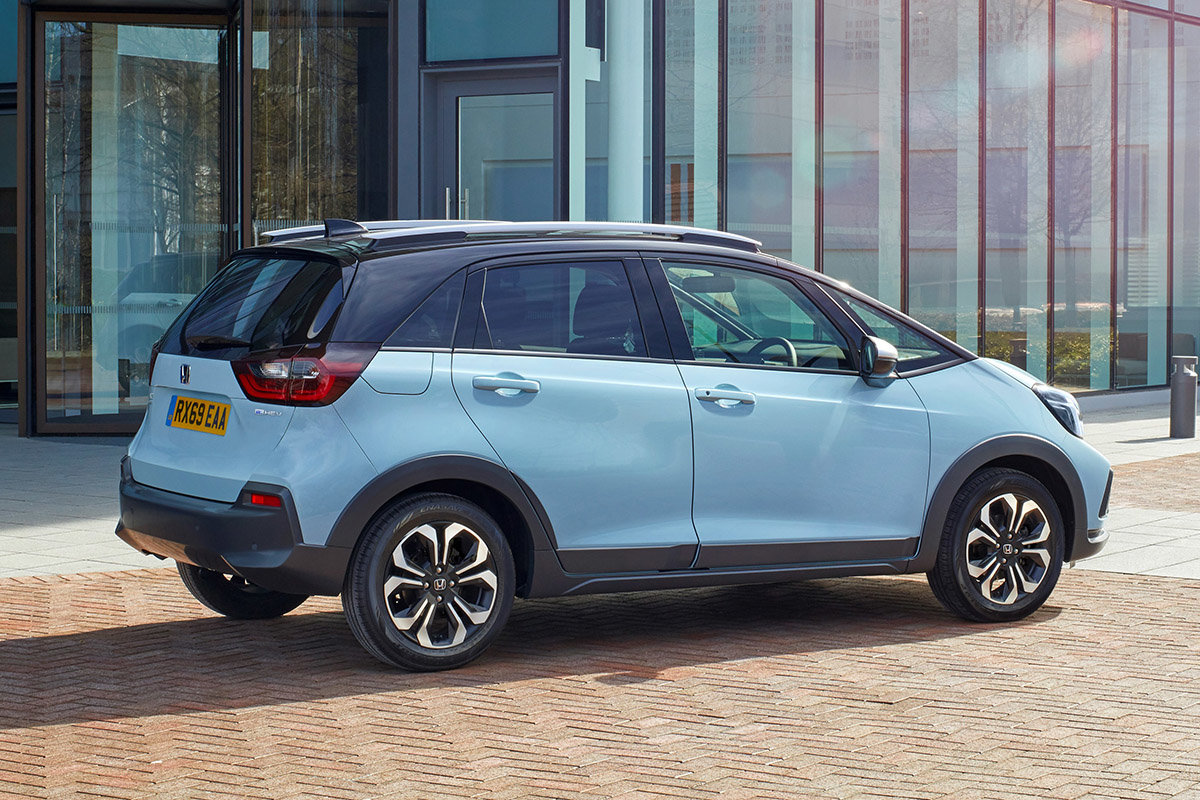
- Part of the reason small MPVs like the Jazz have died out is the rise of the high-riding SUV. If you like the idea of rough, tough styling, though, Honda has you covered with the Jazz Crosstar. This version of the Jazz features a raised ride height, roof rails and black plastic body cladding, which mean it apes a small SUV. The payoff is softer suspension, which means it leans over more in corners, but otherwise the Crosstar is pretty much the same as the standard Jazz to drive and to live with. It’s only available in top-spec EX form, though, so it doesn’t come cheap.
- This latest Jazz is only available with a hybrid powertrain – there’s no pure petrol or diesel alternative. The hybrid system is based around a 1.5-litre petrol engine; this can be used either to drive the wheels directly, or to act as a generator for the two electric motors, one of which can also provide power to the wheels, allowing the car to run in electric-only mode at lower speeds. The upshot is that the Jazz's fuel economy is better than most of its non-hybrid rivals.
- If you want the best all-rounder: We’d avoid the most basic SE, given it doesn’t come with an alarm, and upgrade to the SR; its alloy wheels make the Jazz look smarter and will help when resale time comes, and the plusher upholstery and better entertainment system make it a much nicer place to be.
- If you like technology: If you wanted to push the boat out, the EX is very well equipped for such a small car – though keep in mind all those toys come with a high price tag attached.
- For the SUV-inspired look: If you live in or regularly visit the countryside, the Crosstar is worth considering. Its raised ride height gives better ground clearance on farm tracks and unmade roads, its softer suspension is cushier on rutted country lanes, and the water-repellent upholstery will be useful when you’re wearing muddy boots or clothes.


